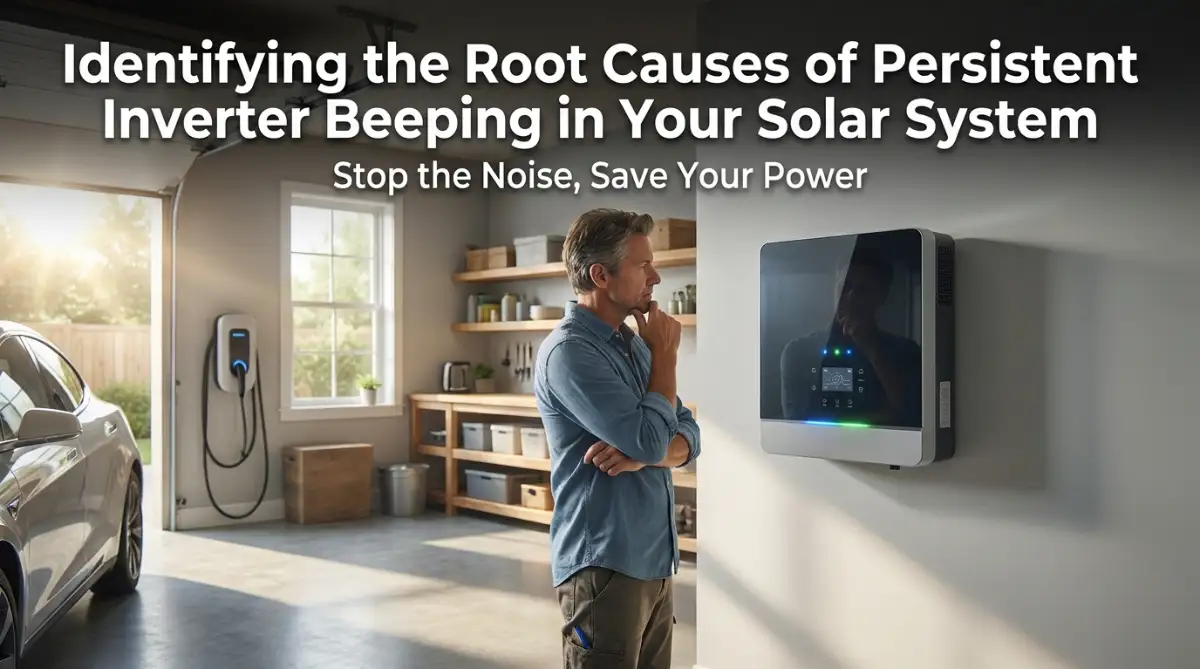
The Midnight Nightmare: When Your Solar System Won't Stop Screaming
It's 3 AM, and your solar inverter decides to play the world's worst alarm clock. If you are frantically Googling how to stop the high-pitched screeching without breaking your expensive off-grid setup, you are in the right place. Before you smash the reset button or rip out any wires, let's figure out exactly what your system is trying to warn you about. Don't panic—most of the time, the fix takes less than five minutes.
That continuous, annoying beep is enough to drive anyone crazy. When your inverter sounds an alarm, it instantly kills your peace of mind. You start worrying about expensive repair bills, damaged batteries, or losing power right when you need it most. It feels like a massive heavy weight on your shoulders, especially when you invested so much money into going green and becoming energy independent.
But you are definitely not alone in this struggle. Thousands of homeowners face this exact same terrifying situation every single day. The good news is that this loud noise is actually your system's way of protecting itself from permanent damage.
If we take a deep breath and learn to understand what the machine is trying to say, the solution is usually surprisingly simple. I spent hours reading manuals and talking to technicians so you do not have to.
Quick Fix Checklist (If You Are in a Hurry):
- Count the beeps: A solid, non-stop tone usually means a power overload. Turn off your AC or heaters right now.
- Check the time: If it only beeps at night, your battery voltage is dropping too fast.
- Look at the fans: A rapid clicking or beeping during a hot afternoon means the system is overheating. Clear the dust!
- Do a safe reset: If everything looks perfectly fine, turn off the AC, solar, and battery breakers for 10 minutes to clear software bugs.
Decoding the Language of Your Power Inverter
When a baby cries, it does not mean the baby is broken. It simply means they need something, like food, sleep, or a diaper change. Your solar inverter works exactly the same way.
That high-pitched beep is not a sign of a dead machine. It is a built-in safety communication tool. The inverter is actively monitoring massive amounts of electricity flowing through thick cables, and it wants to keep your house completely safe from electrical fires.
To fix the noise, we first have to figure out the specific "cry" or beep pattern your machine is making. Different patterns mean completely different problems. Some are quick warnings, while others are serious alerts asking you to take action right now.
Common Beep Patterns and What They Mean
Think of the beeps as Morse code. A single, occasional beep might just be the system switching from solar power to battery power when a thick cloud passes over your house. You do not need to worry about this one at all.
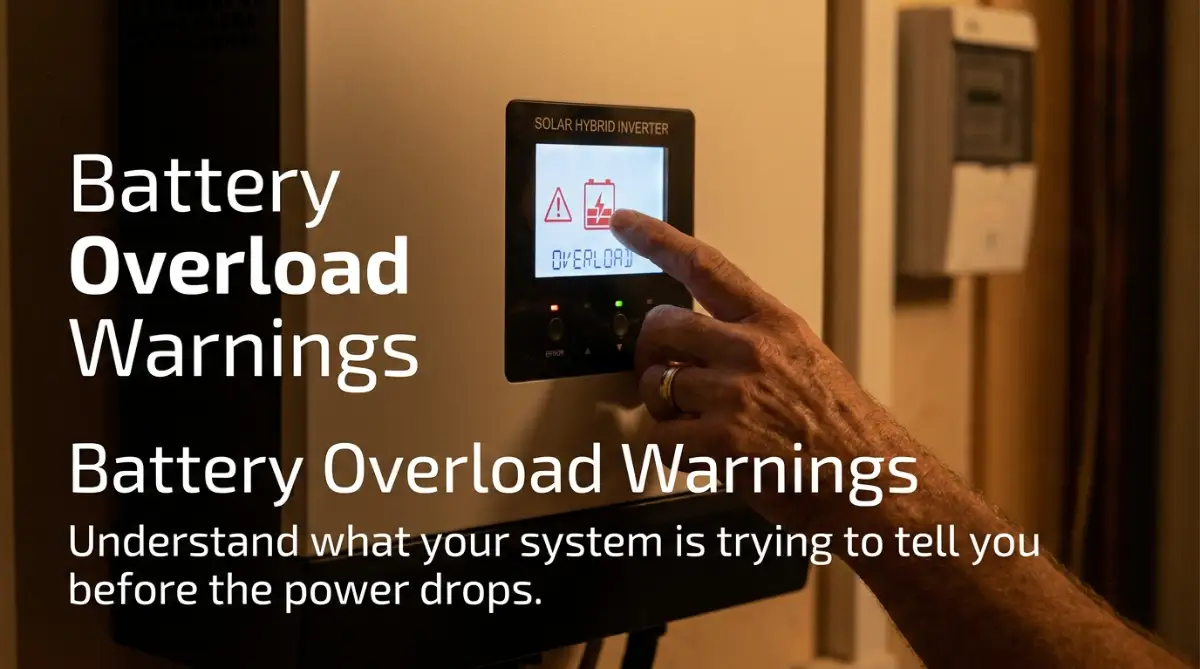
However, a constant, rapid beeping means the system is choking. It is struggling to handle the amount of electricity you are asking for. A solid, continuous, never-ending tone is usually the most serious. It means the system has entirely shut down a specific function to prevent a meltdown.
By simply listening to the rhythm of the noise, you can instantly narrow down the root cause. Grab a notebook and write down exactly how many seconds pass between each beep. This tiny detail will save you a massive amount of time when we start fixing the issue.
Overload Alarms: Are You Asking for Too Much Power?
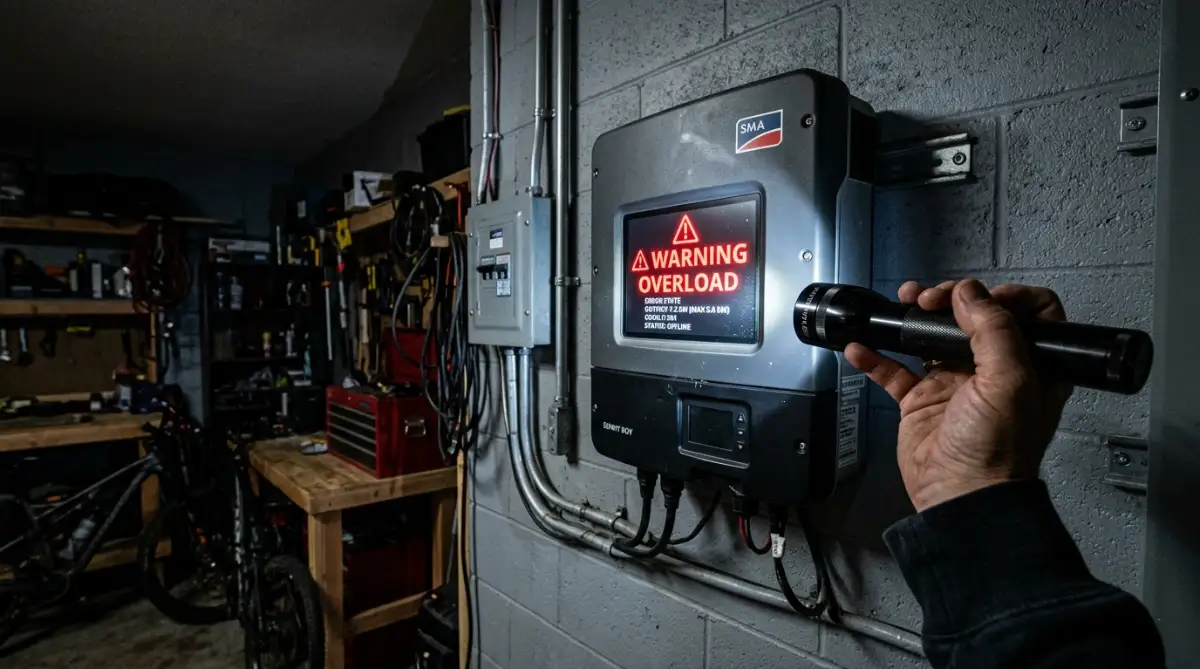
One of the most common reasons your inverter will yell at you is a simple power overload. Every inverter has a maximum capacity, usually measured in watts or kilowatts. If you have a 3,000-watt inverter, it cannot magically produce 4,000 watts of power.
Imagine trying to carry twenty heavy grocery bags from your car to the kitchen all at once. Your arms will eventually give out, and you will drop everything. Your inverter does the exact same thing when you turn on too many heavy appliances at the exact same time.
Things like air conditioners, water pumps, electric heaters, and even hair dryers require a massive surge of power just to start up. If your air conditioner kicks on while the microwave is running, the inverter gets instantly overwhelmed and triggers the overload alarm.
To test if this is your problem, simply walk around your house and turn off all heavy appliances. Unplug the space heaters, shut down the AC, and wait a few minutes. If the beeping stops, you just solved your problem. You simply need to manage your power usage better during peak hours.
Battery Voltage Drops: The Silent Power Drain
Your solar batteries are the actual heart of your entire off-grid or hybrid system. If the batteries are unhappy, the inverter will definitely let you know loudly. The low battery voltage alarm is probably the most frequent cause of persistent beeping in homes today.
During the day, your solar panels charge the batteries with fresh energy from the sun. But on dark, cloudy days, or during the long winter months, those batteries might not get a full charge. When the sun goes down, you start watching TV, cooking dinner, and turning on the lights.
This pulls electricity out of the battery very quickly. When the battery drains down to a dangerous level, the inverter steps in to protect it. If a battery is drained completely to zero, it can permanently ruin the chemical cells inside. The beep is literally the inverter saying, "Stop using power, or you will destroy the battery!"
Here is a quick voltage cheat sheet I keep pasted next to my inverter. Keep in mind, these are rough resting voltage numbers, but they help you spot trouble instantly:
I learned this the hard way during a rainy week last spring. I kept ignoring the occasional beep until the whole house went dark. My quick Pro Tip for you: Always keep a digital multimeter handy near your setup. Whenever my system beeps now, I immediately test the battery terminals myself to see the exact voltage, which saves me from playing a guessing game and gives me instant peace of mind.
The Heat Wave: Ventilation and Overheating Issues
Electronics absolutely hate heat. Your solar inverter is basically a heavy-duty computer that converts raw solar energy into usable household electricity. This conversion process naturally creates a massive amount of heat inside the metal box.
To cool itself down, the inverter relies on built-in cooling fans and metal heat sinks. But if you installed the unit in a hot, stuffy garage or a tight closet with zero airflow, it will start to suffocate.
Watch This Quick Troubleshooting Guide
Before we move on to the more complex wiring issues, take a moment to watch this incredible visual breakdown of standard inverter alarms. This expert clearly shows exactly how to read your specific error codes on the digital screen, making the whole process much less intimidating for beginners.
Take a flashlight and inspect the cooling fans on the top or bottom of your inverter unit. Are they completely blocked by thick layers of dust, spider webs, or pet hair? If the fans cannot spin freely, the heat has nowhere to go.
Use a clean, dry cloth or a can of compressed air to carefully clean the ventilation slots. Make sure there is at least two feet of empty space around the entire inverter so fresh air can circulate. Sometimes, just opening a window in the utility room is enough to stop the over-temperature alarm forever.
Grid Fluctuations and Synchronization Errors
If your solar system is tied to the local utility grid, it has to play a constant game of matching. The electricity coming from the city power lines has a specific voltage and frequency. Your inverter must match this rhythm perfectly to send your extra solar power back to the grid.
However, city power grids are rarely perfect. Sometimes there are hidden power surges, brownouts, or tiny frequency drops that you cannot even see with your own eyes. Your lights might not flicker, but your sensitive inverter will notice the change instantly.
When the grid power becomes unstable, the inverter will safely disconnect itself from the city lines to protect your home appliances. When it does this, it usually sounds a warning beep to let you know it is now running entirely on backup battery power.
This specific type of beep usually stops on its own once the city power stabilizes. If you notice your system beeping heavily during bad thunderstorms or strong winds, it is highly likely a grid synchronization issue. There is nothing actually broken in your house; your machine is just acting as a protective shield.
Inspecting Cables for Hidden Ground Faults
Now we need to talk about something a little more hands-on. A ground fault sounds highly technical, but it simply means electricity is leaking out of a wire and touching something it should not touch. This is a massive safety hazard, and the inverter will refuse to work if it detects a leak.
Over time, the thick cables running from your roof panels down to the inverter can become damaged. Squirrels and birds love to chew on the rubber insulation. Heavy rain and strong winds can loosen the tight connections.
If water gets inside a small crack in the cable, it creates a short circuit. The inverter's computer system immediately senses this tiny change in electrical resistance. It will shut off the power production and scream loudly to prevent a roof fire.
Myth vs Reality: Understanding Inverter Behavior
Let's clear up some common confusion about solar alarms. There is a lot of bad advice floating around on the internet that can actually harm your expensive equipment.
- Myth: If I just restart the inverter, the problem will go away permanently.
- Reality: Restarting might clear the error code for five minutes, but if the battery is still deeply discharged, the alarm will just come right back.
- Myth: A beeping inverter means the solar panels on the roof are broken.
- Reality: Solar panels themselves rarely break. 95% of the time, the issue is related to the batteries, the wiring, or your household power usage.
How to Safely Perform a Hard Reset
Sometimes, just like a frozen laptop or a glitchy smartphone, the inverter's internal computer just gets completely confused. A small software bug can cause it to beep even when the batteries are full and the grid is perfectly fine. In this exact scenario, a full system hard reset is your best friend.
However, you cannot just pull the plug out of the wall. Solar systems hold a massive amount of live electrical current. You have to follow a specific shutdown sequence to drain the power safely.
First, turn off the AC breaker that connects the inverter to your house. This stops the power from flowing into your home appliances. Second, locate the DC disconnect switch for your solar panels and turn it off. This stops the fresh sun energy from entering the box.
Finally, turn off the battery breaker. Now the inverter is completely isolated and dead. Wait for at least ten full minutes. This waiting period allows the internal capacitors to drain all their stored energy. The digital screen should be completely black.
After ten minutes, turn everything back on in the exact reverse order. Batteries first, then solar panels, and finally the AC breaker. If it was just a simple computer glitch, the system will boot up silently and return to normal green lights.
When Loose Connections Cause Chaos
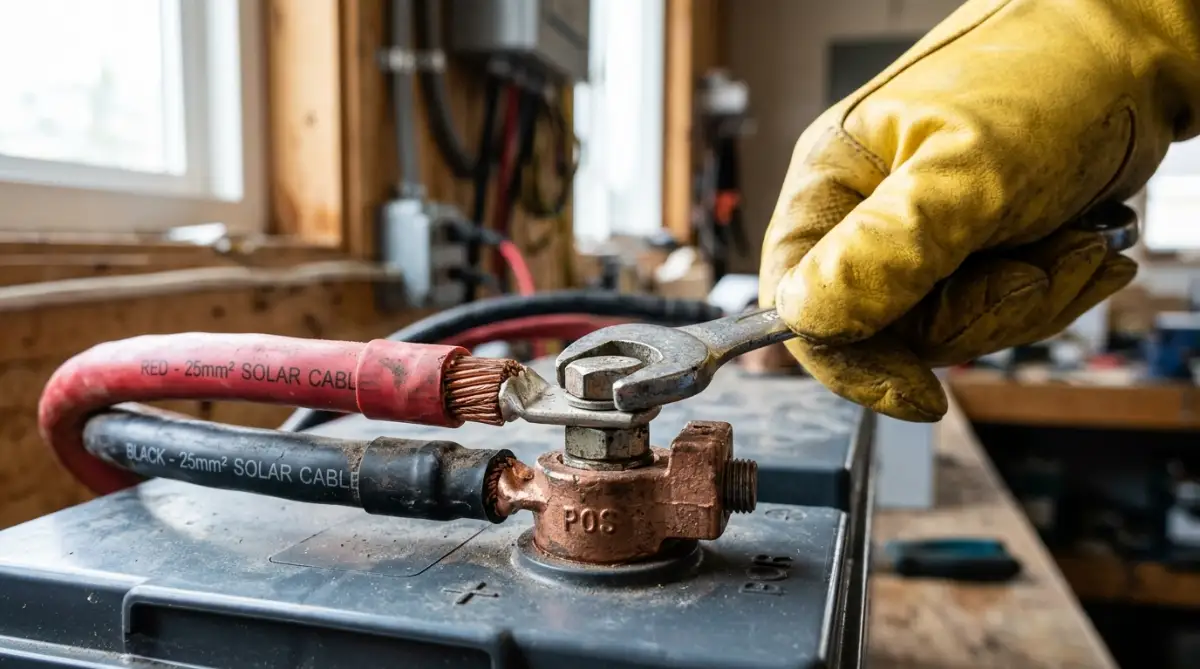
You would be amazed at how many major problems are caused by a single loose screw. Inside your battery bank, thick cables connect everything together. Because electricity naturally generates slight heat, the metal terminals expand and shrink every single day.
Over months of expanding and contracting, the bolts holding the wires can become slightly loose. A loose wire creates higher electrical resistance. The inverter has to work much harder to pull power through a loose connection, which triggers the low voltage alarm.
Grab a heavy-duty wrench with a rubber handle (for safety) and check every single battery connection. Make sure they are perfectly snug and tight. Look closely for any white, crusty acid buildup on the metal posts. If you see corrosion, you need to clean it off with a mixture of baking soda and water to restore a clean connection.
The Aging Battery Dilemma
No battery lasts forever. Even the highest quality lithium or lead-acid batteries slowly lose their strength over time. If your solar system has been running perfectly for five or six years, and suddenly starts beeping every night, your batteries might just be getting old and tired.
An older battery cannot hold as much energy as it did when it was brand new. Even if the inverter says it is charged to 100% during the sunny afternoon, that actual capacity is much smaller. As soon as you turn on the television after sunset, the voltage drops like a rock, and the alarm starts.
If you suspect your batteries are at the end of their life cycle, you can run a quick load test. Fully charge them, turn off the solar input, and turn on a known heavy appliance. If the battery voltage plummets completely into the red zone within twenty minutes, it is highly likely time to start shopping for a replacement battery bank.
Quick Reality Check: Are They Really Dead?
Wait, before you drop $2,000 on a new battery bank, ask yourself these three questions:
- Did the temperature drop below freezing last night? (Cold weather temporarily lowers battery capacity).
- Are the metal connection posts covered in white junk? (Corrosion tricks the inverter into thinking the battery is dead).
- Have you run an equalization charge in the last six months? (Sometimes the battery just needs a deep cleaning cycle, not a replacement).
Firmware Updates for Modern Inverters
We often forget that modern home solar inverters are essentially smart home devices connected to the internet. Just like your smart TV or your phone, the manufacturer regularly releases software updates to fix hidden bugs.
Sometimes, the internal sensors become too sensitive due to old software. The inverter might think there is a grid fault when everything is actually totally fine. Check your smartphone app connected to the inverter, or visit the manufacturer's website.
If there is a firmware update available, follow the simple instructions to download and install it. Many homeowners report that a simple five-minute software update completely cured their random phantom beeping issues without turning a single screw.
Understanding your system takes a little bit of patience. But once you know how to read the signs, check the loads, and clean the vents, you take back full control of your home's energy. You no longer have to live in fear of that loud midnight alarm.
Master-Level Strategies for a Perfectly Silent Solar System
Now that we know exactly what those annoying beeps mean, it is time to move past temporary fixes. You want to make sure that loud alarm never wakes you up again. Achieving long-term peace of mind requires a few simple but powerful daily habits.
These are the exact same methods professional installers use to keep off-grid systems running perfectly for decades. You do not need an engineering degree to understand them. You just need a solid plan and a little bit of consistency.
The Art of Household Load Balancing
One of the best ways to keep your inverter completely silent is to master the art of load balancing. This simply means spreading out your heavy electricity usage throughout the day. If you demand too much power at exactly the same time, your machine will always panic.
Think about how a busy restaurant kitchen works. If every single customer orders a complex meal at the exact same second, the chefs get overwhelmed. But if the orders come in slowly over an hour, the kitchen runs smoothly.
Your solar inverter operates on this exact same principle. Instead of running the dishwasher, the washing machine, and the air conditioner all at 7 PM, spread those chores out. Run the heavy appliances during the middle of the day when the sun is shining its brightest.
This smart timing completely prevents the sudden power surges that trigger the overload alarm. It also saves your batteries from doing heavy lifting after sunset. Understanding these off-grid power dynamics will drastically increase the lifespan of your entire setup.
Embracing Smart Battery Equalization
If you use traditional lead-acid batteries in your solar bank, you need to know about equalization. Over time, the chemical liquid inside these batteries settles down at the bottom. This leaves the top of the battery weak and unable to hold a proper electrical charge.
Equalization is basically a controlled, intentional overcharging process. It forces the liquid inside the battery cells to bubble and mix together. Think of it like vigorously shaking a bottle of orange juice to mix up all the heavy pulp at the bottom.
Most modern inverters have an automatic equalization setting hidden in the menu. Running this cycle once every few months keeps the battery cells perfectly balanced. Healthy batteries mean a stable voltage, and a stable voltage means your inverter stays quiet.
Before trying this yourself, I highly recommend checking out official residential energy management standards to ensure you are following safe handling practices for battery chemicals. Always wear safety glasses when working near older battery banks.
The Magic of Real-Time System Monitoring
We no longer have to guess what is happening inside our metal power boxes. Almost every new solar setup comes with a Wi-Fi module and a smartphone app. If yours does not have one, buying a separate monitoring add-on is the best investment you can make.
These smart apps give you a beautiful visual graph of exactly how much power your house is eating. You can literally watch the battery percentage drop in real time when your refrigerator compressor kicks on. It takes all the mystery out of solar power.
Instead of waiting for the inverter to scream at midnight, you can check your phone at dinner time. If you notice the batteries are unusually low, you can proactively turn off some extra lights. Catching the problem early is the ultimate secret to a stress-free home.
In fact, modern advanced solar monitoring research shows that homeowners who check their daily usage graphs experience way fewer system shutdowns. It trains your brain to understand exactly what your home actually needs to function.
Treating Solar Like a Living Ecosystem
Your solar power setup is not just a bunch of dead metal and wires. It is a highly active system that constantly reacts to the environment around it. Just like silent background processes drain your OS resources on a computer, invisible electrical drains can slowly hurt your batteries.
Vampire loads are appliances that suck small amounts of power even when they are turned off. Think about your microwave clock, the standby light on your television, or your phone charger left in the wall. These tiny drains add up quickly overnight.
Unplugging things you are not actively using gives your inverter a much-needed break. Every single watt you save during the night keeps your system further away from the danger zone. It is all about creating a highly efficient home ecosystem.
The Most Dangerous Traps Homeowners Fall Into
Fixing a beeping solar system can sometimes feel incredibly frustrating. When we get frustrated, we tend to make rushed decisions. Some of these quick fixes can actually destroy your expensive equipment or put your home at serious risk.
I have seen countless people make these exact same errors because they just wanted the loud noise to stop immediately. Let's walk through the absolute worst things you can do when your inverter starts complaining.
The Endless Reset Button Loop
This is easily the most common and destructive habit I see out there. When the loud alarm sounds, the easiest thing to do is walk over and hit the big red reset button. The noise instantly stops, and you feel like a genius.
But if you do not fix the underlying problem, the inverter is just going to crash again an hour later. Doing this repeatedly is incredibly dangerous. It forces the system to pull heavy electrical currents while it is already struggling.
Think about fixing hidden system errors on a smart device. If you just keep restarting your phone when it freezes, you will eventually corrupt the hard drive. Your solar inverter will eventually suffer a complete internal hardware failure if you keep forcing it to restart blindly.
Ignoring the Warning Signs Completely
Some people simply decide to ignore the beeping. They might put a heavy blanket over the machine or install it in a far-away shed where they cannot hear the alarm. This is a recipe for an absolute disaster.
Those loud sounds are happening because the internal computer is trying to prevent a total meltdown. If the machine is overheating and you ignore it, the internal plastic parts can literally melt.
If the battery voltage drops too low and you ignore the warning, those battery cells will permanently die. You will wake up one day to a completely dead system, and you will have to spend thousands of dollars replacing perfectly good batteries that just needed a little attention.
For reliable information on proper equipment handling, I often read through independent solar equipment testing reports. They constantly prove that ignoring minor system faults directly leads to massive replacement costs down the road.
Blindly Adding More Heavy Appliances
It is incredibly easy to forget that you are running on off-grid or hybrid power. We get so comfortable with free sunshine energy that we start treating our home like it is connected to a magical, endless power plant.
People will go out and buy a massive new deep freezer or a high-powered electric heater and plug it directly into the wall. They completely forget to check if their current inverter can actually handle that sudden massive demand.
You must always read the wattage labels on your new appliances before you turn them on. Pushing your system past its breaking point will instantly trigger the overload alarm. It can even blow the heavy-duty safety fuses inside the main breaker panel.
Trying Complex Wiring Repairs Safely
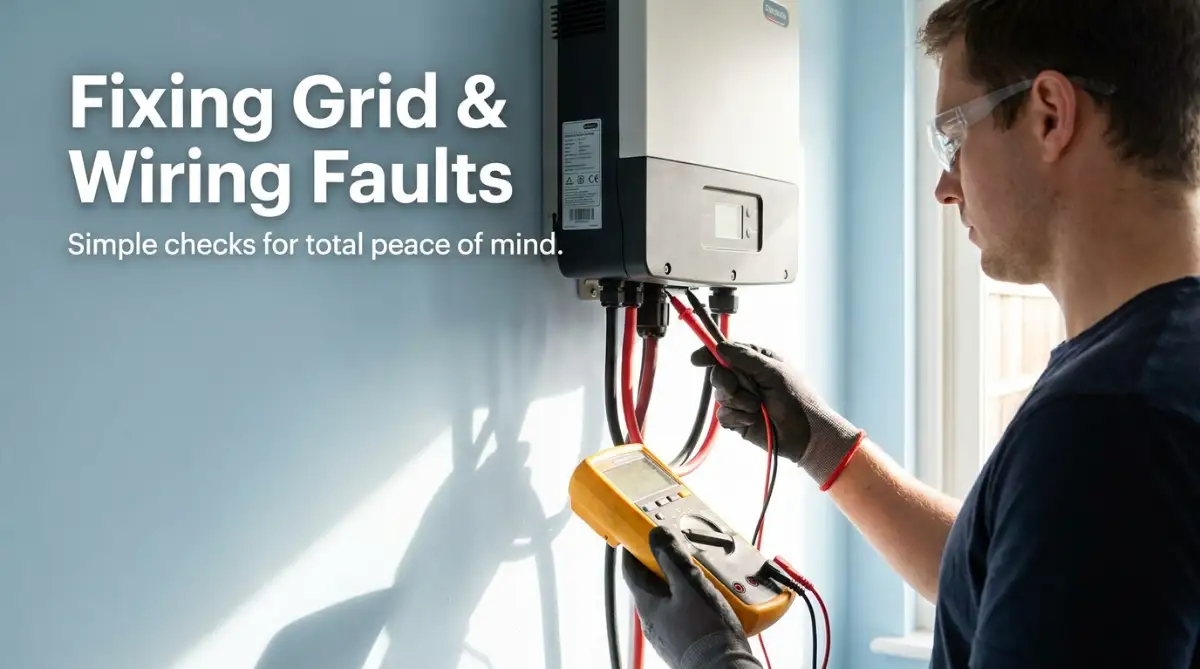
There is a huge difference between cleaning a dusty cooling fan and trying to fix thick electrical cables with zero training. Solar panel strings generate a massive amount of direct current (DC) electricity.
This type of raw power is entirely different from the standard power in your wall outlets. It is incredibly strong and very dangerous to handle without the right rubber gloves and professional tools.
If you notice that a thick battery wire is melted, burnt, or severely corroded, do not try to wrap it in electrical tape. Stop touching it immediately. You must replace the entire cable safely. Knowing what actually happens to your home solar system when the grid fails is helpful, but messing with live electrical boards is where DIY projects should stop.
Taking Back Control of Your Home Power
Living with solar power is an absolutely incredible experience when everything is running smoothly. You get to enjoy clean, reliable energy while taking a massive step toward personal independence.
Dealing with a loud, persistent alarm is definitely stressful, but it is never the end of the world. By paying attention to the specific warning sounds, managing your daily appliance loads, and keeping the unit clean and cool, you can completely eliminate these headaches.
You have already taken the biggest step by deciding to educate yourself. Most people just give up and pay a technician hundreds of dollars just to flip a simple breaker switch. Now you have the exact knowledge needed to handle the situation calmly and safely.
Every single time you catch a minor voltage drop or clean a dusty vent before the alarm even sounds, you are protecting your massive financial investment. You are becoming a true master of your own smart home energy solutions.
I used to hold my breath every single time I turned on the air conditioner during the summer, terrified of that sudden loud beep. But now, because I follow these simple load management rules, my house stays completely silent and perfectly powered all night long. You absolutely have the power to fix this, and you can start improving your system right this minute!
Quick Answers to Your Biggest Inverter Worries
Can I just mute or turn off the inverter beep completely?
Yes, many modern inverters allow you to turn off the physical sound of the alarm deep inside the settings menu. However, this is a very bad idea because you will never know when your batteries are dangerously low or overheating. It is much safer to leave the sound on and actually fix the root problem.
Is a constantly beeping inverter a fire hazard?
The beep itself is not a fire hazard; it is an active safety warning trying to prevent a fire. If the machine is beeping because of a serious wire fault or extreme overheating, ignoring it could eventually lead to dangerous electrical shorts. Always investigate the specific error code immediately to keep your home safe.
Why does my solar setup only beep in the middle of the night?
At night, your solar panels are completely asleep and generating zero power. Your entire house is pulling heavy electricity directly out of the battery bank. The nighttime beep is almost always a low-voltage warning, telling you the batteries are draining much too quickly.
Does a continuous alarm sound mean my expensive battery is ruined?
Not necessarily! A continuous alarm usually means the system has gracefully shut itself down to protect the battery from permanent damage. If you lower your home power usage quickly and let the sun charge the system the next morning, the battery will likely be perfectly fine.
How often should I check my solar inverter for hidden problems?
You should visually inspect your inverter's digital screen and cooling fans at least once every single month. Taking just two minutes to clear away thick dust and check the main battery cables will prevent 90% of sudden system alarms.
Disclaimer: The information provided in this article is for educational and informational purposes only. Working with solar energy systems involves high-voltage electricity which can be extremely dangerous. Always consult the manufacturer's manual and consider hiring a licensed, professional electrician before attempting any serious repairs, wiring modifications, or battery replacements in your home.