When the Sun Hides: A Personal Battle with the Gray Sky
Waking up to a dark, heavily clouded sky used to send me straight into panic mode. You look out the window, hear the rain, and immediately start doing the mental math on how long your solar battery will actually last. I spent my first year off-grid constantly stressing over every light switch and yelling at my family to unplug everything. But then I realized something completely game-changing: you do not need to buy thousands of dollars in extra batteries to survive a three-day storm. You just need to shift a few daily habits.
For a normal family relying on solar power, a simple three-day stretch of gray clouds can feel like an absolute nightmare. The constant anxiety of checking the battery monitor eats away at your peace of mind. You start yelling at your kids for leaving a single light bulb on. Every time the refrigerator compressor kicks in, you hold your breath, wondering if this is the moment the whole system shuts down.
Quick Survival Guide: Beating the Gray Sky
- Kill Phantom Loads: Physically unplug entertainment systems to stop silent battery drain.
- Shift Heavy Chores: Run high-energy tasks (like laundry or water pumps) exactly at solar noon to catch diffuse sunlight.
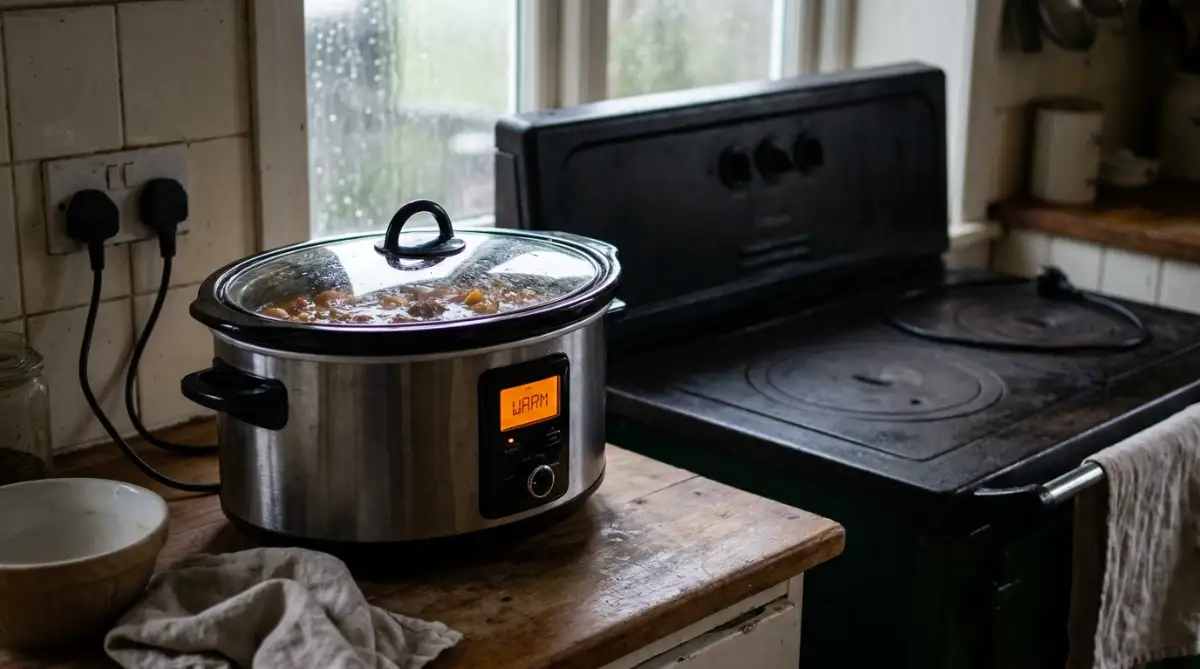
- Ditch the Heating Elements: Swap the electric oven for a slow cooker and the electric kettle for a stovetop version.
- Communicate: Hold a quick family meeting to set ground rules before the storm actually hits.
Mastering the Art of Low-Impact Living During Stormy Weather
The secret to making it through a long stretch of bad weather is not about living like a caveman. It is simply about shifting when and how you use your heavy appliances. Let me walk you through some incredibly practical steps you can take today to protect your power supply.
Stop the Silent Energy Thieves in Your Living Room
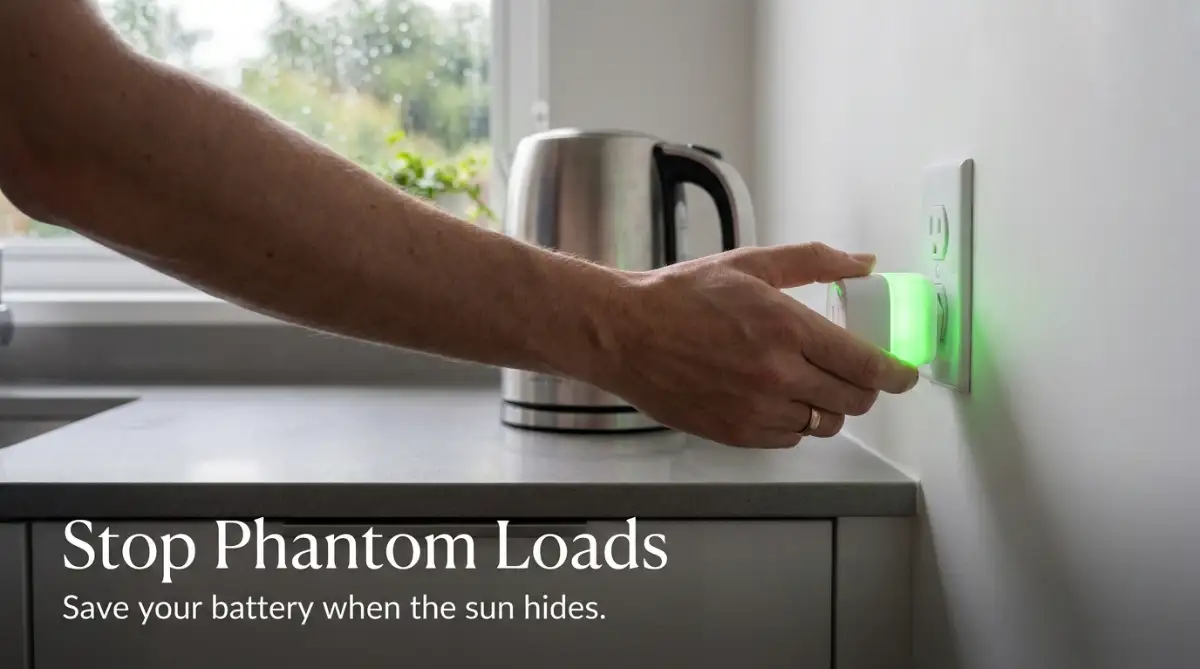
Did you know that your television, gaming consoles, and microwave are eating your battery even when they are turned off? We call this phantom power. On a bright, sunny day, you probably will never notice this tiny drain.
But when you are trapped in a three-day cloudy spell, every single drop of power matters. Those little red standby lights on your electronics are quietly stealing the energy you might need for your water pump tomorrow.
Pro Tip: I used to think leaving my laptop charger plugged in without the laptop was harmless. I realized my mistake when I bought a cheap electricity usage monitor and saw it was constantly pulling watts! Now, my rule is simple: if an appliance is not actively being used during a cloudy week, I physically pull the plug out of the wall.
You can easily fix this by putting your entertainment center on a single smart power strip. When the clouds roll in, just click one switch, and you instantly cut off five or six power-hungry devices. It takes two seconds, but it gives your battery bank a huge relief.
My Personal Phantom Power Hit-List:
To give you a real idea of what these silent devices steal, I tested my own living room. Here is what I found draining my battery while "turned off":
- Smart TV: 3 to 5 Watts constantly
- Gaming Console (Standby): 10 to 15 Watts
- Soundbar & Subwoofer: 4 to 6 Watts
- Cable Box: 15 to 20 Watts
- Multiply that by 24 hours during a storm, and you are losing enough power to run a full load of laundry!
Watch This Before Changing Your Habits!
If you really want to understand how quickly hidden appliances can drain your expensive battery setup, you have to see this visual breakdown.
Rethinking Your Kitchen Routine Without Starving
The kitchen is the absolute biggest enemy of your solar inverter. Devices that heat things up—like electric kettles, toasters, and air fryers—require a massive surge of electricity.
When you wake up on a gloomy morning, reaching for that 1500-watt electric kettle for your coffee is a terrible idea. Instead, this is the perfect time to switch to a traditional stovetop kettle if you use gas or propane.
If you strictly rely on electricity, you need to change your cooking times. Do your heavy cooking in the middle of the day. Even though it is cloudy, your solar panels are still gathering some scattered light at noon.
Using your biggest appliances right at midday means the power comes straight from the gray sky instead of draining your backup batteries.
High-Draw vs. Low-Draw: A Quick Survival Comparison
Sometimes it is hard to remember what you can and cannot use. Here is a simple mental map I use when the weather turns bad. I keep a printed version of a list like this right next to my kitchen pantry.
This simple shift does not mean you have to stop living your life. It just means you are making smarter choices to extend your power bank's life. A slow cooker, for example, uses a tiny fraction of the energy that an oven uses, and your dinner will still taste amazing.
How to Keep Your House Comfortable Without the Heavy AC
Heating and cooling are the next big hurdles. If you are stuck in a cloudy spell during the middle of summer, running the central AC will destroy your battery by midnight.
Instead of trying to cool the entire house, focus on cooling the people. Run a low-wattage ceiling fan or a small desk fan right next to where you are sitting. Close your blinds and curtains during the day to block out the humidity.
If it is winter and you are facing a massive snowstorm blocking your panels, do not touch that electric space heater. Space heaters are notorious battery killers. Layer up your clothing, use thermal curtains, and trap the heat in one single room where the family can gather.
Myth vs. Reality: Do Panels Actually Work in the Rain?
A lot of beginners panic because they believe their panels turn off completely when it rains. This is a huge myth.
Myth: Solar panels produce zero energy when the sun is not directly shining.
Reality: Your panels still collect diffuse light.
Diffuse light is the sunlight that pushes through the clouds. Depending on how thick the clouds are, your system might still produce 10% to 25% of its normal capacity.
This is exactly why shifting your habits is so powerful. If your system is making 20% of its normal power, and you reduce your house's energy consumption by 80%, you achieve a perfect balance. You can literally float through a storm without ever touching your battery reserves.
Shifting Your Chores to Match the Gray Sky
Laundry is another area where a little planning goes a long way. If the weather app says a three-day storm is coming, I do all my heavy washing the day before it hits.
But what if you run out of clean clothes on day two? You simply have to adjust the machine settings. Wash your clothes in cold water only. Heating the water inside the washing machine takes an enormous amount of electricity.
Skip the drying cycle entirely. Hang your clothes on an indoor rack near a window. It might take a day or two longer for them to dry, but your solar batteries will remain full and healthy.
Managing the Kids and Family Expectations
One of the hardest parts of surviving an energy pinch is explaining it to your family without causing panic. Kids do not understand battery voltage, they just want to watch their favorite shows.
Make it a fun game instead of a strict punishment. Tell them you are having a "camp-out" in the living room. Bring out the board games, light some rechargeable LED lanterns, and build a blanket fort.
When you frame low-energy living as a fun, unique adventure, everyone cooperates. You will actually find that these unplugged evenings become some of your best family memories. No one is staring at a screen, and everyone is actually talking to each other.
Monitoring Your System Without Losing Your Mind
While it is good to keep an eye on your battery, you should not become obsessed with it. Constantly refreshing your solar app will just give you a headache.
Set a routine. Check your battery percentage once in the morning, once at solar noon, and once right before the sun sets. This gives you a clear picture of how much power you used overnight and how much you recovered during the day.
If you notice the battery is significantly lower by evening, that is your cue to eat a cold dinner or skip the television for the night. You are making logical, data-driven decisions instead of guessing.
Preparing an Emergency Backup Strategy
Sometimes, no matter how perfectly you manage your habits, the clouds are just too thick and the days are too short. You have to accept that hitting zero is a possibility.
This is why having a secondary backup plan is incredibly smart. Keep a couple of heavy-duty power banks fully charged just for your cell phones. Buy a small portable camp stove so you can boil water safely outdoors if the power completely fails.
When you know you have a backup plan, the anxiety of the cloudy weather completely melts away. You stop worrying about the dark clouds and start enjoying the sound of the rain against your windows.
Embracing the Beauty of a Slower Pace
Ultimately, adapting your household habits is about changing your mindset. A cloudy spell forces us to slow down. It forces us to stop constantly running machines and staring at giant screens.
Instead of fighting the weather, learn to flow with it. When the sun is blazing, run your machines, do your chores, and live loudly. When the sky turns gray, take it as nature's hint to rest, read a physical book, and enjoy a quieter house.
By making these simple, practical adjustments, you protect your expensive solar equipment and buy yourself incredible peace of mind. You become the master of your energy, no matter what the sky looks like outside.
Going Beyond the Basics: Pro-Level Secrets to Outsmarting the Storm
Most beginners stop at turning off a few lights and hoping for the best. But if you want to truly master your home's power supply, you have to look a little deeper. The real secret to surviving a long, sunless week is understanding how your biggest appliances actually operate behind the scenes.
Let us talk about the giant elephant in the kitchen: your refrigerator and freezer. These machines pull a massive amount of power every single time their internal compressors kick on. If your freezer is mostly empty, that compressor has to work twice as hard to keep the empty air completely frozen.
You can easily fix this by filling empty milk jugs with water and stuffing them into the empty spaces of your freezer. Once those jugs freeze, they act like giant ice blocks, holding the cold temperature naturally. This simple trick, known as increasing your thermal mass, means your freezer will stay ice-cold for hours without asking your solar battery for a single drop of power. In fact, optimizing your refrigerator and freezer efficiency is one of the easiest ways to protect your power bank.
Taming Your Automated Smart Home Systems
We all love the convenience of a smart home. Having your lights turn on at sunset and your thermostat adjust itself automatically feels amazing. But during a heavy storm, these automated routines become a serious liability.
Your smart home hub has no idea that the sun has not shown up in three days. It will blindly follow its schedule, turning on your porch lights and cranking up your heating system exactly when your battery is screaming for mercy. As soon as a bad weather alert hits my phone, my very first step is to open my smart home app and pause all my daily automated routines.
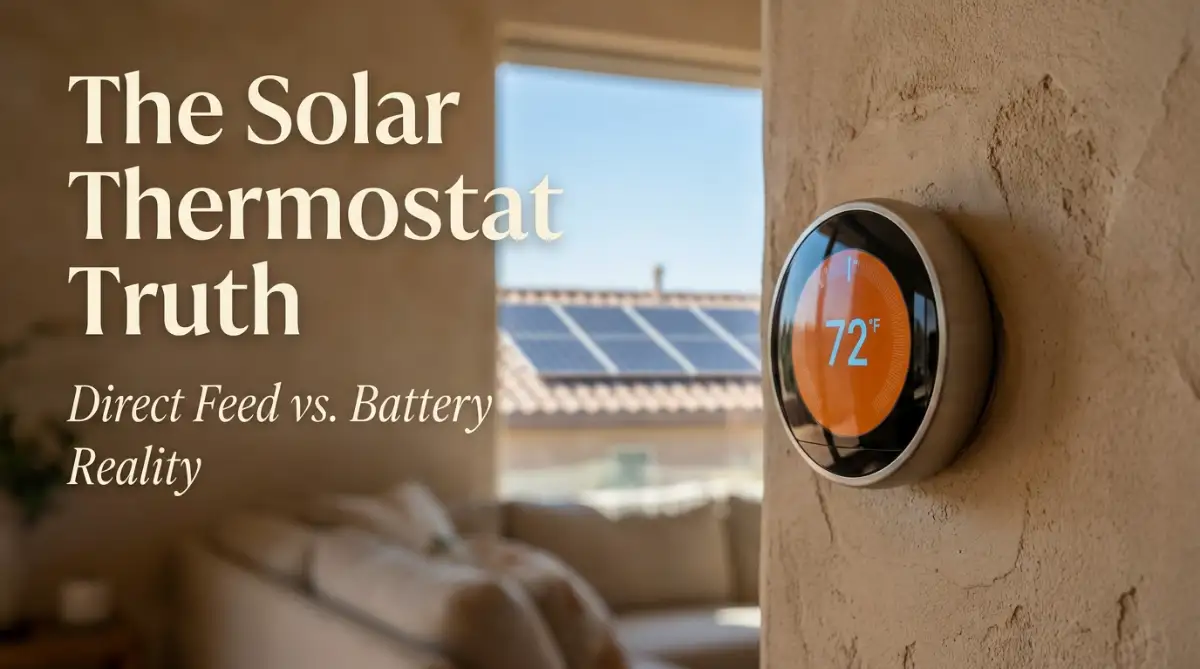
Heating and cooling are the biggest offenders here. If you rely on digital temperature control, you really need to understand the truth about running a smart thermostat on direct solar power. I highly recommend switching your thermostat to a manual setting until the sky clears up, so you can decide exactly when the heater runs.
Rethinking How We Manage Heavy Water Systems
If you live in a rural area or run an off-grid setup, you probably have a heavy-duty electric water pump or an electric water heater. These devices require a shocking amount of starting watts. When you turn on the hot water tap on a cloudy morning, you are forcing your battery to output maximum power.
Instead of taking hot showers in the early morning, shift this habit to the late afternoon. Even on a totally overcast day, your panels will gather enough diffuse light by 3:00 PM to assist with that heavy power draw. By timing your water usage right, you stop your batteries from dropping to dangerous levels.
The same logic applies if you have outdoor water features or swimming pools. A massive storm is not the time to run an electric pool heater. Instead, look into natural alternatives, like the ultimate guide to heating your swimming pool without electricity. Taking these heavy outdoor loads entirely off your main electrical panel will save you from an unexpected total system shutdown.
The Magic of Strategic Load Shifting
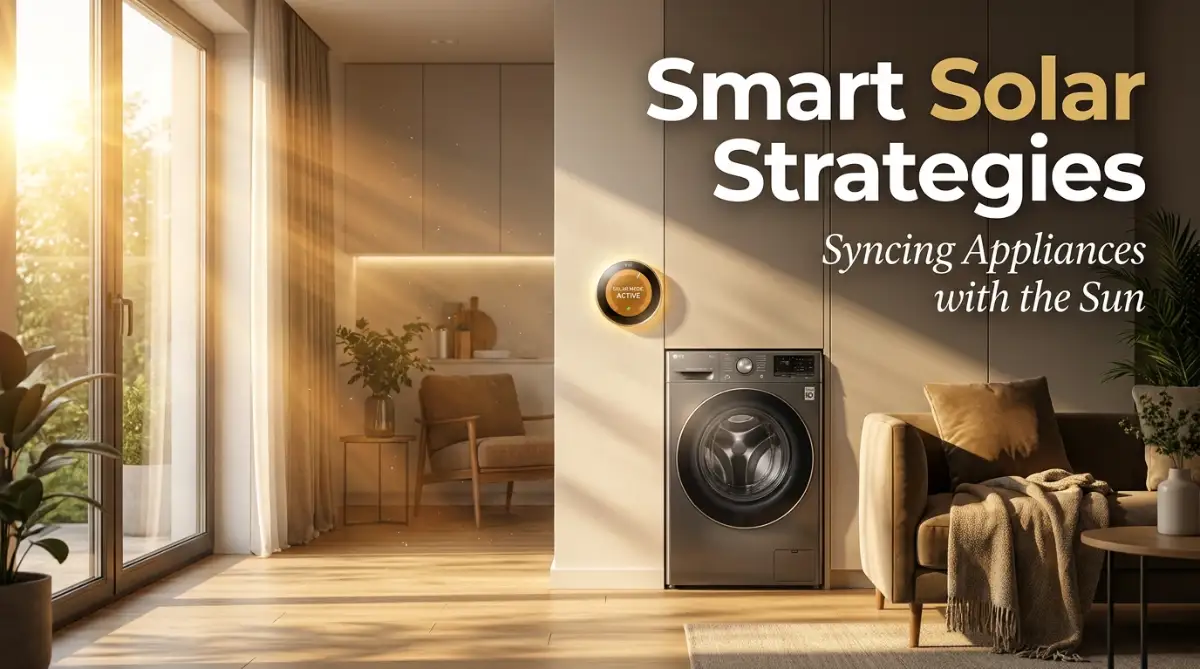
Professionals use a technique called "load shifting." This simply means moving your heavy power usage to the specific times when your panels are producing the most power, regardless of the weather.
Even thick rain clouds cannot block 100% of the sun's radiation. Right around solar noon, your panels will hit their highest production peak for that specific day. If you absolutely have to run a small washing machine cycle or charge a laptop, do it exactly at this peak time.
By matching your energy usage to the natural rhythm of daylight, the power flows directly from the sky to your appliance. It completely bypasses your battery bank, allowing those stored reserves to rest safely for the dark night ahead. According to research from the National Renewable Energy Laboratory (NREL), actively matching your consumption to real-time solar generation is the most effective way to maintain system stability.
The Dangerous Traps That Will Leave You in the Dark
Changing our daily habits is not always easy. When we are forced to suddenly drop our comfortable routines, we tend to make rushed, emotional decisions. Let us look at the most painful mistakes people make when the weather turns ugly, so you can avoid them completely.
The "Morning Coffee" Battery Killer
This is an incredibly common scenario. You wake up on day two of a terrible storm. It is dark, it is raining, and you just want a hot cup of coffee to feel better.
Without thinking, you turn on the electric espresso machine at 6:00 AM. What you do not realize is that your battery bank has been slowly draining all night just to keep your refrigerator running. At 6:00 AM, your battery is at its absolute weakest point.
Hitting a low battery with a massive 1500-watt power draw can cause what experts call "voltage sag." The system panics, assumes the battery is entirely dead, and shuts off power to the entire house to protect itself. Suddenly, you have no coffee, and your house is completely black.
Quick Morning Fix: If you absolutely need that morning caffeine fix during a heavy storm, do not touch the electric coffee maker. Here is my personal routine: I keep a small, cheap French press in the pantry and heat the water on my propane camping stove. It takes about three extra minutes, but it completely saves my solar inverter from that dangerous morning voltage drop.
Trusting Your Inverter Screen Blindly
Another terrible mistake is believing that the battery percentage on your inverter screen is perfectly accurate at all times. Those digital readouts are just estimates based on current voltage.
If you turn on the microwave, your screen might suddenly drop from 60% down to 30%. You might panic, thinking your battery is broken. Then, when the microwave turns off, the screen jumps back up to 55%.
If you constantly stress over these bouncing numbers, you will drive yourself crazy. Instead of obsessing over every little percentage drop, look at the overall trend. Understanding the basics of battery discharging and voltage will help you stay calm and realize that temporary drops are perfectly normal behavior.
Refusing to Communicate with the Family
You cannot survive an energy pinch on your own. If you are secretly turning off lights while your teenager is in the next room running a gaming computer and a space heater, you are fighting a losing battle.
Many parents try to hide the power situation because they do not want to worry their kids. This always backfires. Suddenly, the power goes out in the middle of a movie, and everyone is angry.

Instead, hold a quick two-minute family meeting the moment you see a long string of rain clouds on the weather app. Explain the situation simply, set ground rules for electronics, and get everyone on the same team. When everyone knows the plan, the stress completely disappears.
The Danger of Draining Too Deep
Perhaps the most expensive mistake you can make is trying to live completely normally and draining your battery down to zero. You might think, "Well, the sun will eventually come out and charge it back up."
While this is technically true, taking your batteries down to zero is incredibly damaging. Whether you use lead-acid or modern lithium batteries, pulling them down to absolute empty causes internal stress. If you do this every time it rains, you will literally cut the lifespan of your expensive battery bank in half.
It is always better to suffer a little inconvenience—like reading a book by a window instead of watching a movie—than to destroy thousands of dollars worth of equipment. Treat your battery like a precious reserve, not an endless well. If you are looking for more strategies on managing your home perfectly, exploring resources on Global 24 Info can give you plenty of fresh ideas for sustainable living.
Your Master Game Plan for the Next Gray Week
Surviving a stretch of bad weather without losing your mind is entirely possible. It just requires a tiny bit of forward thinking and a willingness to adapt your daily rhythm. You do not need to buy bigger, more expensive equipment.
You simply need to work with nature instead of fighting against it. When the forecast shows three days of heavy rain, view it as an opportunity to reset your household. Unplug those hidden phantom loads, pause your smart home routines, and move your heavy cooking to the middle of the day.
Keep your freezer packed tightly to hold the cold in. Remind your family to turn off unused devices, and shift your laundry day to when the sky is blue. Every small action you take adds up to massive savings for your battery bank.
If you want to keep improving your daily lifestyle and find smarter ways to run your household, bookmarking a reliable site like our primary home resource hub is a great step to stay updated on the best natural living strategies. You have the power to control your environment perfectly.
I used to dread looking at the weather forecast and seeing a long line of gray rain clouds approaching my town. But once I actually started practicing these simple habit shifts, that anxiety completely vanished, and I realized I was finally in full control of my home's energy. Start testing these small changes during the very next storm, and you will be amazed at how easily your system handles the dark days!
Common Questions About Cloudy Weather Energy Management
Do solar panels work at all on completely overcast days?
Yes, they absolutely still work! Even when thick clouds block direct sunlight, your panels will catch diffuse light bouncing through the atmosphere. While production might drop down to 10% or 20% of their normal output, they are still sending a slow, steady trickle of power to your batteries.
Should I turn off my refrigerator during a multi-day storm?
No, you do not need to turn off your main refrigerator. Food safety is incredibly important, and turning it off will ruin your groceries. Instead, just avoid opening the doors frequently, and fill empty spaces with water jugs to help it hold its cold temperature naturally.
Will running the washing machine drain my battery instantly?
It depends entirely on the water temperature setting. If you run a hot water cycle, the machine's internal heating element will pull a massive amount of power and drain your battery very quickly. Always switch to cold water washes only when the weather is bad.
How do I know which appliances are stealing the most power?
The easiest way is to purchase a cheap plug-in energy monitor from a local hardware store. You simply plug your device into the monitor, and the screen will tell you exactly how many watts it uses while running and while in standby mode. You will usually find that heating devices and older electronics are the worst offenders.
Is it safe to drain my solar battery down to zero?
It is highly recommended that you never let your battery drop completely to zero. Repeatedly draining batteries until they shut off will severely damage their internal chemistry and shorten their overall lifespan. Always try to keep your batteries above a 20% to 30% state of charge by adjusting your daily habits.
Disclaimer: The information provided in this article is for educational and informational purposes only. Every household's solar setup, battery capacity, and energy needs are completely unique. Please consult with a licensed solar technician or electrician before making significant changes to your electrical systems or relying entirely on solar power during severe weather emergencies.