The Frustrating Morning My Screen Went Blank
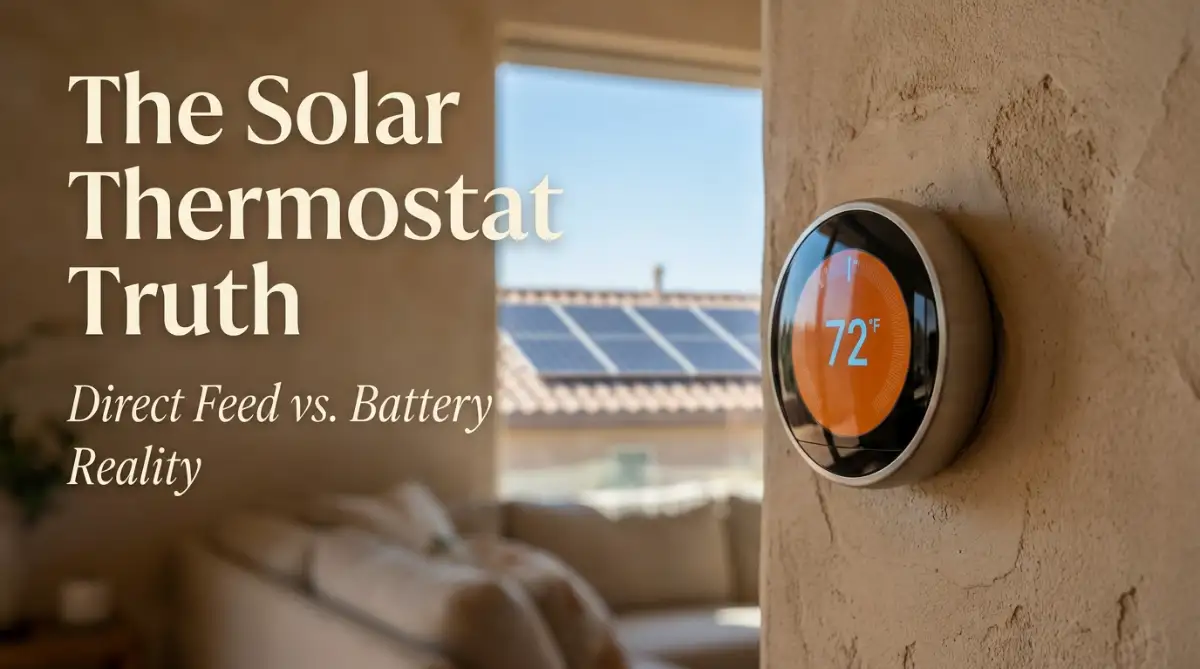
You wire up the solar panel, mount your expensive new smart thermostat on the wall, and expect a lifetime of free off-grid heating. But instead of a glowing screen, you get a dead piece of black glass and a freezing house. Wiring sensitive home climate tech directly to raw solar power is a guaranteed way to fry your motherboard, and figuring out the right way to buffer that voltage can feel like an absolute nightmare.
But when I walked down the hallway to check the temperature, my expensive smart thermostat was completely dead. The glowing screen I was used to seeing was just a blank, black piece of glass. I tapped it, swiped it, and even tried to reset the breaker, but nothing happened.
Panic started setting in because I had no idea what went wrong. I had measured the wires, connected the solar panel directly, and assumed the sun would do the rest. Instead of enjoying free energy, I was left without any heating on one of the coldest days of the season.
This is a reality many DIY solar enthusiasts face when they try to combine modern smart home technology with raw solar power. We assume that because solar panels generate electricity, we can just hook up our gadgets and watch them work perfectly. The truth is far more complicated and honestly, quite frustrating.
When your smart thermostat loses power, your entire house loses its brain. You cannot turn on the heater, you cannot activate the fan, and your indoor climate quickly becomes unbearable. I spent hours shivering in my living room, scrolling through forums on my phone trying to figure out why my direct solar connection failed so miserably.
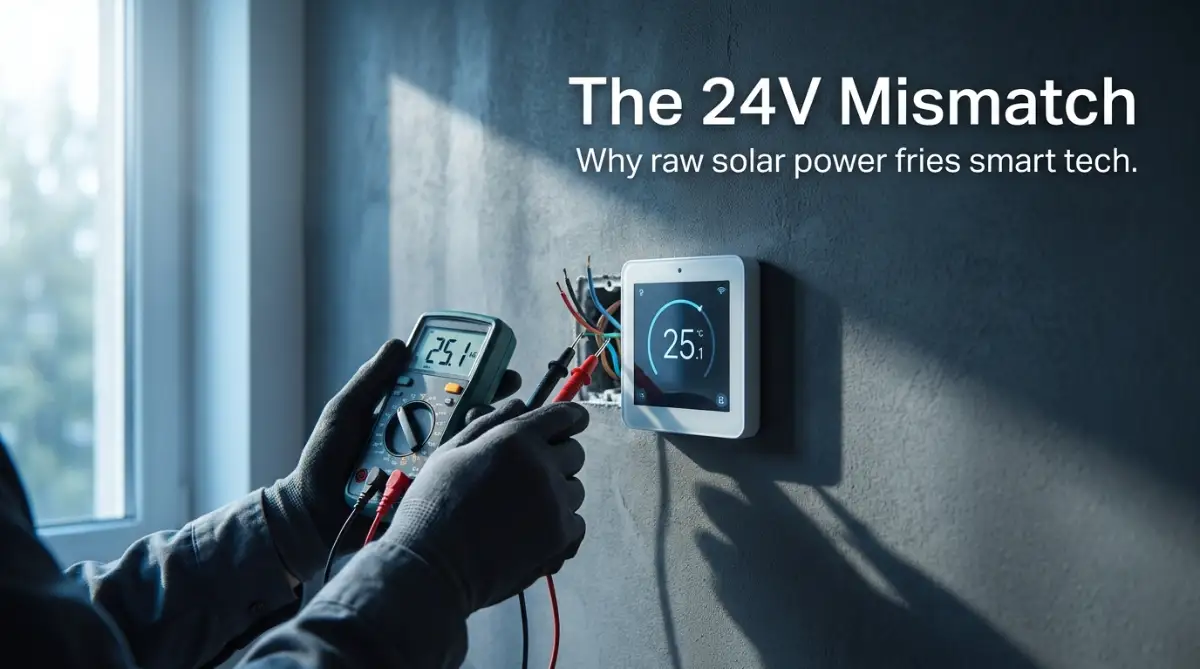
The Off-Grid Thermostat Action Plan
- Never wire directly: Raw DC solar power will instantly overload your AC-powered smart thermostat.
- Build the buffer: You must route your solar energy into a small 12V battery first to stabilize the wild, unpredictable voltage.
- Use the right translator: A Pure Sine Wave Inverter is absolutely mandatory to convert the battery's DC power into the clean 24V AC power your wall unit demands.
- Add cheap insurance: Always install small inline fuses on your positive wires to protect your expensive HVAC control board from sudden surges.
Why Raw Sunlight and Smart Tech Reject Each Other
Connecting a smart home thermostat directly to an independent solar power feed sounds like a brilliant idea on paper. You put a panel outside, run some wires inside, and power your device forever. However, physics and modern electronics do not work that way.
Most people do not realize that solar panels produce Direct Current (DC) power. The sun hits the panel, and energy flows in one single, straight direction. Your smart thermostat, on the other hand, is specifically designed to run on Alternating Current (AC) power.
Your regular home heating and cooling system usually has a transformer that takes standard wall power and steps it down to 24 volts of AC power. This 24V AC is what travels through the wires in your wall to keep your thermostat alive. When you try to push raw DC power from a solar panel directly into an AC-designed device, the motherboard simply gets confused.
Think of it like trying to run a gasoline car on pure diesel fuel. The engine might look similar, and it is still fuel, but the internal mechanics are built for a completely different chemical reaction. Pushing the wrong type of power into your smart device will either cause it to shut down to protect itself, or worse, completely melt the internal circuits.
Quick Cost Reality Check:
- Cost of a proper 24V Pure Sine Wave Inverter: $40 - $80
- Cost of replacing a fried HVAC Control Board: $800 - $1,200
- The reality: Trying to save fifty bucks on a direct wire job will almost always cost you a thousand dollars in furnace repairs. Do not skip the safety buffer.
The Mystery of the C-Wire
If you have ever installed a modern thermostat, you have probably heard of the C-wire, or common wire. Older thermostats just used batteries and two simple wires to turn the heater on and off. They did not need a lot of energy.
Modern devices have bright Wi-Fi touchscreens, weather tracking, and motion sensors. These features demand a continuous, steady flow of electricity. The C-wire provides this constant loop of power from your HVAC control board.
When you use an independent solar feed without a battery, you lose that constant flow. A single cloud passing over your house drops the voltage instantly. Your smart thermostat feels that drop, assumes the power grid failed, and shuts down the Wi-Fi chip to save energy.
Watch exactly how a DIYer safely wired their off-grid climate system without frying the motherboard.
The Voltage Fluctuation Danger
Solar panels are incredibly unpredictable energy sources. A panel rated for 12 volts might actually output 18 to 20 volts in direct, bright sunlight. In the early morning or late afternoon, that same panel might only push out 9 volts.
Smart home electronics hate unpredictable voltage. They are designed for clean, perfectly stable electricity. If a strong ray of sunlight spikes the voltage on your direct feed, it can easily blow the tiny fuses inside your thermostat.
I learned the hard way that you cannot just cross your fingers and hope the weather cooperates with your electronics. You need a way to catch, clean, and regulate that wild solar energy before it ever touches your expensive smart home gear.
I learned the hard way that a cloud passing over your house can reset your entire heating system in seconds. Always use a small multimeter to test your solar lines on a cloudy day before you even think about connecting them to your expensive indoor electronics.
The Right Way to Build an Independent Power Feed
You can absolutely power your climate control system with solar energy, but you have to act as a translator between the sun and your device. You need to build a system that buffers the raw power.
Do not think of a solar panel as a direct plug. Think of it as a water pump, and your thermostat as a delicate drinking glass. You would never blast a high-pressure water pump directly into a glass. You would pump the water into a holding tank first, and then gently pour it.
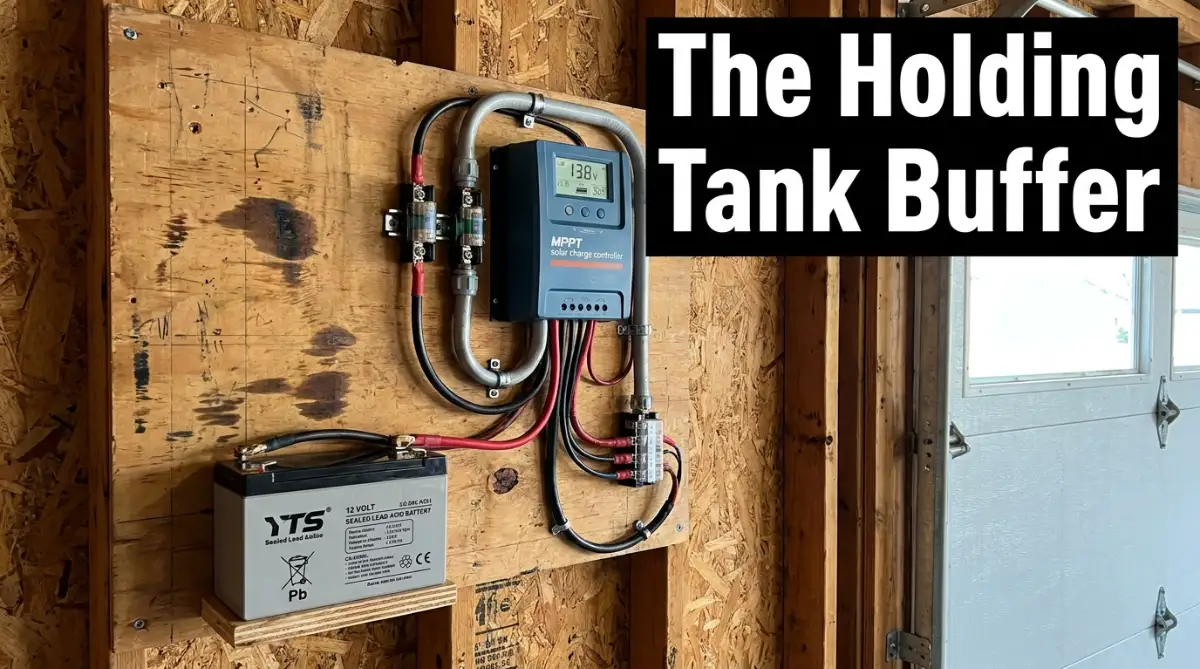
Setting Up the Holding Tank (Your Battery Buffer)
The first step to a successful independent feed is adding a small battery into the mix. You do not need a massive, heavy battery bank that costs thousands of dollars. A simple, small lithium-ion or sealed lead-acid battery will do the job perfectly.
Your solar panel connects directly to a solar charge controller. The charge controller is the security guard of your system. It takes the wild, fluctuating power from the sun and safely feeds it into the battery without overcharging it.
The battery now acts as your holding tank. It stores the energy and provides a perfectly flat, stable output of power. Even if it starts pouring rain outside, your thermostat will not even notice. The battery keeps the power flowing smoothly.
Bridging the DC to AC Gap
Now that you have stable DC power sitting in your battery, you have to solve the alternating current problem. Your smart device still wants 24V AC power. You cannot just run wires from the battery to the wall.
This is where a micro-inverter or a specific DC-to-AC power step-up converter comes into play. These small devices take the direct current from your battery and flip it back and forth to create the alternating current your thermostat expects.
You wire this converter between your battery and the thermostat. It tricks the smart device into thinking it is connected directly to a standard home power grid. The screen stays bright, the Wi-Fi stays connected, and your heating system responds perfectly.
Myth vs. Reality: Direct Wiring Misconceptions
There is a huge myth online that you can just buy a "solar ready" thermostat and hook it straight to a panel. People see low-voltage solar panels on e-commerce sites and assume they match the low-voltage needs of their home electronics.
The reality is that "solar ready" usually just means the thermostat has power-saving features. It does not mean it has a built-in charge controller or an inverter. Manufacturers assume you are using a massive whole-house solar system, not a small independent feed.
Let us look at a quick comparison of what actually happens:
Understanding the True Power Draw
You might be wondering how much solar power you actually need for this project. Smart thermostats are actually very efficient devices. They usually only draw about 2 to 3 watts of continuous power.
This means a very small 20-watt or 50-watt solar panel is more than enough to run the system endlessly. The problem is never the amount of power; it is always the quality of the power.
If you live in an area with long winters and short days, you will want to heavily oversize your solar panel. A 50-watt panel on a snowy roof might only perform like a 5-watt panel. That oversized panel ensures your battery stays fully charged even when the weather is terrible.
Protecting the HVAC Control Board
We focus a lot on the thermostat on the wall, but the wiring goes deep into your basement or garage. The wires connect to the main control board of your furnace or air conditioner.
If you mess up the independent solar feed and send the wrong voltage down those wires, the damage does not stop at the wall. High voltage can travel down the lines and destroy your entire HVAC control board. Replacing a control board can easily cost over a thousand dollars.
This is why isolating the system is so important. By using a proper battery buffer and an inverter, you create a physical barrier. If a lightning storm hits your solar panel, the charge controller takes the hit, protecting the rest of your home.
Keeping Your Wi-Fi Connected Off-Grid
One of the biggest benefits of a smart thermostat is checking your home temperature from your phone while you are at work. But this feature requires constant communication with your home internet router.
When you try a direct solar feed, the Wi-Fi chip is usually the first thing to fail. Wi-Fi transmission takes short, intense bursts of energy. A raw solar panel cannot provide sudden bursts of power. The voltage drops, and the Wi-Fi disconnects.
By using the battery buffer method, the battery easily provides those sudden spikes of energy. Your phone app will stay connected seamlessly. You get all the benefits of an off-grid system without losing the modern conveniences you paid for.
The Joy of True Energy Independence
Once you correctly set up the charge controller, the battery, and the inverter, the feeling is incredible. You realize that no matter what happens to your local power company, your climate control system is completely safe.
During the next big neighborhood blackout, your neighbors will be shivering in the dark. Meanwhile, your screen will still be glowing, keeping your family comfortable. You have taken control of your own comfort through smart, safe engineering.
It takes a little extra time and a few extra components to do it right. But protecting your expensive smart tech and ensuring your family stays warm is absolutely worth the effort. You just have to respect the rules of electricity and never cut corners on the buffer system.
Taking Your Off-Grid Climate Setup to the Next Level
Once you understand the basic battery buffer system, you can start tweaking things for maximum reliability. You want a system that runs perfectly in the background without you ever having to think about it. I spent months adjusting my own setup before I finally found the sweet spot.
One of the biggest secrets to a flawless independent solar feed is choosing the exact right type of power inverter. You cannot just grab the cheapest DC-to-AC converter off the shelf. Smart thermostats contain highly sensitive microprocessors that demand perfectly clean electricity.
Cheap inverters produce something called a modified sine wave, which is basically a jagged, blocky version of electrical current. If you feed a modified sine wave into a modern smart home device, the internal chips will struggle to process the messy power. This often leads to flickering screens, dropped Wi-Fi connections, and strange buzzing noises inside the wall unit.
You must always use a Pure Sine Wave Inverter for your climate control electronics. A pure sine wave exactly mimics the smooth, rolling power that comes from a standard city power grid. This ensures your expensive thermostat never even realizes it is running entirely on an off-grid system. You can read more about how pure sine waves protect sensitive microchips through trusted renewable energy research.
The Magic of Correct Wire Sizing
Another major factor that dictates your success is the thickness of the wires you use. When dealing with low-voltage solar power, distance is your biggest enemy. If you place your battery bank in the garage but your thermostat is in the central hallway, that power has a long way to travel.
Electricity moving through a wire is just like water flowing through a garden hose. If the hose is too thin and very long, the water pressure drops significantly by the time it reaches the end. In electrical terms, this is known as voltage drop.
If you try to use thin, cheap wire over a long distance, the 24 volts leaving your inverter might drop to 18 volts by the time it reaches your wall. Your smart thermostat will instantly reject that low voltage and shut down. Always measure your total wire distance and use a slightly thicker wire gauge than you think you need to keep that voltage strong.
Mastering the Winter Energy Deficit
Many people build their independent solar feeds during the bright, sunny summer months. The system works flawlessly because the panels are soaking up endless hours of intense daylight. But things change dramatically when winter arrives.
Winter brings shorter days, heavy cloud cover, and long, freezing nights. This is the exact time your heating system works the hardest, meaning your thermostat will be drawing maximum power. If your battery buffer is too small, it will completely drain by 3 AM, leaving your family shivering in the dark.
To beat the winter energy deficit, you need to deliberately oversize your solar panel and battery holding tank. If a 20-watt panel works perfectly in July, you might want to upgrade to a 50-watt or even 100-watt panel for December. This ensures that even on the gloomiest day, your system pulls in enough trickle charge to keep your home warm all night.
If you are running a fully off-grid home, managing this energy deficit becomes a daily routine. You can actually apply similar strategies to your entire house by syncing heavy home appliances with peak solar hours. It is all about capturing the sun when it is strongest and storing it safely for the cold nights.
Keeping the Temperature Sensors Accurate
Here is a pro-tip that took me way too long to figure out on my own. Smart thermostats have very delicate internal temperature sensors. If the device receives messy power or slightly higher voltage than it expects, the internal motherboard can actually heat up.
When the internal components get warm, the thermostat thinks your entire living room is hot. It might read 75 degrees on the screen when your room is actually a freezing 60 degrees. As a result, the heater never turns on, and you are left wondering why you are wearing a heavy coat indoors.
By strictly controlling the voltage with a high-quality solar charge controller and a pure sine wave inverter, you keep the internal chips perfectly cool. The temperature sensor remains deadly accurate. This small attention to detail makes all the difference between a frustrating DIY project and a professional-grade home upgrade.
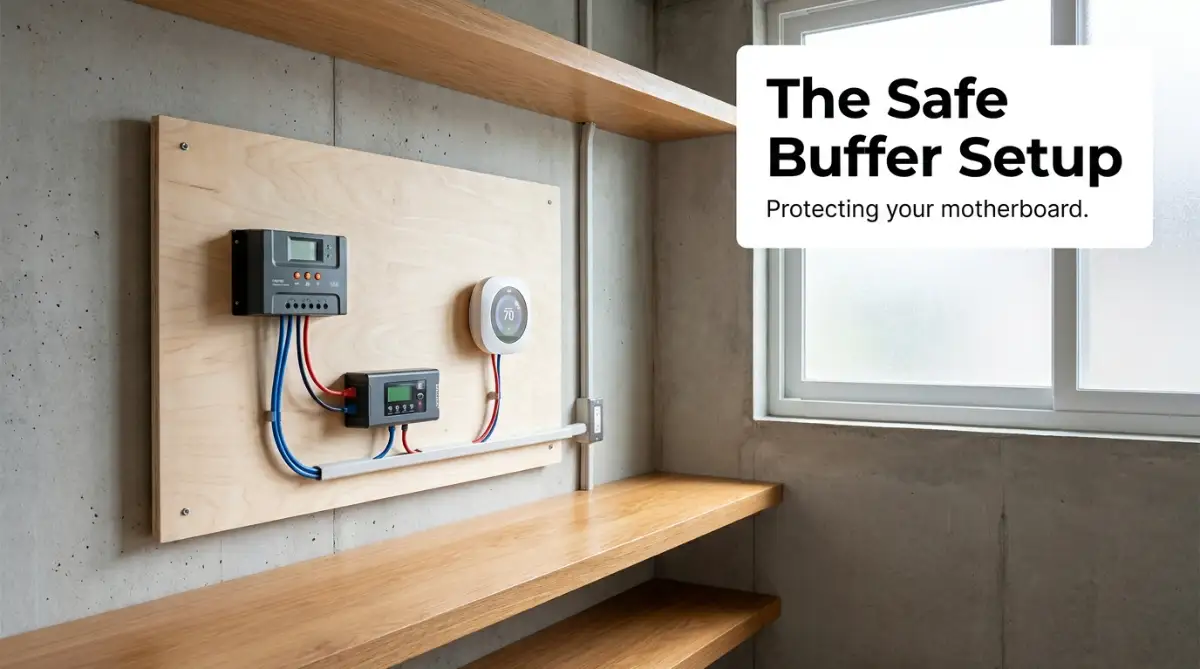
Where Most DIY Solar Heat Projects Fail
Building an independent power feed is incredibly rewarding, but it is also full of hidden traps. When I first started messing with off-grid electronics, I made mistakes that cost me a lot of money. I want to share the most common disasters so you can easily avoid them.
The most painful mistake you can make is skipping the fuse box. A lot of beginners wire their solar panel directly to the charge controller, and then straight to the battery, without a single safety breaker. They assume that because it is low-voltage solar, it cannot do any serious damage.
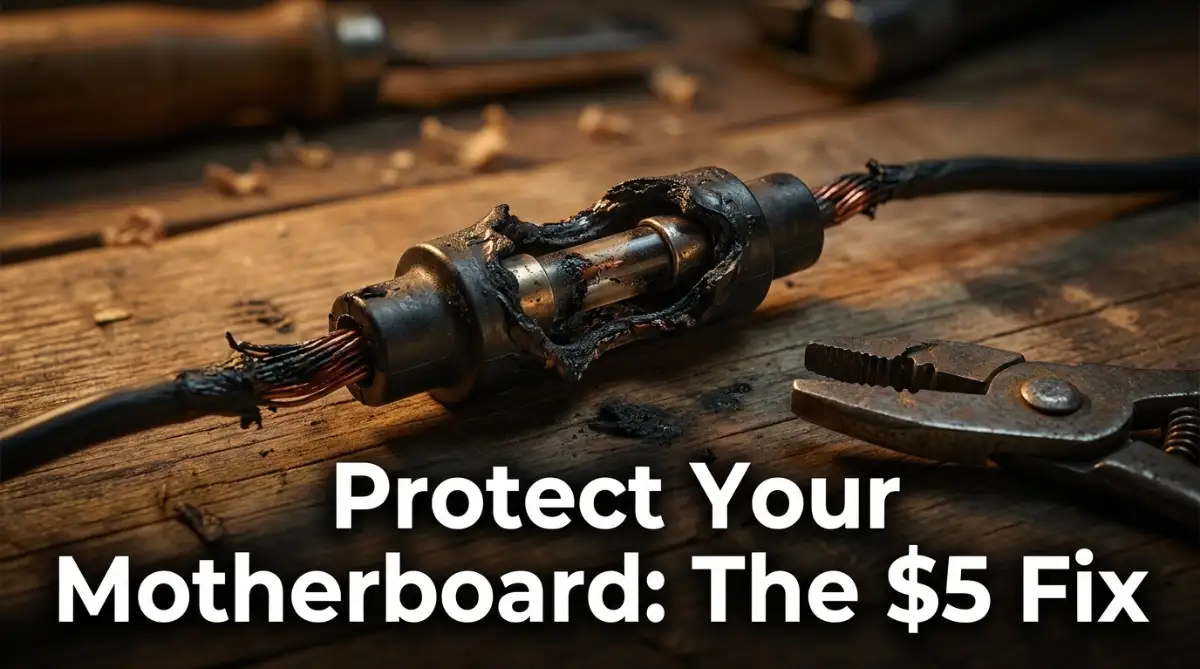
This is a terrible assumption. If a wire accidentally gets pinched behind a wall, or if a component suddenly shorts out, a massive surge of stored battery power will rush through the lines. Without a cheap, five-dollar fuse to stop the flow, the wire will literally melt.
I once skipped a fuse because I was in a rush to finish the project before dinner. A tiny wiring error sent a surge straight into my smart thermostat, and I heard a loud pop followed by the smell of burning plastic. Watching a highly expensive piece of smart technology die right in front of your eyes is a sinking, awful feeling.
You should always follow basic safety protocols. Install a small inline fuse on every single positive wire in your setup. You can find excellent guidelines on residential low-voltage wiring safety standards to ensure your home stays completely hazard-free.
The Misunderstanding of the C-Wire Hack
When people try to run smart thermostats off independent solar feeds, they often run into the dreaded C-wire problem. If your house was built with older wiring, you might only have four wires in the wall instead of the required five. To get around this, people try random online hacks.
They might try bridging two wires together, or using a cheap plug-in wall adapter to fake the C-wire signal. When you mix these risky hacks with an independent solar battery setup, you are asking for major trouble. The signals get crossed, and the main HVAC control board in your basement gets highly confused.
Instead of turning on the heater, the system might trigger the air conditioner in the middle of winter. Or worse, the main control board will try to draw power from your tiny solar setup, completely overloading your inverter.
If you are dealing with complex technical setups, it can honestly feel overwhelming at first. Just like trying to master complex technical programming structures, you have to take things one step at a time. Never rush a wiring job, and never use shady shortcuts to bypass the manufacturer's instructions.
Forgetting About Maintenance and Dust
We love to think of solar power as a "set it and forget it" technology. You put the panel outside, wire the battery inside, and assume you have free energy for the next decade. Unfortunately, nature always has other plans.
A heavy layer of dust, pollen, or autumn leaves can cut your solar panel's efficiency in half. If you are relying on a small, independent panel to run your heating system, that loss of power is a massive deal. A dirty panel means your battery does not fully charge, which means your thermostat might die overnight.
I highly recommend checking your outdoor panel at least once a month. Wipe it down with a damp cloth and clear away any debris. It takes less than two minutes, but it completely guarantees your heating system will run perfectly when you need it most.
Your Path to Reliable Off-Grid Heating
Taking control of your own home climate system is an amazing feeling. You no longer have to worry about neighborhood power grid failures leaving your family freezing in the dark. By creating an independent power loop, you add a massive layer of security to your daily life.
The secret always lies in building a safe, reliable buffer. By using a properly sized charge controller, a small storage battery, and a pure sine wave inverter, you create a perfect translation system. The sun provides the raw energy, the battery holds it steady, and the inverter delivers it smoothly to your wall unit.
If you are planning to expand your home energy setups, you can always find more helpful resources on reliable home improvement strategies to keep your family comfortable. Every step you take toward energy independence makes your home safer and more resilient.
It might seem like a lot of extra pieces to buy, but the peace of mind is entirely worth the investment. You will sleep much better knowing your heating system is protected by a solid, science-backed electrical setup rather than a risky DIY shortcut.
I know that wiring things up for the first time can feel incredibly intimidating. But I promise you, if I can figure out how to safely buffer my own solar setup without burning my house down, you can absolutely do this too. Start small, buy quality components, and enjoy the incredible feeling of true energy freedom today!
Quick Answers About Solar Powered Thermostats
Can I power a Google Nest or Ecobee with a small solar panel?
Yes, you can absolutely run premium smart thermostats with a small solar setup. However, you must route the panel through a battery and a 24V AC transformer first to ensure the device gets stable, clean power.
Why does my smart thermostat keep rebooting on solar power?
Constant rebooting is almost always caused by a sudden drop in voltage. If your battery is too small, or your wires are too long and thin, the thermostat cannot get enough consistent energy to keep its Wi-Fi chip running.
Do I really need an inverter for a 24-volt thermostat?
Yes, you absolutely do. Batteries store Direct Current (DC), but almost all home thermostats require Alternating Current (AC). The inverter flips the DC power into the clean AC power your wall unit expects to receive.
How big of a battery do I need for a dedicated thermostat feed?
Because thermostats only draw about 2 to 3 watts continuously, a small 12-volt, 10-amp-hour lithium or lead-acid battery is usually plenty. This size will easily keep your device powered through multiple cloudy days.
My Personal Tool Checklist for This Job:
Before you even strip a single wire, make sure you have a digital multimeter to test your panel's live output, a set of inline 5-amp fuses, and proper 18/5 thermostat wire. I never try to guess the voltage based on the weather—always test the live lines before hooking up your expensive gadgets.
Will a power outage turn off my solar-wired thermostat?
No, and that is the best part of this project! If you set up an entirely independent solar feed with a battery, your thermostat will stay on and keep communicating with your heating system even if the entire city loses grid power.
Disclaimer: I am an enthusiast sharing my personal experiences, not a licensed electrician. Electrical wiring carries inherent risks of fire, shock, or severe equipment damage. Always consult with a certified professional before altering your home’s electrical or HVAC systems, and always adhere to your local building codes and safety regulations.