The Freezing Reality of Backyard Pools
Does your backyard pool feel more like a refreshing plunge into an ice-cold mountain lake than a relaxing afternoon soak? You aren't alone; most pool owners find that their water temperature drops significantly overnight, turning a massive investment into a useless feature. This guide breaks down exactly how to stop heat loss and capture free solar energy without ever needing to touch an electric heater or pay a high utility bill."
My heart raced as I scrambled out, shivering uncontrollably on the concrete deck. I had spent so much money and time creating this beautiful outdoor oasis, yet it felt like a giant ice bath. My family experienced the exact same disappointment. My kids would excitedly run out to swim, dip one toe in, and immediately turn back inside because it was just too cold to enjoy.
I knew there had to be a smarter, more affordable way to solve this problem without draining my bank account. We are surrounded by massive amounts of natural, free heat coming from the sun every single day. I realized that if I could figure out how to properly capture that natural warmth, I could completely change my backyard experience.
That specific moment of shivering on the pool deck pushed me to figure out how to harness natural sunlight effectively. I started testing different methods to passively heat my water, and the results completely blew my mind. You do not need expensive machines, massive electric bills, or noisy pumps to enjoy a cozy swimming experience.
### Passive Heating: Your Quick Action Plan
- Cover is King: You must use a cover at night to prevent up to 95% of evaporation heat loss.
- Clear Water = Hotter Water: Maintain pH and chlorine levels; murky water reflects heat rather than absorbing it.
- Wind Protection: Use hedges or screens to create a windbreak—it makes a bigger difference than you think.
- The Math: If you don't swim, the cover stays on. That is the golden rule for free temperature gain.
Understanding the Hidden Science of Heat Loss
Quick Heat-Loss Snapshot:
- 70% of Heat Loss: Evaporation at the water surface.
- 20% of Heat Loss: Radiation into the night sky.
- 10% of Heat Loss: Conduction through pool walls/floor.
- Simple rule: Stop the evaporation, and you keep the majority of your heat.
Before we fix the problem, we need to understand exactly why your pool feels like an ice bath in the first place. When I first started researching passive solar thermal energy, I was completely shocked by how simple the physics actually were. Your pool is basically a giant bowl of water constantly fighting a losing battle against the outdoor atmosphere.
The biggest thief stealing your comfortable water temperature is a natural process called evaporation. Every time the wind blows across the surface of your pool, it carries away tiny water molecules. When these molecules turn into vapor and float away into the sky, they take a massive amount of heat with them. It is exactly like how your body cools down when you sweat on a hot day.
Even if the sun shines brightly all morning, heating up the top layer of your water, that warmth is quickly destroyed by afternoon breezes. When the sun finally goes down, the situation gets even worse. The cool night air pulls the stored warmth directly out of the water, leaving you with freezing temperatures the next morning.
If you want to warm your backyard swimming pool without using electricity, your main goal is extremely simple. You must trap the sun's energy during the day and block the water from escaping into the air. Let me walk you through the most effective, completely passive methods to turn your freezing pool into a comfortable oasis.
The Greenhouse Effect for Your Swimming Pool
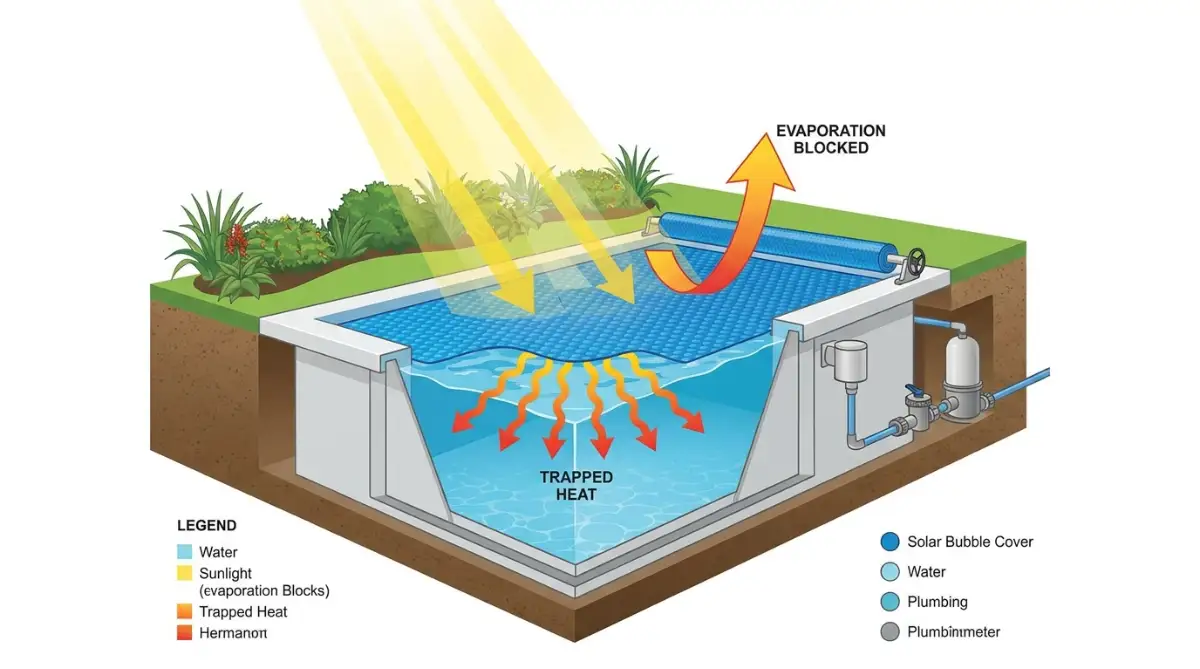
One of the absolute best ways to harness solar thermal energy is by using a high-quality solar pool blanket. These covers look like giant sheets of heavy-duty bubble wrap, but they are actually incredibly powerful heat-trapping tools. When you spread this cover across the surface of your water, it immediately goes to work doing two amazing things.
First, the hundreds of tiny air bubbles act like little magnifying glasses for the sun's rays. The sunlight passes through the clear plastic, entering the water and turning directly into thermal energy. Because the cover is sitting on the surface, it prevents the newly generated heat from bouncing back up into the sky.
Think about what happens when you park your car in the sun with the windows rolled up tightly. The inside of your car gets incredibly hot, even on a mildly warm day, because the glass lets the light in but blocks the heat from escaping. A solar blanket creates the exact same greenhouse effect for your pool water.
Pro Tip: When I bought my first solar cover, I mistakenly thought a dark black color would absorb more heat. I quickly realized that clear or light blue covers actually work much better because they allow the sun's rays to penetrate deeper into the water, rather than just heating the surface plastic.
The second major benefit of a solar blanket is how it completely stops evaporation dead in its tracks. By creating a physical barrier between your water and the open air, the wind can no longer steal your heat. I noticed a massive difference in my water temperature within just a few days of consistent use.
Does a Solar Blanket Actually Make a Difference?
Let’s look at a very simple breakdown of how this simple piece of plastic changes the game completely.
If you actively put the blanket on every single evening, and take it off right before you swim, your pool will naturally heat up over time. It requires zero electricity, makes no noise, and saves you money on water refills because you are no longer losing gallons to evaporation.
The Incredible Magic of Liquid Solar Covers
Sometimes, dealing with a giant physical plastic blanket is extremely annoying, especially if you have a uniquely shaped pool. Taking it on and off every day can feel like a heavy chore. If you want a zero-effort passive heating method, you need to look into liquid solar covers.
This might sound like science fiction, but it is a very real, safe, and highly effective product. A liquid solar cover is a non-toxic, biodegradable chemical compound—usually made from natural alcohols. When you pour a small amount into your pool, the liquid spreads out across the entire surface of the water, creating an invisible, microscopic barrier one molecule thick.
This invisible blanket rests perfectly on top of the water because it is lighter than H2O. It works exactly like a physical blanket by drastically reducing the rate of evaporation. When the wind blows, this microscopic shield keeps the water molecules trapped below the surface, which forces the heat to stay inside your pool.
You cannot see it, you cannot smell it, and you certainly cannot feel it when you are swimming. The liquid simply breaks apart when you splash around, and then naturally reforms itself into a solid invisible shield when the water goes calm.
Watch exactly how liquid solar covers create this invisible barrier and hold the heat inside your pool below!
This method is brilliant for people who want to passively keep their pool warm without doing heavy lifting. While it may not heat the water quite as aggressively as a physical bubble cover, it does a fantastic job of holding onto the heat that the sun naturally provides during the day.
Harnessing Black Hoses for Free Solar Pumping
Expert Pro-Comparison:
| Method | Heating Speed | Cost | Maintenance |
| :--- | :--- | :--- | :--- |
| Solar Blanket | Fast | Low | High |
| Liquid Cover | Moderate | Very Low | Zero |
| DIY Hose/Mat | Slow | Moderate | Low |
If you want to get a little bit more creative with your solar thermal energy, you can build a very simple DIY heating system. Black materials naturally absorb heat incredibly well, pulling the sun’s energy directly into themselves. We can use this basic scientific principle to slowly and continuously warm our pool water.
You can buy a long, heavy-duty black garden hose or a specialized black solar mat. You coil this dark material up in a spot in your yard that gets aggressive, direct, and continuous sunlight. If you have a small, low-power water pump, you can circulate the pool water straight through this hot black tubing.
As the cold pool water slowly travels through the sun-baked black hose, it absorbs the intense heat trapped inside the plastic. By the time the water comes out the other end and splashes back into your pool, it is significantly warmer.
Even without an electric pump, you can use the natural pressure from your existing pool return jets to push water through a solar mat. These mats are completely passive, sitting quietly on your grass or roof, collecting the sun's rays all day long.
When you combine a simple black hose collector with a good solar pool cover, you create a powerhouse of natural heating. The dark tubing adds fresh, warm water during the sunny hours, and the physical blanket locks that warmth securely inside when the sun goes down.
Myth vs Reality: Passive Pool Heating
When I first started looking into zero-electricity heating, people told me a lot of confusing things. I want to clear up a few major misconceptions right now.
Myth: Passive solar heating will make your pool feel like a hot tub.
Reality: Solar energy is incredible, but it has limits. A good passive setup will raise your water temperature by 10 to 15 degrees comfortably. It takes away the freezing shock and makes the water relaxing, but it will not boil the water like an electric spa heater.
Myth: You only need to use the solar cover on sunny days.
Reality: The most important time to use your solar blanket is actually at night. Even on a cloudy day, leaving the cover on protects your pool from heavy winds and prevents evaporation.
Myth: Solar mats require bright, scorching summer days to work.
Reality: As long as there is UV light hitting the black material, it will generate some level of thermal energy. While direct sunlight is best, even mild spring days can slowly transfer usable warmth into your water.
The Power of Strategic Landscaping to Stop Wind
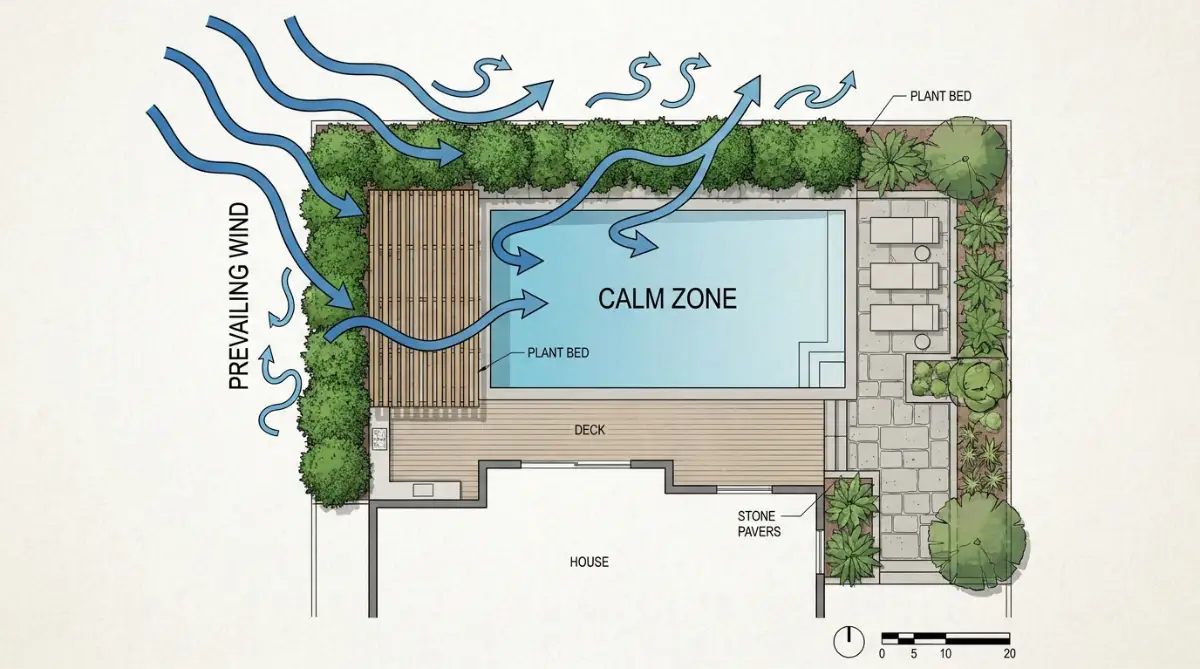
I mentioned earlier that wind is the absolute biggest enemy of a warm swimming pool. Every breeze acts like an invisible thief, stealing your hard-earned solar heat right off the surface of the water. If you want to naturally warm your pool without spending money on electricity, you must control the wind in your backyard.
You can use natural elements to build a protective shield around your swimming area. Planting dense, thick shrubs or tall evergreen trees on the side of your yard where the wind usually comes from creates a powerful windbreak.
When a strong breeze rolls through your property, it hits the bushes and slows down dramatically before it ever reaches your pool. Less wind hitting the water means less evaporation, which directly results in much warmer water.
If planting trees is not an immediate option, installing a solid wooden fence or decorative privacy screens around the pool deck works beautifully. The goal is simply to make sure the air sitting directly above your pool water stays as still and calm as possible.
I actually built a small slatted privacy wall near my pool’s shallow end. Not only did it look fantastic and modern, but it immediately stopped the aggressive afternoon crossbreeze that was constantly chilling my water. Simple, smart backyard design plays a massive role in passive solar retention.
By combining these highly effective, zero-electricity strategies, you completely take control of your backyard environment. You stop fighting against nature and start letting the sun do all the heavy lifting for you. You no longer have to stare at a beautiful but freezing pool, wishing you could afford to heat it.
Instead, you can finally invite your friends over, watch your kids splash around for hours without shivering, and genuinely enjoy the investment you worked so hard to build. All it takes is a little bit of smart planning and a solid understanding of how solar thermal energy naturally behaves in the wild.
Maximizing Your Free Heating System Like A Pro
Once you understand the basic science of trapping the sun's energy, you can start tweaking your setup for even better results. I want to share a few pro-level secrets that completely changed how I manage my backyard oasis. These are simple, daily habits that require almost zero physical effort but deliver massive temperature gains.
First, you need to pay close attention to your pool's water chemistry and overall clarity. Most people do not realize that cloudy water actually reflects sunlight away from your pool. If your water is perfectly balanced and crystal clear, the sun's UV rays can easily penetrate all the way to the bottom.
The clear water acts as a magnifying glass, allowing the floor of your swimming area to absorb heat and slowly release it back upward. If your water is murky, the heat bounces right off the surface and back into the sky. Keeping your filter clean and your water perfectly balanced is the foundation of free temperature control.
Another amazing secret is adjusting how your water naturally circulates during the day. If you look at the walls of your pool, you will see small return jets where the filtered water shoots back in. By default, most builders point these jets straight down toward the floor to push dirt toward the main drain.
However, if you point just one or two of these jets slightly upward, you create a gentle ripple effect across the surface. This continuous movement helps mix the extremely hot top layer of water with the freezing cold water resting at the bottom. Proper mixing ensures your entire swimming area feels comfortable, rather than just having a warm top layer and freezing toes.
If you want to take your efficiency to the next level, you need to treat your solar cover like a delicate tool. I highly recommend learning how to read the energy department guidelines on pool efficiency to understand exactly how much money a well-maintained blanket saves. You must keep the top of the plastic completely free of dry leaves, dirt, and heavy dust.
When debris piles up on top of your blanket, it creates dark shadows that physically block the sun from entering the water below. I make it a habit to quickly sweep my cover with a soft pool brush every few days. This simple routine guarantees that every single square inch of my blanket is aggressively capturing free thermal energy.
I also noticed that managing my outdoor time became much easier when I started treating my pool care like a scheduled daily habit. Just like automating simple daily routines can reduce stress in your house, setting a specific time to unroll your blanket removes all the frustration.
We always roll the cover off right before our afternoon swim, and we pull it back over the water immediately after everyone gets out. We never leave the water exposed to the cool evening air for longer than necessary.
Finally, if you are using black hoses or DIY solar mats on your lawn, you need to think strategically about placement. You want to place these dark materials on concrete or stone surfaces rather than soft grass. Concrete naturally absorbs and holds its own intense heat during the afternoon.
When you lay your black solar mats on top of a hot concrete patio, they absorb energy from the direct sun above and soak up the residual heat from the ground below. It is basically a double-heating effect that costs absolutely nothing extra. You are simply maximizing direct solar power by using the natural environment to your advantage.
The Hidden Traps Destroying Your Hard-Earned Warmth
Even with the best intentions, it is incredibly easy to make simple mistakes that completely ruin your water temperature. I know this because I made almost every single one of these errors during my first year. The worst feeling in the world is waiting three sunny days for your water to warm up, only to lose all that beautiful heat in a single night.
The most common trap I see people fall into is getting lazy on windy afternoons. Sometimes, you might look outside, see bright sunshine, and decide to leave the solar blanket off just because the yard looks prettier without it. If there is a strong breeze blowing across that open water, you are actively destroying your temperature.
I have watched my own thermometer drop five degrees in a matter of hours just because I left the water exposed to a dry, windy afternoon. Wind is aggressive, and it will steal your heat much faster than the sun can replace it. If you are not actively swimming in the water, that cover needs to be securely in place.
Another terribly painful mistake is how people store their plastic bubble covers when they are not in use. When you pull the blanket off the water, you might be tempted to leave it bundled up in a tight pile on your sunny pool deck. This is a massive, expensive disaster waiting to happen.
These covers are designed to amplify the sun’s rays to extreme levels. If you leave the plastic rolled up tightly in direct sunlight, the layers will actually magnify the heat onto themselves. I completely melted my very first solar blanket because I left it sitting on a hot concrete patio for an entire weekend.
The plastic bubbles fused together, destroying the entire sheet and forcing me to buy a brand new one. You must always pull your cover into a shaded area, or throw a protective white sheet over the storage reel when it is not in the water. Taking care of your equipment is just as important as pairing heavy home usage with peak solar hours when managing your overall household efficiency.
People also make a huge error by expecting overnight miracles from passive setups. When you do not use electric gas heaters, you are relying completely on nature's timeline. You cannot throw a solar cover on a freezing pool on Saturday morning and expect it to feel like a tropical resort by Saturday afternoon.
Passive heating is a slow, steady, and continuous marathon. It usually takes three to five solid days of consistent cover usage and bright sunlight to notice a massive difference. If you get impatient and abandon the routine after just two days, you will never get to experience the incredible results.
Lastly, please do not ignore basic water safety recommendations when using these heavy physical barriers. A floating blanket can be very dangerous if small children or pets try to walk on it. You must ensure the yard is properly fenced and secured whenever the cover is deployed.
You should also never swim in a pool that is only partially uncovered. It is incredibly easy to get trapped underneath the thick plastic if you swim beneath it. Always remove the blanket completely, 100 percent, before letting anyone step foot on the pool stairs.
Your Blueprint for a Cozy, Zero-Electricity Swimming Oasis
Creating a perfectly comfortable backyard swimming experience does not require draining your bank account or installing massive machinery. By simply working alongside nature, you can completely transform how your family enjoys the summer months. You are no longer at the mercy of freezing overnight temperatures or aggressive afternoon winds.
Start your journey by choosing the right physical or liquid barrier to immediately stop evaporation from stealing your heat. Make a strong commitment to keeping that protective layer on the water every single night, without fail. Use the natural, invisible power of the greenhouse effect to trap warmth deep within your swimming area.
If you want a heavier boost of heat, get creative with dark-colored hoses or inexpensive flat mats resting in the sunniest corners of your yard. Combine these simple scientific principles with a clean, well-circulated filter system to maximize every single ray of sunlight. Remember to keep your equipment protected from melting when stored, and always prioritize family safety above everything else.
You have already invested so much time, energy, and money into building this beautiful backyard feature. It is time to actually use it, enjoy it, and make those wonderful weekend memories with your loved ones. The sun is offering you free, unlimited thermal energy every single morning, and all you have to do is confidently catch it.
I genuinely hope my personal struggles and eventual successes help you turn your freezing pool into a perfectly warm, inviting oasis. Just remember to stay consistent with your cover, trust the natural process, and get ready to enjoy the most relaxing swimming season of your life!
Real Questions About Passive Pool Warming
How long does it actually take for the water to warm up?
If you are using a high-quality bubble blanket and get consistent direct sunlight, you will usually notice a solid difference in about three to five days. The water temperature will slowly creep up by roughly two to three degrees each day, depending on how cold the nights get.
Do black garbage bags work as a cheap alternative?
While laying black trash bags on the water surface does attract some heat, it is a very messy and frustrating hassle. They blow away easily in the wind, look terrible in your yard, and do not trap heat effectively overnight. It is much better to invest in a proper, durable solar ring or liquid barrier.
Can I leave my solar blanket on during a heavy rainstorm?
Yes, it is completely fine to leave the physical cover on during bad weather. In fact, keeping it on prevents cold rainwater from directly mixing deeply into your warm pool water. Once the storm passes, you can simply pump or sweep the excess puddles off the top of the plastic.
Is liquid solar cover safe for my dogs to swim in?
Absolutely! Liquid covers are completely non-toxic, biodegradable, and scientifically designed to be 100 percent safe for both pets and humans. You will never taste, see, or feel the microscopic barrier while you are swimming around with your furry friends.
Why is my water still cold even with the cover on?
If you are using a cover but your water feels freezing, you are likely dealing with extreme overnight temperature drops or heavy shade during the day. Ensure you are getting at least six hours of direct sunlight, and check research on thermal dynamics in stagnant water to understand how deep-water shading affects overall heat retention.
Disclaimer: The information provided in this article is for educational and informational purposes only and is based on personal experience. Always prioritize local safety guidelines and consult with a professional before modifying your pool's circulation system or installing DIY setups. The author and publisher are not responsible for any damage, injury, or loss resulting from the application of these methods.