The Shocking Truth I Learned in the Dark
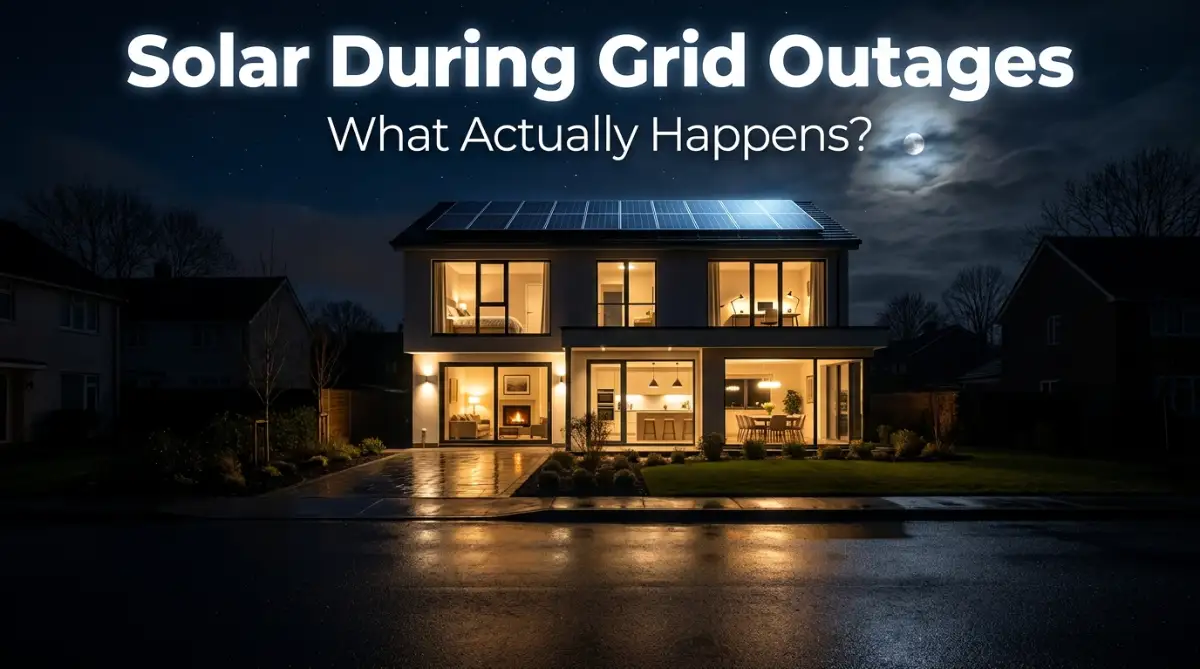
Picture this: the neighborhood goes pitch black, but you aren't sweating it. You’ve got a roof full of expensive solar panels, so you expect to be the only house on the block watching TV and drinking cold water. But instead? Your screens go dark, your fridge shuts off, and your house goes dead silent. You check your inverter, expecting a magic reset button, but nothing happens. If you are wondering why your massive solar investment just abandoned you in the dark, you are not alone. Let’s figure out why this happens and how to actually keep your lights on.
I grabbed my flashlight and ran out to the garage to check my expensive inverter, expecting to just flip a magic switch and bring the power back. Nothing happened. My roof was covered in panels soaking up the afternoon sun, yet my house was completely dead. I had to learn the hard way that just because you generate your own electricity does not mean you get to use it during a blackout.
This is a painful reality that thousands of homeowners face every single time severe weather strikes their area. You spend all this money trying to secure your family's comfort, only to realize you missed one massive piece of the puzzle. The mental stress of watching the food spoil in your refrigerator is incredibly frustrating. You worry about your kids sweating in the summer heat or freezing during winter storms, despite having a personal power plant right above your head.
The peace of mind you thought you purchased simply vanishes the moment the utility company's grid fails. People depend on medical devices, oxygen machines, and well-water pumps to survive daily life. When your expensive rooftop setup just goes to sleep during an emergency, it completely shatters your sense of security.
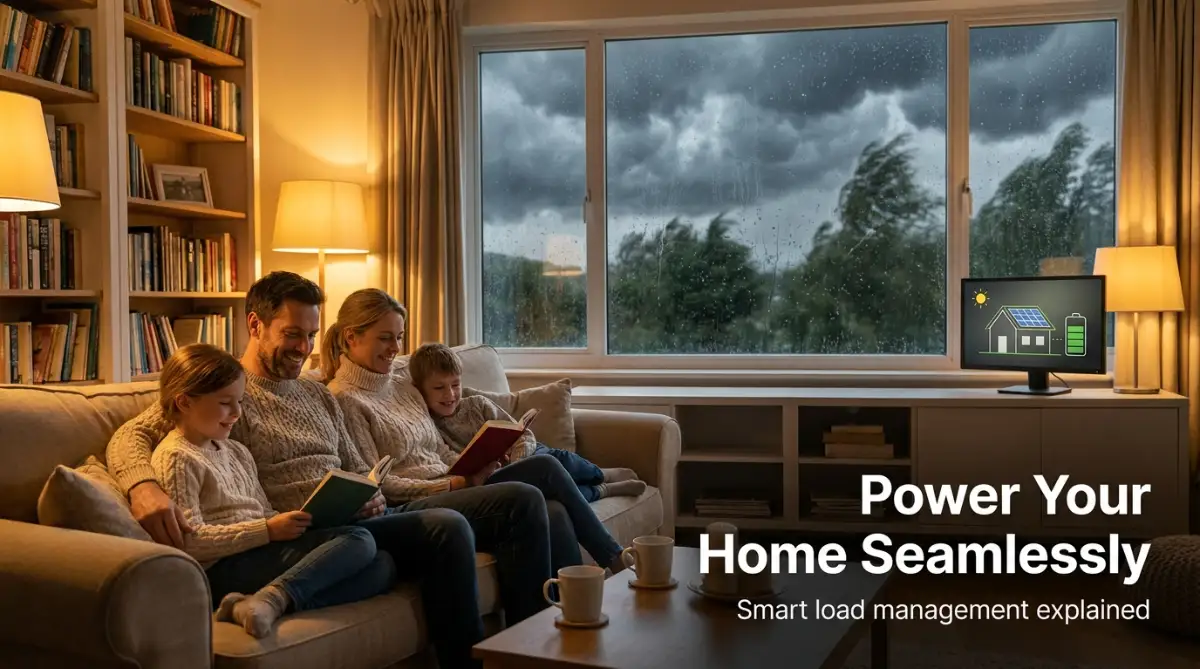
⚡ The 30-Second Survival Guide (Key Takeaways):
- Standard grid-tied solar panels automatically shut down during blackouts to protect utility workers fixing the lines.
- You cannot just plug appliances directly into solar panels; you need a battery and an Automatic Transfer Switch (ATS).
- Don't try to power everything. Move only your essentials (fridge, internet, basic lights) to a dedicated backup breaker panel.
- Pre-cool your house and lower your fridge temperature hours before a storm hits to save massive amounts of battery power later.
Why Your Rooftop Power Plant Goes to Sleep
When you first install solar panels, you automatically assume you are becoming totally independent from the utility company. The truth is actually a lot more complicated and heavily regulated by safety laws. The vast majority of modern residential solar setups are what we call "grid-tied" systems.
This simply means your house acts like a two-way street for electricity. When your panels make more energy than your house needs, that extra power flows backward into the neighborhood wires. Your utility company gives you credits for this extra energy, which helps lower your monthly bill.
But this two-way street becomes extremely dangerous the second a severe storm takes down the power poles. Think about the utility workers who have to climb up those poles to fix the broken wires in your neighborhood. If your house is still pumping live electricity out to the street, those workers could get seriously injured or worse.
Because of this safety risk, federal regulations require your system to have a built-in safety feature. This feature is called "anti-islanding protection." It acts like an automatic emergency brake for your home's power system.
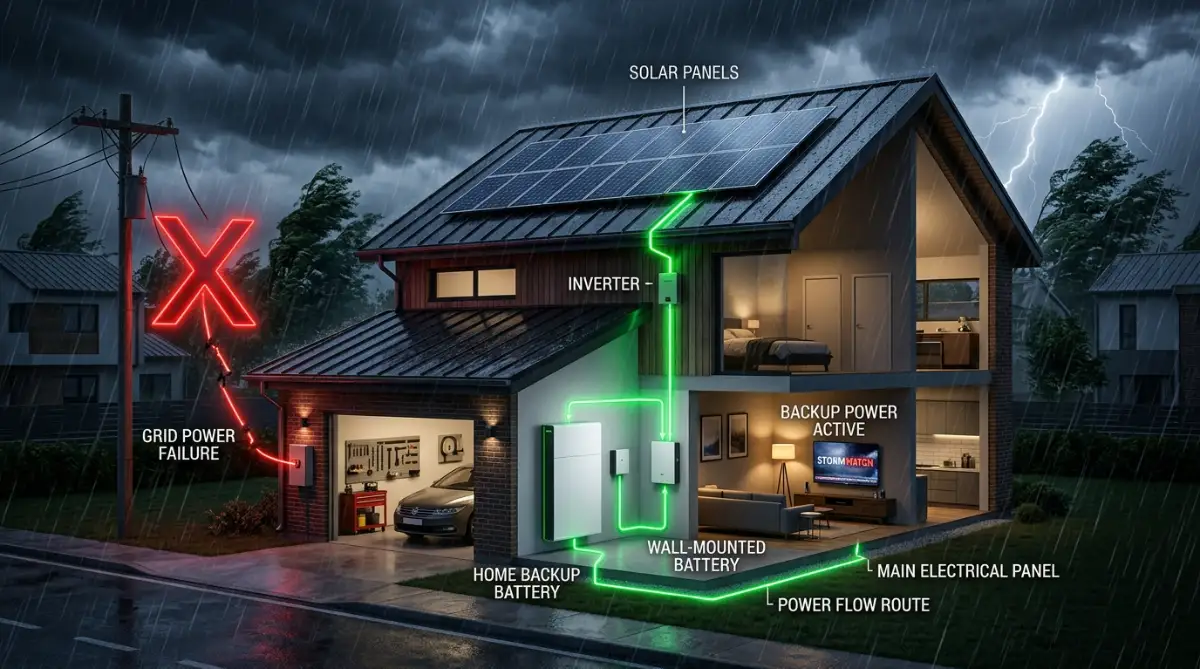
Quick Cheat Sheet: Which Solar Setup Do You Have?
| System Type | Works During a Blackout? | Cost Level | What it Actually Does |
| :--- | :--- | :--- | :--- |
| Grid-Tied (Standard) | ❌ No | Low | Sends extra power to the street. Shuts off if the grid dies. |
| Hybrid (Grid + Battery) | ✅ Yes | Medium-High | Disconnects from the street and uses battery reserves to power your home. |
| Fully Off-Grid | ✅ Yes | Very High | 100% independent. You make and store everything you use, no utility bills. |
Watch this quick visual breakdown to understand the exact moment your solar system disconnects to protect utility workers.
The second your inverter senses that the neighborhood grid has dropped, it completely shuts down your entire rooftop system. It happens in a fraction of a second, so fast you will not even notice it. Your panels might be getting hit by direct, blinding sunlight, but they will not produce a single drop of usable energy for your home.
The Real Cost of Being Unprepared
By day two, the temperature inside your refrigerator has risen to dangerous levels, meaning hundreds of dollars of groceries are ruined. The house gets uncomfortably hot or freezing cold, and everyone starts losing their patience. If you work from home, your internet router is dead, completely cutting you off from your job and your income.
Many people think they can just run out to the local hardware store and buy a cheap gas generator at the last minute. Unfortunately, during a major regional blackout, those generators sell out within the first two hours. Even if you manage to find one, you now have to deal with storing dangerous gasoline, endless noise, and toxic exhaust fumes near your windows.
The Hybrid Solution Explained
So, how do we actually solve this problem and keep the lights on when the neighborhood goes dark? The answer lies in upgrading from a standard grid-tied setup to a "hybrid" solar system. A hybrid system essentially puts a smart traffic cop between your house, your panels, and the street.
When the grid fails, this smart system physically disconnects your house from the utility lines using an Automatic Transfer Switch (ATS). Once your home is safely isolated from the neighborhood wires, your panels are allowed to wake back up. Your house becomes its own private energy island, completely independent of the outside world.
But there is a catch: solar panels only produce power when the sun is shining directly on them. Every time a thick cloud passes by, your power generation drops dramatically. If you try to run your microwave right as a cloud blocks the sun, the whole system will crash because it lacks consistent energy.
This is exactly why you need a home battery bank to act as a massive shock absorber for your electrical panel. The battery stores the excess power your panels make during the brightest parts of the day. When you turn on a heavy appliance, the battery instantly provides the extra juice needed to keep everything running smoothly.
Pro Tip from my own mistake: I once assumed my expensive new battery could easily start my central air conditioning unit during a heatwave. The system tripped instantly because I completely ignored the massive "surge watts" required to start the AC motor, so always install a "soft start" device on heavy appliances.
Myth vs. Reality in Emergency Power
There are so many rumors floating around neighborhood Facebook groups about how to handle home energy during a blackout. Let us clear up some of the most common misunderstandings right now.
Myth 1: You can just plug your appliances directly into the solar panels on your roof.
Reality: Solar panels produce high-voltage Direct Current (DC) power, which is totally different from the Alternating Current (AC) your appliances use. If you tried to wire a panel straight to your fridge, you would instantly fry the motor and probably start a fire.
Myth 2: You need a battery the size of a minivan to run your whole house.
Reality: Modern lithium iron phosphate batteries are incredibly dense and often take up less space than a small bookshelf on your garage wall. You do not need to power the entire house either; you just need to power the essential things.
Smart Load Management for Beginners
If you want to survive a severe grid outage comfortably, you need to understand the concept of an "essential load panel." This is a smaller, secondary breaker box that sits next to your main electrical panel. You only move the most important circuits into this special box.
Think about what actually matters when the world outside is shut down. You need your refrigerator, a few lights, the internet router, and a few outlets to charge phones. You definitely do not need power going to the pool heater, the electric oven, or the guest room television.
By physically separating these heavy power drainers from your backup system, you ensure your battery lasts significantly longer. A single 10kWh battery might only run a whole house for three hours if the air conditioner is blasting. But if you restrict that same battery to just the fridge and the internet, it can easily last through the entire night until the sun comes up again.
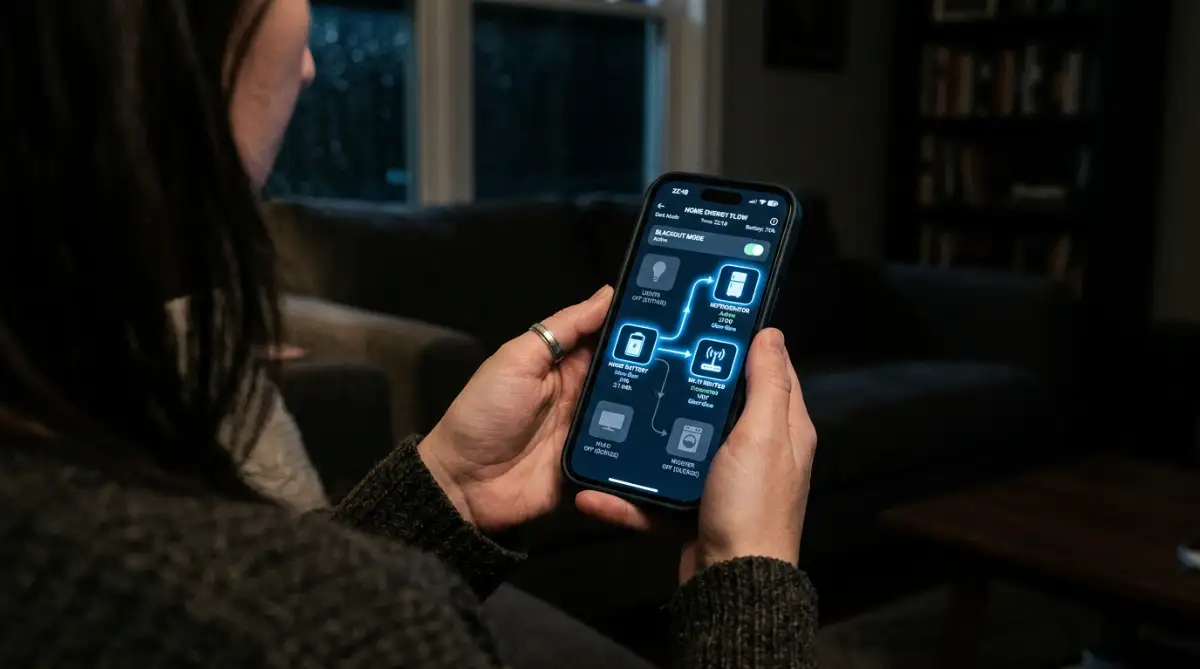
Newer technology is making this process even easier for regular homeowners. Companies are now selling "smart panels" that let you control every single breaker in your house directly from an app on your phone. If a storm hits, you can sit on your couch and instantly turn off the heavy appliances with a simple tap on your screen.
This level of control totally changes how you experience a natural disaster. Instead of panicking in the dark, you become the master of your own energy supply. You can watch your panels charge the battery during the day, and then perfectly ration that power to last through the dark night.
The Financial Side of Blackout Protection
Adding backup power capabilities to your home is absolutely a premium upgrade, and it is important to be honest about the costs. A standard grid-tied system is the cheapest option because it relies entirely on the utility company for stability. When you add hybrid inverters, transfer switches, and heavy batteries, the price tag jumps up quickly.
However, you have to weigh this upfront cost against the hidden expenses of being vulnerable to blackouts. Think about a family that loses a refrigerator full of expensive organic groceries three times a year due to rolling blackouts. Over five years, that spoiled food alone could equal the cost of a small backup battery system.
If you run a home business or work remotely, a three-day power outage means three days of lost wages and angry clients. The financial damage of missing important deadlines can be severe. In these cases, investing in energy security is not just a luxury; it is a direct protection plan for your livelihood.
Furthermore, having a robust battery system allows you to play the utility company's pricing games to your advantage. Many power companies charge you drastically higher rates during the late afternoon and evening when everyone gets home from work. With a smart battery, you can program your house to run completely on stored solar power during these expensive hours.
You avoid paying their peak rates, which dramatically lowers your monthly bill all year round. This daily savings gradually pays off the cost of the battery, making the emergency blackout protection feel like a free bonus feature.
Understanding Battery Chemistries
When you decide to secure your home against outages, you will start hearing a lot of scientific terms about battery chemistry. Do not let the terminology intimidate you; it all boils down to two main choices for home energy storage.
The older standard is Lithium Nickel Manganese Cobalt (NMC). These batteries pack a massive amount of energy into a very small, lightweight box. They are great if you have very limited wall space in your garage, but they can be slightly more sensitive to extreme heat.
The newer, increasingly popular option is Lithium Iron Phosphate (LFP or LiFePO4). These units are physically heavier and slightly bulkier, but they offer incredible advantages for home backup. They do not contain cobalt, they have an incredibly long lifespan, and they are essentially fireproof even if they get damaged.
If you are planning to cycle your battery every single day to save money on peak rates, the LFP chemistry is usually the better long-term investment. They can handle thousands of charge cycles with very little degradation in their performance over a ten-year span.
Battery Cost vs. Lifespan Snapshot:
- NMC Batteries: Usually cost around $6,000 to $8,000. They save space but wear out a bit faster (around 3,000 to 4,000 charge cycles).
- LFP (LiFePO4) Batteries: A bit pricier upfront, often $7,500 to $10,000+. But they easily hit 6,000 to 10,000 charge cycles. If you use it every single day, LFP wins the math test hands down.
What If You Live in an Apartment?
Not everyone owns a single-family home with a massive roof for dozens of panels. If you rent an apartment or live in a strict homeowners association, a permanent hybrid system might be impossible. However, you are not entirely out of luck when the grid fails.
Portable power stations have evolved dramatically over the last few years. These are essentially massive, silent battery packs that you can roll into a closet until an emergency happens. Many of them now accept input from portable, folding solar panels that you can set up on a sunny balcony.
You can run an extension cord from these portable units directly to your refrigerator or medical equipment. They do not require permits, complex wiring, or permission from your landlord. While they will not power your whole apartment seamlessly, they will absolutely keep your essential items running and your phones charged.
Final Preparations for the Next Big Storm
The most important step you can take right now is to figure out exactly what kind of equipment is currently hanging on your wall. Go out to your garage or side yard and read the labels on your inverter. If it says "Grid-Tied String Inverter" without any external battery boxes, you are highly vulnerable to the next neighborhood blackout.
If you are currently getting quotes for a new system, absolutely insist that the installer prices out a battery backup option. Even if you cannot afford the battery right now, ask them to install a "battery-ready" hybrid inverter. This simple choice saves you thousands of dollars in rewiring costs if you decide to add storage a few years down the road.
Do not wait until the weather forecast predicts a massive hurricane or a severe winter freeze to start thinking about this. The supply chains for solar batteries always dry up immediately when natural disasters hit the news. The best time to build your home energy fortress is when the skies are clear and the grid is perfectly stable.
You deserve the ultimate peace of mind that comes from knowing your family is safe and comfortable, no matter what happens to the aging utility grid. Take control of your own energy production today, and you will never have to fear the dark again.
Master-Level Strategies for Uninterrupted Power
Once you understand the basic mechanics of home energy storage, you can start managing your system like a true professional. Most homeowners just let their equipment run on the factory default settings, which is a massive missed opportunity. If you want to survive a multi-day blackout without breaking a sweat, you need to become proactive about your energy management.
One of the smartest tricks you can use is treating your actual house as a giant thermal battery. If the weather forecast predicts a massive storm hitting your area tomorrow evening, you should start preparing your home's temperature today. While the neighborhood utility grid is still functioning normally, crank your air conditioning down to turn your house into an absolute icebox.
By aggressively pre-cooling your home using street electricity, you lock cold air into your walls, furniture, and floors. When the storm finally hits and the power lines drop, your house will naturally stay comfortably cool for many hours. You will not have to waste your precious solar battery power trying to run a heavy air conditioning compressor.
This same logic applies to your water heater and your refrigerator. Turn your fridge to its coldest possible setting a day before the bad weather arrives. This simple habit keeps your food frozen much longer, saving your solar storage for running medical equipment or keeping your internet router alive.
Mastering the Art of Load Shedding
Surviving off the grid during an emergency is all about understanding energy rationing. Think of your solar battery like a bucket of water; if you poke too many holes in it, the bucket empties instantly. You have to aggressively identify and eliminate "phantom loads" around your house the moment the street goes dark.
Phantom loads are devices that secretly consume electricity even when they appear to be turned off. Your living room television, your desktop computer, and your microwave clock are all quietly stealing energy right now. To give you a clear analogy, this is very similar to how silent background processes drain your OS resources on a computer without you ever noticing.
You should walk around your home and physically unplug these devices from the wall sockets during an outage. Unplugging them guarantees they cannot steal a single drop of power from your backup reserves. Every tiny bit of electricity you save during the night means you will have more power for making morning coffee.
Adjusting Your Battery Reserve Settings
Almost every modern solar app allows you to change how your battery behaves on a daily basis. Many people use their battery to save money by running their home on stored power during expensive evening hours. This daily cycle might drain your battery down to just ten or twenty percent capacity by bedtime.
This daily cycling is great for your utility bill, but it becomes a massive liability if a storm hits while you sleep. If a tree falls on the power lines at two in the morning, you will wake up with an almost empty backup tank. You will sit in the dark waiting for the sun to rise, hoping the clouds clear up enough to recharge your system.
When you hear a severe weather warning on the local news, open your phone app immediately and change your settings. Look for a toggle called "Storm Watch" or manually push your battery reserve setting up to one hundred percent. According to the official guidelines for residential solar storage published by the Department of Energy, keeping a full charge before a weather event is your strongest line of defense against prolonged blackouts.
The Importance of Physical Maintenance
Software tricks are incredibly helpful, but they cannot fix physical blockages on your roof. When an emergency strikes, you need your panels to collect every single ray of available sunlight to fill your battery back up. You cannot afford to lose thirty percent of your power generation just because a layer of dirt is blocking the glass.
If you want to successfully disconnect from the grid for several days, your hardware must be in perfect working condition. Make it a habit to wash your panels with a gentle hose spray twice a year to remove dust, bird droppings, and sticky tree sap. Just be incredibly careful not to spray ice-cold water on baking hot glass, because the sudden temperature shift can easily crack the panels.
You also need to think about exactly what you must do to your roof before installing solar tech, and how that impacts emergency repairs. If a falling branch damages your shingles during a storm, the panels might make it difficult for roofers to stop a leak quickly. Keeping your surrounding trees properly trimmed is just as important as managing your electrical breakers.
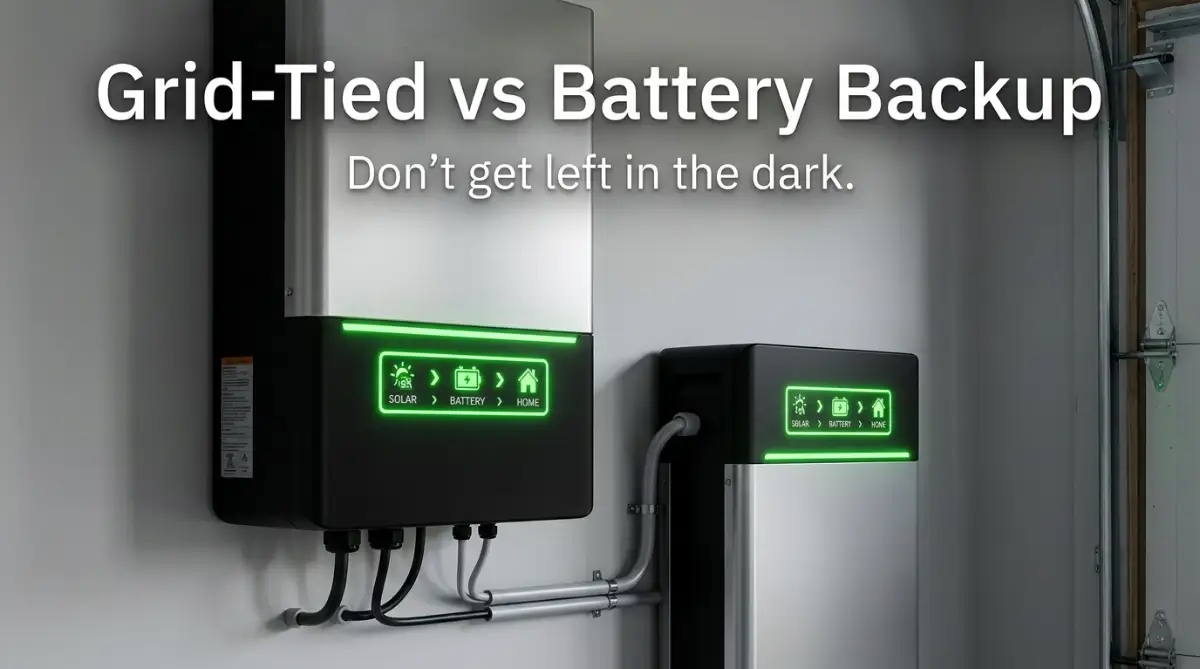
The Painful Errors That Leave Homeowners in the Dark
Even with the best technology mounted on their garage walls, people still make devastating errors during high-stress situations. I have watched neighbors throw away thousands of dollars in spoiled food simply because they misunderstood how their equipment actually works. When the lights flicker and die, panic often replaces basic common sense, leading to some very costly mistakes.
The single biggest error is assuming your rooftop panels can instantly replace the massive neighborhood utility plant. People experience a blackout and immediately try to continue living their life exactly as they normally would. They leave all the bedroom lights on, run the dishwasher, and try to wash clothes at the exact same time.
This aggressive power draw acts like a massive shock to your home inverter, forcing it to work beyond its physical limits. Your battery simply cannot push out enough electrical current to start all those heavy appliance motors simultaneously. The safety sensors inside your inverter will instantly trip, shutting down your entire private energy island to prevent an electrical fire.
When your system trips from an overload, getting it to wake back up in the dark is incredibly frustrating. You will find yourself stumbling around with a flashlight, desperately flipping breakers in your garage while your family complains about the heat. You can completely avoid this nightmare by agreeing to a strict "energy diet" the moment the neighborhood loses power.
Ignoring the Reality of Winter Weather
Summer thunderstorms are rough, but winter ice storms introduce an entirely different layer of danger for solar owners. People often forget that cold weather naturally reduces the efficiency of lithium batteries if they are installed outside. More importantly, winter storms dump thick layers of snow directly onto your primary energy source.
I once spoke to a homeowner who had an incredible, oversized battery bank that kept his family perfectly warm during the first night of a massive blizzard. He woke up the next morning feeling totally victorious, expecting his panels to recharge his empty batteries automatically. Instead, he realized his roof was buried under six inches of heavy, wet snow, completely blocking out the sun.
He had zero power generation, empty batteries, and no way to safely climb his slippery roof to clear the panels. The impact of snow on solar panel efficiency is a massive blind spot for new buyers, as noted by the National Renewable Energy Laboratory. If you live in a snowy climate, you absolutely must invest in a soft roof rake with a long extension pole.
You need to carefully pull that snow off your panels from the safety of the ground before the sun comes out. If you let the snow freeze into a solid block of ice, you will be stuck without power until the weather naturally warms up. Anticipating these environmental hurdles separates the prepared homeowners from the victims.
Relying Too Heavily on Wi-Fi Dependency
Modern smart panels and battery apps are absolute game-changers for managing your home energy comfortably from your couch. You can monitor exactly how many watts your refrigerator is pulling while you sip your morning coffee. However, this heavy reliance on cloud-based smartphone applications creates a massive vulnerability during regional disasters.
When a hurricane or major earthquake strikes, the local internet service provider usually goes offline alongside the power grid. If your entire strategy relies on opening a smartphone app to switch your battery modes, you might be totally locked out of your own system. The app will simply spin in endless circles trying to connect to a dead server.
This is why you must physically familiarize yourself with the manual override switches located directly on your hardware. You need to know exactly how to walk out to your garage and safely force the system into backup mode using the physical buttons. Take five minutes this weekend to read the emergency operation manual so you are not guessing in the dark.
Do not wait for a chaotic emergency to test your offline capabilities. You should intentionally turn off your home router for an hour and practice managing your power flows without the internet. Knowing how to manually intervene builds incredible confidence and removes the fear of technology failing you.
Your Blueprint for Absolute Energy Security
Securing your family’s comfort against an unpredictable utility grid is completely within your control if you take the right steps today. You do not have to sit around feeling helpless the next time the weather starts turning aggressive in your neighborhood. By blending smart technology with proactive habits, you can create a personalized energy fortress that never fails.
You now understand exactly why standard panels shut down during an emergency, and you know how to solve it with a smart hybrid setup. You have the knowledge to manage your heavy appliance loads, track your battery reserves, and avoid the common traps that ruin other people's backup plans. Taking action on this information elevates your home from a standard living space to a fully self-reliant shelter.
Start by auditing your current electrical panel to identify your true essential loads. Request specific quotes from local installers for battery-ready hybrid systems, and explicitly ask about their anti-islanding safety features. Do not be afraid to ask tough questions about winter performance and manual offline controls during your consultations.
My journey into home energy independence started with a ruined refrigerator full of food and a very sweaty, uncomfortable summer night. Today, I actually look forward to grid outages because I get to watch my customized system flawlessly protect my home and my family. You deserve that exact same peace of mind, so take the first step toward true power independence right now.
Straight Answers About Solar Outages
Can solar panels power a house directly without a battery?
No, standard residential solar panels cannot safely power your house directly without a battery or specialized inverter. The electricity they produce constantly fluctuates with the passing clouds and moving sun. A battery is required to absorb these rapid changes and provide a steady, smooth flow of energy to your sensitive home appliances.
Will my solar system turn back on automatically after an outage?
Yes, if you have a standard grid-tied system, it will automatically wake up and start producing power shortly after the neighborhood utility lines are repaired. The inverter constantly monitors the street wires for stability. Once it senses safe, consistent electricity from the grid for a few minutes, it reconnects your house effortlessly.
How long will a standard backup battery last during a blackout?
A typical home battery will easily last through the night if you only power essential items like your internet router, a few lights, and the refrigerator. However, if you try to run your central heating or oven, that same battery might drain completely in less than two hours. Your total runtime is entirely determined by how strictly you manage your energy usage.
Do I still pay a utility bill if I have solar battery backup?
Yes, most homeowners still remain connected to the local utility grid and will receive a monthly bill for mandatory connection fees and taxes. However, by using your battery smartly during peak evening hours, you can drastically reduce the actual cost of the electricity you pull from the street. You might still get a bill, but it will be significantly smaller.
Disclaimer: The information provided in this article is for educational and informational purposes only and does not constitute professional electrical or financial advice. Installing, modifying, or maintaining solar panels and electrical systems carries significant safety risks, including the potential for severe injury, fire, or electrocution. Always consult with a licensed electrician or certified solar installer before making any changes to your home energy system. Furthermore, local building codes and utility regulations vary widely by region, so you must verify compliance with your local authorities before beginning any project.