The Night The Lights Went Out For Good
Nobody warns you about the quiet hum of a failing solar battery until it is too late. You spend thousands of dollars building a dream off-grid setup, only to wake up freezing in the dark because of a completely avoidable mistake. I learned the hard way that squeezing every last drop of power out of your system literally suffocates it from the inside out. Let me show you exactly why this happens and how you can stop killing your expensive power storage tonight.
The screen was completely blank, and my expensive battery bank was completely dead. For months, I had been running my appliances late into the night without a single worry. I assumed my massive solar setup could handle anything I threw at it.
I was terribly wrong, and that simple mistake cost me thousands of dollars. I had been repeatedly draining my power storage down to the absolute bottom line. I did not realize that I was literally suffocating the system from the inside out.
Instead, you end up constantly staring at a voltage meter, feeling extreme anxiety every time a cloud covers the sun. The constant worry about whether the refrigerator will stay cold overnight or if the fan will stop spinning in the summer heat completely destroys your mental peace. It feels like you are working for your home, rather than your home working for you.
When your power storage starts acting up, everyday tasks become highly stressful events. You start yelling at your family members for leaving a single LED light on. This hidden problem quietly steals away the maximum capacity of your system while you are completely unaware of the damage happening behind the scenes.
Actionable Takeaways Before You Read:
- Stop the Drop: Never let traditional lead-acid systems fall below 50% capacity, and keep lithium setups above 20% to prevent permanent chemical damage.
- Automate Your Limits: Program your inverter's Low Voltage Disconnect today so it acts as an automatic bodyguard while you sleep.
- Kill Phantom Loads: Put your television, internet routers, and microwave on a heavy-duty power strip and switch them off entirely at night.
- Use the Midday Sun: Shift heavy electrical chores like washing clothes or pumping water to noon when solar energy is completely free and abundant.
The Silent Trap Inside Your Power Storage System
Living completely disconnected from the grid is an amazing feeling until you realize how fragile power storage actually is. Many new homeowners think their power banks work exactly like the gas tank in a car. You fill up the gas tank, you drive until it hits empty, and then you just refill it again without any problems.
Batteries absolutely do not work this way. Treating your home power storage like a standard fuel tank is the fastest way to destroy it completely. Every single time you drain the stored energy too low, a tiny bit of the overall capacity dies forever.
This happens because of the heavy physical and chemical stress placed on the internal materials. If you keep repeating this aggressive draining cycle, the damage multiplies rapidly. A system meant to last a decade might easily become useless in less than twelve months.
I want to explain exactly how this happens so you can stop making the same expensive mistakes I made. Let us look at the real science behind this issue in a way that actually makes sense.
The Rubber Band Effect: An Easy Analogy
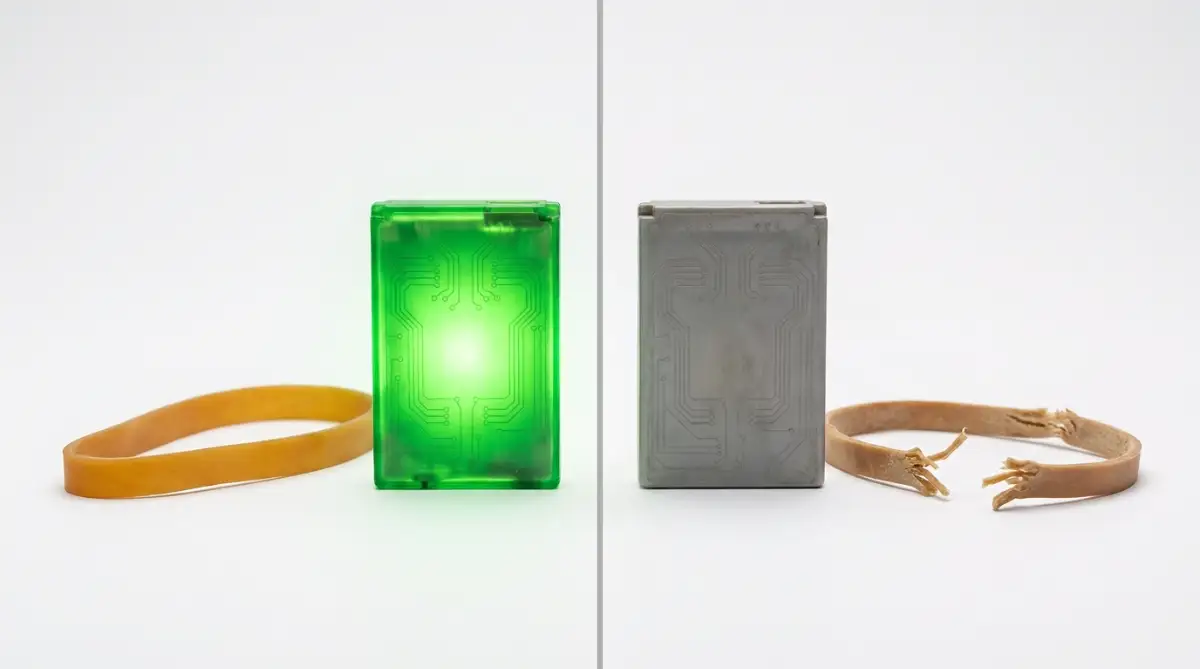
Think of your brand-new battery like a fresh, highly elastic rubber band. When you stretch it slightly and let it go, it instantly snaps back to its original shape and size. It feels strong, tight, and completely reliable.
Now, imagine taking that same rubber band and pulling it as hard as you possibly can, stretching it to its absolute limits. If you hold it there for a long time and do this every single day, the rubber band starts to lose its natural snap. It becomes loose, weak, and easily breakable.
This is exactly what happens when you push a deep discharge on your power storage. Pulling all the energy out stretches the internal chemistry beyond its comfort zone. Eventually, it cannot bounce back to hold a full charge anymore.
The Chemistry Behind The Capacity Loss
You do not need an advanced science degree to understand why your power bank is failing. It simply comes down to how the internal materials react when they are starved of energy. Let us break down the two most popular types of off-grid setups.
Lead-Acid Setups and the Sulfation Monster
If you use heavy, traditional lead-acid blocks, you are dealing with a chemical reaction involving lead plates and acid. When you pull energy out to run your television or lights, sulfate crystals start to form on the lead plates. This is a completely normal part of the process.
However, when you drain the energy too deeply and leave it sitting in that starved state, those soft crystals harden into thick, solid crusts. This hardening process is called sulfation. Once those crystals harden, they permanently block the plates from accepting a new charge.
No matter how much bright sunlight hits your solar panels the next morning, the hardened plates simply cannot absorb the energy. Your maximum capacity shrinks instantly. What used to be a large bucket of water becomes a tiny teacup.
Lithium Setups: Not as Invincible as You Think
Many people upgrade to modern lithium setups because they hear these units can handle deeper drains. While it is absolutely true that lithium is much stronger, it is not completely bulletproof. Pushing a lithium cell down to zero percent causes severe thermal and chemical stress.
Inside a lithium cell, tiny ions travel back and forth between two sides to create electricity. When you drain the cell entirely, you force almost all the ions to crowd onto one single side. This extreme overcrowding causes the physical structure of the cell to expand and degrade.
Over time, this intense structural stress creates microscopic cracks inside the cell materials. Once those materials crack, they can never hold energy again. Your expensive lithium bank will quietly lose its ability to keep your home running.
Quick Myth vs. Reality Check:
- The Myth: Lithium batteries are completely immune to deep discharge damage.
- The Reality: While they handle abuse much better than lead-acid, taking a lithium cell below 10% repeatedly causes irreversible structural micro-cracks. Think of it like bending a paperclip back and forth; eventually, it simply snaps. I highly advise programming your system to treat 20% as the absolute "zero" mark.
Watch The Signs: Is Your System Already Dying?
How do you actually know if your repeated deep discharging has already ruined your maximum capacity? Your home will usually give you a few very clear warning signs before the entire system completely shuts down. You just have to know what to look for on a daily basis.
The first major sign is the "fake full" illusion on your controller screen. You might notice that your battery monitor jumps to one hundred percent extremely fast when the sun comes up. While this might look like a great thing, it actually means your storage bucket has become extremely small.
Because the maximum capacity has shrunk, it takes very little solar energy to fill up the remaining healthy space. The second sign is a terrifyingly fast drop in power as soon as the sun goes down. If turning on your microwave at night causes your voltage meter to crash instantly, your storage health is already severely compromised.
My Personal Wake-Up Call (And Pro Tip)
I finally realized my own system was dying when I woke up freezing in the middle of the night because my heating fan stopped working. I had ignored the fast voltage drops for weeks, blaming the cold weather instead of my own bad habits.
Here is my personal Pro Tip for you: I strongly recommend keeping a simple physical notebook right next to your charge controller. Every single morning, write down the lowest voltage number you saw before the sun came up. If you see that morning number getting lower and lower each week while using the same amount of power, you need to change your habits immediately before the damage becomes permanent.
Understanding Your True Limits
To really protect your maximum capacity, you need to understand the concept of Depth of Discharge. This simply means the percentage of energy you take out compared to what the system can safely hold. Let us look at a simple breakdown to make things perfectly clear.
By strictly following these limits, you keep the internal chemistry happy and stable. Pushing past these numbers is exactly what ruins the maximum capacity over time. Now that you understand the danger, we need to talk about how to actually fix the problem.
Simple Actionable Steps to Protect Your Maximum Capacity Today
You do not have to sit around feeling helpless while your expensive power storage slowly dies. There are a few incredibly simple things you can do starting today to protect your investment. Let us walk through some highly practical actions you can take right now.
Stop Relying on Voltage Drops Alone
Most off-grid beginners try to guess their remaining power by just looking at a simple voltage number on their inverter screen. This is a massive mistake because voltage naturally bounces up and down depending on what appliances are running. If you turn on a heavy water pump, the voltage drops temporarily, giving you a fake reading.
To get an honest view of your power, you need to install a high-quality smart battery monitor with a shunt. A shunt physically measures every single drop of energy that goes in and out of the cables. It is basically an accountant for your electrical system.
With a smart shunt, you will see exactly how much capacity you have left in a clear percentage, just like a smartphone screen. This removes all the stressful guessing from your daily life. You will know exactly when to turn off the television and go to sleep.
Set Up Hard Limits on Your Inverter
Human beings are naturally forgetful. No matter how strictly you promise yourself to watch the power levels, you will eventually fall asleep with a heavy appliance running. This is why you must rely on technology to protect your home.
Almost all modern off-grid inverters have a specific setting called the Low Voltage Disconnect. This brilliant feature acts as an emergency bodyguard for your power storage. You can program this setting to automatically shut off the house power when the energy level reaches your chosen safe limit.
See Exactly How to Set Up Your Disconnect Safeguards
If you have never programmed an inverter before, the menus can look incredibly confusing. Watch this incredibly helpful visual walkthrough to easily set up your emergency power limits and completely prevent accidental deep draining tonight.
By setting your Low Voltage Disconnect to shut off at fifty percent for lead-acid setups, you physically prevent a deep discharge from ever happening. Yes, losing power in the evening is slightly annoying. However, sitting in the dark for one night is much better than buying a whole new system the next morning.
Rethink Your Late-Night Power Habits
Technology can only do so much; you also have to change the way you interact with your off-grid home. When the sun goes down, your home shifts from an energy-making machine to an energy-draining machine. You need to adjust your lifestyle to match the sun.
Start shifting your heavy electrical chores to the middle of the day. Run your washing machine, bake bread in the electric oven, and pump water into your storage tanks exactly at noon. When you do this, you are using energy straight from the solar panels, completely bypassing the batteries.
By the time evening arrives, your system will be resting comfortably at a full hundred percent. You will only need to use a tiny bit of stored energy for simple LED lights and keeping the refrigerator cold overnight. This simple habit change instantly stops the aggressive draining cycle.
Myth vs Reality: "Exercising" Your Power Bank
There is a very dangerous rumor floating around off-grid community forums that you need to completely drain your system occasionally to keep it healthy. People call this "exercising" the battery. This is an incredibly harmful myth that needs to disappear.
The Reality: The idea of exercising power storage comes from ancient nickel-cadmium technology used in old cordless phones decades ago. Modern lead-acid and lithium setups absolutely hate being drained to zero. Draining them deeply on purpose is like running your car engine without oil just to test it.
Every single time you pull that stored energy all the way down to the bottom, you permanently shave days off the system's total lifespan. Your goal should always be to keep the energy levels as high as comfortably possible. Frequent, shallow uses are always better than rare, deep drains.
The Real Financial Cost of Ignoring Battery Health
When you ruin the maximum capacity through careless deep discharging, you are literally throwing large piles of cash straight into the garbage. A healthy system maintained properly will keep your home powered smoothly for many years. A neglected system will leave you completely broke and frustrated.
Buying replacement components every single year completely defeats the purpose of generating your own free solar energy. The sun might be free, but the buckets you use to catch that sunlight are incredibly expensive. Protecting your maximum capacity is exactly the same as protecting your bank account.
Weather Patterns and Accidental Drains
One of the biggest challenges of off-grid living is dealing with unpredictable weather. It is incredibly easy to drain your system too deeply when a massive storm blocks the sun for three days straight. Your normal daily habits suddenly become a massive threat to your power storage.
During dark, rainy days, your solar panels might only pull in ten or twenty percent of their normal energy. If you continue watching television and running standard appliances like a normal sunny day, you will crash the system extremely fast. You must learn to adapt to the sky above you.
When bad weather hits, you immediately need to switch your mind into emergency conservation mode. Unplug anything that is not completely necessary for basic survival. Every single watt you save during a storm is a watt that protects your maximum capacity from dropping into the danger zone.
Generators: Your Ultimate Backup Plan
To completely avoid deep discharging during terrible weather, you need a reliable backup source. This is why almost every successful off-grid home has a fuel-powered generator sitting nearby. A generator acts as a safety net when the solar panels simply cannot do their job.
Instead of letting your energy levels drop dangerously low during a storm, you can fire up the generator to push a heavy charge back into the system. Running a generator for a few hours is slightly noisy and uses a little bit of fuel. However, it completely saves your expensive battery chemistry from suffering permanent damage.
You should ideally set your system to trigger an alarm when the capacity drops to a specific warning level. When that alarm goes off, you know it is time to walk outside and start the backup generator. This simple routine guarantees that your storage never falls into the destructive deep discharge territory.
The Real-World Cost Breakdown: Generator Fuel vs. Battery Replacement
Let us put this into a practical perspective. If a three-day storm hits, you might feel hesitant to spend money on generator fuel.
- Running a 2000-watt gas generator for 4 hours: roughly $4 to $6 in fuel.
- Replacing a ruined 48V 100Ah battery bank: $1,200 to $3,500.
- Spending five dollars on fuel to push a healthy charge back into your system is the cheapest insurance policy you will ever buy for your off-grid home.
Understanding Temperature and Capacity Stress
There is another hidden factor that makes deep discharging even more dangerous, and that is extreme temperature. Your power storage system acts very much like a human being when it gets too hot or too cold. It becomes slow, stressed, and highly vulnerable to damage.
If you deeply drain your system during the freezing winter months, you run the risk of the internal liquids actually freezing solid. A fully charged system can survive freezing temperatures perfectly fine. A completely empty system will freeze, crack the outer casing, and leak dangerous chemicals all over your garage floor.
On the other hand, deeply draining a system in the blazing summer heat creates a massive amount of internal friction. This friction generates extra heat inside the cells, essentially cooking the internal chemistry alive. You must be extra careful about your usage habits during extreme weather seasons.
The Danger of Unbalanced Cells
When you aggressively pull power down to the absolute bottom, you also cause a major problem called cell imbalance. Your large storage bank is actually made up of many smaller individual cells tied together. Ideally, all these individual cells should drain and fill up at the exact same speed.
When you push a deep discharge, the weakest cell in the group gets completely emptied before the others. This weak cell takes the hardest beating and suffers the most chemical damage. Over time, this single damaged cell will drag down the performance of the entire group.
Once a bank becomes severely unbalanced, it becomes nearly impossible to get a proper full charge again. The charge controller will think the system is full because the healthy cells are full, while the damaged cell remains starving. This hidden imbalance quietly destroys the maximum capacity of your entire setup.
How Equalization Tries to Fix The Damage
If you own flooded lead-acid units and you have accidentally deeply drained them a few times, you might still have a small chance to reverse some of the early damage. There is a special maintenance process called equalization. This is essentially a controlled overcharging process designed to aggressively boil the internal liquids.
By pushing extra high voltage into the system for a short period, equalization tries to aggressively shake the hardened sulfate crystals off the lead plates. It is like turning on the self-cleaning mode of your kitchen oven. It gets extremely hot and works hard to burn off the built-up junk inside.
However, equalization is extremely stressful and should only be done exactly according to the manufacturer guidelines. You cannot use equalization on modern lithium units at all, as it will instantly destroy them. Even for lead-acid setups, equalization is a rescue mission, not an excuse to continue deep discharging.
Checking Your Battery Connections Regularly
Sometimes, what looks like a deep discharge problem is actually just a terrible physical connection. When your heavy copper cables become loose or covered in green corrosion, the electricity struggles to flow properly. This massive resistance makes the voltage drop rapidly, tricking you into thinking your maximum capacity is ruined.
I highly suggest taking a small wrench and checking the tightness of every single cable bolt once a month. Also, keep the metal connection posts completely clean and shiny. A simple bad connection can cause your inverter to shut down prematurely, making you panic for absolutely no reason.
The Psychological Relief of Good Maintenance
When you finally stop deep discharging your system, something incredible happens to your mind. You completely lose that terrible feeling of anxiety every time the sun goes behind a cloud. You start trusting your equipment to do exactly what it was designed to do.
You no longer have to constantly yell at your kids for playing video games or leaving a single light on in the hallway. You can actually sit back on your couch and enjoy the wonderful off-grid lifestyle you worked so hard to build. Protecting your maximum capacity is truly about protecting your own peace of mind.
Your solar power storage is the beating heart of your independent home. If you treat that heart with kindness, respect its physical limits, and protect it from extreme exhaustion, it will give you reliable power day and night. Stop treating your power bank like an endless bucket, and start treating it like a living system that needs careful management.
Next-Level Strategies to Protect Your Off-Grid Power Investment
We have already covered the basic chemistry behind why extreme draining destroys your expensive equipment. Now, I want to show you exactly how professionals keep their home energy systems running perfectly for over a decade. These are not just basic tips; these are advanced habits that will save you thousands of dollars.
Mastering the State of Charge (SoC) Drift
One of the biggest secrets in the solar industry is dealing with something called SoC drift. Over time, your smart battery monitor actually loses track of exactly how much energy is left inside the bank. It starts lying to you without you even realizing it.
Your screen might say you have seventy percent power remaining, but the reality might be closer to thirty percent. Because of this hidden drift, you might accidentally push your system into a dangerous deep discharge. You basically end up ruining your maximum capacity while thinking you are perfectly safe.
To fix this, you must deliberately charge your system to a full one hundred percent and hold it there for a few hours. This allows the internal computer to reset its baseline and give you an honest reading again. If you live in a cold climate, knowing how to keep your solar energy storage system calibrated in freezing cold is absolutely necessary to stop this drift from ruining your equipment.
Building a Buffer with Smart Dump Loads
A brilliant way to protect your maximum capacity is to change how you handle excess daytime power. By noon on a sunny day, your power storage is usually completely full. The sun continues to shine, but all that amazing free energy simply goes to waste because there is nowhere to put it.
Instead of letting that energy disappear, smart off-grid homeowners use a clever trick called a dump load. A dump load is an automatic switch that redirects all that extra midday solar energy into something useful. For example, you can program your system to automatically heat a large tank of water with the leftover solar power.
By heating water during the day, you avoid turning on heavy electric heaters at night. You are basically storing energy as physical heat instead of pushing it into your chemical storage bank. According to the Department of Energy guidelines on home solar installations, properly managing your energy loads during peak sunlight dramatically reduces the nighttime strain on your equipment.
Over-Sizing Your Initial Setup on Purpose
When most people build their first solar home, they try to save money by buying the absolute minimum amount of power storage required. They calculate their daily energy needs and buy just enough capacity to survive the night. This is a massive engineering mistake that guarantees early failure.
If your battery bank is too small, you will be forced to drain it deeply every single day just to run basic appliances. You are constantly stretching that rubber band to its absolute limit. The real secret to longevity is deliberately buying forty to fifty percent more capacity than you actually think you need.
When your storage bucket is massive, your normal daily energy use will barely scratch the surface. A large energy draw that would deeply drain a small system will only take a tiny sip from a larger system. This simple design choice naturally prevents extreme drops and keeps the internal chemistry incredibly stable.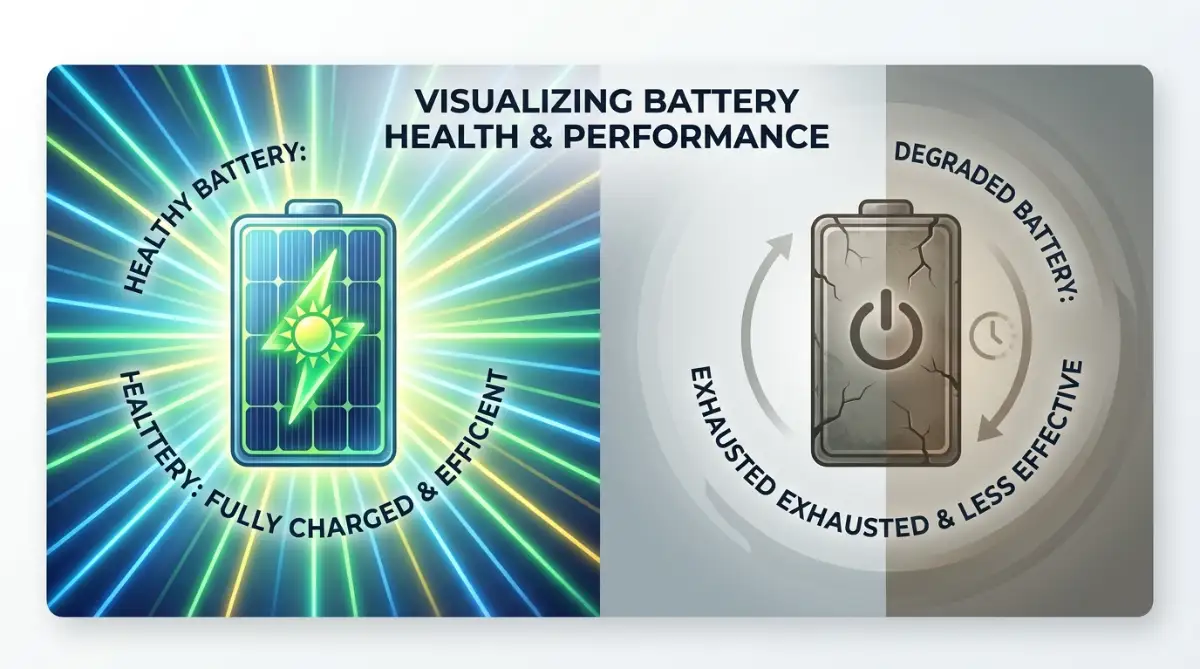
The Heartbreaking Pitfalls of Off-Grid Power Management
Even with the best intentions, people constantly make emotional and uneducated decisions that completely destroy their power setups. Managing your own home electricity is a huge responsibility that comes with a steep learning curve. Let us look at the most dangerous traps people fall into, so you can easily avoid them.
The "Frankenstein" Battery Bank Trap
Imagine this terrible scenario: you notice your old lead-acid system is slowly losing its maximum capacity after three years of heavy use. You decide to buy two brand-new batteries and wire them directly into your old, degraded system. You naturally assume the new units will bring the whole system back to life.
This is arguably the most destructive mistake you can ever make in off-grid living. When you mix old and new cells together, they do not share the workload equally. The system will always perform based on the weakest, most damaged cell in the entire group.
The old, degraded units will aggressively drain the brand-new units, pulling them down to their damaged level. Within a matter of weeks, your expensive new purchase will be completely ruined. Extensive research from the Battery Council International on lead-acid sustainability clearly shows that mixing different ages and capacities creates heavy electrical resistance and instant failure.
Suffocating Your Equipment in Small Spaces
Another incredibly common mistake is hiding your beautiful new power center in a tiny, unventilated closet. People do this because they want their garage or utility room to look clean and organized. Unfortunately, power storage units naturally generate a lot of heat when they are rapidly charging or discharging.
When you trap that heat inside a small, enclosed space, you are essentially baking the sensitive internal materials alive. High ambient temperatures rapidly accelerate the chemical breakdown process inside the cells. You are quietly ruining your maximum capacity simply by starving the equipment of fresh air.
You must provide constant, flowing air to your power center to keep the internal chemistry cool and stable. Learning the ultimate guide to indoor solar battery ventilation will keep your home safe from toxic fumes and prevent heat-related degradation. A simple exhaust fan can easily double the lifespan of your expensive investment.
Trusting Marketing Over Real Engineering Data
If you read the shiny brochures for modern lithium iron phosphate setups, you will see massive claims that you can drain them to one hundred percent safely. The marketing teams want you to believe these units are completely indestructible. Many beginners trust these ads blindly and drain their setups to zero every single night.
The painful truth: Marketing teams are trying to sell products, not protect your long-term investment. While a lithium unit will technically survive a complete zero percent drop, doing it repeatedly causes massive internal thermal stress. Every time you hit zero, microscopic parts of the cell crack and die.
You should always treat your expensive equipment much better than the absolute bare minimum manufacturer rating. Just because your car speedometer goes up to one hundred and fifty miles per hour does not mean you should drive that fast every day. If you want your system to last fifteen years, you must treat it gently.
Ignoring Phantom Loads While You Sleep
You might think you are doing a great job because you turn off all the heavy lights and the television before going to bed. You check your monitor, smile, and go to sleep thinking your maximum capacity is totally safe. However, you wake up the next morning and find the system dangerously close to shutting down.
This happens because of a silent enemy known as phantom loads. A phantom load is the tiny amount of electricity pulled by appliances even when they are technically turned off. Your microwave clock, your smart television resting in standby mode, and your internet router are all constantly sipping away your stored energy in the dark.
While one smart plug only uses a tiny bit of power, having twenty of them plugged in overnight creates a massive, continuous drain. Over a long ten-hour night, these invisible energy vampires pull your system down into a deep discharge zone. You must put all non-essential electronics on heavy-duty surge protectors and physically switch them off at night.

The Psychological Toll of Manual Management
Constantly watching your voltage meter like a hawk is mentally exhausting. Many people become totally obsessed with their power levels, completely ruining the peaceful off-grid lifestyle they wanted. They manually flip switches, yell at their family, and lose sleep worrying about the morning power levels.
You do not have to live your life as a slave to your energy system. You can easily set up automatic relays to shut down non-essential circuits when the voltage drops slightly. Taking the time to set up these auto-disconnects is great because automating small digital chores dramatically improves mental health by removing daily friction.
When your house manages its own energy limits automatically, you get your freedom back. You can finally relax and trust that the system will protect its own maximum capacity without your constant supervision. You can always find more home energy tips on our main home platform to help simplify your daily routines.
Your Master Action Plan for Long-Lasting Solar Power
We have explored the deep science and the hard realities of off-grid energy storage today. The main lesson is incredibly clear: pushing your system to its absolute limits repeatedly is a guaranteed path to financial loss. Your power bank is the beating heart of your independent lifestyle, and it requires serious respect.
Remember that every single time you stop a deep drain from happening, you are physically saving a piece of your equipment's life. Shift your heavy chores to the bright midday sun and let the panels do the heavy lifting. Use smart dump loads to maximize your midday energy capture instead of wasting it.
Do not fall for the myth that you need to exercise your units by running them dry. Set your low voltage disconnects aggressively high so the inverter shuts off long before real damage occurs. Yes, occasionally losing your evening television time is annoying, but it is far better than spending ten thousand dollars on a replacement bank.
If you treat your energy system like a living organism that needs to stay comfortably fed and cool, it will reward you with years of silent, reliable power. You are fully in control of how long your setup lasts. Start changing your evening energy habits tonight, and watch your system thrive.
A Personal Note Before You Go
I ruined my very first power bank because I was too stubborn to change my late-night habits, and writing that massive replacement check honestly broke my heart. My biggest hope is that you take these warnings seriously today so you never have to sit in a dark, freezing house wondering where all your hard-earned money went. I promise you, adjusting your lifestyle to follow the sun is the most rewarding choice you will ever make for your off-grid journey!
Smart Questions People Always Ask (FAQ)
Does a deep discharge permanently ruin my off grid batteries?
Yes, repeatedly draining your system too deeply causes permanent physical and chemical damage inside the cells. While doing it once accidentally might only cause minor harm, doing it regularly will completely destroy the maximum capacity.
What is a safe daily limit to stop draining my power storage?
If you use traditional lead-acid blocks, you should never drain them below fifty percent of their total capacity. For modern lithium setups, staying above twenty percent remaining capacity is highly recommended to ensure a long, healthy lifespan.
Can my solar panels fix a completely dead system the next day?
If the internal chemistry is already hardened or cracked from extreme draining, your panels will not be able to push energy back inside. The charge controller will simply reject the solar power because the storage bucket is physically broken.
Why does my voltage meter drop so fast when I turn on the microwave?
Heavy appliances pull a massive amount of instant energy, which naturally makes the surface voltage reading drop temporarily. However, if the voltage crashes and does not bounce back up when you turn the microwave off, your system has likely lost its maximum capacity.
Is it better to leave my off-grid system fully charged all the time?
Keeping your system resting near a full state of charge is generally the healthiest environment for most off-grid chemistries. The less you stretch the internal materials, the longer they will confidently power your home without failing.
Disclaimer: The information provided in this article is for educational and informational purposes only and does not constitute professional electrical engineering advice. Off-grid solar systems involve high voltages and sensitive technical components that can be dangerous if mishandled. Always consult with a licensed, certified solar technician or electrician before making any physical modifications, changing factory settings, or installing new equipment in your home energy system.