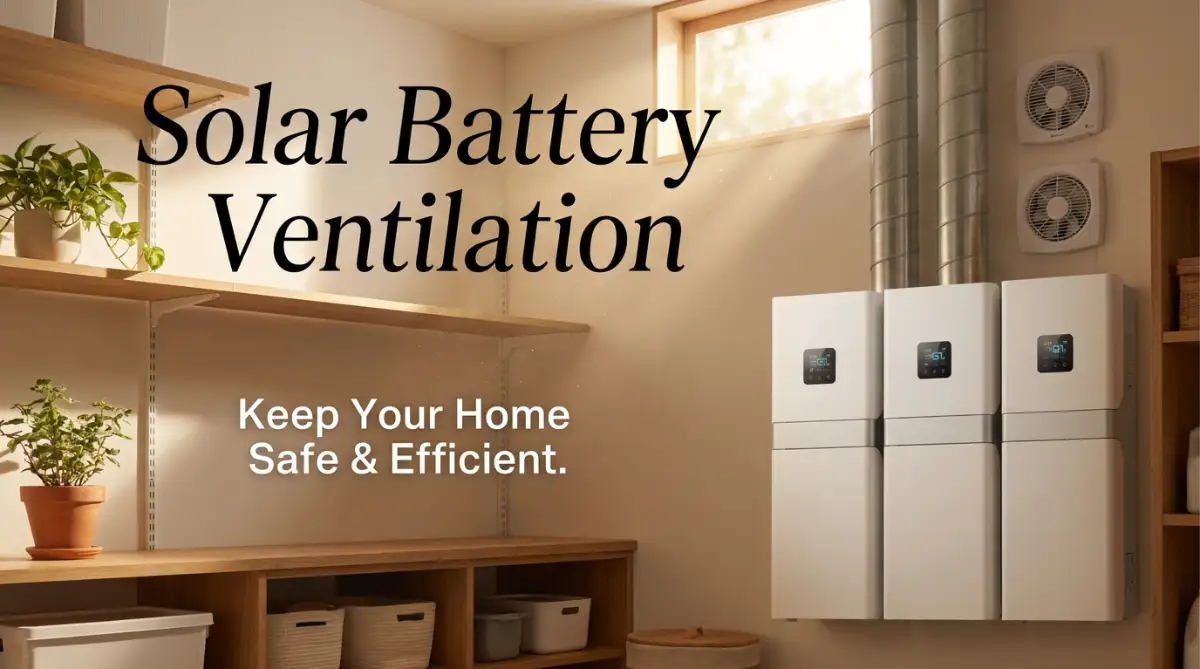
Why I Almost Ruined My Home With a Silent Danger
You just spent thousands on a beautiful off-grid solar setup, and everything looks amazing on the outside. But what nobody tells you is that a silent heat trap might be building up right inside your utility room. I completely ignored my airflow setup at first, thinking my modern equipment was perfectly fine sitting in a closed basement. A few weeks later, a wave of hot, strange-smelling air hit my face when I opened the door, and I instantly knew I made a massive mistake. Let me show you how to properly cool your storage room so you never have to worry about dangerous heat spikes or chemical off-gassing while you sleep.
Everything looked absolutely perfect on the outside, and I was so proud of my new energy independence. But a few weeks later, I walked down the basement stairs and immediately hit a wall of warm, strange-smelling air.
My eyes started watering, and a sudden wave of panic washed over me. I had completely ignored the airflow requirements for my heavy-duty setup. I realized with sheer horror that I was creating a literal ticking time bomb right beneath my living room.
Average homeowners everywhere are making this exact same mistake while trying to save money on their energy bills. You invest heavily in beautiful solar panels and top-tier power storage, but you forget that these massive energy boxes are essentially living, breathing chemical reactions.
The hidden anxiety of going to sleep knowing a fire hazard might be brewing downstairs is absolutely paralyzing. It robs you of the peace of mind that renewable energy is supposed to bring.
You find yourself waking up in the middle of the night, wondering if the equipment is getting too hot. This constant state of worry completely ruins the joy of being self-sufficient.
Thankfully, fixing this hidden danger is much easier than you might think. You do not need an engineering degree to make your storage space safe and cool.
By taking control of the environment around your power equipment, you can instantly restore your peace of mind. Let me walk you through exactly how you can fix this issue right now.
Quick Action Summary for Your Battery Room:
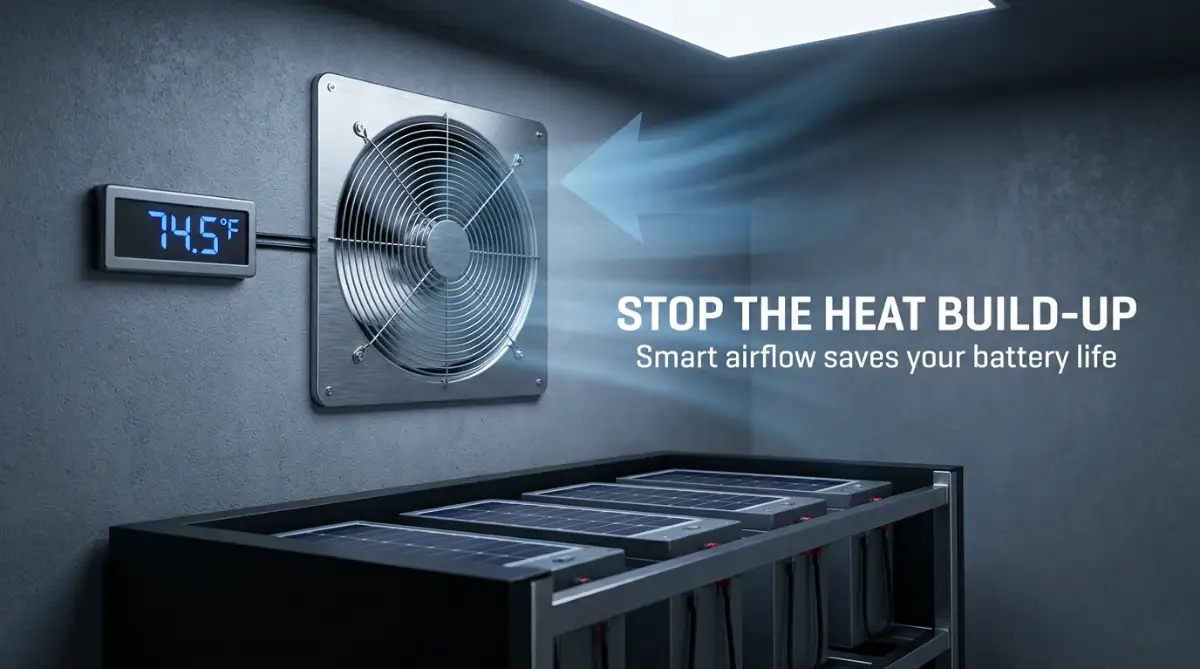
- Cross-Airflow is Mandatory: Always put your fresh air intake near the floor and your exhaust fan near the ceiling on the opposite wall.
- Go For Active Cooling: Passive vents are rarely enough. Use a metal inline exhaust fan wired to a digital thermostat for automatic temperature control.
- Plan for Blackouts: Wire your emergency cooling fans directly to a DC power source so they keep running even if your main inverter shuts down.
- Space Things Out: Leave at least 3 to 4 inches of physical space between your battery units so cool air can flow between them.
The Invisible Threat Lurking in Your Utility Room
When you bring a massive amount of energy storage into a closed space, you are introducing intense chemical reactions into your home. Whenever your system is aggressively charging or discharging, the internal components generate a significant amount of heat.
If this heat has nowhere to escape, it simply builds up in the room, slowly baking your expensive equipment. Heat is the ultimate enemy of electrical longevity and efficiency.
Beyond just the financial loss, extreme temperatures can trigger a terrifying chain reaction known as thermal runaway. This happens when the internal heat feeds on itself, creating an unstoppable and highly destructive temperature spike.
You absolutely must treat your storage room just like a sealed greenhouse sitting in the summer sun. Without a way to push the hot air out and bring fresh air in, the environment becomes highly toxic and dangerous.
Why Gas Build-Up is Your Biggest Enemy
Depending on the specific chemistry of your setup, heat might not be your only problem. Certain traditional setups naturally release hydrogen gas as a normal byproduct of the charging cycle.
Hydrogen is completely invisible, entirely odorless, and highly explosive when mixed with normal room air. It is also significantly lighter than oxygen, meaning it immediately floats straight up to your ceiling.
If your room has a tightly sealed door and no upper vents, this gas will quietly pool at the highest point of the room. All it takes is a tiny spark from a light switch or an internal relay click to cause a massive disaster.
You might think that upgrading to modern solid-state options completely eliminates this need for airflow. While newer technologies do not regularly off-gas hydrogen, they are incredibly sensitive to ambient room temperatures.
If a modern cell overheats, it can swell, crack, and vent highly toxic chemical smoke into your living space. This smoke is incredibly dangerous to inhale and can ruin the air quality of your entire house in minutes.
Quick Reality Check: The Solid-State Myth
- The Myth: Modern lithium batteries do not off-gas, so they do not need any ventilation.
- The Fact: While they do not release hydrogen like older lead-acid units, they still generate intense thermal heat during charging. If you trap that heat in a small closet, the ambient room temperature will quickly rise, causing the internal safety sensors to shut your entire system down.
Designing a Foolproof Airflow Strategy
The fundamental goal of a good ventilation system is incredibly simple. You want to constantly push the bad stuff out while pulling the good stuff in.
This process requires two completely different pathways to function correctly. You cannot just cut a single hole in the wall and hope the air magically figures out what to do.
Air behaves just like water; it will always take the path of least resistance. If you do not actively guide the fresh air across your equipment, it will bypass the hot zones completely.
To create a highly effective sweeping motion, you need to establish cross-ventilation. This means your fresh air intake should be placed on one side of the room, while the exhaust is located on the opposite side.
The Rule of High and Low Placement
Because heat naturally rises, your exhaust vent must be located as high up on the wall as physically possible. If you are dealing with hydrogen off-gassing, this high placement becomes even more critical.
You want that exhaust port positioned near the ceiling to catch the hot, dangerous gases before they can pool. Your fresh air intake, on the other hand, needs to be installed down near the floor.
This creates a natural chimney effect inside your utility space. The heavy, cool air flows in from the bottom, sweeps directly across your warm equipment, and exits through the top.
This natural rising motion happens automatically, even when fans are not actively running. Mother Nature does a lot of the heavy lifting for you if you place your vents correctly.
Knowing When to Go Active vs Passive
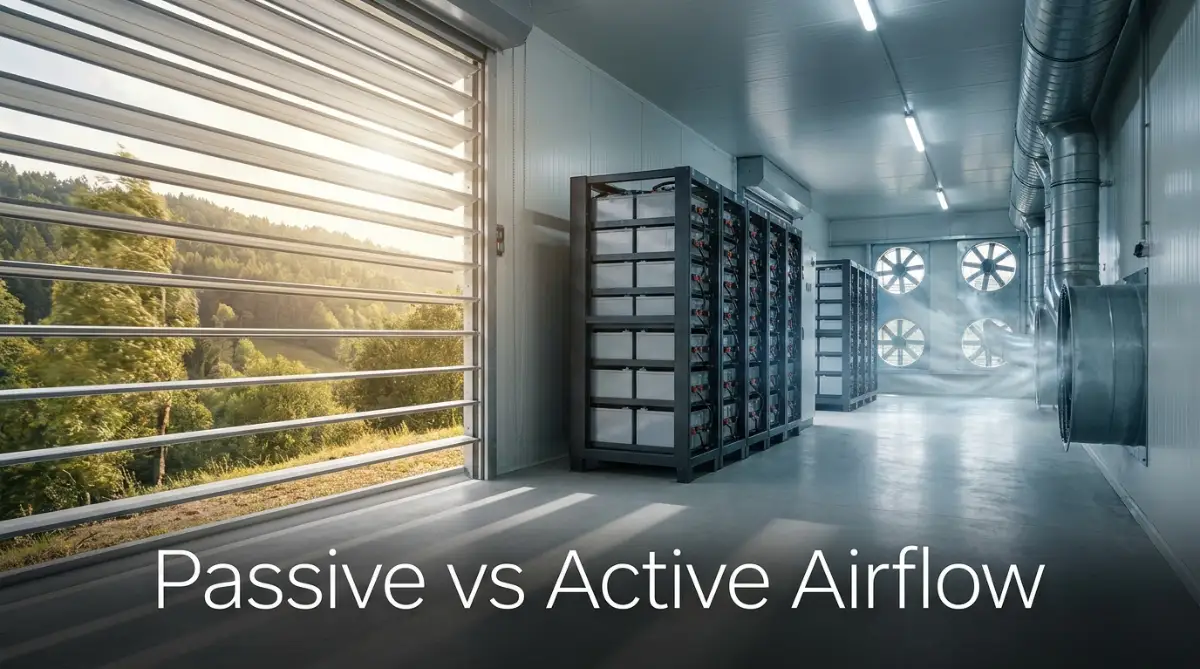
A passive airflow setup simply relies on open grates and natural temperature differences to move the air. For very small setups located in large, drafty garages, passive vents might be totally fine.
However, if your equipment is tightly packed into a small closet or a heavily insulated basement, natural airflow will never be enough. You will need to introduce mechanical help to forcefully move the heavy air out of the room.
This is where active ventilation comes into play, utilizing electric exhaust fans to pull air at a specific speed. An active system completely removes the guesswork, guaranteeing that fresh oxygen is always circulating.
I learned this the hard way when I initially tried to use a cheap, standard plastic bathroom exhaust fan for my setup. The plastic housing actually started warping and melting during a heavy charging cycle on a hot summer afternoon. Always invest in an industrial-grade inline fan made of solid metal, because spending those few extra dollars early on will completely save you from a catastrophic system meltdown later.
If you are feeling a bit overwhelmed by how to actually install these vents, watching a visual breakdown makes the whole process surprisingly easy.
Calculating Your True Air Exchange Needs
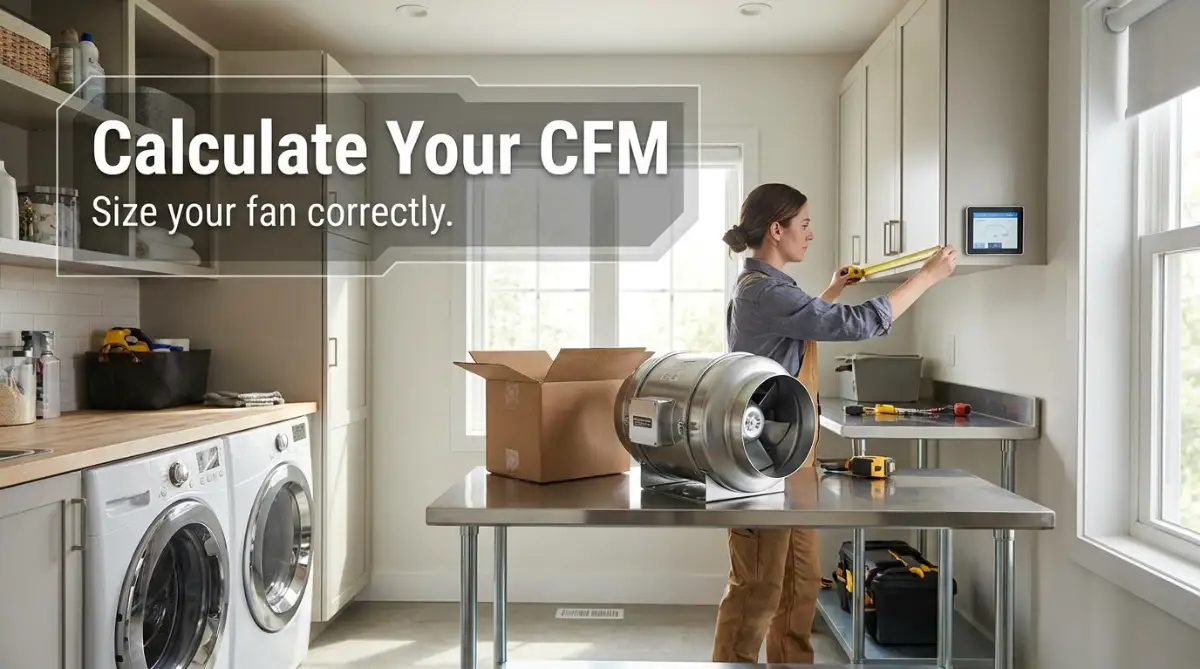
You cannot just buy a random fan off the shelf and expect it to perfectly match your specific room size. Exhaust fans are rated by a measurement called CFM, which stands for Cubic Feet per Minute.
This number simply tells you exactly how much air the fan can push out of the room in sixty seconds. To figure out the right fan size, you first need to calculate the total volume of your storage room.
My Personal CFM Cheat Sheet:
To make things easy, here is a quick reference table I use to size exhaust fans based on a standard 8-foot ceiling height. Just match your room size to get a safe starting point:
- Small Closet (5x5 ft): Minimum 50 - 100 CFM Fan
- Average Utility Room (10x10 ft): Minimum 200 - 300 CFM Fan
- Large Basement Corner (20x20 ft): Minimum 600+ CFM Industrial Fan
- (Note: Always double-check your equipment manual, as heavy charging cycles might require even faster air turnover).
Grab a tape measure and multiply the length, width, and height of the space together. This gives you the total cubic footage of the air sitting inside that specific room.
For a heavily loaded energy storage area, you ideally want the air to completely turn over several times an hour. As a very safe baseline, you should look for a fan that can clear the entire room volume in under five minutes.
If your room is very small, a fan with a low CFM rating might actually be too aggressive and create a noisy wind tunnel. Conversely, a weak fan in a massive basement will do absolutely nothing to clear the heat or gas.
Always check the manufacturer specifications for your specific equipment to see if they recommend a particular air exchange rate. They usually provide this information clearly in the installation manual to keep your warranty valid.
Defending Against Dust, Bugs, and Moisture
When you cut a hole in the side of your house to let air in, you are inviting nature inside. It is incredibly important to protect your fresh air intake vent from outside debris.
If dust and dirt constantly blow into your utility room, they will quickly coat the internal circuit boards of your equipment. A thick layer of dust acts just like a warm winter blanket, trapping heat directly against the sensitive electronics.
You must install a high-quality, washable air filter directly on your intake vent. This simple mesh barrier will catch the pollen, dirt, and pet hair before it ever touches your expensive gear.
However, remember that adding a tight filter restricts how easily the air can flow into the room. Because of this restriction, your intake hole actually needs to be slightly larger than your exhaust hole to keep things balanced.
You also need to think about keeping moisture and rain out of your system during heavy storms. Always use heavily louvered vents on the exterior of your house that point downward toward the ground.
This physical design forces rain and snow to bounce off the housing rather than blowing into your sensitive electronics. Additionally, attaching a tough wire mesh screen to the back of the louvers will stop mice and insects from building nests inside your ducting.
Automating the Cooling Process
Running a heavy-duty exhaust fan twenty-four hours a day is a massive waste of electricity. It will also burn out the motor bearings incredibly fast, leaving you without protection when you need it most.
The smartest thing you can do is automate your active airflow system using smart triggers. You want the fan to kick on only when the room actually needs to be cleared.
The easiest way to achieve this is by wiring your exhaust fan to a high-quality digital thermostat. You can simply mount the temperature probe directly above your equipment rack.
When the equipment starts working hard and heating up the surrounding air, the thermostat detects the spike. It will automatically power up the fan, pull the hot air out, and then shut down once the room returns to a safe temperature.
If you are running traditional equipment that releases gases, you should also install a hydrogen gas detector. You can wire this specialized sensor to trigger the exhaust fan instantly if gas levels ever start to rise.
This automation creates a totally hands-off safety net that protects your home while you are sleeping or away at work. You will never have to manually flip a switch or wonder if the room is getting too dangerous again.
Maintaining Your Airflow Defenses
Building an incredible airflow system is only half the battle. You have to actually maintain it if you want it to keep working flawlessly over the years.
Homeowners often install these vents, close the utility room door, and completely forget about them. Six months later, the intake filter is entirely clogged with thick dust, stopping all airflow dead in its tracks.
You should make a habit of inspecting your vents and filters at the start of every single month. Pull the intake filter out, wash it thoroughly with warm water, and let it completely dry before putting it back.
Take a flashlight and shine it into your exhaust fan to make sure the blades are spinning freely without any grinding noises. A loud, rattling fan usually means the internal bearings are failing and need to be replaced immediately.
Wipe down the outer casings of your storage equipment with a dry microfiber cloth to prevent static dust build-up. Keeping the immediate area spotlessly clean goes a very long way in keeping the internal temperatures completely stable.
Your energy independence journey is supposed to be incredibly rewarding and empowering. By taking these simple airflow steps today, you guarantee that your setup remains a powerful asset rather than a hidden household danger.
Master-Level Strategies for Total Temperature Control
Creating a basic airflow path is a fantastic start, but you can take your system to a completely different level of safety. Once I realized how much money I had tied up in my equipment, I wanted to guarantee it would last for decades.
The first secret to extending your equipment's life is managing the physical space between the individual units. So many homeowners try to cram as much storage as possible into a tiny corner to save room.
When you stack heavy power units right up against each other, you create a dangerous phenomenon called thermal bridging. The heat from one unit instantly transfers into the next, completely blocking the cooling air from reaching the center of the stack.
You should always leave at least three to four inches of empty space between every single component on your rack. This small gap acts as a highway for your cooling air, allowing it to easily grab the trapped heat and carry it away.
Another incredibly powerful upgrade is managing the humidity alongside the temperature. Most people only focus on the heat, completely forgetting that sticky, moist air is highly destructive to internal circuit boards.
If you live in a damp climate, the moisture in the air will eventually cause microscopic corrosion on your expensive battery terminals. I highly recommend running a small, self-draining dehumidifier directly inside your utility room to keep the air perfectly dry.
You can reference the Department of Energy's guide on home battery systems to understand exactly how moisture degrades energy storage capacity over time. Keeping the air dry ensures your system operates at peak efficiency all year round.
Smart Automation and Alert Systems
We live in an amazing time where technology can monitor your home completely on its own. You do not have to walk downstairs every single day just to check a thermometer on the wall.
Upgrading to a Wi-Fi-enabled temperature and humidity sensor allows you to monitor your utility room directly from your smartphone. You can set custom alerts so that if the room ever gets too hot, your phone immediately rings to wake you up.
I found that setting up these simple digital routines removed a massive weight off my shoulders. In fact, automating small digital chores around the house can surprisingly reduce your daily anxiety and give you tremendous peace of mind.
Sometimes, though, smart home devices can be a little frustrating to set up and keep connected. If you ever run into a situation where your temperature monitoring app stops working, you need to fix it quickly.
Having a few actionable workarounds when productivity apps refuse to sync will help you get your safety alerts back online in minutes. Always keep a backup physical thermometer in the room just in case your Wi-Fi router unexpectedly goes offline.
The Dangerous Airflow Blunders You Might Be Making Right Now
Over the years, I have seen homeowners make the same terrifying mistakes over and over again. They spend thousands of dollars on premium energy storage, only to completely ruin it with a terrible airflow design.
One of the most common mistakes is relying strictly on an open door for cooling. People think that leaving the utility room door cracked open will provide enough air circulation to keep things safe.
This is incredibly dangerous because standard room air does not naturally move fast enough to pull heavy chemical heat away. According to the OSHA guidelines for indoor air quality, stagnant air pockets will always form in corners unless there is a directed, mechanical push.
If the room does not have a dedicated intake and a dedicated exhaust, you are just moving hot air around in a circle. You must create a one-way tunnel of fresh air to properly cool heavily stressed electronic components.
The Hidden Trap of Corrugated Ducting
When installing an exhaust fan, many people just grab the cheapest flexible plastic ducting they can find at the hardware store. Those cheap, bumpy tubes are actually destroying your fan's ability to clear the room.
Every single ridge inside a corrugated pipe creates a tiny amount of friction against the moving air. By the time the air travels a few feet through a bumpy tube, it loses nearly half of its speed and pressure.
You should absolutely use smooth, rigid metal ducting for your exhaust lines whenever possible. Smooth walls allow the air to glide perfectly out of the house without making your exhaust fan work twice as hard.
It is also much safer in the rare event of an electrical spark, as cheap plastic ducting can easily catch fire. Following the basic National Fire Protection Association standards for residential energy will show you exactly why rigid metal is always the safer choice.
The Grid-Down Ventilation Disaster
Here is a horrifying scenario that catches almost everyone completely off guard. Why do you have an off-grid energy system in the first place? You probably bought it to keep your house running when the main power grid completely fails.
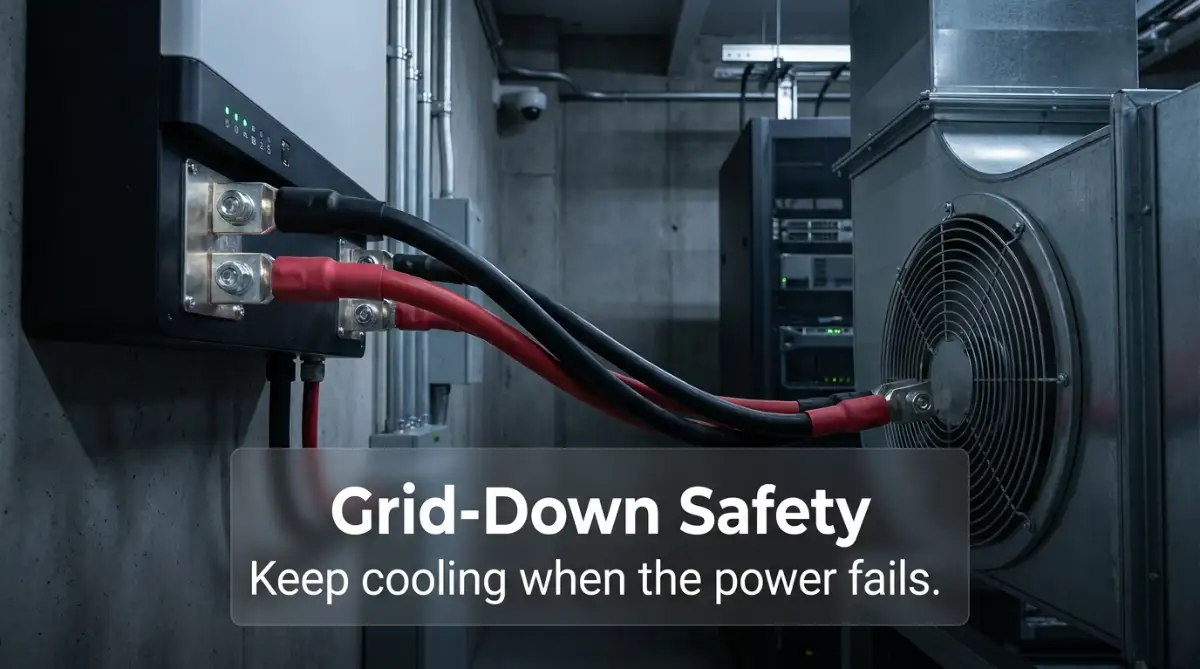
But what happens if your heavy-duty exhaust fan is plugged into a standard wall outlet? If your main inverter unexpectedly shuts down due to an overload, your wall outlets immediately go dead.
Suddenly, your batteries are sitting in the dark, generating massive amounts of heat, and your cooling fan has zero power. This is exactly how extreme thermal meltdowns happen during major neighborhood blackouts.
To completely prevent this nightmare, you must wire your primary exhaust fan directly to a DC power source. By running a low-voltage fan straight off the battery bank itself, your cooling system will never rely on your inverter to function.
This guarantees that as long as your storage system has even a tiny bit of juice left, it can actively cool itself down. It is a brilliant, failsafe method that completely removes a major weak point from your home energy setup.
Ignoring Extreme Weather Changes
A ventilation setup that works beautifully in the middle of a hot summer might actually cause major problems in December. Many people forget that extreme cold can completely stall the chemical reactions inside modern energy storage cells.
If your powerful intake vent is constantly pulling freezing winter air directly across your equipment, your system might refuse to charge at all. Most modern units have a built-in safety feature that shuts the system down if the internal temperature drops below freezing.
You need to know exactly how to keep your solar energy system properly calibrated in freezing cold to prevent these unexpected winter shutdowns. You can simply install adjustable louvers on your intake vents to manually reduce the incoming cold air during the snowy months.
Balancing this seasonal airflow is the true secret to maintaining a perfectly stable room temperature all year long. Just remember to open those vents completely back up the moment spring arrives and the days start getting warm again.
Securing Your Home Energy Setup Starting Today
Taking control of your utility room environment does not have to be a stressful or overly expensive project. You now understand exactly how heat and invisible gases behave, and more importantly, you know exactly how to defeat them.
Start by simply walking into your storage area today and checking the physical temperature of the surrounding air. Put your hand lightly on the side of your equipment while it is actively charging to see how hot it actually feels.
If the room feels stuffy or overly warm, you immediately know that you have an airflow problem that needs fixing. Grab a tape measure, calculate your room size, and order a high-quality metal exhaust fan that matches your space.
Do not let the fear of complex DIY projects stop you from making your home completely safe. Installing a basic intake grate and an automated exhaust fan can easily be done in a single Saturday afternoon.
If you are currently exploring a broader range of sustainable home upgrades, handling your energy safety first will give you the perfect foundation. You are actively protecting your massive financial investment while guaranteeing your family's safety during the next big power outage.
A Quick Weekend Action Checklist
To make this completely foolproof, I want you to follow a very simple checklist this weekend. First, clear out all the random cardboard boxes and storage items sitting around your power equipment.
Clutter acts just like insulation, trapping unnecessary heat in the room and restricting the natural movement of air. Next, measure out exactly where your high exhaust vent and low intake vent will go on the walls.
Make sure the path between those two points crosses directly over your heaviest power equipment. Finally, order a digital thermostat switch to automate the whole process so you never have to think about it again.
I completely transformed my own utility room from a suffocating hotbox into a perfectly climate-controlled sanctuary. My equipment runs flawlessly now, my charging cycles are noticeably faster, and my overall efficiency has never been better.
The peace of mind I get knowing my family sleeps safely right above that room is absolutely priceless. I highly encourage you to take these simple steps this weekend, because you deserve to enjoy your energy independence without a single drop of worry.
Real Questions Homeowners Ask About Battery Safety
Can I put my solar batteries in the garage?
Yes, installing your system in the garage is a very popular choice for keeping heavy equipment out of your main living space. However, garages experience extreme temperature swings, getting freezing cold in winter and dangerously hot in summer. You will still need an automated exhaust system to pull out the heavy summer heat and keep the internal components safe.
How cold is too cold for an indoor solar setup?
Most modern solid-state storage systems will completely stop charging if the internal cells drop below 32 degrees Fahrenheit (0 degrees Celsius). If they try to force a charge while frozen, it will permanently shatter the delicate internal chemistry. You must heavily insulate your utility room and restrict extreme winter drafts to keep the ambient temperature well above freezing.
Do modern solid-state batteries really need ventilation?
Absolutely, even though modern units do not regularly leak explosive hydrogen gas like older flooded designs. They still generate a massive amount of internal heat during heavy charging, which will slowly destroy the circuit boards if trapped in a tight space. A properly vented room prevents terrifying thermal meltdowns and guarantees your expensive equipment lasts its full expected lifespan.
Can I just use a standard room fan to cool my equipment?
Placing a normal desk fan directly in front of your equipment will just blow the same hot, stale air in a circle. It does absolutely nothing to remove the dangerous heat or invisible gases from the closed room. You must install a dedicated exhaust fan that actively pushes the bad air completely outside of your house.
Is it hard to automate a utility room exhaust fan?
It is surprisingly easy and requires absolutely zero advanced programming skills. You simply buy a plug-and-play digital thermostat, plug your exhaust fan directly into it, and hang the small temperature sensor above your equipment. The fan will magically turn itself on whenever the room gets too hot and shut itself off when the danger is gone.
Disclaimer: The information provided in this article is strictly for educational and informational purposes based on personal experience. Electrical energy storage systems can be extremely dangerous if handled incorrectly. Always consult with a licensed, certified electrician or a professional solar installer before modifying your home's electrical setup or cutting ventilation holes in your property's structure. Compliance with local building codes and manufacturer warranty guidelines is entirely your responsibility.