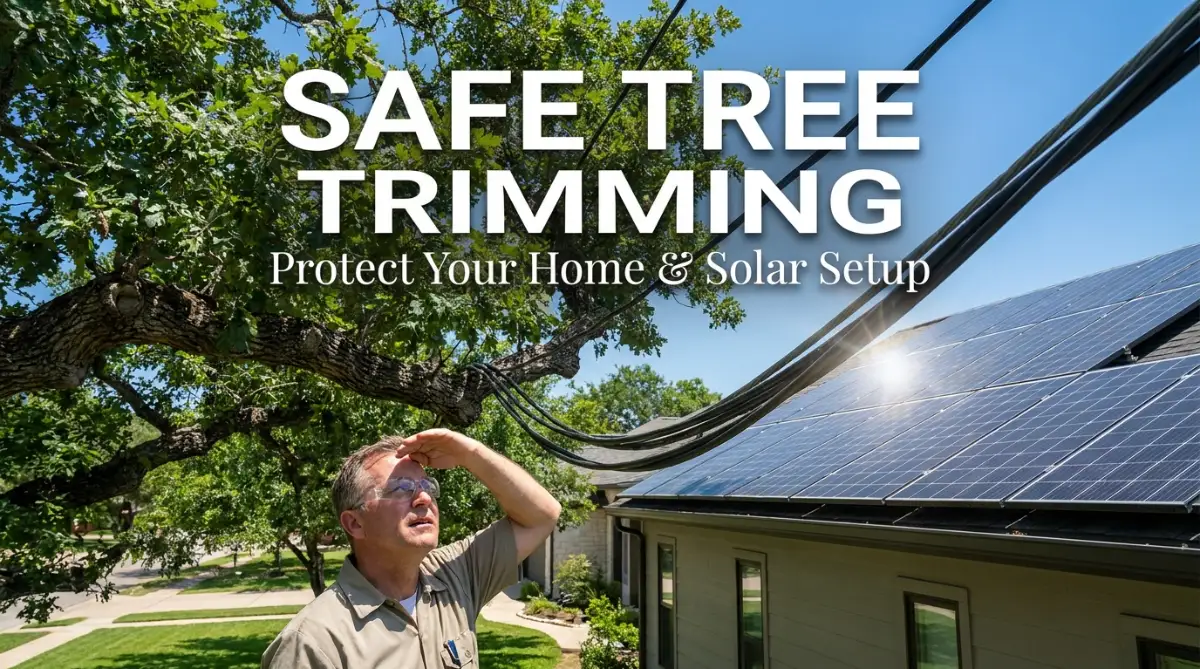
Let's be honest, nobody wants to spend their weekend worrying about getting electrocuted by their own solar setup. But last summer, I nearly made a massive mistake with a metal pole saw that completely changed how I handle yard work. If you have big trees growing near your high-voltage solar lines, you need to read this before you even think about picking up a ladder.
Just as I raised the metal pole toward the leaves, a loud, buzzing hum suddenly echoed from the thick black wires right above my head.
My hands started sweating instantly, and a sudden wave of panic completely washed over me.
I suddenly realized I was standing just inches away from making a terrible, life-threatening mistake.
Quick Safety Takeaways Before You Trim:
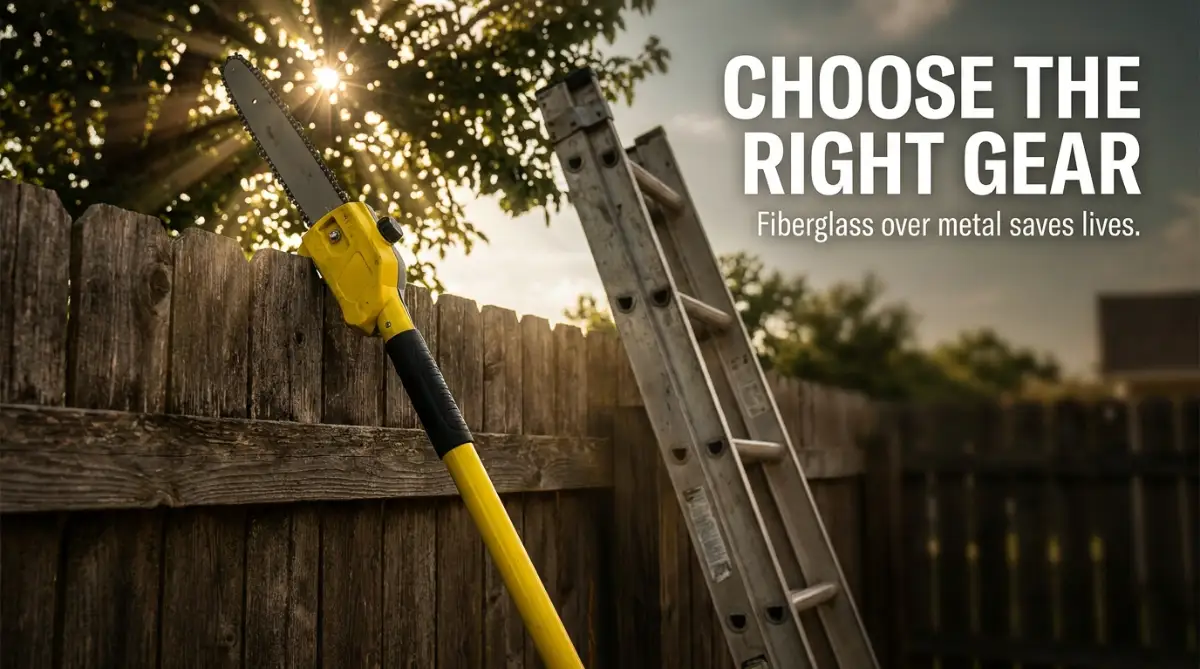
- Never use metal: Stick exclusively to dry, clean fiberglass tools and ladders.
- Respect the 10-foot rule: Electricity can jump through the air; you do not have to touch the wire to get hurt.
- Watch the weather: Damp mornings and windy afternoons make arc flashes much more likely.
- Plant smart: Keep tall-growing trees far away from your solar grid right from the start.
The Hidden Terror in Your Own Backyard
That terrifying afternoon completely changed how I look at everyday yard maintenance. So many of us simply want to keep our properties looking neat and tidy.
We plant beautiful saplings, water them carefully, and watch them grow over the seasons. But we rarely think about where those branches are heading until they are tangled in our expensive solar equipment.
This creates a massive amount of anxiety for regular homeowners like you and me. Every single time a heavy storm rolls in, you probably lie awake in bed listening to the wind howl.
You worry about those heavy branches snapping and crashing directly into your solar transmission wires. You worry about sudden power outages, massive repair bills, or even terrifying electrical fires breaking out on your roof.
But the fear of someone in your family accidentally getting hurt while trying to clean up the yard is so much worse.
Understanding the Invisible Threat of Electricity
Before you even think about stepping outside with a saw, we need to talk about how electricity actually behaves. High-voltage lines connected to solar grids carry an immense amount of raw power.
Most people assume that you only get shocked if you physically touch the black wire with your bare hands. This is a massive, dangerous misunderstanding.
Electricity is essentially incredibly lazy and always looks for the fastest path to the ground. If you bring a conductive tool near a live wire, the electricity can actually jump through the air to reach you.
This terrifying event is known as an arc flash. An arc flash is basically a miniature lightning bolt that shoots horizontally out of the power line.
If your metal pole saw gets too close, the electricity will leap across the gap, travel down the pole, and enter your body. You do not even have to touch the wire to get severely injured.
This is exactly why trimming trees near these systems requires a completely different mindset. Normal gardening rules simply do not apply when high voltage is involved.
The Water Pipe Analogy
If you are struggling to picture how dangerous this is, think of a power line like a massive fire hose filled with high-pressure water. The wire itself is just the hose holding everything inside.
If that hose springs a tiny leak, high-pressure water sprays out forcefully in every direction. High-voltage electricity acts in a very similar way when it finds a conductive path nearby.
The moisture inside a living tree branch acts just like a sponge soaking up that pressure. Tree sap is essentially water mixed with minerals, making it a nearly perfect conductor for electrical currents.
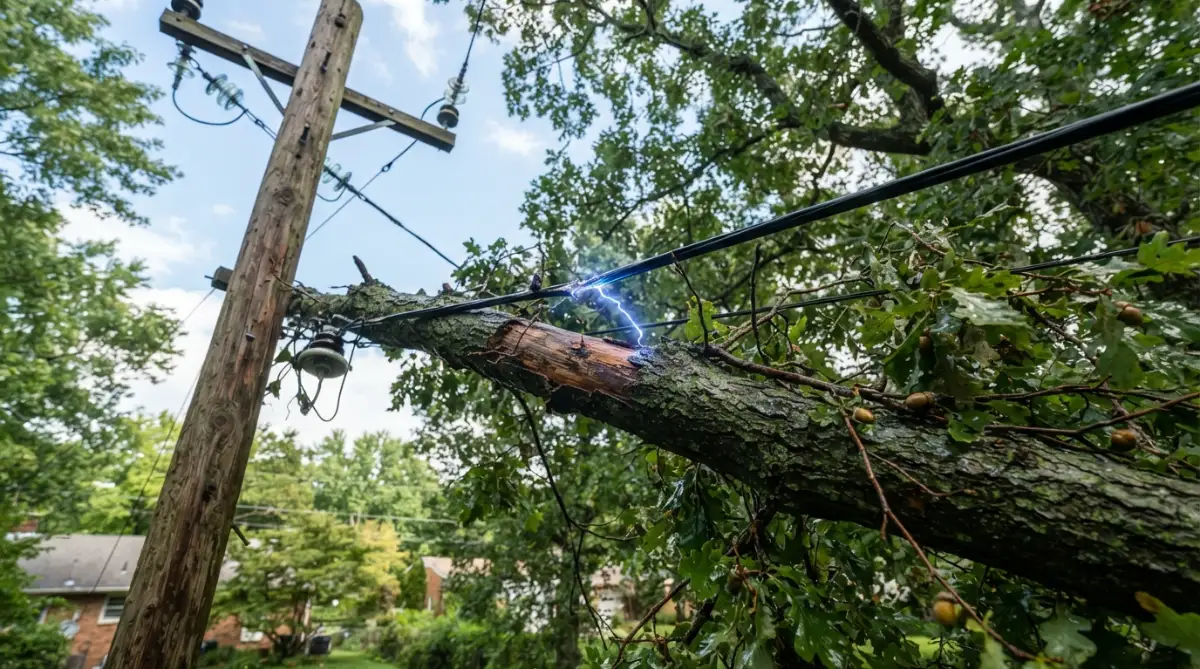
If a live wire is resting against a damp tree branch, the entire branch becomes highly energized. Touching the trunk of that tree could be just as dangerous as touching the bare wire itself.
Understanding this invisible flow of energy is the very first step in keeping yourself and your property safe.
Setting Up Your Unbreakable Defense System
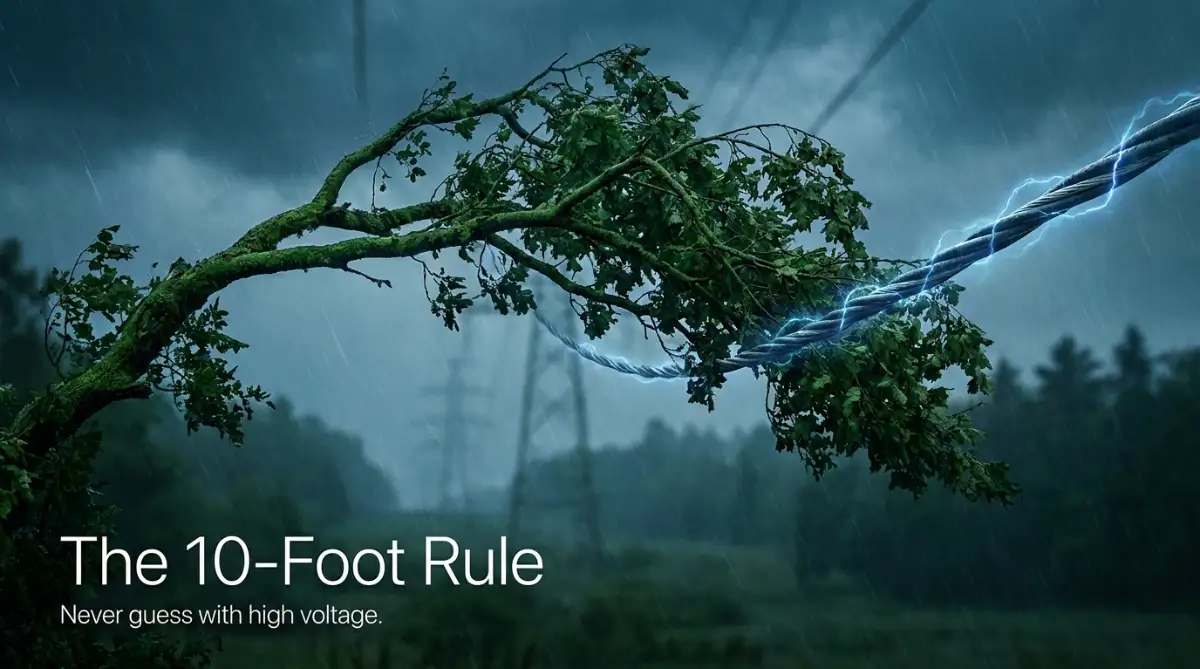
To handle this problem safely, you need to create strict physical boundaries in your yard. The golden standard for working around any electrical line is the famous 10-foot rule.
This rule means absolutely no part of your body, your tools, or the branch you are cutting should ever come within 10 feet of a high-voltage wire.
Real-Life Safety Distances You Need to Know:
| Wire Type | Minimum Safe Distance | Why It Matters |
| :--- | :--- | :--- |
| Standard Service Drop (120/240V) | 10 Feet | Can still cause severe burns or muscle lock. |
| High-Voltage Distribution | 15+ Feet | Arc flashes can easily jump through damp air. |
| Transmission Lines (Huge Towers) | 25+ Feet | Never attempt yard work near these. Call the pros. |
You might look up and think you have plenty of room, but human eyes are terrible at judging distances in the air.
If you are standing on the ground, a branch might look perfectly safe to cut. But the moment you start sawing, the wind can easily blow that branch right into the danger zone.
Before you even think about picking up a saw, watch this incredible visual breakdown of how electricity jumps from wires to tree branches. It might just save your life or prevent a massive solar grid fire today.
Picking the Perfect Tool for the Job
Your choice of tools will literally determine whether you walk away safely or end up in the emergency room. Never, under any circumstances, use a metal ladder when working near your solar lines.
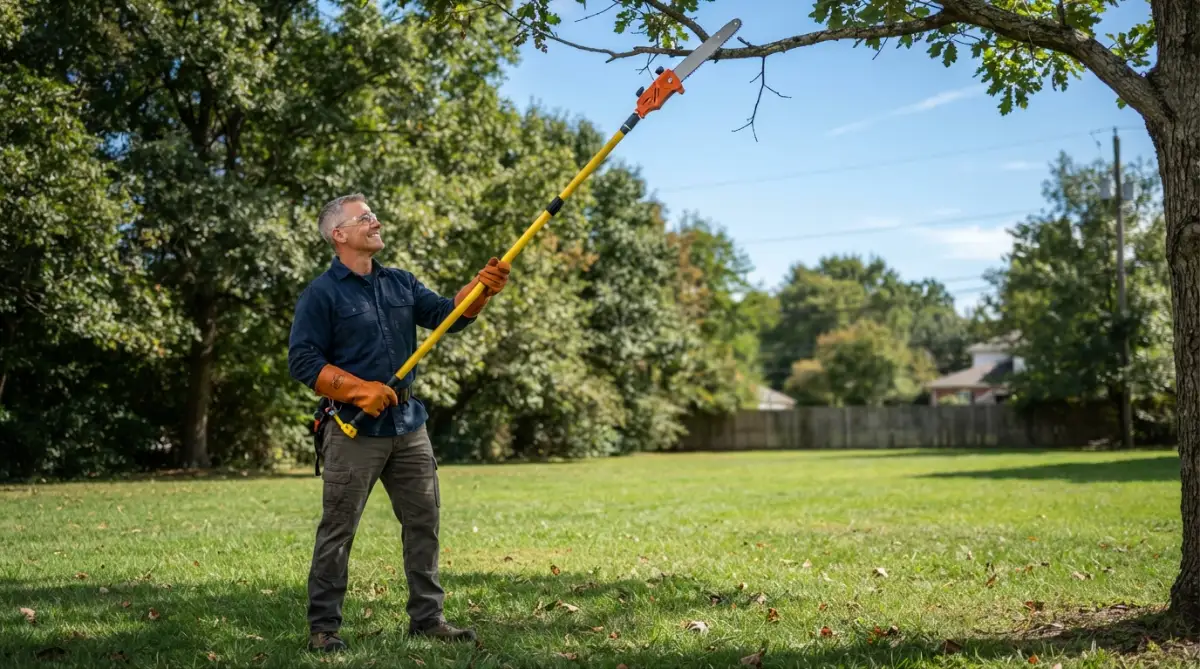
Aluminum and steel are highly conductive and will instantly draw electricity straight down into the earth through your boots. Instead, you must strictly use high-quality, dry fiberglass ladders and fiberglass pole saws.
Fiberglass is generally non-conductive and acts as a strong protective barrier between you and any stray electrical currents. However, you have to keep these tools perfectly clean and dry for them to actually protect you.
Dirt, grease, and wood sap can build up on the outside of your fiberglass pole over time. If a thick layer of dirty tree sap covers your pole, electricity can travel over the surface of the dirt, completely bypassing the fiberglass protection.
Always wipe down your tools with a clean, dry cloth before starting any heavy yard work.
The Reality of Wearable Protection
Many people assume they can just throw on some heavy winter clothes to protect themselves from electrical shocks. Unfortunately, normal fabric and standard work boots offer zero protection against high-voltage solar energy.
You need specialized gear designed specifically for utility work. Dielectric boots are specially manufactured with thick rubber soles that block electrical currents from passing through your feet into the ground.
I used to think wearing regular leather gardening gloves was enough to keep me safe from stray shocks. I quickly realized that normal leather holds moisture from sweat, turning my hands into perfect conductors, so now I strictly use certified lineman's insulated gloves.
Even your safety glasses need to be completely free of metal frames or metal hinges. Every single piece of gear you wear needs to act as an insulator, not a conductor.
Protecting your body requires treating the situation with the same respect a professional electrical worker would.
Common Tool Safety Comparison
To make this completely clear, let us look at exactly what belongs in your shed and what needs to stay far away from your solar lines.
Using this simple chart can help you quickly audit your garage before you start your weekend chores.
How the Weather Secretly Changes Everything
You might have the perfect tools and the perfect protective gear, but the sky above you dictates the final safety rules. Never attempt to trim branches near power lines on a humid, damp, or foggy morning.
Water heavily increases conductivity in the air, meaning an arc flash can jump significantly farther than it would on a dry day. Even a light morning dew on the grass can turn your backyard into a dangerous electrical trap.
You should only plan this specific type of yard work for completely dry, calm, and sunny afternoons. Wind is another massive invisible enemy that you have to watch out for constantly.
A sudden strong gust of wind can easily push the branch you are cutting directly onto the solar cables. It can also cause you to lose your balance while holding a long, heavy pole saw above your head.
If the leaves on the trees are aggressively rustling, you need to pack up your tools and wait for a better day.
The Danger of Hidden Wood Tension
Cutting a thick tree branch is never as simple as slicing through a soft stick of butter. Large tree branches are incredibly heavy and store a massive amount of kinetic energy inside the wood fibers.
When a heavy branch grows over a power line, the wood is often under intense physical stress. If you cut the bottom of that branch incorrectly, it can suddenly snap violently downward.
This unexpected movement is called kickback, and it can easily rip the pole saw completely out of your hands. Worse, the heavy branch can swing like a pendulum and smash directly through your delicate solar transmission wires.
You always have to carefully study the natural lean of the branch before making your very first cut.
Making the Safest Possible Cuts
To avoid disastrous kickbacks, you should never try to cut a massive branch all at once right near the trunk. You must use a smart technique called the three-cut method to safely remove heavy weight in small pieces.
First, you make a small, shallow cut on the underside of the branch, about a foot away from the trunk. Next, you make a top cut slightly further out, allowing the heavy outer portion to safely break away and fall.
This totally removes the dangerous weight and stops the bark from peeling down the side of your beautiful tree. Finally, you can carefully trim the remaining short stub cleanly without any violent snapping or heavy falling debris.
Taking these extra few minutes to plan your cuts dramatically reduces the risk of accidental damage to your solar lines.
Myth vs Reality: What You Probably Got Wrong
Myth: Standard power lines are totally safe because they are covered in thick black rubber insulation.
Reality: That black coating is highly likely just for weatherproofing, not electrical insulation. The heavy sun and harsh rain easily crack this coating over time, exposing raw, deadly wire underneath. You must always treat every single black wire as a completely bare, live electrical hazard.
Myth: If the branch is just lightly touching the solar line, I can quickly yank it away with a dry wooden stick.
Reality: Wood easily traps hidden moisture inside. Touching an energized branch with a wooden stick can instantly transfer high voltage right into your chest.
Knowing When to Walk Away
There is a massive difference between basic yard maintenance and highly dangerous utility clearing. Trimming small, low-hanging bushes away from your solar inverter box is a perfectly normal weekend task.
However, trying to remove a massive, heavy oak limb leaning heavily on your primary grid connection is incredibly reckless. You always need to honestly evaluate your own physical strength and your personal experience level.
Holding a heavy fiberglass pole saw fully extended above your head requires immense shoulder and core strength. As your muscles get tired, your tool will naturally start to sway back and forth unpredictably.
If you feel your arms shaking even slightly, you are immediately putting your life at risk.
Sometimes, the absolute smartest and bravest thing you can do is simply put the saw down on the grass. Calling a certified tree removal expert might cost a little bit of money upfront.
But their fee is incredibly small compared to the cost of replacing a destroyed solar grid or paying for a massive hospital bill. Your personal safety and your family's peace of mind are worth far more than saving a few dollars on yard work.
Pro-Level Secrets for Long-Term Yard Safety
Fixing an overgrown tree once is great, but preventing it from ever threatening your solar grid again is exactly where the real magic happens. Most people completely misunderstand how tree maintenance actually works over a long period.
They wait until the branches are practically wrapping around the high-voltage lines before they finally panic and start cutting. This reactive mindset is incredibly stressful and keeps you trapped in an endless cycle of worry.
If you want to protect your home and enjoy a completely peaceful weekend, you need to start thinking like a professional utility arborist. This means managing the growth of your trees before they ever become a serious electrical hazard.
I want to share some incredibly smart, high-level strategies that will save you time, money, and potentially your life. These are the exact methods professional property managers use to keep large estates totally safe.
The Power of Smart Placement Strategy
The absolute smartest way to handle tree problems near electrical lines is to never plant tall trees there in the first place. This sounds ridiculously simple, but you would be shocked at how many people plant cute little oak saplings directly under their main power drop.
When that tiny sapling turns into a forty-foot giant, it suddenly becomes a massive liability for your entire home energy system. You have to practice the concept of planting the right tree in the right place, which means understanding exactly how tall a plant will eventually get.
If you have a large open space directly under your solar transmission cables, stick to low-growing shrubs or dwarf fruit trees. These plants generally max out at about ten to fifteen feet tall.
They will never grow high enough to interfere with your wires, completely eliminating the need for dangerous ladder work. You do not want to spend every single month manually hacking away at fast-growing branches.
Just as smart businesses use clever software to how to automate repetitive data entry without writing a single line of code, you can practically automate your yard safety simply by choosing the correct species of plants from day one.
Mastering the Art of Directional Pruning
If you already have a mature tree growing near your solar setup, you do not necessarily have to chop the whole thing down. You can actually train the tree to grow completely away from the danger zone using a technique called directional pruning.
When you randomly hack off the tips of tree branches, the tree panics and shoots out a dozen new, weak water sprouts. These messy sprouts grow incredibly fast and usually head straight back toward the sunny power lines.
Instead of doing that, you should completely remove specific branches all the way back to the main trunk. By carefully selecting which branches you remove, you gently force the tree to grow outward rather than upward.
Think of it like gently guiding water down a specific path by blocking off the wrong turns. If you want to learn the exact cuts to make, checking out trusted proper directional pruning techniques from agricultural experts is a brilliant first step.
Over a few years, your tree will naturally develop a beautiful "V" shape or side-swept canopy that naturally avoids your high-voltage grid.
Scheduling Routine Professional Audits
Even if you are extremely handy around the yard, you cannot spot every single hidden danger inside a massive tree. Wood rots from the inside out, meaning a branch that looks perfectly healthy on the outside might be completely hollow inside.
If a heavy storm rolls through, that hollow branch will snap like a dry twig and crash directly into your equipment. This is why having a certified arborist walk your property once every two years is a fantastic investment.
They have the trained eyes to spot hidden diseases, weak branch unions, and subtle signs of structural failure long before a disaster happens. A quick inspection fee is incredibly cheap compared to the massive cost of replacing a crushed solar panel array.
Plus, heavy falling debris does more than just break glass; it can severely damage the hidden technology underneath. A massive impact can easily shorten the everything you need to know about the natural lifespan of residential solar microinverters, forcing you to spend thousands on premature electronic replacements.
Creating a Buffer Zone in Your Yard
You need to establish a strict physical boundary around your home energy equipment. I highly recommend marking a visual boundary on your grass, about fifteen feet away from any high-voltage lines or solar panels.
You can use decorative rocks, small garden fences, or even a neat row of flowers to mark this invisible line. This boundary serves as a constant daily reminder to your family and your lawn care workers.
It clearly communicates that anything crossing this boundary requires extreme caution and specialized safety rules. Setting up this clear visual cue completely stops accidental mistakes from happening when you are distracted by everyday chores.
My Personal Tip for Buffer Zones:
I actually used a row of low-growing Juniper shrubs to mark my 15-foot line. They stay under three feet tall, look fantastic year-round, and my family knows exactly where the "do not cross with tall tools" zone begins. It takes the guesswork completely out of the equation.
The Terrifying Traps Homeowners Fall Into
No one ever wakes up on a Saturday morning planning to cause a massive electrical emergency in their neighborhood. Unfortunately, simple ignorance and a desire to save money often lead people straight into absolute disaster.
I have seen so many incredibly smart people make terrible decisions simply because they underestimated the raw power of electricity. If you want to keep your property totally safe, you absolutely must avoid these specific traps.
Trusting Unlicensed Neighborhood Handymen
One of the biggest mistakes you can ever make is hiring a random guy with a cheap chainsaw who knocks on your front door. Often, after a heavy windstorm, unlicensed workers drive through neighborhoods offering incredibly cheap tree clearing deals.
They almost never carry specialized liability insurance, and they rarely understand advanced electrical safety standards required for high-voltage environments. If that untrained worker accidentally drops a heavy pine branch onto your solar connection, he will likely just drive away in a panic.
You will be left holding a massive repair bill, and your home insurance might refuse to pay out because you hired an unlicensed contractor. Always demand to see proper certification and specific utility line clearance insurance before letting anyone touch trees near your power grid.
Ignoring the Hidden Danger of Dead Wood
Many folks assume that dead branches are lighter and easier to cut, making them less dangerous. In reality, arborists refer to large dead branches as "widowmakers" for a very specific, terrifying reason.
Dead wood is completely unpredictable and heavily prone to violently snapping without any warning whatsoever. If you rest your fiberglass pole saw heavily against a dead branch, the entire limb might instantly shatter.
Those sharp, heavy wooden shards will rain down directly on top of you and your expensive solar panels. Worse, rough broken branches scratching your roof can easily damage protective flashing and create cozy hiding spots for unwanted animals.
In fact, unmanaged tree debris is exactly how pigeons and roof pests are ruining your solar panels by building massive nests in the mess. You must clean up dead wood immediately, but you have to do it with extreme caution and patience.
Working From Shaky Heights
The single most dangerous combination in any backyard is a tall ladder, a sharp saw, and close proximity to electrical wires. People get frustrated when their pole saw cannot quite reach a high branch, so they grab a step ladder to get just a little bit closer.
When you cut a thick piece of wood, the sudden release of weight naturally causes the entire tree branch to spring violently upward. If you are standing on the ground, you can quickly take two steps backward to avoid the swinging wood.
If you are balanced on a ladder, you have absolutely nowhere to run and no way to easily catch your balance. You will almost certainly fall backward, risking severe broken bones or worse.
Strict occupational safety guidelines for tree care state that unless you are a trained professional tied into a harness, you should keep your feet firmly planted on solid earth.
Overestimating Your Own Physical Limits
Yard work in the hot sun drains your energy much faster than you realize. When you are staring up at a branch, your neck cramps, your shoulders burn, and your grip strength slowly fades away.
Many people refuse to take a break because they just want to finish the job quickly before lunch. This stubbornness is exactly when fatal mistakes occur.
When your arms are shaking from heavy fatigue, you lose control of the pole saw blade. The heavy tool can easily bounce off the wood and slice directly into the insulated power lines hovering nearby.
Listen to your body, take frequent water breaks, and never force yourself to finish a difficult cut if you feel exhausted.
Your Action Plan for a Safe and Sunny Home
At the end of the day, maintaining your yard should never feel like navigating a deadly minefield. Your home is supposed to be your ultimate safe space, and your solar system is there to bring you clean, stress-free energy.
By completely changing how you approach overgrown branches, you take total control back from Mother Nature. You no longer have to panic every single time the wind starts blowing heavily against your windows.
Instead of waiting for a dangerous situation to develop, you are now equipped to manage your property proactively and intelligently. Remember that true safety always comes from preparation, using the exact right tools, and knowing your personal limits.
Whether you decide to handle small, low-hanging trims yourself or call a certified professional for the big jobs, you now know the exact rules to follow. You can confidently maintain your beautiful landscaping while keeping your expensive solar investment completely secure.
I finally stopped treating my yard like a weekend battleground and started treating it with respect and smart planning. My stress levels completely dropped, and I know your peace of mind will massively improve today, too!
Smart Answers to Your Biggest Yard Safety Questions
What happens if a tree branch is already touching my high-voltage solar line?
Do not try to move it, cut it, or poke it with anything. The branch might already be carrying a highly dangerous electrical current. You need to immediately call your local utility company or a certified emergency arborist to safely clear the line.
Can I just use my standard gas chainsaw to quickly cut branches near wires?
No, using a heavy gas chainsaw near power lines is incredibly reckless. Chainsaws are heavy, highly conductive, and require two hands, leaving you totally unable to react if an electrical arc flash occurs. Always stick to insulated, manual fiberglass pole saws for small trims.
Do my solar panels need to be completely shut down while trimming nearby trees?
Yes, it is a highly recommended safety practice to power down your solar inverter before working directly near the transmission lines. Even though the utility grid lines remain active, shutting off your personal system reduces the overall electrical load and lowers your total risk.
Who is legally responsible for clearing trees near utility power lines?
If the tree is growing on your personal property and threatening the main drop line to your house, you are typically responsible for maintaining it. However, if the tree is threatening the main city power poles on the street, the local utility company is usually required to trim it for free.
How far exactly can electricity jump from a live wire to a metal tool?
The distance totally depends on the voltage, humidity, and weather conditions. High voltage can sometimes jump several feet through damp air to reach a metal pole saw. This is exactly why you must maintain a strict ten-foot safety barrier at all times.
Disclaimer: The information provided in this article is for general educational and informational purposes only. I am sharing general safety guidelines based on extensive