The Hidden Anxiety Every Writer Faces Today
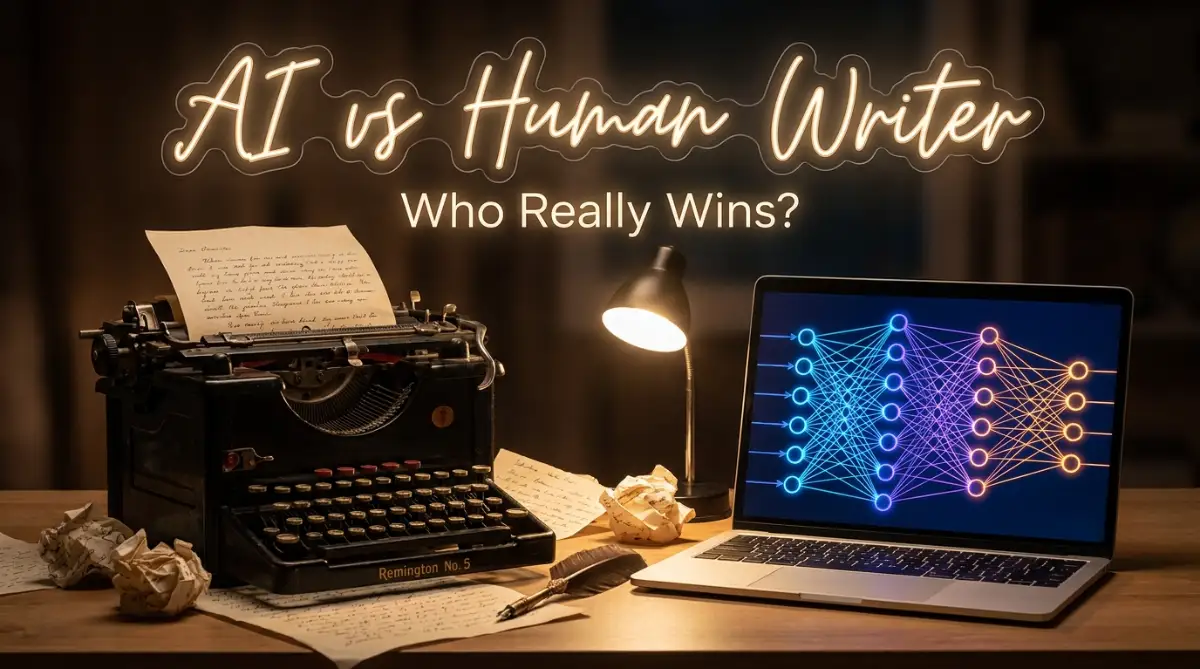
Let's be brutally honest. If I see one more article talking about how artificial intelligence is going to steal all our jobs, I might just throw my phone out the window. You have probably felt that exact same wave of panic scrolling through your social feed, wondering if your writing even matters anymore. I get it. But here is the good news: your messy, unpredictable human brain is actually your biggest advantage right now, and I am going to show you exactly why.
If you are a writer, a marketer, or someone who loves to create, I know exactly how you are feeling right now. You wake up, open your phone, and see another article about how machines are taking over creative jobs. It feels incredibly heavy on your chest. You start questioning your own skills and wondering if you should just give up entirely.
This fear is completely destroying the mental peace of amazing creators everywhere. Every time you try to write something original, a tiny voice in your head whispers that a robot could do it faster and cheaper. This silent anxiety leads to horrible writer's block and severe imposter syndrome. People who used to love telling stories are now walking away from their passions.
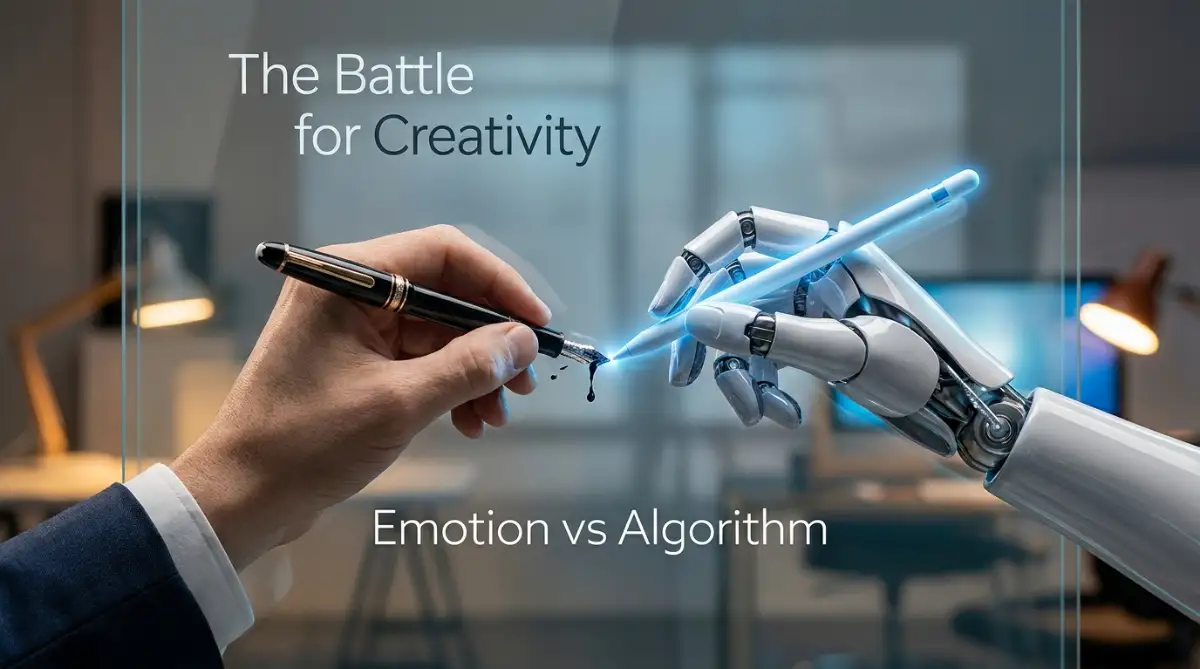
The Quick Breakdown: What You Are About to Learn
Before we get into the details, here is exactly what I want you to take away from this post:
- Your flaws are your superpower: Perfect grammar is boring; human personality is what actually sells.
- Machines predict, humans feel: I will show you why emotional storytelling beats speed every single time.
- Opinionated writing wins: How taking a firm stand protects your blog from getting swallowed by generic software output.
- The "Solar Panel" method: A simple trick to turn your messy daily life into high-value content.
Decoding the Illusion of Machine Intelligence
To really understand what is happening, we need to look past the magic tricks and see how these tools actually function. People think these systems sit down, think deeply, and come up with brilliant ideas just like a human author does. But that is completely false.
These machines do not understand a single word they are writing. They are simply advanced prediction engines, working very much like the autocorrect feature on your mobile phone. They have read billions of websites and learned which words normally belong next to each other.
When you ask a software to write a poem about rain, it does not remember the smell of wet earth. It does not know the feeling of a cold drop hitting your skin. It just mathematically calculates that words like "clouds," "drops," and "sky" usually appear together.
Quick Reality Check: AI vs Human Writing
I put together this simple table to clear up some of the biggest misconceptions we hear every single day.
The Missing Element of Lived Experience
Here is something you really need to keep in mind about your own writing. Every single sentence you write is powered by your real, messy, human life. Your experiences give your words a specific weight that no software can ever copy.
Think about the last time you read a book that made you cry or laugh out loud. You felt that way because the author poured their genuine pain, joy, or embarrassment into those pages. A computer program cannot feel embarrassment. It has never had a broken heart, and it has never felt the joy of holding a newborn baby.
I once tried letting an AI write a whole emotional scene for my blog just to see what would happen. It used big, fancy words and perfect grammar, but reading it felt exactly like chewing on cardboard—there was absolutely no flavor or soul to it. That was my biggest realization; perfect grammar does not equal emotional connection.
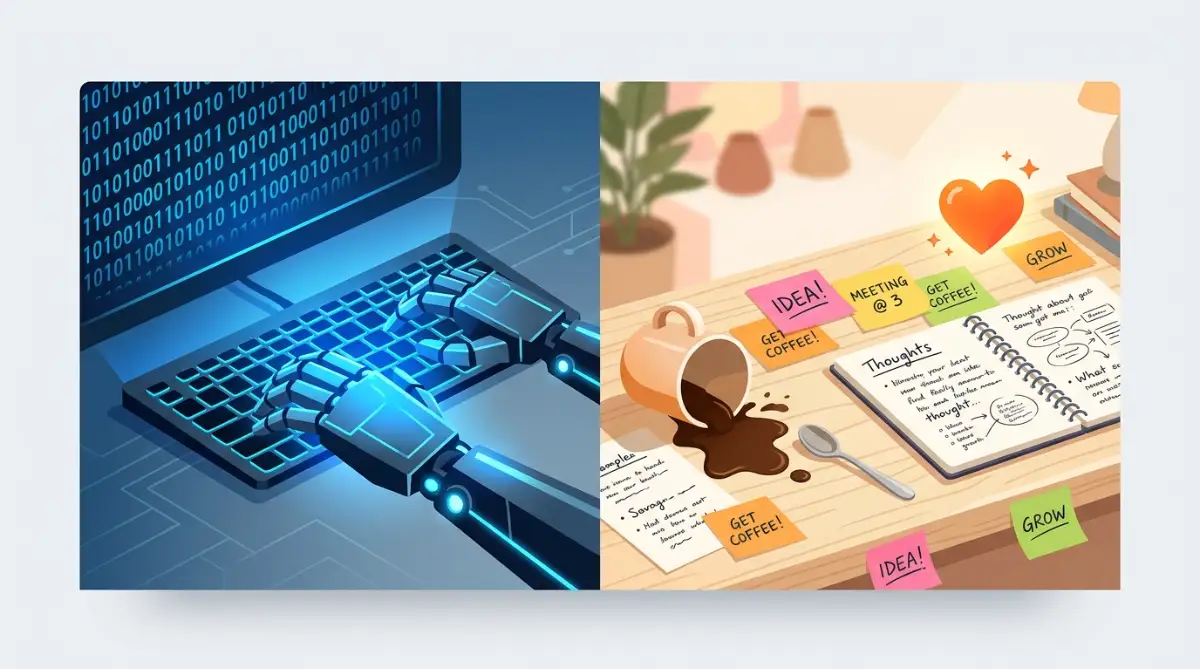
Here is a fantastic video that breaks down the psychology of why humans crave real stories from other humans, and why robotic perfection actually pushes readers away.
Why Flaws Make Your Writing Better
We often think that we need to write perfectly to be considered successful. But in reality, the tiny imperfections in your writing are exactly what make it relatable. Readers do not want to connect with a flawless dictionary. They want to connect with a real person who makes mistakes and learns from them.
When an algorithm creates an article, it always takes the safest, most predictable route. It avoids controversial opinions and smooths out all the interesting, weird angles. It creates content that is perfectly average.
But great writing is never perfectly average. Great writing takes risks, asks uncomfortable questions, and challenges the way people think. A machine is designed to please everyone, which means its writing ultimately moves no one. Your unique weirdness is your biggest advantage right now.
Comparing the Core Differences
To make this super clear, let us look at exactly what separates your human brain from a server processing data. Breaking it down helps remove the fear and shows you exactly where your power lies.
As you can see from this comparison, the things you might consider your weaknesses are actually your superpowers. You do not need to process information faster than a computer. You just need to feel things more deeply.
Changing How We Think About Productivity
Right now, the internet is obsessed with creating things as fast as humanly possible. Business owners are trying to pump out dozens of articles a day. But we need to ask ourselves a very serious question. Who is actually going to read all this automated content?
Human attention is limited. If the internet becomes flooded with million of robotic articles, readers will get completely exhausted. They will start craving authenticity more than ever before.
This means the value of real, human-crafted stories is actually going up, not down. Think of it like home-cooked food versus fast food. A machine can give you a fast food burger in two seconds. It fills your stomach, but it is not special.
Your writing is the home-cooked meal. It takes longer to prepare, and it requires actual effort. But when people consume it, they can taste the care, the love, and the specific spices you decided to use. People will always pay a premium for the home-cooked experience.
Real-World Check: Just look at Google's recent Helpful Content Updates. Millions of websites that pumped out hundreds of automated articles a day lost up to 90% of their traffic overnight. Why? Because the search engine is actively hunting for first-hand experience—something they call E-E-A-T (Experience, Expertise, Authoritativeness, and Trustworthiness). You simply cannot fake real human experience, no matter how good your prompts are.
Moving From Competition to Collaboration
Instead of looking at software as your enemy, you need to change your perspective completely. The goal is not to fight the tools, but to figure out how they can handle the boring parts of your job.
You can use these programs to fix your spelling, organize your messy notes, or brainstorm ten different headlines. But you must never let the machine do the actual thinking for you. You are the director of the movie, and the software is just your helpful assistant.
When you sit down to outline a new project, let the computer gather the basic facts. Let it find the statistics and organize the dates. This frees up your mental energy so you can focus entirely on adding your unique personality and storytelling to the piece.
Protecting Your Creative Identity
In a world where everyone has access to the exact same software, your personal brand becomes your most valuable asset. People will not follow you because you provide basic information. They can get basic information from anywhere.
They will follow you because they like how you think. They will subscribe to your blog because they enjoy your sense of humor, your personal stories, and your unique way of looking at the world. You must protect your creative voice at all costs.
Do not edit out your personality just to sound more professional. If you naturally use slang, keep it. If you like to tell funny jokes before explaining a difficult concept, do it. These small personal touches are the exact things a machine cannot replicate.
The Psychology of Reader Trust
Let us talk about why readers actually decide to trust a writer. Trust is not built by reading mathematically perfect sentences. Trust is built through shared vulnerability.
When you admit a mistake in your writing, the reader subconsciously leans in. They think, "This person is just like me." An algorithm cannot be genuinely vulnerable. It can only pretend, and human beings are incredibly good at spotting fake emotions.
Our brains are wired to detect when someone is being authentic. It is a survival mechanism we have had for thousands of years. When a reader senses that a piece of text was generated without a heartbeat behind it, they instantly stop caring about the message.
If you want to survive and thrive as a creator moving forward, you have to lean heavily into your humanity. Share the behind-the-scenes messy process of your work. Tell stories about your failures.
Rethinking the Definition of Good Content
We have been trained to believe that good content is just a collection of helpful facts. For a long time, the internet rewarded people who just made lists of information. But that era is completely over.
Information is no longer a scarce resource. It is everywhere. The new scarce resource is human connection and original thought.
If your entire writing strategy is based on summarizing what other people have already said, you are definitely in danger of being replaced. But if your strategy involves bringing a fresh perspective, asking deep questions, and connecting dots that no one else sees, you are completely safe.
You have to start viewing yourself as a philosopher of your specific niche, rather than just a reporter. A reporter just states what happened. A philosopher explains why it matters to our hearts and minds.
Practical Ways to Inject Humanity Into Your Work
So, how do you actually make sure your writing sounds completely human? The first step is to read your work out loud before you hit publish.
If you read a sentence out loud and it sounds like a corporate robot talking, delete it immediately. Write it again exactly how you would say it to a good friend over a cup of coffee. Conversational writing is the ultimate defense against automated text.
Use specific sensory details in your examples. Instead of saying "the weather was bad," say "the rain was hitting my window so hard it sounded like angry marbles." A computer will almost never generate that exact weird, highly specific comparison because it does not make statistical sense. But to a human reader, it creates a perfect mental image.
Another powerful method is to actively share your own opinions, even if they are slightly unpopular. Machines are programmed to be neutral and safe. Having a strong, well-reasoned opinion shows the reader that there is a real brain behind the screen.
Do not be afraid to take a stand on topics related to your industry. When you show passion—whether it is excitement, frustration, or hope—you instantly separate yourself from any machine output. Your passion is the invisible energy that keeps the reader hooked until the very last word.
Mastering the Art of Unpredictable Storytelling
If you want to completely outsmart automated software, you need to understand how these programs actually generate words. A computer relies entirely on predictability. It looks at a sentence and calculates the most obvious, mathematically logical word to put next.
This means machine-generated text is always safe, expected, and extremely boring. Your biggest advantage is your ability to be beautifully unpredictable. When a reader expects you to go right, you can suddenly take a sharp left turn.
You can start a business article with a weird story about walking your dog in the rain. A machine would never do this because walking a dog has no statistical relationship to business marketing. But as a human, you can beautifully tie those two separate ideas together.
This unexpected connection forces the reader to pay full attention. They suddenly want to know how the dog story connects to the main topic. This element of surprise is exactly what keeps people glued to your page.
The Strategy of Opinionated Writing
One of the easiest ways to stand out today is to simply pick a side. Algorithms are strictly programmed to stay completely neutral and avoid offending anyone. They will give you the pros and cons of a topic, but they will never tell you what they actually believe.
You are a human being with real beliefs, frustrations, and preferences. Use them to your advantage. If you think a popular industry trend is a complete waste of time, say it out loud.
Argue your point with passion and personal examples. Some readers might disagree with you, and that is actually a wonderful thing. Disagreement creates conversation, and conversation builds a highly engaged community.
When you share strong opinions, you prove that there is a real, beating heart behind the screen. People are secretly exhausted by neutral, robotic advice. They are desperately looking for someone to follow who has a clear, confident voice.
Treat Your Raw Ideas Like Natural Energy
Think about how you gather ideas from your daily life. You observe things, you feel emotions, and you learn hard lessons. These raw experiences are incredibly powerful, but they are messy.
Your job as a writer is to capture that raw energy and convert it into something your readers can easily digest. It is very similar to how raw sunlight is converted into usable household electricity through solar panels. You take the pure, unfiltered heat of your personal experience and process it into a bright, clear message.
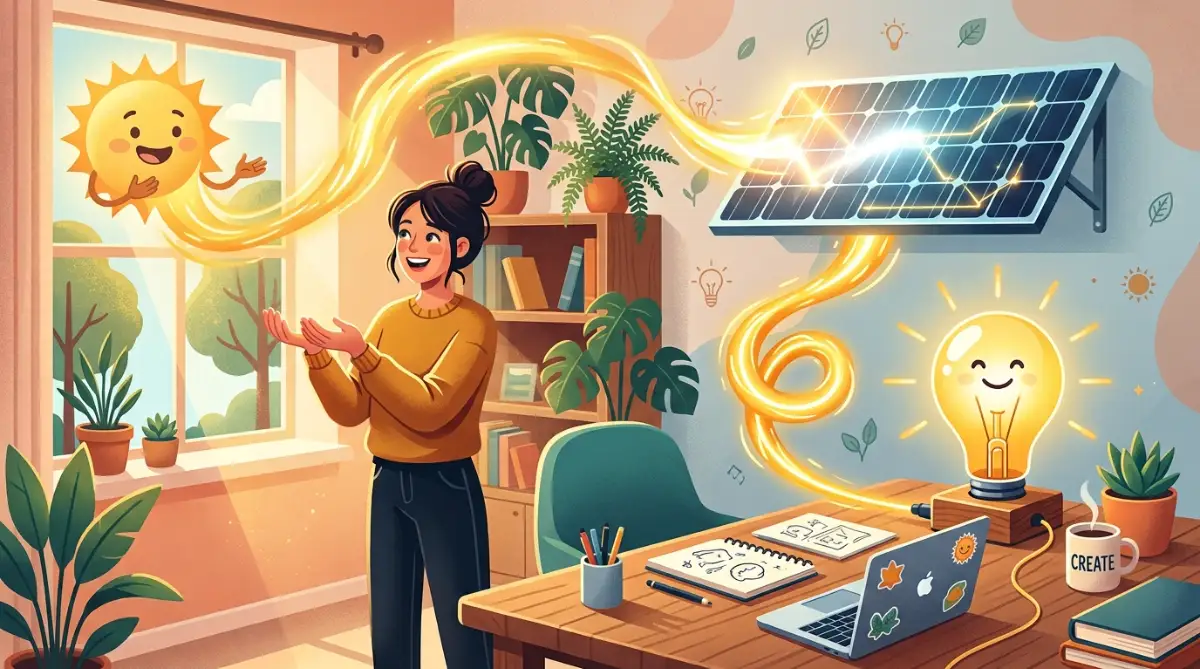
A computer program does not have a sun. It has no original source of emotional heat. It can only recycle the energy that human writers have already put into the internet.
By constantly bringing fresh, real-world experiences into your writing, you provide a warm light that no software can ever generate. Your readers will naturally gravitate toward this warmth.
Securing Your Digital Workflow
As you build this amazing personal brand, you will naturally start using different online tools to manage your work. You might download grammar checkers or note-taking extensions to make your life easier. This is perfectly fine, but you need to be very careful.
Many new plugins ask for complete access to everything you type on your screen. You do not want your highly original, private drafts being sent to unknown servers. It is extremely smart to learn how to spot and fix critical security vulnerabilities in your browser extensions before you install them.
Protecting your digital environment ensures that your unique ideas stay yours. You are creating premium, human-crafted assets. Treat your rough drafts with the respect and security they actually deserve.
The Psychology of Emotional Persuasion
We like to think that people read articles strictly to gather facts and learn new things. But science tells us a completely different story. Most people read content because they are looking for a specific emotional feeling.
Maybe they want to feel less alone in their struggles. Maybe they want to feel motivated to start a new project. You can read some amazing insights about the psychology of emotional persuasion in marketing to see how deeply this affects human behavior.
If your writing only provides plain facts, you are competing directly with machines. And you will lose that race every single time. But if your writing provides comfort, excitement, or a shared sense of frustration, you instantly become irreplaceable.
Whenever you sit down to write your next blog post, ask yourself a simple question. How do I want the person on the other side of the screen to feel when they read this? Focus entirely on delivering that exact emotion.
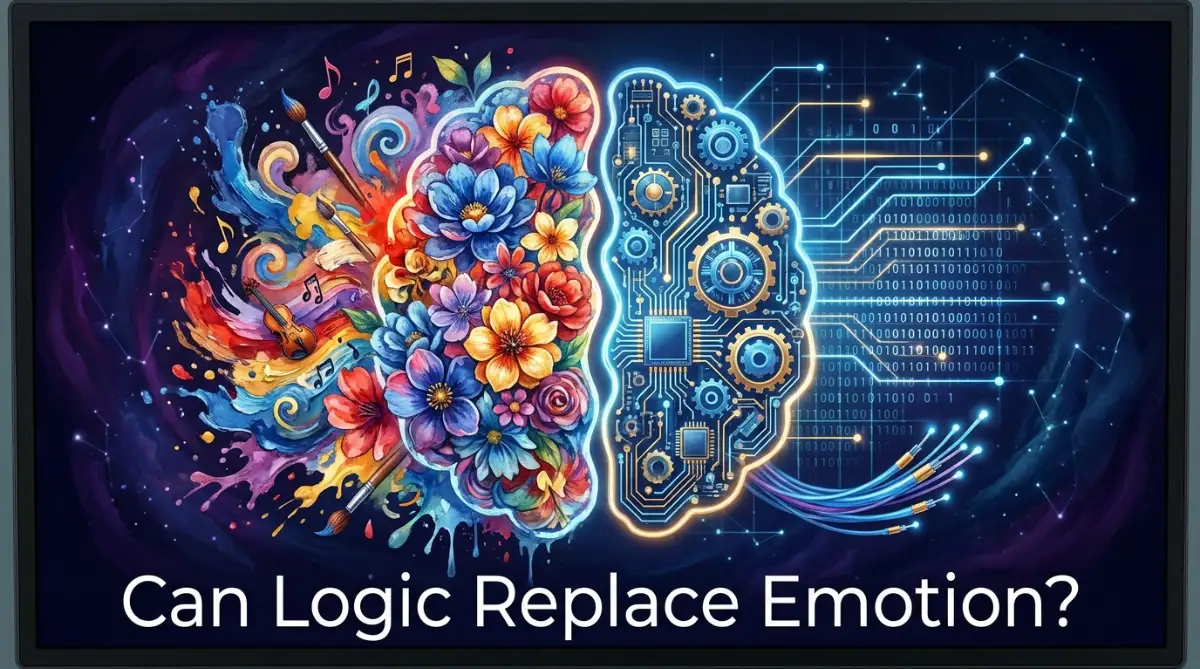
The Hidden Traps Wrecking Modern Creators
Even when we know better, it is incredibly easy to fall into bad habits. The convenience of modern technology is very tempting. I have watched incredibly talented people ruin their entire creative reputation simply because they got a little bit lazy.
You need to know exactly what these traps look like so you can actively avoid them. These are not just tiny mistakes; they are habits that will slowly destroy your unique voice.
The Dangerous "Professional Polish" Trap
This is probably the most common mistake I see on the internet right now. A writer will create a beautiful, simple, conversational paragraph. Then, they decide it does not sound "smart" enough.
They drop their perfectly good text into an automated tool and ask it to make the writing sound more professional. The tool immediately strips away all the personality, humor, and natural rhythm. It replaces simple words with highly complex, unnatural vocabulary.
Suddenly, a friendly blog post sounds like a boring legal document. This is a massive mistake. Studies regarding how everyday users actually read content on the web prove that people hate complex, corporate language.
They want to skim easily. They want to feel like they are having a casual chat with a friend. Never sacrifice your natural, conversational tone just to sound falsely intelligent.
Trusting the Hallucination Machine
Another huge pitfall is treating a prediction algorithm like a fact-checking search engine. You must remember that these systems do not know what is true and what is false. They only know what words look good together.
Because of this, they will confidently invent historical dates, fake statistics, and completely imaginary quotes. In the tech world, this is a well-documented problem. Many experts have published research on why large language models frequently hallucinate fake facts when asked specific questions.
If you publish an article containing fake statistics, your readers will eventually notice. Once a reader catches you lying, they will never trust your website again. Your reputation is your most valuable currency on the internet.
You must take personal responsibility for every single claim you publish. If a tool suggests a fact, go to a real search engine and verify it yourself. Never let a machine ruin your hard-earned credibility.
The Boring Outline Syndrome
Sometimes, creators try to compromise. They say, "I will write the words myself, but I will let the software create the outline." This sounds like a great time-saving trick, but it is actually a trap.
When you ask a machine to outline a topic, it always gives you the most generic, overused structure possible. It will suggest a basic introduction, a definition, three predictable benefits, and a summary. If your skeleton is completely boring, the meat you put on it will be boring too.
Great writing often jumps around. It starts with an aggressive question, jumps to a personal story, and then drops a huge plot twist. You cannot achieve this beautiful chaos if you follow a mathematically generated map.
If you truly want to understand how deep the problem of generic data goes, you should look into how bias and repetitive data heavily influence machine outputs. The system literally cannot give you a highly original outline because it only knows what the crowd has already done.
Moving Forward with Unshakable Confidence
The internet is changing rapidly, and it is totally normal to feel a little bit overwhelmed. But you do not need to be afraid of the future. You just need to adapt your mindset and remember what makes you special.
Think about the invention of the camera. When photography was invented, portrait painters thought their careers were completely destroyed. Why would anyone pay for a painting when a machine could capture a perfect image in seconds?
But photography did not kill painting. It simply forced painters to stop trying to be highly realistic. It gave birth to abstract art, impressionism, and surrealism. The machine took over the boring part, and humans moved on to deeper emotional expression.
This exact same shift is happening in the writing world right now. Automation is taking over the boring, robotic writing tasks. This frees you up to write things that actually matter.
The Premium Value of Human Connection
As automated content floods every corner of the internet, the value of real human stories will skyrocket. People are already getting tired of reading articles that sound exactly the same. They are actively seeking out unique perspectives and genuine personalities.
If you can provide that authentic connection, you will naturally rise to the top. Your messy, beautiful, human experiences are completely immune to any algorithm update. You can browse our main homepage for the latest insights to see how real creators continue to build trust in a changing market.
You are not competing against a super-intelligent robot. You are just competing for human attention. And human attention will always gravitate toward genuine emotion.
Keep writing your stories. Keep sharing your failures. Keep telling terrible jokes in the middle of your paragraphs. These are the exact things that make your readers smile, nod their heads, and click the subscribe button.
I truly believe my weird, imperfect human voice is my biggest asset today. My simple advice for you is to stop trying to sound like a flawless machine, and just start writing like a real friend.
Common Questions About Modern Content Creation
Will algorithms eventually replace human copywriters entirely?
No, they will not replace high-level copywriters who understand deep human psychology. While software can handle basic product descriptions, it cannot feel empathy or understand the nuanced pain points of a specific buyer. The demand for emotionally intelligent writers is actually growing.
How can I make my automated text sound more human?
The best way is to not rely on the software for the final draft. Use it strictly for brainstorming ideas or fixing grammar mistakes. You must manually rewrite the sentences using your own natural voice, adding personal anecdotes and conversational slang.
Do search engines punish websites for using generated text?
Search engines do not necessarily punish the text just because a machine wrote it. They punish content that is unhelpful, boring, and provides no original value to the reader. If you publish generic, spun articles, your site will drop in rankings because human readers will bounce away instantly.
Is it considered cheating to use software for brainstorming topics?
Not at all. Using technology to overcome a blank page or organize your scattered thoughts is just smart time management. The line is crossed only when you let the program do the actual thinking and publish the unedited output as your own original work.
Why does machine-written text always feel so similar?
These programs use mathematical probability to select the most common words and sentence structures. Because they are designed to be safe and broadly acceptable, they actively avoid controversial opinions, unique formatting, and rare vocabulary. This results in a highly repetitive, vanilla tone.
Disclaimer: The information provided in this article is for educational and informational purposes only. It is based on personal experiences, industry observations, and current trends in technology and writing. This content does not constitute professional career or legal advice. Always do your own research and exercise personal judgment before making major changes to your business or content strategy based on new software tools.