The Hidden Battle of Going Solar on the "Wrong" Side of the House
Have you ever been told your roof faces the 'wrong' way for solar? If your home points north, most standard installers will probably tell you to forget about clean energy unless you want ugly metal racks ruining your beautiful house. But before you give up on lowering your power bill, let me share a secret the average sales rep won't tell you. You can actually build a highly profitable, beautiful solar system on a north-facing roof—you just need to stop playing by the traditional rules.
Naturally, I thought adding solar panels would be the perfect next step to cut those crazy energy costs and make our home greener.
But my excitement completely crashed the moment the first solar installer looked at my property and slowly shook his head.
He told me my beautiful, wide-open main roof faced directly north, meaning it would barely catch enough direct sunlight to power a toaster.
To make matters worse, he suggested fixing the problem by installing massive, ugly metal tilt-brackets that would make my beautiful home look like a bizarre science experiment.
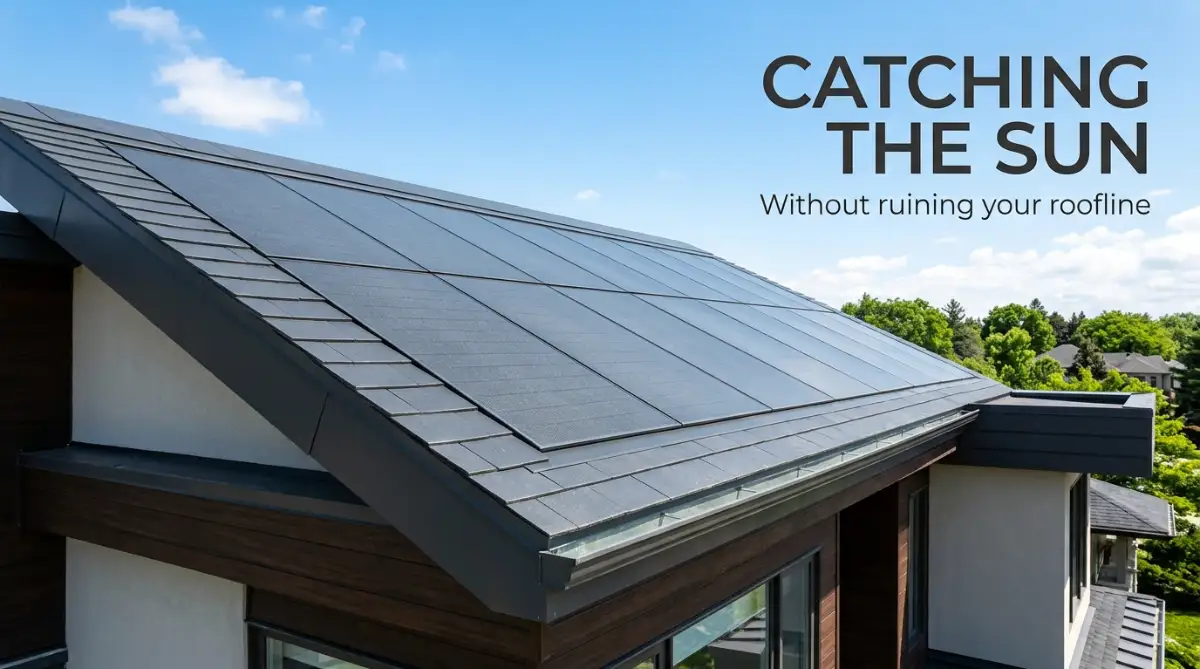
I felt incredibly frustrated and completely stuck. I wanted the financial freedom and environmental benefits of clean energy, but I absolutely refused to destroy the curb appeal of the home I had worked so hard to buy.
This is a massive struggle for so many homeowners today. You want to do the right thing for your wallet and the planet, but you are blocked by the physical direction your house faces.
Homeowners associations (HOAs) often send warning letters the moment you suggest putting raised panels on the street-facing side of your house. Even if you do not have a strict HOA, the personal pride you take in your home makes it painfully hard to accept an ugly installation.
The good news is that the solar industry has completely transformed over the past few years. You no longer have to compromise the aesthetic beauty of your home just to capture a decent amount of sunlight.
By thinking slightly outside the box and using the right modern technology, you can actually turn that tricky north-facing roof into a highly efficient energy source.
Smart Engineering Meets Aesthetic Design: Making Your Roof Work
Trying to solve this problem requires a careful mix of smart technology and clever architectural planning. You cannot just slap standard panels on a north-facing roof and hope for the best.
Instead, you need a highly strategic approach that maximizes every single ray of light your home receives. Let’s break down exactly how you can achieve this beautiful balance.
Understanding the Ambient Light Advantage
Most people think solar panels only work when direct, blinding sunlight is hitting them at a perfect 90-degree angle. While direct sunlight is obviously the best-case scenario, it is definitely not the only way panels generate power.
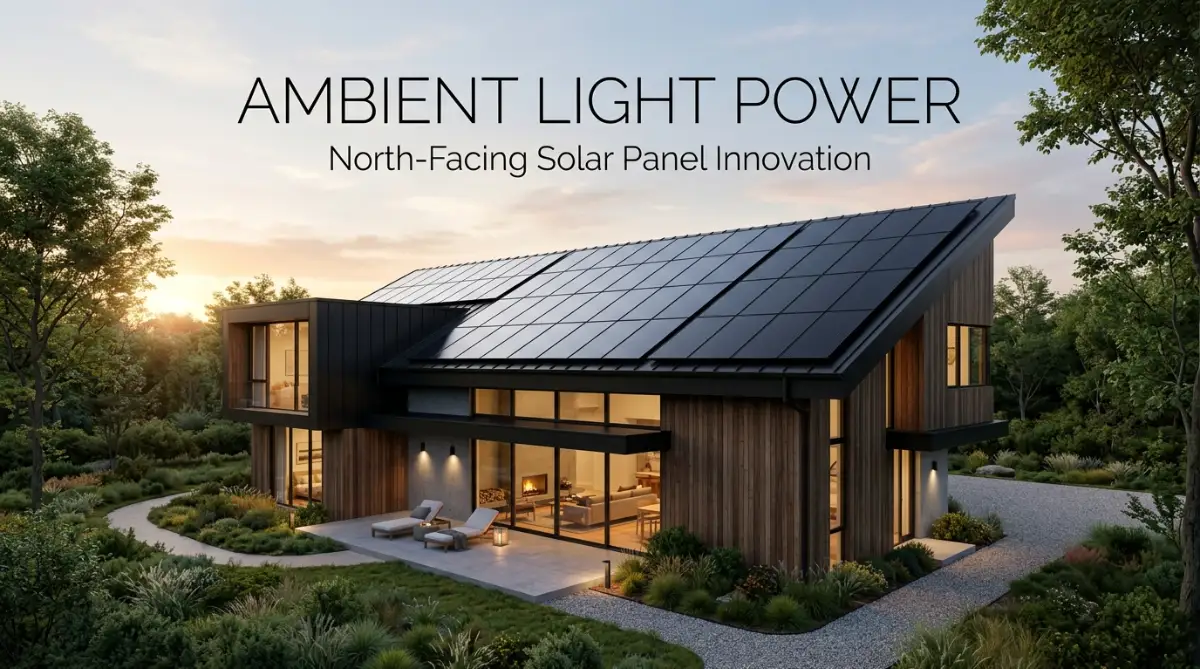
Modern solar cells are incredibly sensitive to ambient light. This is the scattered light you see bouncing off clouds, trees, and the atmosphere even when the sun is not directly overhead.
On a north-facing roof, you will be relying heavily on this ambient light. By understanding this simple scientific fact, you can stop worrying about capturing direct beams and start focusing on highly sensitive panel technology.
If you treat your roof like a giant light sponge rather than a direct mirror, your entire approach to the installation will change for the better.
Investing in Ultra-High-Efficiency Modules
Since your roof receives less overall light, you need panels that can do a lot more heavy lifting with the little light they get. This is where high-efficiency modules come into play.
Standard solar panels usually convert around 15 to 17 percent of the sunlight they receive into usable electricity. If you put those standard panels on a north-facing roof, your energy production will drop way too low to make financial sense.
Instead, you should specifically look for premium N-type monocrystalline solar panels. These advanced modules often push past 22 or 23 percent efficiency, which completely changes the math for your home.
They are designed to perform exceptionally well in low-light conditions and handle higher temperatures without losing power. Because they are so efficient, you actually need fewer panels on your roof to generate the exact same amount of energy.
Fewer panels mean a cleaner, more minimalist look for your home's exterior. You can keep the installation tightly packed together, creating a beautiful glass-like finish that perfectly matches your roofline.
The Magic of Microinverters in Shady Spots
When you have a less-than-ideal roof angle, dealing with shade becomes your biggest enemy. Even a small shadow from a nearby tree or chimney can severely drop your power output.
Traditional solar setups use something called a string inverter. Think of this like old-fashioned holiday lights; if one single bulb goes out, the entire string stops working.
If a shadow falls across just one panel on a string inverter system, every single panel on your roof drops its power output to match that shaded panel. On a north-facing roof where light is already scarce, this is an absolute disaster.
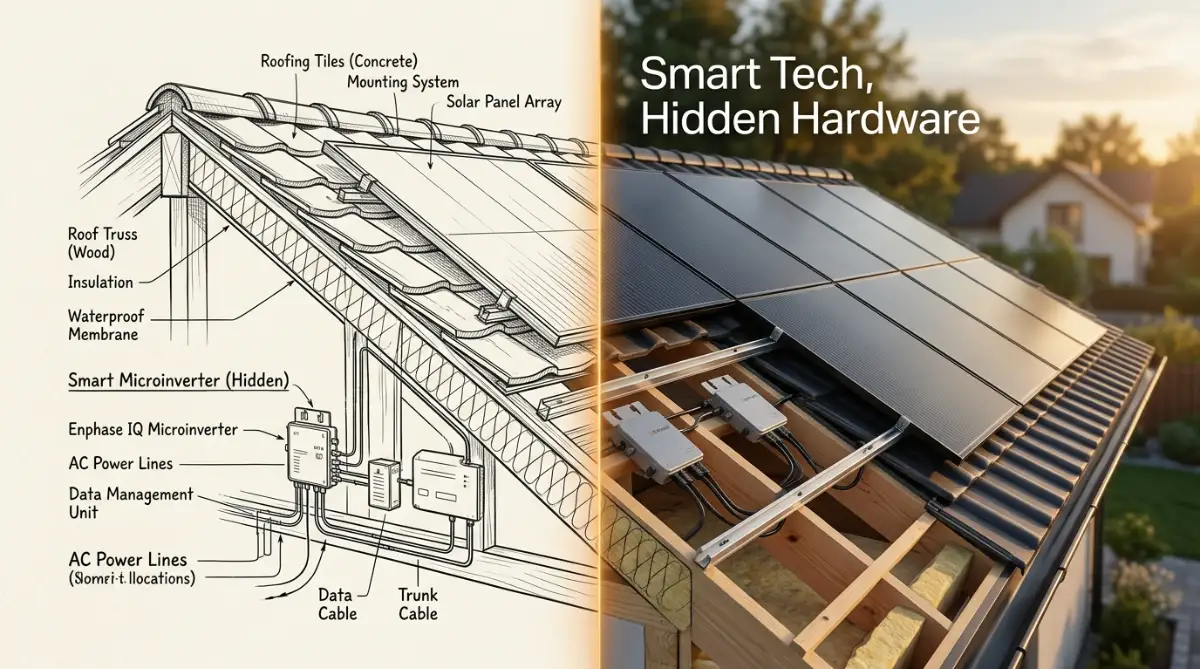
The solution is to use microinverters. These are tiny, intelligent boxes attached underneath every single solar panel on your roof.
Watch This Quick Visual Breakdown Before You Move Forward:
If you really want to understand how microinverters can save your home’s energy production without adding ugly hardware to your roof, this visual explanation is an absolute must-watch.
With microinverters, every panel operates completely independently. If one panel gets shaded by a cloud or a chimney, all the other panels keep pumping out maximum power.
This simple piece of hidden hardware makes an unbelievable difference in low-light situations. It allows you to place panels flush against the roof, exactly where they look best, without worrying about minor shadows destroying your daily energy goals.
I actually learned this the hard way during my own solar journey.
I spent weeks trying to design a system with a cheap string inverter, thinking I was saving a ton of money on hardware. It wasn't until a really honest engineer showed me the actual production numbers that I realized I was actively choking my system's potential. My biggest tip for you is to never cut corners on your inverter tech; spending a little extra on microinverters will practically pay for itself by capturing every last drop of available light.
Quick Personal Tip on Shading: I almost spent thousands of dollars upgrading my system before realizing a single overgrown oak tree branch was stealing 15% of my power. If you have a shaded roof, try trimming back surrounding branches just three to five feet. It can boost your daily energy harvest significantly without buying any extra hardware!
Clever Architectural Integration: Hiding the Hardware
The biggest fear homeowners have is that tilt-frames will ruin their beautiful house. Reverse-tilt frames are metal legs that prop the panels up so they face south, even though your roof slopes north.
From the street, they look extremely bulky, awkward, and totally out of place. But there are actually brilliant ways to use tilt angles without ruining your home's design.
One highly effective method is using parapet walls. If your home has flat or low-slope sections hidden by a raised architectural edge, you can hide heavily tilted panels completely out of sight.
Another amazing trick is installing flush-mounted panels on the north face, but adding a few strategically placed panels on your east and west-facing dormers or garage roofs.
By spreading the system across different roof planes, you can maintain a beautiful, low-profile look everywhere. The east and west panels will capture strong morning and evening sun, balancing out the lower production from the north side.
You can also request completely all-black solar panels. Traditional panels have visible silver grids and thick aluminum frames that look very industrial and messy.
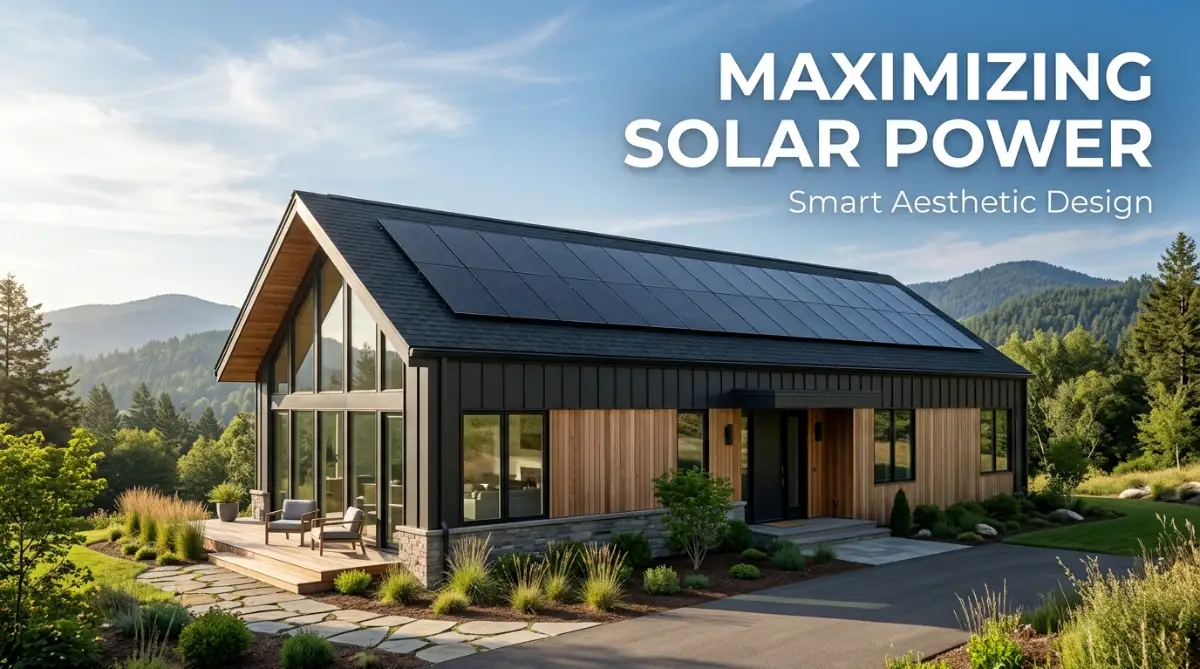
All-black panels, on the other hand, feature black backsheets, black frames, and hidden wiring. When installed closely together, they look like a sleek, modern skylight rather than a power plant.
Myth vs. Reality: North-Facing Solar
Let's clear up a few massive misunderstandings that might be holding you back from making a confident decision.
Myth: North-facing panels will never pay for themselves.
Reality: While they produce less than south-facing ones, high-efficiency panels on a north roof can still easily offset your electricity bill. The payback period might just be a few months longer, but the savings are still incredibly real.
Myth: You must use ugly tilt racks to get any power.
Reality: Flush-mounted premium panels paired with smart microinverters can gather plenty of ambient light. You absolutely do not have to use bulky metal racks if you invest in better internal technology.
Myth: The panels will look totally mismatched on the roof.
Reality: If you use integrated solar skirts and all-black mounting hardware, the entire system will look like a natural, flush extension of your existing shingles.
Analyzing Your Specific Roof Angles
Not all north-facing roofs are created equal. The actual steepness of your roof plays a massive role in how much sunlight you will successfully capture.
A very steep north-facing roof is definitely the hardest to work with because it aggressively points away from the sun's natural path in the sky. If you have a very steep pitch, you might need to rely heavier on secondary roof spaces like a garage or a shed.
However, if your roof has a relatively low or shallow pitch, you are in a fantastic position. A shallow angle means the panels are sitting almost flat, allowing them to catch an enormous amount of overhead light during the middle of the day.
A Simple Comparison of Panel Placements
To make this super easy to understand, here is a quick breakdown of how different setups impact your home's look and energy production.
As you can see, you always have choices. You do not have to settle for the very first standard design an installer hands to you.
By demanding low-profile hardware and all-black materials, you force the installers to treat your home like a piece of architecture rather than just another quick job site.
- Installer Red Flag Checklist:
- When you start getting quotes for your tricky roof, watch out for these warning signs. If an installer does any of these, walk away immediately:
- They completely refuse to use microinverters.
- They push thick, silver-framed panels to save money.
- They won't guarantee hidden conduit wiring in your written contract.
The Role of Bifacial Solar Panels
If you happen to have a flat roof section or a highly reflective roof material, you definitely need to know about bifacial solar panels.
Standard panels only capture sunlight on their top surface. The bottom side is completely solid and does not generate any electricity.
Bifacial panels are made of heavy-duty glass on both the front and the back. This means they can capture direct sunlight from the top, while simultaneously capturing light that bounces off your roof from the bottom.
If you have a light-colored or white roof membrane, the amount of light bouncing around up there is pretty spectacular. A bifacial panel can absorb that reflected light, giving your system a massive power boost without needing any extra space.
This is an incredibly smart way to squeeze more juice out of a shady situation. It is like putting mirrors behind a candle; the original light source is the same, but the overall brightness increases dramatically.
Managing Heat to Protect Performance
There is a very strange scientific fact about solar panels that most people find surprising. They actually lose power when they get too hot.
While they obviously need sunlight to work, excessive heat causes the electrical resistance inside the cells to spike, which actively lowers your energy production.
On a north-facing roof, your panels might naturally run a little bit cooler because they avoid the most intense, direct afternoon heat. This can actually work in your favor during the hottest months of the summer.
However, because you are keeping the panels perfectly flush against the roof to maintain that beautiful architectural look, you have to be careful about airflow. If the panels are bolted tightly against the shingles with zero breathing room, the heat will get trapped underneath.
You need to make sure your installer leaves a small, unnoticeable gap between the roof and the panel frame. This tiny gap acts like a natural wind tunnel.
As the hot air rises, it pulls cool air underneath the panels, naturally keeping the system at a healthy operating temperature. This small attention to detail ensures your beautiful flush-mounted system performs at its absolute peak all year round.
Communicating Your Vision to Installers
One of the biggest mistakes you can make is assuming your solar company cares about your home's design as much as you do.
Most installation crews just want to get the panels up quickly, safely, and efficiently. They are focusing on the wiring, the safety codes, and the structural integrity.
It is entirely up to you to advocate for the aesthetic side of the project. From the very first phone call, you need to make it absolutely clear that preserving the architectural beauty of your home is a top priority.
Ask them specifically to hide the electrical conduit inside the walls or the attic rather than running ugly metal pipes across the exterior of your siding.
Request a front-skirt for your panel array. A solar skirt is a sleek piece of black metal that attaches to the front bottom edge of your panels, hiding all the messy mounting rails and wires from the street view.
It acts exactly like the trim around a built-in oven, giving the entire installation a perfectly finished, premium look. These little details cost very little extra, but they completely transform how your house looks from the sidewalk.
Pushing Your Low-Light Solar System to the Absolute Limit
Once you have perfectly matched your solar panels to your roofline, the real fun actually begins. Getting the hardware installed safely is only the first part of your energy independence journey.
To really get the most out of a north-facing setup, you have to think about how you consume and store that energy. Since you are capturing less direct peak sunlight than a traditional setup, every single watt of power becomes incredibly valuable.
You want to make sure none of that hard-earned ambient energy goes to waste. The best way to do this is by combining your aesthetic solar array with a smart home battery system.
During the middle of the day, your flush-mounted panels will slowly but steadily gather power from the scattered sunlight. Instead of sending that small trickle of power back to the grid for pennies, a smart battery captures and holds it for you.
According to the National Renewable Energy Laboratory's research on understanding residential battery storage, keeping your own power on-site drastically increases your financial return. When evening rolls around and utility companies hike up their prices, your home simply switches over to the stored battery power.
You barely even notice the transition, but your electric bill definitely will. This exact strategy completely changed my perspective on low-light solar production.
I stopped worrying about hitting massive daily peak numbers and started focusing on a slow, steady, and self-sustaining energy cycle.
Shifting Your Power Habits for Maximum Efficiency
Another incredible secret to making a shaded roof highly profitable is changing when you run your heavy appliances. It is a completely free adjustment that requires zero extra hardware on your house.
Most people wait until the sun goes down to run their dishwasher, do heavy loads of laundry, or charge their electric vehicles. If you have a massive south-facing array, you might get away with this lazy habit.
But with a north-facing roof, you need to be much smarter about your power draws. You want to run those power-hungry machines right in the middle of the day when your ambient light absorption is at its absolute highest.
If you are away at work during the day, you can easily use smart plugs or built-in appliance timers to do this for you. In fact, if you already know how to automate everyday administrative tasks with rpa basics, setting up a few smart home schedules will feel like an absolute breeze.
By consuming the power the exact second it is generated, you maximize your system's efficiency and completely bypass the utility company.
The Underrated Power of Keeping Things Spotless
When you have a roof that points directly into the harsh southern sun, a thin layer of dust or pollen will not hurt your production too much. The light is so intense that it simply punches right through the dirt.
However, on a north-facing roof, you are relying on soft, scattered ambient light to power your home. Even a tiny layer of grime can act like a thick pair of sunglasses, drastically cutting down your power output.
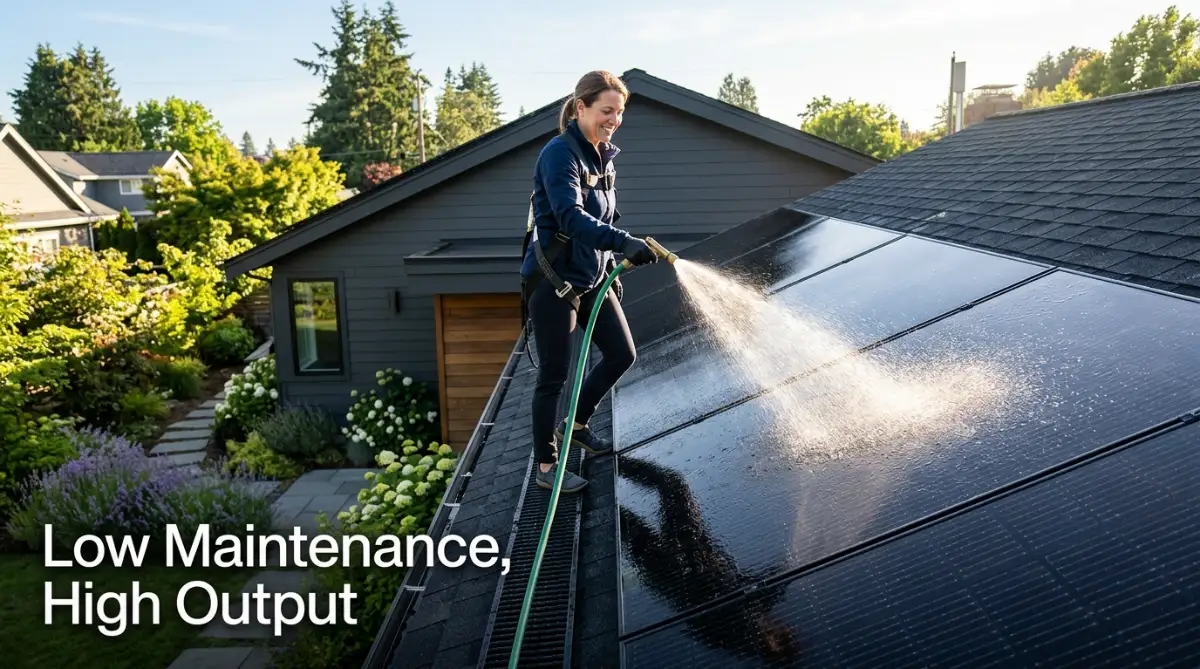
You need to establish a very gentle but consistent cleaning routine for your all-black panels. You do not need harsh chemicals or heavy scrubbing brushes to get the job done.
Just a simple spray from a garden hose in the early morning can wash away the overnight dew, dust, and tree sap. If you live in an area with hard tap water, consider using a cheap inline water filter on your hose so you do not leave cloudy calcium spots on the dark glass.
Leveraging Smart Monitoring Applications
One of the greatest benefits of using microinverters is the incredible software that comes with them. You are no longer flying blind when it comes to your home's energy production.
You can pull out your smartphone at any given moment and see exactly what each individual panel is doing. If a specific tree branch grows too long and starts casting a new shadow, the app will show you a sudden drop in that exact corner of the roof.
This level of detailed data allows you to make tiny adjustments to your landscaping before it causes a major dent in your yearly savings. You can easily track the solar photovoltaic degradation rates over the years to ensure your equipment is holding up to its warranty promises.
Just reviewing this data once a week over your morning coffee gives you total control over your investment.
The Hidden Traps That Ruin Beautiful Rooflines and Energy Goals
Trying to mix high-end home architecture with renewable energy is definitely a delicate balancing act. There are so many tiny details that seem completely harmless at first glance but can quickly turn into an expensive nightmare.
You might successfully convince your installer to use perfectly flat, all-black panels to match your stunning dark shingles. You sign the contract, feeling incredibly proud that you protected your home's curb appeal.
But then installation day arrives, and the crew runs a massive, ugly grey PVC electrical pipe straight down the front siding of your beautiful house. This is a terrifyingly common mistake that completely destroys the aesthetic you worked so hard to achieve.
Always demand a detailed, written plan for exactly where the electrical conduit will run before anyone climbs onto your roof. A premium installation crew will happily route those wires entirely through your attic space, keeping the exterior of your home perfectly clean and untouched.
The Danger of Ignoring Wind Loads
Another massive pitfall happens when homeowners stubbornly insist on forcing panels to face south using aggressive tilt brackets on a highly exposed roof. They completely ignore the physical stress this puts on the house.
When you prop a large, flat sheet of glass up on metal legs, you are basically building a giant sail on top of your home. During a heavy storm, the wind catches underneath those tilted panels and pulls upward with terrifying force.
This constant tugging can slowly loosen the lag bolts holding the system to your rafters. Eventually, this leads to microscopic cracks in your roof sealant, allowing water to silently rot the wood inside your attic.
Instead of fighting nature, it is always safer and better-looking to keep the panels flush against the roofline. If you ever decide to add the smart guide to passive solar sunrooms for cold weather to your property later, you will appreciate having a structurally sound main roof to work with.
Falling for the "Cheap Hardware" Illusion
It is incredibly tempting to accept the lowest bid when shopping for a custom solar setup. When you see a quote that is thousands of dollars cheaper than the rest, your eyes naturally light up.
But in the world of non-traditional solar designs, a cheap quote almost always means terrible hardware choices. Discount installers will push standard string inverters and blue-tinted polycrystalline panels because they are heavily overstocked in warehouses.
These cheap panels have thick silver grid lines running across them, completely ruining that sleek, modern glass look. Even worse, the standard inverter will aggressively choke your power output the moment a single cloud passes over your shaded roof.
Investing in high-quality materials upfront is the only way to protect both your property value and your monthly savings. The consumer protection guidelines for solar buyers strongly suggest thoroughly researching the specific panel brands written into your contract.
Overlooking the HOA Approval Process
If you live in a planned community, you absolutely cannot skip the formal approval process for your exterior modifications. Many homeowners assume that because their panels are on the back or north side of the house, they do not need permission.
This is a very fast way to get slapped with daily fines and a legal order to completely tear down your brand-new system. You have to approach your architectural review board early, armed with highly detailed 3D renderings of the proposed flush-mount design.
Show them exactly how the low-profile, all-black panels will seamlessly blend into the surrounding roof environment. When you present it as a modern architectural upgrade rather than a bulky science project, they are significantly more likely to approve your request without a fight.
Just like you would follow strict rules on how to create sustainable naming conventions for automated webhooks in a software project, you must follow the strict aesthetic guidelines of your local neighborhood.
Your Next Steps Toward a Beautiful, Energy-Independent Home
You no longer have to stare at your electric bill in frustration just because your house faces the wrong direction. The technology, the design strategies, and the aesthetic hardware all exist right now to solve this exact problem.
You have learned that ambient light is a highly powerful resource when you capture it with premium, ultra-efficient modules. You also know that microinverters are your absolute best friend when it comes to fighting off shadows and managing low-light conditions.
By demanding low-profile mounting hardware and completely black panels, you can turn a difficult roofing angle into a stunning, modern feature. It is entirely possible to drastically lower your carbon footprint without sacrificing a single ounce of curb appeal.
Take a deep breath and start gathering quotes from installers who specialize in custom, architectural solar designs. Check their past portfolios carefully to ensure they know how to hide wires, use solar skirts, and respect a beautiful home exterior.
You deserve to enjoy the incredible financial benefits of clean energy while keeping the home you love looking absolutely perfect.
I really hope this guide gives you the confidence to push forward with your solar project, no matter which way your roof points. My own journey was filled with frustrating roadblocks at first, but standing outside today, looking at my sleek, powerful, and beautifully integrated roof, I can confidently say it is worth every single effort.
Common Questions About Shaded and Non-Traditional Solar Setups
Do north-facing solar panels work during the winter months?
Yes, they absolutely still produce electricity during the winter. Because they rely heavily on ambient and scattered light, snow-covered ground can actually reflect extra light back up toward your roof, slightly boosting winter performance.
Can I just add more panels to make up for the bad roof angle?
Adding more panels is a great strategy if you have the physical space available on your roof. Because high-efficiency panels produce slightly less power when facing away from the sun, expanding the physical size of the array easily balances out the total energy gathered.
Will installing flush-mounted panels void my roof warranty?
As long as you use a certified, professional installer who follows proper flashing and sealing guidelines, your roof warranty should remain completely intact. You should always confirm this directly with your roofing manufacturer before any drilling begins.
How much overall energy do you actually lose by not facing south?
Generally speaking, a perfectly pitched north-facing roof might produce around twenty to thirty percent less energy than a perfect south-facing one. However, by using premium high-efficiency panels and smart inverters, you can easily shrink that gap and still see incredible monthly savings.
Are all-black solar panels more expensive than standard ones?
They usually cost slightly more than standard blue panels with silver frames, but the price difference has dropped significantly in recent years. For most homeowners, paying a tiny premium for a beautifully disguised, architecturally pleasing roof is an absolute no-brainer.
Disclaimer: The information provided in this blog post is for educational and informational purposes only. Solar energy production, financial savings, and installation requirements vary heavily based on your specific geographic location, weather patterns, and local utility rates. Always consult with a certified local solar engineer or structural professional before making major modifications to your home's exterior or electrical systems.