The Frustrating Reality Behind Neighborhood Energy Rules
Got a rejection letter from your neighborhood board for your new home energy system? Yeah, I have been there too. You just want to cut your electric bills and do something good for the planet, but suddenly you are fighting a stressful battle over roof aesthetics. Don't panic. Getting past the strict neighborhood rules is actually pretty easy once you learn how to speak their language. Let me show you exactly how to get that approval stamp without pulling your hair out.
This is a very common reality for so many homeowners right now. You save up your hard-earned money, find a highly rated local installer, and feel good about reducing your carbon footprint. Then, a seemingly endless wall of red tape stops you dead in your tracks.
People are losing sleep over unexpected aesthetic demands and endless committee meetings. It feels incredibly unfair when you see your neighbors putting up ugly plastic storage sheds, yet you cannot install a sleek, modern energy system.
It creates real anxiety when the people who are supposed to protect your neighborhood property values seem to be working directly against you. Many families just give up on their dream of energy independence because the paperwork and arguments become too stressful to handle.
But you do not have to give up on your energy goals just yet. I learned the hard way that getting past these strict neighborhood committees is not about fighting them. Instead, it is about speaking their language, understanding the actual laws, and presenting a design they simply cannot refuse.
What You Will Learn Today (Quick Summary):
- How to read your neighborhood rulebook so you know exactly what the board wants.
- The smart hardware upgrades (like black frames and solar skirts) that guarantee a fast yes.
- Why you should never install anything before getting a signed piece of paper.
- How to use state access laws to protect your right to home energy
Decoding the Hidden Language of Property Guidelines
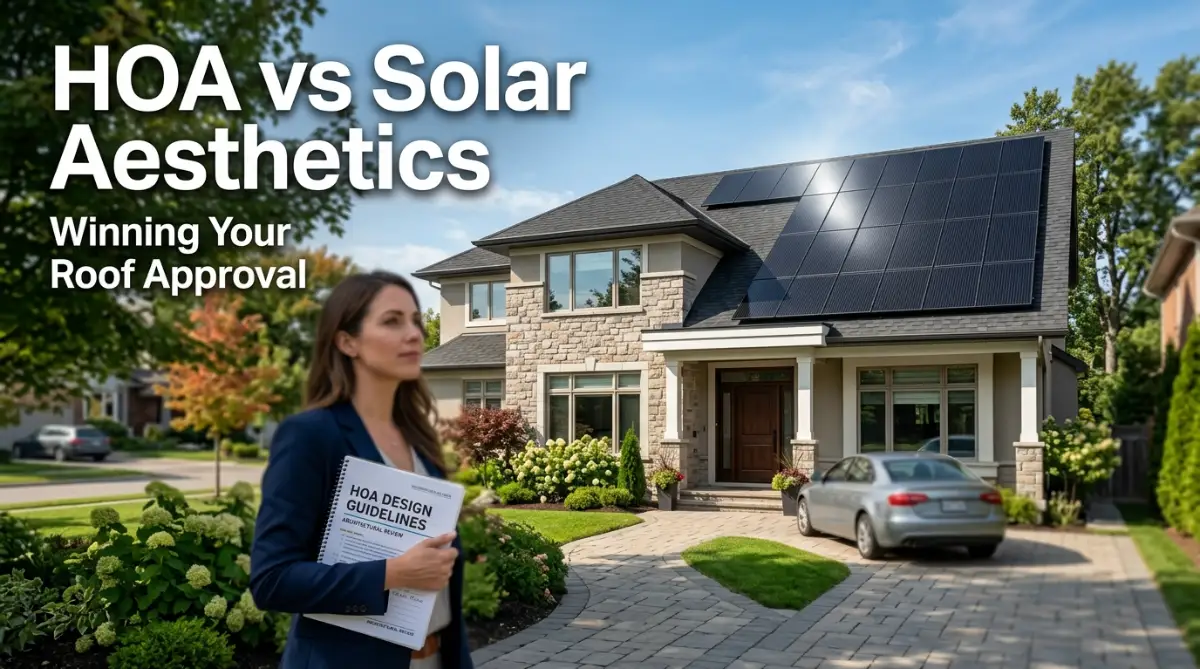
When you first read through your community rulebook, it usually looks like a confusing legal document. These documents are often called Covenants, Conditions, and Restrictions (CC&Rs). Most people just skim through them and hope for the best.
However, ignoring the fine print is the biggest mistake you can make when planning your energy project. You have to read these rules carefully to find exactly what the board cares about most.
Usually, their biggest fear is that your house will suddenly look like an industrial power plant. They worry about shiny silver frames, messy wires running down the side of your house, and panels sticking up at strange angles.
If you can understand their specific visual fears, you can easily design a system that completely avoids them. It is like playing a strategic board game where knowing the rules gives you a massive advantage.
My Personal 3-Step Board Approval Checklist:
- Step 1: Grab a copy of your specific neighborhood rulebook (CC&Rs) and highlight every single mention of "exterior additions" or "roofing."
- Step 2: Walk around your street. Spot 2 or 3 houses that already have panels. Write down exactly how their panels look.
- Step 3: Use those existing homes as proof in your application. If the board approved them, they have to approve a similarly designed system for you.
Myth vs. Reality: The Visual Impact
Myth: Neighborhood boards hate all forms of modern energy systems.
Reality: They do not hate the energy system itself; they just hate ugly, poorly planned installations.
Myth: You must hide everything on the back of your house, even if there is no sun.
Reality: Many local laws actually prevent boards from forcing you to put panels in shaded areas just for looks.
Myth: A visually pleasing installation will cost twice as much.
Reality: Simple changes, like painting conduit pipes to match your house, cost almost nothing but make a huge difference to a committee.
By breaking down these common misunderstandings, we can approach the committee with a clear and confident mindset. You are not asking for a favor; you are presenting a home improvement project.
Mastering the Art of Aesthetic Integration
Now that we know what scares the committee, we need to focus on the physical look of your system. This is where science and smart design come together to create something beautiful.
Not all equipment looks the same, and choosing the right materials is your strongest weapon for getting a fast approval. The goal is to make your new equipment look like a natural, intended part of your roof's original architecture.
Want to see exactly how to hide those ugly electrical wires and make your roof look amazing? Watch this short breakdown below before you submit your plans!
Choosing the Right Cell Technology
The type of cell technology you choose has a massive impact on the final look. Most residential setups use either monocrystalline or polycrystalline materials.
Polycrystalline panels often have a bright blue, shattered-glass appearance with thick silver grid lines. While they are slightly cheaper, neighborhood committees absolutely hate this bold, distracting look.
On the other hand, monocrystalline panels are made from a single, pure silicon structure. This scientific process gives them a deep, solid black color that looks incredibly sleek. When you pair these black cells with a black aluminum frame, the entire system practically disappears against a dark roof.
The Magic of Low-Profile Mounting
How your equipment sits on the roof is just as important as the equipment itself. Older systems used bulky metal racks that made the panels sit several inches above the shingles.
This created an ugly gap where leaves, dirt, and birds could gather, which is a major red flag for any architectural committee. Today, you can request low-profile mounting hardware from your installer.
This hardware keeps the system incredibly close to the roof surface. It creates a smooth, flush appearance that looks more like a modern skylight than a piece of heavy machinery.
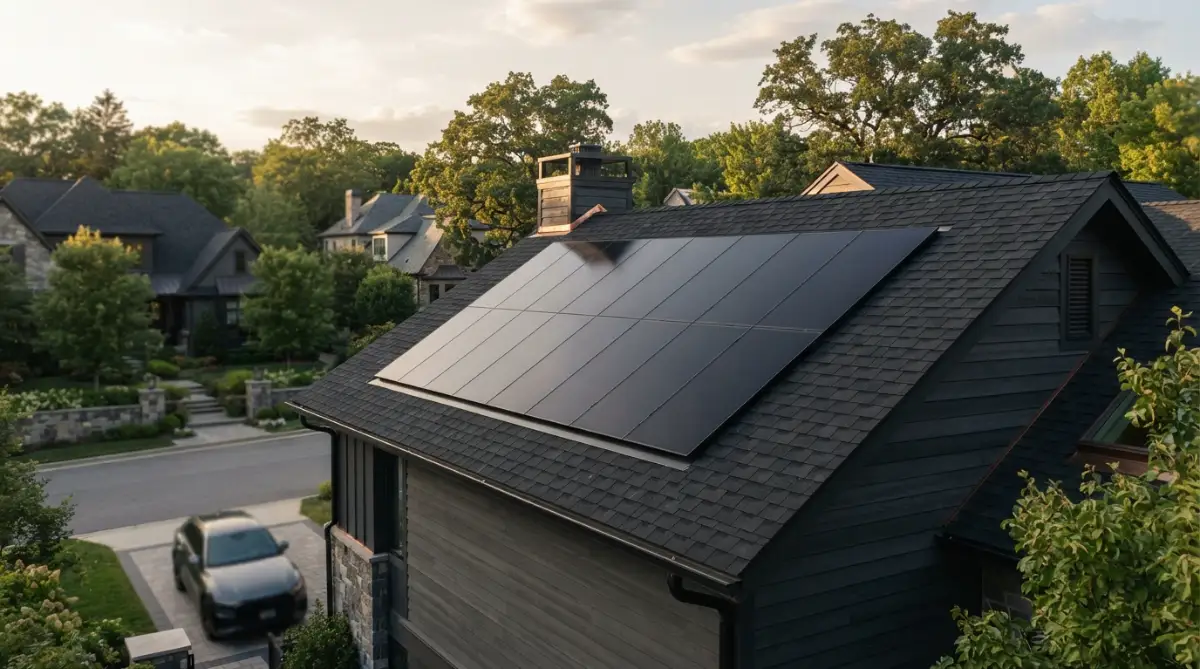
My biggest mistake was assuming the board would just understand the technical terms on my application, which only made them more suspicious. I finally learned that you have to clearly explain the visual benefits of these low-profile mounts in plain English, so they can easily picture how clean it will look.
Aesthetic Upgrades That Guarantee Approval
Using these simple upgrades shows the committee that you respect the visual harmony of the street. It proves that you are a responsible neighbor who cares about property values just as much as they do.
Understanding Your Protected Rights
Many homeowners do not realize that they actually have the law on their side. You do not have to simply accept a rejection letter if the board is being unreasonable.
Across many regions, specific laws called Solar Access Rights exist to protect your ability to generate your own power. These laws clearly state that a neighborhood organization cannot completely ban you from installing a system.
They also cannot force you to make changes that would drastically lower your energy production. For example, if the only sunny spot is on the front of your house, the board cannot force you to put the panels on the shaded back roof.
If their requested changes increase your installation costs by a large, unreasonable percentage, the law usually says you can ignore their demands. However, these legal protections do not mean you can just install whatever you want without permission.
You still have to follow the proper application process and try to meet their visual standards reasonably. The key is to politely remind them of these access rights if they try to block your project completely.
Quick Legal Fact Check:
Did you know that over 20 states in the US have strict "Solar Access Rights"? This means your neighborhood association literally breaks the law if they try to flat-out ban you from putting up panels. They can ask you to hide the wires, but they cannot stop you from generating your own power. Knowing this single fact gives you the upper hand in any board meeting.
When you calmly mention state protections in your application, committees tend to review your plans much more carefully and fairly. They want to avoid legal trouble just as much as you do.
Building the Perfect Architectural Proposal
Your application is your one big chance to make a great first impression. If you just hand them a messy stack of generic papers from your installer, they will likely find a reason to say no.
You need to put together a complete, highly professional proposal packet. Think of this packet as a visual story that clearly proves your new system will look fantastic.
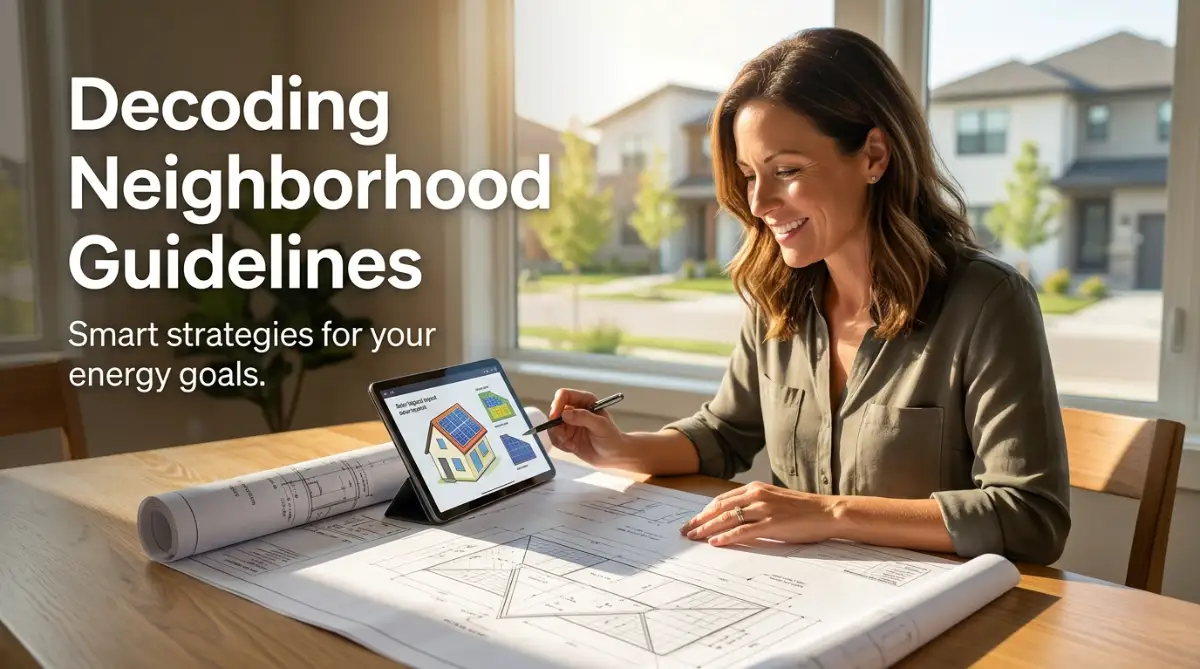
Start with high-quality satellite images of your property, showing exactly where the equipment will go. Use a bold red pen to outline the sunniest areas, providing a logical, science-based reason for the placement.
Next, ask your installer for a 3D digital mockup of your actual house with the panels attached. A realistic picture easily removes their fear of the unknown.
Always include a special section in your packet dedicated purely to aesthetics. List the black frames, the low-profile mounts, and the hidden wires we talked about earlier.
When a board member sees that you have specifically addressed their visual concerns before they even had to ask, they immediately trust you. This level of preparation turns a difficult negotiation into a simple, friendly approval process.
Smart Strategies for Long-Term Board Harmony
Getting your initial design approved is an amazing feeling, but your relationship with the neighborhood committee does not end there. You want to make sure your beautiful new energy system stays on their good side for years to come.
Many people think that once the equipment is on the roof, they never have to think about the association rules again. This is a very common misunderstanding that can lead to surprise warning letters in your mailbox.
Committees change members frequently, and a new president might suddenly care a lot more about how things look from the street. You need a solid, long-term strategy to protect your investment and keep your home looking perfectly compliant.
The "Pre-Approval Handshake" Method
Before you even submit your formal paperwork to the board, try talking to your immediate neighbors. This is a secret step that almost guarantees a smoother process.
Take a copy of your 3D roof mockup and simply show it to the people living directly next door and across the street. Ask for their honest feedback and explain how you are taking extra steps to keep the street looking nice.
If you can get a few signatures from your neighbors saying they support your project, attach those to your application. When the architectural board sees that the people closest to your house are happy, they instantly relax their guard.
They are far less likely to reject a project if nobody in the immediate area is complaining about it. This simple, friendly approach removes almost all the tension from the review process.
Managing The Hidden Aging Process
Over time, everything on the outside of your house gets dirty, and your roof equipment is no exception. A thick layer of dust, bird droppings, or pollen can completely ruin that sleek black look you worked so hard to get approved.
If your panels start looking gray and messy, a strict neighborhood board might actually cite you for poor property maintenance. You need to plan for regular, professional cleaning to keep that custom glass looking sharp and practically invisible against your roof tiles.
You also need to think about the hidden components underneath those dark glass panels. Understanding the natural lifespan of residential solar microinverters helps you plan for future maintenance without surprising the committee.
If an installer has to come back five years later to replace a broken part, you want to make sure they put the aesthetic covers back correctly. Always take a photo of your roof right after the initial installation is finished.
Keep this photo saved in your files forever. If a repair crew ever leaves a wire hanging out, you have proof of how it is supposed to look so you can demand they fix it.
Future-Proofing Your Home's Architecture
Sometimes, you might want to expand your system if you buy an electric car or build a pool. Adding more panels later requires a brand new application process with your neighborhood organization.
Smart homeowners plan ahead for this by understanding their total energy needs right from the start. You can learn exactly how to calculate the roof square footage needed to power a 4-bedroom house before you submit your very first proposal.
By showing the board your long-term vision, you prevent them from being shocked if you ask to add three more panels down the road. Transparency builds trust, and trust is exactly what gets architectural plans approved.
If you want to dig deeper into the actual rules that govern these boards, look into professional architectural review committee guidelines published by national community associations. Understanding how they are trained to think will always keep you one step ahead.
The Biggest Traps Homeowners Fall Into
Navigating property rules can feel like walking through a minefield blindfolded. Even with the best intentions, a single misstep can cost you thousands of dollars and completely ruin your peace of mind.
I have seen so many families get totally heartbroken because they rushed into a project without respecting the neighborhood authority. You have to protect yourself by recognizing these dangerous traps before you fall into them.
When you know exactly what not to do, the path to energy independence becomes clear and safe. Let's break down the most painful mistakes you absolutely must avoid.
The Retroactive Approval Nightmare
The single most dangerous mistake you can make is installing the equipment first and asking for permission later. Some aggressive sales representatives might tell you to just put the panels up because "the board cannot legally stop you."
Please, never listen to this terrible advice. While you might have legal rights, skipping the official application process automatically puts you in violation of your local contract.
I once heard about a family who installed a massive system on their front roof without telling anyone. The neighborhood association immediately fined them fifty dollars a day and eventually hired a lawyer.
The family was legally forced to pay a crew to take the entire system down, fix the holes in the roof, and submit a proper application. They lost nearly ten thousand dollars simply because they tried to bypass the rules.
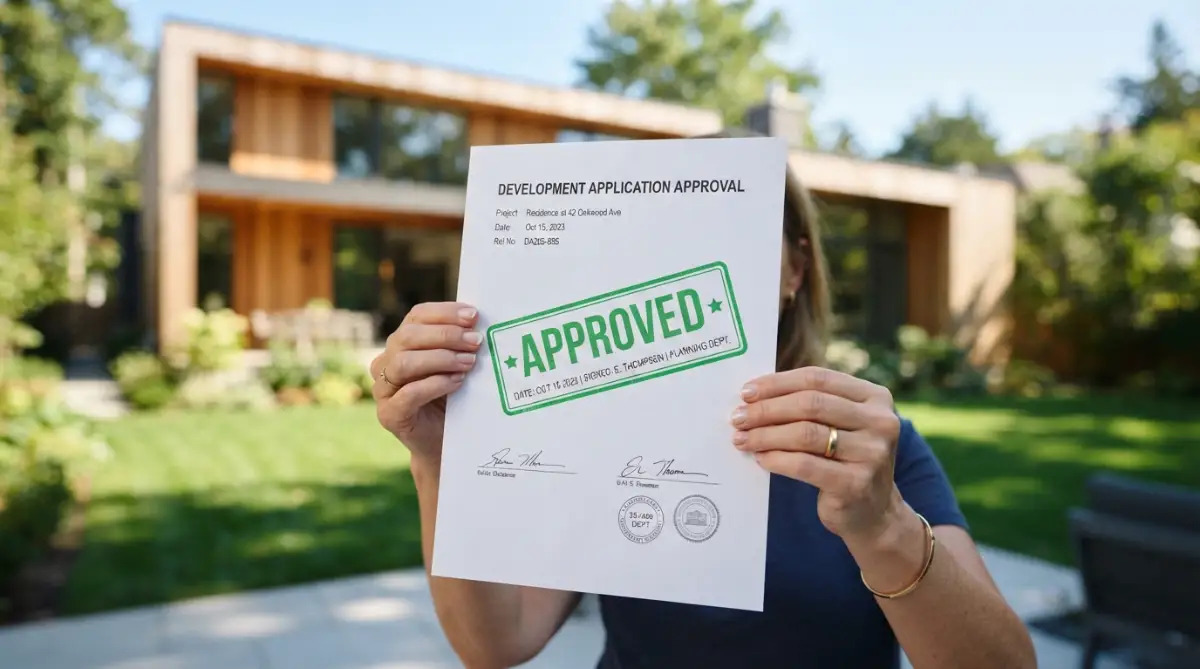
Always get that final, signed approval letter in your hand before a single worker steps onto your property. Your financial safety depends entirely on having that written permission.
Ignoring the Conduit Routing
Most homeowners obsess over how the actual panels look, but they completely forget about the electrical wiring. This is a massive blind spot that ruins beautiful home designs every single day.
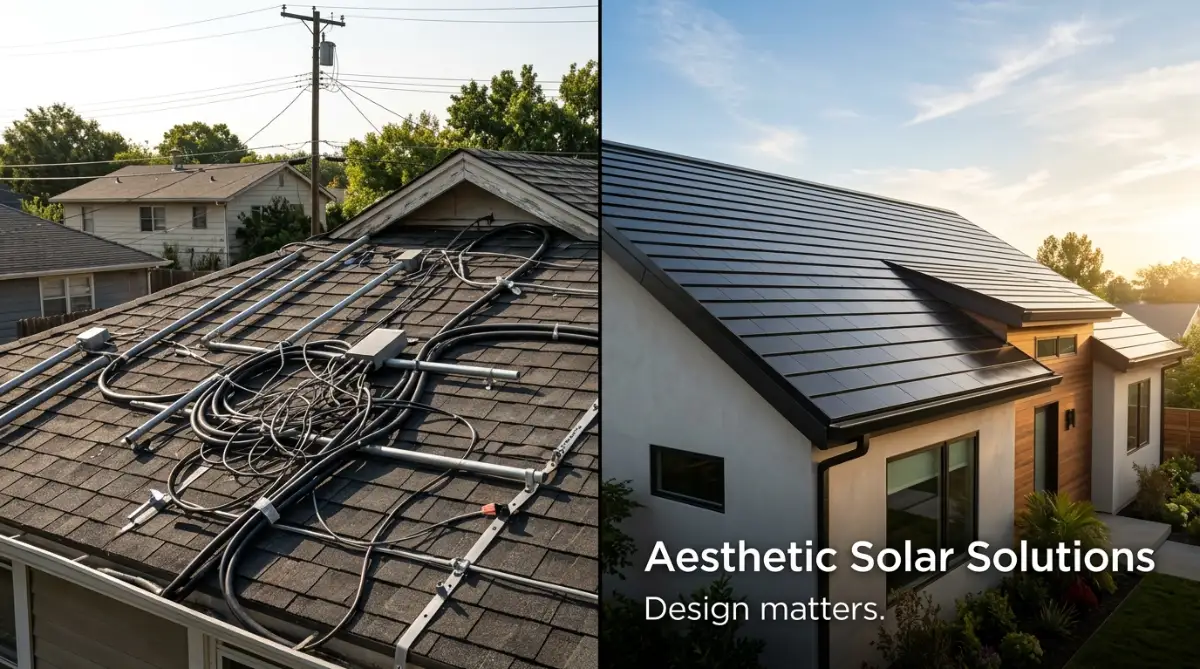
Installers naturally want to finish their job as quickly as possible. If you do not give them specific instructions, they will run thick, ugly metal pipes straight across your roof and down the side of your siding.
Neighborhood boards absolutely despise visible pipes. If you submit a plan that does not clearly explain how the wires will be hidden, they will reject it immediately.
You must demand that your installer routes the main electrical lines through your attic space instead of over the roof. If they absolutely have to run a pipe on the outside, make sure your contract states they will paint it to match your exact house color.
Small details like paint color and wire placement are what separate a professional project from a messy eyesore. Do not let a lazy installation crew ruin your relationship with your neighbors.
Falling for the "Generic Packet" Trap
When you sign up with a big national energy company, they usually handle the neighborhood paperwork for you. This sounds like a great benefit, but it is often a huge trap.
These massive companies send out thousands of generic, robotic applications every single week. They do not care about the unique, historical charm of your specific street.
They will submit a plain black-and-white sketch that looks like a factory blueprint. When your local board sees a generic document with no aesthetic details, they feel disrespected and look for reasons to say no.
Take control of your own application process. You can still use the company's technical data, but you should personally write a friendly cover letter to the board.
Explain how you carefully selected modern solar cell color options that will blend perfectly with the neighborhood style. A little bit of personal, human effort goes a incredibly long way in these situations.
Assuming All Boards Are the Same
Just because your friend in the next town over got a simple, fast approval does not mean you will. Every single homeowner association has its own unique personality, fears, and internal politics.
Some boards are progressive and love green energy, while others are highly conservative and want nothing to change. Treating your strict committee like a relaxed one will quickly result in a rejected application.
You must do your homework on your specific community. Talk to people who have already installed systems on your street and ask them exactly what the board complained about.
If you are just starting to research your rights and options, I highly recommend exploring trusted online resources to educate yourself thoroughly. The more you know about local property dynamics, the less stressful this entire journey will be.
Your Blueprint for a Beautiful, Powered Home
We have covered a massive amount of ground today, and I know this process can still feel a bit overwhelming. But you now hold the exact blueprint needed to beat the red tape and create something amazing.
You understand that getting past a strict neighborhood board is an exercise in empathy and smart design. You are no longer just a homeowner asking for a favor; you are an educated neighbor presenting a flawless architectural plan.
By focusing on sleek black frames, hidden wires, and low-profile mounts, you remove every single visual fear the committee has. You also know how to politely stand your ground using state-protected solar access laws if they ever try to block you unfairly.
Think of organizing your neighborhood application just like you would organize a work project. If you know how to connect your email client to project management tools, you can easily use those same skills to track your board communications and deadlines.
Staying highly organized ensures you never miss a required document or an important meeting date. It proves to the committee that you are serious, responsible, and ready to improve your property.
When installed beautifully, these modern systems actually increase local property values, which is the ultimate goal of any neighborhood association. You are doing a wonderful thing for your wallet, your street, and the environment.
I remember the deep sense of relief I felt when my revised application finally came back with a big green "APPROVED" stamp on it. It took patience, careful planning, and a lot of deep breaths, but seeing my electric bill drop to almost nothing made every single frustrating meeting completely worth it. My best advice to you right now is to print out your community rules tonight, highlight the aesthetic sections, and start building a proposal they simply cannot reject!
Common Questions About Roof Energy Approvals
Can my neighborhood association legally ban me from getting panels?
In many areas, they absolutely cannot issue a complete ban due to specific state access laws. However, they do have the legal right to enforce reasonable visual rules about where and how the equipment is placed. You still have to play by their architectural rules to get approved.
What happens if the committee simply ignores my application?
Most neighborhood contracts have a specific timeline, usually around thirty to sixty days, for the board to respond. If they fail to answer you within that written timeframe, your project is often automatically approved by default. Always keep certified mail receipts to prove exactly when you submitted your packet.
Do aesthetic covers like solar skirts reduce my power output?
No, these visual upgrades do not negatively impact your energy production at all. A front trim piece simply covers the ugly metal hardware beneath the glass and gives the system a finished, premium look. It is purely a decorative choice that keeps the association happy.
Will painting the exterior electrical pipes void my equipment warranty?
Painting standard exterior metal conduits to match your house siding is a very common practice and generally does not affect any warranties. However, you should always ask your specific installation company to handle the painting during the setup. They know exactly which parts are safe to cover and which parts need to remain visible for safety.
How can I make my system virtually invisible from the street?
The best trick is to ask your installer to map out a design on the rear or side roof, assuming those areas get enough direct sunlight. If you must use the front roof, insist on all-black panels, black mounting rails, and wire routing directly through your attic space. This creates a smooth, flush surface that blends beautifully into dark shingles.
Disclaimer: The information provided in this article is for educational and informational purposes only and should not be construed as legal or professional architectural advice. Homeowner Association (HOA) rules, state laws, and local building codes vary widely by location. Always consult with a licensed contractor, real estate attorney, or your specific neighborhood board before making any financial commitments or physical changes to your property.