The Frustrating Reality of Going Solar
Let's be honest—figuring out if your roof is actually big enough for solar feels like trying to pass a math test you didn't study for. If you live in a 4-bedroom house, your family probably uses a ton of power, and one wrong measurement could leave you stuck paying both a solar loan and a utility bill. Today, I am going to show you exactly how to find out if your roof can handle the gear you need, no engineering degree required.
They wanted to know if my roof had enough square footage to support a full system that could power my entire family's lifestyle. I honestly had no idea, and that single question sent me down a massive rabbit hole of calculations and late-night research. That confusion is something so many homeowners face every single day.
We want to do the right thing for our wallets and the environment, but the technical jargon just gets in the way. When you live in a bigger house with multiple bedrooms, your energy needs are completely different from a small starter home. You have more air conditioning units running, extra televisions, and a bigger refrigerator working around the clock to feed a family.
Dealing with sky-high utility rates creates this constant background anxiety for families everywhere. You end up telling your kids to turn off the lights constantly or sweating through the afternoon just to save a few dollars. It feels incredibly unfair when you finally try to switch to renewable energy but hit a brick wall of confusing math.
Installers throw around terms like kilowatts and peak sun hours, leaving regular people feeling overwhelmed and paralyzed by the choices. Figuring out exactly how much roof space you actually need should not require an advanced degree in engineering or mathematics. If you get the math wrong, you might end up with a solar array that only covers half your bill, leaving you stuck paying a utility bill and a solar loan at the exact same time.
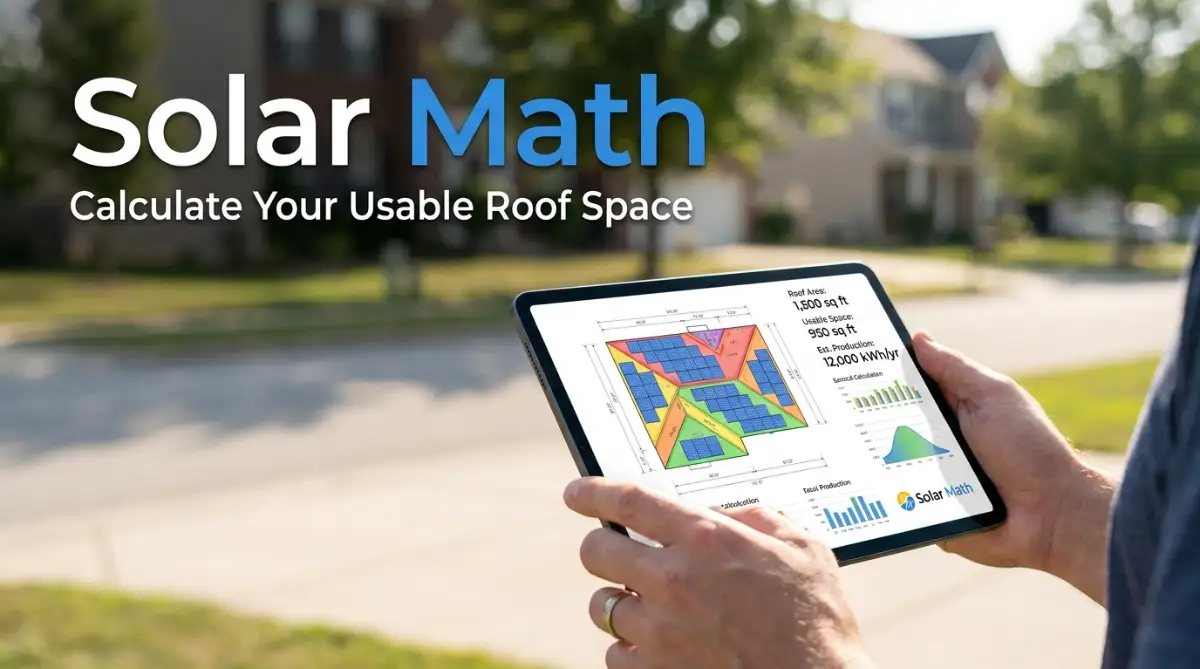
What You Need to Know Upfront
- Find Your Number: You need your total yearly kWh usage from your electric bill before you do anything else.
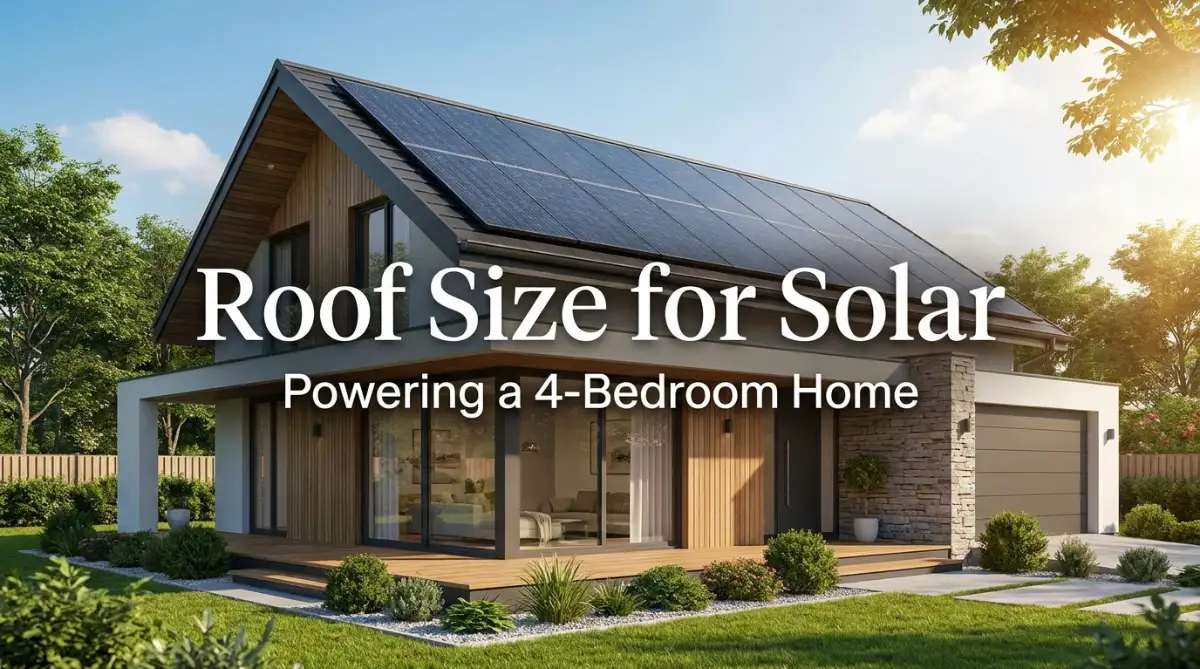
- Size Matters: A typical 4-bedroom home needs about 20 to 25 panels, taking up around 450 square feet of roof space.
- Watch the Vents: Chimneys, plumbing vents, and local fire codes will shrink your usable roof space fast.
- Future Proof: Always leave a little extra room on your roof for when you buy an electric car or add new appliances down the road.
Figuring Out Your Home’s True Energy Appetite
Before you can even pull out a measuring tape or look at your roof, you have to understand what your house actually consumes. A four-bedroom house is basically a small factory of electricity usage. Every family lives differently, but we all share the same heavy-hitting appliances that drive our bills up.
Your air conditioner, electric water heater, and clothes dryer are the biggest power hogs in your home. To find out your exact needs, you have to look at your utility bill and find your annual kilowatt-hour (kWh) usage. Do not just look at one month, because your power usage swings wildly between hot summers and freezing winters.
A Quick Look at What Eats Your Power
To give you a better idea of why a 4-bedroom house uses so much energy, I broke down the usual suspects. Here is roughly what your heavy appliances consume over a year:
- Central Air Conditioner: 3,000 - 5,000 kWh
- Electric Water Heater: 2,500 - 4,000 kWh
- Electric Clothes Dryer: 800 - 1,200 kWh
- Refrigerator: 400 - 800 kWh
- (Note: If you have a pool pump or an electric car, go ahead and add another 2,500 to 4,000 kWh to your list right now!)
Let’s Look at a Real-Life Scenario
Imagine a standard four-bedroom home where a family of four lives. On average, a house of this size might use around 10,000 to 14,000 kWh of electricity over a full twelve months. If you have a swimming pool, an electric vehicle, or run your air conditioning at very low temperatures, that number will shoot up significantly.
You need to write down that exact annual number. This single piece of data is the foundation of everything else we are going to do today. Without knowing your target energy goal, trying to measure your roof is like trying to buy a pair of shoes without knowing your foot size.
Turning Your Electricity Usage Into Physical Panels
Once you have your annual energy number, the next step is translating invisible electricity into physical solar panels. This is where things start to get interesting and a bit more visual. You have to figure out how many individual panels you actually need to bolt onto your roof.
Solar panels come in different power ratings, usually ranging from 300 watts to over 400 watts per panel. The higher the wattage, the more power a single panel produces, which means you need fewer of them overall. Let's assume you choose a modern, standard 400-watt solar panel for your project.
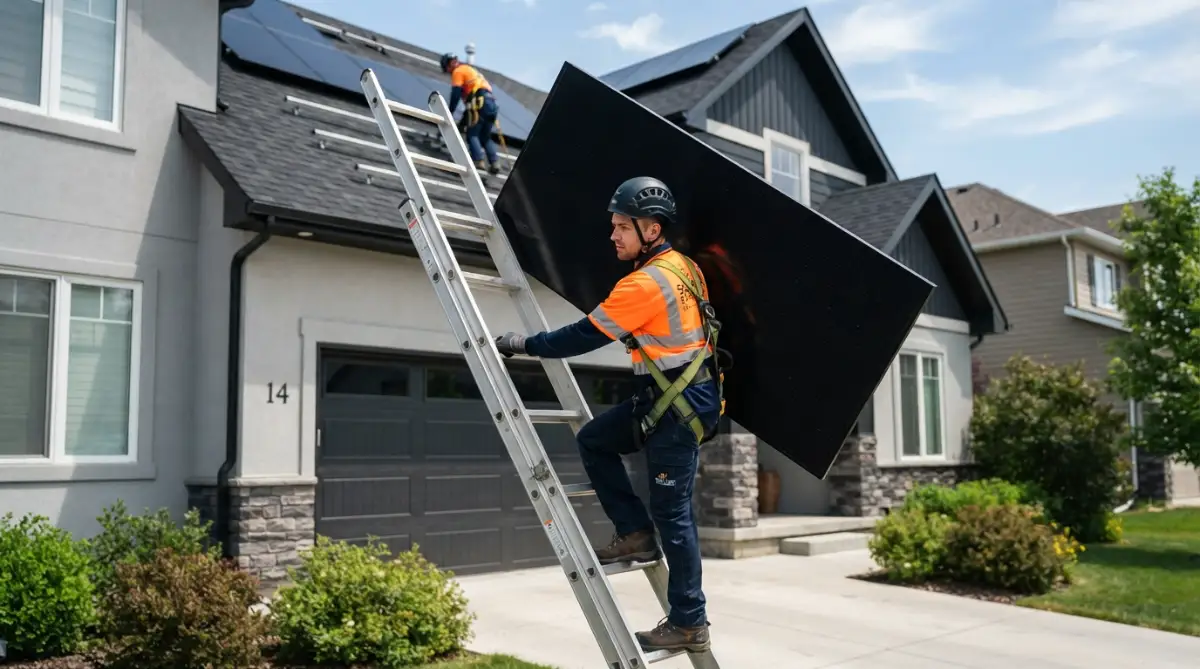
To produce roughly 12,000 kWh a year, a typical home might need a solar system sized around 8 to 10 kilowatts (kW). In plain English, that usually equals about 20 to 25 solar panels. Now you finally have a physical number of objects you need to fit onto your house.
The Physical Footprint: Measuring the Gear
Now we get to the core of the problem: measuring the actual square footage these panels will consume. A standard residential solar panel is roughly 5.4 feet long and 3.25 feet wide. When you multiply those numbers, one single panel takes up about 17.5 to 18 square feet of space.
If you determined earlier that your four-bedroom house needs 25 panels to cover all your energy use, you simply do the math. You multiply 25 panels by 18 square feet. That gives you 450 square feet of physical space required just for the panels themselves.
If you want to see exactly how professionals map out a roof layout without making expensive mistakes, watch this quick visual breakdown.
However, you cannot just measure a 450-square-foot rectangle on your roof and call it a day. Real life is much more complicated than a simple math equation. You have to account for the way your roof is built and the safety rules in your local city.
Understanding Gross Space vs. Usable Space
One of the biggest mistakes homeowners make is looking at their massive roof and assuming it is entirely available for solar. Your gross roof area might be 2,000 square feet, but your usable roof area is going to be significantly smaller. There are physical obstacles permanently attached to your house that you cannot just remove.
Look up at your roof right now. You will likely see plumbing vents protruding from the shingles, a chimney, and maybe even a skylight or two. Every single one of these obstacles creates a dead zone where a solar panel simply cannot be installed.
Installers also have to leave buffer space around these obstacles to ensure everything fits securely. On top of that, local fire departments have strict safety regulations regarding roof access. They usually require a three-foot walking path along the edges and the peak of your roof.
Myth vs Reality in Solar Planning
Myth: I can put solar panels on any side of my roof to save space.
Reality: Only certain sides of your roof are actually worth using. In North America, the south-facing side of your roof gets the absolute most direct sunlight throughout the day. Panels placed on the north side will generate significantly less power, meaning you would need to buy even more panels to make up the difference, which defeats the purpose of saving space.
Myth: If my roof is too small, I just cannot get solar power.
Reality: If you lack square footage, you can invest in premium, high-efficiency panels. While standard panels might be 400 watts, you can buy high-end 450-watt or 500-watt panels. They cost a bit more upfront, but they allow you to hit your energy goals using much less physical space.
Factoring in the Angle and Pitch
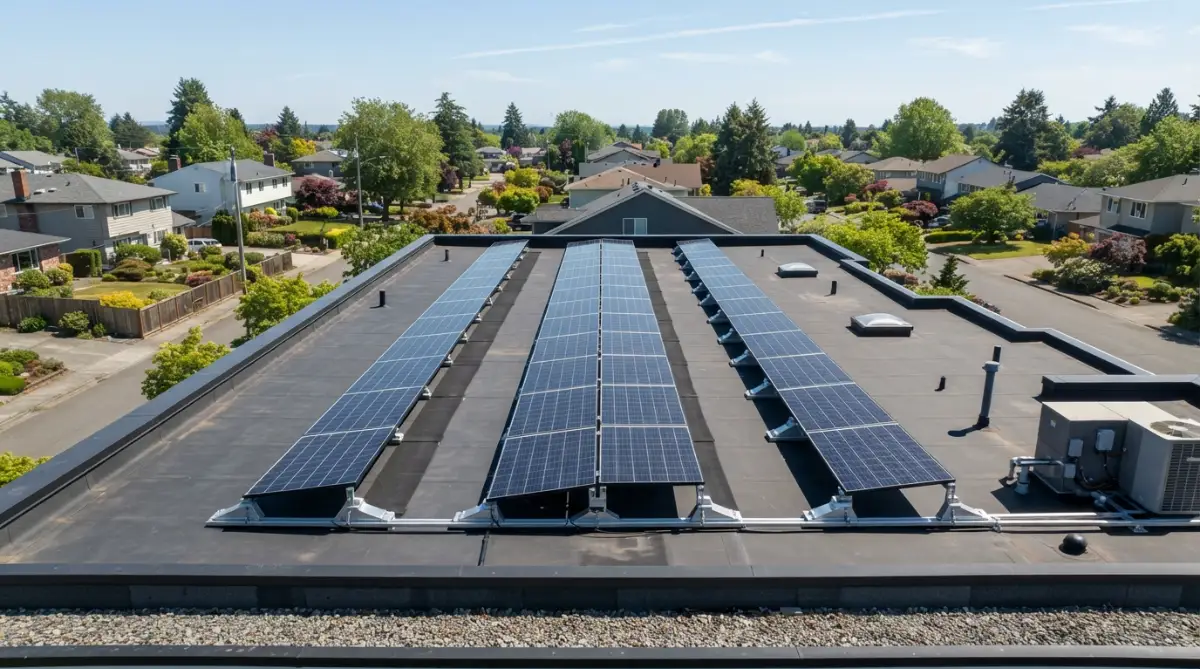
The steepness of your roof also plays a massive role in this entire calculation process. A completely flat roof requires special mounting brackets to tilt the panels toward the sun. When panels are tilted on a flat surface, they cast shadows behind them.
Because of these shadows, installers have to leave empty rows between each line of panels. This spacing requirement eats up even more of your total square footage. On the other hand, a standard sloped roof is usually perfect because the panels lay flat against the shingles without casting shadows on each other.
If your roof is incredibly steep, installing the system becomes dangerous and complex. While it does not change the square footage math too much, it will definitely increase your installation costs. You want a roof that has a moderate pitch, facing south or west, with no tall trees blocking the afternoon sun.
What to Do When the Math Doesn't Work Out
Sometimes, no matter how many times you crunch the numbers, a four-bedroom house simply uses too much power for its small roof size. You might do all the math and realize you need 600 square feet of clear space, but you only have 300 square feet available. Do not panic, because you still have some excellent options.
First, you can choose to install a smaller system that offsets a portion of your bill. Even cutting your electric bill in half will save you thousands of dollars over the lifespan of the panels. You do not always have to completely eliminate your utility bill to make the investment incredibly worthwhile.
Second, if you have a large backyard, you might want to consider a ground-mounted solar system. Ground mounts do not rely on your roof dimensions at all. You can place them exactly where the sun hits best and easily wipe out the entire energy bill of your four-bedroom home without ever touching your roof shingles.
By taking the time to understand your energy needs, measuring the physical footprint of the panels, and identifying your usable roof space, you put yourself in a position of power. You can speak confidently with installers and know exactly what your home is capable of achieving. This simple math protects you from buying a system that is too small or paying for a setup that your house simply cannot support.
Squeezing Every Drop of Energy Out of Your Limited Roof Space
Once you know the basic math of your solar project, you have to start thinking like an energy expert. Most people assume that if their roof is slightly too small for their massive four-bedroom house, they just have to give up. But there are actually several advanced strategies you can use to generate massive amounts of power from a very tight space.
The first secret is focusing entirely on the efficiency rating of the equipment you buy. Standard solar panels convert about 17 to 19 percent of the sunlight that hits them into usable electricity. However, if you are working with limited square footage, you should specifically request premium high-efficiency panels from your installer.
These premium panels can push conversion rates well past 22 percent. This might sound like a small jump, but across an entire year, it adds up to a massive amount of extra power. By using these top-tier panels, you can physically shrink the total footprint of your system while keeping the same energy output.
Another game-changing detail is how your system handles shade throughout the day. If you use a traditional string inverter, a shadow falling on just one single panel will drag down the performance of the entire group. This is because standard systems treat a whole row of panels as one single unit.
To fix this, you should ask your installer about upgrading the technology on the back of the panels. By understanding the natural lifespan of residential solar microinverters, you can see how this technology allows each panel to operate completely independently. If a chimney casts a shadow on one corner of your roof, the rest of your system will keep pumping out maximum power.
Shrinking Your Home’s Power Appetite First
Before you stress out about fitting more panels on your roof, you should look at how your house wastes energy. The easiest way to make your roof space work for a four-bedroom home is to simply require less electricity in the first place. This concept is called energy efficiency, and it is usually much cheaper than buying extra solar equipment.
Start by checking the insulation in your attic and sealing up drafty windows. If your air conditioner is running constantly because the cool air is leaking outside, your solar panels are just working overtime for no reason. Upgrading to a smart thermostat can automatically adjust your home's temperature when you are away.
Just like you might try to automate repetitive data entry at your office to save time, you can automate your home’s climate control to save heavy electrical loads. Every kilowatt-hour you save inside the house means one less solar panel you have to squeeze onto your roof.
Protecting Your Usable Space from Unwanted Guests
You also have to protect the space you do have from outside threats that most people never even consider. When you put a large solar array on a sunny roof, you are accidentally creating the perfect shaded shelter for local wildlife. Birds absolutely love to build nests underneath the warm, protected space between your panels and your shingles.
This might seem harmless, but bird droppings and nesting materials can severely damage your system and cover the surface of your glass. If your panels are covered in dirt and debris, their efficiency drops, and your carefully calculated math is completely ruined. You have to learn exactly how pigeons and roof pests are ruining your solar panels so you can stop them before they arrive.
Ask your installation crew to include pest guards or critter guards around the edges of your solar array. This simple black mesh fencing blocks animals from getting under your equipment. It is a tiny extra step that ensures every square foot of your roof continues generating power at full capacity for decades.
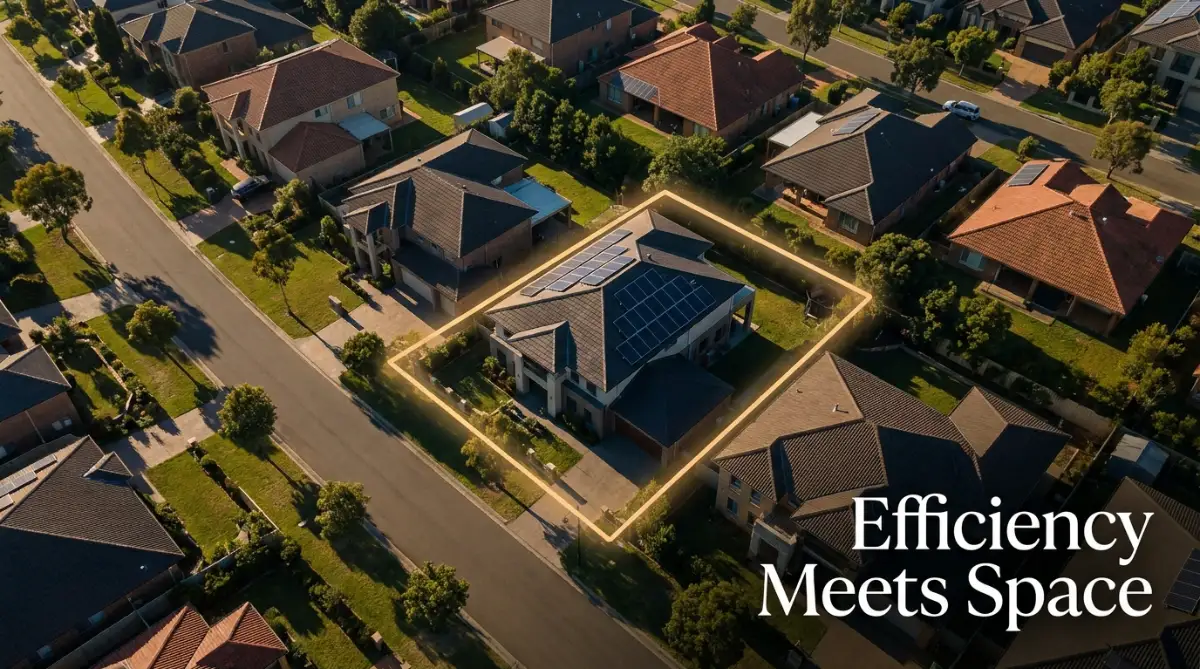
Where Homeowners Usually Get the Math Terribly Wrong
Even with all the right information, the excitement of going green can make people rush the process and make terrible assumptions. Calculating your roof space is not a guessing game, and getting it wrong can cost you thousands of dollars. Let me walk you through the most expensive pitfalls I have seen homeowners fall into.
The "Right Now" Energy Trap
The absolute biggest mistake you can make is sizing your roof only for the electricity you use today. Families grow, teenagers get older, and people buy more electronic devices over time. If you perfectly match your roof size to your current bill, you will be deeply disappointed five years from now when your energy needs naturally increase.
Think about the future of transportation for a moment. You might drive a gas-powered car right now, but electric vehicles are becoming the standard everywhere. Charging an electric car in your garage requires a massive amount of electricity, completely changing your home's energy profile.
If you do not leave extra room on your roof for future panel additions, you will be stuck paying high utility rates to charge that car. Always plan a buffer into your calculations and ask your installer to design a system that can be easily expanded later.
Ignoring the True Condition of the Roof
Another heartbreaking mistake is measuring a beautifully large roof and forgetting to check how old the actual shingles are. Solar panels are designed to sit up there and generate power for 25 to 30 years without moving. If your current roof only has five years of life left, you are walking into a financial trap.
When it is finally time to replace those old shingles, you will have to pay a specialized crew to come out and remove every single solar panel. Then the roofers do their job, and you have to pay the solar crew again to reinstall and reconnect the entire system. This process is called "remove and replace," and it can completely wipe out all the money you saved on your electric bill.
Real Talk: The "10-Year Rule"
Here is a good rule of thumb I always tell my friends: If your asphalt shingle roof is more than 10 to 12 years old, do not put solar panels on it yet. Go ahead and get the roof replaced first. Many roofing companies now work directly with solar installers, so you can often bundle the roof and the panels into one single financing package to save some cash upfront.
Before you measure a single square foot, have a professional roofing contractor inspect your house. According to the experts at the National Renewable Energy Laboratory (NREL), pairing a fresh roof installation with your solar project is the most cost-effective way to handle this upgrade. Sometimes, doing both at the same time even opens up better financing options.
The Invisible Shading Problem
Many people walk out to their driveway at noon, look up, and think their roof gets perfect sunlight all day long. But the sun moves across the sky in an arc, and that arc completely changes position depending on the season. A roof that gets direct sunlight in the middle of summer might be heavily shaded by tall trees during the winter months.
Winter shadows are longer and stretch further across your property. If you only measure your usable space based on a bright summer afternoon, your winter energy production will fall off a cliff. Professional installers use highly specialized software and satellite data to track the exact sun angle for all 365 days of the year.
You should never trust your own naked eye to determine if a spot on your roof is truly free of shade. You can read more about how the sun's position impacts residential power generation on the Department of Energy’s official solar guide. They explain exactly why specific roof angles perform better in different parts of the country.
Fighting with the Homeowners Association
If you live in a planned neighborhood, you might have plenty of physical roof space, but you do not actually have legal control over it. Homeowner Associations (HOAs) frequently have strict, outdated rules about what you can attach to the outside of your house. They might demand that you only place panels on the back side of your home, completely out of view from the street.
If the back of your home faces north, you are in serious trouble. North-facing roofs get terrible sunlight, meaning you would need to buy way more panels to power your four-bedroom house, taking up even more square footage. You have to fight this battle early.
Luckily, many regions now have "solar access laws" that legally prevent HOAs from blocking your installation or forcing you to place panels in heavily shaded areas. The Solar Energy Industries Association (SEIA) has great resources on understanding your rights as a homeowner. Always get written approval from your neighborhood board before signing any contracts with an installer.
Your Next Moves for a Complete Solar Setup
Taking control of your home’s energy future does not have to be a stressful, confusing process. Now that you understand how to match your electricity usage with your actual roof dimensions, you have a massive advantage. You are no longer flying blind, and you will know exactly when an installer is giving you a realistic plan or just trying to make a quick sale.
When you approach this project with real knowledge, everything becomes a simple math equation. You know how to find your annual usage, you understand the size of the panels, and you realize that obstacles like vents and chimneys steal your usable space. This gives you the confidence to start having real conversations with local solar companies.
By utilizing helpful resources on our platform, you can keep educating yourself on how to make your home completely self-sufficient. Remember to fix your home's energy leaks first, upgrade your insulation, and plan for the future. Every little adjustment makes powering a large four-bedroom house much easier to manage.
The Ultimate Homeowner Action Plan
Instead of feeling overwhelmed, I want you to break this entire process down into three very simple steps that you can do this week.
- Step One: Log into your utility company's website today and download your last twelve months of billing statements. Write down your total annual kilowatt-hour usage on a sticky note and put it on your fridge.
- Step Two: Walk outside during the morning, at noon, and in the late afternoon. Take pictures of your roof at these different times to see exactly where the heavy shadows fall.
- Step Three: Contact at least three different highly-rated local solar installers for a customized quote. Compare their roof layouts to see if they all agree on how much usable square footage you actually have.
A Personal Note from Me to You:
I remember sitting at my kitchen table, finally signing my solar agreement, and feeling this massive weight lift off my shoulders. It took a little bit of patience to figure out the math, but seeing my electric bill drop to almost nothing made every single minute of research entirely worth it. I know you can take these exact steps, protect your family from rising energy costs, and turn your roof into an incredible asset today.
Common Questions About Sizing Solar For Big Homes
How many square feet of solar do I need for a typical 2,500 square foot home?
The physical size of your house matters much less than how you actually live inside it. On average, a family in a four-bedroom home might need about 400 to 600 square feet of clear, unshaded roof space for their panels. However, if you run multiple air conditioners or charge an electric car, you will naturally need significantly more space to generate that extra power.
Can I still go solar if my roof has too many vents and chimneys?
Yes, you absolutely can, but it requires a bit of creative engineering from your installation team. They might suggest using fewer, high-efficiency premium panels that generate more power in a smaller footprint. If your roof is truly too cluttered, you can also explore setting up a ground-mounted solar system in your backyard where space is wide open.
Will putting massive solar panels on my roof cause water leaks?
When installed by certified and experienced professionals, solar panels actually protect the shingles directly underneath them from harsh weather. Installers use special heavy-duty flashings and waterproof sealants around every single hole they drill into your roof structure. As long as your roof is in good condition before the installation begins, you should not experience any leaking issues at all.
Does the steepness of my roof change how many panels I can fit?
Yes, the pitch of your roof definitely impacts the overall design and layout of your solar array. If your roof is completely flat, the panels have to be tilted up on special brackets, which requires extra empty space between the rows to prevent them from shading each other. A standard sloped roof is usually the best-case scenario because the panels can lay flat side-by-side, maximizing every inch of available space.
Disclaimer: The information provided in this article is for educational and informational purposes only and should not be considered professional financial, engineering, or legal advice. Every home has unique structural and electrical needs. Always consult with certified solar professionals, structural engineers, and your local utility company to get exact measurements and pricing tailored specifically to your property before making any investment decisions