My Expensive Mistake With Dusty Solar Panels (And Why It Hurts Our Wallets)
Grab a sponge, splash some heavy dish soap, and scrub those dirty solar panels until they shine. Sounds like a great weekend chore, right? Wrong. That exact mistake cost me a small fortune in ruined glass. Let me show you how to safely wash your panels so you can stop losing daily power—without scratching your investment to pieces.
I saw dozens of tiny, permanent scratch marks glaring back at me through the morning light. My desperate attempt to get better electricity output actually caused irreversible damage to the sensitive anti-reflective glass coating. I learned the hard way that treating solar panels like a dirty driveway is a massive mistake. Since then, I have dedicated myself to figuring out the absolute safest way to wash these expensive units without causing a single micro-scratch.
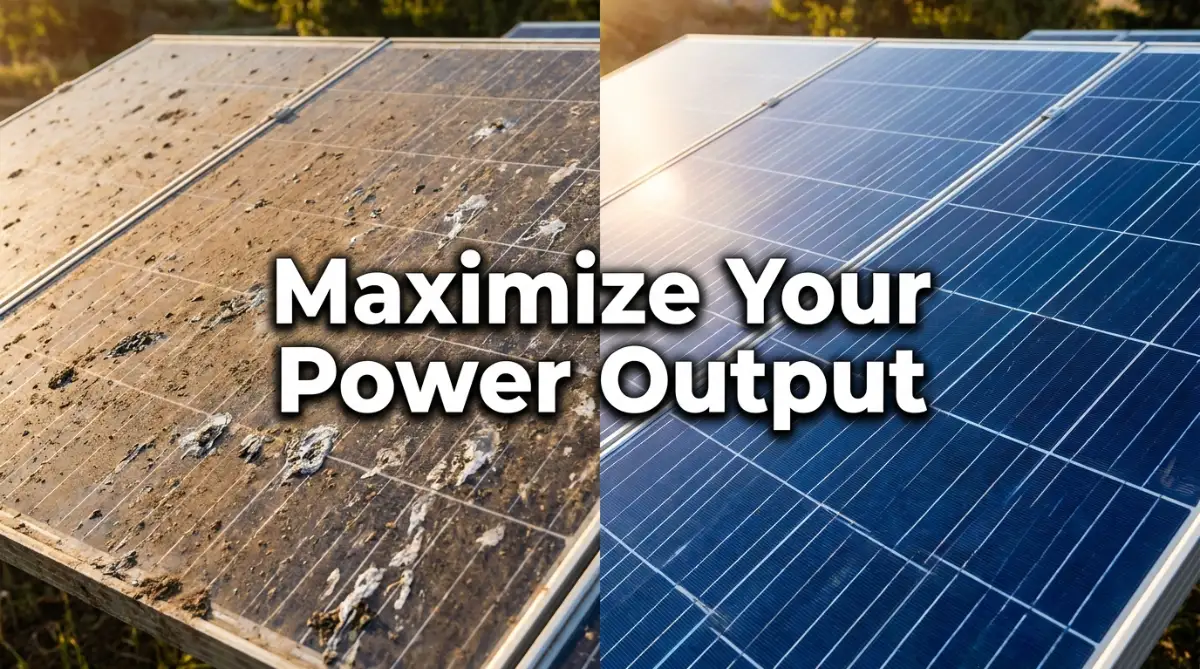
Thick layers of pollen, heavy road dust, and stubborn bird droppings slowly cover your beautiful glass panels. You watch your smart energy monitor app, and you can literally see your daily power output dropping lower and lower. It feels incredibly stressful to know you are losing money just because your roof is dirty.
Before You Climb The Roof: Key Takeaways
- Never wash hot panels during midday—the glass can shatter. Early morning is best.
- Throw away the Windex and dish soap. Stick to plain filtered water or solar-specific mild soap.
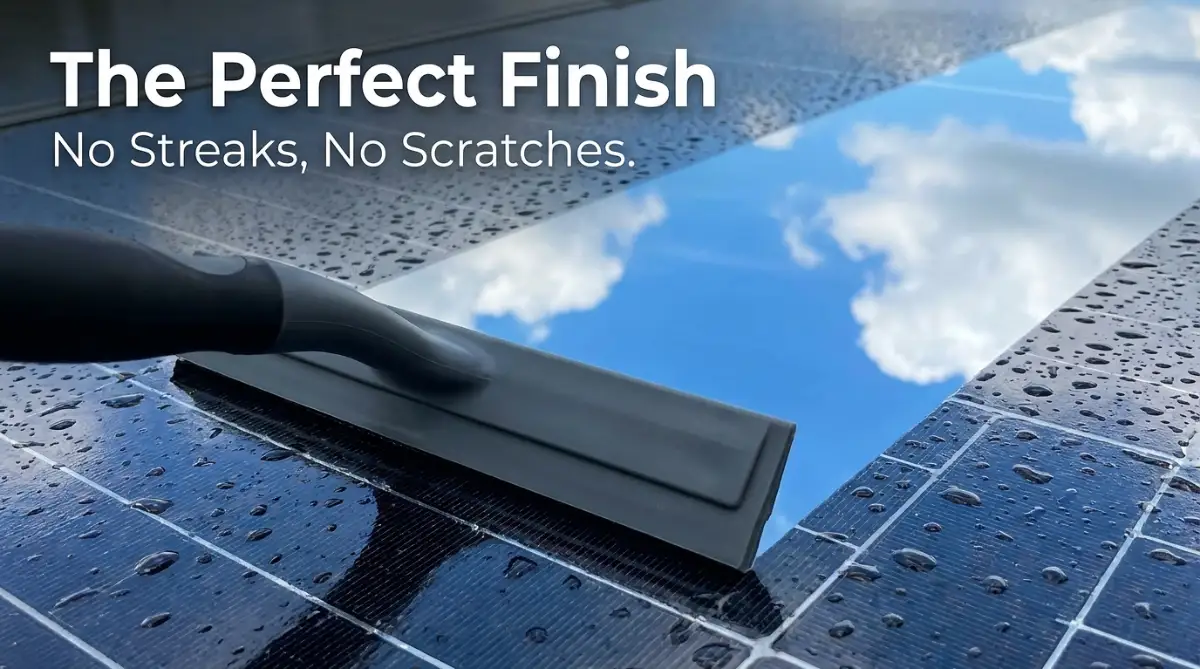
- Ditch the stiff scrubbers. Use an ultra-soft car wash brush and a silicone squeegee.
- Stay on the ground if you can. Use a long telescoping pole to keep yourself safe.
Understanding Your Solar Glass: Why Traditional Washing Fails
Before we grab a hose and a bucket, we need to understand exactly what we are dealing with. Solar panel glass is not the same as the cheap glass used in your bathroom mirror or your living room windows. It is engineered with a highly sensitive anti-reflective coating designed to pull in as much sunlight as humanly possible.
If you use a rough tool, like a standard broom or a stiff scrub brush, you will instantly create microscopic scratches across this special coating. These tiny scratches act like thousands of little shadows. They catch the dirt faster next time, and they physically block the sun from reaching the solar cells underneath.
The Hidden Enemy: Hard Water Deposits
Many homeowners think they can just spray their roof down with a garden hose and call it a day. However, regular tap water is usually packed with heavy minerals like calcium and magnesium. When you spray tap water onto hot glass, the water quickly evaporates into the air.
What gets left behind is a stubborn, cloudy white crust of minerals stuck directly onto the panel. This white crust acts just like a thick blanket, blocking the sun and lowering your energy production even more than the original dust did. This is exactly why relying on a simple garden hose often makes your problem significantly worse.
The "Rain Will Wash It" Myth
There is a very common belief that you do not need to wash your panels because the natural rain will do the job for you. Let us address this interesting idea right now. Think about the windshield of your car after a light rainstorm.
Does the rain make your car windshield perfectly clear, or does it leave behind messy, brown mud rings? Rainwater mixes with the thick dust already sitting on your panels, creating a sticky layer of mud. When the sun comes out and dries that mud, you are left with a dirty, baked-on mess that block sunlight. Rain is simply not a reliable cleaning strategy.
Myth vs. Fact: The Rain Cleaning Rule
- The Myth: A heavy rainstorm acts like a free car wash for your roof.
- The Fact: Rain drops carry airborne dust. When the water evaporates, it leaves a sticky brown film on your panels that actually blocks more sunlight than dry dust. Think of it like letting your muddy car dry in the sun.
Preparing for a Flawless, Scratch-Free Wash
Now that we know what to avoid, let us talk about how to get the job done perfectly. You need to treat washing your solar panels exactly like you are washing a luxury sports car. The preparation stage is incredibly important for keeping yourself safe and protecting your equipment.
Timing is Everything (Avoiding Thermal Shock)
You should never attempt to wash your system in the middle of a hot, sunny afternoon. Solar glass absorbs an incredible amount of heat, and the surface can easily reach boiling temperatures during the day.
Pro Tip: I eventually realized that spraying freezing cold hose water onto a baking hot solar panel in the middle of the afternoon was a terrible idea. I highly recommend doing your washing just after sunrise when the glass is perfectly cool, which completely stops the glass from cracking under sudden temperature changes.
Early morning also gives you a great advantage because the heavy morning dew has already started to loosen the baked-on dirt overnight. If you absolutely cannot do it in the morning, wait until the sun goes down in the late evening. Just make sure you have enough daylight left to clearly see what you are doing.
Gathering the Right Scratch-Free Tools
You do not need to buy expensive, complicated machinery to get professional results. You just need a few specific items designed to be gentle on delicate surfaces. First, you need a high-quality, ultra-soft bristle brush.
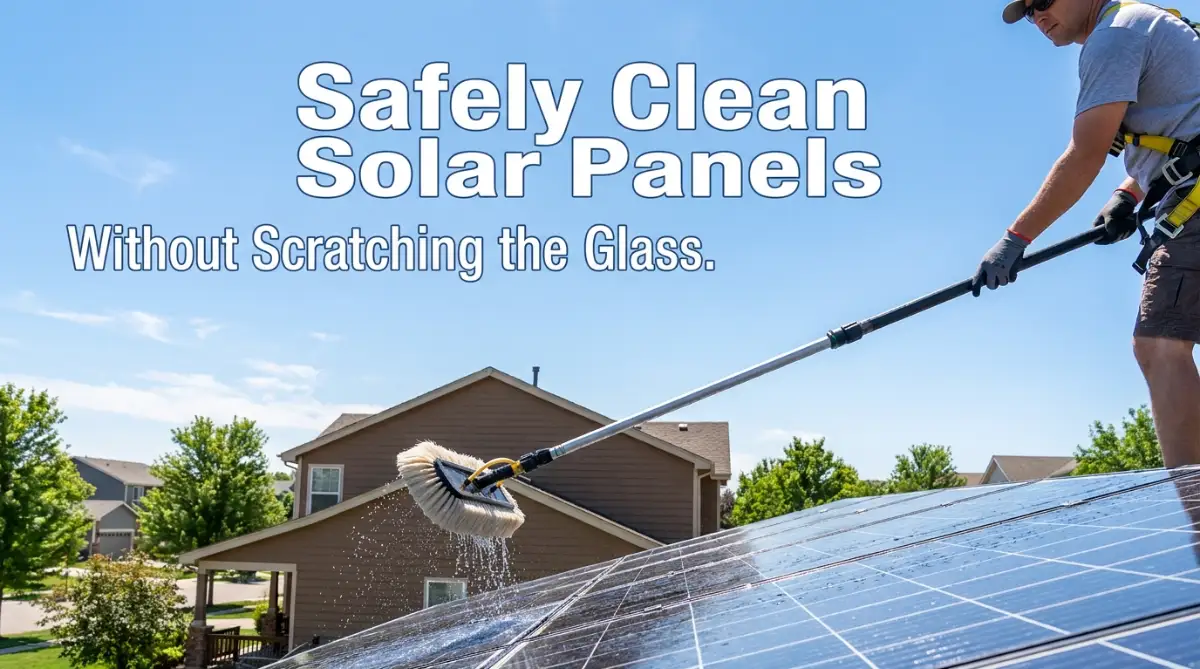
Look for brushes specifically labeled for washing cars or cleaning RVs, as these are guaranteed not to scratch clear coats. Attach this soft brush to a long telescopic extension pole. This long pole is a lifesaver because it allows you to reach the top of your roof while keeping your feet planted safely on the ground or on a secure ladder.
Next, you will want a heavy-duty silicone squeegee. A squeegee is the secret weapon for getting that flawless, streak-free shine. Finally, try to get your hands on some distilled water or deionized water for the final rinse. This pure water contains zero heavy minerals, meaning it will dry perfectly clear without leaving any white spots behind.
The Safe Washing Technique: Step-by-Step
We have our soft tools, we have chosen a cool morning, and we are ready to restore our energy output. The physical motion you use to wash the glass is just as important as the tools you selected.
Phase One: The Gentle Pre-Rinse
Do not start scrubbing immediately. Your panels are currently covered in sharp, tiny grains of sand and thick dust. If you rub a brush directly onto dry sand, you are essentially turning your brush into sandpaper.
Instead, use your hose to gently spray water over the entire surface of the array. Let this water sit on the glass for about five to ten minutes. This gentle soaking process softens the stubborn bird droppings and lifts the loose dirt away from the glass. You want the water to do the heavy lifting for you before you ever touch the surface.
Watch This Expert Technique in Action:
Seeing the right motion makes all the difference in protecting your glass. Check out this incredibly helpful visual demonstration on how to glide the squeegee without applying too much downward pressure.
Phase Two: The Soft Scrubbing Motion
Once the dirt is soft and loose, dip your ultra-soft brush into a bucket of clean water. You rarely need to use any soap at all, but if you have heavy tree sap, you can add a tiny drop of extremely mild, non-abrasive baby shampoo.
Gently place the wet brush onto the top corner of the panel and let the weight of the brush head do the work. Do not push down hard. Use slow, sweeping side-to-side motions, gently guiding the loose dirt downward toward the bottom edge. If you encounter a stubborn bird dropping, do not scrub it aggressively. Just hold the wet brush over the spot for a few extra seconds to let the water dissolve it naturally.
Phase Three: The Spotless Squeegee Finish
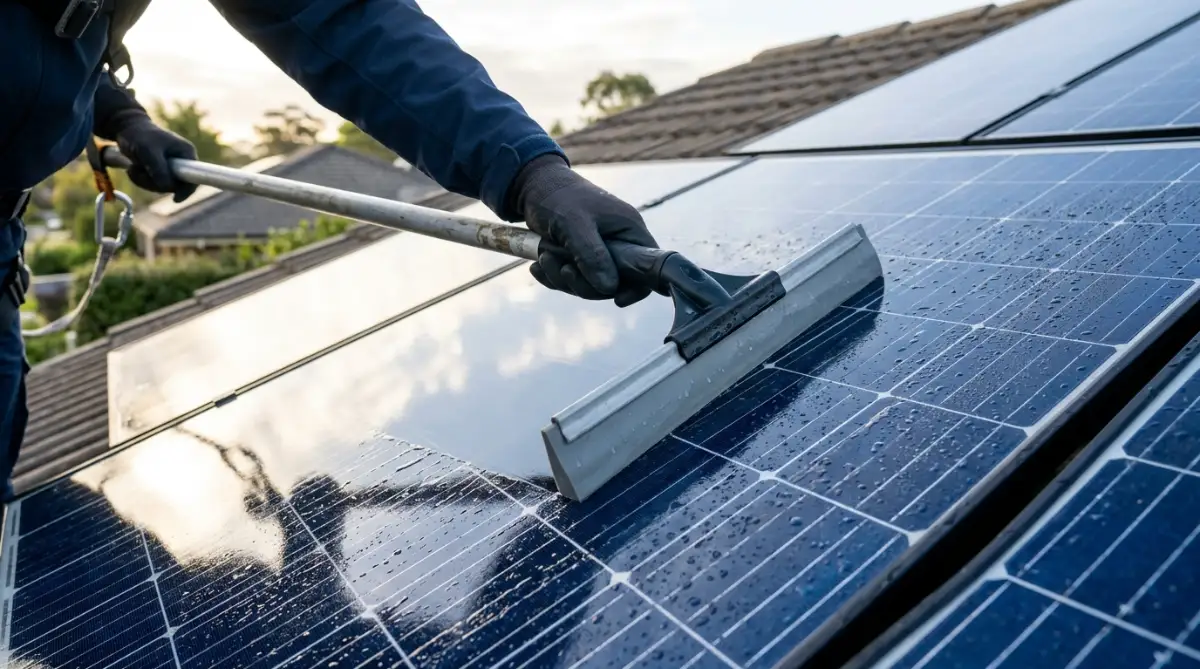
This is where the magic really happens. As soon as you finish gently brushing away the dirt, immediately grab your silicone squeegee before the sun can dry the water. Start at the top left corner of the panel and pull the squeegee straight down in one smooth, continuous motion.
Wipe the rubber blade with a clean microfiber cloth after every single pass to prevent dragging dirt back onto the glass. This squeegee process pulls all the heavy tap water off the panel instantly. By completely removing the water, you eliminate the risk of those annoying hard water mineral stains forming on your beautiful glass.
Dealing With Stubborn Environmental Stains
Depending on where you live, normal dust might not be your biggest enemy. Different environments throw different challenges onto your roof, and handling them properly requires a bit of specific knowledge.
Tackling Sticky Tree Sap and Pollen
If you have large trees overhanging your house, you are probably dealing with sticky tree sap and thick yellow pollen. Pollen is incredibly sticky and contains natural oils that simple water struggles to wash away.
For heavy pollen, you might need to use a specialized, non-abrasive solar cleaning solution mixed into your water bucket. Never use harsh household window cleaners like Windex. Those heavy chemical cleaners contain strong ammonia, which will slowly eat away and destroy the anti-reflective coating on your expensive investment. Stick to specially formulated, gentle soaps designed specifically for outdoor solar usage.
The Danger of Bird Droppings
Bird droppings are incredibly acidic and pose a massive threat to your power output. A single large bird dropping can cover a specific solar cell, causing a massive drop in electricity production for that entire panel.
Because bird droppings are highly acidic, they can actually etch directly into the glass if left sitting in the baking hot sun for too long. You should make it a habit to visually inspect your roof from the ground every few weeks. If you spot heavy bird activity, do not wait for your scheduled monthly wash. Grab your long pole and gently rinse that specific spot away immediately to protect your glass.
Ground-Level Safety vs Roof Walking
We cannot talk about washing your expensive panels without talking about personal safety. Too many people think they need to climb onto their slick, wet roof like a professional acrobat to get a good clean.
Walking on a wet, sloped roof is incredibly dangerous and highly unnecessary for most standard homes. You should always prioritize cleaning your system from the absolute safety of the ground using a long extension pole. Modern water-fed poles can easily extend twenty to thirty feet into the air.
If your roof is simply too high to reach from the ground, invest in a highly stable, heavy-duty ladder. Stand securely on the ladder, well below the roofline, and use your extension pole to reach up. Never physically step onto a wet roof unless you are wearing a professional safety harness tied to a secure anchor point.
Furthermore, you should never put your physical body weight onto the solar panels themselves. The glass is strong enough to handle heavy hailstones, but it is not designed to support the concentrated weight of a human foot. Stepping on a panel will instantly cause invisible micro-cracks inside the sensitive solar cells, completely destroying the unit from the inside out.
Why You Should Avoid Pressure Washers
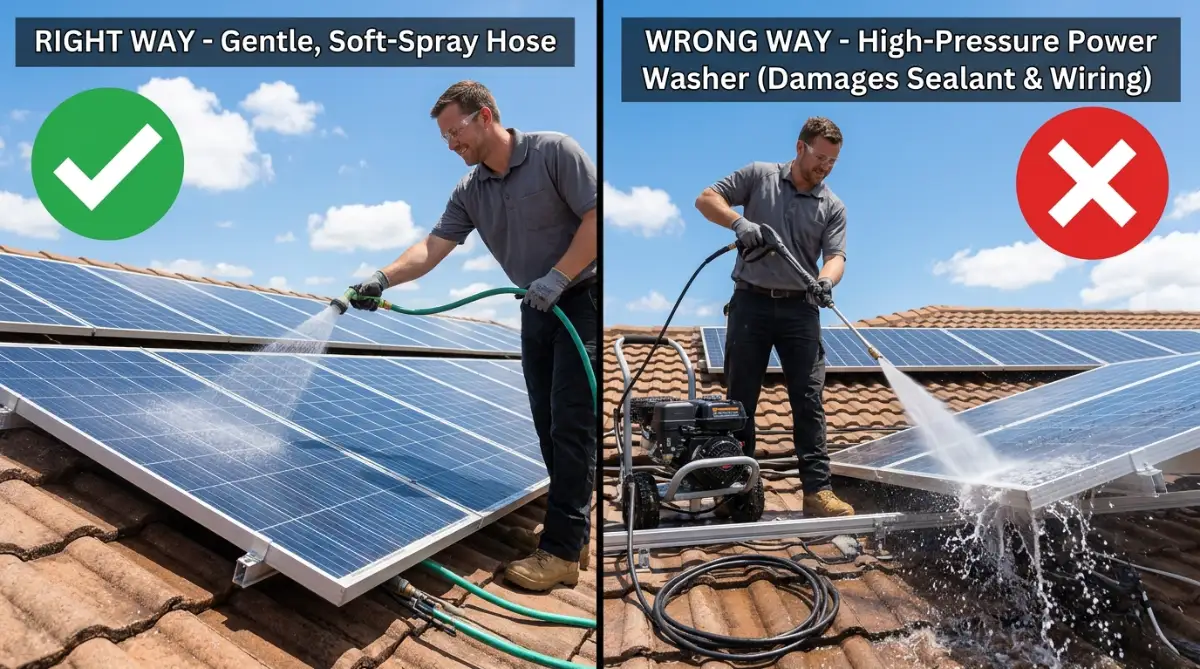
I frequently see people asking on community forums if they can just blast their panels with a high-powered gas pressure washer. This is quite possibly the fastest way to void your expensive warranty and destroy your entire system.
A high-pressure water jet is incredibly violent. The intense pressure can easily force water deep under the protective rubber weather seals surrounding the glass edge. Once water gets pushed past those tight rubber seals, it enters the sensitive electrical wiring underneath. This creates massive electrical shorts, ruins the metallic connectors, and completely kills your energy production. Always stick to the gentle flow of a standard garden hose.
How Often Should You Actually Clean Them?
You might be wondering exactly how many times a year you need to go through this specific washing routine. The honest answer depends entirely on your local environment and weather patterns.
If you live in a very dry, dusty desert region with heavy winds, you might need to gently rinse your system every single month to keep your power output high. Dust storms can coat your glass in a thick brown blanket in just a matter of hours.
On the other hand, if you live in a mild climate with regular, clean rain and very little airborne dust, you might only need to do a thorough squeegee wash twice a year. Spring and late autumn are usually the best times for a deep clean.
The easiest way to know when it is time for a wash is to simply watch your smart energy app. If you notice a sudden five to ten percent drop in your normal sunny-day energy production, take a quick walk outside and look up at your roof. If the glass looks dull, gray, and cloudy instead of a deep, shiny blue, it is time to grab your soft brush and get to work.
Quick Production Drop Guide:
| Output Drop % | What It Means | Action Required |
| --- | --- | --- |
| 1% - 3% | Normal dust buildup | Wait for your seasonal wash. |
| 5% - 8% | Heavy dirt or hard water stains | Grab the squeegee and wash this week. |
| 10%+ | Sticky sap, bird droppings, or snow | Clean immediately to protect the cells. |
Monitoring Your Production Data
Your smart inverter app is your best friend when it comes to maintenance. Get into the habit of checking your daily production numbers at the exact same time every week.
When you know exactly how much power your system normally generates on a clear, sunny Tuesday, you will easily notice when things start slowing down. Treat your panels just like you treat the oil in your car. Regular, gentle maintenance keeps everything running at peak performance, saving you thousands of dollars on utility bills over the next few decades.
Secrets to Keeping Your Solar Array Spotless Year-Round
Now that you understand the basic physical motions of getting the heavy dirt off without causing scratches, we need to talk about a long-term maintenance strategy. You certainly do not want to be standing out in the yard with a wet extension pole every single weekend. The real secret to a beautifully low-maintenance solar system is working much smarter, not harder.
Let us talk specifically about the exact type of water you are using, because this is where the seasoned professionals separate themselves from the hopeful amateurs. I highly recommend investing in a high-quality inline water filter attachment that screws directly onto your standard garden hose.
These simple, inexpensive filters physically pull heavy calcium and magnesium out of your tap water before it ever reaches your expensive roof glass. Think of it like giving your beautiful home energy system a premium bottled water wash instead of using harsh city water. When you use heavily filtered water, you completely eliminate the stressful risk of hard water mineral stains forming under the hot sun.
If you want to take your protective maintenance routine to the absolute highest level possible, you should look into specialized hydrophobic glass treatments. These are basically high-tech, liquid nano-coatings you can safely wipe onto the glass immediately after it is perfectly clean and dry. It works exactly like rubbing a heavy-duty, premium wax on a luxury sports car to protect the paint.
When morning dew or natural rain hits a coated panel, the water instantly beads up into tight little balls and completely rolls off. As those tight water beads roll down the slope of your roof, they carry the loose surface dust right along with them. This incredibly smart surface protection means you can easily cut your physical manual washing schedule completely in half.
Why Automated Roof Sprinklers Usually Fail
Many frustrated homeowners try to completely automate their cleaning process by installing heavy-duty lawn sprinkler systems directly above their solar arrays. While this sounds like an incredibly brilliant and easy idea, it almost always backfires terribly. Unless you are feeding those roof sprinklers with highly expensive, laboratory-grade pure water, you are just causing massive long-term damage.
According to various National Renewable Energy Laboratory studies on solar efficiency, repeatedly spraying untreated tap water onto solar hardware bakes thick daily layers of heavy mineral crust onto the glass. Over just a few short months, this white mineral crust will block out more usable sunlight than regular loose dirt ever could. Instead of relying on random automated spraying, you should always focus on smart, consistent data tracking.
Leveraging Smart Apps and Modern Data
Most modern residential solar setups come with highly advanced tracking software right on your smartphone. Some of the absolute newest monitoring apps are even starting to utilize forms of artificial general intelligence to accurately predict exactly when your panels are getting too dirty to function efficiently.
By closely watching your personal daily data, you take all the stressful guesswork completely out of your cleaning schedule. You only need to drag the hose out and wash the glass when the digital numbers tell you it is actually necessary. This highly analytical approach saves you dozens of hours of unnecessary physical labor while maximizing your total financial returns.
Costly Blunders That Will Destroy Your Solar Investment
Let us shift gears and talk about the absolute disasters I have unfortunately seen people create on their own roofs. There is nothing more deeply heartbreaking than watching a proud homeowner completely destroy a ten-thousand-dollar energy investment just because they grabbed the wrong household item.
The most common everyday tragedy happens when someone walks into their kitchen, grabs a large bottle of heavy-duty dish soap, and eagerly mixes it right into their wash bucket. Dish soap is chemically designed to leave a slightly slippery film behind on your dinner plates to prevent future food from sticking. When you rub that exact same kitchen soap onto your solar glass, it leaves a highly sticky, invisible residue across the entire array.
This sticky soap film actually acts like a giant, powerful magnet for blowing dirt, heavy pollen, and oily vehicle smog. Within just three or four days, your panels will honestly look significantly worse than before you even washed them. You should always stick to plain filtered water or a specialized soap explicitly formulated for outdoor solar hardware.
The Abrasive Sponge Nightmare
Another absolutely massive blunder is grabbing the rough, green side of a standard kitchen sponge to aggressively attack a stubborn bird dropping. I truly cannot stress this point enough: your protective anti-reflective glass coating is incredibly thin and highly sensitive. When you scrub aggressively with an abrasive household sponge, you instantly carve hundreds of permanent micro-scratches right into that coating.
Those tiny, jagged scratches permanently scatter the incoming sunlight away from the cells, meaning your system will never produce its maximum potential power ever again. It is a terrible physical mistake you can never undo. You are always much better off leaving a slight dirty spot on the glass than aggressively scratching the delicate surface trying to perfectly remove it.
I have also seen people heavily spray industrial glass cleaners, strong ammonia, and even heavy bleach directly onto their expensive solar arrays. This is an absolute nightmare scenario for your outdoor equipment. These harsh household chemicals will rapidly react with the delicate metallic framing securely holding your glass in place.
They slowly eat away at the flexible rubber weather seals that strictly prevent rainwater from reaching the highly sensitive electrical wires underneath. Once those tight rubber seals dry rot and physically crack from heavy chemical exposure, regular rainwater gets inside and completely shorts out your electrical inverter. Always remember that improving your home energy efficiency requires gentle care, not aggressive chemical warfare.
The Silent Killer: Walking on Your Roof Panels
Finally, I absolutely have to warn you about the most silent, invisible killer of solar efficiency: human body weight. So many well-meaning, ambitious people climb high up onto their slippery roofs and actually step directly onto the panels just to easily reach a difficult upper corner. This is a genuinely catastrophic error that voids warranties instantly.
While the thick glass might feel extremely strong and secure under your heavy boots, the tiny silicon cells hidden just underneath are as fragile as a thin potato chip. When you put your concentrated body weight directly on the glass, those expensive silicon cells instantly snap and develop massive invisible microcracks. You will probably not see any physical damage with your naked eyes, but your daily energy production will plummet aggressively.
If you are currently dealing with a highly difficult roof layout, please do not risk destroying your equipment or seriously hurting your body. This exact danger is specifically why installing DIY solar on an old roof requires so much extremely careful planning beforehand. Always keep your heavy feet entirely off the expensive hardware.
Adapting to Your Unique Local Environment
Not all dirt is created equal, and the specific way you clean your system heavily depends on exactly where your house is located. If you live far out in the quiet countryside, you are mostly dealing with loose, dry agricultural dust blowing in the wind. This dry rural dust is incredibly easy to wash away using nothing but a gentle spray of plain water.
However, if you live right next to a busy, heavily trafficked highway or a large industrial zone, you are dealing with a completely different monster altogether. Vehicles and large factories constantly pump heavy, oily smog directly into the air, which slowly settles onto your roof as a sticky black film. Plain water simply cannot cut through thick, oily smog.
If you are fighting against this dark industrial pollution, you will definitely need to mix a mild, non-abrasive degreaser into your wash bucket. You can easily find amazing, environmentally safe degreasers recommended by the Department of Energy residential guidelines that perfectly protect your glass while cutting through the nasty oil. Just be sure to rinse the panels heavily with fresh water immediately after using any type of mild soap.
Navigating Autumn Leaves and Winter Snow
When crisp autumn weather finally rolls around, falling tree leaves quickly become a massive headache for home energy systems. A single large, wet oak leaf heavily stuck flat against your glass can instantly knock out the entire power production for that specific panel section. You do not necessarily need to drag out the water hose during the messy fall season.
Sometimes, simply running a dry, ultra-soft bristle brush on a long extension pole is all you really need to quickly sweep the dry leaves away. Winter brings its own completely different set of scary challenges, especially if you happen to live in a freezing area with heavy, unpredictable snowfall. Never grab a hard plastic snow shovel to aggressively scrape thick ice or snow off your delicate panels.
The sharp plastic edge of a standard winter shovel will immediately gouge and completely destroy the anti-reflective coating. Instead, you should carefully use a highly specialized soft foam snow rake perfectly designed for sensitive solar arrays. You simply pull the thick top layer of snow off very gently and let the dark glass naturally absorb the weak winter sun to safely melt the rest.
Your Action Plan for Maximum Solar Power Output
Taking absolutely perfect care of your home energy system truly does not have to be a highly stressful or overly complicated weekend chore. You simply need to safely treat the sensitive equipment with a little bit of deep respect and consistently use the highly gentle techniques we have thoroughly outlined today. By taking a very slow, highly methodical approach, you completely protect your expensive financial investment.
Start your journey right now by getting into a solid, predictable weekly routine. Make a strong mental habit of visually glancing up at your sunny roof every single time you pull your car into your driveway. Pay incredibly close attention to your daily energy production numbers on your phone so you know exactly what perfectly normal performance looks like.
Closely managing your daily home energy output is actually just as important as managing your digital footprint; you always need to know exactly what is happening behind the scenes. Remember to strictly wash your glass only during the highly cool morning hours to completely avoid dangerous thermal shock. Always confidently rely on a high-quality, ultra-soft brush and a smooth silicone squeegee to guarantee a totally beautiful, scratch-free finish.
Let the cool water completely soak the heavy dirt first, and never try to aggressively force a stubborn stain with hard scrubbing. If you carefully follow these highly effective, proven guidelines, your system will easily continue to effortlessly produce free, beautifully clean electricity for many long decades to come.
You will heavily enjoy significantly lower monthly utility bills, and you will rest incredibly easy knowing your delicate glass is perfectly safe from harm. For more smart daily habits regarding your household maintenance, always keep a close eye out for updated safety strategies.
Frequently Asked Questions About Protecting Your Solar Investment
Can I easily use a regular gas pressure washer on a very low setting?
Absolutely not, because even the absolute lowest setting on a standard gas pressure washer is way too violently powerful for delicate solar hardware. The highly aggressive water force can incredibly easily push invisible moisture right past the protective rubber weather seals and completely destroy the internal electrical wiring. Always strictly stick to the highly gentle, incredibly natural water flow of a standard outdoor garden hose.
Does Windex or regular window cleaner work well for washing the glass panels?
You should absolutely never use Windex or any other similar household glass cleaners on your expensive solar system. These everyday bathroom products contain highly harsh chemicals like heavy ammonia that will slowly chemically burn away the highly special anti-reflective coating on the glass. Strictly stick to totally pure filtered water or a highly specialized, incredibly mild solar soap.
How do I safely remove heavily baked-on bird droppings without scratching?
The absolute best trick is to heavily soak the stubborn, acidic dropping with plain cool water and just completely walk away for about ten full minutes. Let the soaking water naturally soften the highly acidic mess so you do not ever have to scrub it aggressively. Once it gets incredibly soft, it will extremely easily wipe away with a wet, highly soft-bristle brush.
Is it completely safe to slowly clean my roof panels during a bright sunny afternoon?
Cleaning heavily hot glass directly under the intense midday sun is incredibly dangerous for your highly expensive roof equipment. Spraying cool hose water directly onto baking hot glass instantly causes a rapid temperature shock that can easily instantly shatter the entire panel into tiny pieces. You must always wait patiently for a highly cool, extremely cloudy morning before you even start washing.
Do I really need to hire a professional or can I easily do it myself?
If you currently have a highly accessible single-story home and a genuinely good, long extension pole, you can easily do an amazing job entirely yourself from the absolute safety of the ground. However, if you are currently dealing with a highly dangerous, incredibly steep roof or a tall multi-story house, hiring a highly trained professional team is heavily recommended. Your personal bodily safety is always worth way more than trying to save a few dollars on regular maintenance.
Disclaimer: The information provided in this article is for general educational and informational purposes only. Cleaning solar panels involves working with electricity, water, and potential heights, which carries inherent safety risks. Always consult your specific solar panel manufacturer’s warranty and safety guidelines before attempting any maintenance. If you are unsure about safely reaching or cleaning your roof, please hire a certified and insured solar maintenance professional. We are not liable for any physical injuries, equipment damage, or voided warranties resulting from the DIY application of these methods.
I know exactly how utterly terrifying it feels to constantly worry about accidentally ruining your highly expensive roof equipment. I used to blindly stare at my dirty, dusty panels and feel completely paralyzed by the overwhelming fear of making a massively expensive mistake. But once I finally started confidently using a soft silicone squeegee and highly cool morning water, my daily power output completely skyrocketed without leaving a single tiny scratch on the glass. You absolutely have the incredible power to easily keep your system running completely perfectly, so confidently grab a gentle soft brush and get ready to see your massive energy bills drop today.