The Hidden Frustration of the Evening Power Drain
Staring at my electric bill last month, I felt completely ripped off. My roof was covered in expensive solar panels soaking up the sun all day, yet I was still paying massive evening grid charges to the power company. If you are tired of watching your daytime solar energy go to waste while your nighttime usage costs a fortune, you are in the right place. Let me show you a few simple tricks I used to finally outsmart my power meter and balance my home energy.
But as soon as the sun went down, the real nightmare began. My family and I would come home around 6 PM, exhausted and ready to relax. We would immediately blast the air conditioning, turn on the large electric oven to cook dinner, run a heavy load of laundry, and switch on the big television in the living room. Without even realizing it, we were pulling a massive amount of power from the regular grid.
This is a massive struggle that so many homeowners face today. You invest in clean energy to gain peace of mind, but instead, you end up feeling completely cheated by your own daily routine. You watch the sun shine brightly on your roof during the day, knowing that energy is just flowing back to the grid for pennies on the dollar.
Then, when the evening rolls around, you are forced to buy that exact same energy back from the power company at a highly expensive premium rate. It feels like a bad joke. You are doing everything right by choosing renewable energy, yet your bank account is still bleeding money every single month.
Key Takeaways for Immediate Action
- Shift the heavy lifting: Run your dishwasher and washing machine during peak afternoon sun using delay timers.
- Size your battery right: Always check your specific 6 PM to 10 PM energy usage before buying a home battery.
- Kill the phantom drain: Plug your entertainment centers into smart strips that automatically shut off at midnight.
- Use your house as a battery: Pre-cool your home at 2 PM with free solar so your AC stays off during expensive evening hours.
Rethinking Your Energy Flow: A Practical Approach
You do not have to live with this endless cycle of energy waste and high bills. Fixing this mismatch between when you make power and when you actually use it is entirely possible.
It just takes a slight shift in how you view your home appliances and your storage options. Let us look at a few highly effective, proven ways to align your solar production with your real-life evening habits.
Understanding the Daily Power Gap
Before you can fix the problem, you need to understand exactly what is happening inside your home wires. Think of your solar panel system like a giant bucket placed outside to catch rainwater.
During a sunny day, the rain comes pouring down, filling your bucket very quickly. If you are standing right there to drink the water as it falls, everything is perfect. You are using the resource exactly as it arrives.
But what happens if you are at work all day? The bucket fills to the top, overflows, and all that extra water just spills onto the ground. When you finally come home thirsty at night, the rain has stopped falling. The bucket only holds what it can, and you are left looking for another water source.
In the solar world, this overflowing water is your lost daytime electricity. The power company might give you a small credit for it, but they charge you a fortune to use their power later that night.
To fix this, you need to either make your bucket bigger, or you need to figure out how to drink the water while it is actually raining.
Quick Look: The Power Shifting Playbook
To give you a clear idea of how load shifting works in real life, here is a quick breakdown of my personal daily routine. Moving just these three chores saved my evening battery capacity immensely:
| Home Appliance | Old (Grid-Draining) Time | New (Solar-Powered) Time |
| :--- | :--- | :--- |
| Dishwasher | 7:30 PM | 1:00 PM (Delay Start) |
| Washing Machine | 6:00 PM | 11:30 AM (Timer) |
| Pool Pump | 8:00 PM - 12 AM | 10:00 AM - 2 PM |
Investing in a Smart Storage Solution
The most direct and scientific way to solve your nighttime energy problem is by adding a solar battery to your system. A solar battery is literally the bigger bucket in our previous example.
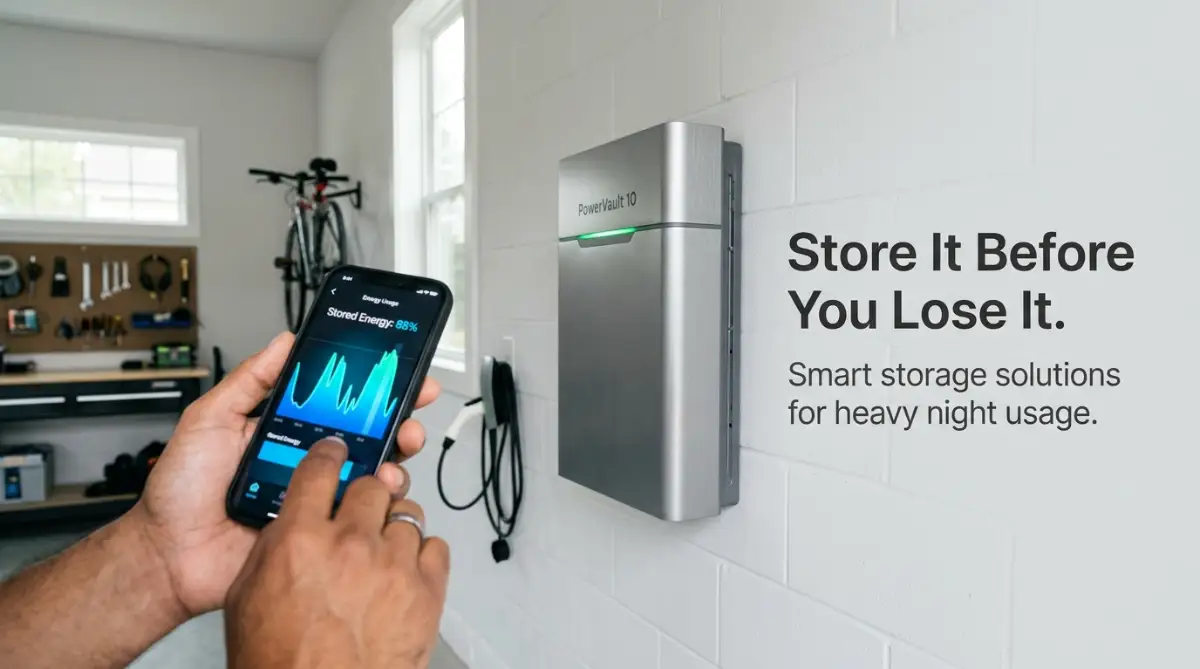
Instead of sending your extra noon sunshine back to the power company, your panels send that energy straight into a highly advanced lithium-ion battery attached to your garage wall. The battery safely stores the chemical energy until you actually need it.
When the sun sets and your solar panels go to sleep, your house automatically switches over to pulling power directly from the battery. Your lights, your television, and your refrigerator keep running smoothly on the exact same sunshine that hit your roof six hours earlier.
This creates a self-sustaining loop. You generate power, you save it, and you use it when it makes the most financial sense for your family.
I actually learned a massive lesson about this a few months after getting my own solar setup. I thought buying the smallest, cheapest battery would be enough to get me through the night.
I quickly realized that running an air conditioner for just two hours completely drained my tiny battery, leaving me right back on the expensive grid.
Pro Tip: I learned the hard way that you must measure your actual evening power usage before buying a battery. Do not just guess. Look at your past utility bills, find your highest usage hours between 6 PM and 10 PM, and buy a battery capacity that covers at least that specific heavy-load window. It saves you so much headache down the road.
The Magic of Load Shifting
If buying a large home battery is not in your budget right now, do not worry. You can still make a massive difference through a completely free concept called load shifting.
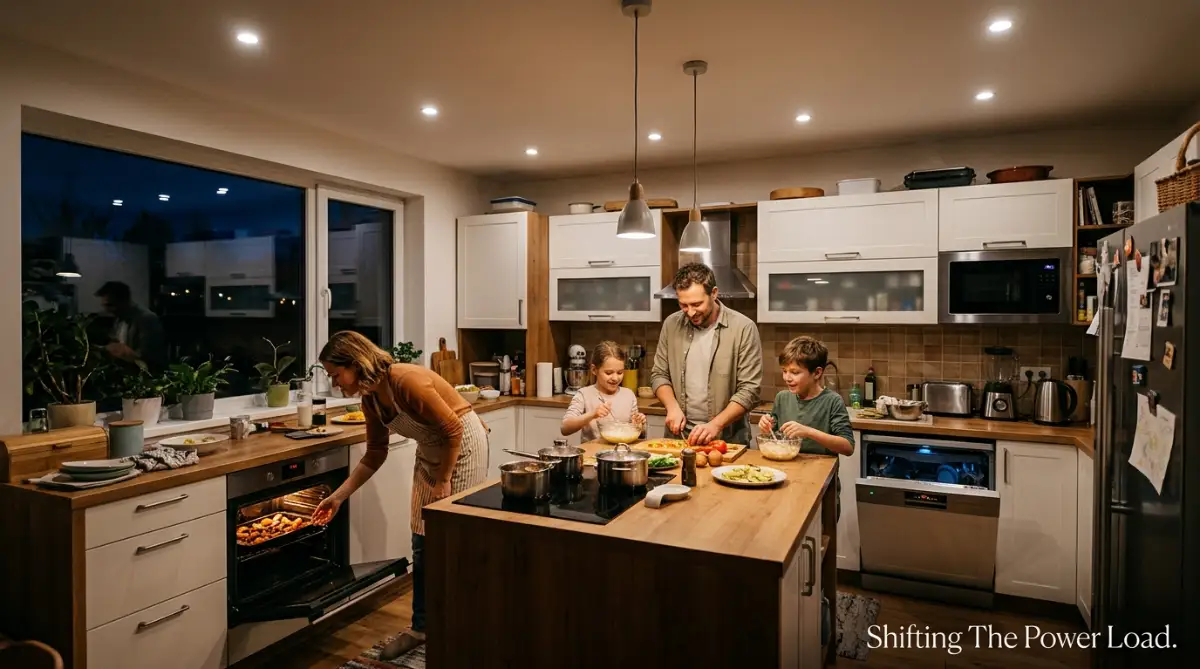
Load shifting simply means moving your heavy energy chores from the dark hours of the night to the bright hours of the day. You are literally shifting the power load to match the sun.
Think about the appliances in your home that use the most electricity. Your washing machine, your clothes dryer, your dishwasher, and your water heater are the biggest power hogs in your house.
If you run all of these machines at 8 PM, you are forcing your home to buy expensive grid power. But what if you changed your habits just a little bit?
Most modern washing machines and dishwashers have a simple "delay start" button. You can load your dirty clothes into the machine before you leave for work in the morning. Then, you set the timer to start washing at 1 PM.
At 1 PM, the sun is shining at its absolute brightest. Your solar panels are producing maximum power. The washing machine turns on and runs entirely on free, direct solar energy.
By the time you get home from work, your clothes are clean, and you have not used a single drop of nighttime grid power to do it. You just saved money by pushing a single button.
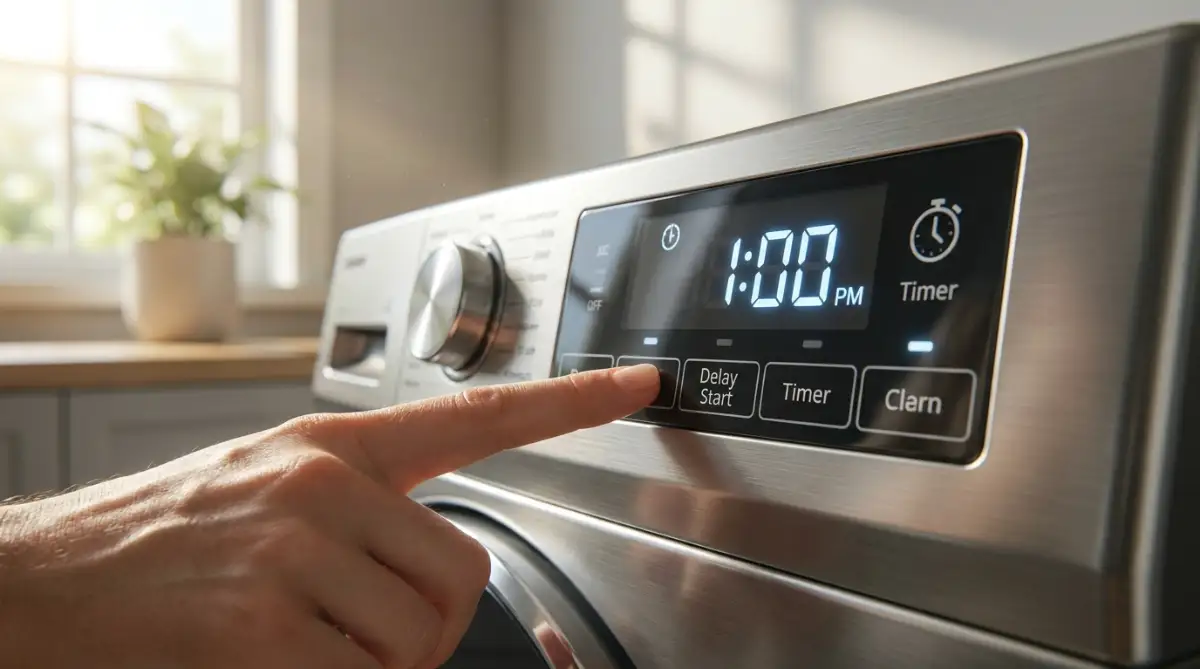
Want to see exactly how a regular homeowner successfully shifted their massive energy loads to run perfectly on daytime sunshine? Watch this incredible breakdown below to see the exact daily schedule they use to keep their evening power bills at absolute zero.
Controlling the Phantom Power Drain
Another massive issue that hurts your nighttime energy balance is something called phantom power. You might not even realize it, but your home is constantly leaking electricity while you sleep.
Phantom power is the energy that your electronics consume when they are turned off but still plugged into the wall. Your television, your computer, your microwave clock, and your smart speakers are always drawing a tiny bit of power.
During the day, your solar panels easily cover this small invisible drain. But at night, this phantom load adds up over eight to ten hours of darkness. You are paying the power company for electricity you are not even actively using.
To stop this hidden drain, you need to take control of your plugs. One of the easiest methods is using advanced smart plugs or simple power strips.
If you have a home office or an entertainment center with a TV, a gaming console, and a sound system, plug them all into one single power strip. When you go to bed at night, simply flip the switch on the power strip.
This completely cuts the connection to the wall. The devices can no longer pull phantom power from the grid while you are sleeping.
Pre-Cooling and Pre-Heating Your Home
Heating and cooling are responsible for the biggest chunk of any home energy bill. If you run your air conditioning heavily at night, you are going to drain your battery fast or rack up a huge grid bill.
But physics offers a really neat trick to solve this. Your home is essentially a giant insulated box. The walls, the floors, and the furniture inside can actually hold onto temperatures for a very long time.
You can use your home's natural insulation as a form of energy storage. We call this pre-cooling or pre-heating.
Here is how you do it. Instead of waiting until 6 PM to turn on your air conditioner, you program your smart thermostat to cool the house aggressively at 2 PM.
At 2 PM, your solar panels are generating completely free energy. The air conditioner runs on high, using the sun's power to push cold air into the house. Your walls and furniture absorb that cool temperature.
When the sun goes down at 6 PM, your house is already freezing cold. You can then turn the air conditioner completely off, or set it to a very low, energy-saving mode.
Because your home is well-insulated, the cold air stays trapped inside for hours. You get to sleep comfortably in a cool bedroom all night long, without running the heavy AC compressor in the dark.
Maximizing Energy Efficient Appliances
Older appliances are notorious for wasting electricity. An old refrigerator from fifteen years ago can use three times as much power as a modern, energy-efficient model.
Since your refrigerator has to run 24 hours a day, it is constantly pulling power from your system all night long. Upgrading to a highly efficient model means your nighttime baseline usage drops significantly.
The same rule applies to lighting. If you still have old incandescent light bulbs in your living room, you are burning highly unnecessary watts every evening.
Replacing every single bulb in your house with high-quality LED lights is one of the cheapest and most effective ways to lower your night load. LEDs use a tiny fraction of the power and produce even better light.
When your evening power needs are naturally low, it becomes much easier for a small solar battery to cover the entire night.
Tracking Your Usage Like a Scientist
You cannot manage what you do not measure. If you want to perfectly balance your daytime generation with your nighttime usage, you need data.
Most modern solar setups come with a smartphone application that shows you exactly what your panels are doing. But many people only look at the production side of the app.
You need to become obsessed with the consumption graph. Look at the exact hours when your home energy use spikes.
Does the graph shoot up at 7 PM? What exactly is turning on at that time? Is it the oven? Is it the pool pump?
Once you identify the specific machines causing the massive evening spikes, you can make targeted decisions. Maybe you decide to cook dinner on a backyard grill two nights a week instead of using the electric oven.
Maybe you change the pool pump timer to run exclusively at noon instead of evening. Small, data-driven changes in your daily routine can drastically reshape your energy profile.
When you align your lifestyle with the rhythm of the sun, everything changes. The frustration of high bills fades away, and you finally get to experience the true financial freedom that solar power was meant to provide.
Balancing your energy does take a little bit of thought and effort at first. It requires breaking old habits and creating new, smarter routines. But the feeling of watching your nighttime grid usage drop to zero is absolutely worth the effort.
Next-Level Solar Mastery: Unlocking Deep Evening Savings
Once you understand the basic concept of shifting your power habits, a whole new world of energy independence opens up to you. You are no longer just a passive consumer hoping for a low utility bill at the end of the month.
Instead, you become the active manager of your own personal power plant. To really maximize your savings and keep that evening grid usage at absolute zero, we need to look at some highly effective, expert-level strategies.
These are the exact methods smart homeowners use to completely eliminate their reliance on the traditional power grid after the sun goes down.
Mastering Time-of-Use Rate Schedules
One of the biggest secrets to evening solar success is deeply understanding how your local utility company actually charges you for power. Many people do not realize that electricity does not cost the same amount all day long.
Most modern utility providers use something called a Time-of-Use (TOU) rate plan. This simply means they charge you significantly more money for electricity during the hours when everyone else is using it.
Typically, these highly expensive peak hours happen between 4 PM and 9 PM. This is exactly when families get home, turn on their ovens, and blast the air conditioning.
If your solar panels stop producing power at 6 PM, you are forced to buy energy back from the grid during the absolute most expensive time of the day. This completely destroys your potential monthly savings.
You can read more about understanding time-of-use pricing models from the Department of Energy to see exactly how these peak windows are structured across different regions.
To beat this system, you must program your solar battery to act defensively. Most modern solar storage apps allow you to set strict rules for when the battery discharges its power.
You can tell your system to hold onto its stored sunshine all afternoon and only begin powering your house exactly when the expensive peak hours start. By running your house on battery power from 4 PM to 9 PM, you avoid paying the highest rates entirely.
Automating Your Home Energy Chores
Trying to manually remember to turn on the dishwasher at exactly 1 PM every single day can get incredibly exhausting. We are all busy human beings with jobs, families, and endless daily responsibilities.
If you rely purely on human memory to run your appliances during peak sun hours, you will eventually fail. The smartest way to guarantee your energy load shifts correctly is by removing yourself from the equation entirely.
You can easily invest in smart appliances or highly affordable smart plugs that connect directly to your home internet. You just set a schedule once on your phone, and the house does the heavy lifting for you every single day.
This takes away the daily mental burden of checking the clock before doing laundry. In fact, understanding how automating simple daily tasks dramatically improves your peace of mind is a massive part of enjoying a modern, stress-free home.
You just load the washing machine at night, and the smart system automatically turns it on the next day right when your solar panels hit peak production.
Weather-Predictive Power Management
A truly advanced solar homeowner does not just look at today; they actively look at tomorrow. The weather plays a massive role in how much free energy you will have available for your evening routine.
If your weather app shows that tomorrow will be completely covered in heavy, dark rain clouds, you need to change your evening strategy tonight.
You know your panels will barely generate any power tomorrow. Therefore, you should absolutely avoid draining your battery tonight on unnecessary things like heating a hot tub or running three loads of laundry.
Some of the highest-end smart solar systems will actually check the local weather forecast automatically. According to National Renewable Energy Laboratory's findings on battery load shifting, weather-integrated smart systems can improve battery efficiency by a massive margin.
If your system is not that advanced yet, you can easily do this manually. Make it a habit to check the forecast every evening after dinner.
If a winter storm is approaching, you should be extremely conservative with your battery usage overnight. Speaking of cold weather, it is highly recommended to study up on making sure you know how to keep your solar energy storage system calibrated in freezing cold so your equipment does not fail when you need it most.
Dealing with Smart App Failures
Sometimes the technology we rely on to monitor our energy simply stops working. You might open your solar monitoring app on your phone one evening, only to find the screen completely frozen or failing to show your battery level.
This can be incredibly frustrating when you are trying to make smart decisions about cooking dinner or turning on the air conditioner. You are essentially flying blind without your real-time data.
Usually, this is just a temporary server issue or a small glitch on your smartphone. When this happens, it is incredibly helpful to know a few actionable workarounds when productivity apps refuse to sync so you can get your dashboard back online quickly.
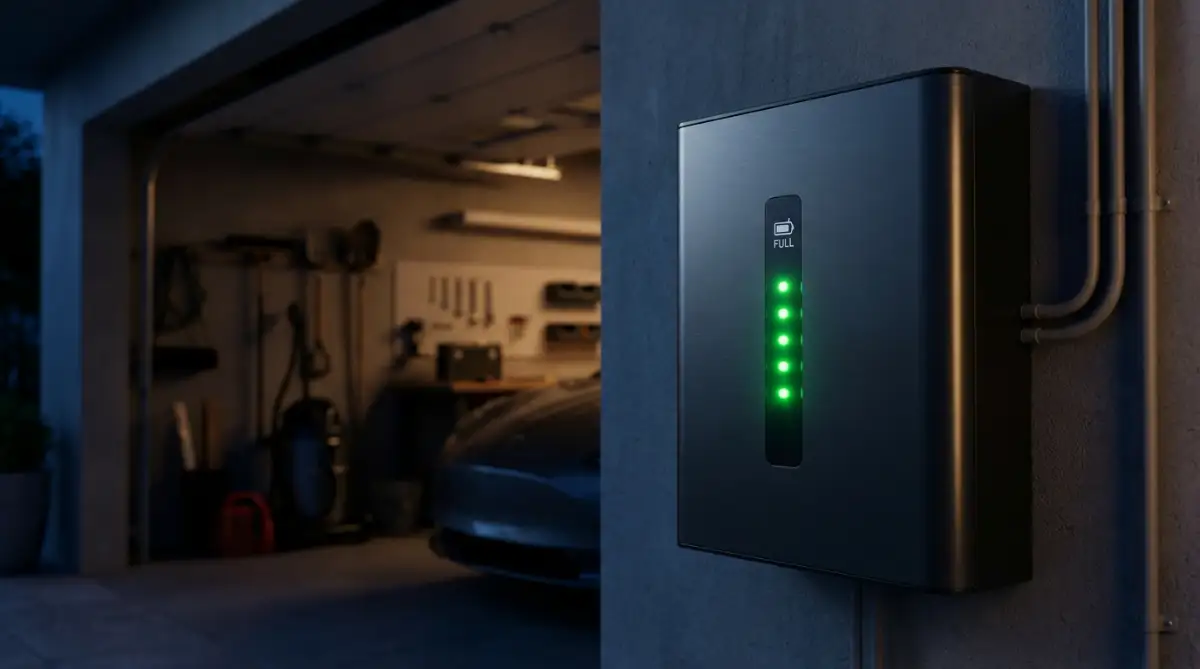
Always make sure you have a physical backup way to check your battery level. Most modern wall-mounted batteries have small LED indicator lights right on the front panel.
Learning to read those simple green lights can save you a lot of anxiety when the digital app decides to take the night off.
The Costly Energy Traps You Must Avoid
Transitioning your home to run entirely on daytime sunshine and evening battery storage is an amazing journey. However, there are some deeply painful mistakes that beginners make almost every single day.
I have seen so many people excitedly share pictures of their new solar panels, only to complain bitterly three months later because their bills are still terribly high. These mistakes do not just waste money; they cause a massive amount of family stress and frustration.
Let us walk through the most common pitfalls so you can protect your wallet and your peace of mind.
Buying Massive Panels with Zero Storage Plan
The absolute biggest heartbreak in the residential energy world is the oversized system trap. Many enthusiastic homeowners are convinced by pushy salespeople to cover every single inch of their roof with the most expensive panels available.
They spend tens of thousands of dollars generating massive amounts of energy at noon. But they completely refuse to buy a battery because they think it is too expensive upfront.
They assume the power company will pay them handsomely for all that extra noon energy. But the reality is incredibly harsh.
Utility companies buy your daytime power for absolute pennies, and then they sell it back to you at night for top dollar. You end up generating massive amounts of power for the neighborhood, but you are still paying a huge bill every evening.
Never buy a massive panel system without having a solid, realistic plan for how you will store or use that power when the sun goes down.
Fighting the Family Over Electricity
This is a heavily emotional mistake that ruins the fun of having a modern energy setup. When you become obsessed with lowering your evening power draw, it is incredibly easy to turn into the household energy police.
You start following your spouse around the house, turning off lights the second they leave a room. You yell at your kids for playing video games after 7 PM because it is draining the battery.
This creates a highly toxic environment where your family actually resents the solar system you worked so hard to install. It completely destroys the comfort of being home.
Instead of fighting human nature, you need to rely on invisible technological upgrades. Change the heavy bulbs to highly efficient LEDs so it does not matter if a kid leaves a light on.
Invest in smart power strips that automatically cut phantom power to the television at midnight. You should control the environment with smart tools, not by constantly arguing with the people you love.
Myth vs. Reality: Evening Energy Stress
- The Myth: You have to sit in the dark and stop watching television to save your solar battery for the night.
- The Reality: Small electronics like your TV or laptop use very little power. The real villains are heat-generating appliances (ovens, space heaters, dryers). Swapping out ten old light bulbs for LEDs saves more power than turning off your family movie night. Keep the comfort, just shift the heavy loads!
Trusting Cheap, Unbranded Inverters
Your inverter is the actual brain of your entire house setup. It is the machine that turns raw sunshine into usable electricity, and it directs traffic between your panels, your battery, and your home panel.
Many people try to save a few hundred dollars by buying cheap, unbranded inverters from random online marketplaces. This is a massive disaster waiting to happen.
These cheap devices are highly inefficient. They actually burn up a significant portion of your stored battery energy just trying to keep themselves running overnight.
If you look into recent IEEE studies on smart home power optimization, you will quickly see that high-quality, smart inverters are the absolute backbone of a successful setup.
Always invest in a highly rated, reputable brand for your inverter and battery management system. If the brain of your setup fails on a cold winter night, your entire house goes dark, and all those expensive roof panels instantly become useless.
Your Tomorrow Morning Action Plan
We have covered a massive amount of ground today regarding how your home handles energy. But simply reading about these concepts will not lower your bill next month.
You actually have to step up and make a few small, highly intentional changes in how you run your household. The good news is that these changes are completely free and deeply rewarding.
Start by simply finding your most recent utility bill and locating the graph that shows your daily usage. Find out exactly when your personal peak hours are hitting your wallet the hardest.
Tomorrow morning, try putting just one heavy chore on a delay timer. Load the dishwasher before you leave for work and set it to run right at noon when the sun is blazing.
Once you see how incredibly easy it is to shift your heavy loads to the daytime, you will start finding amazing new ways to optimize your entire home. For even more helpful guides on improving your home lifestyle, you can always spend some time exploring more everyday life resources on our main platform.
Every single watt of sunshine you capture and use correctly is a tiny victory for your family budget.
I remember looking at my own heavily reduced power bill for the very first time after applying these exact strategies. I felt an incredible sense of pride knowing I had finally outsmarted the system, and I am so excited for you to experience that exact same feeling this month.
Common Questions About Evening Solar Management
Can I actually go completely off-grid during the night?
Yes, it is entirely possible to go off-grid at night if you have a properly sized solar battery system. As long as your daytime sunshine fills the battery enough to cover your evening air conditioning and appliance usage, your home will not pull a single drop of power from the utility company while you sleep.
Do I really need an expensive battery if my state offers net metering?
If you live in a rare area that still offers true 1-to-1 net metering, a battery might not be financially necessary right now. True net metering means the power company pays you the exact same high price for your daytime solar as they charge you for nighttime usage. However, many companies are rapidly phasing this program out, making batteries highly necessary very soon.
How long will a standard solar battery actually power my house?
This completely depends on your family lifestyle and what appliances you are running. A standard modern home battery can easily run basic lights, internet routers, ceiling fans, and a refrigerator for 10 to 14 hours. But if you turn on an electric oven and a heavy central air conditioner, that exact same battery might drain completely in just two or three hours.
Will running my air conditioning at night drain my system instantly?
Heavy central air conditioning is the absolute fastest way to drain any stored energy reserve. To prevent this, you should highly consider pre-cooling your house during the afternoon while the sun is shining. This way, the AC compressor barely has to run during the dark evening hours.
How does bad winter weather affect my nightly backup power?
Shorter winter days and heavy cloud cover mean your panels will generate significantly less energy to fill your bucket. You will definitely need to monitor your app closely on winter evenings and avoid doing heavy laundry or running electric heaters purely on battery power.
Disclaimer: The information provided in this article is for educational and informational purposes only. Every home energy system is entirely unique. Always consult with a licensed electrician or certified solar installer before making any major modifications to your electrical panels, purchasing large battery systems, or changing your home utility setup.