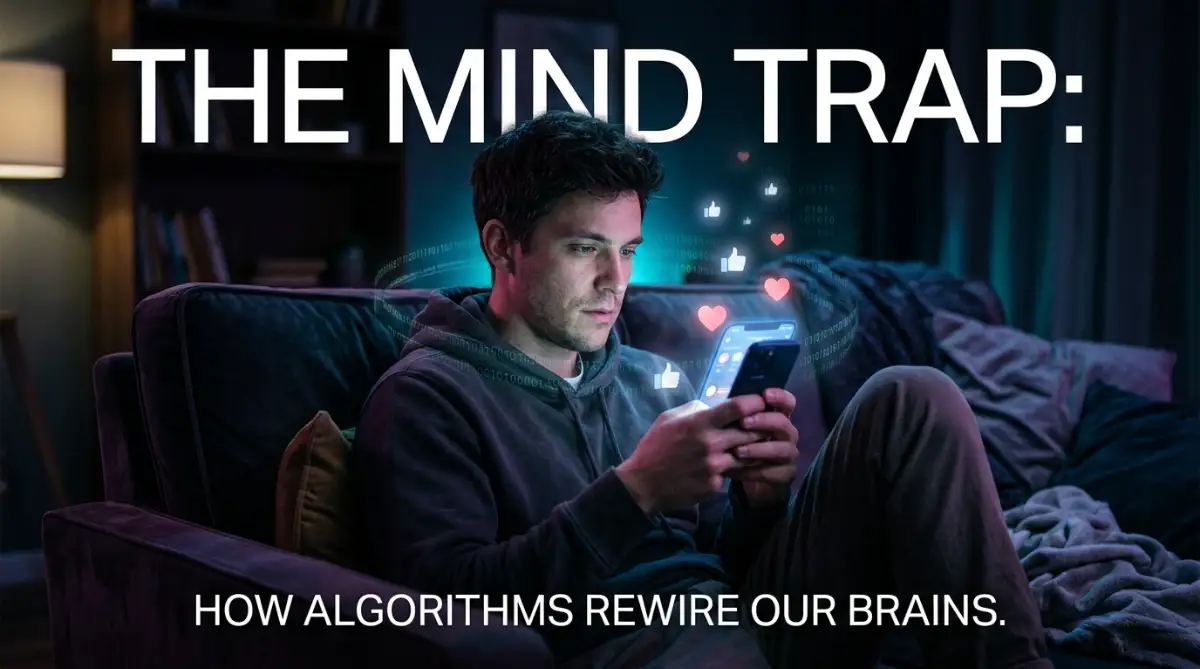
The Silent Mind Hack: How We Lost Control of Our Own Screens
Look at your phone's screen time report right now. If you're anything like me, that daily average is probably a little embarrassing. We didn't accidentally lose hours of our day to random videos; we walked into a highly calculated trap built by the smartest engineers on earth. Let's talk about how to actually break out of it, and no, I'm not going to tell you to throw your smart device into the ocean.
This is not just my personal failure or a simple lack of willpower. It is a highly engineered reality that millions of us face every single day. We wake up, reach for our devices, and instantly fall into a digital rabbit hole designed by the smartest engineers on the planet.
Modern software applications are no longer just tools we use to complete tasks. They have evolved into highly intelligent psychological environments that observe every second of our behavior. When you pause on a video for just a fraction of a second longer than usual, the machine learns. When you quickly scroll past a specific topic, the machine adapts.
This creates a constant feeling of mental exhaustion for the average person. We constantly feel like we are falling behind on our daily tasks. Our attention spans have shrunk so much that watching a full ten-minute video without checking another app feels almost impossible.
This daily struggle drains our emotional energy and ruins our mental peace. We end up snapping at our loved ones because our brains are constantly overstimulated. We sit at dinner tables looking at screens instead of the people sitting right in front of us.
Quick Takeaways Before You Read:
- Social media platforms act like digital slot machines, using unpredictable rewards to keep your brain hooked.
- Changing your screen to Grayscale (black and white) instantly makes your phone less addictive.
- Willpower is not enough to stop scrolling; you need to change your physical environment and make bad habits inconvenient.
- Being bored is actually a good thing—it is the space where your brain rests and creates new ideas.
The Invisible Chains: Understanding How the Machine Learns You
To actually solve this exhausting problem, we first need to understand the exact mechanics of what is happening inside our heads. Software platforms use something called predictive algorithms. These systems do not care about your happiness or your mental health.
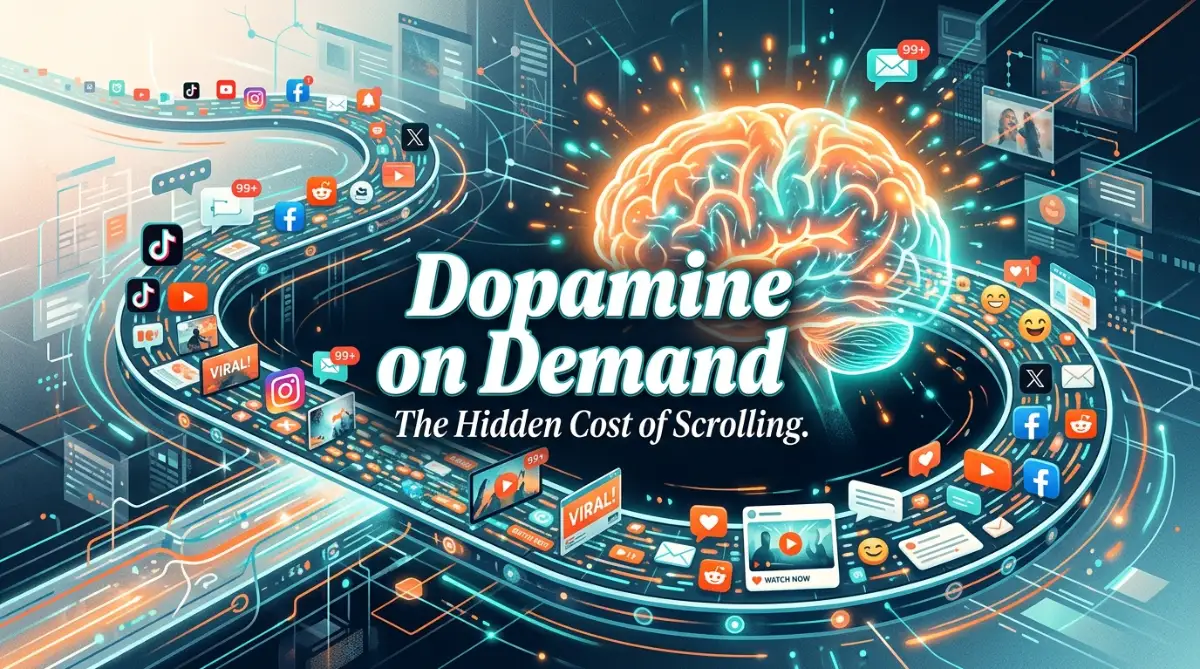
Their only goal is to maximize your "time on device." To do this, they rely on a psychological concept known as intermittent reinforcement. This is the exact same psychological trick used in casino slot machines.
Every time you pull down your screen to refresh a feed, your brain releases a tiny hit of dopamine. You never know what you are going to get. It might be a boring post, or it might be a highly entertaining video that makes you laugh out loud.
Because the reward is entirely unpredictable, your brain becomes obsessed with chasing the next hit. You keep scrolling, searching for that perfect piece of content. The software developers know this, and they design the user interface to make scrolling as frictionless as humanly possible.
The endless scroll feature removes any natural stopping points. In the past, you would reach the bottom of a page and have to actively click "Next." That small physical action gave your brain a moment to pause and ask, "Do I want to keep reading?"
Quick Reality Check: Here is a crazy statistic I found while trying to fix my own habits. The average person scrolls through about 300 feet of content every single day on their phone. That is roughly the height of the Statue of Liberty! Your thumb is running a daily marathon just searching for that next tiny hit of dopamine.
Now, the content just bleeds into the next piece infinitely. Your brain never gets the signal to stop. Before you know it, a quick five-minute break turns into an hour of lost productivity.
The Echo Chamber Effect on Our Emotions
Beyond just wasting our time, these systems deeply affect our emotional stability. Algorithms are designed to show you content that triggers a strong emotional reaction. Anger and outrage are the most engaging emotions of all.
If an AI notices that you linger on controversial news stories or heated debates, it will slowly fill your entire feed with similar content. This creates an invisible echo chamber around your mind.
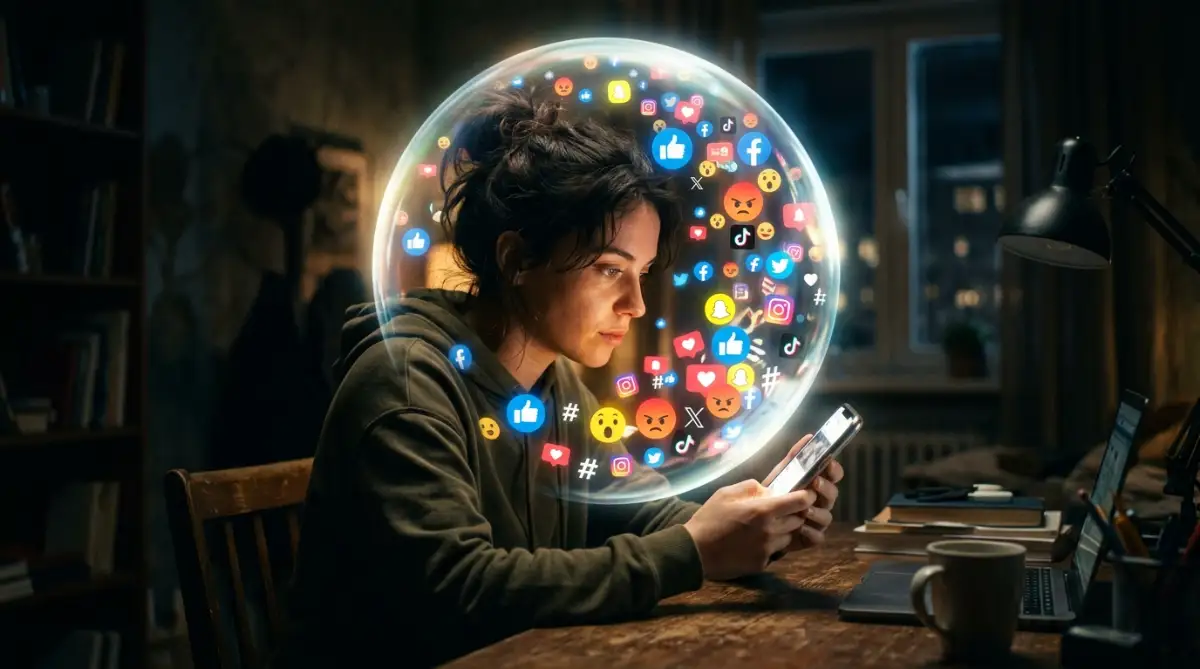
You start to believe that the whole world is angry, divided, and dangerous. This is not a true reflection of reality, but rather a funhouse mirror created by machine learning. It directly spikes your cortisol levels, leaving you feeling stressed out and pessimistic about life.
How to Rewire Your Habits and Reclaim Your Mental Space
We cannot simply throw away our smart devices and move to the woods. We need software for our jobs, our communication, and our daily lives. The secret is shifting from being a passive consumer to an active director of your technology.
Create Intentional Digital Friction
The algorithms rely on absolute convenience to trap you. You have to fight back by making bad habits highly inconvenient. Move your most addictive apps off your home screen and bury them deep inside a labeled folder.
Better yet, delete the apps entirely from your phone and force yourself to log in through a web browser. The web versions of social platforms are usually clunky and less engaging. That tiny bit of extra effort—typing in the web address and logging in—is often enough to break the automatic habit loop.
The Power of Grayscale Mode
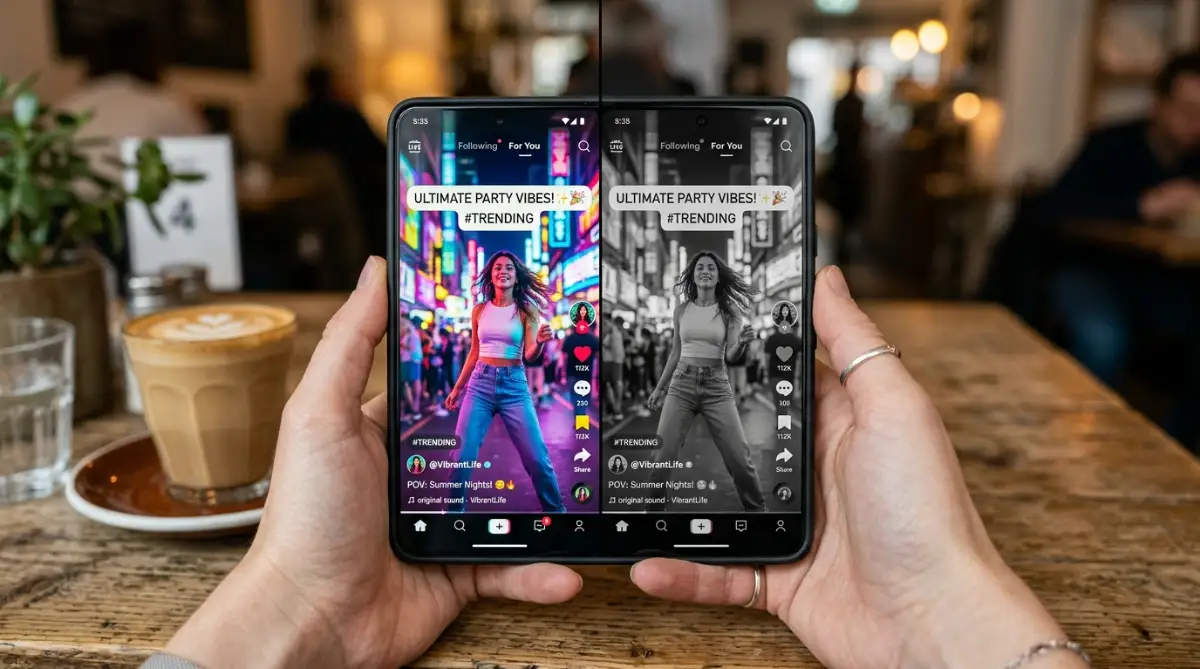
Your brain naturally loves shiny, bright colors. Tech companies spend millions of dollars testing exact shades of red and blue to see which ones grab the human eye the fastest. You can easily shut this down.
Go into your phone’s accessibility settings and change your display color to Grayscale. Suddenly, the highly stimulating digital world becomes a boring, flat newspaper. You will be absolutely amazed at how fast you want to put your phone down when Instagram or TikTok looks like a black-and-white movie.
Pro Tip from My Own Experience
I used to rely heavily on software app timers to lock me out after thirty minutes of use. But honestly, I always ended up just typing in my password to bypass the block the second the timer popped up. My biggest win came when I bought a cheap physical alarm clock and permanently banned my phone from entering my bedroom at night.
Confuse the Recommendation Engine
You have more power over the AI than you think. You can actively train the algorithm to show you things that actually benefit your life. Stop passively scrolling past things you hate.
If you see a negative, outrage-baiting post, use the "Not Interested" or "Hide" button immediately. Then, go out of your way to search for positive, educational, or highly boring topics.
Search for historical documentaries, gardening tips, or basic cooking tutorials. Like and save these posts intentionally. Within a few days, the machine will realize its old tricks are not working on you anymore. It will start serving you calmer, slower-paced content because that is what you are rewarding.
Embrace the Beauty of Boredom
The biggest reason we fall victim to algorithmic feedback loops is our modern fear of being bored. We treat a quiet moment at a bus stop or in a grocery store line as a problem that needs to be solved with a screen.
Watch This Expert Explanation on Digital Dopamine Fasting
Understanding how to reset your brain's reward system is the first massive step toward getting your daily focus back.
You have to teach your brain how to just exist in empty space again. The next time you are waiting for a friend at a cafe, leave your phone in your pocket. Just look around the room.
Notice the sounds, the people, and the lighting. It will feel highly uncomfortable for the first few minutes. Your brain will scream for a quick distraction.
If you push through that initial discomfort, you will feel a deep sense of calm wash over you. Boredom is the exact space where creativity and original thoughts happen. When you constantly fill every silent moment with AI-generated feeds, you kill your own ability to generate new ideas.
Setting Strict Time Boundaries
Human willpower is a limited resource. You cannot expect to fight against a billion-dollar supercomputer all day using just your mind. You need hard boundaries.
Decide on a specific "digital sunset" time every single evening. For example, make a rule that all smart devices are powered down at 8:30 PM.
After that time, you can read a physical book, talk to your family, or do some light stretching. This gives your nervous system a chance to cool down before sleep. Your brain needs time to process the day's events without a screen flashing new information into your eyes.
The Reality of Phantom Notifications
Have you ever felt your phone vibrate in your pocket, only to check it and realize nothing is there? This is a documented psychological phenomenon. Our nervous systems have become so highly tuned to the demands of software that our bodies hallucinate incoming alerts.
This happens because we live in a constant state of high alert. To fix this, you must ruthlessly audit your notifications. Go into your settings right now.
Turn off every single notification except for direct phone calls and text messages from real humans. You do not need to know that a stranger liked your photo the exact second it happens. You do not need a shopping app telling you about a random flash sale on a Tuesday afternoon.
When you silence the noise, you take back the power of choice. You decide when to check the app, rather than the app telling you when to look at it.
Myth vs. Reality: The Willpower Deception
Myth: If you cannot stop scrolling, you are just lazy and lack personal discipline.
Reality: You are fighting a psychological war against algorithms built to exploit basic human biology. Blaming yourself only creates shame, which often leads to more scrolling to escape the bad feelings.
Instead of relying on willpower, rely on system design. Change your environment so that doing the right thing becomes the easiest option.
Recognize the "Zombie Scroll" State
We all have moments where we lose total awareness of what we are actually doing. You might open an app to check the weather, and ten minutes later you are watching a video about deep-sea fishing. You don't even remember how you got there.
This is the zombie state. The algorithm loves this state because your critical thinking is completely turned off. To fight this, practice the habit of stating your intention out loud.
Before you unlock your screen, literally say, "I am opening my phone to check my bank balance." It sounds silly, but speaking it aloud engages a different part of your brain. It acts as an anchor.
When you finish checking the bank, that spoken intention reminds you to lock the screen and walk away.
Rebuilding Your Natural Attention Span
Years of algorithmic training have taught our brains to prefer quick, hyper-edited, ten-second bursts of information. Reading a long article or focusing on a slow-moving task now feels physically painful.
You have to actively rebuild your attention span, just like a muscle at the gym. Start incredibly small. Pick a task that requires deep focus, like reading a dense book or writing in a journal.
Set a timer for just ten minutes. During those ten minutes, your phone must be in a completely different room. Your brain will panic at first.
You will feel strong urges to get up and check your messages. Acknowledge the feeling, take a deep breath, and return to the task. Over a few weeks, you can slowly increase this focused time to twenty, thirty, and eventually sixty minutes.
You will quickly notice that your mind feels sharper. You will be able to follow complex arguments without losing your train of thought.
The danger only arises when we allow the tool to use us. By understanding the psychology behind algorithmic feedback loops, you are no longer a blind participant in their game. You can step back, see the strings pulling your attention, and finally decide to cut them.
Every single time you choose to look out a window instead of down at a screen, you are winning a small battle for your own mind. It takes practice, and you will definitely make mistakes along the way. But gaining back hours of your daily life, and the mental peace that comes with it, is completely worth the effort.
Mastering Your Digital Environment for the Long Haul
Once you understand the basic tricks these platforms use, you need a long-term strategy to stay in control. You cannot just rely on a few settings changes and hope for the best. Algorithms are constantly updating, and software engineers are always finding new ways to hold your attention.
To truly protect your mind, you must start treating your attention like a highly valuable bank account. Every single time you open an app, you are spending a piece of your mental wealth. You have to decide if the content you are consuming is actually worth the price of your personal energy.
One of the most powerful advanced methods is called the "Data Diet Audit." Think of your mind just like your physical body. If you eat junk food all day, you will feel sick and tired.
If you consume angry, fast-paced videos all morning, your brain will feel exhausted by lunch. You must intentionally search for long-form, educational content that forces your brain to slow down. Reading about what artificial intelligence actually means instead of just watching a ten-second reaction video gives your mind a chance to process real information.
Another expert-level strategy is creating strict physical zones in your house. The human brain heavily associates physical locations with specific habits. If you always scroll on your couch, your brain will crave your phone the second you sit on that exact piece of furniture.
My Personal Tactic: I started leaving my phone on the kitchen counter at 8 PM. If I really wanted to check Instagram, I had to stand on the cold, hard kitchen floor to do it. Spoiler alert: I rarely lasted more than five minutes. Comfort is the algorithm’s best friend. Take away the comfy couch, and your desire to doom-scroll drops to zero.
You must break this physical association. Create a rule that you can only check your favorite apps while standing in the kitchen or sitting at a designated desk. When you remove the extreme comfort of lying in bed while scrolling, the habit suddenly becomes much less appealing.
According to psychological research on digital habits, changing your physical environment is one of the fastest ways to break an automatic behavioral loop. Your brain simply gets confused by the new location and stops running on autopilot.
The Power of the 24-Hour Blank Slate
Many highly productive people use a technique called the "Blank Slate Weekend." This means picking one day a week where you completely disconnect from algorithmic feeds. You do not check any recommended videos, social updates, or news aggregators.
You can still use your phone to call a friend or look up a map, but the endless scroll is entirely off-limits. At first, this will feel incredibly boring and almost painful. Your thumbs will literally twitch as they look for something to swipe.
However, if you push through that first morning, something amazing happens by the afternoon. You start noticing the physical world again. You might suddenly feel the urge to clean your room, read a dusty book, or go for a long walk outside.
This happens because your natural dopamine and pleasure pathways are resetting to their normal levels. You are no longer flooding your system with artificial excitement. Just like maintaining your personal energy battery in a smart home system, you have to let your internal battery recharge without constant draining.
Training the Machine to Work for You
Instead of just fighting the AI, you can actually hack it to improve your life. The algorithm is basically a mirror reflecting your past choices. If you want a better feed, you have to feed the machine better data.
Start intentionally searching for topics that calm you down or teach you a new skill. Look up slow-paced cooking tutorials, classical music performances, or deep dives into behind-the-scenes software development. Click "Like" on things that are boring but highly educational.
Within a week, the recommendation engine will completely shift its behavior. It will realize that you no longer respond to cheap outrage or flashing lights. It will start serving you high-quality content that actually adds value to your quiet time.
The Hidden Traps: Why Most Digital Detoxes Fail
Trying to fix this modern problem is not easy, and people often fall into very predictable traps. The biggest mistake you can make is attempting to go "cold turkey" without a backup plan. You suddenly delete every single app off your phone on a Sunday night and expect to be a completely new person by Monday morning.
This almost never works. Your brain is dealing with a genuine chemical dependency, and cutting it off completely will cause intense psychological withdrawal. You will feel highly irritable, anxious, and deeply bored.
Because you have not replaced the scrolling habit with a healthy alternative, you will eventually crack. By Wednesday, you will redownload the apps and end up scrolling twice as much to make up for lost time. Instead of completely erasing your digital life, you must slowly reduce your usage while adding new, engaging physical hobbies.
The Phantom Screen Replacement
Another massive pitfall is replacing one glowing screen with another. Many people successfully put their phones in a drawer for the evening, only to sit down and binge-watch television for five hours straight. They think they are making progress because they are not holding a device in their hands.
This completely misses the point. You are still feeding your brain artificial, fast-paced media. The goal is not just to avoid phones; the goal is to escape the mechanics of the attention economy entirely.
If you want true mental rest, you have to step away from all directed media. You need activities that require your own imagination, like sketching, writing, or having a face-to-face conversation.
Ignoring the Emotional Root Cause
Perhaps the most dangerous mistake is ignoring why we scroll in the first place. For most of us, excessive screen time is not just a bad habit; it is an emotional escape route. We pull out our phones when we feel stressed at work, lonely at home, or anxious about the future.
The glowing screen acts as a digital pacifier. It numbs the uncomfortable feelings so we do not have to deal with them. If you only try to block the software but never address your underlying stress, you will always find a way back to the feed.
You have to start asking yourself hard questions. The next time you frantically reach for your device, pause for just two seconds. Ask yourself, "What feeling am I trying to run away from right now?"
Just acknowledging that you feel sad or overwhelmed takes away the power of the urge. You learn to sit with your own feelings instead of letting an algorithm distract you from your real life. Finding healthy ways to process human emotion is the only permanent cure for this digital trap.
Taking Back Your Mind: A Blueprint for Tomorrow
We are living through a massive experiment in human psychology, and you do not have to be a helpless test subject. The software companies have teams of brilliant engineers working hard to capture your attention. But at the end of the day, you are the one holding the physical device.
You have the power to turn off the notifications, change the screen colors, and set hard boundaries. You can choose to actively consume global tech insights on your own terms, rather than letting an AI dictate what you should care about today. Breaking this invisible loop requires a little bit of daily courage and a willingness to be bored.
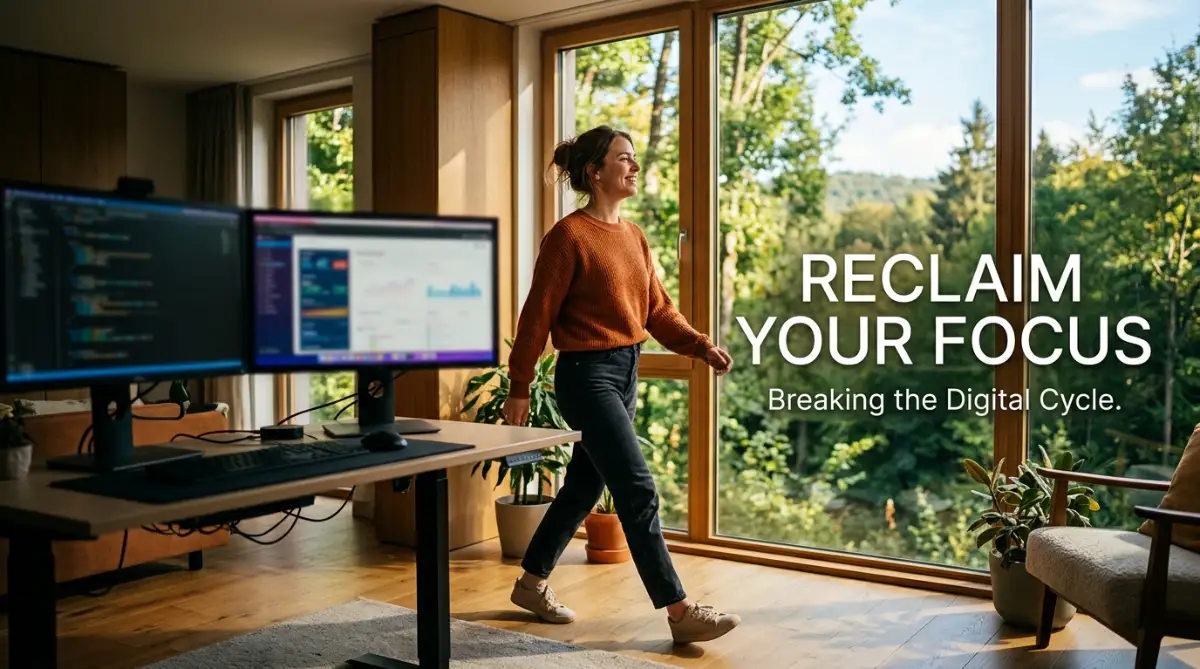
Start extremely small tomorrow morning. Give yourself just the first thirty minutes of the day without looking at a screen. Drink your coffee while staring out the window, and let your brain wake up naturally.
That one small victory will build confidence. It will remind you that life happens right here in the physical world, not inside a glowing rectangle. You will slowly begin to notice the beauty in everyday moments again.
I know how hard it is to break this cycle, but the peace of mind on the other side is completely incredible. I finally feel like I own my time again, and I no longer panic when I leave my phone in another room. You can absolutely do this, one simple, intentional choice at a time.
Common Questions About Overcoming Algorithm Addiction
How long does it take to reset dopamine levels?
It usually takes about three to four weeks of strict digital boundaries for your brain's reward system to fully reset. The first few days are always the hardest because your mind craves the instant stimulation it is used to. Over time, you will find joy in much slower, quieter activities again.
Are all software algorithms bad for my mental health?
Not all algorithms are harmful by default. Many industry tech tools use algorithms to filter out spam or organize important data. The danger only comes from recommendation algorithms that are specifically designed to maximize your viewing time through emotional manipulation.
How do I stop mindless scrolling at night?
The most effective way is to ban your phone from the bedroom completely. Buy a cheap traditional alarm clock for your nightstand. If the device is physically in another room, you cannot mindlessly reach for it when you feel restless.
Can changing my phone screen color actually help?
Yes, changing your phone display to grayscale is incredibly effective. App designers use bright, flashing colors to trigger excitement in your brain. When you remove those colors, the phone suddenly feels like a boring tool instead of an entertaining toy.
Disclaimer: The information provided in this blog post is for educational and informational purposes only. It is not intended as a substitute for professional mental health advice, diagnosis, or psychological treatment. If you are experiencing severe anxiety, depression, or distress related to technology use, please consult a qualified healthcare or mental health professional.