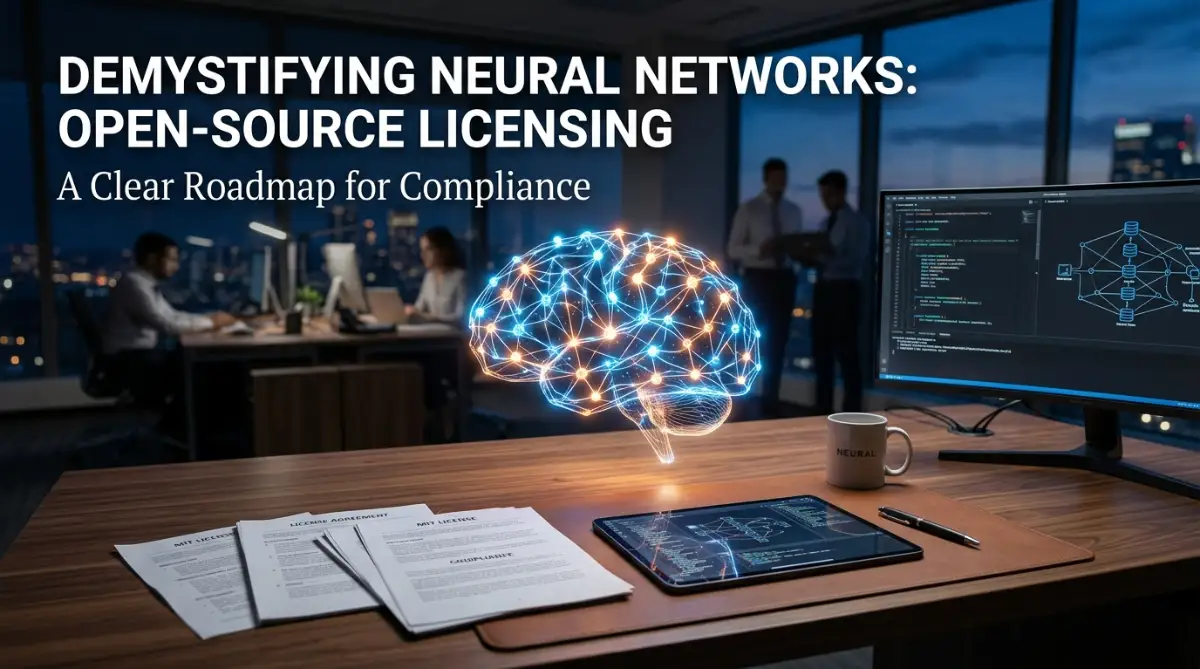
The Hidden Nightmare Behind Building Your Dream AI Model
So, you built a cool AI app, ran a few tests, and you are ready to make some money. Stop right there. Before you launch anything, you need to check where your training data actually came from. Trust me, ignoring a tiny text file called a "license" could get your entire project shut down by lawyers before you make your first dollar. You do not need a law degree to fix this, but you do need a solid system. Let us look at how you can protect your hard work and keep your app online.
I froze instantly. I had absolutely no idea what he was talking about, so I rushed to check the original repository.
To my horror, the data I used was strictly restricted to non-commercial use only. All my hard work, late nights, and expensive computing power were completely wasted because I ignored the legal fine print. I had to scrap the entire project and start over from scratch, feeling incredibly defeated.
This exact situation happens to thousands of creative builders and developers every single day. We get so excited about the amazing technology behind artificial intelligence that we completely forget about the legal boundaries.
You find an amazing free tool online, download it, and start integrating it into your main project. Everything seems perfectly fine until your app starts gaining traction and making money.
Suddenly, you receive a terrifying email from a legal team demanding you take down your software. Your stress levels shoot through the roof, and your mental peace completely disappears.
Nobody wants to deal with complex legal jargon when they just want to build cool things. Reading through pages of complicated software agreements feels like a punishment.The fear of doing something wrong makes many talented creators abandon their projects entirely. They become paralyzed by the anxiety of potential lawsuits and copyright strikes.
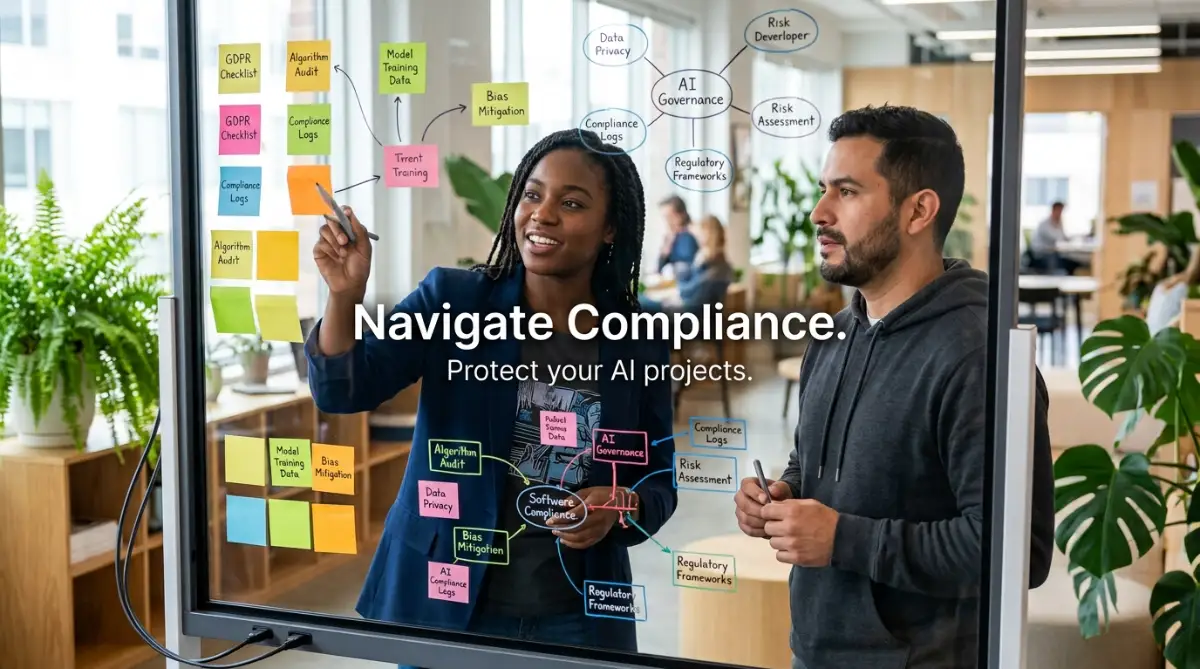
Quick Blueprint: Keep Your Project Safe
- Code vs. Data: A free algorithm does not mean the training data is free to use. Always check both.
- The 2-Minute Habit: Check for the "LICENSE" file before downloading any tool, not after you build your app.
- Avoid the "GPL" Trap: If you want to keep your project code a secret, avoid strict "copyleft" licenses.
- Track Everything: Keep a simple spreadsheet of every open-source tool you use. It builds trust if you ever want to sell your app.
Breaking Down the Licensing Puzzle for Everyday Developers
You do not need an expensive law degree to protect your hard work. You just need a clear, easy-to-follow system to understand how these permissions actually work.
Think of open-source tools like borrowing a friend's car for a road trip. Some friends will let you drive it anywhere, as long as you fill up the gas tank.
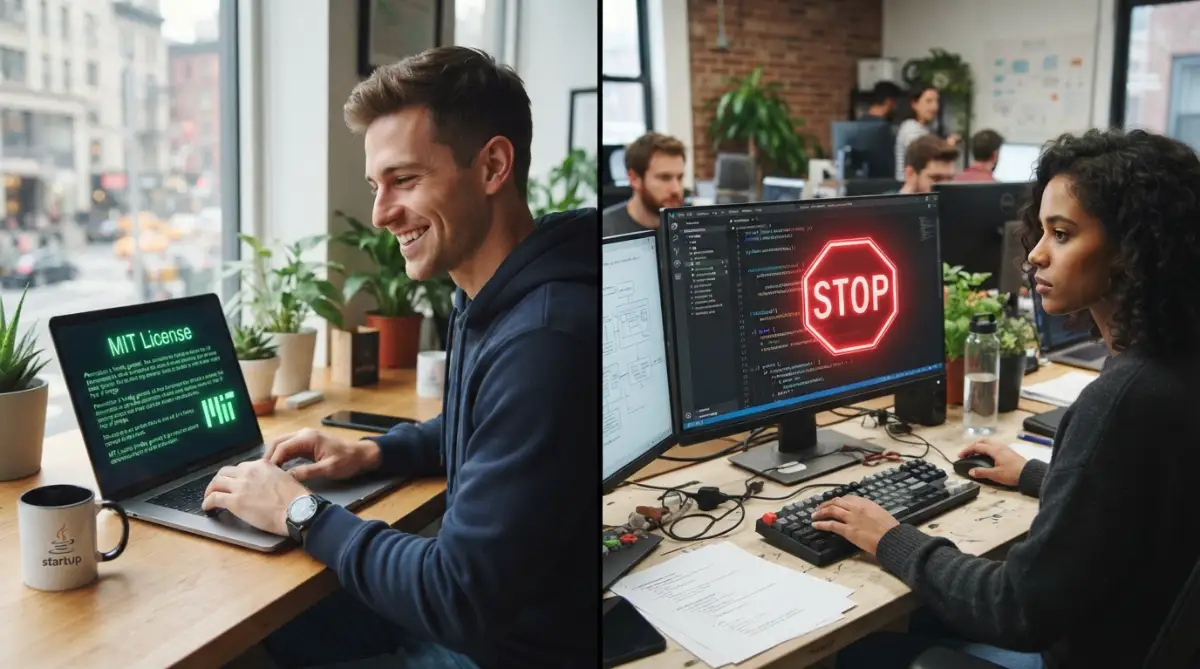
Other friends might say you can only drive it on weekends, and you definitely cannot use it as a taxi to make money. Software permissions work in the exact same way.
The people who create algorithms and datasets give you specific rules on how you can use their property. If you break those rules, you lose the privilege of using their tools.
The Most Common Permissions You Will Encounter
Let us talk about the most frequent rules you will see when downloading free tech resources. Understanding these few categories will solve most of your headaches.
First, we have the highly relaxed permissions, often called the MIT or Apache licenses. These are incredibly friendly for business owners and independent creators.
They basically tell you that you can do whatever you want with the tool. You can modify it, sell it, and include it in your paid software.
The only small rule is that you must include the original creator's copyright notice in your files. It is simply a way of saying "thank you" to the person who originally built it.
On the other hand, we have the strict sharing rules, often known as "copyleft" or GPL licenses. These can be incredibly tricky if you plan to keep your main project a secret.
To make things super simple, here is a quick cheat sheet I keep pasted on my monitor when checking new software:
Pro Tip: I used to blindly accept every license agreement without reading it, assuming everything free was safe to sell. Now, I explicitly search for the "Commercial Use" tag before I even look at the actual code or dataset. This simple five-second habit has saved me from countless future headaches.
If you use a tool with a strict sharing rule, you are usually forced to share your entire project with the public. For many business owners, giving away their secret formulas is completely unacceptable.
The Major Difference Between Code and Data
When dealing with complex algorithms, things get a little more complicated than standard apps. You are not just dealing with the raw text instructions; you are also dealing with the information used to teach the machine.
Many people mistakenly believe that if the algorithm is free to use, the teaching data is also free. This is a very dangerous assumption to make.
You might find an amazing machine learning system that allows full commercial rights. However, the thousands of pictures or text files used to teach that system might belong to private companies.
If the teaching information is protected by copyright, your final product might still be illegal to sell. You always have to check the permissions for both the engine and the fuel.
Want to understand exactly how this impacts your daily workflow? Watch this amazing breakdown.
Real-World Scenarios That Create Confusion
Let us look at a practical example to make this crystal clear. Imagine you want to build a tool that automatically edits audio files for podcasters.
You find a free algorithm online that can perfectly remove background noise. The algorithm itself has a friendly, open permission tag.
However, you decide to train this algorithm using hundreds of copyrighted songs and premium audiobooks you found online. Even though the tool itself was free, your final product is now built on stolen property.
This means you cannot legally sell your audio editing service. The original owners of those songs could easily demand compensation.
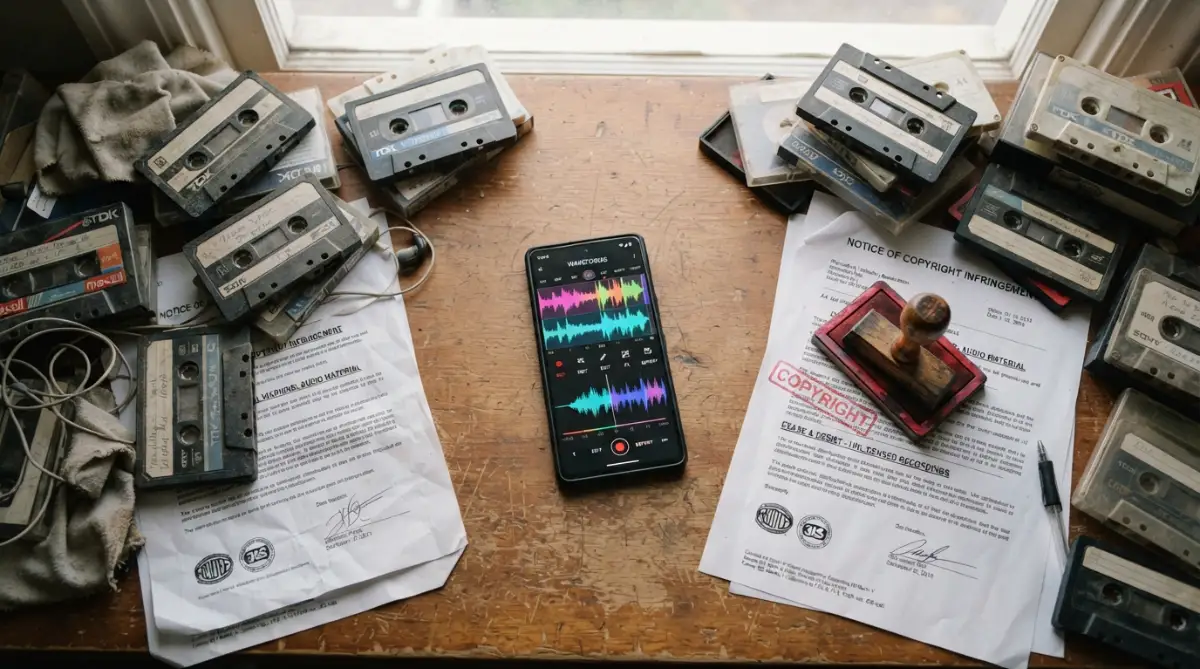
Another common scenario involves mixing different tools together. You might combine three different free resources to create one super-tool.
If two of those tools have friendly permissions, but one has a strict sharing rule, the strict rule usually takes over everything. It acts like a powerful dye in a glass of water, coloring the entire project.
Debunking the Biggest Myths in the Industry
There are a lot of rumors floating around internet forums that lead beginners down the wrong path. We need to clear the air so you can work with confidence.
Myth 1: If it is available publicly on the internet, it is free to use for any purpose.
Reality: Just because someone posted a file online does not mean they gave up their ownership rights. Always look for a specific permission file attached to the folder.
Myth 2: You only need to worry about the rules if you are a massive corporation making millions.
Reality: Automated bots constantly scan the internet looking for copyright violations. Independent creators get hit with takedown notices every single day.
Myth 3: Changing a few lines of the text makes the tool yours.
Reality: Simply renaming files or slightly modifying the structure does not erase the original creator's rights. You still have to follow their original rules.
Building a Safe and Stress-Free Workflow
Now that you understand the basic rules, how do you actually apply this to your daily life? You need to build a simple checking habit into your routine.
Before you ever hit the download button, stop and look for a file named "LICENSE" or "README". Open that file and scan it for words like "commercial," "derivative," or "non-profit."
If you cannot find a permission file anywhere, you must assume the creator holds all rights. Do not use it for anything serious without sending them a quick email to ask.
Create a simple spreadsheet for your active projects. Every time you bring in a new external tool, log the name, the link, and the exact permission type in your spreadsheet.
This takes less than two minutes per tool. When you are finally ready to launch or sell your project, you will have a complete, organized list to review.
Why Good Documentation is Your Best Friend
Keeping track of your resources also makes you look incredibly professional. If you ever want to sell your entire app to another business, they will ask for this list.
Investors and buyers will not touch a project if the legal foundations are messy. They do not want to inherit your potential lawsuits.
By having your clean spreadsheet ready, you instantly prove that you are a serious, organized builder. It builds massive trust.
If you work with a team of other builders, you must make sure everyone follows this exact same rule. One team member downloading a restricted file can ruin the work of twenty other people.
Host a quick ten-minute meeting to explain the difference between friendly and strict permissions. Make it a hard rule that no external files enter the main project without a quick permission check.
Handling Unclear and Confusing Situations
Sometimes, you will find a resource where the rules seem completely contradictory. The creator might say "free for all uses" in the description, but attach a highly restrictive legal document to the file.
When you encounter this confusing situation, always trust the formal legal document attached to the file. The description text is often just a mistake or poorly worded marketing.
If you truly need that specific tool, the best approach is direct human communication. Reach out to the creator on social media or via email.
Explain exactly what you are trying to build and ask if their rules allow it. Most independent creators are incredibly friendly and will happily give you clear, written permission.
Always save a screenshot of their response in your project folders. That simple screenshot can save you from massive legal trouble years down the road.
The Future of Open Collaboration
The entire technology industry relies heavily on people sharing their ideas and tools openly. It is a beautiful system that allows beginners to build incredible things very quickly.
By respecting the rules set by these generous creators, you help keep the community healthy. If too many people steal and misuse open tools, creators will simply stop sharing them.
When you build something great, consider giving back to the community. You can release pieces of your own work with friendly permissions.
This creates a positive cycle of innovation where everyone benefits and grows together. Just make sure you understand the rules you are setting for your own work.
Avoiding the Over-Engineering Trap
A lot of beginners get so obsessed with following the rules that they stop building entirely. They spend three weeks researching legal documents instead of working on their main idea.
Do not let the fear of making a mistake ruin your creative energy. Start your early experiments and personal tests with whatever tools you want.
If the project is just living on your personal computer for learning purposes, you generally do not need to worry. The rules only become highly important when you decide to share it with the public or charge money.
Build your rough draft first to see if your idea even works. Once you know the concept is solid, then take the time to clean up your tools and check your permissions.
This approach keeps your momentum high while still protecting your future business goals. You can always replace a restricted tool with a friendly one later in the process.
Navigating Cloud Platforms and APIs
Many modern builders use cloud services to access powerful machine learning tools instead of downloading them directly. You send your information to a big company's server, and they send you the results back.
This feels very different from downloading files, but the legal concepts remain similar. You have to read the terms of service to understand who owns the final results.
Some platforms state that they own anything their system generates. This means if you use their service to create digital art or text for a client, you might not actually own that final product.
Other platforms are very clear that you retain 100% ownership of anything you generate. Always verify this before you start building an entire business around someone else's server.
For example, look at OpenAI's API compared to their free ChatGPT service. If you type information into the free ChatGPT window, they can legally use your chats to train future models. But if you use their paid API for developers, they explicitly state that they will not touch your API data for training. Little details like this matter deeply when you handle client information.
Additionally, check if the platform uses your private information to improve their own systems. If you are handling sensitive client data, you cannot legally feed it into a public learning system.
This could violate privacy laws and destroy your client's trust instantly. Look for specific settings that allow you to "opt-out" of data sharing to keep your information secure.
Mastering Your Software Rights: Next-Level Protection Strategies
Once you understand the basic rules of borrowing digital tools, you are already ahead of most beginners. However, if you plan to turn your passion project into a real business, you need to step up your game.
The most successful builders do not just rely on a simple spreadsheet to track their permissions. They build automated safety nets that protect their work while they sleep.
Imagine having a digital security guard that checks every single piece of code before it enters your main project. This is exactly what professional teams do to avoid legal disasters.
Instead of manually reading text files, you can use automated dependency scanners. These are simple software tools that scan your entire project and immediately flag any strict sharing rules.
They look deep inside the folders you downloaded and tell you exactly what you are legally allowed to do. Setting up one of these scanners takes maybe an hour, but it will save you months of anxiety.
Building a Safe Team Culture
If you are working with other people, your automated tools are only half the battle. You have to train your team to actually care about the rules.
Many brilliant developers are incredibly lazy when it comes to reading legal documents. They just want to build things fast, and they often ignore warning signs.
You need to sit down with your partners and explain exactly what is at stake. Tell them stories about companies that lost everything because one employee copied restricted code.
Make it a hard company rule that nobody can add a new external tool without getting it approved first. This simple review process forces everyone to slow down and check the permissions.
When you establish this standard early, it becomes a natural part of your daily routine. You can manage your digital footprint with free open-source tools safely, knowing your team respects the boundaries.
The Magic of Dual-Licensing
Sometimes you will find the absolute perfect algorithm for your project, but it has a strict sharing rule. You might feel totally heartbroken, thinking you have to abandon the tool entirely.
Before you give up, look at the creator's website to see if they offer a dual-license option. This is a brilliant system where the creator offers two different rulebooks for the same tool.
They might offer a free version with strict sharing rules for students and hobbyists. But for a small fee, they will sell you a commercial version with absolutely no restrictions.
Paying a few hundred dollars for a clean, restriction-free tool is almost always worth the investment. It is significantly cheaper than hiring a lawyer to defend you in court later.
If you do not see a paid option on their website, just send them a polite email. Many independent developers will happily sell you a private license if you simply offer to pay them for their hard work.
Preparing for the Ultimate Audit
If your app becomes widely popular, larger companies might want to buy it from you. When this happens, their legal team will perform something called an "open-source audit."
They will comb through every single line of your project looking for stolen property. If they find even one restricted file hidden deep in your folders, the entire deal will collapse instantly.
To prepare for this, you should do a self-audit every six months. Dedicate one entire weekend to reviewing your active tools and verifying their current permissions.
Sometimes, creators change their rules for newer versions of their software. A tool that was completely free last year might have new restrictions today.
By catching these changes early, you can replace the risky tool before it becomes deeply tangled inside your project. Staying proactive is the only way to sleep peacefully at night.
For a deeper understanding of exactly how these official standards are defined globally, you can always review the official guidelines provided by the Open Source Initiative. They maintain the exact definitions that the entire industry follows.

The Most Dangerous Traps Builders Fall Into
Even with the best intentions, smart people make terrible mistakes when they rush their work. The legal side of technology is full of hidden traps that can destroy your business overnight.
Let us talk about the absolute worst mistakes you can make right now. Avoiding these specific pitfalls will protect your income and your mental health.
The Nightmare of Transitive Dependencies
This is easily the most terrifying trap in modern development. You find a great tool with a friendly permission tag, so you add it to your project and feel totally safe.
What you do not realize is that this tool relies on five other hidden tools to function properly. One of those hidden tools has a highly strict sharing rule attached to it.
Because everything is connected, that one hidden strict rule suddenly applies to your entire project. It is like buying a house that looks perfect on the outside, only to discover the foundation is completely rotten.
You must always check the rules for the underlying tools, not just the top-level software. Automated scanners are incredibly helpful for catching these hidden dangers before they infect your work.
Treating AI Generated Code as Your Own
With the rise of powerful machine learning assistants, developers are generating code faster than ever before. You type a simple prompt, and the machine hands you a perfectly working algorithm.
Many people blindly copy and paste this generated text directly into their paid products. They assume that because a machine wrote it, it is completely free of any ownership rules.
This is a massive and dangerous assumption. These machines were trained on millions of files created by real humans, and they often spit out exact copies of restricted work.
If you are curious about how these massive automated systems impact the future of our work, you can explore what artificial general intelligence really means for you. It is a fascinating subject that connects directly to how we borrow digital property.
Always review generated text just like you would review something downloaded from a stranger. If it looks incredibly complex and specific, you should probably test it to ensure it does not belong to someone else.
The "No One Will Notice" Delusion
Some creators realize they are breaking the rules, but they decide to publish their work anyway. They convince themselves that they are too small for anyone to care about their tiny project.
This is an incredibly foolish gamble in today's highly connected digital space. Massive corporations do not use humans to find stolen property; they use relentless automated bots.
These bots scan the entire internet 24 hours a day, looking for exact matches of their protected files. When they find your project, they immediately send an automated takedown notice to your hosting provider.
Within minutes, your website is pulled offline, and your payment processors freeze your bank accounts. It is an emotionally devastating experience that can ruin your reputation forever.
To understand how aggressively these rights are protected, take a look at the legal resources provided by the Electronic Frontier Foundation, who constantly monitor digital rights and ownership disputes.
Ignoring the Notice Requirements
Even the most relaxed and friendly permissions usually come with one simple request. The original creator just wants you to include their name and a copy of their license in your final product.
It is basically a digital "thank you" note, and it takes absolutely zero effort to include. Yet, thousands of developers completely ignore this basic requirement because they feel it looks messy.
By removing that simple text file, you are technically violating the agreement. The creator can legally demand that you stop using their tool entirely.
Do not let your ego get in the way of basic professional courtesy. Create a simple "Credits" page inside your app and list every single person whose free tools helped you build your dream.
It makes you look highly professional and keeps you completely safe from petty legal disputes.
Mixing Private Code with Public Code
If you are building a secret algorithm that makes your company special, you must protect it fiercely. This is your competitive advantage, and you cannot afford to accidentally share it.
The biggest mistake you can make is mixing your secret instructions inside the same folder as a strictly restricted open tool. When you do this, the strict rules legally force you to reveal your secret formula to the public.
You need to keep your private work completely separated from the free tools you borrow. Think of them as two completely different rooms in a house, separated by a locked door.
They can communicate with each other, but they should never touch or share the same files. This structural separation is the best way to protect your most valuable business secrets. For global standards on how intellectual property is separated, the World Intellectual Property Organization offers excellent foundational knowledge.
Your Path Forward to Confident Creation
You now have a massive advantage over the vast majority of people building things online today. You understand the hidden rules of the game, and you know exactly where the dangerous traps are located.
Instead of feeling terrified by legal documents, you can view them as simple instruction manuals. They are just maps that show you exactly how to build your business safely.
Remember that the entire goal of these systems is to encourage sharing and creativity. The people who release free tools genuinely want you to succeed and build amazing things.
By respecting their simple boundaries, you are participating in the greatest collaborative community on earth. You are building on the shoulders of giants, and doing it with complete peace of mind.
Start organizing your folders today, run a quick audit on your current projects, and set up your safe habits. When you know your foundation is legally solid, you can focus 100% of your energy on creating something beautiful.
Common Questions About Machine Learning Legalities
What happens if I accidentally use restricted data to train my model?
If you train your system on restricted information, your final product is legally compromised. You will likely have to delete the entire model, throw away your progress, and start over from scratch with clean data. It is always better to double-check your data sources before you spend money on computing power.
Can I sell an app that uses free open-source tools?
Yes, you absolutely can sell your app, as long as the specific tools you used allow commercial activity. Look for friendly permissions like the MIT or Apache tags, which are perfectly safe for business owners. Always check the rules for every single tool before you start charging money.
Do I need to hire a lawyer for my small personal project?
For small side projects and learning experiments, you generally do not need an expensive legal team. Simply tracking your tools in a basic spreadsheet and avoiding strict sharing rules is usually enough protection. However, if you secure massive funding or plan to sell the company, getting professional advice is highly recommended.
How do I properly credit the original creators?
Most friendly agreements just require you to include a copy of their original license document inside your project files. You can create a simple text file named "Third-Party Notices" and paste all the original text there. Many builders also add a friendly "Credits" page inside their app settings to show respect.
What should I do if a tool has no legal file attached to it?
If you cannot find any rules or permission files attached to a download, you must assume it is strictly protected by default copyright laws. You cannot legally use it for your business without direct written permission. Your best option is to message the creator directly and ask them to add an official permission tag to their work.
Disclaimer: The information provided in this article is for educational and informational purposes only and does not constitute formal legal advice. Software compliance laws and licensing terms can change frequently and vary by jurisdiction. Always consult with a qualified legal professional regarding your specific business projects and copyright concerns before launching commercial applications.