The Day the Lights Went Out Unexpectedly
You probably walk past your solar battery setup every single day without giving it a second thought—until the house suddenly goes dark right in the middle of dinner. I learned the hard way that these expensive systems rarely just die out of nowhere. They actually drop tiny, silent hints for months before a total hardware failure. Let me show you exactly what red flags you need to look for right now, so you never end up sitting in a freezing, dark living room like I did.
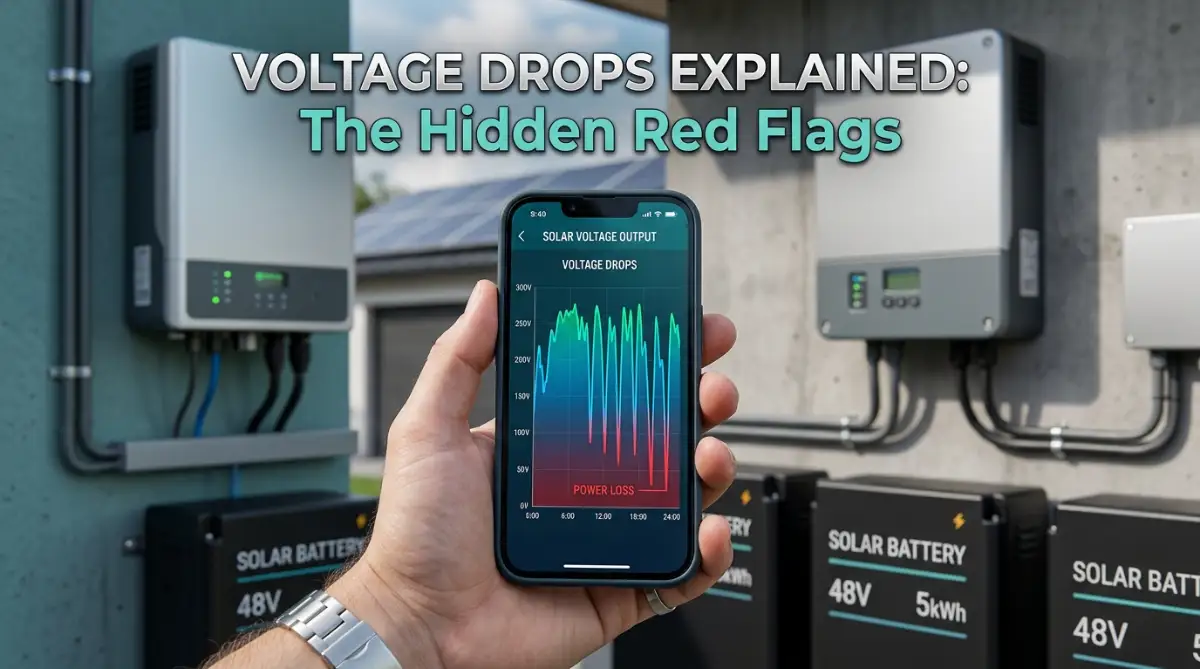
My heart skipped a beat as the silence settled over the living room. I immediately pulled out my phone and opened the solar monitoring app, expecting to see plenty of stored energy.
According to the dashboard, my lithium-ion setup was supposedly sitting at a comfortable sixty percent capacity just an hour earlier. There was absolutely no logical reason for a complete shutdown.
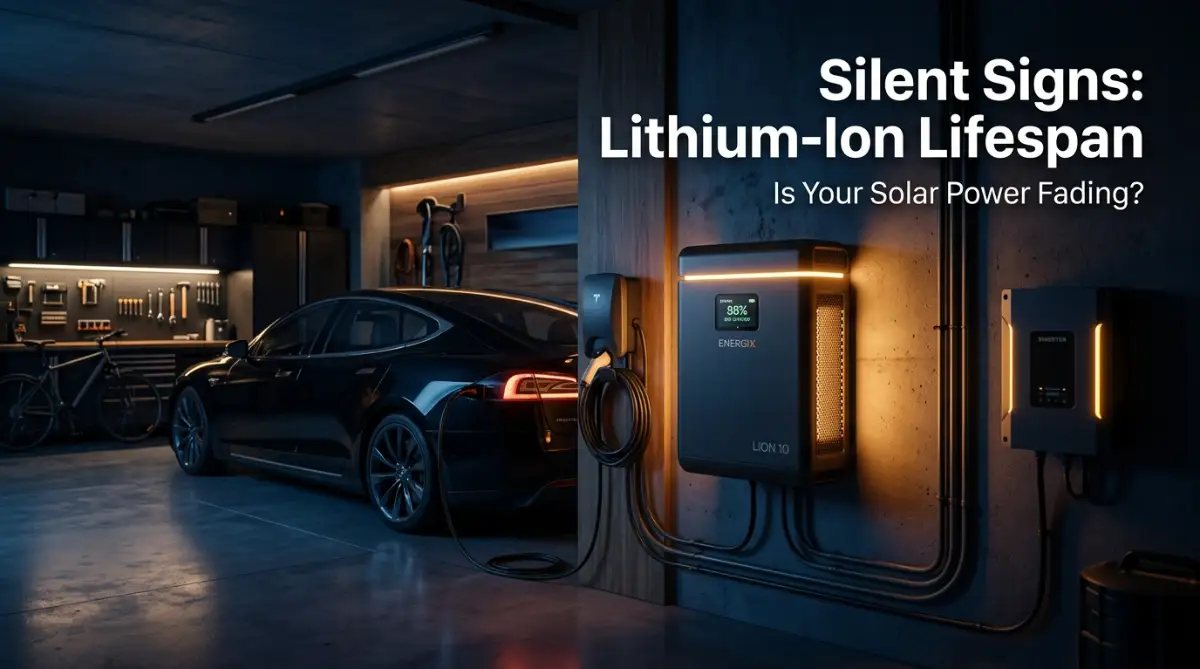
I grabbed my heavy-duty flashlight, walked out to the dusty garage, and stared blankly at the blinking red fault light on my main inverter.
That specific night, I realized I had completely ignored the quiet, subtle warnings my power system had been sending me for months. It was an incredibly frustrating and expensive lesson about how these advanced energy storage units actually behave right before they fail.
The mental toll of dealing with an unreliable home power setup is surprisingly heavy and exhausting. When you invest thousands of dollars into a renewable energy system, you expect total peace of mind and security.
Instead, you find yourself constantly checking your phone app, anxiously watching the digital battery percentage tick down faster than normal. You start adjusting your daily habits just to accommodate a system that is quietly falling apart.
You might hesitate to run the air conditioner on a boiling hot afternoon, fearing you will drain the storage completely before bedtime. The constant worry about food spoiling in the refrigerator during a random shutdown sits in the back of your mind.
Quick Summary: What You Need to Know Right Now
- Watch the Sunset Drop: A healthy system holds its charge after dark; a failing one drops rapidly within the first two hours.
- Feel the Heat: Your battery casing should never feel uncomfortably hot to the touch during normal charging hours.
- Check the Shape: Any physical bulging or swelling of the outer casing means you have an immediate fire hazard.
- Adjust Your Habits: Lowering your maximum charge rate can easily buy you extra months of usable power.
Decoding the Quiet Whispers of Fading Energy Storage
Fixing this stressful situation starts with understanding exactly how your energy storage communicates its health. These units do not just die overnight without leaving a trail of clues behind.
If you know what specific behaviors to look for, you can easily catch the degradation process early. This gives you plenty of time to budget for a replacement and avoid a sudden blackout.
Let us break down the physical and digital clues your system is showing you right now. You can start applying these observation techniques today without needing a degree in electrical engineering.
The Mystery of the Rapidly Disappearing Charge
One of the absolute earliest indicators of battery decay is an unexplainable drop in available power. You might notice that your system reaches a full 100% charge during peak sunlight hours, looking perfectly healthy.
However, as soon as the sun goes down and your house starts pulling power, that percentage drops aggressively. A healthy unit will slowly and steadily discharge over the course of the night.
An aging unit acts very much like a sponge that has turned hard and brittle over time. It might look completely full of water, but the moment you squeeze it, you realize there was barely anything inside.
This happens because the internal chemical structure of the lithium cells is physically breaking down. The active materials inside simply cannot hold onto the electrons the way they did when they were brand new.
How to verify this symptom at home: Start taking a screenshot of your monitoring app right at sunset. Take another screenshot exactly two hours later while running your normal evening appliances.
If the percentage drops by an unusually massive amount compared to when the system was new, you have a solid red flag. Keep a simple physical notebook near your inverter to track these specific drops over a two-week period.
My Quick 3-Day Capacity Test (Do This Tonight):
- Day 1: Write down the exact battery percentage at 7:00 PM.
- Day 2: Run your normal evening appliances, but turn off the heavy AC unit. Check the percentage at 9:00 PM.
- Day 3: Compare the drop. If you lose more than 30% of your total charge in just two hours of light TV and bulb usage, your cells are officially heavily degraded.
Extended Recovery and Unusually Long Charging Times
Another hidden symptom of cell degradation is a noticeable change in how long it takes to absorb power from your solar panels. You might have perfect, cloudless weather, yet the system struggles to reach a full state of charge.
In the past, your storage might have hit maximum capacity by early afternoon. Now, you notice it is still struggling to cross the ninety percent mark right as the sun begins to set.
This frustrating delay happens because the internal resistance within the physical battery cells has increased significantly. Think of it like trying to force a large amount of water through a garden hose that is full of mud.
The solar panels are pushing the electricity down the wires, but the storage unit is fighting back, refusing to accept the charge efficiently. This wasted energy often turns into heat, which only accelerates the internal damage even further.
A bold step you can take today: Check your charge controller logs for the total amp-hours pushed into the system versus the actual percentage gained. If your panels are generating maximum power but the storage percentage is barely moving, internal resistance is the likely culprit.
Before replacing any expensive components, watch this quick breakdown of how internal resistance affects solar setups. You will easily learn how to test your connections safely.
The Confusing Alerts from Your Battery Management System
Your Battery Management System (BMS) is essentially the brain of your entire solar storage operation. It constantly monitors the individual voltage of every single cell inside the heavy casing.
When your unit is healthy, the BMS silently balances the power, keeping everything running in perfect harmony. You rarely ever see an error code or hear an alarm beep from the main console.
But as the unit nears the end of its functional life, the individual cells start aging at completely different rates. One cell might drop its voltage drastically, while the one right next to it remains perfectly fine.
This imbalance sends the BMS into an absolute panic as it tries to fix a physical chemistry problem with software adjustments. You will start seeing random error codes on your inverter screen that seem to magically disappear and reappear.
Common BMS warnings to watch out for: Look closely for terms like "Cell Imbalance," "Over-Voltage Disconnect," or "Low Voltage Cutoff" in your error logs. If these specific warnings pop up frequently without any extreme weather events, the internal chemistry is definitely failing.
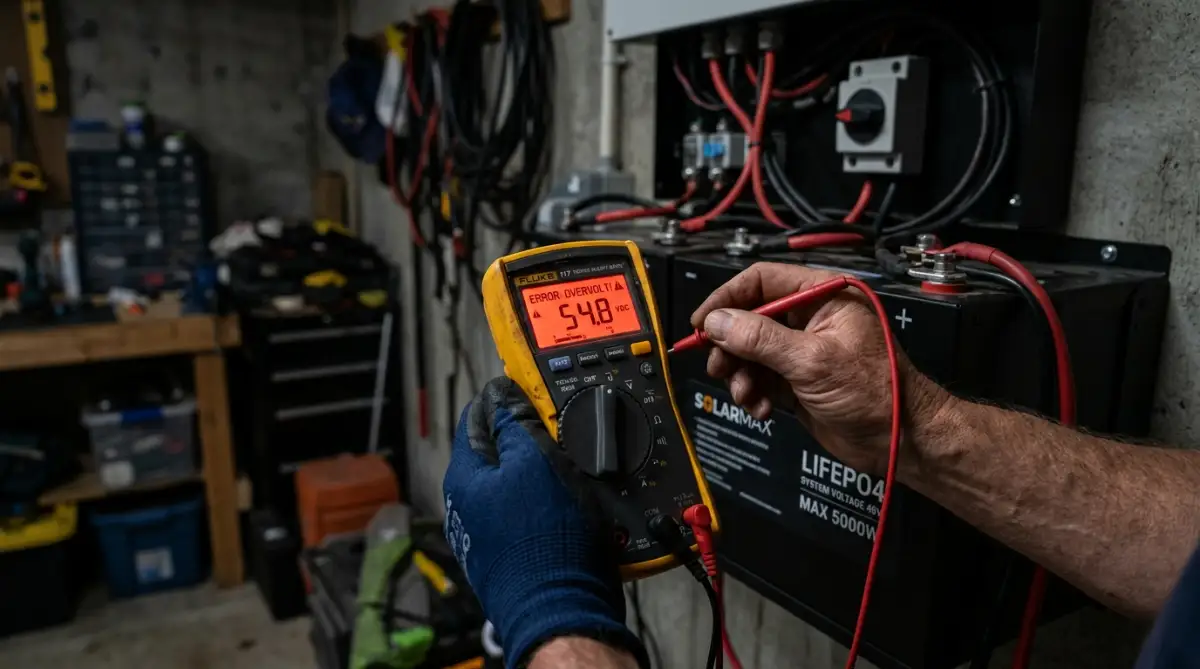
Pro Tip for Homeowners: I remember thinking I could just reset my inverter every time an error code popped up, hoping a software reboot would magically fix the hardware. I learned the hard way that clearing a BMS fault without investigating the root cause only masks the danger. If your system throws an imbalance error more than twice in one month, stop ignoring it and immediately check the individual cell voltages with a multimeter.
Understanding the Dangers of Thermal Shifts
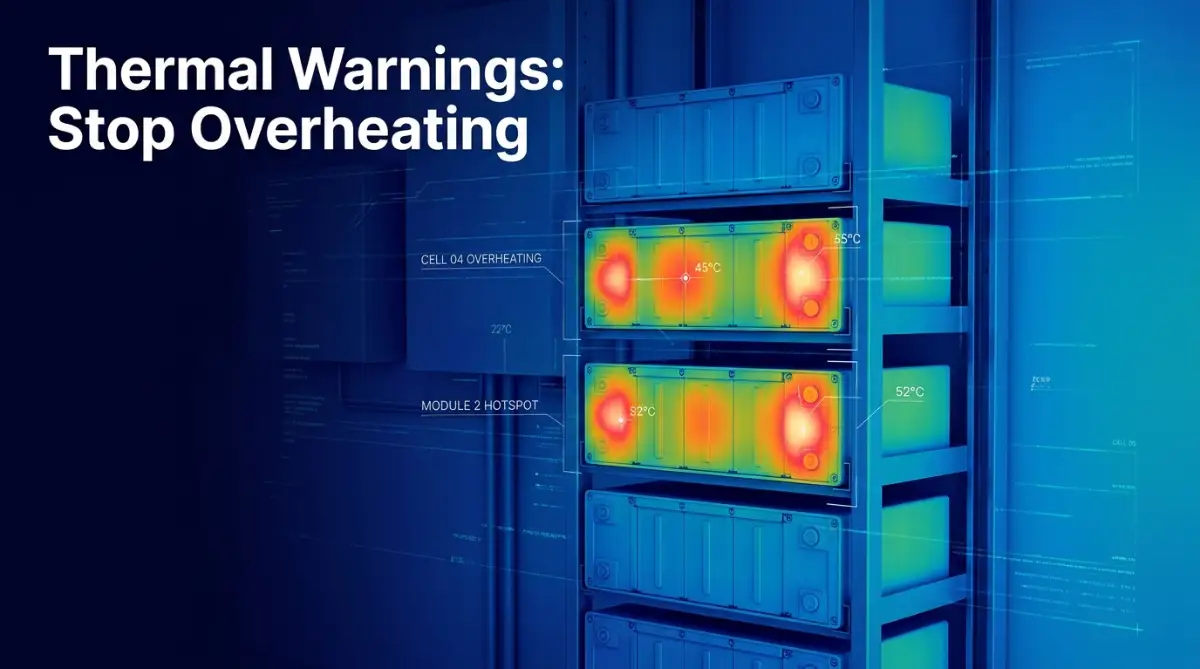
Heat is the absolute worst enemy of any energy storage system in your home. While it is completely normal for heavy electronics to get slightly warm during heavy use, excessive heat is a major warning sign.
When internal resistance builds up inside an aging unit, the electrical current struggles to move smoothly. This friction generates a surprising amount of unwanted thermal energy during regular charging and discharging cycles.
If you walk past your equipment room and feel a noticeable wave of heat radiating from the casing, you need to pay attention. You should be able to comfortably place your bare hand on the outer casing without pulling it away in pain.
If the casing feels unusually hot to the touch, the internal chemistry is working dangerously hard just to maintain basic operations. Ignoring this specific thermal warning can easily lead to a dangerous thermal runaway event.
Myth vs Reality: Storage Temperature
People often share bad advice regarding how temperature affects power storage. Let us clear up some common misunderstandings.
- The Myth: Keeping your equipment room freezing cold will make the storage units last forever.
- The Reality: Lithium cells actually hate freezing temperatures just as much as extreme heat. Extreme cold forces the chemical reactions to slow down drastically, causing permanent damage if charged aggressively while frozen.
- The Myth: A hot casing just means the panels are producing lots of great power.
- The Reality: A hot casing means energy is being wasted as heat instead of being stored safely. It is a sign of high internal resistance, not high efficiency.
A Quick Temperature Observation Guide
You do not need fancy laboratory equipment to monitor the physical health of your setup. Here is a simple observation table you can use to check your equipment safely.
The Physical Swelling and Bulging of the Casing
Sometimes the signs of failure are completely physical and visible to the naked eye. Lithium cells are tightly sealed pouches or cylinders designed to keep highly reactive chemicals contained.
As the unit ages and degrades, these chemical reactions can produce unwanted gases inside the sealed chambers. Because the gas has absolutely nowhere to escape, it begins to push outward against the walls of the cell.
This causes the outer metal or plastic casing of the battery bank to physically bulge, warp, or expand. If your once perfectly rectangular power unit now looks like a slightly overinflated balloon, you have a massive problem.
Why you cannot ignore a swollen unit: A bulging casing means the internal pressure is reaching dangerous, unmanageable levels. The protective layers separating the positive and negative sides are being stretched to their absolute limits.
If those internal layers finally tear due to the pressure, the system will short circuit instantly. Never press down or try to squeeze a bulging unit back into shape, as this can trigger an immediate fire hazard.
By paying close attention to these invisible and visible clues, you take total control over your home power security. You stop reacting to sudden blackouts and start actively managing the natural lifespan of your expensive renewable energy investment.
Advanced Strategies to Maximize Your Remaining Storage
When you start noticing those quiet signs of battery decay, you do not have to just sit back and watch your investment crumble. You still have a tremendous amount of control over how the remaining lifespan of your system plays out.
By making a few smart adjustments to how your home interacts with your power setup, you can easily squeeze extra months or even years out of aging cells. I learned these specific tricks after spending countless hours tweaking my own system to avoid a total shutdown.
You do not need to be a certified electrician to make these changes. You just need to understand how your daily habits affect the sensitive chemistry sitting inside that heavy metal box in your garage.
Mastering the Depth of Discharge (DoD) Rule
The single most effective way to protect a degrading power bank is to change how deeply you drain it every night. When your equipment was brand new, draining it down to ten or twenty percent might have seemed perfectly fine.
However, as the internal components age, pulling that much energy out creates massive physical stress on the chemical bonds. It is very similar to stretching an old, brittle rubber band to its absolute limit day after day.
Eventually, that rubber band is going to snap under the pressure. To prevent this, you should immediately log into your inverter settings and adjust the low-voltage cutoff point.
Instead of letting the house drain the storage down to twenty percent, set a hard limit at forty or even fifty percent. This keeps the aging cells in a much more comfortable, low-stress state during the overnight hours.
If you are worried about running out of heat during the winter because of this new limit, look into alternative warming solutions. For example, utilizing passive solar heating methods during the day can drastically reduce the heavy nighttime load on your power setup.
The Magic of Custom Charging Profiles
Most off-grid systems come straight from the factory with aggressive, fast-charging profiles turned on by default. The goal of these default settings is to push as much solar energy into the cells as quickly as possible.
While this is great for a brand-new unit, blasting an older setup with maximum amperage causes intense overheating. The internal resistance simply cannot handle that heavy rush of electricity anymore.
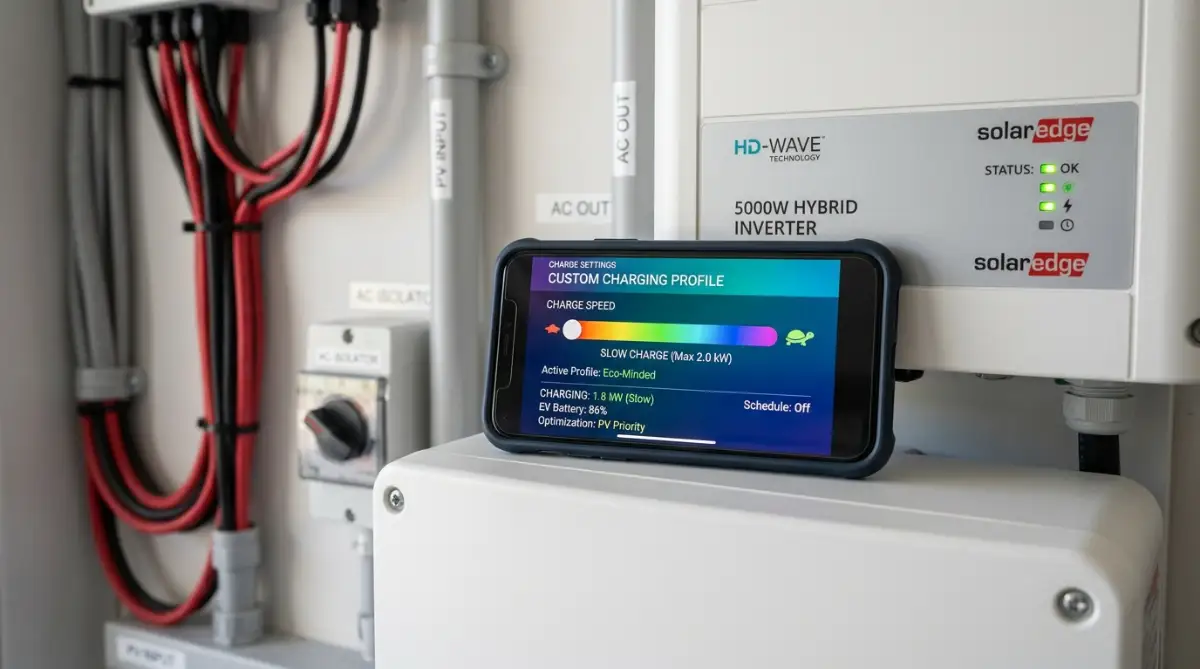
You need to access your charge controller and manually lower the maximum charge rate, often called the "C-rate." Slowing down the charging process gives the aging internal chemistry plenty of time to absorb the power safely.
Think of it like pouring a giant bucket of water into a small funnel. If you pour it all at once, it spills everywhere, but if you pour slowly, every drop makes it inside.
According to experts on battery longevity at Battery University, lowering the peak charge voltage even slightly can double the remaining cycle life. A gentler charge cycle is the ultimate secret to preserving old lithium technology.
Protecting Your System from Micro-Cycling
One of the most silent killers of aging energy setups is something called micro-cycling. This happens on partly cloudy days when the sun is constantly appearing and disappearing behind heavy clouds.
Your solar panels will rapidly push power into the bank, suddenly stop, and then start pulling power as a heavy cloud passes. This back-and-forth action happens hundreds of times a day, confusing the management system and stressing the cells.
If your unit is already showing signs of weakness, this erratic behavior will accelerate the damage. To fix this, you can adjust the delay settings in your inverter to stop it from reacting instantly to every passing cloud.
Firmware Updates and Digital Maintenance
We often think of our home power as purely physical hardware, but the software running the show is just as important. The manufacturer of your inverter and battery management system frequently releases digital updates.
These firmware updates often contain better, more efficient algorithms for balancing cell voltages and managing heat. Skipping these updates is like ignoring the maintenance light on your car dashboard.
You should make it a habit to check the manufacturer's official app at least once a month for new software versions. Just like managing automated administrative tasks on your computer, keeping your solar software updated prevents massive headaches down the road.
The Expensive Pitfalls Destroying Your Energy Independence
Trying to manage a degrading home power setup can feel incredibly overwhelming, especially when the lights start flickering. In a panic to fix the problem, many homeowners make split-second decisions that end up completely destroying their remaining equipment.
These common mistakes usually happen because people apply old logic to highly advanced lithium technology. I have seen friends waste thousands of dollars simply because they refused to change their daily power habits.
If you want to protect your wallet and keep your house powered, you must actively avoid these specific traps. Let us walk through the most dangerous errors people make when their off-grid storage starts acting up.
The Frankenstein Effect: Mixing Old and New Cells
When a homeowner realizes their capacity is dropping, their first instinct is often to just buy a new unit and wire it together with the old one. They assume the fresh unit will magically support the dying one and restore the whole house to perfect order.
This is absolutely the worst financial and technical mistake you can make with lithium-ion technology. The brand-new cells have very low internal resistance, while your old, degraded cells have incredibly high resistance.
When you wire them together, the entire system is forced to operate at the level of the weakest, oldest unit. The new unit will overwork itself trying to balance the load, which will permanently damage its fresh chemistry within weeks.
The U.S. Department of Energy researchers at the National Renewable Energy Laboratory heavily advise against mixing different battery degradation levels. If your main bank is truly dying, you must replace the entire unified bank at the same time to ensure safety.
The Obsession with Reaching 100% Capacity
We have been deeply conditioned by our smartphones to panic anytime our battery indicator drops below a full one hundred percent. People apply this exact same anxiety to their massive garage setups, constantly forcing the panels to top off the storage.
Leaving a lithium-ion unit sitting at maximum capacity for long periods puts extreme pressure on the internal components. It is the chemical equivalent of keeping your car engine redlined while sitting parked in the driveway.
An aging power bank actually prefers to rest somewhere around the sixty to eighty percent mark. If you are constantly forcing a degraded unit to sit at absolute maximum charge, you are rapidly boiling away its remaining lifespan.
Ignoring Minor Digital Alerts
When you have a busy life, it is incredibly easy to simply swipe away the annoying notifications popping up on your solar app. You might see a quick warning about a "High Temperature Event" and assume it was just a temporary glitch in the matrix.
Those tiny digital alerts are the only way your physical hardware can scream for help before a catastrophic shutdown. Ignoring them is a surefire way to wake up in a completely dark, freezing house.
Instead of swiping them away, start treating these notifications like serious household security alerts. You would benefit greatly from organizing detailed digital alerts so you can track exactly what time of day your system struggles the most.
The Danger of Uneven Appliance Loads
Another massive mistake is ignoring how you actually use electricity inside the house during the evening. When your storage unit is brand new, it can easily handle the microwave, toaster, and air conditioner running simultaneously.
But when the internal cells are heavily degraded, a sudden, massive pull of electricity can instantly crash the entire system. The sudden voltage drop triggers the safety cutoff, plunging your home into darkness.
You have to train your family to stagger their heavy appliance usage after the sun goes down. Do not run the electric dryer while someone else is using the electric oven.
This simple behavioral change dramatically reduces the sudden physical stress on the aging chemical bonds inside your equipment. It is one of the easiest, completely free ways to keep your home running smoothly on older hardware.
Smart Appliance Staggering Strategy:
Instead of guessing, here is exactly how my family fixed our evening power crashes:
- 6:00 PM to 7:00 PM: We run the electric stove for cooking. (High load)
- 7:00 PM to 8:00 PM: We wait a full hour before turning on the dishwasher. (Cool-down period)
- 10:00 PM Onward: Only light electronics and fans stay on. (Low stress)
- This tiny gap gives the aging internal chemistry time to stabilize before taking another big hit.
Your Action Plan for Unbreakable Home Power
Understanding the silent warnings of your energy storage is the ultimate key to true off-grid freedom and security. You now have the knowledge to spot sudden voltage drops, identify dangerous thermal heat, and decode confusing digital errors.
Instead of waiting for a total blackout, you can actively manage your remaining capacity with smart, practical adjustments. It is all about shifting your mindset from passive observation to active, daily system management.
By lowering your charge rates and avoiding the trap of mixing old and new cells, you protect your family's safety and your wallet. You are no longer at the mercy of unpredictable technology.
If you ever feel overwhelmed by the technical details, remember that finding reliable home management information is just a click away. Take this journey one step at a time, and you will master your renewable setup easily.
I remember how stressed I used to get every time the sun went down, wondering if my aging setup would survive the night. But once I started applying these specific monitoring tricks and adjusted my family's evening habits, that heavy anxiety completely vanished. You have the power to take control of your home's energy today, so go check those inverter logs and secure your peace of mind!
Common Questions About Solar Storage Decay
Can a degraded lithium-ion setup be repaired or refurbished?
No, the physical chemical breakdown inside a lithium-ion cell is completely irreversible. Once the internal active materials have degraded, no amount of software updates or external devices can magically restore the lost capacity. It is always safer and more cost-effective to prepare for a full hardware replacement.
How often should I check my solar inverter logs for early warning signs?
You should make it a habit to briefly check your main dashboard or smartphone app at least once a week. Look specifically for sudden voltage drops occurring immediately after sunset, as this is the clearest sign of trouble. Catching these tiny fluctuations early gives you plenty of time to adjust your usage habits.
Will adding more solar panels help support a dying battery bank?
Adding more panels will not fix the root problem of a failing storage unit. In fact, pushing more raw solar power into a highly resistant, aging cell can actually cause dangerous overheating. Your panels only generate the power; your storage still needs to be healthy enough to safely absorb it.
What happens if I completely drain my off-grid system every single night?
Taking your lithium-ion bank down to zero percent every night is one of the fastest ways to destroy it completely. Deep discharging causes severe physical stress on the internal components, slashing your expected lifespan in half. Always try to leave at least a twenty to thirty percent buffer to keep the chemistry stable.
Does extreme winter weather permanently damage outdoor solar storage?
Cold temperatures temporarily reduce the amount of power you can pull from your setup, but freezing them while charging causes permanent damage. If your unit is outside, the management software must prevent charging below freezing temperatures. You should strongly consider adding safe thermal insulation to your outdoor battery enclosures before winter arrives.
Disclaimer: The information provided in this blog post is for general educational and informational purposes only and does not constitute professional electrical or engineering advice. Always consult with a licensed, certified solar technician or electrician before modifying, testing, or replacing any components of your home energy storage system. Improper handling of lithium-ion technology can result in severe fire hazards, electrical shock, or property damage.