Waking Up to the Silent Energy Drain in My Home
You know that awful feeling when the utility bill arrives, and you just stare at it, wondering how on earth you used that much power? I was stuck in that exact cycle for years. I honestly thought turning off a few extra lights and washing my clothes in cold water would fix it. But I was completely ignoring the real culprit hiding in plain sight—a massive, energy-chugging electric water heater running 24/7 in the background. It was quietly draining my wallet and forcing me to rely on dirty local power grids. I knew something had to change.
Then, one weekend, I decided to do a deep energy audit of my own house. I quickly realized my old electric water heater was running almost constantly in the background. It was silently draining my wallet while pulling massive amounts of dirty energy from the local power grid. I felt this heavy guilt wash over me.
I always considered myself someone who cared about nature and the environment. Yet, my own morning showers were indirectly burning piles of fossil fuels. I knew I needed a better, cleaner solution immediately.
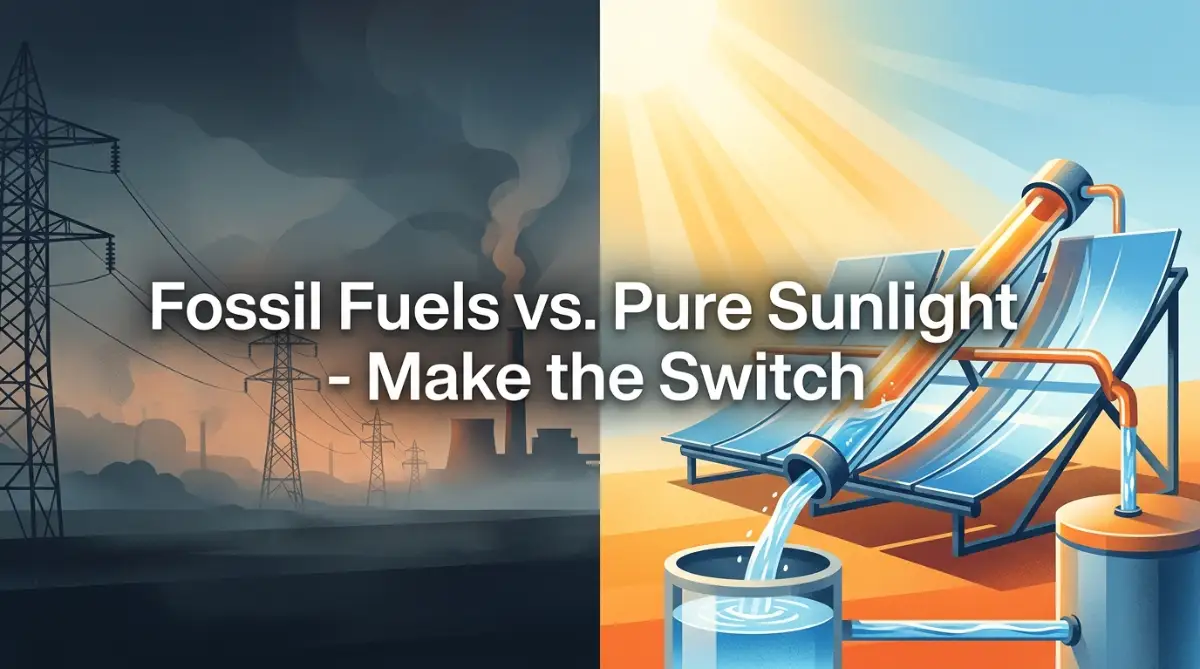
But we often ignore the massive, energy-hungry metal tank sitting in our garage or basement. Traditional water heaters are an absolute disaster for the environment. They rely heavily on power plants that burn coal and natural gas just to keep our bathwater warm.
You want to enjoy a simple hot shower without feeling like you are doing something wrong. That deep desire for guilt-free comfort is exactly what drives so many of us to look into renewable options.
What You Will Learn in This Guide:
- How standard water heaters secretly drive up your utility bills and hurt the environment.
- The simple math behind swapping grid power for free, daily sunshine.
- Smart daily habits (like shifting your laundry time) to get the most out of your solar tank.
- Hidden traps to avoid, including undersized tanks and lazy maintenance routines.
Breaking Down the Real Ecological Footprint of Daily Hot Water
Moving away from a traditional utility grid is a big mental shift. You have to understand exactly how capturing sunlight changes the entire ecosystem of your home. Let us look closely at the actual science and daily mechanics of this green transition.
The Hidden Coal and Gas Burning Behind Your Morning Shower
Most people never stop to think about how the water in their pipes actually gets hot. When you turn on the hot water tap, an old-school electric heater kicks into high gear. To power that heater, your local utility company has to generate a massive spike of electricity.
In most areas, that electricity is not coming from a clean source. It comes straight from a massive industrial power plant burning heavy fossil fuels. Every single time your tank drops in temperature, more coal or gas goes up in smoke.
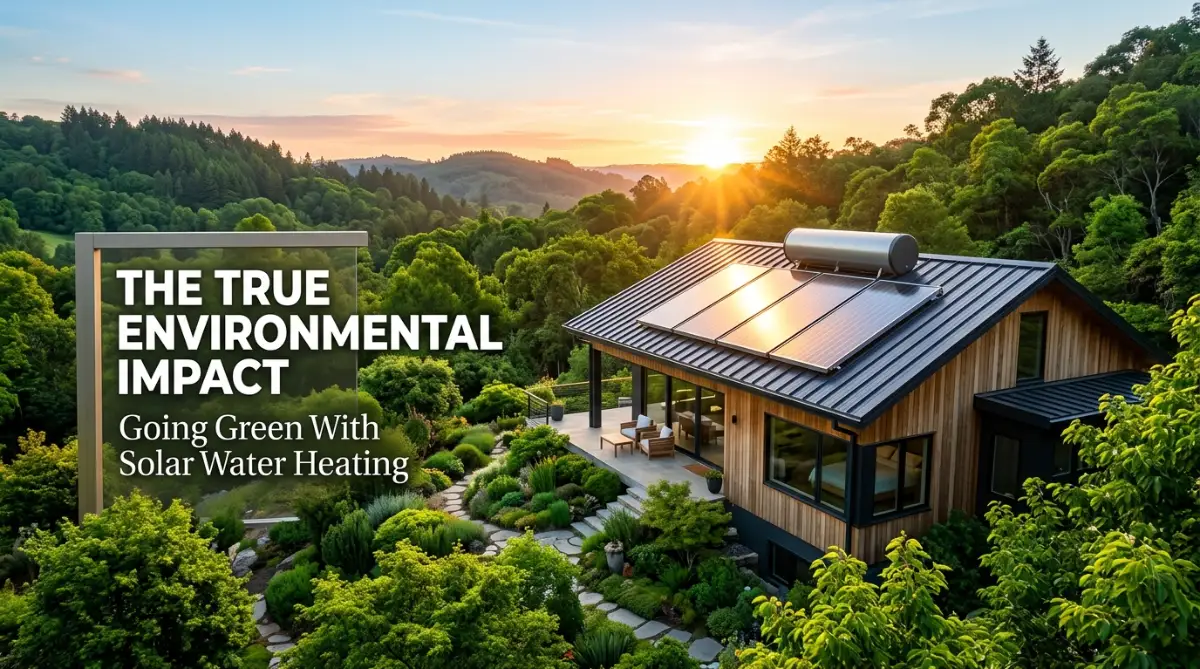
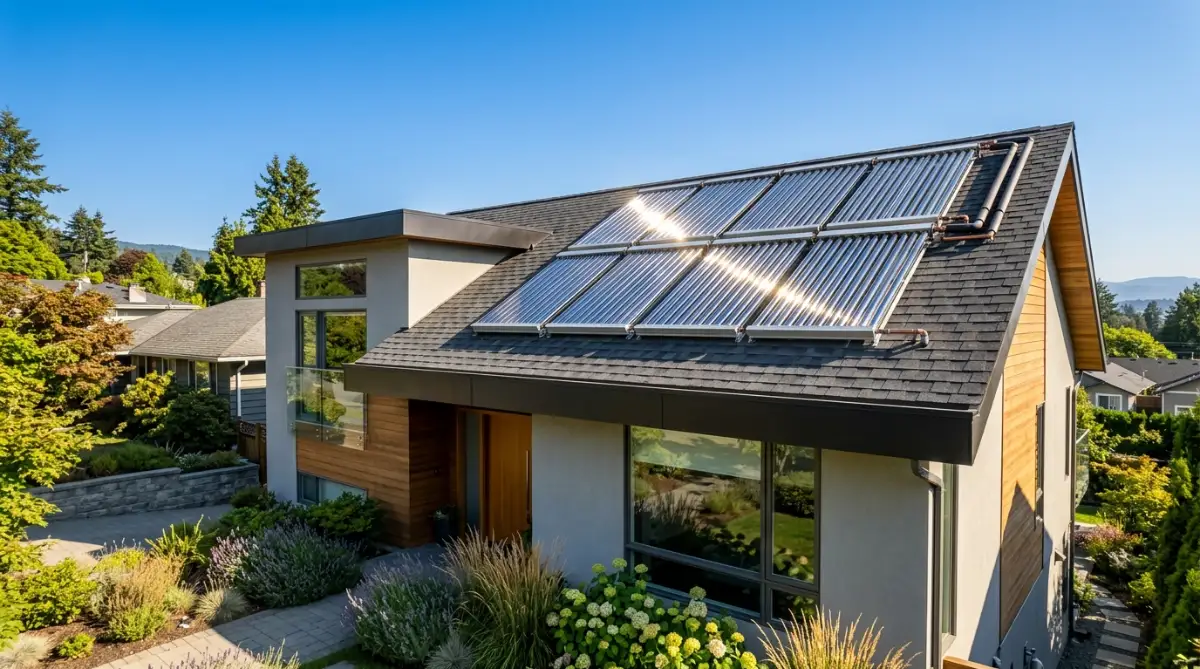
Switching to a solar thermal system completely cuts this toxic cord. Instead of burning ancient rocks, you are simply catching the free, endless heat from the sun. The glass tubes on your roof trap ultraviolet rays and transfer that raw heat directly into your water supply.
Quick Look: The True Cost of Your Hot Water
To put things in perspective, let us look at how an old-school electric heater stacks up against a modern solar thermal setup over a 10-year period:
Are you tired of paying for dirty energy? Watch this quick video to see exactly how these rooftop systems completely bypass the traditional power grid.
Translating Megawatts into Trees Planted
Sometimes, talking about kilowatts and carbon emissions feels a bit too complicated. We need to look at this impact through real-life analogies that make sense. Think about the average family of four using standard hot water every day.
An electric water heater easily produces around two tons of carbon dioxide every single year. That is roughly the exact same amount of pollution created by driving a standard car for an entire year. By installing a solar water heater, you are basically taking one heavy-polluting vehicle entirely off the road.
If you want to look at it another way, think about planting trees. It takes about fifty fully grown trees an entire year to absorb that much carbon dioxide from the air. Upgrading your heating system does the exact same job as planting a small forest in your backyard.
Myth vs. Reality: Are Solar Panels Actually Green to Make?
You will often hear skeptics argue that manufacturing solar equipment causes too much pollution. They claim the factories making these glass tubes and metal tanks ruin the environmental benefits. It is true that producing any physical product requires energy and raw materials.
However, we need to look at the big picture of a product's entire lifespan. A high-quality solar water heating system will easily last for two decades on your roof. The carbon emissions created during the manufacturing process are completely offset within the very first few months of use.
After those first few months, the system produces one hundred percent pure, clean energy for the next twenty years. The math heavily favors the environment. Comparing factory emissions to twenty years of free sunlight is simply no contest at all.
I remember constantly worrying that I was just trading one environmental problem for another. My Pro Tip based on my own experience: I spent way too much time reading negative forums before taking action. I finally realized that waiting for a "perfect" zero-impact product was just an excuse to delay making a genuinely good choice today. Stop overthinking the factory process and look at your long-term daily savings instead.
The Ripple Effect on Local Power Grids
Our local electrical grids are often pushed right to the breaking point. Think about early mornings and late evenings when everyone in your neighborhood is showering. The power grid experiences massive spikes in demand, forcing utility companies to turn on backup generators.
These backup power plants are usually the oldest, dirtiest, and most inefficient facilities available. They pump out thick, black emissions just to handle the morning rush. When you use a solar water heater, you completely remove your home from this dangerous peak demand cycle.
You actually help stabilize the entire neighborhood grid. If enough homes in a community switch to solar thermal, the local utility company rarely has to fire up those dirty backup plants. Your single choice has a beautiful ripple effect that cleans up the air for your entire town.
Indirect Benefits: Saving Our Fresh Water Supply
We usually only talk about saving electricity, but solar upgrades also save massive amounts of fresh water. Traditional fossil fuel power plants require billions of gallons of fresh water just to cool down their heavy machinery. Every time you use grid electricity, you are indirectly wasting precious fresh water at a power plant miles away.
By generating your own heat from the sun, you reduce the workload on those distant power plants. This means they pump less water out of our local rivers and lakes. It is a hidden environmental benefit that most homeowners never even realize they are contributing to.
You are protecting local aquatic ecosystems while enjoying your hot bath. It feels incredibly rewarding to know your home is acting like a shield for the natural environment.
Examining Real-Life Scenarios: Two Different Homes
Let us imagine two identical houses sitting right next to each other on the same street. The first house relies entirely on a standard, aging gas water heater. Throughout the year, this family unknowingly pumps harmful nitrogen oxides directly into their local air.
Their system constantly leaks small amounts of heat, meaning it has to burn fuel even when no one is home. Now, look at the second house with a sleek solar thermal system on the roof. Their water is passively heated while they are away at work, storing that thermal energy in an insulated tank.
When they return home, the water is boiling hot, and absolutely zero emissions were produced. The environmental gap between these two families is staggering. Over a decade, the first house contributes to smog and climate damage, while the second house remains completely carbon neutral.
Making the switch is not just about saving money on your monthly bills. It is about taking total personal responsibility for the patch of earth you live on. Every drop of sun-heated water is a small victory for our atmosphere.
Pushing Your Clean Energy Setup to the Absolute Limit
Installing a solar thermal system on your roof is a massive first step toward protecting the earth. However, just putting the equipment up there does not guarantee you are getting the best environmental results. You need to develop a few simple daily habits that match the rhythm of the sun.
Most people completely forget that their new setup runs on natural timing. If you want to squeeze every drop of clean energy out of your system, you have to shift your mindset. It all comes down to syncing your heaviest water usage with peak daylight hours.
Think about your laundry routine, for example. If you run your washing machine late at night, you are likely forcing your system to use grid backup power. The hot water sitting in your tank might have cooled down slightly, triggering an electrical heating element.
Instead, try running your heavy loads of laundry right in the middle of a sunny afternoon. Your solar collector is working at its absolute peak performance during this time. The hot water flows directly from the sun to your clothes without touching a single fossil fuel.
This simple shift in scheduling makes a massive difference in your carbon footprint over time. You are literally washing your clothes with pure, raw sunshine.
The Secret Power of Insulating Your Inner Pipes
Your roof panels might be catching plenty of free heat, but what happens during the journey down into your house? A lot of homeowners lose incredible amounts of energy simply because their attic pipes are exposed. As the boiling hot liquid travels through cold metal or plastic tubes, the surrounding air steals that precious heat.
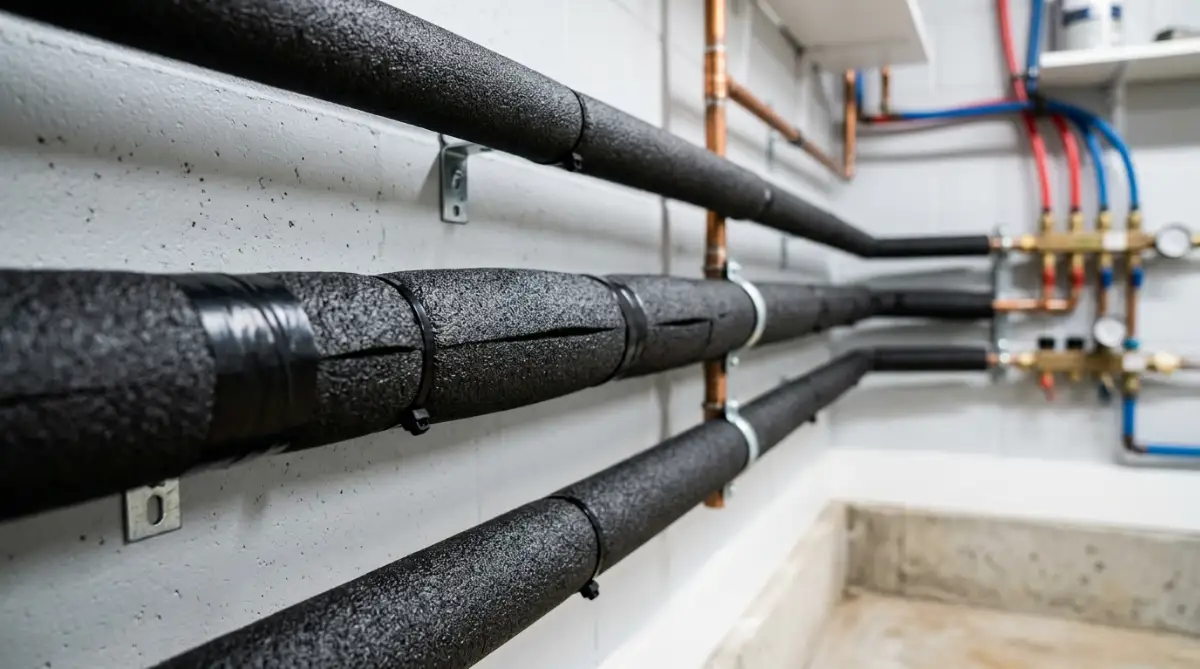
This is what experts call standby heat loss. It forces your system to work twice as hard to deliver comfortable water to your showerhead. By wrapping your exposed pipes in thick foam insulation, you lock that clean thermal energy inside.
This inexpensive upgrade means your tank stays hotter for much longer periods. It prevents the backup electric heater from turning on during chilly nights. A quick trip to the hardware store for some foam sleeves can save thousands of pounds of carbon emissions.
Myth vs. Fact: The Winter Weather Trap
Myth: Solar water heaters completely stop working when it gets cold outside.
Fact: Solar tubes catch ultraviolet rays, not outside heat. As long as the sun is shining, your water will get hot, even if your yard is covered in snow. Thick pipe insulation simply guarantees that none of that captured heat escapes on its way down to your shower.
Harmonizing Your Showers with Smart Fixtures
Another brilliant way to maximize your environmental impact is completely controlling the flow of water itself. You can have the best solar collector in the world, but it will still struggle if you waste the water it heats. High-pressure showerheads drain your storage tank faster than the sun can replace it.
When you drain the tank too fast, the dirty energy grid has to step in and save the day. Swapping your old showerheads for modern, low-flow aerators solves this problem entirely. These clever little devices mix air into the water stream, giving you amazing pressure while using half the actual liquid.
Your solar tank stays full longer, meaning multiple family members can shower back-to-back using only clean energy. Taking the time to understand your overall home water efficiency is a game changer. If you want to learn more about keeping your renewable systems running perfectly, you should look into how to maintain your home solar battery for maximum efficiency and apply those same care principles to your thermal tank.
Tracking Your Temperature Settings Like a Pro
The backup heating element inside your solar tank is a hidden energy thief. Installers usually set this backup thermostat way too high by default. They want to make absolutely sure you never complain about cold water.
But if that electric backup is set to 140 degrees, it will constantly turn on and burn dirty energy. It completely ruins the purpose of having a green setup in the first place. I highly recommend grabbing a screwdriver and gently lowering that backup thermostat to around 115 or 120 degrees.
This gives your solar panels plenty of room to do the heavy lifting on their own. According to guidelines from the U.S. Department of Energy on water heating, lowering your thermostat setting is one of the easiest ways to secure massive energy savings. You will still enjoy steaming hot baths, but you will force the system to rely on sunlight first.
Hidden Traps That Destroy Your Eco-Friendly Goals
It breaks my heart when I see homeowners spend their hard-earned money on green technology, only to accidentally ruin the benefits. Switching to renewable sources is incredibly rewarding, but there are a few dangerous pitfalls you must avoid. Falling into these traps means you are still actively contributing to heavy greenhouse gas emissions without even realizing it.
We need to talk about the mistakes that completely wipe out the positive environmental effects of your new setup. Avoiding these errors is the only way to ensure your home actually becomes a clean energy sanctuary.
The Disaster of Undersizing Your Storage Tank
One of the most devastating mistakes you can make is buying a thermal storage tank that is simply too small for your family. When you consult with sales teams, they often try to sell you a smaller tank to make the overall price look cheaper. They promise that a compact system will be perfectly fine for your daily needs.
Here is the ugly truth about small solar tanks. On a bright morning, your roof panels will heat that small volume of water extremely fast. But once that little tank is full of heat, the panels literally have to stop working because there is nowhere else to store the energy.
Then, when your family comes home and takes three showers in a row, you drain that tiny tank completely dry. Suddenly, your system has to aggressively pull dirty power from the local grid to heat the next batch. You end up burning the exact same amount of coal and gas as you did before.
Always size up your tank slightly so you can capture and store massive amounts of thermal energy during the day. Having a larger buffer prevents your local utility company from ever getting involved in your evening routine.
Ignoring the Silent Threat of "Shade Creep"
When you first install your rooftop collector, you probably made sure the area was perfectly exposed to direct sunlight. The sky was clear, and the system performed flawlessly. But nature does not stand still.
Over the years, the beautiful oak trees in your front yard continue to grow and stretch their branches. Slowly but surely, shadows begin to creep across your thermal tubes during peak afternoon hours. Even a small amount of dark shade can dramatically drop the heat production of your entire array.
When your panels lose direct sunlight, your home silently reverts back to burning fossil fuels for hot water. You might not notice the change in your shower, but the local power plant certainly feels the demand. You must make it a yearly habit to safely trim back any heavy branches threatening your direct sun exposure.
Trusting Shoddy Installation Practices
You can buy the most advanced, zero-emission equipment on the market, but a lazy installer can ruin everything. Sometimes contractors rush through the job, leaving gaps in the plumbing or failing to seal roof penetrations properly. When cold drafts leak into the system, your equipment constantly fights a losing battle against the weather.
Poorly connected temperature sensors can also cause your backup electrical heater to run constantly by mistake. It reminds me of how serious electrical issues can happen if you are not careful. Just like how poor solar wiring puts your home at risk, a poorly plumbed thermal system puts your environmental goals in serious jeopardy.
Always insist on hiring certified professionals who specialize specifically in thermal dynamics. Checking their previous work ensures your clean energy dreams do not turn into a massive, leaking nightmare.
The Trap of Zero Maintenance
There is a dangerous myth floating around that renewable home upgrades never require any maintenance. Homeowners assume they can just bolt these panels to the roof and forget about them for twenty years. This lazy mindset leads to massive drops in system efficiency over time.
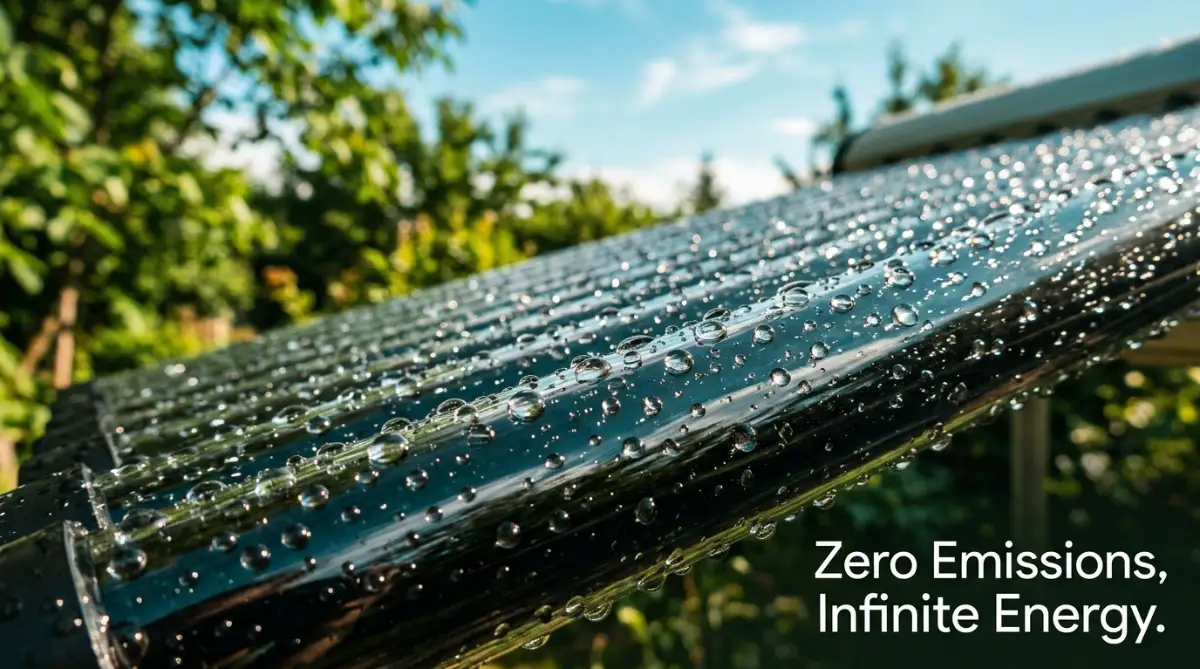
Dust, bird droppings, and heavy pollen can coat the glass tubes on your roof. This layer of grime acts like a shield, literally bouncing the suns rays back into the atmosphere instead of heating your water. A dirty panel works twice as hard to produce half the heat.
Taking a garden hose and gently rinsing the dust off your collectors every few months completely restores their power. It takes less than ten minutes to do, but it guarantees your system continues to offset toxic carbon emissions perfectly. If you want to read detailed data on how dirty panels lose efficiency, you can check reports from the National Renewable Energy Laboratory (NREL) regarding solar collector maintenance.
Taking Charge of Your Home's Future Today
We have walked through the amazing science and the hidden challenges of heating your home with pure sunshine. It is incredibly clear that relying on outdated, fossil-fuel-burning tanks is no longer a smart or responsible choice. You now understand exactly how heavy our daily comforts weigh on the fragile atmosphere.
Every time you turn on a traditional hot water tap, you are unintentionally supporting an energy grid that heavily pollutes our air. But you also know the brilliant, simple alternative that sits right above our heads every single day. Harvesting free ultraviolet heat is completely within your reach right now.
You do not need to be a wealthy environmental activist to make a massive difference in the world. You just need to look at your utility closet and decide that enough is enough. By upgrading your system, you are actively choosing to stop the endless cycle of dirty emissions.
You are creating a safe, clean, and self-sufficient environment right on your own property. It is about taking back control of your resources and showing your neighborhood that a greener path is absolutely possible. If you need more resources to guide your renewable journey, exploring a trusted home improvement solar guide will give you the confidence to start.
My personal journey with renewable energy changed everything about how I view my home. I used to feel helpless about rising utility bills and air pollution, but taking that first step gave me incredible peace of mind. Start researching your options today, call a local installer, and finally experience the pure joy of a truly guilt-free hot shower.
Common Questions About Solar Water Heating and the Planet
Do solar water heaters actually work on cloudy days?
Yes, they absolutely still work when the sky is completely overcast. The glass tubes on your roof rely on scattered ultraviolet rays, not just direct beams of visible light. While they might be slightly less efficient during heavy rain, they will still capture enough thermal energy to drastically reduce your reliance on the power grid.
How much air pollution does one residential system prevent?
The environmental impact is staggering when you look at the yearly math. A standard home upgrading to solar thermal stops roughly two full tons of harmful carbon dioxide from entering the atmosphere every year. According to the EPA's greenhouse gas equivalents calculator, that is the same positive impact as giving up driving your car for an entire twelve months.
Are the materials used to make solar tubes toxic?
Modern solar thermal systems are incredibly safe and rely on very basic, non-toxic materials like standard glass, copper tubing, and aluminum frames. Unlike chemical batteries, there are no dangerous acids or heavy metals leaking into your water supply. When the system eventually reaches the end of its long life, almost every single metal component is fully recyclable.
Can this system completely replace my electric water heater?
In heavily sunny regions, a well-sized solar collector can provide up to ninety percent of your yearly hot water needs without any help. However, almost all systems include a small electric or gas backup element just for extremely cold or rainy weeks. The goal is not always one hundred percent replacement, but rather drastically reducing your daily dependence on dirty energy grids.
Is the water safe to drink directly from the solar tank?
The water heated by your roof panels is exactly the same fresh municipal or well water you normally use. However, because it sits in a large thermal storage tank, it is intended strictly for bathing, washing clothes, and cleaning dishes. You should always use your separate cold water kitchen tap for drinking and cooking purposes just to be completely safe.
Disclaimer: The information provided in this article is for educational and informational purposes only. It does not constitute professional engineering, plumbing, or financial advice. Always consult with a certified solar installer and a licensed local contractor before making any major modifications to your home's water heating or electrical systems. Your actual energy savings and environmental impact may vary based on your local climate, daily water usage habits, and specific utility rates.