The Hidden Nightmare Behind DIY Solar Projects
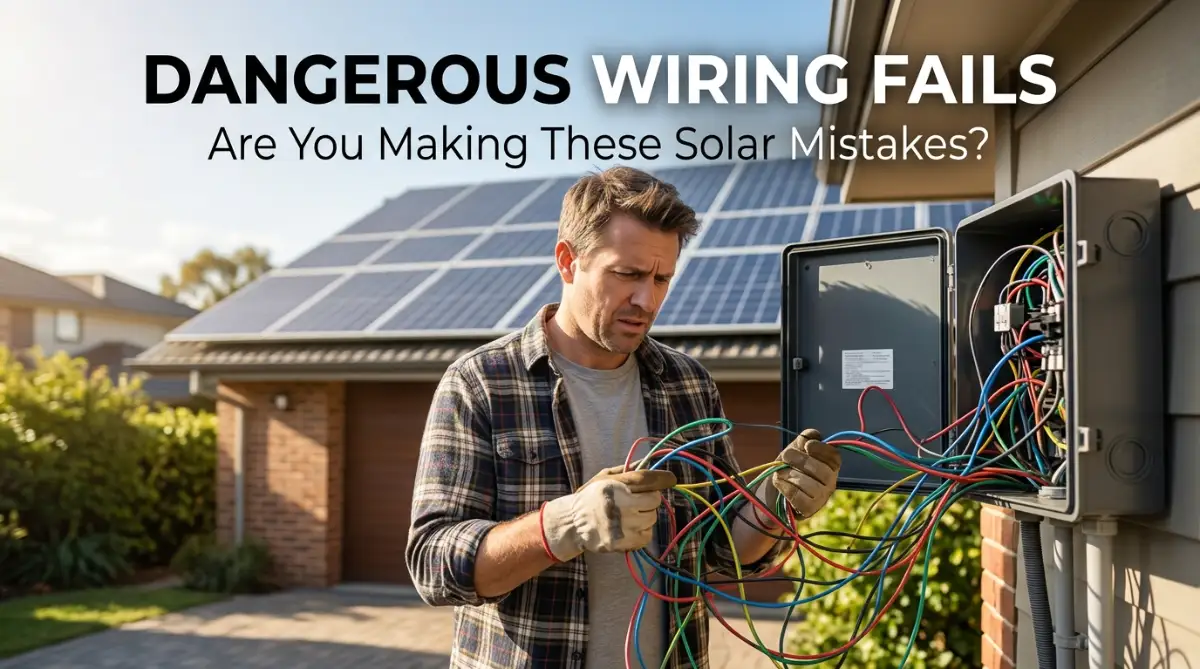
You just spent a small fortune on solar panels, watched three online tutorials, and now you are ready to cut the cord. Stop right there. I made the exact same mistake last year, thinking a weekend DIY project would instantly lower my bills. Instead, I built a massive fire hazard that nearly melted my entire battery bank. Let me show you the hidden traps inside home solar setups that most online guides conveniently forget to mention.
It hits you hard when you realize a simple DIY mistake can put your entire home at risk. Many of us just want to be energy independent and lower our monthly bills. We watch a few online tutorials, buy some gear, and think we are completely ready. But the reality of electrical work is a whole different beast.
You go to bed wondering if your roof is actually safe. Every time the wind blows or it starts raining, you worry about water getting into those cheap wire connectors you bought online. It completely ruins the exact peace of mind you wanted to achieve in the first place. You find yourself constantly walking back to the garage to check the battery temperatures.
The worst part is the constant fear of ruining very expensive equipment. A single misplaced wire can fry an inverter that cost you hundreds or even thousands of dollars. It makes you feel incredibly frustrated and overwhelmed. You just wanted a simple power backup, but now you have a giant stress machine sitting in your backyard.
We need to change how we approach these home projects. The dangers are incredibly real, but they are also completely avoidable if you know what to look for. Let me share exactly what goes wrong behind the scenes and how you can fix it today.
Quick Summary: What You Will Learn Today
- Why using standard AC house parts on DC solar power will start a fire.
- The exact wire sizes you need to stop your cables from melting.
- How unmatched battery cable lengths quietly destroy your expensive battery bank.
- A simple trick to safely ground your equipment and stop deadly shocks.
The Science and Reality Behind Common Power Fails
When we talk about moving electricity from a panel on your roof into a battery in your home, we are dealing with pure physics. Electricity behaves in very predictable ways. When you ignore these physical rules, bad things happen very quickly.
The Garden Hose Trap: Using the Wrong Wire Size
One of the most common issues happens right at the very beginning of the project. People buy beautiful, high-quality solar panels but connect them with cheap, thin cables. This is like trying to force a massive rushing river through a tiny drinking straw.
Electricity is essentially the flow of tiny particles called electrons. When you push a lot of solar power through a wire that is too thin, those electrons bump into each other. This creates friction. In the world of electricity, friction turns directly into heat.
If the wire gets too hot, the plastic insulation wrapped around it starts to melt. This is exactly how electrical fires start inside walls or attics. You might not even see the damage happening until it is far too late.
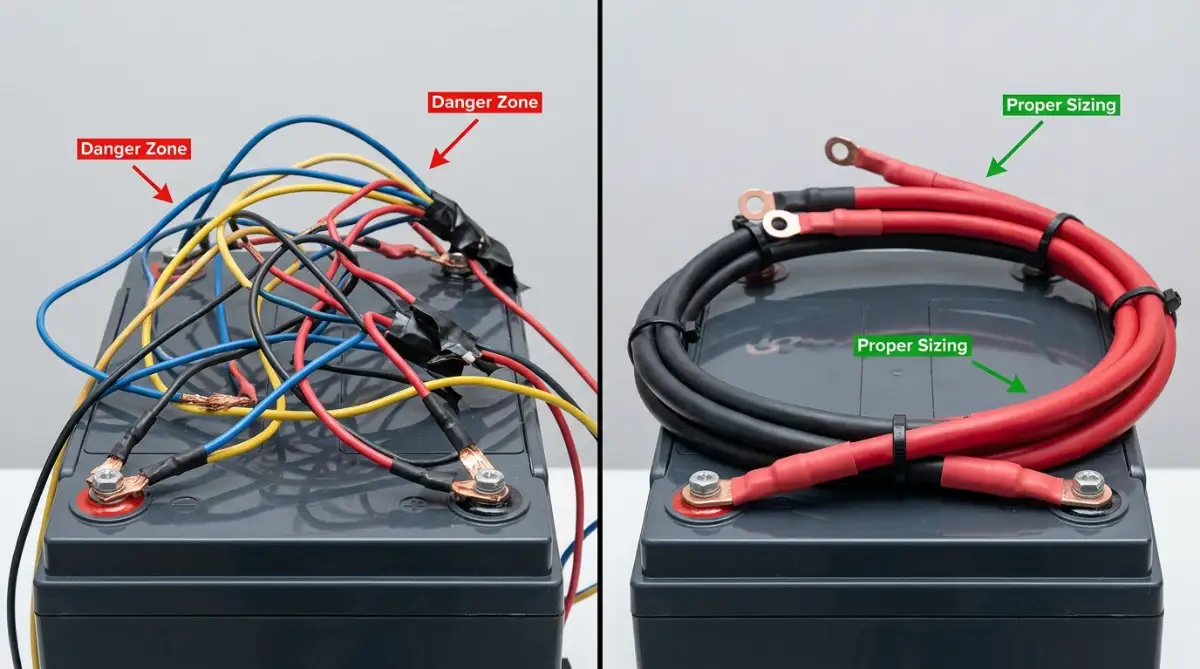
To fix this, you must understand wire gauge sizing. The thickness of a wire is measured in something called AWG (American Wire Gauge). The smaller the number, the thicker the actual copper wire inside.
For example, a thick 4 AWG cable can handle heavy power flowing from a battery bank. A thin 14 AWG cable should only be used for very small electronics. Always use a proper solar wire sizing calculator before buying any cables.
My Quick Solar Wire Sizing Cheat Sheet:
| Wire Size (AWG) | Max Safe Amps | Where I Use It Most |
| :--- | :--- | :--- |
| 10 AWG | 30 Amps | Solar panels straight to the roof |
| 4 AWG | 60 Amps | Small charge controllers |
| 2/0 AWG | 200 Amps | Main battery bank connectors |
| 4/0 AWG | 300+ Amps | Heavy-duty whole-house inverters |
Treating Solar Direct Current Like Regular House Power
Here is a big reality check for anyone doing their own electrical work. The electricity coming straight from your solar panels is Direct Current (DC). The electricity running through your home wall outlets is Alternating Current (AC).
These two types of power behave in completely different ways. Many homeowners assume they can just use regular light switches or household breakers for their solar setup. This is an incredibly dangerous assumption to make.
When you turn off an AC switch, the power easily stops flowing because the current naturally drops to zero many times a second. DC power never drops to zero. It constantly pushes forward like a strong, steady stream of water.
If you use a standard house breaker on a heavy DC solar line, the power might jump right across the gap when the breaker trips. This creates a terrifying bright flash of plasma known as a DC arc. It is essentially a tiny lightning bolt inside your equipment.
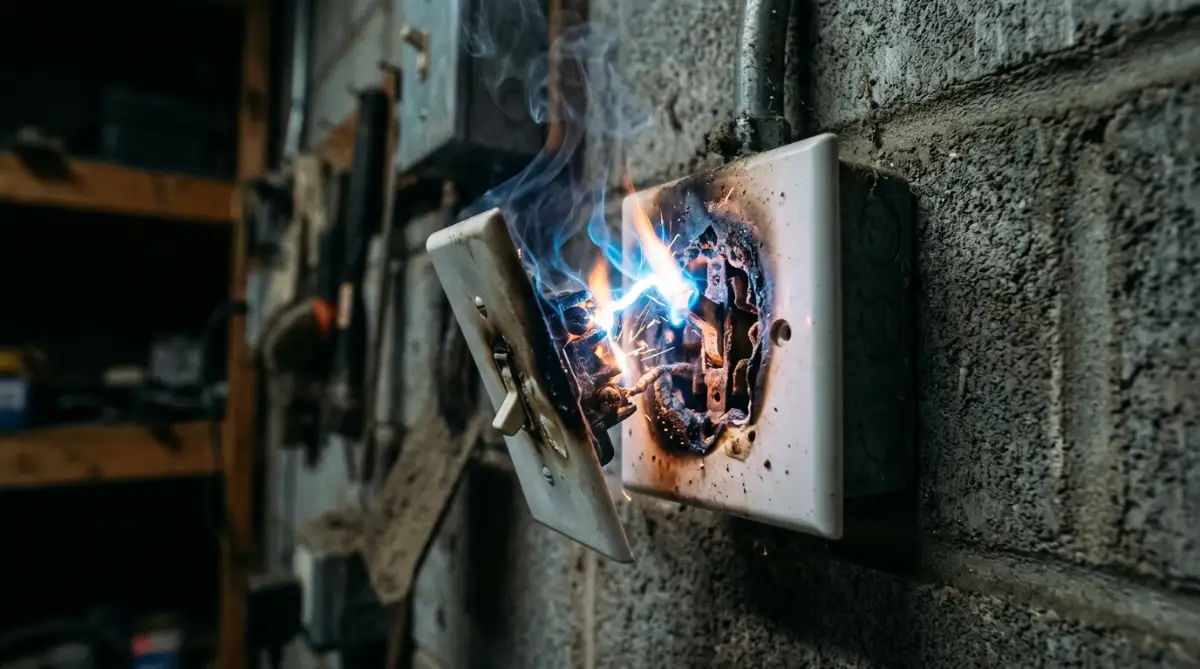
This plasma arc is hot enough to melt solid metal and easily start a massive fire. You must always use breakers, switches, and fuses that are specifically designed and rated for Direct Current. Never mix household AC hardware with your raw solar wiring.
The Mismatched Connector Danger Zone
Almost all modern solar panels use a specific type of plug called an MC4 connector. They are designed to snap together tightly and keep water out. However, a major problem happens when people buy different brands of connectors from different online stores.
Myth vs Reality in Solar Connections:
- The Myth: All MC4 connectors are exactly the same, no matter where you buy them.
- The Reality: Different manufacturers use slightly different metal pins and plastic molds. Mixing brands creates loose connections.
When two connectors do not perfectly lock together, they leave tiny microscopic gaps between the metal pieces. Electricity hates gaps. The power has to work harder to jump across that loose connection.
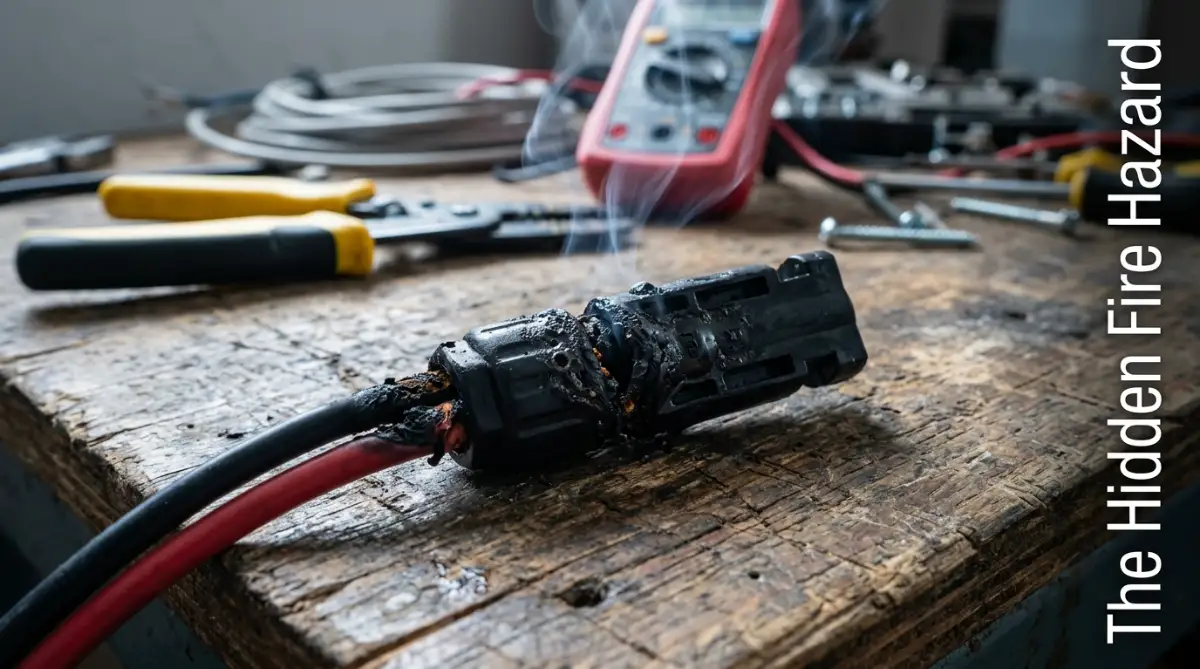
This extra effort creates a massive amount of heat right at the plug. Over a few months, the plastic casing will turn brown, then black, and eventually melt entirely. If this happens on a dry, wooden roof, the results can be absolutely disastrous.
Always buy your connectors from the exact same manufacturer. If your panels come with a specific brand of plug, use that exact same brand for the extension cables you build.
I actually ruined three expensive solar panels because I used a cheap, mismatched crimping tool I found on sale. I thought the wires were tight, but they slowly wiggled loose over a few windy weeks. The loose metal arched, melted the entire junction box, and voided my warranty instantly. Always invest in a proper heavy-duty crimper.
Skipping Proper Overcurrent Protection
Fuses and breakers act as the security guards of your power system. Their only job is to break apart and stop the power if something goes terribly wrong. Shockingly, many DIY enthusiasts skip them completely just to save a little money.
They connect their expensive lithium batteries directly to the inverter with straight, unprotected cables. If a wire accidentally gets cut or a tool drops across the terminals, the battery will dump all its power at once.
A single heavy battery can push out enough raw energy to instantly turn a thick copper wire glowing red hot. This will melt the insulation off the wire in less than three seconds. The only way to stop this is by placing a large main fuse right next to the battery.
You also need protection between the solar panels and the controller. You need another layer of protection between the controller and the battery. Every single time a wire changes size, you need a fuse to protect that specific wire.
Think of it like building a ship with watertight doors. If one section floods, you want the doors to close so the whole ship does not sink. Fuses isolate the damage so your entire house does not go up in smoke.
Understanding the Grounding Puzzle
Grounding is easily the most misunderstood part of home power generation. People look at a grounding rod and think it is just an extra, unnecessary piece of metal. They leave their heavy equipment floating without any safe path to the earth.
Electricity is always desperately trying to find the quickest path back to the ground. If lightning strikes near your home, or a wire rubs against the metal frame of your solar panel, that raw energy needs somewhere safe to go.
If your system is not properly grounded, the next time you touch the metal frame of your inverter, you become the path to the ground. A severe electrical shock from a home energy system can easily be fatal.
Proper grounding means hammering a thick copper rod deep into the earth. You then connect a heavy, bare copper wire from that rod directly to the metal chassis of all your equipment. This gives rogue electricity a safe highway away from your family.
Watching someone properly ground a system makes a huge difference in understanding how it works. Check out this amazing visual guide that finally made grounding click in my head.
The Hidden Danger of Unbalanced Battery Cables
When people build a battery bank, they often buy multiple batteries and wire them together. This is a great way to store more energy for cloudy days. However, the exact way you connect those jumper wires is a massive deal.
Many people cut their battery cables to random lengths. They might use a short wire for the first battery and a really long wire for the last battery. This creates a terrible imbalance in how the energy flows.
Electricity takes the path of least resistance. A shorter wire has less resistance than a longer wire. Therefore, the battery with the shortest wire will end up doing almost all the heavy lifting.
That single battery will charge much faster and discharge much quicker than the others. It will get incredibly hot and die years before it is supposed to. Meanwhile, the other batteries in the bank sit there barely doing any work at all.
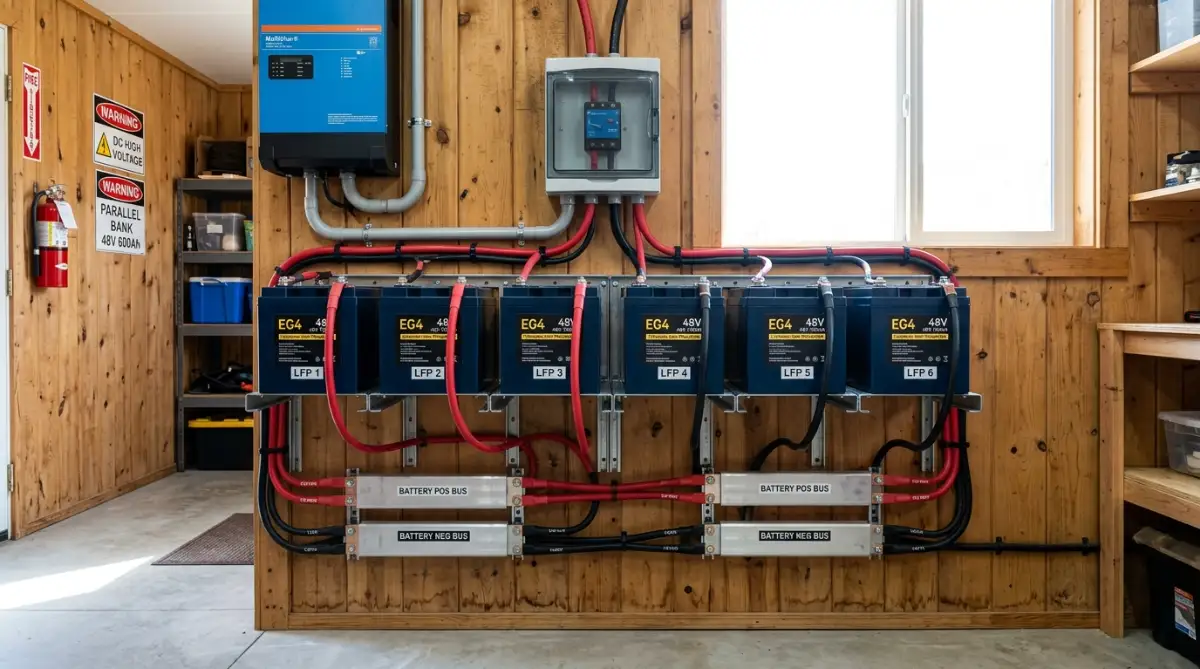
To fix this, every single wire connecting your batteries together must be the exact same length. If one positive jumper cable is exactly twelve inches long, every other positive jumper cable must be twelve inches.
You also need to pull the main power from opposite corners of the battery bank. The positive cable should connect to the very first battery, and the negative cable should connect to the very last battery. This forces the power to flow equally through the entire system.
Poor Weatherproofing and Exposed Wiring
Solar panels clearly have to live outside in the harsh elements. They face beating sun, freezing snow, and heavy rain. Yet, so many homeowners leave their main connection cables completely exposed to the open air.
UV rays from the sun are incredibly destructive to cheap plastic. If you use standard indoor electrical wire on your roof, the sun will bake the outer jacket until it turns brittle. Within a year or two, the plastic will crack open entirely.
Once the plastic cracks, rain water will seep directly inside the wire. Water and electricity are obviously a terrible combination. The water will cause the pure copper inside to turn green and slowly corrode away.
This corrosion adds massive resistance to your power flow. Your panels might still be producing energy, but that energy gets lost in the damaged, rusty wires. You will wonder why your batteries are never fully charging anymore.
You must always use wires that are specifically labeled as UV resistant and meant for outdoor use. Furthermore, these wires should ideally be run inside protective tubing known as conduit.
Conduit shields the wires from the sun, from hungry animals that like to chew on plastic, and from falling tree branches. Taking the extra time to hide your wires inside a sturdy pipe is one of the smartest safety moves you can make.
Ignoring Torque Specifications on Terminals
When you connect a heavy wire to a battery post or an inverter block, you have to tighten a metal screw down on the copper. Most people just grab a wrench and pull until it feels "tight enough" in their hand.
This guessing game is a very bad practice. If the screw is too loose, the connection will vibrate. As the equipment turns on and off, the metal naturally heats up and cools down, which makes it expand and shrink.
Over time, a slightly loose screw will become completely detached. We already know that loose connections create heat, arcing, and fires. On the flip side, if you tighten the screw too much, you can actually crush the copper wire.
Crushing the wire breaks the tiny individual strands of copper inside. This reduces the amount of power the wire can safely carry. It also damages the threaded metal post on your expensive equipment.
Every manufacturer lists a specific "torque rating" for their equipment in the manual. This tells you exactly how much turning force you should apply to the screw. You need to buy a special tool called a torque wrench.
A torque wrench lets you dial in the exact number of inch-pounds required. When you tighten the screw, the wrench will click loudly to tell you to stop. This ensures a perfect, safe connection every single time.
My 3-Step Safety Check Before Turning Power On:
- The Pull Test: I gently pull on the wire after crimping. If it wiggles even a tiny bit, I cut it off and start over.
- The Torque Match: I check the manual for the exact inch-pounds of torque and set my wrench. No guessing allowed.
- The 30-Minute Heat Check: After I turn the system on, I run a heavy load (like a heater) for 30 minutes, then feel every connection with my bare hand. If a wire feels hot to the touch, something is wrong.
Taking these extra steps seems tedious at first. Measuring wire lengths, buying special tools, and reading manuals takes up a lot of a weekend. But the safety of your home is worth the extra effort.
You are building a miniature power plant in your backyard. Treating it with serious respect is the only way to enjoy clean, free energy without the constant worry of a disaster.
Pro Strategies for a Bulletproof Off-Grid Setup
Once you move past the basic mistakes, you enter a completely different level of system management. This is where you stop just hooking things up and start engineering a power solution that actually lasts. I spent my first few months just trying to keep my batteries from dying overnight. Now, I focus on optimizing every single watt of energy my roof collects.
The biggest secret the professionals use is temperature compensation. Heat is the ultimate enemy of solar storage. When your battery bank gets too hot in the summer or freezing cold in the winter, its chemistry changes dramatically. If your solar charge controller keeps pushing the exact same amount of raw power regardless of the weather, you are slowly cooking your batteries from the inside out.
You need to install a simple temperature sensor directly onto the side of your main battery. This tiny wire connects straight to your smart charge controller. When the garage hits ninety degrees, the controller automatically lowers the charging voltage to protect the delicate internal cells. When it is freezing outside, it gently increases the voltage to wake the sluggish chemistry up. It is a tiny twenty-dollar part that will easily double the lifespan of a very expensive power bank.
Another advanced strategy is separating your heavy loads from your daily usage. Many beginners plug their entire cabin into a single massive power inverter. When the refrigerator kicks on at the exact same time the microwave is running, the sudden massive spike in power can trip the entire system. It leaves you sitting in the dark with a flashing error code on your equipment.
Instead, professional installers divide the work. They use one large, heavy-duty inverter dedicated entirely to massive appliances like air conditioners or water pumps. Then, they set up a much smaller, highly efficient inverter just for lights, internet routers, and charging phones. This way, if the heavy inverter trips from a power surge, you do not lose your basic survival lighting and communication tools.
You also need to think about long-term wire health through heat shrink tubing. Electrical tape is completely useless in a solar setup. The sticky adhesive melts into a gooey mess within a month of a hot summer. If you want a connection to stay clean and tight forever, you must slide a piece of marine-grade heat shrink tubing over every single copper terminal you crimp.
When you heat this special tubing, it shrinks tightly around the metal and releases a waterproof glue that seals everything perfectly. This completely locks out moisture and prevents the slow, invisible corrosion that eventually ruins most DIY setups. It is a small extra step that makes your wiring look completely professional and keeps the raw energy flowing smoothly for decades.
If you want to dive deeper into managing your battery health over the long run, check out this guide on maintaining your home solar battery for maximum efficiency for some excellent daily maintenance habits.
Traps That Will Destroy Your Solar Dream
Even when you think you have everything figured out, it is incredibly easy to fall into a false sense of security. The most devastating failures usually happen because people take a shortcut that seems completely harmless at the time. Let me tell you, raw electricity does not care about your shortcuts.
The Deadly All-in-One Switch Hazard
One of the scariest things I see on internet forums is people using standard AC house switches to turn off their DC solar panels. I completely understand the logic. A switch is just a switch, right? You just want a simple way to shut down the roof power before you clean the panels.
This assumption can burn your house down. As we discussed earlier, DC power creates a massive electrical arc when you pull a standard switch apart. I watched a neighbor try this exact trick. He flipped a regular light switch to cut power to his roof array.
The switch instantly made a horrifying buzzing sound, started glowing orange from the inside, and then caught fire right in his hand. The continuous flow of DC power just leaped across the tiny gap inside the switch mechanism. You absolutely must buy heavy-duty DC isolator switches designed specifically for solar arrays. They have special internal chambers that safely extinguish those dangerous plasma arcs instantly.
For a deeper look into the technical differences between handling these power types safely, the National Fire Protection Association (NFPA) provides incredible safety guidelines for residential electrical systems.
Ignoring the Hidden Battery Fumes
People love putting their battery banks in tight, hidden spaces to keep things looking clean. They stuff massive lead-acid or even lithium batteries under staircases, in tight bedroom closets, or inside small wooden boxes. This creates a silent, terrifying hazard that most people never see coming.
Traditional deep-cycle batteries actually release highly flammable hydrogen gas when they are charging. If you trap this gas inside a small, unventilated box, it slowly builds up over time. All it takes is one tiny spark from a loose wire connection or a nearby light switch to ignite that invisible gas cloud.
Even modern lithium batteries, while much safer, can suffer from thermal runaway if they get too hot in a tight space. They need constant, fresh airflow to stay cool while they work. You must always install your power storage in a well-ventilated area, preferably a garage or a dedicated outdoor shed with specific air vents. Never trap heavy power storage in a place where it cannot breathe.
The Phantom Power Drain Disaster
This mistake usually happens a few months after everything is installed. You notice your batteries are completely dead every single morning, even though you hardly used any electricity the night before. You start blaming the expensive panels or thinking the battery bank is already broken.
The real culprit is usually phantom power drain. People leave their massive inverters turned on twenty-four hours a day, even when they are just powering a single LED light bulb. Big power inverters consume a significant amount of electricity just to stay awake and run their internal cooling fans.
If you leave a heavy-duty inverter running all night with nothing plugged in, it can easily suck ten to fifteen percent of your battery storage right out of the air. It is like leaving your car engine idling in the driveway all night just so the radio stays on.
You have to manage your power smartly. If you only need to run a small CPAP machine or charge a phone at night, you do not need a massive whole-house inverter running. Use a tiny, efficient inverter for nighttime tasks and completely shut down the big equipment when the sun goes down.
Understanding how different technology impacts your daily life is a growing concern, much like how we are navigating the realities of artificial general intelligence and its hidden demands on our resources. We always need to be aware of what is running quietly in the background.
Taking Control of Your Energy Safely
Building your own home power system is one of the most rewarding projects you will ever take on. The feeling of watching your meter slow down while the sun does all the heavy lifting is absolutely incredible. It gives you a profound sense of independence and security against sudden grid failures.
However, that independence requires a deep respect for the raw energy you are managing. You are no longer just plugging a toaster into a wall; you are acting as your own personal utility company. By simply using the right wire sizes, buying the correct DC-rated safety gear, and keeping everything properly grounded, you eliminate almost all the terrifying risks associated with DIY projects.
Take your time. Do not rush the installation on a Sunday afternoon just to see the lights turn on. Double-check every single metal connection, test your limits, and never be afraid to step back and rethink a wiring path. Your safety and your family's peace of mind are worth the extra hours of careful planning.
I know how overwhelming that massive pile of red and black wires looks right now on your garage floor. But if you follow these safety rules and double-check every single connection you make today, you will have a rock-solid, silent power plant protecting your home for years to come. You have totally got this.
Common Questions About Home Solar Safety
Do I really need to use thick battery cables if my system is small?
Yes, you absolutely do. Even a small battery bank can instantly dump thousands of amps if something goes wrong. Thin wires will melt instantly under that kind of pressure, creating a severe fire risk regardless of how small your overall system seems.
Can I mix different brands of solar panels together safely?
It is generally a bad idea unless you perfectly match their voltage and amperage ratings. Mismatched panels will drag the entire system down to the performance of the weakest panel. Worse, wildly different voltages can confuse your charge controller and cause dangerous heating issues.
Why is my solar charge controller getting so hot during the day?
Charge controllers naturally get warm as they process heavy power from the roof. However, if it is too hot to touch comfortably, you might have it mounted in a poorly ventilated spot, or your wires might be too thin and are creating resistance heat right at the connection terminals.
Is it safe to leave my solar panels connected if I go on vacation?
Yes, it is perfectly safe as long as your system is properly fused and managed. In fact, keeping the system active allows your charge controller to slowly maintain your battery health through a gentle "float" charge while you are away.
What is the fastest way to check for a loose electrical connection?
The safest way is to use a handheld infrared temperature gun. When the system is running under a heavy load, simply point the laser at every single wire connection. If one specific bolt or crimp is glowing significantly hotter than the rest, you have found a loose, dangerous connection that needs immediate tightening.
Disclaimer: The information provided in this article is for educational and informational purposes only. Electrical work, especially involving high-voltage DC solar systems and battery banks, carries significant risk of injury, fire, or death if handled improperly. Always consult with a licensed, certified electrician before attempting any wiring, installations, or modifications to your home energy system. The author and publisher are not responsible for any damage, injury, or loss resulting from the application of the concepts discussed in this post. Local building codes and safety regulations must always be followed.