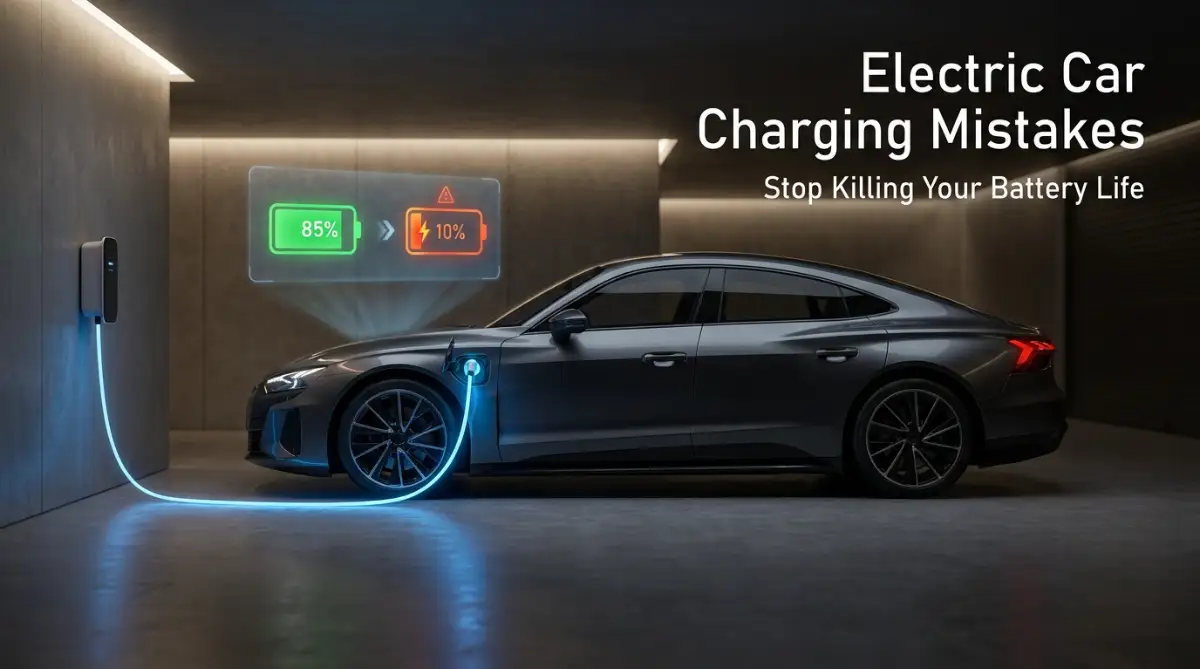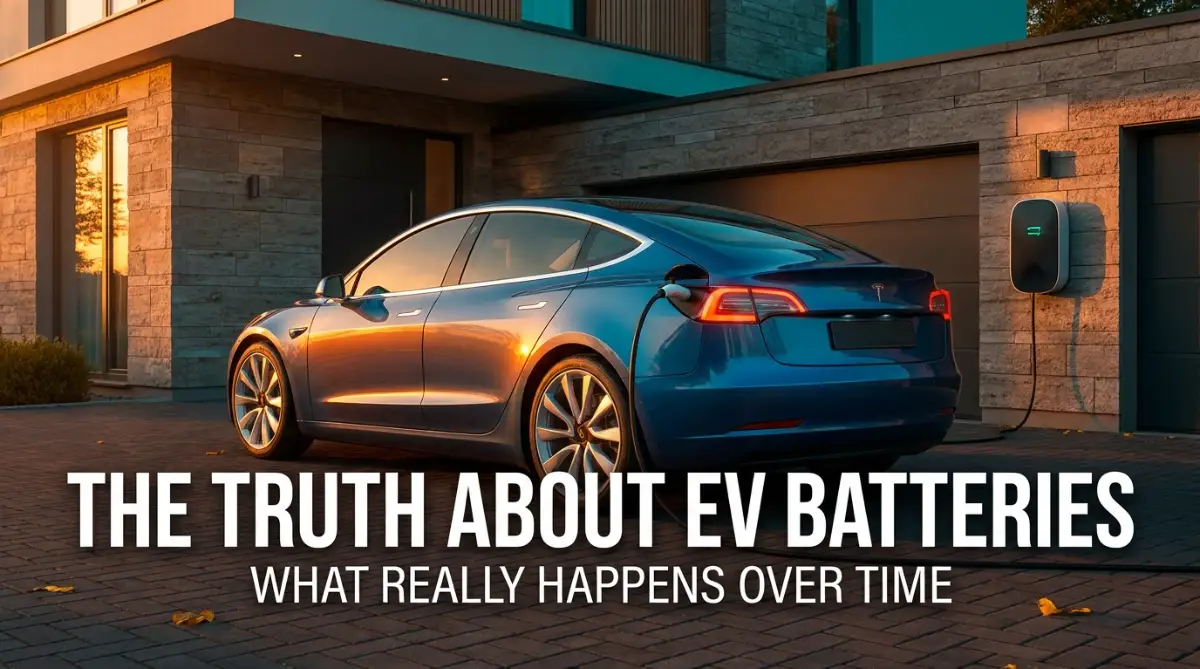
Facing the Silent Fear: When Your EV Dash Shows Fewer Miles
Staring at your EV dashboard and seeing fewer miles than yesterday can instantly ruin your morning. You immediately think you've broken your new car or that a massive repair bill is just around the corner. But before you panic and start Googling battery replacement costs, let me stop you right there. What you're seeing is usually totally normal chemistry at work, and fixing your daily charging habits is a lot easier than you think.
That sinking feeling is something almost every new electric vehicle owner experiences at some point. We constantly stare at that little battery icon, treating it with the same level of stress as a dying smartphone on a busy workday. Range anxiety quickly transforms into battery degradation anxiety. You start to worry about every single mile, wondering if using the heater or the air conditioning is slowly killing your expensive investment.
But the reality of how these power systems age is completely different from the horror stories floating around the internet. There is a massive gap between what people think happens to an electric car battery and what actually occurs under the floorboards of your vehicle. Understanding this gap is the only way to get your peace of mind back.
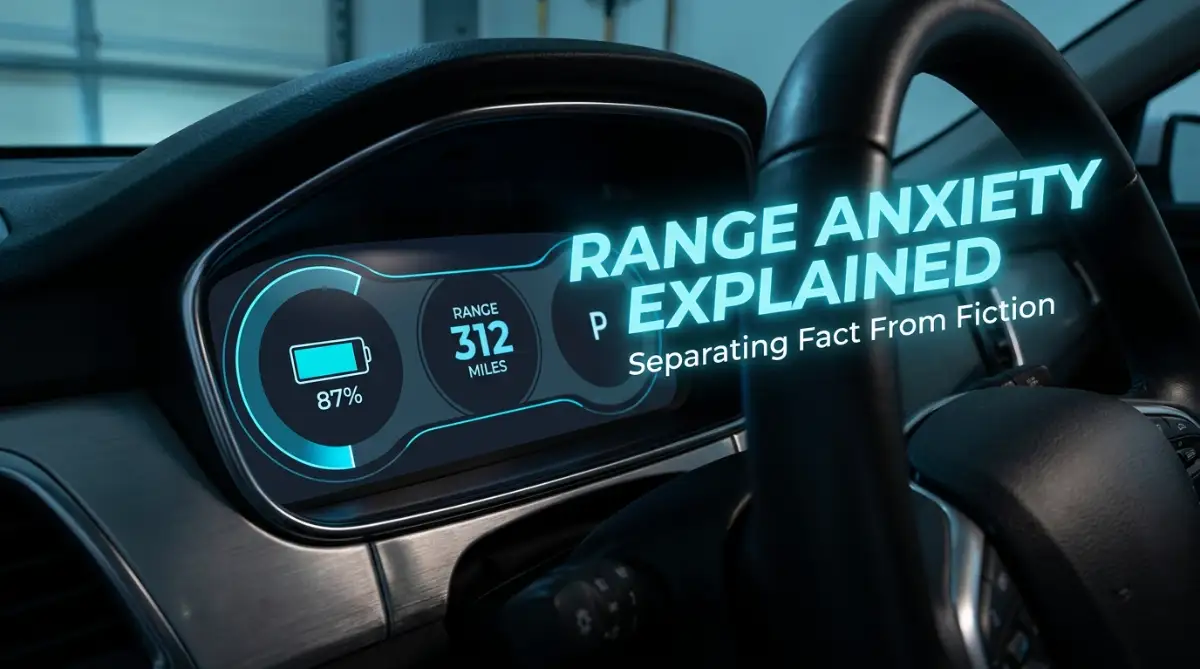
Quick Takeaways for a Happy EV Battery:
- Stick to the 80/20 rule: Keep your daily charge between 20% and 80% unless you are going on a long road trip.
- Don't panic over early range drops: A slight loss of miles in your first year is just the battery chemistry settling in.
- Use preconditioning in winter: Warm up your car while it's still plugged into the wall to save your actual driving range.
- Never ignore software updates: Your car manufacturer sends free over-the-air updates to improve your battery's long-term health.
Unlocking the Science: How Your Car Actually Stores Power
To stop worrying about your battery, we first need to understand how it holds energy in a very simple way. Think of your electric vehicle's battery pack like a giant water bucket filled with a sponge. When the car is brand new, that sponge is soft, perfectly clean, and can soak up a massive amount of water. This represents your maximum driving range.

Every time you charge the car, you are pouring water into that bucket. Every time you drive, you are squeezing the water out to make the wheels turn. Over time, as you constantly squeeze and soak that sponge, tiny parts of it start to get a little stiff. It naturally loses a tiny fraction of its ability to hold the exact same amount of water it did on day one.
This exact process happens inside the lithium-ion cells of your car. Ions move back and forth between two sides of the battery when charging and discharging. Over time, a microscopic layer builds up inside the cells, which slightly reduces the amount of energy they can hold. This is completely normal physics, not a defect in your vehicle.
The Real Story Behind Normal Wear and Tear
Many drivers panic the moment they lose their first few miles of range. However, battery wear does not happen in a straight, predictable line. Almost all electric cars experience a slight, noticeable drop in range during the early stages of ownership. This early drop is just the battery chemistry settling into its long-term working state.
After this initial settling period, the degradation curve flattens out significantly. The capacity loss becomes extremely slow and gradual, almost unnoticeable in your day-to-day driving routine. Most modern electric vehicles are designed to outlast the usable life of the car itself. You are highly unlikely to ever need a complete battery replacement just from normal driving.
Automakers know exactly how battery chemistry works, so they build in secret safety buffers. When your dashboard says the car is fully charged at one hundred percent, the battery itself is actually holding a bit less than its true maximum. The car's computer hides this extra capacity to protect the cells from being stressed to their absolute physical limits.
Myth vs Reality: Clearing Up The Biggest Fears
Let us take a moment to bust some of the most common myths that keep drivers up at night. There is so much bad advice out there that it actually causes people to damage their cars unintentionally.
Myth 1: You must drain the battery completely before charging.
This old advice comes from the days of nickel-cadmium batteries used in old laptops and power tools. Doing this to a modern lithium-ion car battery is actually one of the worst things you can do. Draining the car to zero puts an immense amount of physical stress on the battery cells.
Myth 2: Using DC fast chargers will instantly destroy your battery.
While it is true that extreme heat from constant fast charging can cause slight extra wear over many years, modern cars have incredibly smart liquid cooling systems. The car actively pumps cooling fluid around the battery to keep it safe while pulling in huge amounts of electricity. Using a fast charger for your weekend road trips is perfectly fine.
Myth 3: The battery will just randomly die one day like a smartphone.
Your phone uses a single, small, cheap battery cell that gets heavily abused every single day. Your car uses thousands of high-quality cells managed by a brilliant computer system. If one tiny cell acts up, the computer reroutes power around it. The car will gradually lose a little range over many years, but it will not suddenly turn into a brick on your driveway.
Smart Charging Habits for Maximum Lifespan
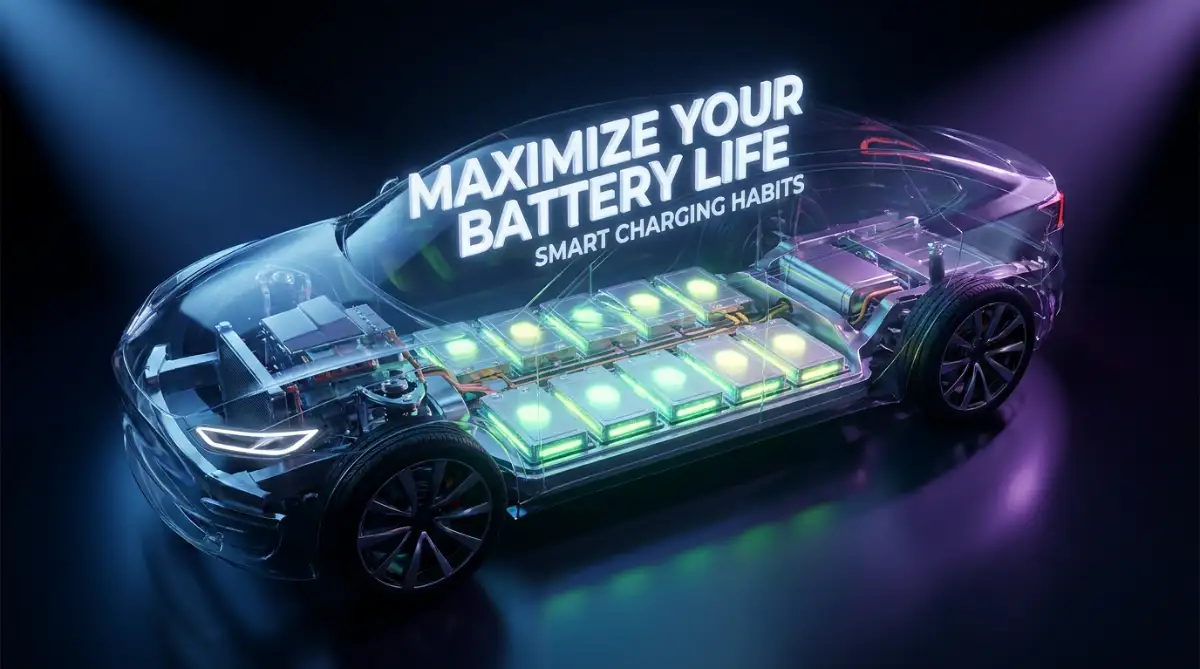
If you want to keep your battery healthy for as long as possible, you just need to adopt a few simple daily habits. The absolute golden rule of electric vehicle ownership is the 80/20 principle. You want to try and keep your battery's charge level between twenty percent and eighty percent for daily city driving.
Charging past eighty percent pushes the battery into a state of high tension. Imagine eating a huge meal at a restaurant; those last few bites make you feel uncomfortably full. Your battery feels the exact same way when you force those last few electrons into the pack. Only charge to full when you actually need the maximum range for a long road trip.
Leaving the car sitting at a low charge is equally stressful. If you park the car with only five percent left and leave it there for a week, the battery cells can actually degrade faster. Always try to plug the car in if it drops below twenty percent.
The Magic of Daily "Sip" Charging
Instead of waiting for the car to get nearly empty, get into the habit of plugging it in every time you get home. Electric car batteries actually prefer to take small, frequent sips of electricity rather than massive gulps.
If you drive thirty miles to work and back, plug it in when you park in the garage. Let the home charger gently top it back up to eighty percent while you sleep. This gentle, slow charging at home creates very little heat, which makes the battery incredibly happy.
To give you a clear picture of how your daily habits affect your car, here is a quick breakdown of charging styles I have seen in the EV community:
Daily Charging Habit vs. Long-Term Battery Health
- The "Top Off" (Charging 50% to 80% daily): Excellent. Keeps the battery cool and relaxed.
- The "Deep Drain" (Driving to 5% and charging to 100%): Poor. Puts heavy physical stress on the cells over time.
- The "Always Full" (Keeping it plugged in at 100%): Fair to Poor. High battery tension, mostly bad for standard Lithium-ion packs.
- The "Sweet Spot" (Keeping it between 20% and 80%): Perfect. Maximum lifespan for your EV.
Pro Tip: I used to stress endlessly about unplugging my car the exact second it hit my target charge limit. I finally realized that the car’s internal computer is much smarter than I am. Once it hits the set limit, the car physically stops pulling power and just uses the wall electricity to keep the battery at a comfortable temperature, so you can leave it plugged in without any worry.
The Hidden Impact of Extreme Weather
You cannot talk about battery health without talking about the weather outside. Lithium-ion batteries are a lot like humans; they prefer to be at a comfortable room temperature. When the weather gets extremely hot or terribly cold, the battery has to work much harder to do its job.
During scorching summer days, heat is the ultimate enemy of battery longevity. Parking your car under the blazing sun on hot black asphalt bakes the battery pack from above and below. If you have the option, always try to park in the shade or inside a parking garage during the hottest parts of the day.
Winter brings a completely different set of challenges for your daily driving range. When the battery gets freezing cold, the chemical reactions inside slow down dramatically. The car has to use its own energy to warm up the battery before it can even move efficiently. This is why you notice a massive drop in range during the winter months.
Fact Check: Does Cold Weather Permanently Ruin My Battery?
A lot of new owners freak out when they lose 20% of their range in January. Don't worry—your battery isn't degrading. Cold weather simply slows down the flow of energy. Think of it like pouring cold honey out of a jar. Once the weather warms up in the spring, your "missing" miles will magically reappear on your dashboard.
Preconditioning: Your Secret Weapon
There is a brilliant feature in almost every modern electric car called preconditioning. This is a game-changer for both your driving range and the long-term health of your vehicle.
When your car is plugged in at home on a freezing winter morning, use your phone app to turn on the climate control twenty minutes before you leave. The car will use electricity from the wall of your house to warm up the cabin and, more importantly, warm up the battery pack. When you finally unplug and drive away, the battery is already at its perfect operating temperature.
This simple habit prevents the battery from taking a harsh beating in the cold. It also means you drive away with a completely full battery and a warm cabin without wasting your actual driving range.
Here is an excellent explanation from an industry expert on how weather truly impacts your daily driving experience. Watch this before your next winter road trip!
Reading the Signs: How to Track Your Battery Health
Many owners wonder how they can actually tell if their battery is doing well or if it is degrading faster than normal. You do not need to be a mechanic or have expensive tools to figure this out. The most basic way is to simply monitor your estimated range at a specific charge percentage over time.
Take a notebook and write down your estimated range at an eighty percent charge when the weather is mild. Check this again a few months later under similar weather conditions. A slight drop is completely expected, but a massive sudden drop might indicate an issue worth checking.
Understanding the Battery Management System
Your car has a dedicated brain called the Battery Management System, or BMS for short. This computer’s entire job is to constantly monitor the temperature, voltage, and health of every single cell. It works endlessly in the background to balance the power so that no single part of the battery works harder than the rest.
Sometimes, the BMS can get a little confused if you always do small, short charges. The computer might lose track of where the actual top and bottom of the battery capacity really are. This can result in your dashboard showing a much lower range than what the battery can actually deliver.
The Occasional Deep Cycle Calibration
If you suspect your dashboard numbers are inaccurate, you can help the BMS recalibrate itself. A few times a year, allow your battery to drop down to around ten percent during your normal driving. Then, plug it into a slow home charger and let it fill all the way up to a complete hundred percent.
Leave it plugged in for a few hours after it says it is full. This allows the computer system to properly measure the exact top and bottom limits of the battery cells. It essentially resets the math in the car's computer. You might suddenly find that your estimated range jumps back up slightly because the computer now has an accurate reading.
Decoding the Dealership Health Report
If you are ever truly concerned about abnormal capacity loss, your local dealership can run a professional diagnostic test. They plug a special computer directly into your car's diagnostic port and pull the raw data straight from the battery pack.
This report will give you a "State of Health" percentage. If your car is a few years old and the report shows a State of Health at ninety percent, you are doing wonderfully. Most manufacturer warranties guarantee the battery will not drop below seventy percent capacity for at least eight years or one hundred thousand miles.
The Long-Term Reality of EV Ownership
As we spend more time with electric vehicles, we are learning that they are incredibly resilient machines. The early fears of batteries dying after just a few years have been proven completely false by real-world data from thousands of drivers. People are regularly driving their electric cars well past the hundred-thousand-mile mark with original battery packs that still offer plenty of useful range.
The key to a stress-free experience is to simply change your mindset. Accept that a small amount of range loss is a normal part of the aging process, just like tires wearing down or brake pads getting thinner. You do not panic when your gas car gets slightly worse fuel economy as the engine ages, and you should not panic when your electric car loses a few miles of range.
By practicing smart charging habits, keeping the battery out of extreme temperatures when possible, and trusting the car's internal computers, you are already doing exactly what is needed. Enjoy the instant torque, the silent acceleration, and the convenience of waking up with a "full tank" every single morning in your garage.
Focusing on the incredible benefits of electric driving rather than obsessing over the battery percentage will completely transform your ownership experience. Your car is designed to take care of itself, so you can spend less time worrying and more time enjoying the journey on the open road.
Taking Control: Next-Level Battery Care Strategies
If you really want to get the absolute most out of your electric vehicle over the long haul, basic habits are just the beginning. I want to share some deeper, expert-level secrets that most dealerships completely forget to mention when they hand over your keys. These are the small, brilliant tweaks that separate a stressed-out owner from a truly happy electric driver.
First, you need to figure out exactly what kind of battery chemistry your specific car uses. Not all electric vehicles are built exactly the same under the floorboards. Most cars use standard lithium-ion packs, which absolutely hate being charged all the way to one hundred percent every day. However, many newer, budget-friendly electric cars now use something called an LFP battery.
LFP stands for Lithium Iron Phosphate, and these batteries play by a completely different set of rules. If your car has an LFP battery, you actually need to charge it to one hundred percent at least once a week. This keeps the internal computer perfectly balanced and prevents sudden drops in your estimated range. Always check your owner's manual to see exactly which type of power pack you are driving on.
Mastering the Art of Regenerative Braking
One of the coolest features of driving an electric car is regenerative braking. Whenever you take your foot off the accelerator pedal, the car's electric motor runs backwards. This slows the car down smoothly while instantly pushing free electricity back into your battery pack.
Many drivers think they should always keep this feature on its highest setting to maximize their range. While strong regenerative braking is amazing for stop-and-go city traffic, it is actually terrible for highway driving. When you are cruising at high speeds, you want the car to glide and coast as much as naturally possible.
Constantly engaging heavy regenerative braking on the highway forces the battery to rapidly switch between charging and discharging. This micro-cycling creates extra heat and unnecessary wear on the internal cells. Instead, adjust your settings to a lighter level on long highway trips to keep the battery much cooler and happier.
Defeating the Hidden Vampire Drain
Have you ever parked your car for a few days, only to return and find that you lost five percent of your battery for no apparent reason? This frustrating issue is commonly known in the electric vehicle community as vampire drain or phantom drain. Even when the car is completely turned off and parked, it is still quietly using a small amount of electricity.
Your car is essentially a massive rolling computer that stays connected to the internet. It constantly checks for software updates, runs security cameras, and regulates the temperature of the battery pack. Just like you might struggle with why your prompt engineering fails because of bad instructions, your car loses power because of background software settings.
To stop this silent energy loss, you need to turn off extra features when you park for long periods. Disable the cabin overheat protection if you are parked safely in a cool garage. Stop opening your phone app to check the battery percentage every two hours. Every time you open the app, you physically wake the car up, forcing it to consume precious battery power.
The Airport Parking Protocol
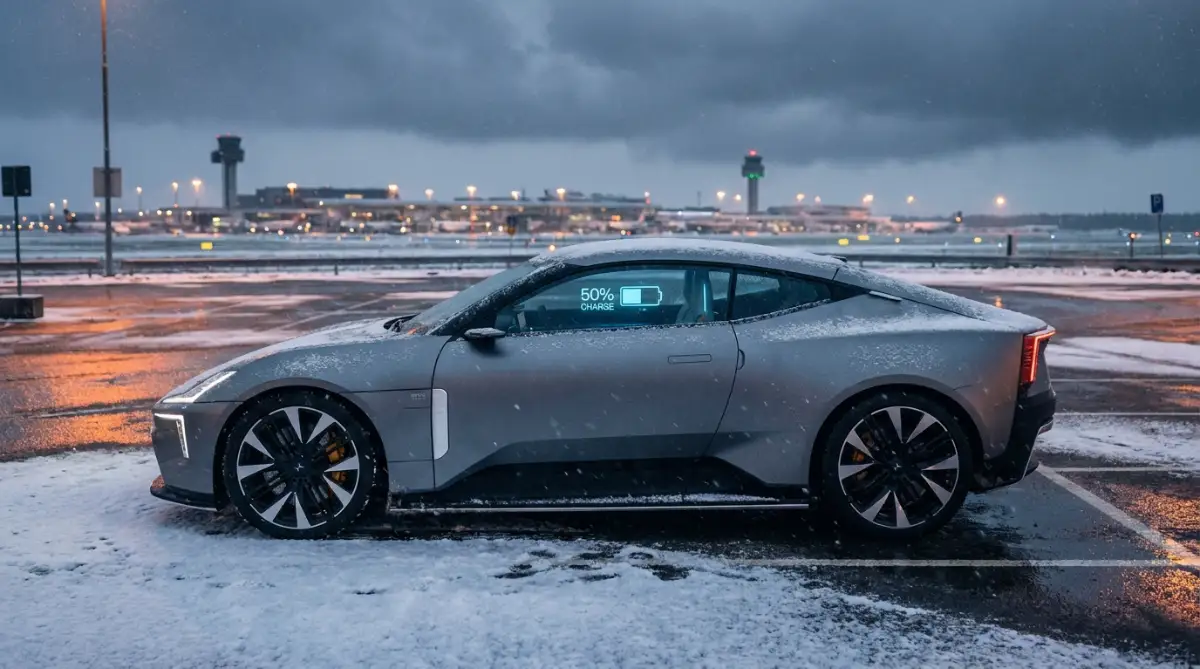
Leaving your electric car parked for a long vacation requires a bit of smart planning. Imagine parking your beautiful car at the airport for a two-week trip in the middle of freezing winter. If you leave it sitting at ten percent battery, the freezing temperatures will drain it further, potentially damaging the low-voltage systems.
The ideal long-term storage level for any standard lithium-ion battery is right around fifty percent. If you plan to leave the car unplugged for more than a week, try to arrive at the parking lot with a battery level between forty and sixty percent. This perfectly balanced state creates the least amount of chemical stress inside the battery casing.
If the airport offers a slow charging station, use it, but be sure to set your car's charge limit extremely low. Tell the car to stop charging at fifty percent. This allows the car to pull tiny amounts of wall power to keep the battery warm without accidentally overcharging it while you are away.
Protecting Your Long-Term Investment
Understanding these advanced tips does not just save you daily anxiety; it actively protects your wallet. A healthy battery pack directly translates to a much higher trade-in value when you eventually decide to sell the vehicle. You can actually check long-term electric vehicle resale value guides to see how much of a difference a well-maintained battery makes.
Just like you might carefully manage a tight budget to bootstrap your first business, managing your charging habits saves you real money. You spend less on public fast chargers and guarantee that your car stays perfectly reliable for hundreds of thousands of miles.
The Dangerous Traps of Over-Managing Your EV
While it is great to understand how your battery works, many drivers accidentally take this knowledge way too far. I have seen countless electric vehicle owners completely ruin their driving experience by becoming overly obsessed with battery preservation. They fall into mental traps that cause unnecessary stress and, ironically, sometimes lead to worse outcomes for the car.
One of the biggest mistakes you can make is becoming a hyper-miler who constantly drives below the speed limit to save a few percent of battery. These drivers refuse to turn on the air conditioning during a massive heatwave just to squeeze out an extra five miles of range. You bought a comfortable, modern car to enjoy it, not to suffer inside a rolling sauna.
The stress of watching the percentage drop creates a terrible relationship between you and your vehicle. The car's intelligent cooling system actually needs you to use the climate control to help regulate the cabin and the battery temperature. Turning everything off does not just make you miserable; it can sometimes confuse the thermal management systems.
Ignoring Critical Software Updates
Another massive mistake is ignoring the over-the-air software updates that your manufacturer sends to the vehicle. Many people hate waiting twenty minutes for their car to update, so they just constantly hit the "remind me later" button on the screen. This is a terrible habit that directly harms your overall battery health.
Automakers are constantly collecting real-world data from millions of vehicles on the road. They use this data to learn exactly how batteries behave under different stresses. When they discover a better way to balance the cell voltages or improve cooling efficiency, they send that fix directly to your car through a software update.
By ignoring these updates, you are forcing your car to use outdated, inefficient charging logic. It is highly recommended to read up on independent EV reliability testing to see how frequent software updates dramatically improve the lifespan of electric motors. Always let your car install its updates overnight while it is safely parked in your garage.
The Misunderstanding of Insurance and Battery Damage
A lot of drivers misunderstand what happens if their battery gets slightly damaged by road debris. Because the battery sits at the very bottom of the car, running over a large rock or a piece of metal can sometimes dent the protective casing. Many people completely ignore small scrapes because they are terrified the battery will be incredibly expensive to fix.
Ignoring underneath damage is incredibly dangerous because a small dent can slowly compromise the watertight seal around the battery cells. Over time, moisture gets inside and slowly destroys the highly sensitive electrical components. This is why you need to clearly understand common auto policy myths regarding electric vehicles.
Most comprehensive auto insurance policies will fully cover battery casing damage caused by road debris. If you hear a loud bang under your car on the highway, do not just hope for the best. Take it to a certified service center immediately to have the battery shield professionally inspected before a tiny scrape turns into a catastrophic failure.
The Trap of Free Public Charging
We all love getting things for free, especially when it comes to fueling our cars. Many workplaces and shopping malls now offer completely free charging stations for their employees and customers. While this is an amazing perk, it often leads to terrible battery management habits.
Drivers will often plug their car in every single morning at work, even if they only used five percent of their battery getting there. They let the car sit at a completely full charge for eight hours in the hot sun, day after day. This constant state of being completely stuffed with energy creates massive tension inside the battery cells.
Just like you might wonder why flight prices jump when demand is high, charging habits should match your actual driving demands. If you only have a short commute, you do not need to plug in every single day just because the electricity is free. Let the battery naturally drain down to thirty or forty percent over the week before topping it back up.
Getting a good deal on electricity is never worth permanently degrading a battery pack that costs thousands of dollars to replace. Treat your battery with respect, and it will give you years of completely trouble-free driving.
The Road Ahead: Driving With Ultimate Peace of Mind
At the end of the day, transitioning to an electric vehicle should be an exciting and incredibly rewarding journey. Yes, the technology is different from what we grew up with, and there is a small learning curve involved. But the freedom of waking up every morning with enough power to drive hundreds of miles is truly unmatched.
You no longer have to stand outside in freezing rain pumping expensive gas or worry about regular oil changes and spark plug failures. Your electric car is a highly advanced piece of engineering designed specifically to handle the rigors of daily life. The internal computers are much smarter than we give them credit for, and they work constantly to keep your battery safe.
If you just follow the basic rules of keeping the charge mostly between twenty and eighty percent, your car will easily outlast your desire to own it. You can review advanced battery longevity research which clearly proves that modern battery packs degrade incredibly slowly after their first year of use. The panic around rapidly dying batteries is simply outdated fiction.
My personal advice to you is to completely turn off the battery percentage display on your dashboard. Switch it to show estimated driving miles instead, and just drive the car the exact same way you would drive any other vehicle. I spent my first few months constantly stressed about battery health, but once I finally relaxed and trusted the car's computer, I experienced the true joy and freedom of electric driving.
Common Questions About EV Range and Battery Health
Do frequent small charging sessions damage the battery?
No, small frequent charges are actually incredibly healthy for a lithium-ion battery. The cells prefer to take tiny sips of electricity rather than being forcefully drained to zero and filled all the way back up.
How long does an electric car battery actually last?
Most modern electric vehicle batteries are designed to easily last between three hundred thousand and five hundred thousand miles. The battery pack will very likely outlive the actual mechanical suspension and body of the car itself.
Will my EV lose range if I leave it parked outside in the cold?
Yes, you will temporarily lose some range because cold temperatures slow down the chemical reactions inside the cells. However, this is not permanent damage, and your normal range will return perfectly once the battery warms back up.
Can I buy a used EV with a degraded battery?
Yes, buying a used electric car is very safe as long as you have the dealership run a State of Health diagnostic test first. Just like figuring out life coverage with a pre-existing condition, you just need to know exactly what you are dealing with before signing the paperwork.
Does driving at high speeds drain the battery significantly faster?
Yes, electric vehicles are incredibly sensitive to wind resistance at highway speeds. Driving at eighty miles per hour will drain your battery much faster than cruising comfortably at sixty-five miles per hour.
Disclaimer: The information provided in this article is for educational and informational purposes only and does not constitute professional mechanical advice. Battery degradation rates vary widely based on vehicle make, model, environmental conditions, and individual driving habits. Always consult your specific vehicle’s official owner's manual or a certified dealership technician before altering your charging routines or performing diagnostic tests.