The Hidden Anxiety of Watching Your Range Drop
Did you buy your electric car expecting zero maintenance, only to find yourself constantly stressing over the battery percentage dropping too fast? You aren’t alone. Most of us accidentally ruin our EV’s range by treating it exactly like a giant smartphone. Instead of checking your dashboard every five minutes in a panic, let's fix a few simple daily habits that are silently eating away at your battery life and killing your driving range.
This is a quiet struggle thousands of everyday drivers are facing right now. You spend a massive amount of money to upgrade to a clean, quiet, and futuristic ride. You expect peace of mind and lower maintenance costs. Instead, you end up checking the battery percentage every five minutes with a tight feeling in your chest.
That sudden loss of range is not just a number on a screen. It means you have to plan extra stops on your family road trips. It means feeling nervous about making it home when the traffic gets bad on the highway. Most terrifyingly, it brings up the fear of having to pay fifteen thousand dollars for a complete battery replacement right after your warranty expires.
This mental burden ruins the fun of owning an electric vehicle. You are constantly second-guessing your charging habits. Should you plug it in every night? Is fast charging bad? It feels like you need a degree in chemistry just to keep your car running properly. But the truth is, you only need to adjust a few very simple daily habits to protect your investment completely.
n a Rush? Here is Your 30-Second Cheat Sheet:
- Stop the 100% habit: Lock your daily charging limit to 80% inside your EV app right now.
- Don't run on fumes: Never let your battery dip below 10% on a regular Tuesday; treat 20% as your new zero.
- Let it cool down: Wait an hour after a long highway drive before plugging your car in to avoid heat damage.
- Fast chargers are for road trips: Use slow home charging for your daily routine to keep the battery cells healthy.
Demystifying the Chemistry: What Actually Happens Inside?
Before we look at the specific habits ruining your car, we need to understand the simple science behind the power source. Do not worry, we will keep this incredibly easy to understand. Your electric vehicle runs on a massive pack of lithium-ion cells.
Think of a lithium-ion battery like a human stomach. When a stomach is completely empty, you feel weak, stressed, and uncomfortable. On the other hand, if you eat until you are painfully full, you feel bloated, sick, and your body is under immense stress.
Lithium-ion cells work in the exact same way. They hate being totally empty, and they absolutely hate being completely stuffed. When you push the battery to either of these extreme ends, the internal chemistry starts to physically break down.
This breakdown is permanent. The small materials inside the cells that hold electricity become stiff and useless. Every time you stress the battery, you lose a tiny fraction of a mile from your total range. Over time, those tiny fractions add up to massive chunks of lost driving distance.
Mistake 1: Treating Your Car Like Your Smartphone
The single most common mistake almost every new owner makes is the "one hundred percent rule." We have been trained by our mobile phones and laptops to plug them in before bed and wake up to a fully charged device. Naturally, we do the exact same thing when we park our cars in the garage.
Why this is slowly killing your range:
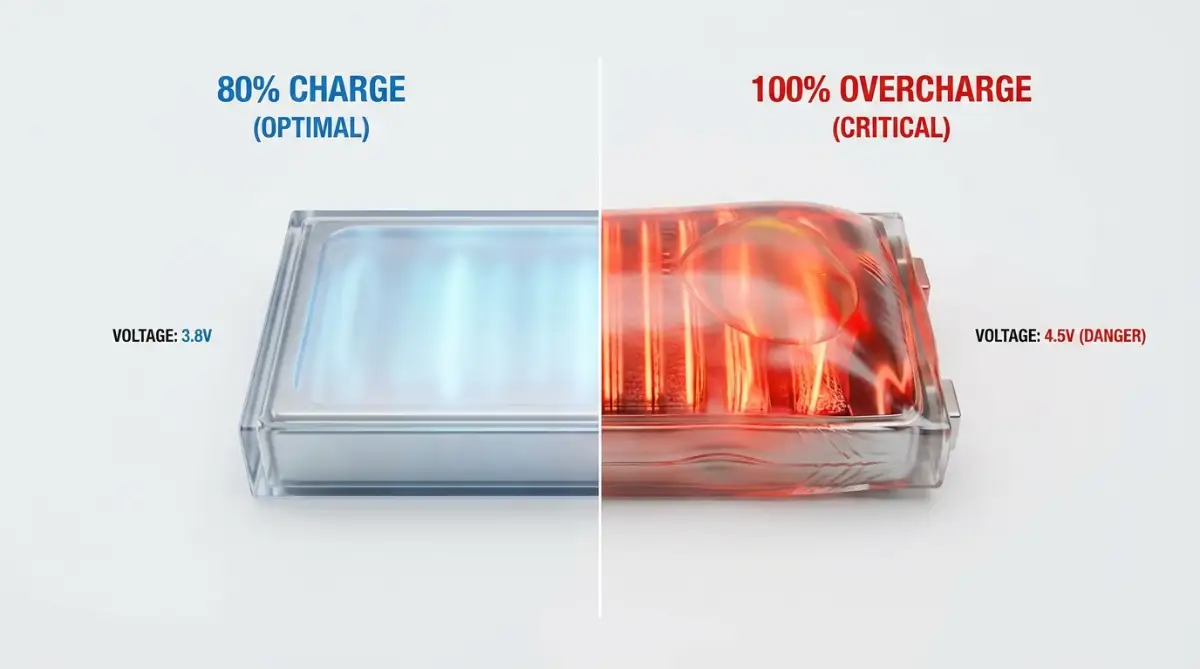
When a lithium-ion battery reaches a very high state of charge, the internal voltage gets extremely high. High voltage creates an incredible amount of stress inside the battery pack. If you charge your car to one hundred percent and let it sit in your garage for hours, the battery is essentially suffocating under high pressure.
It is like pulling a rubber band back as far as it will stretch and holding it there for twelve hours. Eventually, the rubber band is going to lose its elasticity and snap.
The Daily Fix:
You need to change your daily charging target. Most modern vehicles allow you to set a maximum charge limit directly from the dashboard or your mobile app. For your everyday driving around town, going to work, and running errands, you should set this limit to eighty percent.
Eighty percent provides plenty of range for normal daily activities while keeping the battery in a comfortable, relaxed state. You should only ever charge to one hundred percent if you are about to leave for a long road trip. And even then, try to time the charging so the car hits maximum capacity right as you pull out of the driveway.
A Quick Confession on Charge Limits
I used to ignore the warning pop-ups on my dashboard telling me to lower my charge limit. I thought the manufacturer was just being overly cautious. It was not until I lost my first five percent of battery health that I finally dug into the settings and locked my daily charge at eighty percent. Since making that tiny change, my battery degradation has almost completely stopped. Do yourself a favor and lock that setting in your app tonight.
Watch This Before You Plug In Tonight
If you want to see exactly how high voltage physically damages battery cells in real time, you have to watch this quick breakdown. It completely changed how I look at my charging cable.
Mistake 2: The "Running on Fumes" Habit
On the complete opposite side of the spectrum is the habit of driving the car until the battery is almost completely dead. In a traditional gas car, it is very common to drive until the low fuel light comes on. You just pull into a gas station, spend five minutes filling up, and you are good to go.
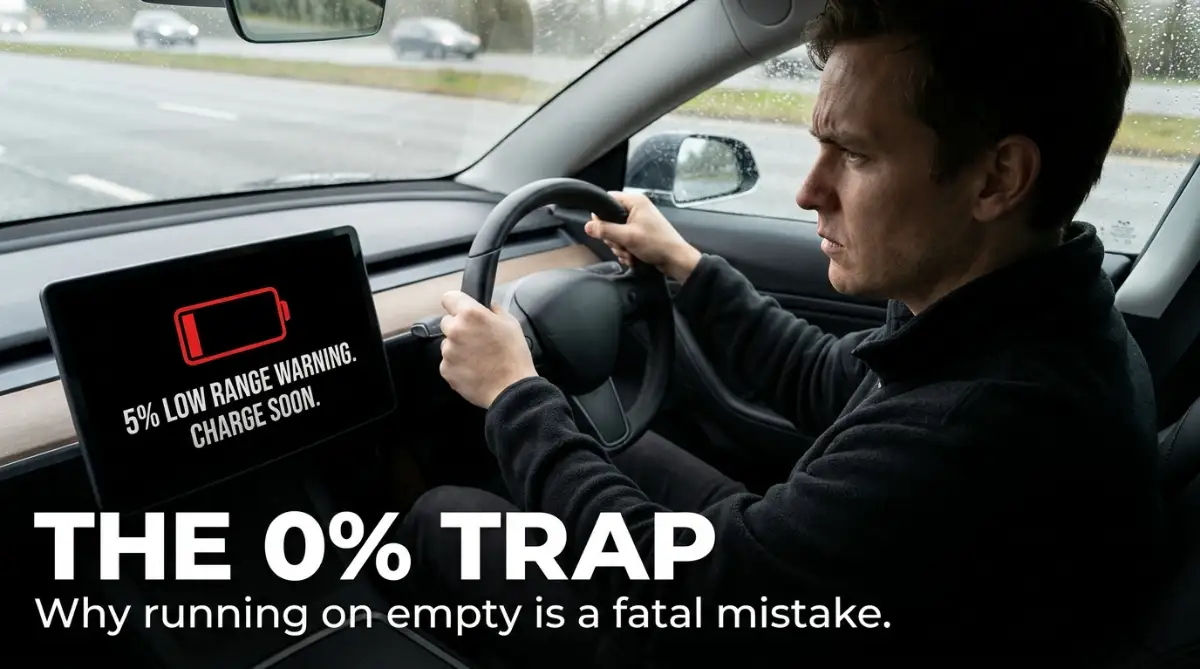
Doing this in an electric vehicle is a massive error. When the battery drops below ten percent, it enters a state of deep discharge.
The Hidden Damage of Deep Discharging:
When the power level drops too low, the battery struggles to provide the heavy amount of energy needed to move a two-ton vehicle. The cells have to work much harder to push out power. This creates excessive heat and chemical strain.
If you regularly let your car drop below ten percent, you are forcing the battery to struggle for survival. Over time, this deep discharging weakens the cell structures. Even worse, if you park your car at five percent and leave it out in the cold overnight, you risk "bricking" the battery entirely if it drains to zero.
The Sweet Spot Strategy:
You need to treat your battery level like a comfortable middle ground. The general rule of thumb among electric vehicle engineers is the "20/80 rule."
Keep your battery charged between twenty percent and eighty percent for your daily routine. Think of twenty percent as your absolute new zero. When the display hits twenty percent, it is time to head home and plug in. By keeping the energy levels floating in the middle, you put zero stress on the chemical components.
Why The 20/80 Rule Saves You Thousands
Ignoring this rule doesn't just lower your daily range; it threatens your bank account. A full EV battery replacement out of warranty averages around $12,000 to $15,000 depending on the model. By keeping your battery in that 20% to 80% sweet spot, you are actively preventing the deep discharge wear-and-tear that leads to premature battery death. Think of it as free insurance for your biggest investment.
Myth vs Reality: The "Battery Memory" Confusion
Let's clear up a major misunderstanding right now. A lot of older drivers remember the days of nickel-cadmium batteries used in old electronics and tools.
The Myth: You have to drain the battery to zero occasionally to prevent it from developing a "memory" and losing capacity.
The Reality: Lithium-ion batteries do not have a memory effect. In fact, intentionally draining a modern car battery to zero is one of the worst things you can possibly do to it. You should plug your car in frequently and do small top-ups rather than waiting for it to empty out.
Mistake 3: The Fast Charging Addiction
Public DC Fast Chargers are incredible pieces of technology. They allow you to add hundreds of miles of range in just twenty or thirty minutes. They make cross-country road trips completely possible and convenient.
However, many drivers who do not have chargers installed at their homes rely completely on these public fast chargers for their daily needs. They treat the fast charging station just like a traditional gas station, visiting it twice a week to fill up fast.
Why Speed Comes at a Heavy Cost:
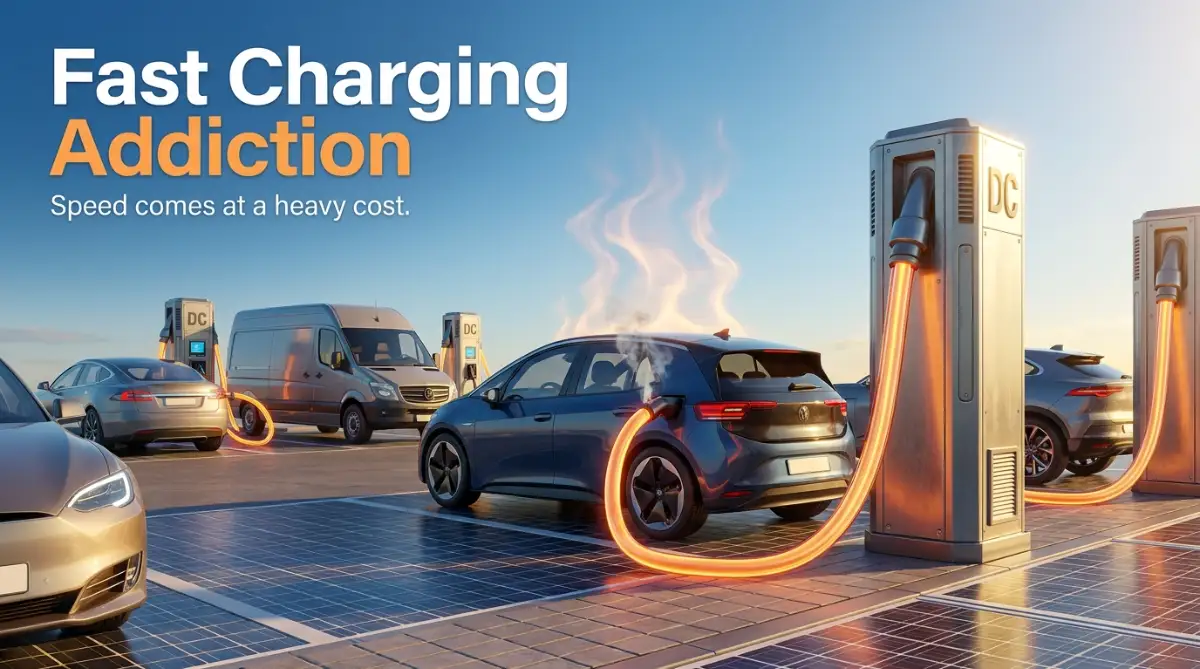
Shoving electricity into a battery at high speeds generates a massive amount of extreme heat. Heat is the ultimate enemy of battery chemistry. While your car has a liquid cooling system built in to manage this heat, it can only do so much.
Frequent exposure to this extreme heat literally cooks the battery cells. The protective layers inside the cells begin to break apart.
Here is a quick look at how different charging speeds affect your car:
The Right Way to Fast Charge:
You should view DC Fast Charging as a tool for road trips, not as your primary source of fuel. If you rely entirely on public chargers, try to find Level 2 public chargers near your workplace or grocery store.
When you absolutely must use a fast charger on a road trip, try to unplug when the car reaches eighty percent. Fast chargers heavily reduce their charging speed after eighty percent to protect the battery anyway. Sitting at a fast charger to get from eighty to one hundred percent takes a very long time and pushes enormous heat into an already full battery.
Quick Reality Check: The Fast Charging Habit
Let's put this into perspective. If you rely on DC Fast Charging for 100% of your EV charging needs over 5 years, you could lose up to 10% more of your total battery capacity compared to someone who charges at home.
- The Problem: Extreme heat cooks the internal cell components.
- The Fix: Limit public fast chargers to road trips. For normal weeks, use a standard Level 2 home charger. Your wallet (and your car) will thank you.
Mistake 4: Charging Immediately After High-Speed Driving
Imagine you just finished running a very intense five-mile race in the hot summer sun. Your heart is pounding, you are sweating, and your core body temperature is extremely high. If someone immediately handed you a massive, heavy meal to eat right at the finish line, your body would reject it. You need time to cool down first.
Your car behaves the same way after a long drive on the highway. Driving at high speeds forces the battery to discharge energy rapidly, which naturally heats up the entire pack.
The Temperature Trap:
If you pull into your garage after an hour of driving fast on the interstate on a hot summer day and immediately plug the car in, you are compounding the heat problem. You are taking a hot battery and immediately pushing electricity into it, which generates even more heat.
The thermal management system will have to work overtime, spinning cooling fans loudly to prevent damage. But some chemical wear and tear is still going to happen during this process.
A Simple Cool-Down Period:
Give your car a chance to rest. When you get home from a long, aggressive drive, wait about an hour or two before plugging the cable in.
Many smart home chargers and vehicle apps allow you to set a charging schedule. You can plug the cable in when you park, but tell the car to wait until midnight to actually start pulling electricity. This not only gives the battery hours to naturally cool down in your garage, but it also allows you to take advantage of much cheaper electricity rates in the middle of the night.
The Impact of Extreme Weather on Your Garage Habits
We cannot talk about charging mistakes without talking about the weather outside. You might have perfect charging habits on paper, but if you ignore the temperature, you are still doing damage.
The Cold Weather Problem:
Lithium-ion batteries become incredibly sluggish in freezing temperatures. The fluids inside the cells actually become thicker, making it much harder for electricity to flow smoothly. If you try to charge a freezing cold battery at high speeds, the electricity basically hits a wall. This forces lithium particles to build up on the outside of the cells, causing permanent damage.
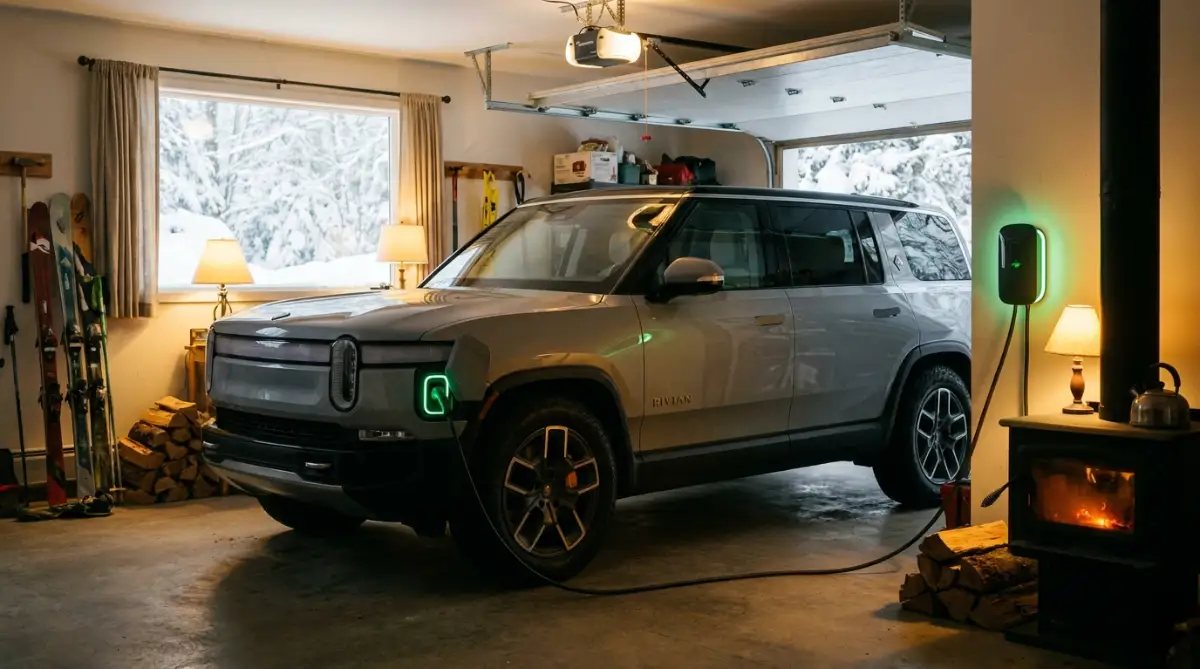
If you live in a cold climate, you should try to charge your car immediately after you finish driving for the day. Why? Because the battery is already warmed up from driving. It will accept the charge much faster and with zero stress.
The Hot Weather Problem:
We already know heat is the main killer of battery life. If you leave your car parked outside in the baking sun with a ninety percent charge, the battery will degrade incredibly fast. High heat combined with a high state of charge is the most toxic combination possible for your car.
Always try to park in the shade if you are leaving the car out all day. If you have to park in the blazing sun at work, keep your charge level much lower, around sixty percent, to minimize the stress on the battery pack.
You have the power to keep your electric car feeling brand new for years to come. It just takes a little bit of awareness and a willingness to break old habits. Now that we have covered the major daily mistakes, we need to talk about how you are maintaining the software and physical connections.
Taking Total Control of Your Battery's Ecosystem
Now that we have covered the basic daily habits, we need to look at the deeper systems running quietly in the background. Modern electric vehicles are essentially massive computers on wheels. They come packed with advanced software designed specifically to manage the power source.
However, this software only works well if you actually know how to use it. Many drivers completely ignore the deep settings hidden in their dashboard menus. By taking a few minutes to configure these settings properly, you can add years of healthy life to your vehicle.
The Magic of Battery Preconditioning
One of the absolute best secrets to preserving your battery is a feature called preconditioning. Lithium-ion cells operate best at room temperature. When the cells are too cold or too hot, they struggle to release and absorb energy efficiently.
If you just jump into a freezing cold car and start driving aggressively, you put massive chemical strain on the power pack. Preconditioning solves this problem entirely. By using your mobile app to turn on the climate control twenty minutes before you leave the house, the car uses energy from your wall charger to warm up the battery pack.
By the time you unplug and drive away, the internal chemistry is already at the perfect operating temperature. The cells are relaxed, the power flows smoothly, and you experience zero range loss from extreme weather conditions.
Mastering the Smart Charging Schedule
We briefly touched on scheduling your charging sessions earlier, but this is a feature you need to master. Almost every modern utility company offers massive discounts for using electricity during off-peak hours, usually between midnight and six in the morning.
You can program your vehicle to only accept power during these specific hours. This not only saves you hundreds of dollars a year on your electric bill, but it also benefits the car. Charging in the middle of the night means the ambient air temperature in your garage is much cooler.
This naturally keeps the battery pack cool while electricity flows into it. Finding ways to reduce your daily expenses is always a smart move, much like learning why flight prices jump when you look twice and how to stop it. It is all about working with the system instead of against it.
Software Updates Are Your Best Friend
You probably ignore the software update notifications on your phone for weeks at a time. Do not ever do this with your car. Automotive engineers are constantly learning new things about how their batteries behave in the real world.
When they discover a better way to balance the chemical cells or manage the thermal cooling system, they send out an over-the-air software update. These updates directly improve how your car handles charging speeds and heat management. Ignoring these updates means you are missing out on free, immediate improvements to your vehicle's health.
According to advanced battery lifecycle research from the MIT Energy Initiative, keeping the internal management software updated is one of the most effective ways to slow down natural chemical aging.
The Silent Traps That Destroy Long-Term Range
Even drivers who follow the eighty percent rule and avoid fast charging can still fall into some very common, destructive traps. These are the mistakes that happen when you are not paying attention to the smaller details of ownership.
Let's look at the hidden dangers that quietly drain your vehicle's maximum driving distance over time.
The Long Vacation Disaster
Leaving your car parked at the airport for a two-week vacation can turn into an expensive nightmare if you are not careful. Many people make the terrible mistake of charging their car to a full one hundred percent right before leaving it parked for weeks.
We already know that sitting at a maximum charge creates intense high voltage pressure inside the cells. Leaving it sitting in this highly stressed state for fourteen days straight will cause permanent capacity loss. The chemical structure literally begins to break down while you are relaxing on the beach.
On the flip side, leaving your car parked at the airport with only five percent power is just as dangerous. Your car has systems running in the background, like security cameras and battery cooling systems. These systems slowly drain the battery, known as phantom drain. If you leave a car at five percent for two weeks, it will likely drop to zero, completely bricking the power unit.
The smartest thing you can do is leave your car parked at exactly fifty percent charge. Fifty percent is the ultimate resting state for lithium-ion chemistry. The cells are perfectly balanced and completely relaxed.
The Danger of Bargain Charging Cables
Upgrading your home charging station can be slightly expensive, leading many people to hunt for cheap alternatives online. Buying a discount, unbranded charging cable from a third-party seller is a massive safety hazard.
These cheap cables often lack the proper internal safety sensors and thick copper wiring required to handle heavy electrical loads. When you push continuous high power through a cheap cable, the resistance creates a terrifying amount of heat.
This heat can easily melt the charging port on your car, causing thousands of dollars in permanent damage. It is a risk you simply cannot afford to take. Always buy certified, heavy-duty cables directly from reputable automotive brands. If you want to dive deeper into electrical safety standards, checking out the guidelines by the Electrical Safety Foundation is a great place to start.
Making a bad choice here could even void your vehicle's warranty. This kind of completely avoidable mistake is surprisingly common, very similar to unmasking common auto policy myths that secretly ruin accident claims. Always read the fine print and use certified equipment.
The Neglected Physical Charging Port
We spend so much time worrying about software and battery chemistry that we completely forget about the physical connection point. The charging port on the side of your car is exposed to rain, dirt, road salt, and snow.
Over time, tiny pieces of debris can build up inside the electrical contact points. When you plug your heavy cable into a dirty port, the electricity cannot flow smoothly. This poor connection creates heavy resistance, which instantly generates dangerous heat at the connection site.
This heat tricks the car's computer into thinking the battery is overheating, forcing it to dramatically slow down the charging speed. Make it a habit to visually inspect your charging port once a month. Use a simple can of compressed air to blow out any dust, leaves, or dirt that might be hiding inside the contact pins.
Obsessively Checking the Mobile App
This sounds like a joke, but it is a very real problem. When you open your vehicle's mobile app to check the battery percentage, you actually wake the car up from its deep sleep mode.
Waking the car up turns on the internal computers, primes the battery systems, and draws a noticeable amount of power. If you are sitting at your desk at work nervously checking your car's battery level every hour, you are actively draining your own range.
This constant waking and sleeping cycle puts unnecessary wear on the low-voltage systems. Trust the vehicle to manage itself. Check your app once when you need to precondition the cabin, and leave it alone for the rest of the day.
For more general advice on managing your digital habits and staying informed on the latest technology trends, platforms like Global 24 Info offer fantastic insights into everyday problem-solving.
Daily Habits for Maximum Battery Protection
Let's break down the most practical ways you can protect your vehicle starting today. You do not need to be an engineer to keep your car running perfectly. You just need to follow a few straightforward rules.
Here is a quick look at the best practices you should adopt immediately:
- Set the Limits: Lock your daily maximum charge limit to eighty percent inside your vehicle's settings menu tonight.
- Plug in Daily: Do not wait for the battery to drop low. Plug your car in every single time you park in your garage at home.
- Avoid the Extremes: Treat the bottom ten percent and the top ten percent of your battery as emergency reserves only.
- Cool Down First: Give your car at least an hour to rest after a heavy highway drive before pushing electricity into it.
- Embrace the Shade: Park in a shaded area or a covered garage whenever possible during the hot summer months to protect the pack from extreme heat.
Protecting your main asset requires a solid foundational plan. It is very similar to learning how to bootstrap your first business from scratch. If you manage your resources carefully early on, you will reap massive long-term benefits down the road.
If you ever find yourself worrying about whether a slightly degraded battery is still covered under your manufacturer's warranty, the stress can be overwhelming. It feels a lot like trying to figure out can you get life coverage with a pre-existing condition. Save yourself the anxiety by simply preventing the damage in the first place.
Extensive studies published by the National Renewable Energy Laboratory confirm that drivers who maintain moderate charge levels experience almost zero noticeable capacity loss over their first five years of ownership. The science is completely on your side.
Questions Every New Electric Vehicle Owner Asks
Can I leave my electric car plugged in every single night?
Yes, you absolutely should leave it plugged in every night. Modern vehicles have incredibly smart internal computers that automatically stop drawing power the exact second the battery reaches your set limit. Leaving the cable connected allows the car to use wall power to run cooling fans and software updates without draining your battery.
Does using the heater in winter damage the battery long-term?
Using the cabin heater does not cause any long-term chemical damage to your battery at all. It will temporarily reduce your driving range for that specific trip because the heater uses a lot of electricity. However, once you plug the car back in, your battery health remains completely unaffected.
What actually happens if my electric car runs completely out of power on the highway?
The car will not just suddenly stop and lock up the brakes. As the battery gets critically low, the car will drastically reduce your speed and limit your acceleration to help you pull over safely. Once it hits absolute zero, you will need to call a flatbed tow truck to take you to the nearest charging station.
Is it okay to charge to one hundred percent in the middle of winter?
You should still try to stick to the eighty percent rule for daily driving, even in freezing weather. While cold weather temporarily hides some of your available range, pushing the battery to a full one hundred percent still causes unnecessary high-voltage chemical stress inside the cells.
Do heavy rain and thunderstorms make charging dangerous?
No, charging outside in heavy rain is completely safe. The charging cables and the port on your car are heavily weatherproofed and designed to handle intense storms. The system also performs a complex safety handshake before allowing any high-voltage electricity to flow through the cord.
Your Blueprint for a Healthy, Long-Lasting Ride
Owning a modern electric vehicle should bring you joy, peace, and an incredibly smooth driving experience. You should not have to spend your weekends stressing over range numbers dropping on a screen. By understanding the simple chemistry inside your power pack, you can completely eliminate range anxiety.
You now know that the battery simply wants to be treated like a comfortable middle ground. Keep it away from the extreme top, keep it away from the extreme bottom, and avoid stuffing it with heavy fast-charging heat every single day.
If you follow the twenty-to-eighty percent rule and take advantage of smart home scheduling, your battery will easily outlast the rest of the physical car. You are making a huge positive impact on the environment, and you deserve a vehicle that supports your daily lifestyle flawlessly.
I know how overwhelming it feels to stare at that dashboard display, wondering if you are doing everything right. But once I locked my daily limit to eighty percent and stopped obsessing over public fast chargers, my daily driving anxiety completely vanished. Take ten seconds right now to open your car's mobile app, set that charge limit, and give yourself total peace of mind for the road ahead.
Disclaimer: The information provided in this article is for educational and informational purposes only. Automotive technology and battery management systems vary heavily by manufacturer and vehicle model. Always consult your vehicle's official owner's manual or speak directly with a certified dealership technician before making changes to your charging habits or electrical setup.