The Silent Fear Behind the Steering Wheel
So, you bought an electric car and now your eyes are glued to the battery percentage. Trust me, we have all been there. Watching that number drop on your dashboard feels a lot like watching your phone battery die when you are miles away from a charger. But what if I told you that beating this daily range anxiety is actually ridiculously easy once you learn a few simple tricks? Let me show you how I completely stopped worrying about my battery.
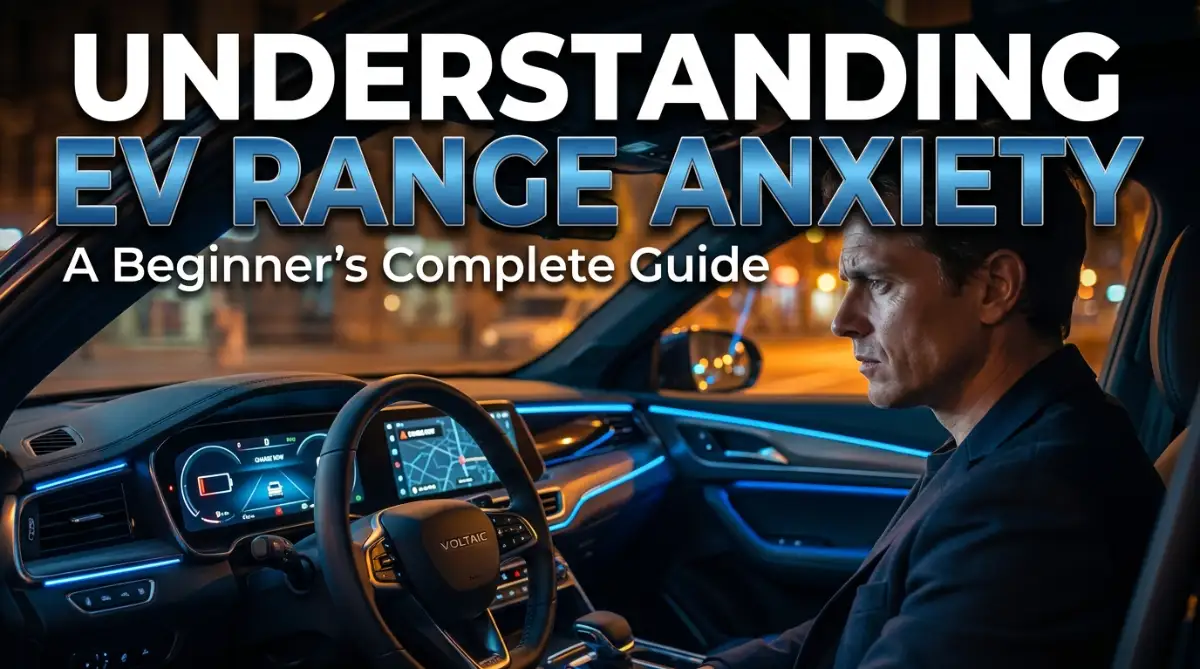
That sinking feeling in your stomach is exactly what people mean when they talk about electric car battery fear. It is completely normal, and almost every single new owner goes through this exact same phase. You constantly stare at the battery percentage, treating every single mile drop as a personal failure. Instead of enjoying the smooth, quiet ride, you are trapped in a loop of worry and doubt.
You might even wake up in the middle of the night wondering if your car is actually charging in the garage. This mental burden is heavy, exhausting, and steals away the peace of mind you deserve. But the truth is, this fear is mostly based on the unknown rather than actual facts.
Quick Summary: How to Kill Range Anxiety Forever
- Treat your car like your smartphone—plug it in at home every night.
- Stop charging at 80% on road trips to save hours of waiting time.
- Let smart apps (like ABRP) plan your charging stops for you.
- Slow down on the highway; driving at 65 mph saves a massive amount of battery.
Decoding the Science of Your Dashboard
To fix this problem, we first need to understand why our brains react this way. For our entire lives, we have driven gas cars with a very simple fuel gauge. When the needle gets near the red line, you just pull into a gas station on the corner and fill up in three minutes.
Electric cars work completely differently. Your dashboard does not just show you how much energy is in the battery. It actually tries to predict the future based on your recent driving habits.
This prediction system is often called the "Guess-O-Meter" by experienced drivers. If you just drove up a steep hill very fast, the computer thinks you will keep driving like that forever. It instantly drops your estimated miles, causing you to panic for no reason.
When you understand that this number is just a constantly changing guess, the fear begins to fade away. Let's look at exactly what makes this number bounce around and how you can take back control of your mind.
To give you a better idea of what to expect, here is a quick breakdown of how different charging habits impact your wallet and your time.
My Quick Guide: Home vs. Public Charging
| Charging Method | Where You Do It | Average Time | Best Used For |
| :--- | :--- | :--- | :--- |
| Level 1 (Wall Outlet) | Your own garage | Overnight (Super slow) | Daily short trips to work |
| Level 2 (Dedicated Box) | Office or home | 4 to 8 hours | Getting a full tank every morning |
| Level 3 (Fast Charger) | Highway rest stops | 15 to 30 minutes | Long family road trips only |
The Impact of Mother Nature on Your Battery
The weather outside plays a massive role in how far your car can actually go. Batteries are a lot like humans; they prefer to be at a comfortable room temperature. When it gets freezing cold outside, the chemical reactions inside the battery slow down significantly.
Because of this simple science, cold weather can temporarily reduce your total driving distance by twenty to thirty percent. Heating the inside of the cabin also takes a lot of energy directly from the main battery pack.
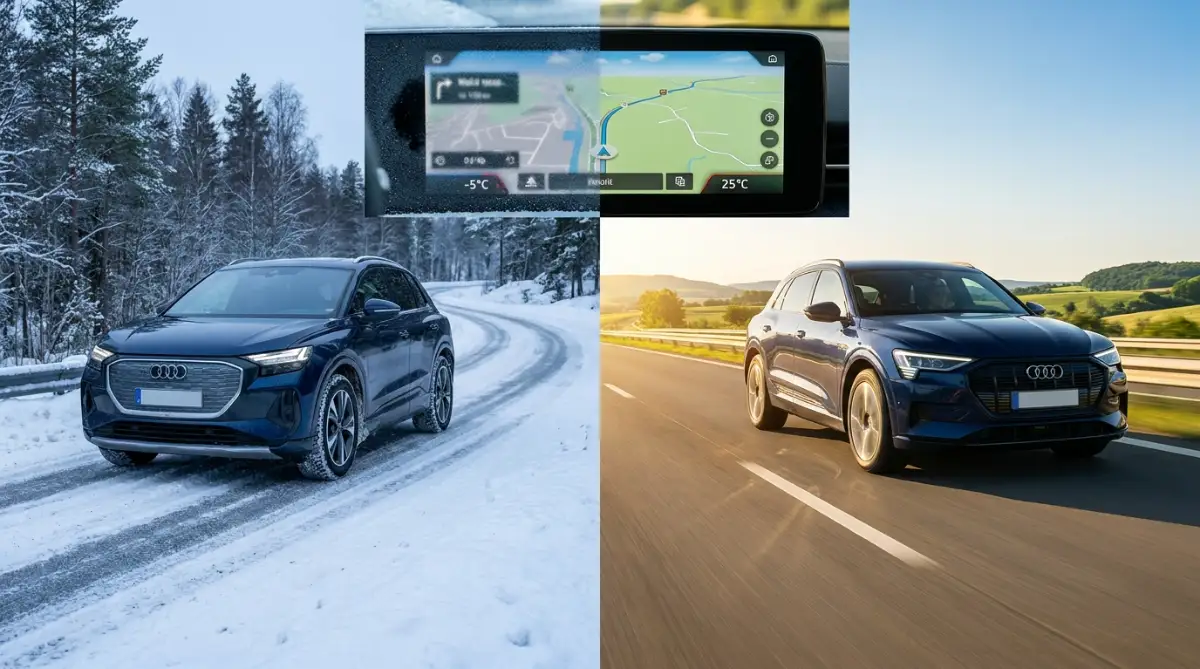
Myth vs Reality: The Cold Weather Panic
- The Myth: Your battery permanently loses power in the winter and will die suddenly.
- The Reality: The range loss is only temporary. Once the battery warms up or spring arrives, your full range magically returns.
On extremely hot days, your air conditioning works overtime to keep you cool. However, cooling the car uses much less energy than heating it during a snowstorm. Understanding these weather patterns helps you set realistic expectations before you even pull out of the driveway.
If you know a winter storm is coming, you simply plan to charge a little bit more than usual. This completely eliminates the surprise factor that usually triggers anxiety.
Mastering Your Route with Smart Technology
One of the biggest mistakes beginners make is trying to map out a road trip in their heads. In a gas car, you just follow the highway signs. In an electric vehicle, you need to let smart technology do the heavy lifting for you.
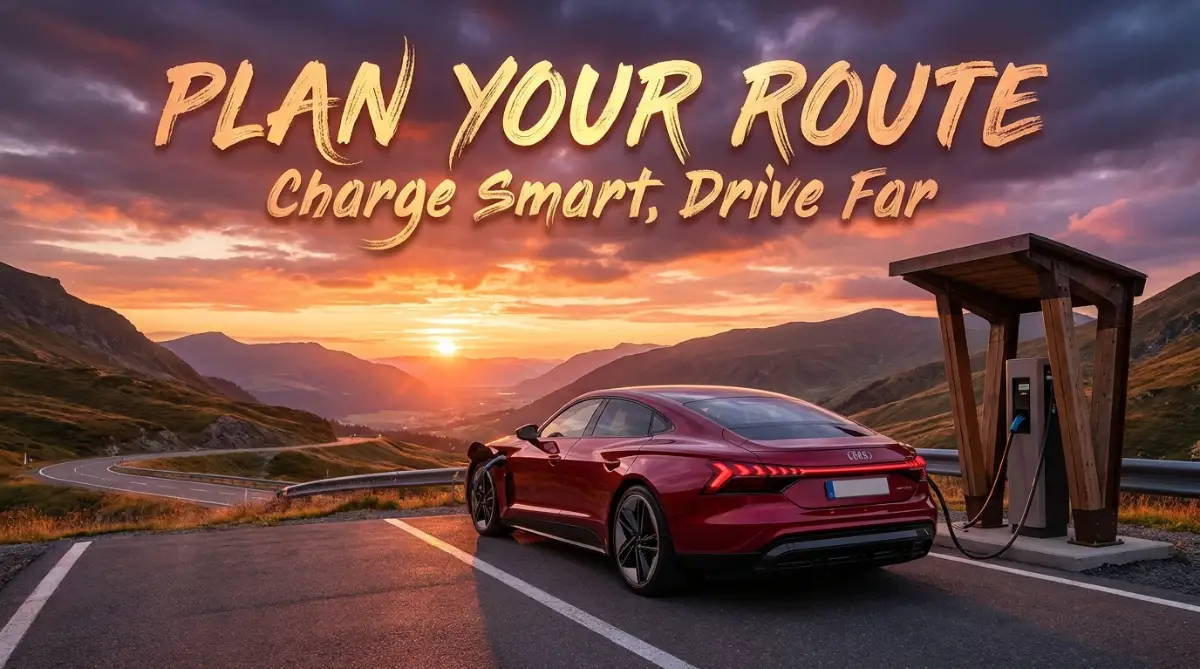
Modern route planners are incredibly intelligent. They look at the weather, the elevation of the mountains, and your exact car model to tell you exactly where to stop.
You do not have to guess anymore. I highly recommend downloading a dedicated app for this. My absolute favorite tool right now is A Better Routeplanner (ABRP). You just type in your exact car model, tell the app where you want to go, and it automatically builds a map showing exactly which chargers to use and how many minutes you need to stay plugged in. Another great backup app to keep on your phone is PlugShare, which lets you read reviews from other drivers so you know if a public charger is actually working before you get there.
Watch This to Become a Route Planning Master
If you want to completely eliminate road trip stress, watch this quick video to see exactly how the pros plan their cross-country drives.
Instead of guessing if you can make it to the next city, your phone or car screen will tell you to stop at a specific charger for exactly fifteen minutes. This completely removes the stressful guesswork from long drives.
You just follow the instructions on the screen and enjoy the music. It is like having a professional co-pilot sitting next to you at all times.
The Secret Power of Regenerative Braking
Many new drivers completely ignore one of the best features of their new vehicle. When you lift your foot off the accelerator in a gas car, the car just rolls forward. When you do this in an electric car, something amazing happens.
The electric motor actually runs backward, acting like a generator. This process physically slows the car down while pumping free energy directly back into your battery pack.
This is known as regenerative braking, and it is a total game-changer for extending your daily driving distance. If you are driving down a long mountain road, you can actually gain miles back on your dashboard.
My Personal Confession and Pro Tip: I completely misunderstood this feature when I first bought my car. I turned regenerative braking completely off because it felt a bit jerky and weird at first. Pro Tip: Keep your regenerative braking on the highest setting for a whole week, even if it feels strange. I forced myself to get used to it, and my daily range instantly jumped by fifteen percent just from driving around the city.
In heavy traffic where you stop and start constantly, this feature shines the brightest. Instead of wasting energy by stepping on the brake pedal, the car captures that energy and saves it for later. It is literally free miles given back to you every single time you slow down for a red light.
How Highway Speeds Secretly Eat Your Power
We all love going fast on the open highway, but speed is the biggest enemy of your battery pack. Aerodynamic drag increases dramatically as you drive faster. Pushing a heavy car through the air at eighty miles per hour requires significantly more effort than driving at sixty miles per hour.
This simple fact often catches beginners completely off guard during their first big road trip. They wonder why the battery is dropping so much faster than it does during their daily work commute.
If you are ever feeling anxious about making it to the next charging station, the absolute best thing you can do is simply slow down. Dropping your speed by just ten miles per hour can instantly give you the extra distance you need to arrive safely.
You do not need to turn off the radio or freeze to death without the heater. Just moving over to the slow lane and setting the cruise control will solve most of your range problems immediately.
Changing Your Mindset: The Smartphone Analogy
The biggest hurdle you have to jump over is purely psychological. We need to stop thinking about electric cars like we think about gas cars. Instead, you should start treating your car exactly like you treat your smartphone.
You do not wait until your phone is at one percent before you finally plug it in at night. You plug it in whenever you are near a charger or when you go to sleep.
The goal is to adopt an "always topping off" mindset. If you plug your car into a regular wall outlet in your garage every single night, you will wake up to a "full tank" every single morning.
When you start your day with hundreds of miles ready to go, the daily commute anxiety completely disappears. You realize that you will never actually need to visit a public charging station unless you are driving across the state.
Understanding Battery Degradation Fears
Another huge source of stress comes from worrying about the long-term health of the car. People hear rumors that the battery will become completely useless after a few years. They worry that their investment will disappear because the car will not hold a charge anymore.
The science shows that modern battery packs are incredibly durable and built to outlast the car itself. Car manufacturers build special buffer zones into the battery software to protect it from serious damage.
Yes, you might lose a tiny fraction of your total range over ten years, but it happens so slowly that you will likely never even notice it in your daily life. You can protect the battery even further by following the twenty-to-eighty percent rule.
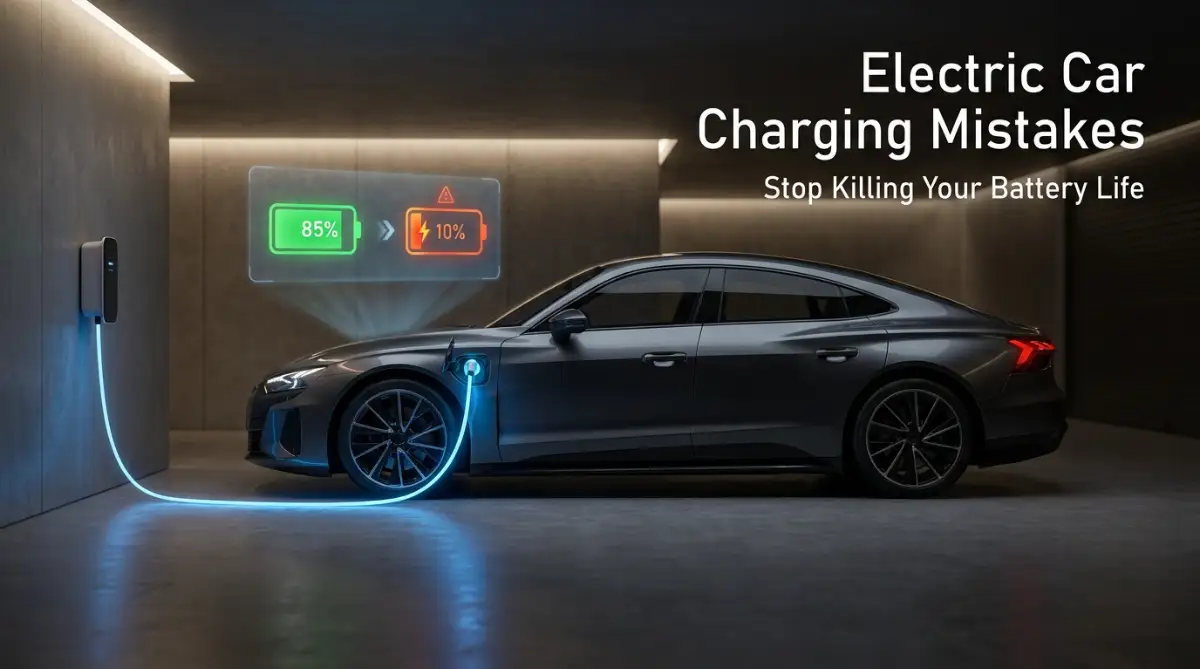
Keeping your daily charge between twenty and eighty percent reduces the physical stress on the battery cells. You only charge all the way to one hundred percent when you are packing the car for a long road trip.
The Importance of Proper Tire Maintenance
It sounds almost too simple to be true, but your tires have a massive impact on your range anxiety. When tires are low on air, they create extra friction against the road surface. This friction forces the electric motors to work much harder to keep the car moving forward.
Checking your tire pressure once a month can easily save you ten to fifteen miles of range on a full charge. This is a totally free and simple habit that gives you extra peace of mind.
Make sure you are using the specific tires recommended by the manufacturer. Electric vehicles use special tires designed to handle the heavy weight of the batteries and reduce rolling resistance. Putting standard, cheap gas car tires on your electric vehicle will noticeably hurt your driving distance.
Real-Life Scenarios: Commuting vs Road Trips
Let us break down a real-life example to show how harmless range fear really is. Imagine your daily drive to work is twenty miles each way. That is forty miles round trip.
Even the most basic electric car on the market today can easily drive over two hundred miles on a single charge. You could theoretically drive to work for an entire week without plugging in a single time.
Now, compare that to a family road trip to a beach that is four hundred miles away. This is where people usually panic. But with a smart route planner, the trip is broken down into easy pieces.
You drive for three hours, stop at a fast charger near a restaurant, eat lunch for thirty minutes, and the car is perfectly ready to finish the trip. You were going to stop to eat lunch anyway. The charging time completely blends into your natural human need to stretch your legs and use the restroom.
Trusting the Warning Systems
Your car wants to protect you just as much as you want to protect yourself. Modern vehicles are packed with multiple layers of warning systems. Long before you ever run completely out of power, the car will clearly alert you.
It will gently suggest nearby charging stations on the navigation screen. If you ignore those warnings and keep driving, the car will eventually reduce its own power output.
This is known as "turtle mode" or a low-power state. The car automatically turns off non-essential items like the heater and limits your top speed. It does this to guarantee you have enough juice to limp safely to a charger or a safe parking spot.
Knowing that the car has these built-in safety nets takes a huge weight off your shoulders. You are never going to be surprised by a sudden shutdown out of nowhere. The car gives you plenty of time and multiple chances to fix the situation.
Next-Level Strategies for Total Battery Confidence
Now that we understand how the dashboard thinks, it is time to turn you into an electric vehicle expert. Mastering your daily driving routine is actually much easier than most people assume. You just need to learn a few secret habits that experienced drivers use to maximize their efficiency.
One of the most powerful tools at your disposal is something called "pre-conditioning." Think about an athlete getting ready for a big game. If they try to sprint without stretching first, their muscles will not perform well. Your car battery acts the exact same way on a chilly morning.
If you just jump in the car and turn the heater on full blast, the battery has to work incredibly hard. It uses a massive amount of energy to warm up both the cabin and the physical battery cells. Instead, you can use a brilliant feature hidden right inside your smartphone app.
While the car is still plugged into the wall inside your garage, you tell the app that you are leaving for work in twenty minutes. The car will pull electricity directly from your house to warm up the seats and the battery pack. When you finally unplug and drive away, your battery is at a perfect temperature and one hundred percent full.
The Water Glass Analogy for Fast Charging
Another massive secret that beginners completely misunderstand is the "charging curve." When you stop at a public fast charger on the highway, the electricity does not flow at the same speed the entire time. The computer naturally slows down the charging speed as the battery gets closer to being full.
Imagine you are filling a glass of water from a powerful kitchen sink. At first, you turn the faucet on all the way because the glass is empty. But as the water reaches the top edge, you have to slow the faucet down to a tiny drip so it does not spill over.
Your car does the exact same thing to protect the chemical cells inside the battery. It charges incredibly fast from ten percent up to eighty percent. Once it hits eighty percent, the charging speed drops dramatically.
- The Expert Move: Never sit at a fast charger waiting for the battery to reach one hundred percent unless you absolutely have to.
- The Time Saver: Unplug the car at eighty percent and drive to the next charger. You will save yourself thirty minutes of boring waiting time.
- The Golden Rule: Only charge to a full one hundred percent when you are sleeping safely at home.
By understanding this simple water glass concept, you can easily shave hours off your family road trips. You stop for quick, fifteen-minute charging sessions instead of sitting at a gas station for an hour. If you want to learn more about the deep science behind this, the National Renewable Energy Laboratory (NREL) provides excellent research on how battery cells manage heat and energy transfer safely.
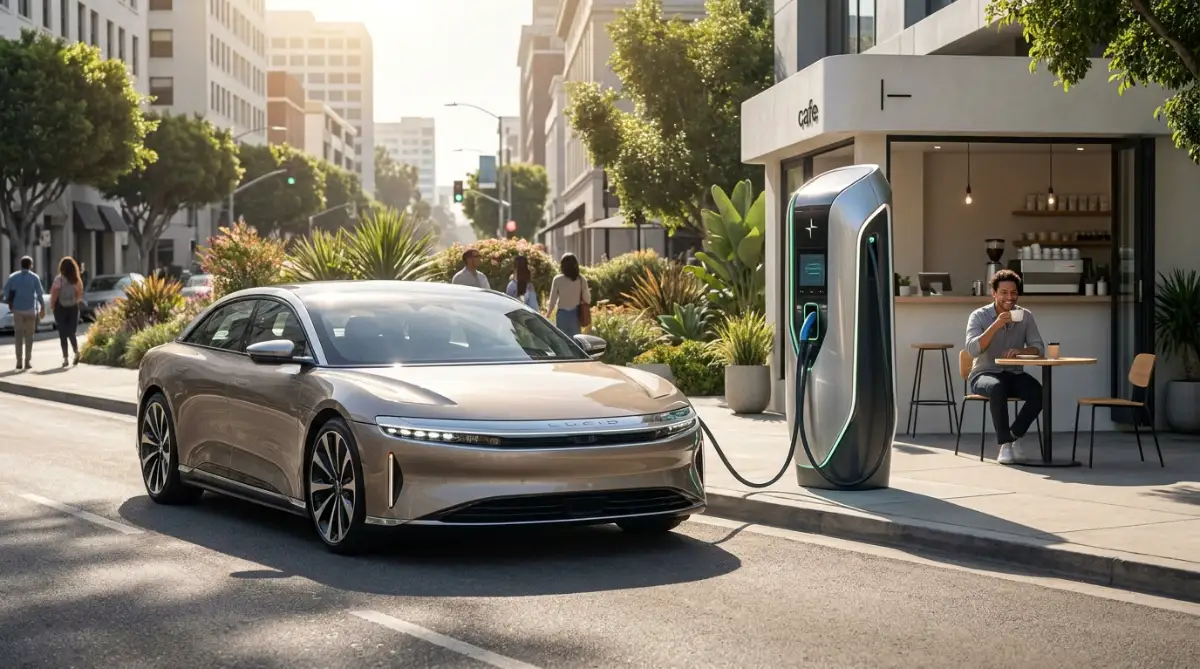
Smart Daily Planning and Financial Perks
Driving electric is not just about saving the environment; it is heavily focused on personal finance and daily convenience. You should set up a charging schedule in your car's main menu so it only pulls electricity during the middle of the night. Power companies usually charge much cheaper rates when everyone else in the neighborhood is sleeping.
This smart budgeting habit frees up extra money in your monthly budget. You can use those savings to explore other important life goals, whether that means saving for a vacation or securing government-backed educational funding for your family. Managing your vehicle's energy is just another smart form of household budgeting.

The Dangerous Traps New Owners Fall Into
We have talked a lot about the positive habits you should build. But we also need to talk about the painful mistakes that leave new drivers stranded and frustrated. These pitfalls are completely avoidable, but human stubbornness often gets in the way of common sense.
The most common trap is ignoring the car's built-in navigation system. We often think we know a better route to our destination because we have driven it a hundred times in a gas car. So, we turn off the smart route planner and just rely on our gut feelings.
This is a terrible idea when driving long distances. The car's computer knows exactly where the hills are, which way the wind is blowing, and exactly how many chargers are on that specific highway. When you ignore the computer, you might accidentally take a route that has a broken charging station.
The Reality of Broken Public Chargers
Let me paint a picture of a very frustrating scenario. You decide to push your battery all the way down to two percent because you are determined to reach a specific charger near a popular coffee shop. You finally pull into the parking lot, completely stressed out, only to find a dark, blank screen on the charging machine.
The machine is broken, and you do not have enough battery left to drive to the next town. You are now officially stranded in the rain. According to trusted automotive safety organizations like AAA, getting a flatbed tow truck for an electric vehicle can be complicated and expensive if you are far from home.
This situation easily turns a fun weekend trip into a total nightmare. To avoid this, always plan to arrive at a public charger with at least fifteen or twenty percent of your battery remaining. This gives you a safe "Plan B" buffer so you can comfortably drive to a different station if the first one is under maintenance.
If you do end up needing a tow, you will want to make sure your paperwork is perfectly in order. Making sure you fully understand your coverages and unmasking common auto policy myths before a roadside emergency happens will save you thousands of dollars.
The Airport Parking Phantom Drain
Another massive mistake people make is leaving their car in long-term airport parking without understanding "phantom drain." Electric cars are basically giant computers on wheels. Even when they are parked and turned off, they still use a tiny bit of battery to run background software, check for updates, and keep the battery at a safe temperature.
If you leave the car sitting in the freezing cold for two weeks while you fly to a tropical island, you might return to a surprisingly low battery. It is exactly like leaving your laptop sitting in your backpack in sleep mode.
To prevent this nightmare, you must remember to turn off features like "Sentry Mode" or continuous camera recording before you walk into the airport terminal. You also need to resist the urge to constantly open the phone app while you are on vacation. Every time you open the app to check on the car, you actually wake the vehicle up, which drains even more power.
Understanding why these software systems behave the way they do is incredibly helpful. It is very similar to figuring out why your prompt engineering fails on a computer system; once you know the basic rules of the software, you can easily fix the problem yourself.
Relying Exclusively on Highway Fast Charging
Many new owners live in apartments and think they can just treat fast chargers like regular gas stations. They drive the car until it is empty and then sit at a fast charger every few days. While this technically works, it is a very bad long-term strategy for your wallet.
Public fast chargers cost significantly more money than charging at home or at your office. You end up paying prices that are dangerously close to buying regular gasoline. Furthermore, hitting the battery with extreme high-voltage electricity every single day can slowly degrade the chemical cells faster than normal.
You want to look for "Level 2" chargers in your community. These are the slower chargers often found at shopping malls, movie theaters, or office parking garages. They provide a gentle, affordable charge while you are inside going about your normal daily life. You can explore our main platform for more lifestyle tips on how to integrate smart technology into your daily routine.
Embracing Your Journey on the Electric Highway
But as you practice these simple daily habits, the fear slowly melts away. You start waking up every morning to a completely full vehicle, ready to tackle whatever the day throws at you. You learn to trust the navigation system, and you begin to enjoy the peaceful, quiet ride.
Managing this new technology is just about preparing for the expected. It is a lot like learning how to manage life coverage with a pre-existing condition; you just gather the right information, create a solid backup plan, and move forward with total confidence.
The range anxiety that used to keep you awake at night will soon feel like a silly memory. You will become the expert who gives advice to your friends when they finally buy their first electric vehicle. You just have to be patient with yourself and trust the smart engineering sitting inside your dashboard.
People Also Ask About Driving Electric Cars
Does turning on the heater quickly drain my electric car battery?
Yes, using the electric heater can noticeably reduce your total driving distance, especially in freezing weather. Unlike a gas car that uses waste heat from the engine, an electric car has to use raw battery power to generate heat for the cabin. To save your range, use your heated seats and heated steering wheel instead, as they use significantly less electricity.
Should I plug in my electric vehicle every single night?
Absolutely, treating your car just like your smartphone is the best habit you can build. Plugging into a basic wall outlet every night ensures you wake up with plenty of miles for your daily commute. This simple routine completely eliminates the stress of needing to find a public charging station on your way to work.
What actually happens when an electric car runs out of power?
Your car will not just suddenly turn off while you are driving at high speeds. It will give you multiple loud warnings, suggest nearby chargers, and eventually limit your speed to save the last drops of energy. If the battery finally hits absolute zero, the car will safely pull over and stop, requiring a flatbed tow truck to take you to the nearest charging station.
Can public fast chargers damage my car battery over time?
Using fast chargers occasionally for weekend road trips will not harm your battery at all. However, relying on them as your only source of power every single day can slowly wear down the battery cells over many years due to the extreme heat they generate. It is always best to do the majority of your charging slowly at home or at the office.
Do electric cars lose battery charge while parked in the garage?
Yes, this is known as phantom drain, and it is completely normal behavior for modern software. The car uses a tiny amount of power to check for internet updates, keep the security cameras running, and manage the battery temperature. If you are leaving the car parked for a long vacation, simply turn off the extra security features to save your battery life.
I still remember the exact moment my own fear turned into pure joy on the open highway. Once you start applying these simple charging habits to your routine, my biggest hope is that you will experience that exact same sense of freedom. I know you are going to love the smooth, quiet ride once the worry is finally gone.
Disclaimer: The information provided in this article is for educational and informational purposes only. It should not be considered professional automotive, financial, or mechanical advice. Always consult your vehicle's official owner's manual and refer to the specific guidelines provided by your car manufacturer before making decisions regarding battery maintenance or charging routines.