My Nightmare Crash and the Insurance Shock I Never Saw Coming
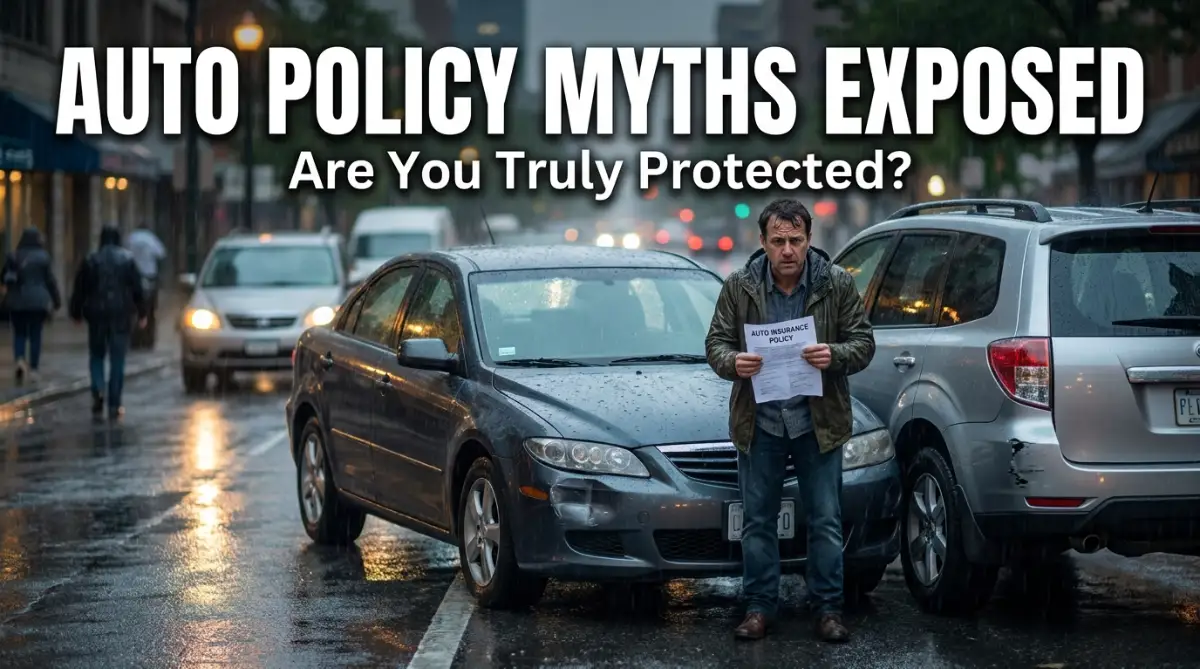
Ever stared at a car repair bill and felt your stomach physically drop? Yeah, me too. I paid my auto insurance on time every single month, totally believing I was safe from the worst-case scenario. Then someone ran a red light, wrecked my car door, and I found out my so-called "full coverage" didn't actually pay for my own damages. Let's fix your policy right now before you end up stuck with a massive bill you never saw coming.
But just a few days later, the claims adjuster called me with the absolute worst news possible. They explained that my specific policy only covered the other driver's property, leaving me entirely responsible for my own wrecked vehicle. I was absolutely devastated, feeling betrayed by a system I trusted to keep me safe.
Families are often forced to drain their hard-earned savings or max out credit cards just to get a working vehicle back in their driveway. It is a nightmare situation that easily destroys a person's peace of mind and daily financial stability. The most frustrating part is that almost all of these financial disasters happen because of a few simple misunderstandings.
People blindly believe popular myths about their auto policies without asking the right questions. Those innocent mistakes end up costing them everything they have worked hard to build.
Before You Read Further (The TL;DR)
- "Full coverage" is a made-up sales term; you need to check your specific liability, collision, and comprehensive limits manually.
- State minimum insurance rarely covers the actual cost to fix modern, expensive cars on the road today.
- Delivering food for apps instantly voids your standard personal auto policy if you crash.
- Bumping up your deductible (like going from $500 to $1,000) can save you enough money to buy better overall protection.
Breaking Down the Dangerous Auto Policy Illusions
If you want to protect your hard-earned money, you need to understand exactly how your insurance works before an accident happens. We often rely on advice from family or friends, but insurance rules are strictly bound by legally written contracts. Let us clear up the most expensive misunderstandings that trap everyday drivers.
The "Full Coverage" Fantasy vs. Actual Protection
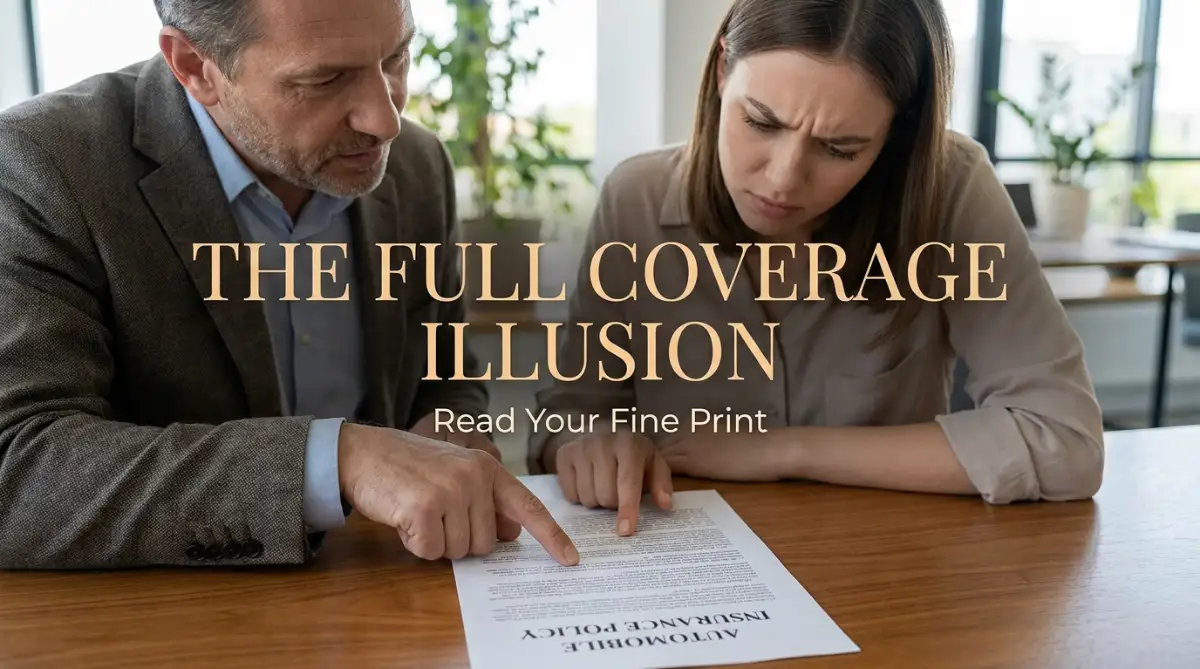
One of the biggest traps in the insurance world is the phrase "full coverage." Most drivers believe this magic phrase means every single bad thing that could happen to their car is paid for. In reality, there is no actual insurance product officially named "full coverage."
When an agent uses this term, they usually just mean you have a combination of Liability, Collision, and Comprehensive insurance. However, this does not mean you are protected against everything. For example, your combination might not cover medical bills for your own injuries or the cost of a rental car while yours is in the shop.
Imagine your car gets severely damaged by a massive hailstorm. If you only bought Liability and Collision, the insurance company will completely deny your claim. You specifically need Comprehensive coverage to handle weather damage, theft, or hitting an animal.
I used to think checking my policy meant just looking at the final price tag on the renewal letter. My biggest mistake was ignoring the actual breakdown of my coverage limits, which completely blinded me to the glaring holes in my daily protection.
To truly protect yourself, you must stop asking for "full coverage" and start asking for specific protections. You have to clearly tell your agent that you want your vehicle, your medical bills, and your passengers completely protected.
Quick Check: What Does "Full Coverage" Actually Mean?
- The Myth: You don't have to pay a single dime out of pocket if you get into a wreck.
- The Fact: It just means you carry Liability (pays the other guy), Collision (pays for your car if you hit something), and Comprehensive (pays if a tree falls on your car). You might still be missing rental car coverage, medical payments, or gap insurance!
The Hidden Dangers of State Minimum Limits
Every place has a legal minimum amount of insurance you must buy to drive on public roads. A lot of people choose these minimum limits because they offer the absolute cheapest monthly premium. This feels like a smart financial move until you actually cause an accident.
State minimums are often incredibly low and completely out of touch with the modern cost of vehicles. Some places only require you to carry $10,000 or $15,000 in property damage liability. Now, think about the cars driving next to you on the highway right now.
If you accidentally rear-end a brand-new electric SUV, the repair bill could easily reach $40,000. Your minimum insurance policy will only pay the first $15,000 of that massive bill. You are personally responsible for paying the remaining $25,000 out of your own pocket.
Here is a quick look at how different levels of liability protection actually work in a real crash:
The insurance company will not step in to help you once your minimum limit is reached. The other driver's insurance company can actually sue you, go after your savings, and even take money directly out of your future paychecks. Paying a little extra each month for much higher limits is the only way to shield your personal wealth.
The Silent Threat of Uninsured Drivers
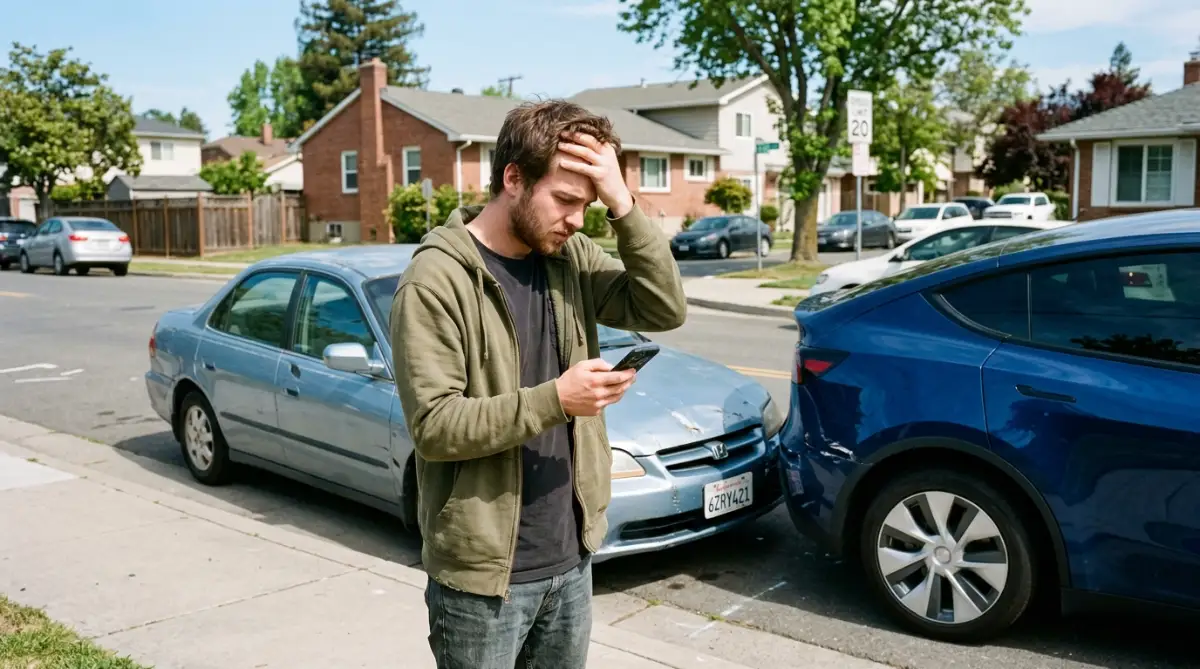
Many careful drivers think that if they never cause an accident, they will never have to worry about paying for one. They assume the at-fault driver's insurance will simply pay for all the repairs and medical bills. Sadly, this is a massive myth that leaves innocent people financially ruined.
Millions of people currently drive on the roads without any active insurance policy at all. Others carry insurance, but their limits are so low that they cannot even cover a basic bumper replacement. If one of these underinsured drivers hits you, their lack of responsibility instantly becomes your financial nightmare.
Before you drive another mile, you need to understand how easily an uninsured driver can turn your life upside down. Watch this short video to see exactly why Uninsured Motorist Coverage is the smartest addition you can make to your policy today.
If you do not have Uninsured/Underinsured Motorist coverage, you will have to rely strictly on your own Collision coverage to fix your car. Even worse, if you get hurt, you will be stuck paying your own expensive medical bills. Adding this specific protection ensures your own insurance company steps up when the other guy fails to do his part.
The New Car Loan Trap and Gap Protection
Buying a shiny new car is an exciting experience, but it comes with a massive hidden financial risk. As soon as you drive a brand-new vehicle off the dealer's lot, it immediately loses a large chunk of its value. This sudden drop in value is called depreciation.
If you total that new car in a crash just a few weeks later, your standard insurance policy will only pay you the current market value of the car. They do not care how much you originally paid for it or how much you still owe the bank. This creates a terrifying gap between your loan balance and your insurance payout.
Let us say you took out a $30,000 loan for a new car. You get T-boned at an intersection a month later, completely destroying the vehicle. The insurance adjuster decides the car is now only worth $22,000 because it is technically a used car.
They hand the bank a check for $22,000, leaving you with an $8,000 loan balance for a car that is sitting in a junkyard. You still have to make monthly payments on a vehicle you can no longer drive. The only way to prevent this specific disaster is by purchasing Gap Insurance, which completely pays off that remaining $8,000 balance.
Should you buy Gap Insurance directly from the car dealer?
Honestly, skip the dealership gap coverage. Dealers usually charge anywhere from $500 to $1,000 upfront for this add-on. If you call your own auto insurance agent instead, you can usually add it to your monthly bill for just $20 to $40 a year. It does the exact same job but keeps hundreds of dollars in your pocket.
The Misunderstanding About Personal Belongings
People often store expensive items inside their vehicles without a second thought. You might leave a high-end laptop on the backseat, expensive golf clubs in the trunk, or a pricey smartphone in the cup holder. A very common myth is that your auto insurance will pay to replace these items if your car is crashed or stolen.
Auto insurance specifically covers the vehicle itself and the permanent equipment attached to it. It does not cover your personal loose items sitting inside the cabin. If a thief smashes your window and steals your backpack, your auto policy will only pay to fix the broken window.
To get reimbursed for the stolen backpack and the laptop inside, you actually need to file a claim through your Homeowners or Renters insurance. Those policies are specifically designed to protect your personal property, no matter where it gets stolen or destroyed.
Understanding the clear line between what your auto policy covers and what your home policy covers can save you from a very stressful phone call with your claims adjuster. You should never assume your belongings are safe just because your car doors are locked.
The Rental Car Reimbursement Confusion
After a major accident, your vehicle might spend several weeks sitting in a repair shop waiting for parts. Most people automatically assume their auto policy will provide them with a free rental car during this waiting period. They are often shocked to learn that they have to pay for their own transportation.
Unless you specifically added "Rental Reimbursement Coverage" to your policy, your insurance company owes you absolutely nothing for a rental. Even if the accident was not your fault, waiting for the other person's insurance to approve and pay for a rental can take days or even weeks.
In the meantime, you still have to get to work and take care of your daily responsibilities. Paying for a rental car out of pocket can easily cost hundreds of dollars a week. Adding rental coverage to your policy usually costs just a few dollars a month, but it completely eliminates this massive inconvenience.
Why Friends Driving Your Car Can Destroy Your Finances
We all want to be helpful and let a friend or family member borrow our car for a quick errand. The common myth is that car insurance follows the specific driver, meaning your friend's insurance will pay if they crash your car. This is highly inaccurate and incredibly risky.
In the insurance world, the policy generally follows the vehicle, not the person behind the wheel. If your friend runs a stop sign and crashes your car into a wall, your insurance policy is the one that has to pay out. You will be the one responsible for paying the expensive deductible.
Even worse, if they cause severe injuries to someone else, the victim can directly sue you because you are the legal owner of the vehicle. Your insurance rates will skyrocket for years because a claim was made on your specific policy.
Before you hand your keys over to anyone, you need to understand that you are handing over your financial future. If you must lend your car out, make absolutely sure your insurance policy does not have any hidden exclusions for unlisted drivers.
How to Take Control of Your Coverage Today
Now that you understand these dangerous myths, you need to take immediate action to protect yourself. Do not wait for a loud crash to find out what is actually written inside your insurance contract. You have the power to fix these problems right now.
First, pull up your most recent insurance declaration page. This is usually a one-page summary document you can easily find on your insurance company's mobile app or website. Look closely at your specific liability limits and ask yourself if those numbers could honestly cover a major multi-car accident.
Next, clearly check to see if you have Uninsured Motorist protection and Rental Reimbursement listed on that exact page. If you do not see them, call your agent immediately. Ask them directly how much it would cost to add these specific protections to your current plan.
You might be surprised to find that massively increasing your protection only costs a little bit more each month. Your financial security and your daily peace of mind are absolutely worth the small extra investment. Stop blindly trusting the myths and start building a safety net that will actually catch you when things go wrong on the road.
Beyond the Basics: Insider Secrets to Bulletproof Your Auto Protection
Now that we have busted those terrifying myths, we need to talk about how you can actually beat the system. Insurance companies love it when you just pay your monthly bill and never ask any hard questions about your contract. But if you want to truly secure your peace of mind, you have to start thinking like an industry insider.
Most everyday drivers leave massive gaps in their protection simply because they do not know what options are available to them. You do not have to be a legal expert to build a rock-solid safety net for your family. You just need to learn a few advanced strategies that agents rarely talk about unless you specifically ask.
Let us explore some powerful ways to maximize your coverage without completely draining your monthly budget. These are the practical habits that separate vulnerable drivers from those who sleep soundly every single night.
The Hidden Power of an Umbrella Policy
If you have a decent amount of savings, own a home, or plan on retiring comfortably one day, your standard auto policy is simply not enough. Even if you buy the highest possible liability limits your car insurance offers, a massive multi-car pileup can easily exceed those numbers. This is exactly where a personal liability umbrella policy steps in to save the day.
An umbrella policy acts as a giant financial shield that sits directly on top of your auto and home insurance. If you are sued for a million dollars after a terrible crash, your auto policy might pay the first $250,000. Your umbrella policy then activates and covers the remaining $750,000, completely protecting your personal savings from a devastating lawsuit.
The best part is that this massive layer of protection is usually incredibly cheap to buy. Because it only kicks in after your regular car insurance runs out, you can often get a million dollars in extra coverage for just a few hundred dollars. Learning more about protecting your family's financial future is the absolute smartest move you can make today. You can also read detailed guides on the National Association of Insurance Commissioners (NAIC) website to understand how these extra liability layers function.
Mastering the Deductible Math
Most people pick a $500 deductible when they first buy their car insurance and then never think about it again. A deductible is simply the amount of money you have to pay out of your own pocket before the insurance company pays anything. If you want to lower your monthly premium, you should strongly consider raising that deductible to $1,000.
By taking on slightly more risk yourself, the insurance company will reward you with a much lower monthly bill. Over time, the money you save on your monthly premium will easily cover the cost of the higher deductible if you ever have an accident. You just have to make sure you actually keep that $1,000 sitting safely in your bank account for emergencies.
Instead of paying high premiums to an insurance company, you can keep that money working for you. Setting up a dedicated emergency fund is a core part of managing personal financial stability the right way.
Dropping Dead Weight from Older Cars
If you are driving a car that is more than ten years old, you might be throwing your money away on completely useless coverage. As cars age, their market value drops incredibly fast, meaning the maximum payout you can get from a collision claim shrinks every single day. If your old commuter car is only worth $2,000, paying high premiums for collision coverage makes zero financial sense.
Remember, the insurance company will never pay you more than the car is currently worth. If you have a $1,000 deductible, and your car is worth $2,000, the absolute maximum check they will ever hand you is $1,000. You are likely paying more than that in premiums over the course of a few years.
You have to learn how to evaluate the actual cash value of your vehicle independently. Trusted consumer resources like Consumer Reports can help you track how quickly older models lose their resale value. Once the math stops making sense, call your agent and drop the collision coverage to save yourself a ton of money.
The Most Dangerous Insurance Traps You Keep Falling For
Even if you set up the perfect auto policy, you can still ruin everything by making a silly mistake in your daily life. Insurance contracts are incredibly strict legal documents filled with hidden rules and strict conditions. If you break one of these rules, the company has the legal right to completely deny your claim, leaving you with zero help.
I have seen so many honest people accidentally void their own insurance coverage without even realizing it. They make small assumptions that end up costing them thousands of dollars and endless amounts of stress. We need to walk through the most common pitfalls so you never fall into these terrifying traps.
The Gig Economy Delivery Disaster
This is easily one of the most common and financially devastating mistakes happening on the roads right now. Millions of people use their personal cars to deliver food, groceries, or drive passengers for extra cash on the weekends. They assume their normal personal auto insurance will cover them if they get into a crash while working.
This is a massive and dangerous assumption. The exact second you turn on a delivery app to accept a job, your personal auto insurance completely stops protecting you. Standard policies explicitly exclude any kind of "business use" or "delivery for hire" in their strict fine print.
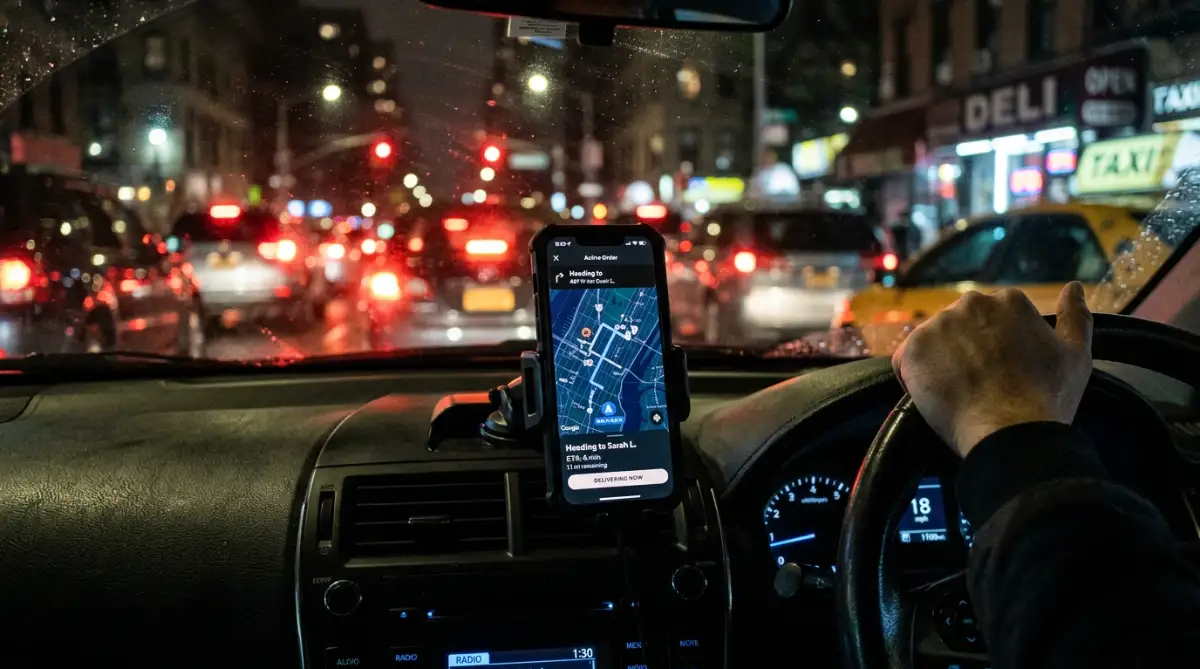
Imagine you are delivering a pizza, and you accidentally rear-end a luxury sports car at a red light. When your insurance adjuster finds out you were working for an app, they will instantly deny the claim and drop you as a customer. You will be personally sued for the damages, completely ruining your chances of exploring financial security options in the future.
To stay safe, you must call your agent and explicitly ask to add a "rideshare endorsement" or commercial coverage to your current plan. The Insurance Information Institute (III) offers fantastic explanations on exactly how gig economy driving changes your personal risk profile.
The Secret Handshake Deal on the Side of the Road
We have all heard a story about two people getting into a minor fender bender and deciding to settle it without involving the insurance companies. The driver who caused the crash usually begs the victim not to call the police, promising to pay for the damages in cash. This sounds like a nice way to keep everyone's rates low, but it is actually a terrible idea.
When you agree to a handshake deal, you give up all of your legal protections immediately. That friendly driver might give you fake contact information, or simply stop answering your phone calls the next day. Even worse, the physical damage to your car might look minor on the outside, but hide thousands of dollars in structural damage underneath the bumper.
If you discover this massive damage a week later and try to file a claim, your insurance company will likely deny it because you failed to report the accident promptly. You should always call the authorities and get a completely official police report, no matter how small the scratch looks. For more details on why crash reporting is mandatory for your safety, checking the guidelines from the National Highway Traffic Safety Administration (NHTSA) is highly recommended.
Lying About Your Permanent Address (Rate Evasion)
Car insurance rates change drastically depending on exactly where you live and park your car every night. A policy in a crowded city center will always cost significantly more than a policy in a quiet suburban neighborhood. Because of this, many people intentionally give the insurance company their parents' address in the suburbs to score a cheaper monthly rate.
This practice is technically called "rate evasion," and insurance companies consider it a very serious form of soft fraud. If you get into a major accident, the company will send an investigator to verify where you actually live and work. If they discover that you lied about your primary parking garage, they will completely deny your claim for misrepresentation.
Saving fifty dollars a month is never worth risking a massive financial disaster that could bankrupt you. Always be one hundred percent honest with your agent about where the car sleeps at night and how many miles you drive. Building trust with your provider is a key part of creating smart personal finance habits that protect you from sudden shocks.
Playing Games with the Grace Period
Life gets busy, and sometimes we forget to pay our bills on the exact due date. Many drivers assume their car insurance company offers a generous "grace period" of a few weeks before they actually cancel the policy. While some companies do offer a few extra days, relying on this assumption is a massive gamble.
If you miss your payment and your policy officially lapses, you are driving completely uninsured. Even if you are just one day past the cancellation date, a crash will result in zero help from the insurance company. They have no legal obligation to pay out a single penny if the contract was broken due to non-payment.
On top of the terrifying accident risk, letting your policy lapse makes you look like a high-risk driver in the computer systems. When you try to buy a new policy later, the companies will charge you heavily inflated penalty rates. Setting up automatic payments is the easiest way to avoid this specific nightmare and keep your safety net perfectly intact.
Taking Complete Control of Your Roadside Safety
You do not have to live in fear of the unknown every time you get behind the steering wheel. Understanding exactly how your auto policy works gives you incredible confidence and complete control over your own financial destiny. We have ripped away the dangerous illusions of "full coverage" and exposed the scary reality of uninsured drivers.
Now is the exact moment for you to take everything you have just learned and apply it to your own life. Grab a cup of coffee, sit down at your computer, and carefully pull up your current insurance documents. Look at those liability limits, check for your uninsured motorist protection, and make absolutely sure you have gap insurance if you carry a car loan.
Do not be afraid to pick up the phone and ask your local agent some very tough questions. A good insurance agent will gladly walk you through different scenarios and explain exactly how your specific policy responds. If they seem annoyed by your questions, it is probably time to start shopping around for a better company.
Taking ten minutes to review your limits today can literally save you hundreds of thousands of dollars tomorrow. Make the decision to stop guessing and start knowing exactly what you are paying for. A solid foundation of protection is the best tool you have for managing unexpected financial stress down the road.
I highly encourage you to make these phone calls right now, before your daily routine distracts you again. I remember the exact feeling of panic when my own claim was denied, and I sincerely never want you to experience that terrible sinking feeling. You deserve the absolute peace of mind that comes with knowing you and your family are totally protected.
Common Questions About Auto Coverage Myths
Does my policy completely cover a rental car on vacation?
Most standard personal auto policies will extend your exact current coverage to a rental car used for personal vacations. However, if you only carry liability on your own old car, the rental car will not have physical damage protection. You should always call your specific agent before declining the expensive insurance offered at the rental counter.
Will my monthly rates go up just for asking my agent a question?
Simply calling your agent to ask hypothetical questions about coverage or deductibles will never raise your monthly premium. Insurance rates only increase if you actually file a formal claim, receive a traffic ticket, or legally change your coverage limits. You should feel completely comfortable asking your provider to explain your confusing paperwork.
Does my auto insurance pay to fix sudden mechanical breakdowns?
Standard car insurance only pays for sudden physical damage caused by external events like collisions, fires, or bad weather. It completely ignores normal wear and tear, engine failures, or a broken transmission. If you want protection for mechanical problems, you specifically need to buy a separate extended warranty for your vehicle.
Is my teenager automatically protected the day they get a license?
No, a newly licensed teenager is never automatically covered just because they live in your house. The moment they pass their driving test and receive their official license, you must actively call your provider to add them to your contract. If they crash your car before you officially list them, the company can completely deny the massive claim.
Disclaimer: The information provided in this blog post is for educational and informational purposes only and does not constitute official legal or financial advice. Insurance policies vary widely depending on your specific provider, contract terms, and local state laws. Always consult directly with a licensed insurance professional or your specific insurance carrier to thoroughly review and verify your coverage limits before making any binding financial decisions.