Trapped Between Green Energy Dreams and Strict Landlord Rules
Let's be honest—renting usually means kissing your solar energy dreams goodbye. You want lower electric bills, but your landlord will not even let you drill a hole for a curtain rod, let alone a roof rack. But here is the secret: you do not actually need a roof to generate your own off-grid power. I figured out a fully legal, temporary workaround using portable canopies, and I am going to show you exactly how to set it up without risking your security deposit.
Living this way creates a very specific kind of daily frustration. You watch homeowners around you slash their utility bills, feeling a heavy knot in your stomach every time the mail carrier drops off another envelope from the power company. It feels like you are throwing your hard-earned money into a bottomless pit every single month. Renters already face so many strict rules, from paint colors to pet policies, and adding energy dependence to that list just drains your mental peace.
What You Will Learn In This Guide:
- How to build a freestanding solar setup without drilling a single hole.
- The exact type of flat cables you need to get power indoors safely.
- Why pairing your setup with a LiFePO4 portable battery is a game-changer.
- Simple tricks to hide your gear so your landlord never asks questions.
Breaking the Rules (Without Actually Breaking Them)
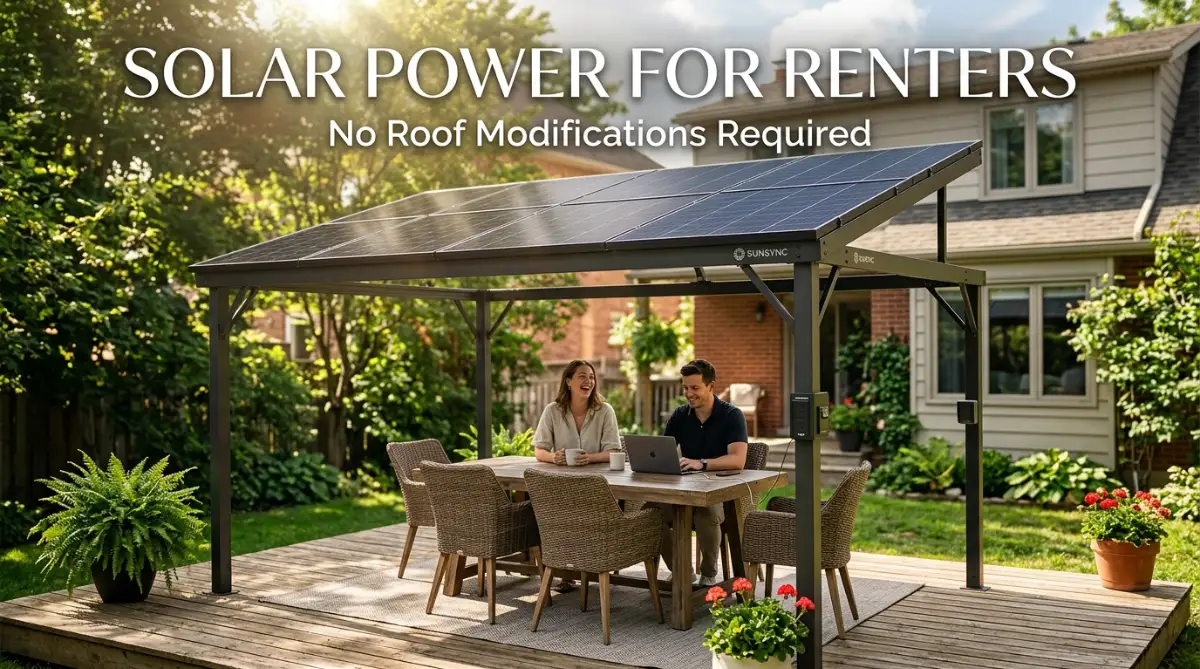
The good news is that the solar industry has finally realized that renters make up a massive portion of the population. You do not need to own a roof to harness the immense power of the sun. Innovative engineers have designed completely freestanding structures that act just like heavy-duty patio umbrellas or gazebos, but with a powerful twist.
These structures are known as portable solar canopies. They offer a brilliant workaround that keeps your landlord happy while giving you the off-grid power you crave. Let us explore exactly how these remarkable systems work and how you can set one up in your rented backyard or patio today.
The Anatomy of a Renter-Friendly Solar Structure
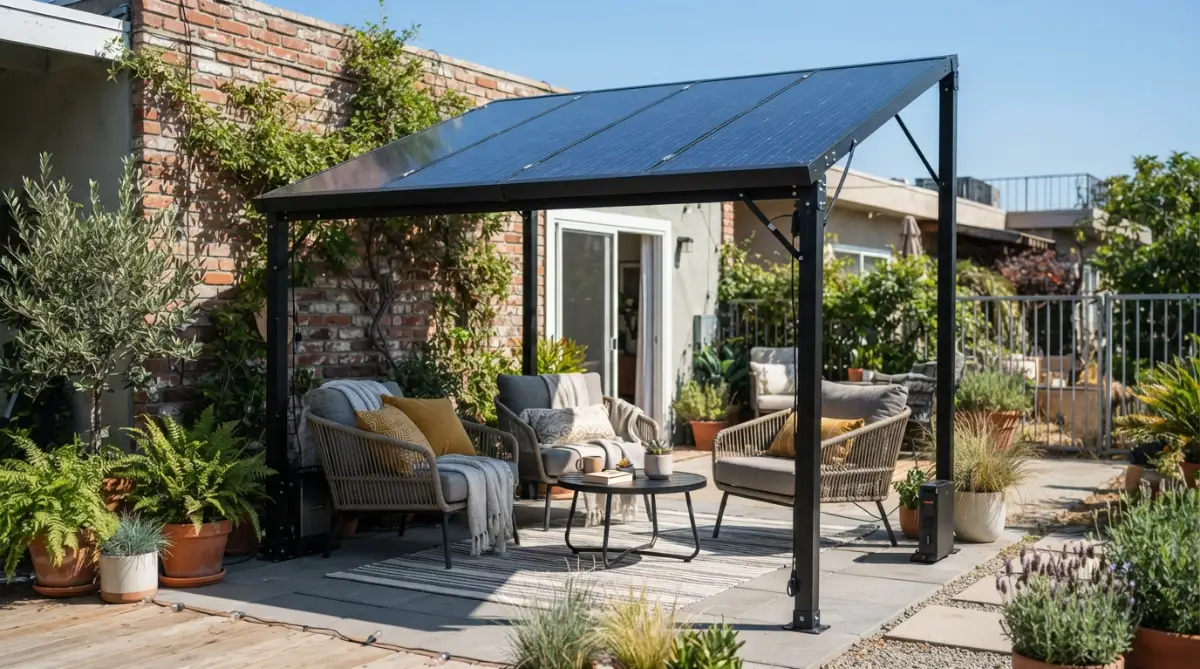
A portable solar canopy is basically a temporary shade structure topped with flexible or lightweight rigid solar panels. Unlike traditional rooftop systems that require heavy metal rails and deep lag bolts driven into roof joists, these canopies rely on simple gravity and wide bases. You construct the aluminum or steel frame directly on your grass, concrete patio, or wooden deck.
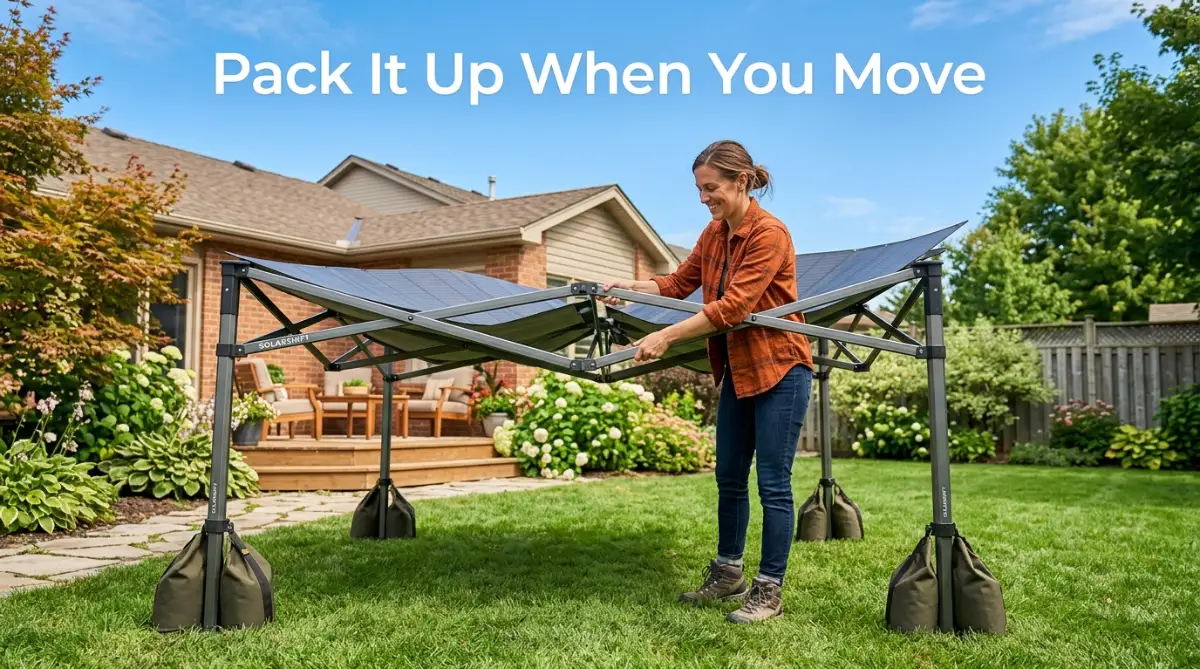
The top fabric is usually replaced or covered by highly efficient solar cells that capture sunlight from above. This means you get a comfortable shaded area to drink your morning coffee while your roof generates actual electricity. The best part is that the entire structure can be disassembled with basic hand tools. When your lease is up and it is time to move, your power plant folds down and goes right into the back of your moving truck.
Quick Look: Rooftop Solar vs. Portable Canopy
| Feature | Traditional Rooftop | Portable Solar Canopy |
| :--- | :--- | :--- |
| Landlord Approval | Always required | Not needed (freestanding) |
| Installation | Heavy drilling, professional crew | DIY setup in under 2 hours |
| Mobility | Stays with the house | Packs up in your moving truck |
| Best For | Homeowners with big budgets | Renters, apartment patios, tight budgets |
Evaluating Your Sun Potential and Space
Before you buy any equipment, you have to play the role of a sun detective in your own backyard. Grab a comfortable chair, head outside on a clear day, and map out exactly where the sun hits your available space. You need a spot that receives at least five to six hours of direct, unshaded sunlight every day.
Keep an eye out for tall trees, neighboring apartment buildings, or even your own roofline that might cast long shadows during the afternoon. Even a small amount of deep shade on a solar panel can severely drop its energy production. If your only outdoor space is a tiny apartment balcony, a full-size canopy might be too large. However, if you have a decent-sized patio or a patch of open grass, you have the perfect foundation for a freestanding solar setup.
Finding the Perfect Sun Angle for Maximum Output
Finding the right spot is only half the battle; knowing how the sun moves across your specific location changes everything. Check out this incredibly helpful visual breakdown on tracking solar trajectories to maximize your daily energy yield.
The Science of Capturing Power Without Roof Rails
Traditional solar panels are heavily bolted down because they act like massive sails when the wind blows. When you move solar panels to a portable canopy, you change the aerodynamic physics of the setup. The canopy frame is specifically engineered to allow wind to pass underneath and through small vents, reducing upward lift.
The solar panels themselves are often wired in a series-parallel combination to ensure steady voltage flows down the leg of the canopy. You do not need a complex grid-tied inverter bolted to your stucco wall. Instead, the power travels down a simple, weather-proof cable directly to your storage system. This clean, straightforward science is what makes the technology completely legal for temporary housing.
Getting the Power Inside Without Drilling Walls
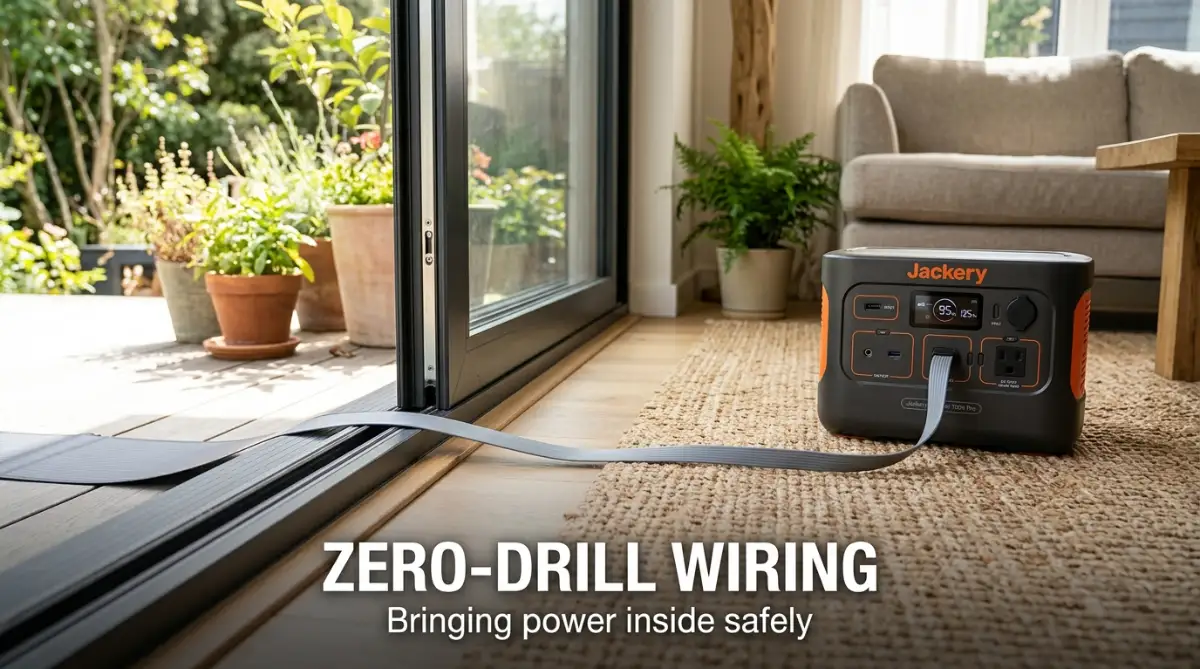
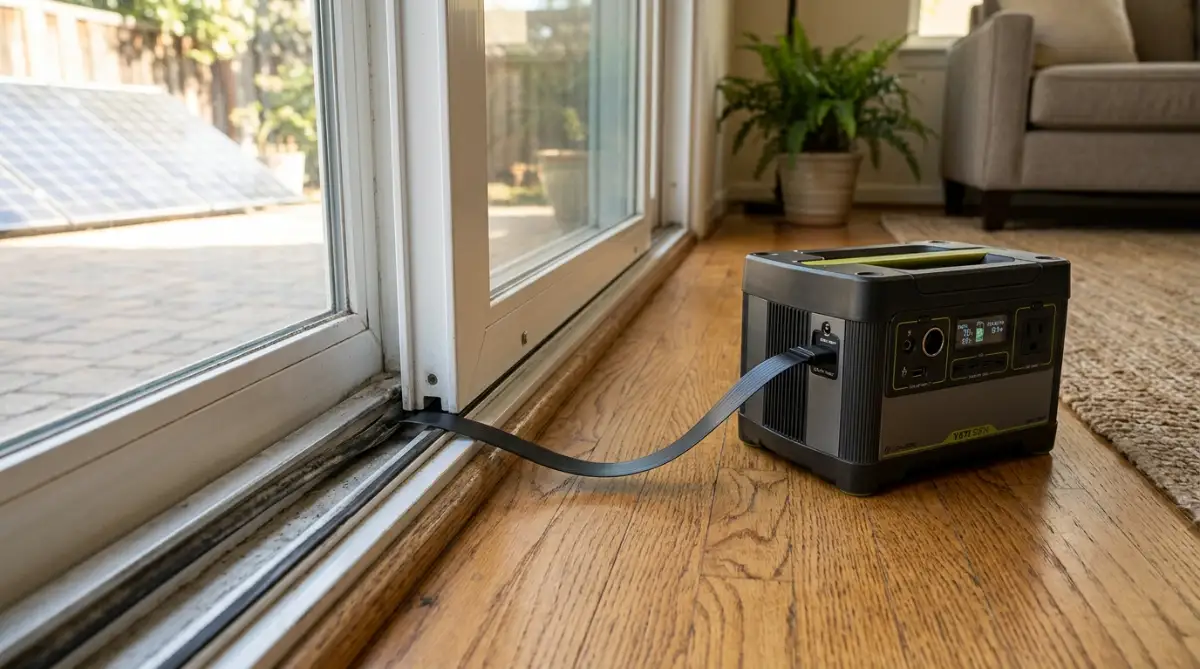
The biggest question renters have is how to get the electricity from the backyard canopy into their living room. Landlords will quickly penalize you for drilling a thick hole through the exterior siding to pass a cable. Thankfully, the solar industry created an incredibly simple solution called flat pass-through cables.
These cables are designed to be paper-thin but highly insulated. You simply lay the flat cable across the track of your sliding glass patio door or a nearby window. When you close and lock the window, it safely presses down on the cable without breaking the wires or letting cold air inside. This gives you a direct, safe energy bridge from your outside canopy to your inside devices.
My Personal Cable Safety Checklist:
- Always buy a flat cable with a heavy-duty silicone coating. Cheap plastic cracks in the winter.
- Put a brightly colored sticker right next to the cable on the floor. It stops guests from tripping over it.
- Never run the cable across a high-traffic doorway. Stick to windows or sliding doors you rarely use
Storing Your Harvested Sunlight
Generating power is great, but having electricity when the sun goes down is the ultimate goal. Since you cannot install a massive home battery system on a rental wall, you will rely on portable power stations. These are essentially all-in-one boxes that contain a lithium battery, a charge controller, and a standard wall outlet.
You plug the flat cable coming from your window directly into this portable station. During the day, your canopy silently pumps energy into the battery box sitting quietly in the corner of your living room. At night, you plug your television, laptop, and lamps right into the front of the battery. It works exactly like a regular wall outlet, but the power is 100% free and completely yours.
Managing Wind, Weather, and Weights
Because your structure is entirely freestanding, gravity is your absolute best friend. A sudden gust of wind can easily lift a lightweight canopy, which is dangerous and could damage the property. You must secure the legs of your canopy using heavy, non-permanent weights.
Most renters use aesthetic outdoor sandbags or heavily weighted water barrels that strap directly to the canopy legs. These weights hold the structure firmly to the earth without requiring a single metal stake driven into the ground. When it is time to move, you just dump the water out or empty the sand, making it instantly lightweight again.
I learned the hard way that skimping on base weights is a terrible idea. I initially used small tent stakes to hold down my first canopy, and a mild thunderstorm nearly flipped the entire thing into my neighbor's yard. Always use at least fifty pounds of sand or water weight on every single leg to guarantee it stays exactly where you put it.
The Myth vs Reality of Portable Power
There is a common misconception that portable solar panels are just expensive toys for camping trips. People often assume these canopies cannot run actual household appliances. Let us break down the clear difference between the myths and the actual reality of off-grid renting.
Myth: Portable canopies only generate enough power to charge a cell phone or a tablet.
Reality: A standard 400-watt canopy setup under good sun can generate enough daily energy to run a large flat-screen TV, keep a full-sized refrigerator cold during a blackout, and power several laptops simultaneously.
Myth: The setup is too complicated for someone who doesn't understand electrical engineering.
Reality: Modern systems use simple "plug and play" connectors. If you know how to plug a standard extension cord into a wall, you have all the technical skills required to connect a solar canopy to a power station.
Understanding the Financial Payback
Many renters hesitate to invest in solar gear because they do not own the property. They worry they will spend thousands of dollars and never see a true return on investment. The beauty of portable solar is that it travels with you for decades.
If you spend money on rooftop panels and move a year later, you lose that entire investment. With a canopy and a portable battery, you simply pack the equipment into boxes and take your power plant to your next apartment. Over the lifespan of the equipment, you will slowly chip away at your monthly utility bills. During a severe power grid failure, having your own electricity is a priceless advantage that pays for itself immediately.
Creating a Daily Off-Grid Routine
To get the most out of your new setup, you will need to adjust your daily energy habits slightly. Think of your portable power station like a bucket of water that fills up when the sun shines. You want to run your most power-hungry devices, like electric cookers or heavy chargers, during the brightest part of the day.
This allows the power from the canopy to bypass the battery and go straight into your devices. When evening approaches, you switch to using the stored battery power for lower-demand tasks like lighting and entertainment. By consciously shifting your energy usage to match the sun's schedule, you maximize every single watt your canopy produces. This simple routine connects you to nature and deeply lowers your dependence on the traditional power company.
The Emotional Freedom of Self-Reliance
There is an incredible feeling of relief the first time you power your living room entirely from the sun. Hearing the neighborhood go completely quiet during a grid blackout while your lights stay on is highly empowering. You no longer feel like a helpless tenant at the mercy of unpredictable utility rates and harsh landlord rules.
You have effectively hacked the system, securing clean energy while perfectly respecting your lease agreement. This independence deeply improves your mental peace and gives you full control over your household environment. You become an active participant in the green energy movement, proving that you do not need a mortgage to make a massive difference.
Expanding Your Setup Over Time
One of the most appealing aspects of a portable solar canopy is its highly modular nature. You do not have to buy a massive, expensive system all at once. You can easily start with a small, single-panel awning and a modest battery bank to learn the ropes.
Once you get comfortable with how the system operates, you can buy additional panels and link them together. You simply string the new panels into the existing wiring, instantly doubling your daily energy harvest. This completely scalable approach makes solar power financially accessible for renters on strict monthly budgets. You build your personal power grid step by step, entirely at your own comfortable pace.
Maximizing Your Off-Grid Renter Setup Like a Pro
Once you have your portable solar canopy standing proudly on your patio, the real fun begins. You might think that plugging in a few cables is the end of the journey, but managing off-grid power is an ongoing learning experience. There are incredibly smart ways to squeeze every single drop of energy out of your temporary setup.
Most beginners set their canopy up on day one and completely forget about it. They miss out on massive amounts of free power simply because they do not adjust to the changing seasons. The sun sits much lower in the winter sky than it does during the bright summer months.
To keep your battery bank happy, you must learn to adjust the tilt of your portable panels if your canopy frame allows it. A flat roof canopy is great for high noon in July, but it will struggle heavily in December. You can easily find excellent resources on tracking optimal solar panel tilt angles through the Department of Energy to match your specific zip code.
Mastering the Art of Energy Shifting
Your portable power station is not a magic bottomless well of electricity. You have to train yourself to become an active manager of your daily power consumption. We call this habit "energy shifting," and it completely changes how you view your household appliances.
Instead of waiting until nightfall to run your dishwasher or charge your heavy tool batteries, do it right in the middle of the afternoon. While homeowners might heavily research things like the science behind solar attic fans and how they shrink cooling bills to manage their heat, renters have to focus on timing. By running high-draw appliances while the sun is hitting your canopy, the power bypasses your battery entirely.
This smart habit prevents your lithium battery from going through deep, unnecessary drain cycles. When you reduce the physical stress on your portable power station, you easily add years to its total lifespan.
Keeping Your Setup Extremely Stealthy
One of the biggest secrets to a happy renting experience is avoiding unnecessary attention from property managers. Even if your lease allows temporary patio furniture, a messy wire setup might trigger a spontaneous inspection. You want your solar canopy to look exactly like a high-end outdoor entertainment space.
Hide your thick solar extension cables along the edges of your deck or bury them lightly under outdoor rugs. Keep the base weights neatly covered with decorative potted plants or stylish wooden covers. When your setup looks clean and intentional, landlords are far less likely to ask annoying questions.
Maintaining Your Equipment for the Long Haul
Flexible and lightweight solar panels require a bit more tender loving care than heavy glass rooftop models. Dust, pollen, and bird droppings act like a thick blanket that blocks the sun from reaching the solar cells. You need to make a habit of wiping down the top of your canopy at least twice a month.
Never use harsh chemical cleaners or rough scrubbing brushes on lightweight solar panels. A simple microfiber cloth and a mild soap mixture will safely wipe away the grime without scratching the sensitive surface. Treating your equipment gently guarantees that it will easily survive the bumpy ride to your next rental home.
Creating a strict maintenance routine is very similar to how digital professionals connect your email client to project management tools to keep their work perfectly organized. You need a reliable physical system to keep your energy production running smoothly.
Understanding Battery Chemistry
Not all portable power stations are built the same, and knowing the difference saves you major headaches. Older models use standard lithium-ion batteries, which generally last for about five hundred heavy charge cycles before degrading. Newer units use Lithium Iron Phosphate (LiFePO4) chemistry, which is significantly more stable and durable.
LiFePO4 batteries can easily endure over three thousand charge cycles while still holding a massive amount of power. They are slightly heavier to carry, but they are incredibly safe to keep inside your rental apartment. If you are serious about long-term renting with solar, always choose a power station with this modern battery chemistry. For deep technical details on battery safety, you can always check out reports from the National Fire Protection Association on safe indoor storage.
Hidden Traps That Can Ruin Your Renter Solar Experience
Stepping into the world of off-grid power is incredibly exciting, but the learning curve has some very sharp edges. People get so thrilled by the idea of free energy that they completely rush the setup process. This excitement often leads to highly preventable disasters that can cost you a lot of money or damage your rental property.
I have seen enthusiastic renters make easily avoidable errors that completely destroyed their expensive equipment in a single afternoon. Let us walk through the most dangerous pitfalls you need to actively avoid when running a backyard solar canopy.
The Extension Cord Disaster
One of the most frequent errors people make is buying the cheapest, thinnest extension cord they can find at the local hardware store. When direct current (DC) travels a long distance from your backyard canopy to your living room, it experiences voltage drop. If the wire is too thin, it creates a massive amount of heat due to the electrical resistance.
Using an undersized cable is a massive fire hazard that can melt your connections and ruin your power station. You must always use thick, heavy-gauge solar cables specifically rated for outdoor weather and high-voltage transmission. Spending an extra fifty dollars on high-quality copper wiring is the best insurance policy you can possibly buy.
Ignoring the Shadow Effect
Many renters set up their canopy, look at the bright sky, and assume they are capturing maximum power. They completely ignore the small tree branch or the neighbor's chimney casting a tiny shadow over just one corner of the solar panel. What they do not realize is how aggressively modern solar panels react to partial shading.
Because the internal solar cells are wired together in a series, a shadow on one single cell restricts the flow of the entire panel. It is exactly like stepping on a running garden hose; the water stops entirely even though the rest of the hose is clear. You have to actively monitor your canopy throughout the day to ensure absolutely nothing is blocking the panels.
The Patio Door Pinch
We talked earlier about using flat pass-through cables to get the power safely inside without drilling holes. However, many people forget to tell their roommates or family members that a delicate wire is sitting in the sliding door track. Someone excitedly slams the heavy glass door shut, instantly slicing right through the copper wiring.
This mistake instantly shorts out your system and might even damage the charge controller inside your battery box. Always place a physical bumper or a highly visible piece of tape on the door track to stop it from closing completely tight. Protecting that tiny cable is the only way to keep your indoor power flowing safely.
If you are managing a complex smart home setup alongside your solar, you might want to explore advanced digital organization at Global24Info to keep your smart plugs and tracking apps perfectly synced.
Underestimating High Winds
I cannot stress enough how aggressively the wind wants to throw your portable canopy into the next zip code. A large flat surface covered in solar panels acts exactly like a giant airplane wing when a storm rolls in. People often secure their canopy legs with tiny metal stakes that pull out of wet grass in seconds.
If your canopy flies away, it will smash those expensive panels and potentially shatter your landlord’s windows. You must invest in heavy-duty sandbags or massive water weights for every single leg of the structure. If a severe hurricane or massive storm is approaching, the smartest move is to take the fabric and panels down completely.
Overloading the Inverter
It is incredibly tempting to plug every appliance you own into your new portable power station. You watch the battery percentage drop, but you feel completely invincible because you are off the grid. Suddenly, you plug in a cheap electric space heater, and the entire system shuts down with an angry beep.
Space heaters, coffee makers, and hair dryers require a massive surge of power that easily overwhelms small battery inverters. If you push the inverter past its built-in safety limit too many times, it will eventually burn out completely. Always read the wattage label on your appliances and compare it to the maximum output rating of your specific battery station.
Taking Back Your Power on Your Own Terms
Living in a rental property does not mean you have to completely sacrifice your dreams of clean, renewable energy. We have spent years believing that only wealthy homeowners with massive south-facing roofs could actually make a difference. Portable solar canopies completely smash that outdated mindset, giving everyday tenants the tools to generate their own electricity.
You now have a clear, actionable blueprint to build a completely legal off-grid system right in your backyard or patio. You know exactly how to safely route the wires, store the harvested sunlight, and keep your property manager completely happy. The initial setup requires a bit of thoughtful planning, but the long-term rewards are absolutely incredible.
Every time the power grid fails, your apartment will remain a comfortable, brightly lit oasis. You will feel a deep sense of pride knowing that the device you are reading this on is being powered by the sun. You are actively stepping away from expensive utility monopolies and taking direct control of your monthly living expenses.
I finally found my total peace of mind when I stopped waiting for the perfect house and started using the exact space I already had. My portable solar setup changed the entire way I look at daily energy, and I know it can do the exact same for you.
Renter-Friendly Solar Answers You Should Know
Will a solar canopy damage my rental lawn?
If you leave a large canopy in the exact same spot for months, the deep shade will likely turn the grass underneath brown. To keep your landlord happy, try moving the structure slightly every few weeks or placing it directly on a concrete patio instead.
Can my landlord legally force me to take down a portable canopy?
Most standard leases only prohibit permanent alterations, drilling, or structures that heavily attach to the building itself. However, if your landlord has strict rules about temporary patio umbrellas or messy yards, they might ask you to remove it, so always keep your setup neat.
How long do portable power station batteries last?
If you purchase a modern unit with a Lithium Iron Phosphate (LiFePO4) battery, it can last for over ten years of daily use. They are incredibly durable and will easily survive multiple moves from one rental property to another.
Do solar panels still work during heavy rain?
Solar panels need direct or ambient sunlight to generate high amounts of electricity, so heavy, dark rain clouds will drop your production significantly. However, they will still trickle a tiny bit of charge into your battery, and the rain actually helps wash away dirt and pollen from the panels.
Are flexible solar panels as good as rigid glass panels?
Flexible panels are much lighter and easier to mount on a temporary canopy, but they generally have a shorter lifespan than rigid glass panels. They can also get much hotter during the summer, which slightly lowers their overall daily energy efficiency.
Disclaimer: The information provided in this article is for educational and informational purposes only and should not be considered professional electrical or legal advice. Always review your specific lease agreement and consult with your property manager before setting up outdoor structures. Ensure all electrical equipment is used strictly according to the manufacturer's safety guidelines to prevent fire hazards.