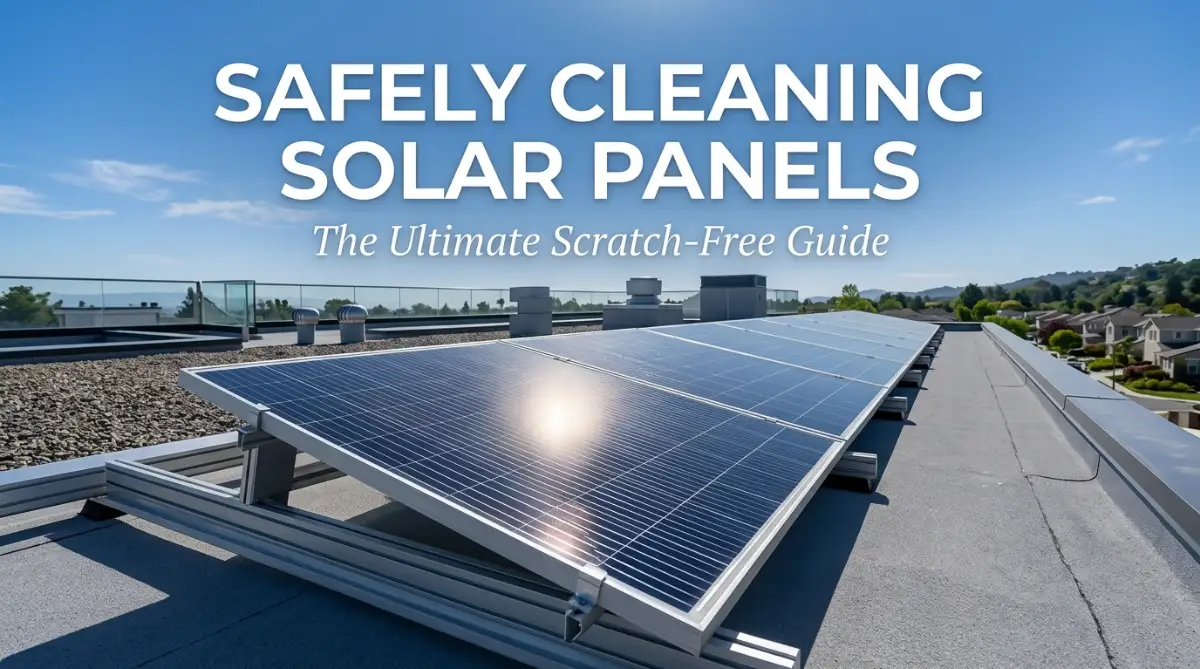
Why Dirty Solar Panels Were Costing Me Money and Peace of Mind
Last month, I stared at an electric bill that made zero sense. I have a roof full of expensive solar panels, yet I was still paying the power company a small fortune. Turns out, a thin layer of dust and bird poop was silently stealing my energy, and I had no idea how to wash it off without ruining the glass.
Instead, I was paying the utility company while my expensive panels sat covered in a thick layer of dust and bird droppings. I knew I had to wash them, but a deep fear held me back. I was terrified of doing it wrong.
What if I used the wrong brush and left permanent scratches all over that expensive tempered glass? What if my attempt to save a few dollars on electricity ended up ruining my entire investment?
This fear paralyzed me for weeks. I spent hours reading conflicting advice on the internet. Some people said to just blast the roof with a pressure washer, while others warned that high pressure would destroy the seals.
Dirty solar panels do not just look bad on your house. They actively steal your hard-earned money by blocking the sun from reaching the photovoltaic cells.
When your panels are covered in grime, pollen, or pollution, your energy production takes a massive hit. You are essentially throwing away free energy every single day.
We end up staring at those dirty rectangles on our roofs, paralyzed by the fear of causing expensive damage. It is a terrible feeling to know your home is not running as efficiently as it should be, simply because you do not know the right way to wipe off the dust.
What You Need to Know Right Now:
- Never wipe your panels while they are dry (this creates permanent scratches).
- Wash early in the morning so the cold water does not crack hot glass.
- Ditch the harsh chemicals; use mild dish soap and deionized water.
- Use a soft rubber squeegee to prevent hard water spots from blocking the sun.
The Hidden Danger of Micro-Scratches on Solar Glass
Before we get into the exact steps for washing your system, we need to understand exactly what we are dealing with. The surface of a solar panel is not like the regular glass in your living room windows.
It is a specialized, anti-reflective tempered glass. This anti-reflective coating is exactly what helps the panel absorb as much sunlight as possible.
If you use an abrasive sponge, a stiff-bristled brush, or even the wrong kind of chemical cleaner, you can easily strip away this coating. Worse, you can create thousands of tiny, invisible scratches known as micro-scratches.
At first, you might not even see these scratches with your naked eye. But over time, dirt and grime will get trapped inside those tiny grooves.
Micro-scratches scatter sunlight instead of letting it pass straight through to the cells.
When the light scatters, your panels generate significantly less electricity. Imagine trying to look through a pair of eyeglasses that have been rubbed with sandpaper.
That is exactly what your solar panels experience when they are washed improperly. You might think you are doing a great job by scrubbing hard, but you are actually causing permanent harm.
This is why understanding the correct maintenance process is so incredibly important for the lifespan of your system. You have to treat that glass with the utmost respect.
Assessing the Mess: What Exactly is Blocking Your Power?
Not all dirt is created equal. Before you grab a hose, you need to identify exactly what is sitting on top of your panels.
If you live in a dry, desert-like area, your main enemy is likely just loose, fine dust. This is actually the easiest type of mess to deal with.
However, if you live near trees, you might be fighting sticky tree sap, heavy pollen, and stubborn bird droppings. Bird droppings are highly acidic and can actually eat into the glass coating if left sitting for too long.
If you live near a busy highway or industrial zone, you might have a thin film of oily smog coating your system. Each of these messes requires a slightly different approach, but the core rule remains the same: never use force.
Quick Look: Solar Cleaning Myth vs. Fact
- Myth: You should scrub sticky bird poop hard to get it off.
- Fact: Scrubbing causes permanent micro-scratches. You must let wet soapy water sit on the spot for 30 seconds to safely melt it away.
- Myth: Windex or kitchen glass spray is perfect for solar panels.
- Fact: Standard window cleaners contain ammonia, which actually eats away the special anti-reflective coating on solar glass.
You cannot aggressively scrub off a stubborn piece of tree sap. You have to let water and safe soaps do the heavy lifting for you.
By understanding the type of grime you have, you can set realistic expectations for your cleaning day. Sometimes, it takes a little extra patience rather than extra elbow grease.
Gathering Your Safe, Non-Abrasive Cleaning Arsenal
You cannot do a good job if you do not have the right tools. Throw away the green scrubby sponges, the hard push brooms, and the harsh household chemicals right now.
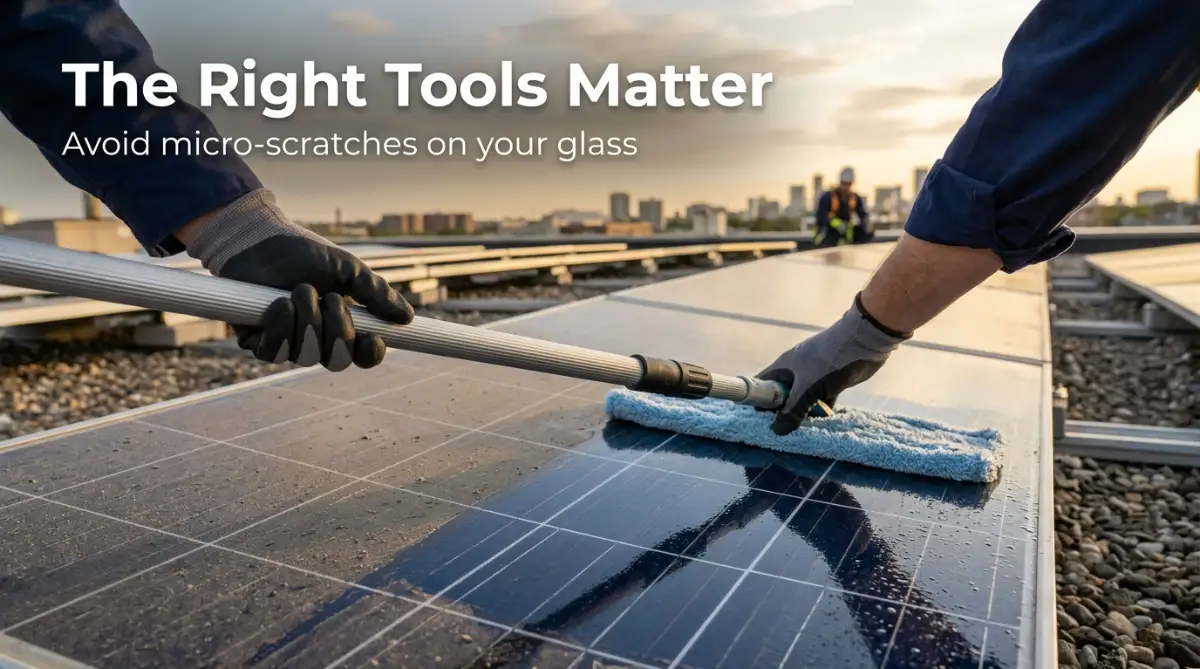
To clean your solar glass properly, you only need a few specific items. First, you need a high-quality, ultra-soft microfiber mop or a specialized soft-bristle solar brush.
Do not use tools meant for scrubbing driveways or car tires.
My Safe Tool Checklist (Keep This Handy):
| What to Use | What to Throw Away |
| :--- | :--- |
| Ultra-soft microfiber mop | Stiff push brooms |
| Soft rubber window squeegee | Car tire scrubbers |
| pH-neutral dish soap | Bleach or ammonia sprays |
| Deionized water filter | High-pressure power washers |
You will also need a long extension pole so you can reach the panels safely from a ladder or the ground. Climbing around on a slanted roof covered in slippery soap water is incredibly dangerous, and avoiding that risk should be your top priority.
Next, you need a squeegee with a soft rubber blade. This is exactly what professional window washers use to leave glass perfectly clear.
Finally, you need your cleaning solution. In most cases, pure, deionized water is the absolute best choice.
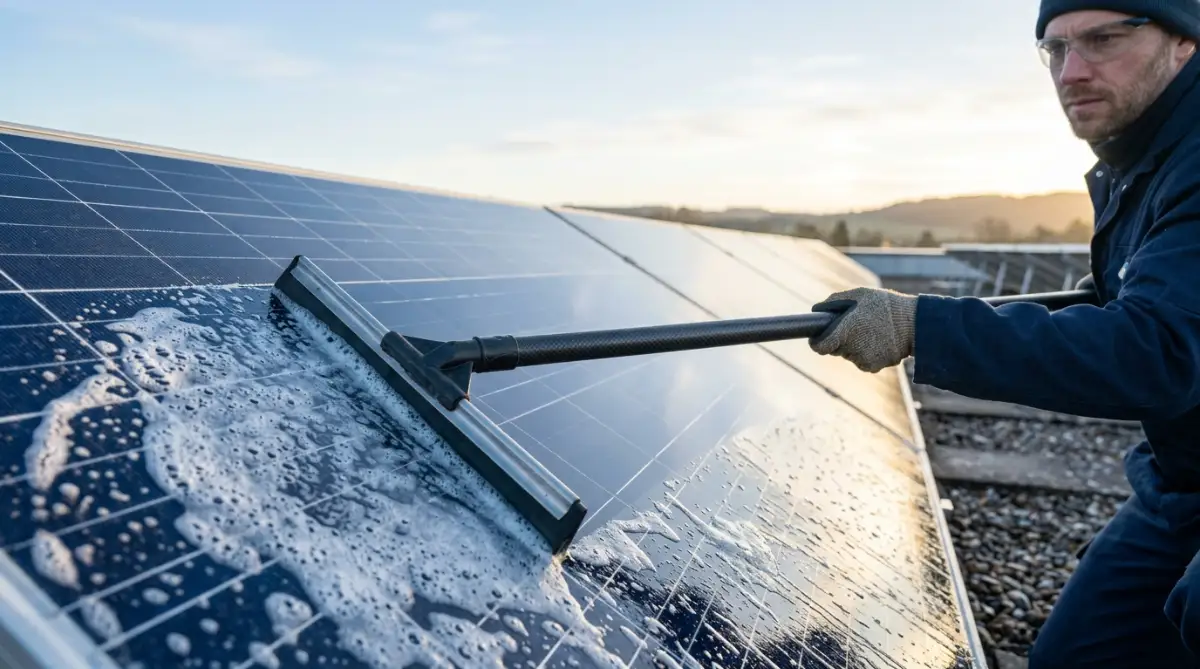
If your panels are extremely dirty, a few drops of a very mild, pH-neutral dish soap in a bucket of water will work wonders. Never use bleach, glass cleaners with ammonia, or abrasive powders.
Here is a great resource to help you understand the tool setup better:
Watch this quick demonstration to see exactly which soft tools professionals use to protect expensive solar glass before you buy anything yourself.
Planning the Perfect Time for Maintenance
Timing is everything when it comes to solar panel care. You should never, under any circumstances, try to wash your panels in the middle of a hot, sunny day.
Solar glass gets incredibly hot when baking in direct sunlight. If you spray cold water onto hot glass, the sudden change in temperature can cause the glass to crack or shatter instantly.
This is a phenomenon called thermal shock, and it will completely ruin your panel. Even if the glass does not crack, washing hot panels is a terrible idea for another reason.
The water will evaporate the second it touches the hot glass. This rapid evaporation will leave behind a stubborn layer of soap scum and hard water minerals.
Instead of clean panels, you will be left with hazy, streaky glass that blocks even more sunlight than before. The absolute best time to wash your system is early in the morning, just as the sun is coming up.
The glass will be cool from the night air, and you will have plenty of time to wash and squeegee the surface before the sun gets too strong. Alternatively, late evening on an overcast day works very well too.
The Pre-Rinse: Letting Water Do the Hard Work
Now that you have the right tools and the right time of day, it is time to start the actual process. The biggest mistake people make is immediately attacking the glass with a soapy brush.
If you wipe a dry, dusty panel with a mop, you are essentially dragging tiny rocks across the glass. This is the number one cause of those dreaded micro-scratches we talked about earlier.
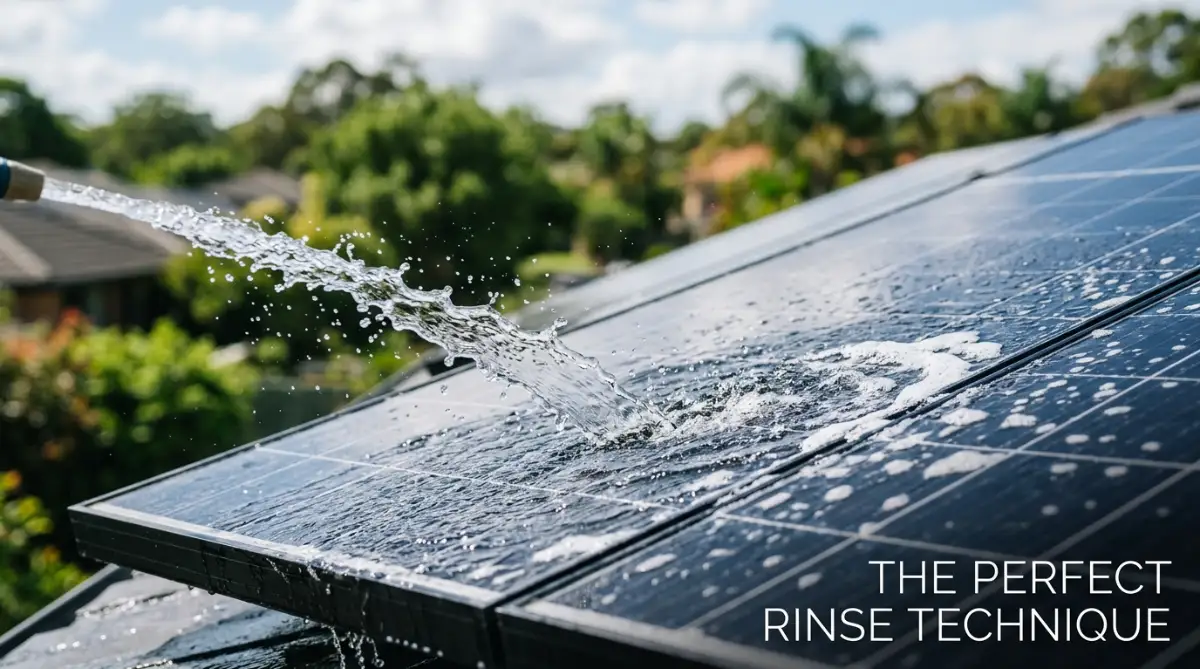
Instead, you must always start with a gentle pre-rinse. Grab your garden hose and attach a standard spray nozzle.
Do not use a pressure washer. A regular garden hose provides more than enough water pressure to do the job safely.
Stand on the ground or safely on a secure ladder, and gently spray down the entire array of panels. Let the water run over the glass, turning the dry dust into loose mud.
Pay special attention to the thick dirt accumulating at the very bottom edge of the aluminum frames. Let this plain water sit on the panels for about five to ten minutes.
This resting period gives the water time to soften up baked-on bird droppings and sticky sap. You want the grime to lift away from the glass naturally.
If the day is a bit warm and the water starts to dry, just give the panels another light misting to keep everything wet.
I actually ruined a pair of expensive sunglasses once by wiping them while they were dry and dusty. I learned my lesson the hard way. Now, whether I am cleaning my glasses or my solar panels, I always make sure to flood the surface with water first to float the sharp dust particles away from the glass.
Applying the Gentle Soap Solution
Once the heavy, loose dirt has been rinsed away, you can move on to the actual washing phase. If your panels were just mildly dusty, the water rinse might actually be enough!
But if you have oily residue or stubborn bird droppings, you will need to apply your mild soap solution. Dip your soft microfiber mop into your bucket of soapy water.
Make sure the mop head is completely saturated. Lift the pole and gently place the mop onto the top corner of the highest panel.
Let the weight of the mop head do the work for you. You do not need to press down hard or scrub aggressively.
Slowly pull the mop across the glass in smooth, overlapping side-to-side motions. Imagine you are lightly massaging the glass, not scrubbing a dirty floor.
Work your way from the top row of panels down to the bottom. If you encounter a tough spot like dried tree sap, do not scrub it.
Instead, hold the wet soapy mop over the spot for about thirty seconds. The extra moisture and mild soap will eventually break down the organic material safely.
Keep your mop head clean. If you are washing a large system, bring the mop down frequently and rinse it out in a separate bucket of clean water.
You never want to spread dirt from one panel to the next. Keeping your tools clean during the process is just as important as the cleaning itself.
The Art of the Perfect Squeegee Finish
Leaving soapy water to air dry on your panels is a huge mistake. Tap water contains dissolved minerals like calcium and magnesium.
When the water evaporates, those white, chalky minerals are left behind on your beautiful dark panels. These hard water stains act just like dirt, reflecting sunlight away from your system.
To prevent this, you must remove the water manually before it has a chance to dry. This is where your high-quality rubber squeegee comes into play.
As soon as you finish washing a section with soap, immediately rinse it thoroughly with clean water from your hose. Make sure absolutely all the soap bubbles are gone.
Then, take your squeegee on the extension pole and place it at the top edge of the panel. Pull the squeegee down in one smooth, continuous motion.
Wipe the rubber blade with a clean microfiber cloth between every single pass. If you leave dirt or water on the rubber blade, it will leave nasty streaks on the next pass.
Squeegeeing from a distance with a long pole takes a little bit of practice. Keep your movements slow and steady.
If you miss a spot and a water droplet dries, do not panic. You can gently buff away small water spots with a clean, dry microfiber cloth later on.
Taking the time to squeegee the glass ensures that your panels are left 100% crystal clear. The clearer the glass, the more sunlight hits the cells, and the more money you save on your monthly utility bill.
Dealing with Extreme Weather and Seasonal Buildup
The frequency of your maintenance routine will depend heavily on where you live. If you live in an area that gets frequent, heavy rainstorms, nature will actually do a lot of the work for you.
A good, heavy downpour is fantastic at washing away loose topsoil and light dust. However, light, misty rain is actually your enemy.
Light rain does not have enough volume to wash dirt off the roof. Instead, it turns the dust on your panels into a sticky mud that dries into a thick crust.
During the spring, pollen can become a major headache. Pollen is incredibly sticky and will cover your panels in a yellow, light-blocking film.
If you notice a sudden drop in your energy production via your solar monitoring app during the spring months, pollen is likely the culprit. You might need to gently rinse your panels every few weeks during peak allergy season.
During the fall, leaves falling from nearby trees can completely cover your solar array. Wet leaves that stick to the glass can cause localized hot spots.
These hot spots occur when one specific solar cell is shaded while the rest are producing power, which can actually damage the internal wiring of the panel over time. Always use a soft roof rake or a leaf blower to remove dry leaves promptly.
Do not let organic matter decompose on top of your expensive energy system. Staying proactive with seasonal changes will keep your energy production high all year round.
Mastering Long-Term Solar Glass Maintenance Like a Professional
Once you understand the basic washing process, you might wonder how to keep your panels looking pristine for longer periods. I used to wash my panels every single month, which was honestly exhausting and completely unnecessary.
I quickly learned that working smarter is much better than working harder when it comes to rooftop energy systems. The biggest secret professionals use to get that spotless, mirror-like finish is upgrading their water source.
Regular tap water is full of heavy minerals, and managing those minerals is an endless battle. If you want to skip the squeegee process entirely, you should seriously look into a water deionization filter.
You can attach an inline water filter directly to your standard garden hose. These filters remove the calcium and magnesium from the water before it ever touches your expensive anti-reflective glass.
Using pure, filtered water means you can simply rinse the dirt away and let the panels air dry completely spot-free. This is the exact same technology used by high-end auto detailers to wash luxury cars without leaving water marks.
If you are aiming to build a highly efficient home setup, checking out a complete suburban solar masterclass can give you even more ideas on maximizing your energy independence.
Another advanced tactic is learning to read your system's energy monitoring app like a detective. You do not need to climb a ladder to know if your system needs a bath.
Instead, establish a baseline for how much energy your roof produces on a clear, sunny day right after a fresh wash. Check the solar cell efficiency data from reliable sources like the National Renewable Energy Laboratory to understand your expected output.
If you notice a slow, steady drop in your daily energy production over a few weeks, despite clear skies, dirt is usually the culprit. I treat my solar app exactly like a check-engine light for my roof.
Just as you would fix issues when silent background processes drain your OS resources on your computer, you must clear the physical barriers draining your solar output.
Pay very close attention to the bottom edge of your panel frames during your visual inspections. Because panels sit at an angle, rainwater washes loose dirt down to the bottom edge, where it pools against the aluminum frame.
This creates a thick band of mud that blocks the bottom row of solar cells. Due to the way solar circuits are wired, shading even one small section can drag down the performance of the entire array.
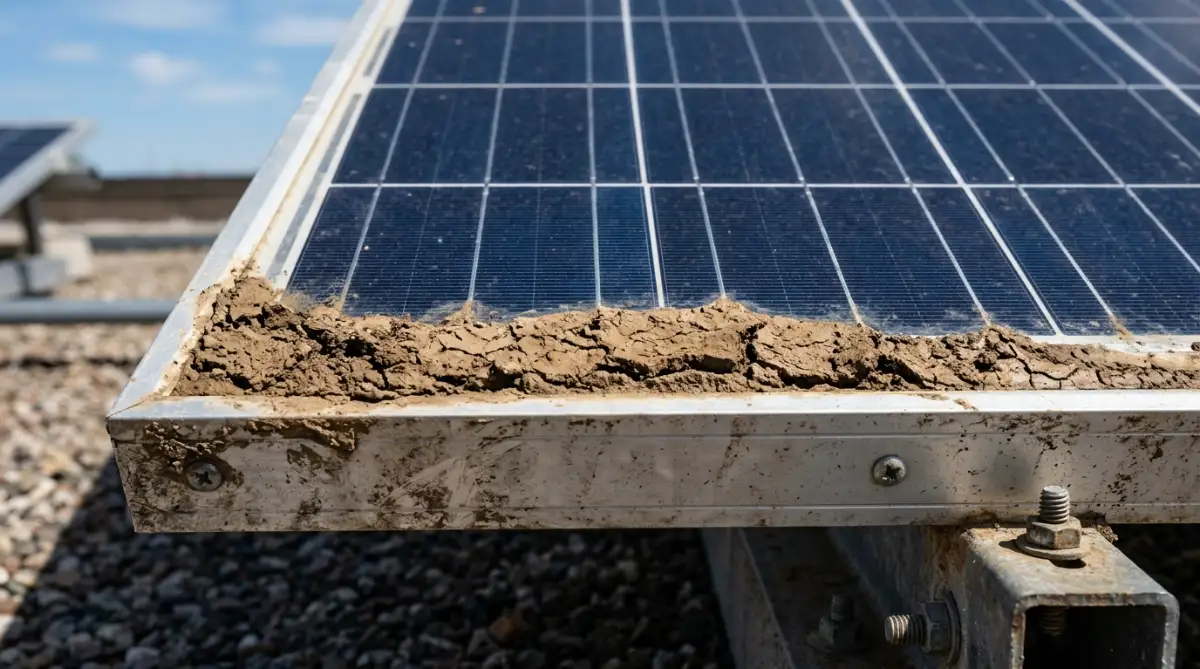
By simply walking around your yard with a pair of binoculars, you can spot this mud pooling safely from the ground. I always keep a pair of cheap binoculars on my porch just for this quick weekly check.
The Most Dangerous Cleaning Habits Homeowners Need to Stop
We all want to save money and take care of our homes, but good intentions can easily lead to incredibly expensive disasters. Over the years, I have seen friends and neighbors make some truly heartbreaking mistakes with their renewable energy systems.
The most common trap people fall into is assuming that tough dirt requires aggressive chemicals. You might look at a stubborn bird dropping and think about grabbing a bottle of heavy-duty glass cleaner from under the kitchen sink.
Never let standard household glass cleaners touch your solar array.
Products containing ammonia or harsh solvents will chemically strip the anti-reflective coating right off the tempered surface. Once that coating is gone, the glass becomes highly reflective, bouncing sunlight away into the sky instead of absorbing it.
You will permanently reduce your energy yield, and there is no way to paint that coating back on. You might as well just throw money directly into the trash can.
Another massive pitfall is the temptation to use a high-pressure power washer. It seems like such an easy shortcut to blast the grime away from a safe distance.
However, water propelled at high pressure will easily force its way underneath the rubber weather seals around the aluminum frames. Once water penetrates those protective seals, it enters the sensitive electrical components inside.
This water ingress leads to delamination, internal corrosion, and a complete system failure that is almost never covered by the manufacturer's warranty. You are risking a multi-thousand-dollar investment just to save twenty minutes of gentle washing.
We also need to talk about the physical tools you bring up to the roof. Using a stiff broom or a car wash brush with hard plastic bristles is a guaranteed way to inflict micro-scratches on the surface.
These tiny scratches act like a cloudy film over the cells, slowly degrading your power output year after year. Always stick to ultra-soft microfiber materials that glide smoothly over the surface.
Lastly, the biggest mistake has nothing to do with the panels at all, but rather with personal safety. Climbing onto a slanted, soapy, wet roof without proper safety gear is an incredibly dangerous gamble.
Thousands of homeowners end up in the emergency room every year from preventable ladder and roof falls. I highly recommend reviewing proper ladder safety guidelines provided by occupational safety experts before you ever leave the ground.
If your roof is too steep, or if the panels are just out of reach with a standard extension pole, please swallow your pride. Hiring a professional service twice a year is much cheaper than a trip to the hospital.
I once slipped on a wet rung of my ladder while carrying a heavy bucket of soapy water, and it scared me so badly that I completely changed my approach. Now, I do ninety percent of my maintenance while standing safely on the solid ground using an extra-long, lightweight carbon fiber pole.
You can easily find the latest tech resources and equipment recommendations online to build a safe, ground-level maintenance kit. Your physical health is simply not worth a few extra kilowatt-hours.
Setting Up Your Action Plan for Maximum Solar Efficiency
Taking care of your renewable energy investment does not have to be a source of stress or anxiety. By understanding the delicate nature of the anti-reflective glass, you are already far ahead of the average homeowner.
You now know exactly why aggressive scrubbing and harsh chemicals are your biggest enemies. You understand the incredible value of a gentle pre-rinse to float sharp dust particles safely away.
More importantly, you have the knowledge to avoid those invisible micro-scratches that slowly steal your energy production. The key to success here is building a gentle, consistent routine rather than waiting for a massive layer of grime to build up.
Treat your solar array with the same gentle care you would use when washing a pair of expensive prescription eyeglasses. Let the water and mild soap do the heavy lifting, and always prioritize removing hard water mineral deposits with a clean squeegee or a specialized spot-free rinse filter.
If you apply these simple, non-abrasive methods, your panels will reward you with decades of maximum energy output. You will finally see those incredibly low utility bills you were dreaming of when you first installed the system.
It feels absolutely amazing to open your monthly electricity statement and see a zero balance just because you took an hour to properly wash your roof.
I know exactly how overwhelming home maintenance can feel, especially when dealing with expensive technology on top of your house. But the truth is, once you gather the right soft tools and pick a cool, cloudy morning to do the work, it actually becomes a very peaceful and satisfying chore. Grab your microfiber mop, turn on your garden hose, and take back the free solar power that rightfully belongs to you.
Common Questions About Safe Solar Panel Washing
Can I use vinegar to wash my solar panels?
While diluted white vinegar is a popular natural cleaner, it is generally not recommended for solar glass because of its high acidity. The acid can slowly degrade the protective anti-reflective coating over time if not completely rinsed away. Stick to pure water or a highly diluted, pH-neutral dish soap for the safest results.
How frequently do I actually need to clean my system?
This depends entirely on your local environment and weather patterns. If you live in a dry, dusty area with high pollen, you might need a gentle rinse every two months. If you get regular, heavy rainstorms and live away from heavy smog, a thorough wash once or twice a year is usually plenty.
Will standard rain keep my solar panels clean?
Heavy, driving rain does an excellent job of washing away loose surface dust and light dirt. However, light misty rain can actually make things worse by turning dust into sticky mud. Rain also cannot remove sticky substances like tree sap, bird droppings, or oily smog residue.
Is it safe to use a standard car wash brush?
You should avoid typical car wash brushes because the plastic bristles can be too stiff for specialized solar glass. Even if a brush feels somewhat soft to your hand, it can easily trap sharp dirt particles and drag them across the surface. An ultra-soft microfiber mop is always the safest choice to prevent microscopic scratches.
Do I have to turn off my solar system before washing it?
For basic washing with a garden hose and a long extension pole, you do not need to shut down the system. However, if you are closely inspecting the wiring or if you have any exposed cables, it is always a smart safety practice to turn off the system at the inverter level. Always consult your specific manufacturer's manual for their official safety recommendations.
Disclaimer: The information provided in this article is for educational and informational purposes only. Working on roofs and around electrical systems poses significant physical risks, including falls and electrical shock. Always prioritize your personal safety, use appropriate safety gear, and consider hiring a licensed professional if your panels are difficult to reach safely. We are not responsible for any damage to property or personal injury resulting from following the maintenance tips outlined in this guide. Always check with your solar manufacturer's specific warranty guidelines before applying any cleaning tools or solutions to your system.