The Frustrating Reality of Guessing Your Property's Potential
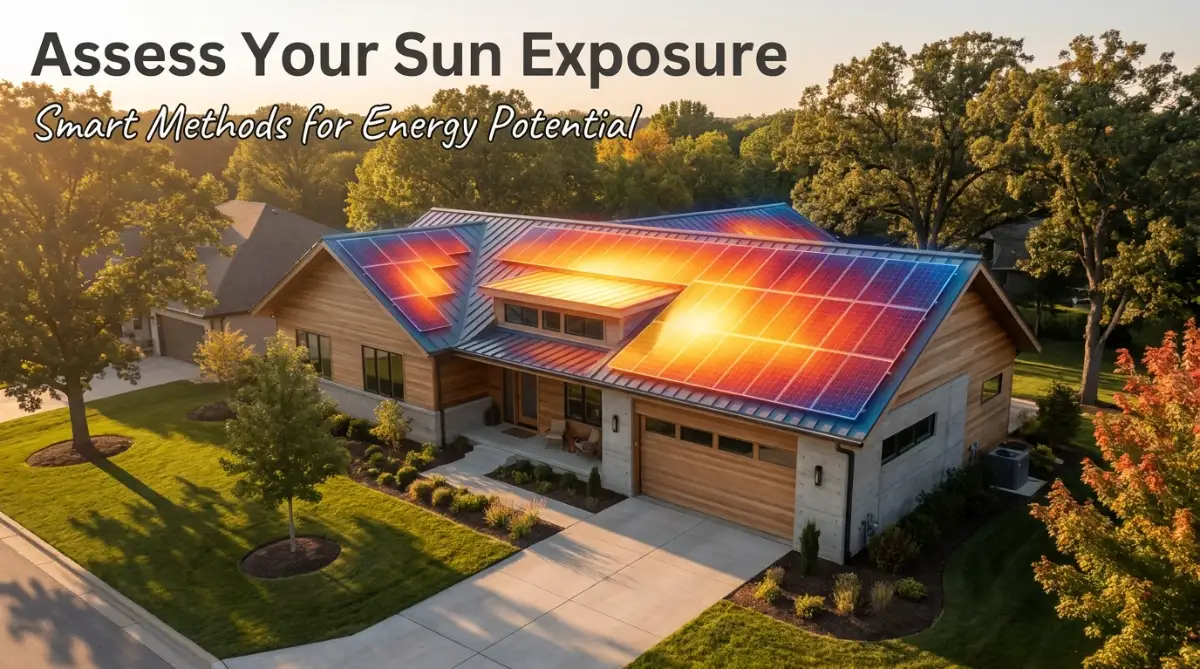
Look at your electric bill. Now look at your roof. Most of us want to turn that empty space into a money-saver, but guessing if you get enough sunlight is a massive headache. You do not need to hire an expensive consultant right away. Let me show you how to map out your roof's actual power potential using just your smartphone and a piece of paper.
I kept hearing about how great renewable power was, but looking at my house, I just didn't know if it would actually work for me. We have a massive oak tree in the front yard, and my roof has a weird slope on one side.
I spent weeks guessing, watching the shadows move across the shingles, and getting more confused by the day. Every time a salesperson knocked on my door, they promised me perfect results, but I wanted hard facts, not a sales pitch.
I realized I needed to figure out exactly how much direct sunlight my property was actually getting before making any big decisions. That struggle forced me to dig deep and find a method that actually makes a difference for normal homeowners like us.
So many people are tired of guessing if their house is right for modern energy upgrades. You look outside at noon, see bright light, and think you are completely good to go.
Then, a few hours later, a neighboring building casts a massive dark shadow right over your main roof space. It is incredibly frustrating to want energy independence but feel blocked by confusion over shade and angles.
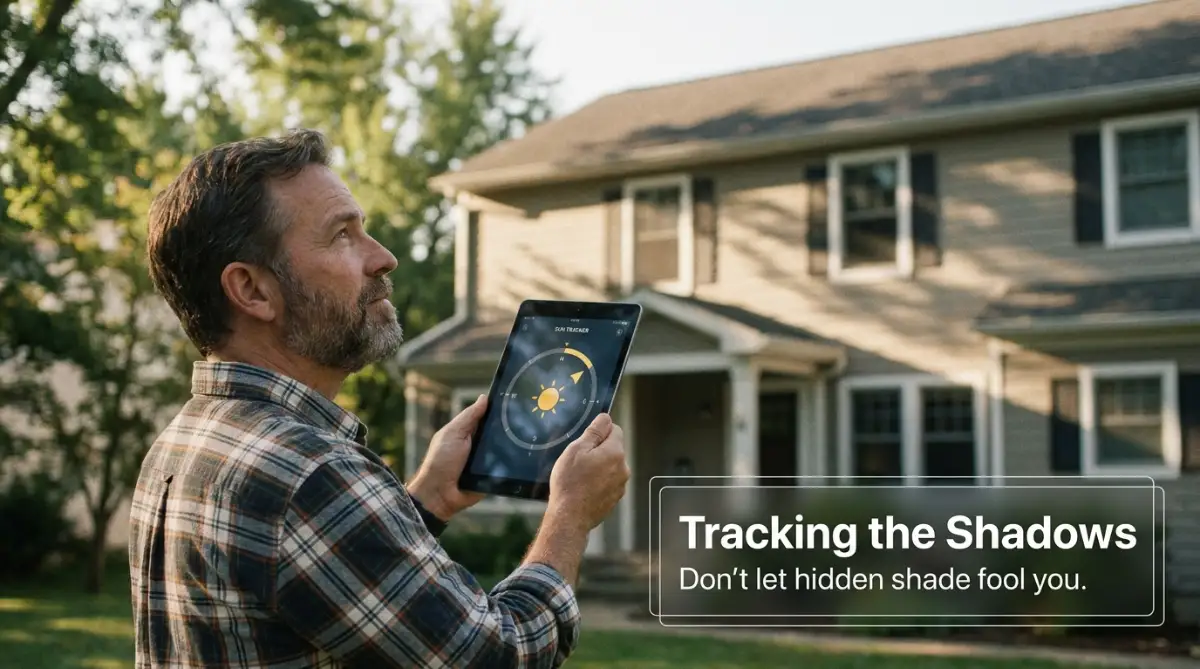
When you do not understand how light hits your home, you risk placing panels in dead zones. This leads to poor performance, longer payback periods, and massive disappointment down the road.
I want to share exactly how you can map out your property with complete confidence. You do not need a degree in engineering to figure this out, you just need a solid plan.
Quick Summary & Key Takeaways
- Target the "Golden Window" (9 AM to 3 PM) for the best direct sunlight.
- Winter shadows stretch much longer than summer shadows—plan for the cold months.
- You can map your roof perfectly using just a smartphone camera and a notepad on a sunny weekend.
- Even tiny shadows from overhead wires (micro-shading) can heavily drop your power output.
Understanding the Golden Window for Power Collection
Before we start mapping anything, we have to talk about how light actually works during the day. Not all sunlight is created equal when it comes to generating power.
There is a specific timeframe that industry professionals call the golden window. This window generally happens between 9:00 AM and 3:00 PM every single day.
During these middle hours, the sun is highest in the sky, pushing the strongest and most direct rays down to earth. If your roof gets covered by shade during this specific window, your energy production will drop heavily.
Early morning light and late afternoon light are nice, but they hit your house at a very sharp angle. Because the angle is so low, the light has to pass through more atmosphere, making it much weaker.
Quick Cheat Sheet: Time of Day vs. Expected Power Output
- 7:00 AM - 9:00 AM: Low Output (Angle is too sharp, heavy atmosphere interference)
- 9:00 AM - 3:00 PM: Maximum Output (This is your target "Golden Window")
- 3:00 PM - 5:00 PM: Moderate Output (Drops fast depending on the season)
- After 5:00 PM: Near Zero Output (Time to rely on grid or battery storage)
Your main goal is to find the spots on your property that stay clear of shadows between 9 AM and 3 PM. If you can secure that space, you are already halfway to a highly efficient setup.
Myth vs. Reality: The Summer Illusion
One of the biggest mistakes you can make is judging your property based entirely on a beautiful summer day. I see homeowners do this all the time, and it always leads to trouble.
During the summer, the sun sits directly overhead, making shadows extremely short and tight. A large chimney might barely cast a shadow at all in the middle of July.
However, when winter rolls around, the sun takes a much lower path across the southern sky. Because the light is coming from a lower angle, shadows stretch out dramatically across your roof.
That same chimney that cast a tiny shadow in July might cast a ten-foot dark streak across your roof in December. If you plan your layout based only on summer light, you will lose a massive amount of power in the winter.
A Personal Lesson in Shadow Tracking
I learned this lesson the hard way when I was mapping out my own backyard for a small ground project. I completely ignored the bare winter branches of my neighbor's maple tree because they looked totally harmless.
I set everything up, but when winter arrived, the low sun angle caused those bare branches to cast long, thick striped shadows right across my equipment. I had to completely move my setup, which cost me a weekend of heavy lifting and a lot of frustration.
Always over-calculate how far shadows will reach during the colder months. It is always better to be safe and leave a little extra room than to watch your production completely stop.
How to Find Your True Direction
The next step in taking control of your energy plan is understanding exactly which way your house faces. We need to find your true south, or true north if you live in the southern hemisphere.
A compass on your smartphone is a great starting point, but magnetic north is slightly different from geographic north. For casual planning, your phone compass will get you very close, but you need to pay attention to your main roof faces.
A roof that faces the equator gets the most consistent, direct sunlight throughout the entire day. If your main roof slopes east or west, you can still collect great power, but the timing changes.
An east-facing roof will catch all the strong morning rays but will lose production in the late afternoon. A west-facing roof stays quiet in the morning but works incredibly hard during the hot afternoon hours.
Knowing your orientation helps you manage your expectations and plan your daily usage around when you produce the most power.
Simple DIY Observation Methods That Actually Work
You do not need expensive drones or fancy laser equipment to get an accurate reading of your property. The most effective method is simply using your own eyes and a smartphone camera.
Pick a sunny weekend when you are going to be home all day to do a physical shadow audit. You want to take a clear photo of your roof every hour, starting at 8:00 AM and ending at 4:00 PM.
Watch This Helpful Breakdown
If you want a clear visual understanding of how the sun travels across different roof types, this short clip explains it perfectly. It is a fantastic resource to watch before you start taking your own photos.
By the end of your observation day, you will have a perfect time-lapse gallery showing exactly how shadows move across your property. You will clearly see exactly when the chimney shadow hits, or when the neighbor's roof blocks your light.
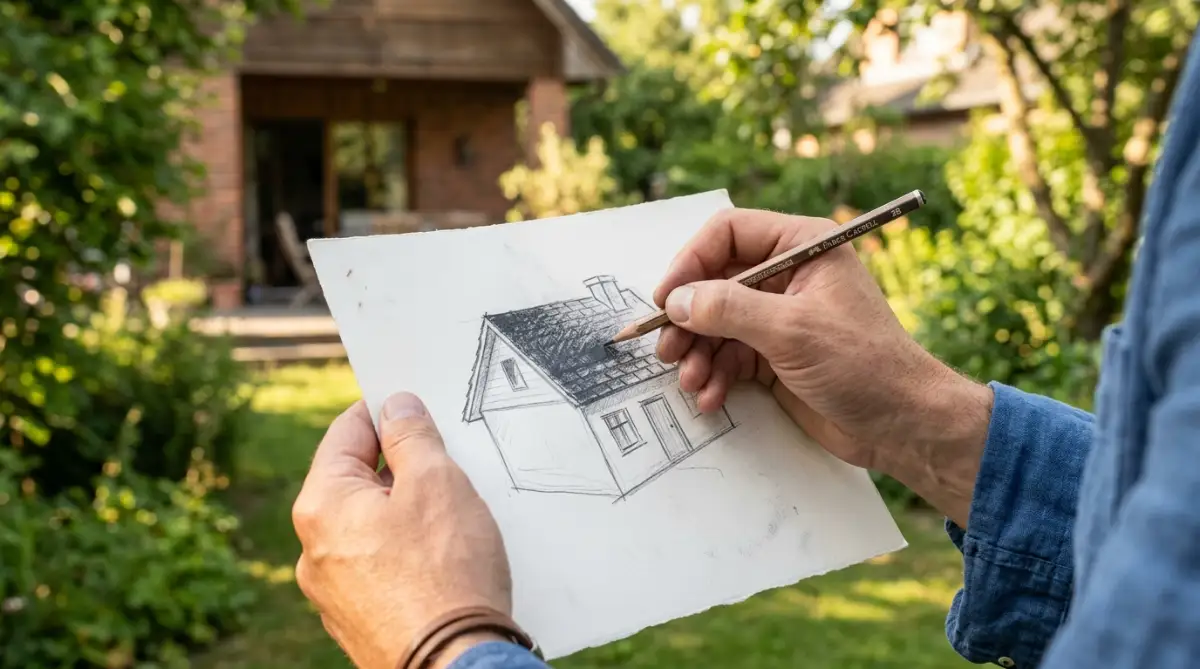
I recommend creating a simple sketch of your roof on a piece of blank paper. Every time you take a photo, use a pencil to shade in the areas on the paper that are currently dark.
By the end of the day, the areas on your paper that remain completely white are your premium energy zones. This physical drawing makes it incredibly easy to visualize exactly how much usable space you really have.
Utilizing Free Digital Mapping Tools
If you do not have time to sit at home all day, there are amazing free digital tools you can use. Almost everyone has access to free satellite map applications on their computers or phones.
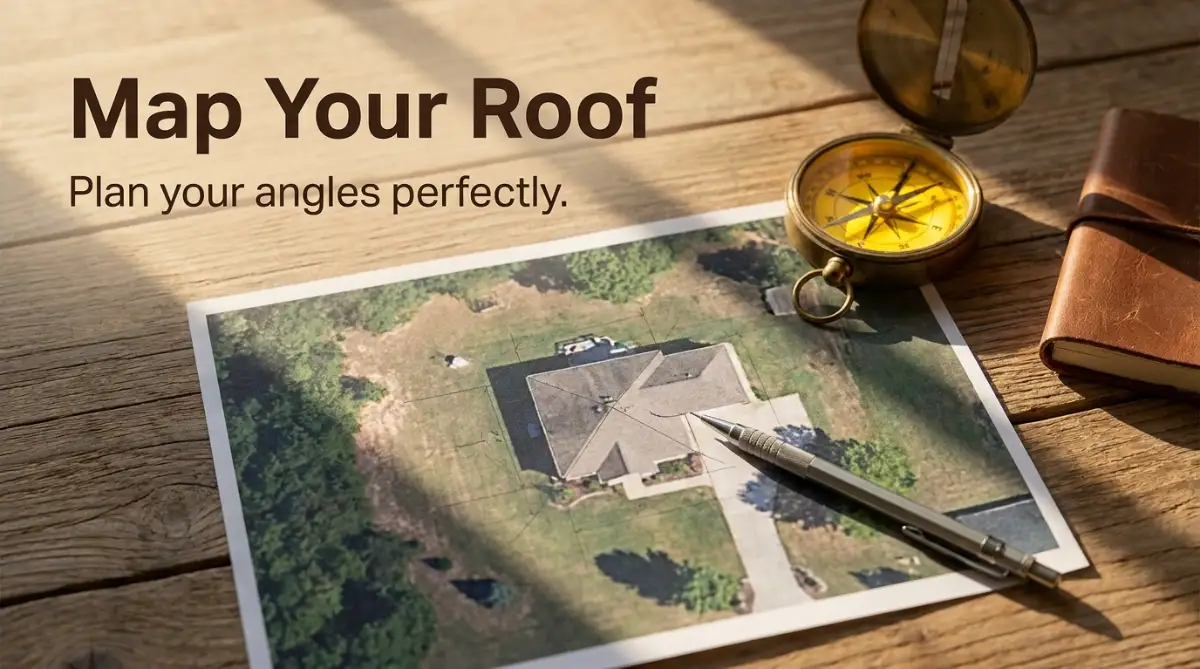
Pull up your exact home address and switch the view to the detailed satellite mode. Most modern map tools allow you to zoom in close enough to see the distinct ridges and valleys of your roof.
While satellite images are taken at random times, they give you a perfect bird's-eye view of large obstacles. You can easily spot massive trees or neighboring structures that sit dangerously close to your property lines.
Some online platforms even have free solar calculators built into their maps. You simply type in your address, and the software uses historical weather data and 3D modeling to estimate your light exposure.
These digital tools are incredibly helpful for getting a quick baseline understanding before you do your own physical audit. Combining satellite data with your own hourly photos gives you a bulletproof assessment of your home.
My Top Free Tools for Remote Roof Audits:
- Google Project Sunroof: Best for instant visual heat maps of your specific roof shape.
- NREL PVWatts: Best for getting hardcore data on how weather changes your setup over 12 months.
- SunCalc: Excellent for checking exact shadow angles for any day of the year anywhere in the world.
Evaluating the Impact of Micro-Climates
Something many people forget to consider is their specific local weather patterns. You might have a perfectly angled roof with zero trees, but your local climate plays a massive role.
For example, I know families who live near large bodies of water or in deep valleys. Their houses get covered in thick, heavy fog almost every single morning until about 11:00 AM.
If they relied entirely on an east-facing roof, they would miss out on their best light because of the morning fog. In situations like this, a west-facing roof becomes much more valuable because the afternoons are always clear and bright.
Take a few minutes to think about the general weather patterns in your specific neighborhood. Do you get rolling afternoon clouds in the summer? Does snow pile up heavily on one specific side of your house in the winter?
These local environmental factors will change exactly where you should focus your attention. You know your neighborhood better than any computer model, so trust your own observations.
Dealing with Roof Obstructions Properly
When we look up at our houses, we usually just see a flat surface of shingles or tiles. But when you get up close, roofs are actually covered in pipes, vents, skylights, and antennas.
Every single one of these items takes away from your usable square footage. Furthermore, a small plumbing vent pipe sticking up just one foot can cast a long, narrow shadow across your panels.
When you are drawing your paper map, make sure you mark the location of every single vent and pipe. You cannot lay flat equipment safely over these items, so they become strict dead zones.
Sometimes, if a vent is small enough, it is actually cheaper to hire a plumber to relocate the pipe to a different side of the roof. Moving a small obstacle out of a premium sun zone can drastically increase your overall energy collection for decades to come.
Do not let a minor roof feature ruin your perfect southern exposure. Carefully evaluating these small obstacles early on saves you from major design headaches later.
Understanding Your Roof's Pitch and Angle
The slope of your roof, also known as the pitch, changes how the sun strikes the surface. A very steep roof might be perfect for shedding heavy snow, but it alters how light is absorbed.
If you live very far away from the equator, a steeper roof is actually better for catching the low winter sun. If you live very close to the equator, a flatter roof works beautifully because the sun is mostly directly overhead.
You do not need to worry about perfectly modifying your roof structure, because modern mounting hardware can adjust the tilt. However, knowing your natural roof angle helps you understand your baseline efficiency.
You can measure your pitch roughly by holding a simple protractor app on your phone against the underside of your attic rafters. This little bit of geometry gives you a massive advantage when planning out your system's overall footprint.
The Importance of Honest Assessment
If you discover that your beautiful century-old oak tree covers your entire roof in shade by 1:00 PM, you have to accept that reality. You either have to make the tough choice to trim back the tree, or accept that a roof system might not be your best option right now.
Sometimes, realizing your roof is a bad fit opens the door to better alternatives, like a small ground setup in a sunny corner of the backyard. Finding the truth about your sun exposure empowers you to make the smartest financial decision for your family.
By taking a few days to track shadows, check your angles, and map your obstacles, you remove all the guesswork. You transform yourself from a confused homeowner into a highly educated consumer.
When you finally do decide to take the next step, you will be doing it with total confidence, knowing exactly what your home is truly capable of achieving.
Pro-Level Secrets for Tracking Roof Sunlight Like an Expert
Once you have your basic paper map completed, you might feel ready to immediately call a contractor. But hold on for just a minute. Before you make any final decisions, there are a few advanced strategies you can use to completely bulletproof your plan.
Professionals use highly specific methods to guarantee their estimates are entirely accurate. You can easily copy these exact same methods from your own backyard without spending a dime.
The biggest secret in the home energy industry is understanding something called the Solar Access Percentage (SAP). This is simply a fancy mathematical way of measuring exactly how much natural light hits a specific spot over an entire twelve-month period.
Most homeowners only track their shade for a single day and assume that is good enough. However, truly maximizing your power means thinking about the long-term weather patterns and seasonal shifts.
To get an incredibly accurate SAP score, I always recommend using free government data tools. For example, the National Renewable Energy Laboratory (NREL) offers an amazing public tool called PVWatts.
You just type your home address into their system, and it uses decades of satellite weather data to show your exact local potential. It takes the guesswork completely out of the equation and gives you real, bankable numbers.
Mastering the Art of Micro-Shading
We already talked about massive shadows from large trees and tall chimneys. But there is a silent killer of energy production that most beginners completely ignore.
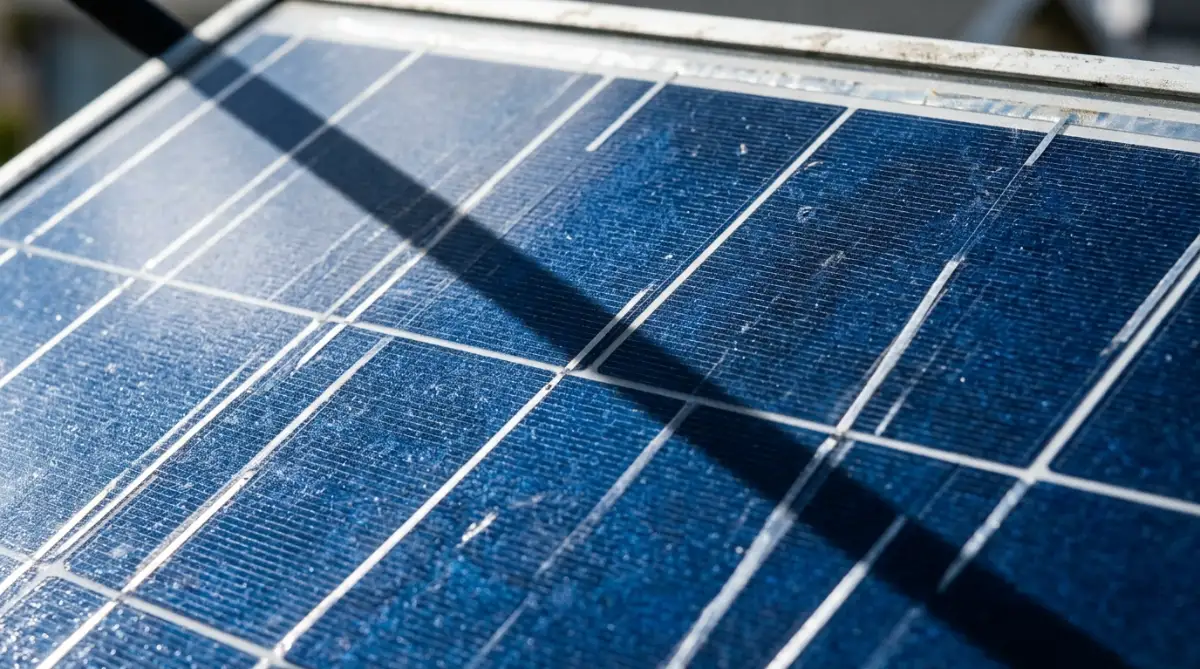
Industry experts call this problem micro-shading, and it can absolutely ruin your system's overall efficiency. Micro-shading happens when very small, seemingly harmless items cast tiny shadows over your equipment.
Think about the thin overhead power lines running from the street directly to your house. You might also have a small television antenna or a thin wire holding up some backyard string lights.
These items look incredibly thin, so you naturally assume the bright sun will just blast right around them. Unfortunately, modern energy systems are extremely sensitive to any type of light interruption.
A shadow as thin as a single pencil can sometimes shut down an entire row of panels if they are wired together in a specific way. You have to actively look for these tiny wires and cables when mapping out your prime real estate.
If you want a deeper dive into the actual science behind this, checking out a guide on understanding how sunlight converts into household electricity will help you see exactly why clear space is so strictly required.
Checking Your Attic for Structural Clues
One of my favorite advanced tips actually involves going inside your house rather than staring at the outside. Your attic holds massive clues about your roof's true capabilities.
Grab a bright flashlight and safely climb up into your unfinished attic space during the middle of the day. Look closely at the wooden rafters that support your main southern-facing roof structure.
Are the wooden beams spaced very far apart, or do they look heavily reinforced? If your roof gets incredibly hot, direct, uninterrupted sunlight all day, the wood up there bakes all summer long.
Sometimes, extreme heat exposure can actually warp older roof decking over time. You want to make sure the physical structure underneath your premium sun zones is actually strong enough to hold heavy equipment.
If you find weak spots or heavy sagging under your best sunny spots, you will need to plan for structural repairs first. It is always better to discover a weak rafter now rather than after you install expensive new hardware on top of it.
Navigating the Rules of Your Local Airspace
Here is a reality check that catches so many excited homeowners completely off guard. You might have the most perfect, unshaded, south-facing roof in your entire neighborhood.
However, your local town government or your strict Homeowners Association (HOA) might legally block your perfect plan. Many neighborhoods have very rigid aesthetic rules about what can and cannot be visible from the main street.
If your prime sun-gathering spot faces the front yard, your HOA might force you to move everything to the shaded backyard instead. This completely destroys your energy goals and leaves you with an inefficient setup.
Always check your local zoning laws before you fall in love with a specific roof layout. The U.S. Department of Energy (DOE) highly recommends reviewing local municipal codes as your very first planning step.
Knowing your legal boundaries early saves you from paying massive fines or being forced to tear down a newly built system. Always get your approvals in writing before you sign any major installation contracts.
The Hidden Traps That Destroy Energy Potential
Even with the best planning, I see smart homeowners fall into the exact same traps over and over again. These mistakes happen because people get overly excited and want to rush through the boring assessment phase.
One of the most dangerous mistakes is completely ignoring future property changes. You step outside today, look at the small sapling tree near your driveway, and think your roof is completely safe.
But trees are living, aggressively growing things. That tiny sapling can easily explode into a massive thirty-foot shade monster in just a few short seasons.
According to forestry experts at university agricultural extension programs, certain fast-growing tree species can add several feet to their canopy width every single season. If you do not plan for that future growth, your system will slowly be swallowed by darkness.
Always project how your landscaping will look ten or fifteen years down the line. If a tree is going to eventually block your light, you must make a hard choice about removing it or finding a completely new energy zone.
Falling for the Neighbor's Setup Trap
It is basic human nature to look at what the people around us are doing and simply copy them. You might see your next-door neighbor install a massive array on their east-facing roof and think you should do exactly the same.
This is a terrible strategy because every single house on a street has a completely unique energy footprint. Your neighbor might have heavily trimmed their trees, or their roof might have a slightly different pitch than yours.
They also might have completely different daily power habits than your family does. Copying their layout without doing your own math usually results in massive disappointment and wasted money.
Your house is a unique fingerprint, and it requires a completely customized approach. Focus entirely on your own shadow map, your own angles, and your own specific daily sunlight window.
The Danger of the Aging Roof Surface
Imagine doing all this hard work to find the absolute perfect, sun-drenched spot on your property. You map the shadows, check the angles, and realize you have a goldmine of energy potential just waiting to be used.
But in all that excitement, you forget to check the actual health of the shingles underneath. Installing modern power hardware on a roof that is already fifteen years old is a financial disaster waiting to happen.
Most new energy setups are designed to stay bolted in place for multiple decades. If your old shingles start leaking just five years from now, you will have to pay thousands of dollars to completely remove the hardware just to fix the leak.
Always evaluate the age and condition of your surface before you commit to that sunny location. If your roof is nearing the end of its life, replace the surface first, and then build your new system on a brand-new foundation.
Additionally, keeping your roof clean and safe is a massive priority once everything is installed. Make sure you regularly review safety guidelines and panel maintenance rules to protect your home from debris buildup and extreme heat hazards.
Ignoring the Impact of Dirt and Debris
Another major pitfall is mapping your light perfectly but forgetting about exactly what falls from the sky. You might find a beautiful spot on your garage roof that gets zero shade all day long.
However, if that specific spot sits directly under the flight path of local birds, or collects heavy dust from a nearby dirt road, you have a major problem. Heavy layers of dirt, pollen, and bird droppings act exactly like dark clouds.
They block the light from hitting the sensitive cells, instantly killing your production numbers. If you pick a spot that gets incredibly dirty, you will be forced to climb up a ladder and wash it constantly.
When choosing your final zones, try to avoid areas directly next to heavy pollen-producing pine trees or busy industrial exhaust vents. You want a spot that stays relatively clean naturally with just the help of regular rain showers.
If you are generally looking for more smart ways to upgrade your property, browsing through the latest home improvement resources can give you great ideas on keeping your exterior completely optimized.
Wrapping Up Your Home Energy Action Plan
Taking control of your home's energy future is one of the most rewarding projects you will ever take on. It feels amazing to finally stop guessing and actually know exactly how your property interacts with the sun.
You started this journey feeling confused and stressed by shadows and angles. Now, you hold a clear, scientific understanding of how to map your roof, track the golden hours, and avoid expensive mistakes.
Remember, the goal is not to have a completely flawless, perfect roof. Very few homes in the real world have 100% perfect conditions without any obstructions.
Your true goal is simply finding the absolute best possible spaces on your unique property. By combining a physical shadow audit with digital satellite mapping tools, you eliminate all the dangerous guesswork.
Take your time with this assessment phase, and never let anyone rush you into skipping these checks. You are building a long-term foundation for your family's independence, so doing it right the first time is incredibly rewarding.
I genuinely hope my struggles and lessons help you avoid the frustrating mistakes I made early on. My biggest realization was that patience during the planning phase pays off massively when you finally see those energy bills drop.
Common Questions About Mapping Home Sun Exposure
How many hours of direct light does a roof actually need?
For an energy system to be truly worth the investment, you generally need about four to five hours of peak, direct sunlight every single day. This light needs to hit the surface uninterrupted, ideally during that golden window between 9:00 AM and 3:00 PM.
Will a completely flat roof ruin my chances of making power?
Not at all. Flat roofs are actually incredibly versatile because they give you a totally blank canvas to work with. Installers simply use specialized angled brackets to tilt your equipment precisely toward the southern sky, completely bypassing the flat surface limitation.
Does heavy winter snow permanently damage energy collection?
Snow will temporarily stop production while it is physically covering your roof, but it rarely causes permanent damage. Because the equipment is dark and constantly generating mild heat, snow usually melts and slides off much faster than it does on standard shingles.
Should I cut down my old trees just to get more light?
This is a highly personal choice, but you should carefully weigh the cooling benefits the tree currently provides against the potential power gains. Sometimes, simply paying an arborist to thin out the top branches allows plenty of light through without destroying your beautiful landscaping.
Can I trust the automated solar maps I find online?
Automated satellite maps are an amazing starting point and offer excellent baseline estimates. However, they cannot always see small micro-shading issues like power lines or accurately predict future tree growth, so you must always verify their data with your own physical eye check.
Disclaimer: The information provided in this article is for general educational and informational purposes only. I am not a licensed structural engineer, electrician, or certified solar contractor. Every home and local climate is completely unique. Always consult with a licensed local professional and check your municipal zoning laws before making any structural changes, roof modifications, or major financial investments in home energy systems.