The Hidden Struggle Behind Understanding Artificial Intelligence
Did you know your brain and a smart computer learn in almost the exact same way? A few weeks ago, I was completely lost trying to figure out how artificial intelligence actually works. Everyone makes it sound like magic or rocket science. But once I stopped paying attention to the heavy math and fancy jargon, I realized it is actually pretty simple. I am going to show you exactly how these systems think, step by step, without giving you a headache.
Millions of people face this exact same wall of confusion every single day. You hear about amazing tools writing essays, diagnosing diseases, or driving cars all by themselves. But when you try to look under the hood, the tech community often makes it feel like an exclusive club.
This unnecessary complexity destroys our confidence. It makes smart, capable people feel like they are simply not clever enough to grasp modern technology. Business owners get scared to invest in smart tools, and everyday professionals worry about losing their jobs to a system they cannot even comprehend.
The truth is, the core concept behind these smart systems is wonderfully simple and deeply inspired by our own human brains. You do not need a computer science degree to understand the magic happening behind your screen. You just need someone to explain it to you like a normal human being.
Inside This Guide:
- How smart machines copy the human brain using simple step-by-step sorting.
- Why "Weights and Biases" are just digital ways of prioritizing what matters.
- The scary truth about automation bias and blindly trusting bad data.
- Simple tips to properly control pattern-matching tools without needing a tech background.
Decoding The Black Box: How Machines Learn Like Humans
If you want to understand how a machine learning model actually thinks, we need to completely forget about complicated code for a minute. Instead, we are going to look at the process through everyday, practical scenarios. These smart systems are just digital copycats of the biological pathways inside our own heads. Let us break down the exact steps these models take to turn absolute chaos into clear, recognizable patterns.
The Input Layer: Serving Food to the Machine
Think of a brand-new AI model as a baby who has never seen the outside world. To teach this baby anything, you have to show it things, let it touch things, and let it hear things. In the digital world, we call this the Input Layer.
This is the very first stage where raw data enters the system. Raw data can be anything from thousands of medical X-rays to a massive spreadsheet of house prices, or even a simple audio recording of your voice. The machine cannot understand what a "dog" is just by hearing the word. We have to feed it thousands of pictures of dogs, represented as tiny colored squares called pixels.
Every single piece of information is broken down into basic numbers before being fed into this input layer. If you are uploading a photo, the model looks at the brightness and color value of every single dot. It is exactly like handing a massive pile of unorganized puzzle pieces to a friend. They have no idea what the big picture is yet, but they hold all the necessary pieces in their hands.
Passing Through Hidden Layers: The Brain at Work
This is where the actual magic happens, and it is usually the part that confuses people the most. Once the raw numbers enter the system, they move into what we call Hidden Layers. You can picture these layers as a huge team of detectives working in a very organized assembly line.
The first group of detectives only looks for extremely basic things. If they are analyzing a photo of a human face, the first layer might only look for simple edges or sharp lines. They do not know it is a face; they just say, "Hey, I found a curved line here!"
Then, they pass their notes to the next group of detectives in the second layer. This second group takes those simple curved lines and realizes they form the shape of a circle. They pass this new realization to the third layer.
The third layer takes those circles and says, "Wait, two circles with a bump in the middle looks like two eyes and a nose." This chain reaction continues through multiple hidden layers, with each group figuring out something slightly more complex than the last. By the time the information reaches the end of the line, the final group of detectives can confidently say, "This is definitely a picture of a human face."
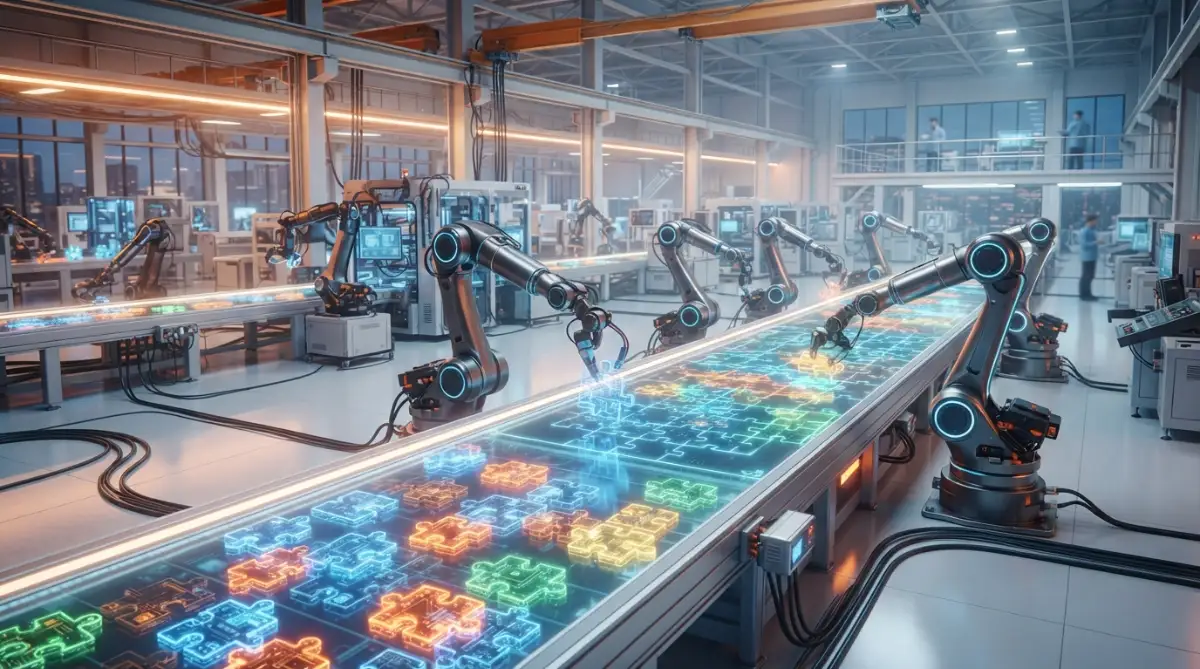
Before we look at the secret tuning knobs that make this process accurate, check out this great visual breakdown that really brings this concept to life.
See exactly how this assembly line of hidden layers operates in real-time:
Adjusting the Dials: How Weights and Biases Work
Now, you might be wondering how these digital detectives know which lines or shapes are actually important. This is where two incredibly important concepts come in: Weights and Biases. Do not let the fancy names scare you off.
Think about how you make a decision when buying a new smartphone. You probably care about battery life, camera quality, and price. However, you might care about the camera quality much more than the battery life. In your mind, you give the camera a heavier "weight" or importance when making your final choice.
Neural networks do the exact same thing. When information passes from one digital node to another, the system assigns a "weight" to that connection. If the model is trying to predict the weather and it sees thick black clouds, it will assign a very heavy weight to those clouds because they are a strong sign of rain.
Biases act like a baseline assumption. For example, if you live in London, your baseline assumption might be that it is going to rain anyway, even if the clouds are not that dark. The AI uses these weights and biases to prioritize information, completely ignoring useless background noise in the raw data.
Here is a personal realization that changed everything for me when I was struggling with these concepts.
Whenever I got confused about weights in machine learning, I started relating it to cooking my favorite soup. I knew I needed salt, but adding too much ruined the dish, so I had to constantly adjust the amount based on taste. Machine learning models do exactly the same thing through trial and error—they just keep adjusting their digital "salt" until the pattern recognition is perfectly balanced.
Real-World Example: Your Email Spam Filter
To make weights and biases easier to digest, look at your email inbox. How does it know what is spam?
- The Weight: The system gives a heavy negative score to words like "FREE MONEY" or "URGENT."
- The Bias: If you never open emails from unknown senders, the system naturally assumes those emails are junk, giving it a baseline bias to block them.
Learning from Mistakes: The Power of Feedback Loops
A machine learning system is rarely correct on its very first try. When you first start riding a bicycle, you wobble and fall down multiple times before your brain figures out how to balance. Artificial intelligence goes through a remarkably similar process of trial and error.
When the system makes a guess, it compares its answer to the actual truth. If it looks at a picture of a muffin and confidently declares it is a chihuahua dog, the system receives an error signal. It realizes it messed up terribly.
This triggers a process where the system goes backward through all those hidden layers we talked about earlier. It tells the digital detectives, "Guys, we got it wrong. We need to adjust our weights and pay attention to different details next time." This backwards communication allows the network to constantly tweak itself.
After running through thousands or even millions of examples, the system fine-tunes its settings so perfectly that it rarely makes a mistake again. It learns from failure just like humans do, but it can fail and learn millions of times in a single minute.
Comparing Human Learning with AI Processing
Sometimes it helps to see these concepts side by side. I have put together a simple breakdown showing how closely an AI mimics our natural thought process.
This table shows that we are not dealing with magic. We are simply dealing with a highly organized system of information sorting.
Shattering Common Myths About Pattern Recognition
There are so many misconceptions floating around the internet about how these models handle data. It is time to clear the air and look at the realistic side of things.
Myth 1: AI completely understands the context of what it is looking at.
This is entirely false. If an AI recognizes a cat, it does not know what a cat actually is. It does not know that cats meow, drink milk, or scratch furniture. It only knows the mathematical pixel pattern that makes up a cat's shape. It is a master of matching shapes, not a master of comprehension.
Myth 2: Neural networks are completely independent and self-aware.
People love to imagine that these systems are sitting in a server room thinking about the meaning of life. In reality, they are just complex calculators waiting for you to press "equals." If you do not feed them raw data, they do absolutely nothing. They have no desires, no thoughts, and no awareness.
Myth 3: You need perfect data to get good results.
While high-quality data is amazing, modern networks are incredibly good at dealing with messy, noisy information. Just like you can recognize your friend's voice over a bad phone connection, a well-trained model can find patterns even if some of the data is missing or corrupted.
The Final Output: Delivering the Answer
After the data has traveled all the way through the input layer and survived the intense scrutiny of the hidden layers, it arrives at the final destination. We call this the Output Layer. This is the moment of truth where the system finally gives you an answer.
Depending on what you asked the AI to do, this output can look very different. If you are using a medical tool, the output might be a simple "Yes" or "No" regarding whether a tumor is present. If you are using a text generator, the output is the next logical word in a sentence.
The output layer gathers all the final calculations from the detectives and presents the most mathematically likely answer. It is a beautifully simple conclusion to an incredibly busy background process. By breaking down the problem step by step, we can see that artificial intelligence is highly approachable and logical.
Taking Control: Getting The Best Results From Smart Algorithms
Now that you understand the basic mechanics of how these systems think, you are already ahead of most people. But just knowing how an engine works does not automatically make you a professional race car driver. If you want to actually use these pattern-matching tools to make your life easier, you have to learn how to steer them properly.
Many people give up on smart tools after just one or two bad experiences. They type a simple question, get a confusing answer, and immediately decide the technology is useless. The reality is that these systems are incredibly powerful, but they need very clear directions from you.
Think of an artificial intelligence model as a highly energetic intern on their first day at the office. This intern is incredibly fast and wants to do a good job, but they know absolutely nothing about your specific business or life. If you give them a vague instruction, they will just guess what you want, and they will probably guess wrong.
If you want long-term success with these algorithms, you need to master the art of feeding them the right information. Let us explore some advanced strategies that professionals use to get perfectly accurate results every single time.
The Golden Rule of Data Hygiene
There is an old saying in computer science that goes, "Garbage in, garbage out." This is the absolute most important rule you will ever learn about data processing. A machine learning model is completely at the mercy of the information you give it.
Imagine you want to teach a system to recognize healthy apples. But instead of showing it pictures of fresh fruit, you accidentally feed it hundreds of pictures of rotten, brown apples. The system will memorize the spots, the decay, and the bad colors. The next time you show it a perfect, shiny red apple, it will tell you it is not an apple at all.
When you use smart tools for your business, you must make sure your numbers and records are clean. If your sales spreadsheets are full of errors, missing names, or duplicate entries, the algorithm will confidently give you terrible business advice. Before you ever ask a computer to analyze your information, you need to spend time organizing it properly.
Quick Comparison: Good Data vs. Bad Data
Here is a fast breakdown of what happens when you feed a smart tool different types of information:
Directing the Machine with Precision
You have to learn how to talk to these tools like a highly specific manager. Instead of asking a smart tool to "write a sales email," you need to give it strict boundaries and context.
Tell the system who it is writing for, what the tone should be, and exactly what to avoid. A better instruction would be, "Write a short, friendly email to a new customer welcoming them to our bakery, and do not use any complicated business jargon."
By giving the system these boundaries, you are basically narrowing down the digital puzzle pieces it has to sort through. You stop the hidden layers from wandering off in the wrong direction.
Protecting Your Private Information
While we are feeding all this rich context to the machine, we have to talk about personal security. This is a massive concern for everyday professionals who are just trying to get their work done faster.
When you type a private company memo into a public chat assistant to check for spelling errors, you are handing over raw data to an external server. The company that owns that model might use your private memo to continue training their system. Your highly sensitive business ideas could accidentally become part of the machine's permanent memory.
You should never feed sensitive financial numbers, private medical records, or confidential client details into an open public tool. Instead, focus on cleaning up your digital footprint and maintaining strict boundaries about what you share online. Always read the privacy settings of any new software you decide to test.
The Dark Side of Pattern Recognition: Dangerous Traps to Avoid
It is incredibly easy to fall in love with automated tools when they start saving you hours of boring work. But this honeymoon phase can blind us to some very serious dangers. People get so comfortable relying on computers that they completely turn off their own critical thinking skills.
This leads to a psychological trap known as automation bias. This happens when a human being blindly trusts a machine's decision, even when their own eyes and common sense tell them the machine is wrong.
Imagine using a smart navigation app on your phone while driving. The app tells you to take a sudden right turn. You look out the window and see a lake directly in front of you. Automation bias is the scary phenomenon where a person will actually drive their car into the lake simply because "the computer said so."
When we stop questioning the output of an algorithm, we open ourselves up to massive financial and personal risks. Let us look at the most common mistakes people make when dealing with pattern recognition.
The Danger of Algorithmic Prejudice
Computers do not have morals, empathy, or a sense of fairness. They only care about numbers and historical trends. If you feed them biased history, they will happily create a biased future.
Let us say a large company wants to build a smart tool to review job resumes and pick the best candidates. To train the system, the company feeds it 10 years of past hiring data. However, for the last 10 years, human managers at this company secretly favored hiring young men and unfairly rejected women.
The machine looks at this raw data and finds a distinct pattern. It assumes that "being a young man" is the mathematical secret to being a good employee. From that day on, the automated tool silently throws every woman's resume into the trash. The computer is not trying to be evil; it is just perfectly copying human mistakes.

This happens in banking, housing, and healthcare all the time. If you want to understand how deep this goes, spending time observing recent technology trends reveals that fighting biased algorithms is currently the biggest challenge in the tech world. Relying on an unfair tool can destroy your company's reputation overnight and ruin innocent people's lives.
Memorizing Instead of Learning
There is a technical trap that developers call "overfitting," but you can just think of it as memorizing the test answers. This happens when a model spends too much time studying a very small, specific set of data.
Imagine a student preparing for a math exam. Instead of learning the actual rules of addition and subtraction, the student simply memorizes every single answer in the practice book. When exam day comes, the teacher changes the numbers slightly. The student completely fails because they never learned the logic; they only memorized the exact shapes of the practice problems.
A machine learning system can do the exact same thing. If you train a model exclusively on photos of cats indoors on couches, it will memorize the couch just as much as the cat. If you then show it a picture of a cat sitting outside on the grass, the model will fail to recognize the animal.
This causes huge headaches for business owners who spend thousands of dollars on custom software, only to realize the software breaks the moment the real world gets slightly messy. You must test these systems with fresh, unexpected information before trusting them with important decisions.
The Trap of False Confidence
Another major pitfall is assuming these systems will boldly admit when they do not know something. A smart model is designed to give you an answer, and it will often give you an answer even if it has to completely guess.
In the tech community, this is sometimes called "hallucinating." The system connects the dots in the wrong order and presents a completely fake fact with absolute confidence. It will use professional language and structure, making the fake information sound incredibly convincing.
If you are a student using these tools to write a paper, or a lawyer using them to find past cases, this false confidence can ruin your career. You always have to double-check the final output against real-world facts. If you want to keep exploring deeper tech insights, you will quickly learn that treating AI as an assistant rather than an absolute authority is the smartest move you can make.
Your Action Plan for Tomorrow: Thriving Alongside Smart Technology
We have covered a massive amount of ground today, stripping away the confusing math and looking at the plain reality of these digital systems. You now know that these hidden layers are simply digital detectives passing notes down a long assembly line.
You no longer have to feel intimidated when tech enthusiasts throw around big words. You understand the basic input and output process, the importance of good data, and the real dangers of blind trust. This knowledge puts you in a powerful position to actually benefit from the ongoing tech revolution.
Your next step is incredibly simple: start experimenting with small, low-risk tasks. Do not try to automate your entire life by tomorrow morning. Instead, pick one tiny, annoying administrative task you hate doing, and see if a pattern-matching tool can help you organize it better.
Always keep human oversight in the loop. Think of yourself as the pilot and the computer as your autopilot system. The autopilot is great for keeping the plane steady during a long flight, but you still need your hands on the controls during takeoff and landing.
By actively engaging with these tools safely, you are preparing yourself for a future where humans and machines work together effortlessly. While experts debate the understanding the true meaning of artificial general intelligence, your focus should remain on practical, everyday benefits. Stay curious, protect your privacy, and always question the results.
Over the past year, I realized that my fear of falling behind was actually doing more damage than the technology itself. Once I started treating these complex algorithms like regular household tools, my daily stress completely vanished. I strongly encourage you to stop worrying about the complicated math, open up a simple AI tool today, and just start asking it questions.
Common Questions About Machine Learning Operations
Do neural networks need a constant internet connection to work?
Not necessarily. While training a massive system requires huge data centers and an internet connection, a finished, trained model can actually run entirely offline. Many modern smartphones have tiny, optimized neural networks built directly into their chips for features like face unlock and photo editing.
Can an AI model explain exactly how it reached its final answer?
Most traditional deep learning models cannot explain their thought process. They operate like a "black box" where data goes in and an answer comes out, but the millions of tiny mathematical decisions inside are too complex for humans to track. However, researchers are currently spending huge amounts of money developing new systems that can clearly explain their reasoning to users.
Is my personal data completely safe when I talk to these digital assistants?
You should always assume that any free, public tool is storing your conversations to improve its future performance. If you are deeply concerned about safeguarding your personal data, you should look into private, locally hosted tools that never send your information to external servers. By following federal data security standards, you can easily learn how to lock down your personal files before experimenting.
How long does it actually take to train a smart system?
This depends entirely on the size of the project and the computer hardware being used. A simple model predicting house prices based on a small spreadsheet can be trained on a regular laptop in less than five minutes. However, massive language tools that write essays require supercomputers running non-stop for several months just to understand basic grammar patterns.
Will these pattern-matching systems replace human creativity?
These tools are incredibly good at remixing old patterns, but they cannot feel emotion or experience human struggles. True creativity requires personal perspective, pain, joy, and lived experiences that a machine simply does not possess. They will likely replace boring, repetitive tasks, freeing up more time for humans to focus on highly creative and meaningful work.
Disclaimer: The information provided in this article is for educational and informational purposes only. It does not constitute professional tech, financial, or legal advice. Software tools, privacy standards, and technology features change frequently; always conduct your own research and review official privacy policies before inputting sensitive data into any machine learning model or third-party platform.