The Heartbreak at the Check-In Counter: A Hard Lesson Learned
Have you ever handed your passport to an airport agent, only to watch their face drop? Yeah, that happened to me. I thought I scored an amazing flight deal on a random discount site, but instead, I was left stranded at the check-in counter with a crying family and a fake reservation. Let me show you how these sneaky booking traps actually work behind the scenes, so you never have to empty your wallet at the last minute just to save your vacation.
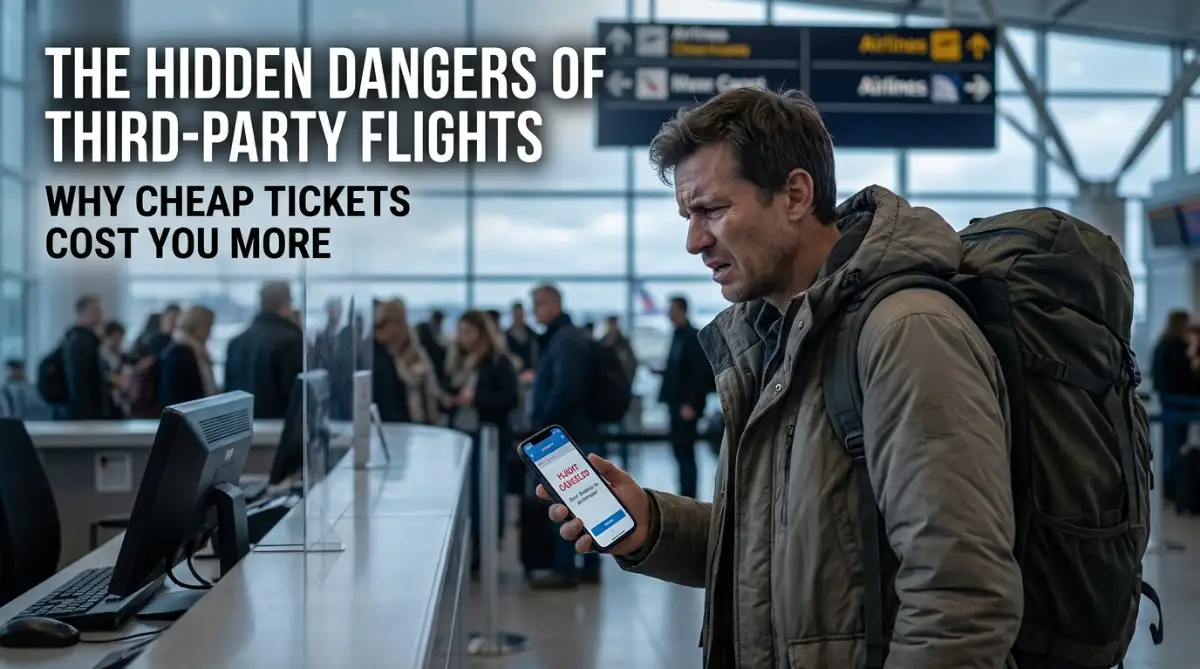
I confidently handed my passport to the airline agent, expecting a smooth and easy check-in process. Instead, she typed on her keyboard for what felt like an eternity before looking up with a deeply confused expression.
She calmly told me that my reservation simply did not exist in their system, even though I had a confirmation email glowing brightly on my phone screen. I had booked through a popular discount website to save just fifty dollars. That single, small decision almost ruined our entire family trip.
I spent the next two hours standing on the side of the terminal, frantically calling a customer service number that kept me on an endless automated hold. The airline staff could not help me because I did not buy the ticket directly from them.
In the end, I had to buy completely new, incredibly expensive last-minute tickets right there at the counter just so my family would not cry. This is a terrifying situation that thousands of regular people face every single day.
But behind that cheap price tag hides a massive amount of silent anxiety. The mental toll of wondering if your ticket is actually real can easily destroy your peace of mind leading up to the trip.

What You Will Learn Before Booking Your Next Flight:
- Why that 6-letter confirmation code from a discount site doesn't actually mean you have a seat.
- How "phantom fares" trick you into paying more at the final checkout screen.
- The simple Google Flights trick to find cheap routes while keeping your ticket 100% safe.
- Why downloading the official airline app is the best way to protect your trip from sudden schedule changes.
Why Your Confirmed Ticket Might Just Be a Mirage
Most travelers believe that paying for a flight online means the seat is instantly theirs. We assume that the moment our credit card is charged, a magical message goes to the airline, and everything is perfectly secured.
Unfortunately, the reality of the travel industry works entirely differently. When you buy from a middleman, you are essentially playing a very expensive game of telephone with your vacation plans.
Let us break down exactly what happens behind the scenes when you hit that final purchase button on a discount website. Understanding this process will completely change how you plan your future trips.
Quick Look: Direct Booking vs. Discount Sites
| What Happens? | Direct Airline Booking | Third-Party Discount Site |
| :--- | :--- | :--- |
| Seat Status | Instantly ticketed and confirmed. | Just a "reservation hold" until they pay the airline. |
| Flight Changes | Airline texts you right away. | Agency might forget to forward the email to you. |
| Refund Speed | Money goes straight back to your card. | Agency holds your cash, sometimes for months. |
The Big Difference Between "Reserved" and "Ticketed"
This is the most common trap that catches completely innocent travelers off guard. When you book on a third-party site, they usually give you a booking reference number right away.
You see that six-letter code and you feel a deep sense of relief. But what you do not realize is that the agency has only requested a reservation, and they have not actually paid the airline for your seat yet.
Sometimes, these agencies wait hours or even days to process the actual payment to the airline. If the price of the flight goes up during that waiting period, the agency might just cancel your request without warning you.
You show up to the airport with your printout, only to find out that the airline canceled your hold because they never received the money. The agency kept your funds, and you are left completely stranded at the gate.
Navigating the Customer Service Blame Game
Imagine your flight gets delayed by ten hours, or worse, canceled entirely due to a massive storm. If you bought your ticket directly from the airline, you simply walk up to their desk, and they rebook you on the next available plane.
When you use a third-party portal, you lose that direct line of support. The airline agents will look at you apologetically and say, "We cannot touch this ticket, you have to call your travel agency."
You then call the agency, and they tell you that the airline has control of the ticket on the day of departure. You are thrown into a frustrating endless loop of pointing fingers, while other passengers take all the remaining seats on the next flights.
Watch this breakdown to see exactly how communication breaks down between agencies and airlines during sudden flight changes.
How Phantom Fares Trick Your Wallet
Have you ever clicked on an unbelievably cheap flight, spent fifteen minutes filling out all your personal details, and then suddenly the price jumps by two hundred dollars right before checkout? These are called phantom fares.
Third-party portals often display outdated prices pulled from old data caches just to grab your attention and get you onto their website. By the time you try to check out, the system finally checks the live airline database and realizes that cheap seat was sold hours ago.
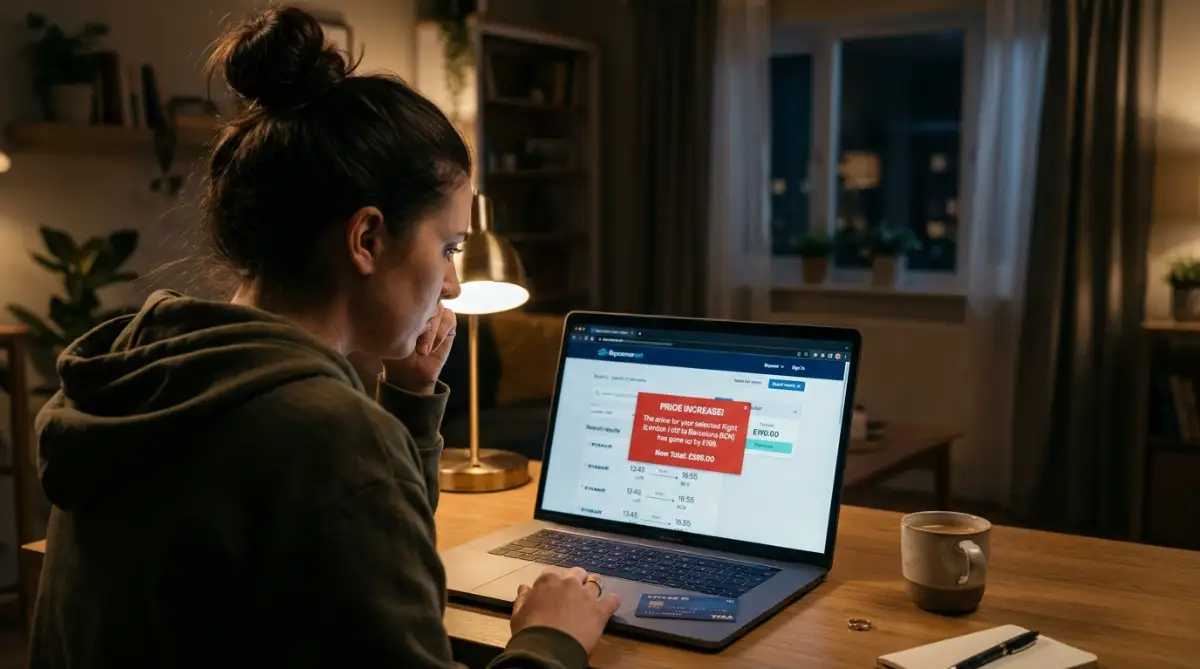
They hope that since you already typed in your passport number and credit card, you will just accept the higher price out of pure frustration. It is a very clever psychological trick that works on almost everyone.
I quickly learned that seeing a booking reference on an agency app means absolutely nothing to the actual airline. My biggest mistake was assuming the middleman immediately paid the airline for my seat, but they actually hold the money and wait for bulk processing. Always take your agency booking reference and plug it straight into the official airline website to see if your ticket is actually ticketed, not just reserved.
The Silent Danger of Schedule Changes
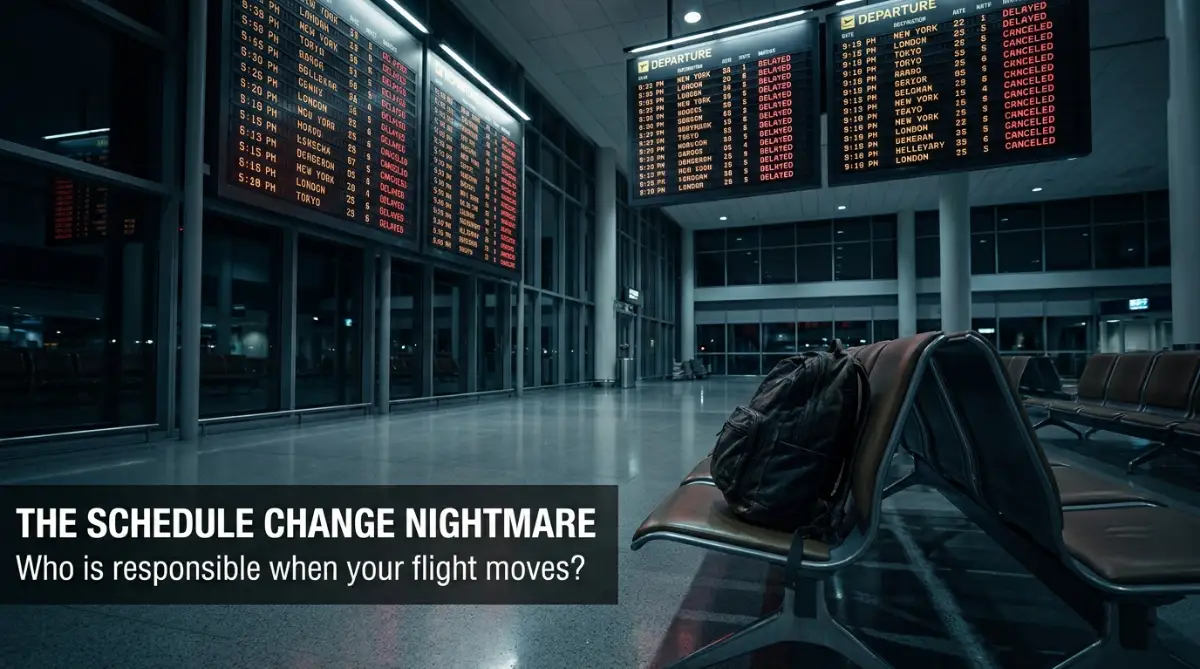
Airlines change their flight schedules all the time. Sometimes a flight leaves ten minutes earlier, and sometimes it is moved to an entirely different day.
When you book directly, the airline sends an urgent email or a text message directly to your personal phone. You get the update instantly and can plan accordingly.
When you book through a third-party, the airline sends that important update to the agency's corporate email address instead. It is then the agency's responsibility to forward that message to you.
Very often, their automated systems fail, and that email never reaches your inbox. You arrive at the airport exactly on time, only to watch your plane taking off through the terminal window because the schedule changed three weeks ago.
The Real Truth About Hidden Baggage Policies
Low-cost international flights are famous for their incredibly strict luggage rules. You might find a ticket that looks like a total steal, but it comes with strings attached.
Third-party sites are notoriously bad at clearly explaining exactly what kind of bags you are allowed to bring. They might show a little suitcase icon, leading you to believe a cabin bag is perfectly fine.
When you get to the boarding gate, the airline staff weighs your bag and tells you that your specific ticket class only allows a tiny personal item that fits under the seat. Because you bought a highly restrictive agency fare, you are suddenly forced to pay a hundred-dollar penalty right there at the gate.
This completely wipes out any money you thought you were saving. In fact, you often end up paying significantly more than if you had just bought a standard ticket straight from the airline in the first place.
The Telephone Game with Your Hard-Earned Money
Think about how a refund works when things go terribly wrong. If a global event happens and borders close, you want your money back as fast as possible.
If you bought directly, the airline processes the refund straight back to your original credit card. It is a clean, simple transaction that usually takes a few business days.
With a middleman, the airline sends the money to the agency. The agency then holds onto your money for as long as they possibly can, earning interest on it, before eventually passing it back to you.
Some people wait up to six months just to get a refund for a flight they never took. Many discount websites even charge their own hidden "processing fee" just to handle the refund that the airline gave them for free.
The Nightmare of Missed Connections
Booking complex trips with multiple stops is where third-party portals become extremely dangerous. They often piece together flights from completely different airlines to build the cheapest possible route.
This is known as a self-transfer or a hacker fare. For example, you might fly the first leg of your journey on one airline, have a two-hour layover, and then fly the second leg on a totally unrelated carrier.
If your first flight is delayed and you miss your connection, you are in massive trouble. Because the two airlines have no official partnership, the second airline views you simply as a passenger who did not show up.
They will cancel your ticket, and they have absolutely zero obligation to put you on another flight for free. You are completely on your own, stuck in a random country, forced to buy an expensive ticket home.
Navigating Seat Selection Nightmares
We all want to sit next to our loved ones on a long fourteen-hour flight over the ocean. Choosing your seats early is the best way to make sure your family stays together.
When you book directly on an airline website, you see a live, accurate map of the airplane. You can clearly pick the seats you want and pay for them right then and there.
Third-party websites often let you request a seat preference, like an aisle or a window, but they cannot actually guarantee it. Their system does not always talk directly to the airline's seating chart in real-time.
You might show up to the airport thinking your family is sitting together in row twelve. Instead, you find out the airline scattered your family across the very back of the plane, and there is nothing the flight attendants can do about it.
The Truth About Name Changes and Typos
Humans make simple mistakes all the time. You might accidentally spell your middle name wrong, or miss a single letter in your last name while typing fast on your phone.
If you book directly with an airline and notice the typo within twenty-four hours, they will usually fix it for free with a quick phone call. They understand that honest typing mistakes happen.
Third-party portals treat name changes very differently. They often claim that the ticket is strictly non-changeable, and they will try to charge you a massive administrative fee just to fix a single letter.
Sometimes, they completely refuse to fix it at all, telling you that you must buy a brand-new ticket. An airline ticket must match your passport exactly, so a simple spelling mistake on a discount site can become a total disaster.
A Quick Reality Check on Airline Loyalty Programs
Many travelers love collecting miles and points to earn free future flights. It is one of the best perks of flying frequently.
However, many of the deeply discounted fares sold on third-party websites do not earn any frequent flyer miles at all. The airlines specifically block these cheap agency tickets from earning rewards.
You might fly halfway across the world, expecting to earn enough points for a free domestic trip later. But when you check your account, your balance still says zero.
If you value loyalty points and want to achieve elite status for free upgrades, booking directly is almost always the only valid path.
Understanding the 24-Hour Cancellation Rule
There is a very specific rule enforced by many aviation authorities that allows passengers to cancel a flight within twenty-four hours of booking for a completely full refund, no questions asked.
When you book directly with the airline, this process is usually as simple as clicking one button on their website. The money goes right back to your card instantly.
Third-party portals often try to find sneaky loopholes around this protective rule. They might make their cancellation buttons incredibly hard to find, or their customer service wait times so long that the twenty-four-hour window passes before you can speak to a human.
They also sometimes apply their own site-specific cancellation fees, completely ignoring the government regulations meant to protect you.
Why Your Meal Preferences Get Lost in Translation
Dietary restrictions are very serious. If you are allergic to certain foods or require a specific vegetarian meal, you absolutely need the airline to know before you fly.
When you put your meal request into a third-party booking engine, that information does not always transfer correctly to the airline’s catering department. It often gets lost in the digital space between the two computer systems.
You end up on a ten-hour flight with absolutely nothing safe to eat. To guarantee your meal preference, you must always log directly into the airline's own system using your confirmation code to verify the request went through manually.
The Risk of Unnotified Border Rule Changes
International travel requires a lot of complicated paperwork, visas, and health declarations. These government rules can change overnight without any warning.
Airlines have dedicated teams that monitor these border rules. If you book directly, they will often send you a helpful checklist before your flight to ensure you have the right documents.
Online travel agencies rarely provide this level of personalized care. They sell you the ticket and then completely wash their hands of the situation. If you show up missing a required transit visa that you did not know about, you will be denied boarding instantly.
By removing the middleman, you create a direct line of communication with the people actually flying the plane. You get faster support, clearer information, and the deep peace of mind that comes from knowing your ticket is truly safe and completely yours.
Pro-Level Booking Strategies to Protect Your Trip
Understanding the hidden traps of middleman agencies is only half the battle. Now, we need to talk about exactly how you can protect your travel plans and your money moving forward.
I have spent hundreds of hours talking to airline gate agents, ticketing specialists, and frequent travelers. They all agree on a specific set of rules that you must follow if you want to avoid airport disasters completely.
These are not just casual tips; these are essential strategies for anyone planning a serious international trip. By changing a few simple habits, you can take total control of your travel experience.
The Power of Direct-to-Carrier Pricing Tools
You should never start your flight search on a specific airline’s website, because you will obviously only see their prices. You still want to use powerful search engines to compare your options across the entire market.
The trick is to use tools that act strictly as aggregators, not travel agencies. Google Flights is currently the absolute best platform for this specific purpose.
Google Flights searches thousands of routes instantly and shows you a massive calendar of cheap dates. But the most important part is what happens when you finally click to buy the ticket.
Instead of taking your credit card information directly, Google forwards you straight to the official airline website to complete the purchase. You get the incredible search power of an aggregator, but the pure safety of a direct booking.
Understanding the 24-Hour Price Drop Trick
Here is a little secret that can save you a significant amount of money without any risk at all. It takes advantage of that protective twenty-four-hour cancellation rule we talked about earlier.
When you book a ticket directly with an airline, you have twenty-four hours to change your mind. If you find a perfectly good flight on a Tuesday morning, go ahead and book it directly with the carrier.
Then, set a fast price alert on your phone for that exact same flight route. Keep a close eye on the prices for the next twenty-three hours.
If the airline suddenly drops the price of that exact flight later that night, you can simply cancel your original ticket for a full refund and instantly rebook it at the newly discounted price. You secure your seat early, but you still grab the better deal if one appears quickly.
Leveraging Multi-City Searches Like a Professional
Many people think they have to use third-party hacker fares to build complex trips across multiple countries. They assume the airlines cannot handle complicated travel maps.
This is completely false. Almost every major airline website has a button specifically labeled "Multi-City" right next to the standard round-trip option.

You can build an incredible itinerary, like flying from New York to London, and then flying back from Paris to New York. The airline’s own computer system will connect the dots using their official partner networks.
Because the airline built the ticket themselves, all your connecting flights are fully protected under one single confirmation number. If one leg is delayed, they take full responsibility for getting you onto the next available plane.
The Strategy Behind Official Airline Phone Apps
I cannot stress this enough: the moment you book a ticket, you need to download the official mobile app for that specific airline immediately. Do not rely on email confirmations.
Log into the app using your confirmation code and your last name. Once your ticket appears on the app's dashboard, you finally have total proof that your seat is truly secured in their internal system.
The app becomes your direct lifeline. If there is a sudden gate change, a weather delay, or a random baggage policy update, the official app will push a notification right to your phone screen instantly.
You will often know about a delay before the airport staff even announces it over the loudspeaker. This gives you a massive advantage when rushing to rebook a different flight before the other passengers realize what happened.
The Worst Traps Travelers Keep Falling Into
Even with the best intentions, people still make extremely costly mistakes when hunting for vacation deals. The desire to save money can sometimes blind us to the glaring red flags right in front of our eyes.
I have seen countless travelers ruin their entire holiday budget because they ignored basic safety rules. Let us talk about the specific pitfalls that you must avoid at all costs.
Falling for the "Only Two Seats Left" Illusion
Online travel agencies are absolute masters of psychological pressure. You have definitely seen those bright red warnings flashing on your screen saying, "Hurry! Only 2 seats left at this price!"
This is heavily designed to trigger your fear of missing out. They want you to panic and type in your credit card details before you have time to think clearly.
In reality, the airline might have a hundred empty seats left on that plane. The agency is simply saying that they only have two seats left in their specific discounted block of tickets.
Never let a countdown timer or a flashing red warning force you into a rushed financial decision. Take a deep breath, open a new browser tab, and go check the official airline website to see the actual seat availability.
Ignoring the Hidden Realities of Basic Economy
In recent years, almost every major airline introduced a new ticket class called "Basic Economy" to compete with ultra-cheap discount carriers. Third-party sites absolutely love selling these specific tickets because the base price looks amazing.
The problem is that basic economy strips away every single standard travel right you normally expect. You cannot pick your seat, you board the plane absolutely last, and you often cannot even bring a normal carry-on bag for the overhead bin.
When people book these fares on third-party sites, the extreme restrictions are usually buried deep in the small print. Travelers show up to the airport expecting a normal flight experience and are completely shocked when they are hit with massive extra fees just to check a bag.
If a price looks too good to be true, it is almost certainly a basic economy fare. You must read the fine print incredibly carefully to understand exactly what you are actually buying.
Travel Myth vs. Travel Fact
- The Myth: Discount sites always have secret, ultra-cheap tickets that airlines hide from you.
- The Fact: Airlines control the pricing. If an agency ticket is wildly cheaper, you are likely buying a "Basic Economy" shell. This means no seat choices, zero overhead bin space, and massive hidden fees at the boarding gate that wipe out your savings.
Relying on Outdated Travel Advice Forums
The internet is full of old travel forums and out-of-date blog posts claiming they know the ultimate secret to cheap flights. You might read a post from five years ago saying you should always book your tickets exactly at midnight on a Tuesday.
The modern aviation industry is completely run by advanced artificial intelligence and dynamic pricing algorithms. Prices change constantly based on live demand, weather patterns, and even local sports events.
Basing your entire vacation budget on an old internet rumor is a massive mistake. The only real secret is being flexible with your travel dates and using reliable historical flight price data to understand what a normal ticket actually costs.
If you focus on tracking the data over a few weeks instead of hoping for a magical Tuesday discount, you will always secure a much safer and fairer price.
Taking Back Control of Your Travel Experience
Planning a major trip should be an exciting and joyful experience, not a stressful battle against confusing computer systems. The moment you stop relying on middlemen to handle your money, your entire approach to travel will change.
Booking directly with the people who actually own the airplanes gives you a deep sense of security that you simply cannot buy on a discount website. You gain direct access to real human support when things go wrong, and you completely eliminate the anxiety of phantom tickets and hidden agency fees.
By using powerful aggregators to find the best routes and then finalizing the purchase strictly on the airline’s official page, you get the best of both worlds. You secure a fair price while keeping your consumer rights completely intact.
The next time you see a massive discount on a completely unknown travel portal, I want you to stop and think about the true cost of that ticket. Ask yourself if saving thirty dollars is really worth risking your entire family vacation.
I know how tempting those cheap flashing prices can be, because I used to click them too. But ever since I started booking my flights directly, my airport anxiety has completely disappeared, and I genuinely want you to experience that exact same peace of mind on your next adventure.
The Most Pressing Questions About Flight Bookings
Can a third-party agency legally cancel my flight without telling me?
Yes, unfortunately, this happens quite often. If the agency fails to process the payment to the airline in time, or if they encounter a pricing error in their system, they can cancel your reservation completely. Because you did not buy directly from the carrier, the airline cannot stop the agency from dropping your ticket.
Is it ever safe to use an online travel agency?
Using a middleman is generally only okay if you are booking a very simple, short domestic flight where you have absolutely zero checked bags. However, for any complex international trip, expensive long-haul flights, or family vacations, the risks of using an agency far outweigh the tiny potential savings.
How do I know if my ticket is fully confirmed?
The only way to be one hundred percent sure is to take the booking reference number (PNR) and type it into the official airline’s website under the "Manage Booking" section. If you can see your name, your seat map, and a 13-digit e-ticket number, your seat is safe and fully paid for.
What should I do if an agency refuses to refund my canceled flight?
If an agency holds your money hostage after a valid cancellation, immediately contact your credit card provider and explain the situation clearly. You can often file a formal chargeback dispute, as credit card companies are very good at fighting fraudulent travel agency practices on your behalf.
Will airlines match a cheaper price I found on a discount site?
Unlike big hotel chains, most major airlines do not offer price matching guarantees against third-party websites. If you see a massive price difference, it is almost always because the agency is selling a highly restrictive basic economy fare that strips away all your luggage and seating rights.
Disclaimer: The information provided in this travel guide is for educational and informational purposes only. Airline policies, pricing algorithms, and government travel regulations change frequently. Always verify current luggage rules, cancellation policies, and ticket terms directly with your chosen airline before making any financial purchases.