
The Day I Watched My Savings Disappear in Pixels
You check your phone, and boom—your portfolio is bleeding red. Your brain screams at you to hit the sell button before things get worse. I know that feeling all too well because I let panic cost me a huge chunk of my savings. Let me show you exactly how your own mind is tricking you out of your money, and how you can fix it right now.
Instead, my own brain had completely betrayed me. I let pure panic dictate my actions, smashing the sell button when the price was at its absolute lowest. It was a deeply humiliating moment for me. I finally realized that my biggest enemy in investing was not the market, but my own unpredictable emotions.
I thought I was a logical person until the market started dropping. My hands were literally shaking, and my heart was racing like I was running a marathon. I broke every single rule I had promised myself I would follow.
This silent trap catches almost everyone who is new to this space. You read the charts, you study the projects, and you think you are totally prepared. But nothing prepares you for the emotional rollercoaster of seeing real money fluctuate wildly right before your eyes.
The mental peace of so many new investors is being quietly destroyed by these invisible psychological traps. We are constantly fighting a war inside our own heads without even knowing it. The anxiety becomes a heavy shadow that follows you everywhere.
It is heartbreaking to see beginners hand over their hard-earned money to the market simply because they cannot control their own psychology. People who are incredibly smart in their daily jobs suddenly make terrible decisions when a chart turns red. They act entirely out of fear or extreme greed.

Your 30-Second Survival Guide
- Your brain treats dropping charts like a physical threat—learn to override that panic.
- FOMO forces you to buy from smart investors who are already cashing out.
- Do not average down on bad assets; you are just buying more of a sinking ship.
- Automate your buying and selling so your emotions cannot touch your money.
Unmasking the Mind Games: Why Your Brain Hates Digital Assets
Our human brains were simply not designed to handle a market that never sleeps. For thousands of years, our survival depended on quick, emotional reactions to immediate threats. If you saw a tiger, you ran away immediately without thinking twice.
Today, our brains treat a dropping line on a screen exactly like a tiger in the bushes. The fear center in your brain takes over, completely shutting down your logical thinking. You cannot make good financial decisions when your body is in full survival mode.
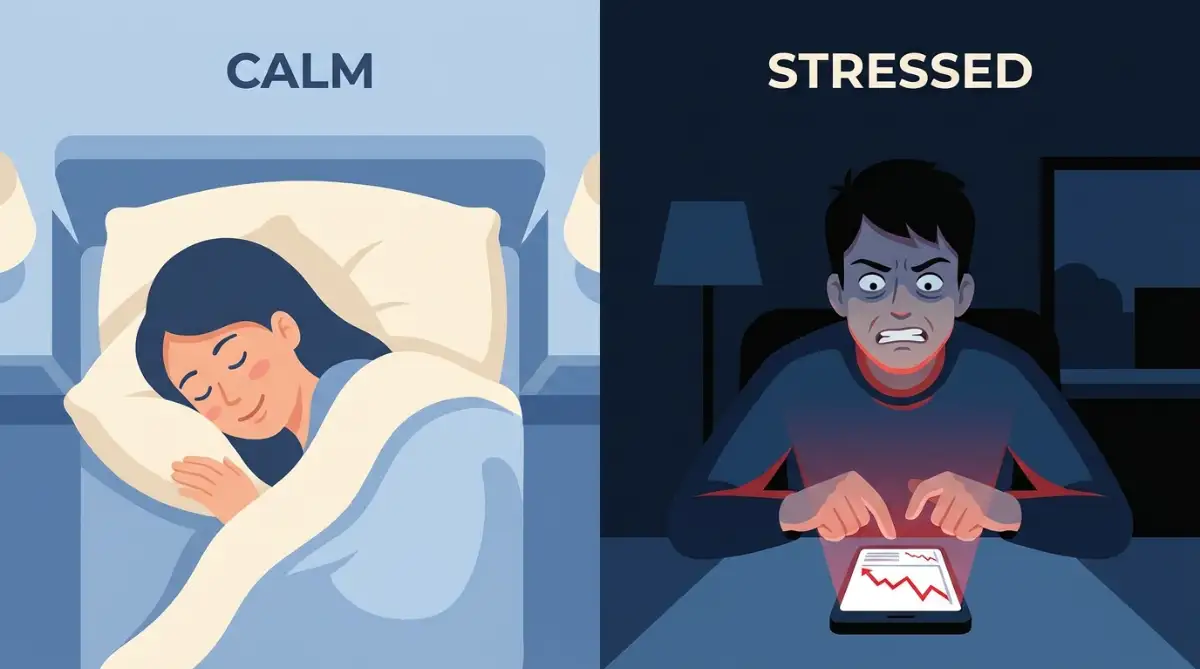
To fix this massive problem, we need to completely expose the specific psychological traps that are hurting your portfolio. Once you can name the enemy, you take away its power over you. Let's break down exactly how your mind is secretly working against your financial goals.
The "Fear of Missing Out" (FOMO) Infection
Imagine you are walking past a store and see a massive crowd of people fighting over a limited-edition product. You do not even know what the product is, but suddenly you desperately want one. You feel a burning need to join the crowd because you think they know a secret you do not.
This exact feeling is what we call FOMO, and it is the fastest way to destroy your account balance. In the investing world, FOMO hits hardest when you see a specific coin jumping up by fifty or a hundred percent in a single day.
You watch the green candles shooting up on the chart, and your brain starts doing fake math. You tell yourself, "If I just put my rent money in right now, I could double it by tomorrow." You are no longer investing based on logic; you are basically buying lottery tickets out of pure desperation.
When you buy out of FOMO, you are almost always buying from smart investors who bought early and are now taking their profits. You are the person they are selling to. By the time you feel safe enough to jump on the hype train, the train has usually reached its final destination.
Market Reality Check: FOMO Myth vs Fact
- The Myth: If I don't buy this coin right this second, I will miss my only chance to make real money.
- The Fact: The market is full of endless opportunities. There is always another train leaving the station tomorrow. I missed out on massive runs three different times last year, but keeping my cash safe allowed me to buy the next big dip comfortably.
The Sunk Cost Fallacy: Marrying Your Mistakes
Have you ever paid for a movie ticket, realized the movie was absolutely terrible after twenty minutes, but stayed until the end anyway? You tell yourself you have to stay because you already spent the money. This is the sunk cost fallacy in action.
In your portfolio, this happens when you buy a coin and its value drops significantly over time. Instead of accepting the loss and moving on to better opportunities, you stubbornly hold onto it. You refuse to sell because hitting that button makes the financial loss feel permanent and real.
You start inventing wild stories in your head about how the project will magically recover and make you rich again. You become emotionally attached to a digital asset that does not care about you at all. You are marrying your worst mistakes instead of divorcing them quickly.
I learned this lesson the hard way a few years ago. I held onto a failing project for months, watching it bleed slowly to zero, just because I was too proud to admit I made a bad choice. My Pro Tip for you is this: If you would not buy that same coin today at its current price, you should not be holding it in your portfolio right now.
The "Hold or Fold" Decision Matrix
Not sure if you should keep that losing asset? Ask yourself these quick questions:
- Did the core team abandon the project? (If yes -> Sell immediately)
- Is my money stuck here just because I hate losing? (If yes -> Cut the loss)
- Would I buy this exact asset today at its current low price? (If no -> Time to move on)
Confirmation Bias: Living in an Echo Chamber
Humans love being told that they are right. We actively seek out information that proves our current beliefs and completely ignore facts that challenge us. This is called confirmation bias, and it is a silent killer of new portfolios.
When you buy a new asset, you suddenly start following accounts on social media that only say positive things about it. You join specific community groups where everyone constantly screams that the price will go to the moon. You create a comfortable bubble of pure positivity around yourself.
If a highly respected analyst posts a warning about your investment, you instantly call them a hater or a fake. You completely ignore valid criticism because it makes you feel uncomfortable and scared. This echo chamber blinds you to obvious warning signs that the market is changing direction.
Want to truly understand how market trends shift before getting caught off guard? Watch this brilliant breakdown on how to decode market patterns safely:
Breaking out of your echo chamber is incredibly uncomfortable, but it is entirely necessary for your financial survival. You must actively search for smart people who disagree with your investment choices. If your thesis cannot survive a little bit of logical criticism, it was probably a weak thesis to begin with.
Revenge Trading: Trying to Punish the Market
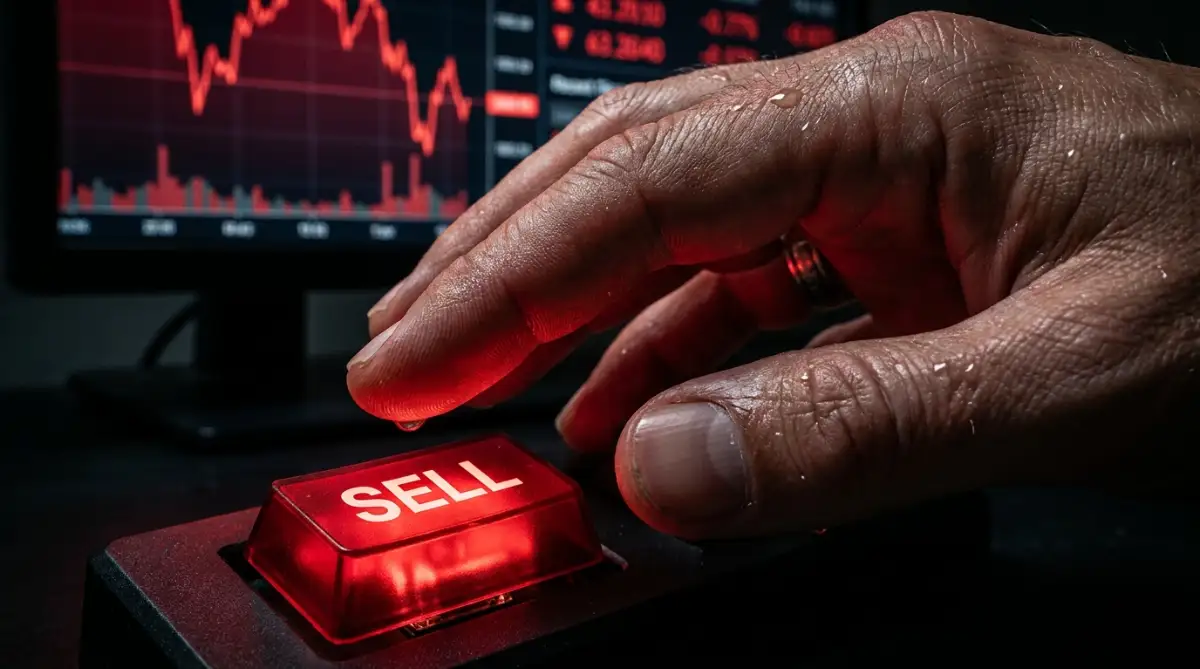
Losing money hurts deeply, and our natural human instinct is to fight back and get even. If you take a heavy loss on a trade, you might feel an intense burning desire to immediately win that exact amount of money back. This is known as revenge trading.
You become angry and frustrated, completely throwing your carefully planned strategy out the window. You open a brand new position right away, usually taking on significantly more risk than you normally would. You are no longer trading to make money; you are trading to repair your damaged ego.
The market is not a person, and it does not have feelings. It does not know who you are, and it certainly does not care that you just lost your savings. Trying to punish a mathematical chart is like trying to punch the ocean because a wave knocked you over.
Revenge trading almost always leads to a second, much larger loss. Your mind is clouded with anger, making it impossible to see clear entry and exit points. The best thing you can do after a heavy loss is simply close your laptop and walk away for a few days.
Rewiring Your Brain for Logical Investing
Now that we have exposed the ugly psychological traps hiding in the shadows, we need to build a strong mental defense system. You cannot just turn off your human emotions completely. However, you can create strict systems that prevent those emotions from touching your money.
Winning in this space is heavily dependent on boring, repetitive routines rather than exciting gambles. The best investors in the world look incredibly bored while they work. They are simply executing a carefully planned system without any emotional attachment to the outcome.
Let's look at some deeply practical steps you can take today to completely rewire how your brain handles market pressure. These are real habits you can start building right now to protect your peace of mind.
Setting the "Sleep Well at Night" Threshold
The absolute most important rule of investing is position sizing. If you are constantly checking the market while lying in bed, you have invested way too much money. Your financial exposure has crossed your personal panic threshold.
You need to sit down and honestly ask yourself how much money you could completely lose tomorrow without it ruining your actual life. This number is your "Sleep Well at Night" limit. You should never, under any circumstances, let your portfolio exceed this specific amount.
When your investment size is comfortably small, you naturally stop caring about daily price drops. You stop experiencing extreme FOMO because your life is perfectly fine without hitting a massive jackpot. Small, calculated positions allow your logical brain to stay fully in control of the steering wheel.
Journaling Your Emotional Triggers
Professional athletes watch replays of their games to see exactly where they made mistakes. You need to do the exact same thing with your financial decisions by keeping a very simple trading journal. This is not about writing down numbers; it is about writing down your feelings.
Every single time you buy or sell an asset, write down a few quick sentences explaining why you did it. Be brutally honest with yourself about your emotional state at that exact moment. Did you buy because a chart looked perfectly aligned, or because your favorite influencer hyped it up?
After a few weeks, you will start to see very clear patterns in your own behavior. You will notice that you always lose money when you trade while feeling angry or rushed. This simple notebook will act as a mirror, showing you the invisible traps before you fall into them again.
The 24-Hour Cooling Off Period
Impulse control is extremely difficult when an app on your phone makes it so easy to move money instantly. To fight this, you need to create artificial friction between your brilliant ideas and your actual actions. You must force yourself to slow down.
Implement a strict twenty-four-hour rule for any major portfolio changes. When you get a burning urge to buy a new coin because it looks exciting, simply write the name down on a piece of paper. Do not touch your trading account until exactly one full day has passed.
You will be absolutely shocked by how many "amazing opportunities" look completely terrible the next morning. The intense emotion of FOMO usually completely evaporates after a good night of sleep. If the investment is truly a solid, long-term opportunity, waiting one single day will not ruin your chances of success.
Automating Your Strategy to Remove Human Error
The absolute easiest way to beat your own brain is to completely remove it from the equation. When you rely heavily on willpower to make good choices, you will eventually get tired and fail. You need to automate your good intentions.
Use the tools provided by exchanges to set up automatic purchases on a fixed schedule. This strategy means you buy a set amount of an asset every week, regardless of whether the price is high or low. You never have to guess the perfect time to enter the market.
You should also automatically set your exit points the exact second you enter a trade. Decide in advance where you will take profit and where you will cut your losses. By letting the computer execute these orders automatically, you stop yourself from making panicked decisions when the chart starts moving violently.
Mastering the Mental Game: Strategies for Long-Term Survival
Protecting your capital from your own mind is not a one-time fix. It requires building solid habits that keep you grounded when the charts are spinning out of control. Let's look at some deeply effective, pro-level strategies that can completely change how you approach digital assets.
You do not need a fancy degree in finance to apply these concepts. You just need a bit of discipline and the willingness to accept that you cannot control the market. You can only control how you react to it.
The Magic of Scaling In and Out
One of the biggest sources of anxiety is trying to buy exactly at the bottom or sell exactly at the top. This is an impossible game that will only leave you frustrated. Nobody, not even the smartest analysts on Wall Street, can predict the absolute highest or lowest price points consistently.
Instead of throwing all your money into a trade at once, practice scaling in. Break your total investment amount into smaller pieces and buy in gradually over a few weeks or months. This strategy naturally smooths out the rough edges of price swings and gives you a much better average entry point.
You should apply the exact same logic when it is time to take your profits. Do not wait for a magical, perfect number to sell everything at once. Sell a small percentage of your holdings as the price goes up, completely securing real cash in your pocket while still letting the rest of your position grow.
Redefining Your Definition of "Profit"
Many beginners trick themselves into believing that unrealized gains are actual money in their bank account. When they see their portfolio up by fifty percent, they start planning vacations and shopping for new cars. This is an incredibly dangerous illusion that directly feeds into extreme greed.
A green number on your screen is just a number until you actually hit the sell button. If the market crashes the very next day, that imaginary money disappears entirely. You have to train your brain to stop celebrating paper profits.
Only celebrate the money you have successfully moved off the exchange and back into your personal savings account. The goal is to build actual wealth, not just collect high scores in a digital application. Understanding the hidden realities of staking cryptocurrencies and how real profit works is essential for your financial safety.
Building an Information Diet
The constant flood of information on social media is carefully designed to keep you angry, excited, and constantly engaged. Every single headline is written to trigger a strong emotional response so you click on the link. This noise makes it completely impossible to stick to a logical investment plan.
You need to put yourself on a strict information diet to protect your mental health. Unfollow accounts that only post hype, fake rumors, or extreme panic. Stop checking the price of your assets fifteen times a day; it will not make the line go up any faster.
Find a few boring, highly reliable sources of data and stick strictly to them. Read deep-dive reports or listen to educational podcasts instead of scrolling through angry arguments online. When you lower the volume of the noise, you can finally hear your own logical thoughts clearly. Exploring how different financial systems work globally can give you a much better perspective on market movements.
The Power of "Doing Absolutely Nothing"
Sometimes, the smartest financial decision you can possibly make is to do absolutely nothing at all. When the market is moving incredibly fast and nobody knows what is happening, the urge to trade is extremely strong. You feel like you have to do something just to prove you are actively managing your money.
This urge to act usually leads to rushed, highly emotional decisions that destroy your portfolio. True professionals know that cash is actually a position. Sitting on the sidelines and waiting for clear signals is a perfectly valid and highly profitable strategy.
You do not have to catch every single price swing to be successful. Wait patiently for the easy opportunities that perfectly match your specific rules. As the American Psychological Association notes in their studies on financial stress, stepping away from the source of anxiety is the best way to regain clear decision-making skills.
Silent Portfolio Killers: What Happens When You Lose Control
Knowing the right things to do is only half the battle in this space. You also have to deeply understand the dangerous traps that are waiting to catch you when you lose focus. Let's talk about the specific mistakes that usually end up destroying a beginner's entire account.
These are not just small errors that cost you a few dollars. These are the massive mental failures that can wipe out years of hard-earned savings in a single weekend.
The "Averaging Down" Disaster
Imagine you buy a coin at ten dollars, and it quickly drops down to five. Your brain might tell you to buy even more at five dollars so your average entry price becomes lower. You think this makes it easier to break even when the price eventually bounces back up.
This strategy might work in traditional stock markets with solid companies, but it is absolute poison in the digital asset space. You are essentially throwing perfectly good money after bad money. If the project is fundamentally broken, the price is going to zero, and you are just buying more of a sinking ship.
Averaging down usually happens because you refuse to accept you made a bad choice. Instead of cutting your small loss and moving on, you double your exposure to a terrible asset. When the price hits zero, your entire account is completely wiped out.
Leveraging Money You Do Not Have
Trading with leverage means you are borrowing money from an exchange to make your position bigger. If you have one hundred dollars and use ten times leverage, you are trading with a thousand dollars. It sounds like an amazing way to get rich very quickly.
However, leverage amplifies your losses exactly the same way it amplifies your profits. If the market moves against you by just a tiny percentage, the exchange will forcefully sell your assets to get their borrowed money back. You lose absolutely everything in a split second.
Leverage completely destroys your ability to hold onto an asset through normal price drops. It turns a long-term investment into a high-stakes, extremely stressful gamble. You should never, ever borrow money to trade highly volatile digital assets.
Becoming a Permanent Moonboy
In this industry, a "moonboy" is someone who constantly believes every single project will go up a thousand percent in a week. They completely ignore math, logic, and market capitalization. They live in a permanent state of wild, unrealistic optimism.
This mindset prevents you from ever taking actual profits. When a coin goes up by three hundred percent, a moonboy refuses to sell because they firmly believe it will go up another thousand percent. They end up holding the asset all the way back down to zero.
You have to stay grounded in pure reality. Be deeply thankful for a twenty or thirty percent gain, take the cash, and secure your financial future. Do not let internet hype convince you that normal market rules do not apply to your specific investment.
Securing Your Peace of Mind and Your Financial Future
We have covered a lot of deep psychological ground today. The truth is, the market is an incredibly harsh teacher, and it will aggressively test every single emotional weakness you have. But by simply understanding these silent traps, you are already miles ahead of the average beginner.
You no longer have to let fear, greed, or panic dictate your financial future. You have the tools to build strict systems, automate your discipline, and protect your hard-earned money from your own worst instincts. It is perfectly okay to feel scared when the market drops, but you now know how to stop that fear from hitting the sell button.
Investing should ultimately make your life better and more secure, not fill your nights with terrible anxiety. Start small, focus heavily on keeping your emotions completely flat, and never trade money you actually need to survive.
I have made almost every single mistake we talked about today, and it cost me dearly in the beginning. The moment I stopped trying to outsmart the charts and started managing my own mind instead, everything completely changed for me. You have the power to take control today, so step away from the screen, take a deep breath, and trust the logical systems you build.
Common Questions About Crypto Trading Psychology
Why do I always buy right before the price drops?
This usually happens because you are buying into the FOMO of a massive green candle. By the time a project is incredibly popular and exciting online, the early investors are already starting to sell and take their profits.
Should I hold my losing coins until they break even?
Not automatically. You should deeply evaluate if the project still has actual value today. If you would not buy it right now at its current price, you should probably cut your losses and find a better opportunity.
How do I stop checking my portfolio at night?
The best way is to significantly reduce your position size until you truly do not care about daily price changes. You can also physically leave your phone in another room when you go to bed to break the bad habit.
Is it normal to feel angry after losing a trade?
It is completely normal to feel angry because losing money triggers our natural survival instincts. The key is to simply recognize that anger and step completely away from the market until your logical brain takes over again.
Why is investing in digital assets so much more stressful than stocks?
Digital assets trade twenty-four hours a day, seven days a week, and the price swings are significantly more violent than traditional stocks. This constant, high-speed movement puts extreme pressure on our emotional control systems.
Disclaimer: This article is strictly for informational and educational purposes only and does not constitute financial, investment, or legal advice. The digital asset market is highly volatile and unpredictable. Always conduct your own thorough research (DYOR) and consult with a licensed financial advisor before making any investment decisions. Never invest money you cannot afford to lose.