My $4,000 Wake-Up Call with Passive Crypto Income
Let's talk about the nightmare of watching your money vanish while you literally cannot do anything to stop it. I lost a big chunk of my savings chasing those flashy double-digit crypto returns, thinking it was just a modern, high-tech bank account. Spoiler alert: it is not even close to being safe. Today, I want to pull back the curtain and show you exactly how to avoid the trap I fell into, so you can keep your money safe.
But the truth is much darker than those flashy marketing graphics suggest. Daily life becomes an anxious cycle of checking price charts at dinner, during work meetings, and right before bed. You start losing your mental peace because you know your funds are locked away on a platform you barely understand.
I have seen hardworking parents invest their children's college funds into high-yield staking pools, hoping for a quick financial boost. When the market suddenly crashes, they find out they cannot withdraw their money for a full month. The helplessness you feel when you watch your net worth melt away, while a timer tells you that your funds are "unbonding," is truly terrifying.
We need to stop pretending that earning yields on digital assets is totally risk-free. It is time to look behind the curtain and understand exactly what happens when you hit that shiny "Stake Now" button.
What You Will Learn Before You Risk Your Money:
- Why those massive 50% yield promises are usually just hidden inflation traps.
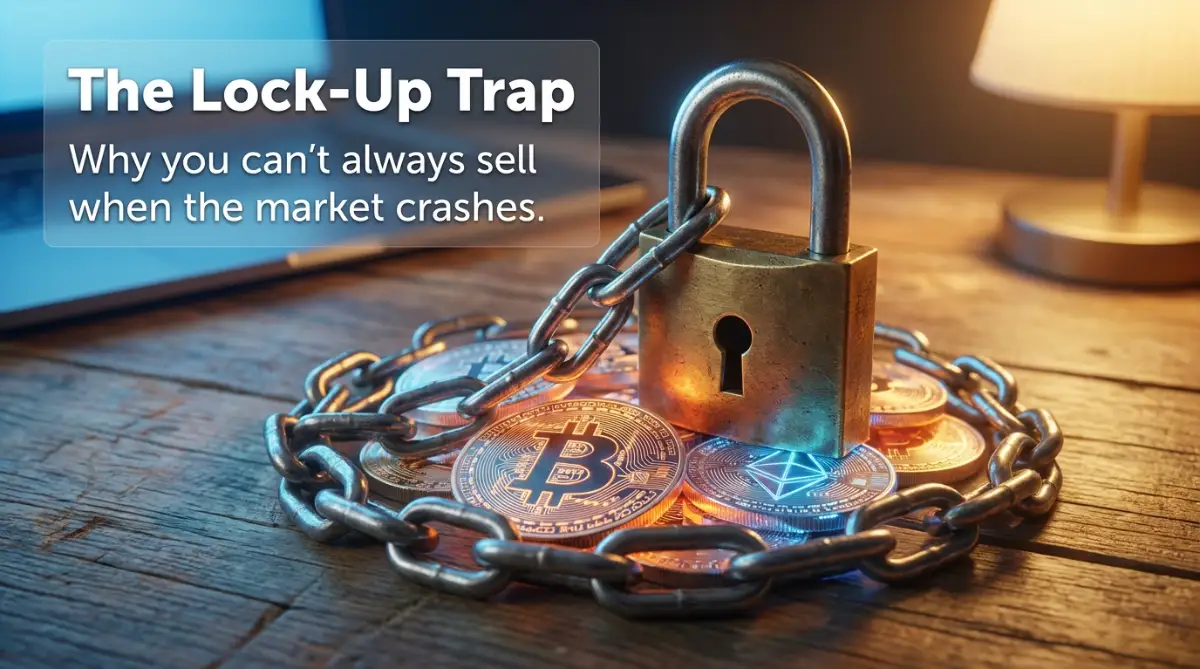
- How "unbonding periods" can completely lock your funds during a market crash.
- The real reason you should split your assets across different platforms.
- Why using "liquid receipt tokens" is the safest way to keep control of your money.
Breaking Down the Illusion of "Free" Money
When you deposit money into a traditional bank, they lend it out and pay you a tiny fraction of the interest. Staking seems similar on the surface, but the mechanics behind it are entirely different and incredibly complex. You are not just depositing money; you are actually performing a technical job for a blockchain network.
To secure a proof-of-stake network, the system needs people to lock up their digital assets as a form of security deposit. The high rewards you see are essentially compensation for taking on significant technical and market risks. If you do not understand these risks, you are not an investor; you are just providing exit liquidity for the early buyers.
Let us explore the core mechanical realities that make this form of passive income incredibly dangerous for the average person. Understanding these concepts will directly protect your peace of mind and your wallet.
The Danger of Illiquidity and Unbonding Times
One of the biggest shocks for new investors is discovering the reality of lock-up periods. When you decide to stake your assets, the network usually requires you to lock them up for a specific amount of time. This is technically called the "unbonding period," and it is designed to keep the network stable.
Imagine buying a house, but the contract says if you ever want to sell it, you must wait exactly 21 days after making the decision. If the entire neighborhood suddenly catches fire on day one, you are forced to just stand there and watch your property burn. This exact scenario happens frequently in the digital asset market.
During sudden market crashes, everyone rushes to the exit door at the exact same time. If your tokens are locked in a staking contract with a 21-day unbonding period, you cannot sell them to stop your losses. You are completely trapped in a sinking ship, holding a ticket that says you can leave in three weeks.

This lack of immediate access to your own money completely destroys the concept of a safe emergency fund. You should never lock up funds that you might need to pay for unexpected medical bills or urgent home repairs. The promised interest rate will never cover the emotional cost of being trapped during a financial emergency.
Quick Reality Check: Staking Myths vs. Facts
I see so many beginners fall for the same bad advice on social media. Let me clear this up right now:
- The Myth: Staking your coins is just like earning interest in a regular savings account.
- The Fact: Bank accounts have insurance. Staking means you are running blockchain software, and you carry 100% of the risk if the code breaks.
- The Myth: You can pull your money out whenever the market drops.
- The Fact: Most networks force a 14 to 28-day "unbonding" wait time. If a crash happens, you are locked inside the burning building.
The Silent Wealth Killer: Token Inflation
We often get blinded by massive double-digit return rates advertised on various platforms. If a platform offers you a fifty percent annual return, human greed instantly takes over your logical brain. However, you must ask yourself one essential question: where is this extra money actually coming from?
In many cases, the network simply prints new tokens out of thin air to pay the stakers. This creates massive token inflation, which slowly destroys the buying power of the asset over time.
This brings us to a major point of confusion for beginners. Before you dive into any high-yield project, you need to hear directly from experts about how these inflationary mechanics actually play out in real time.
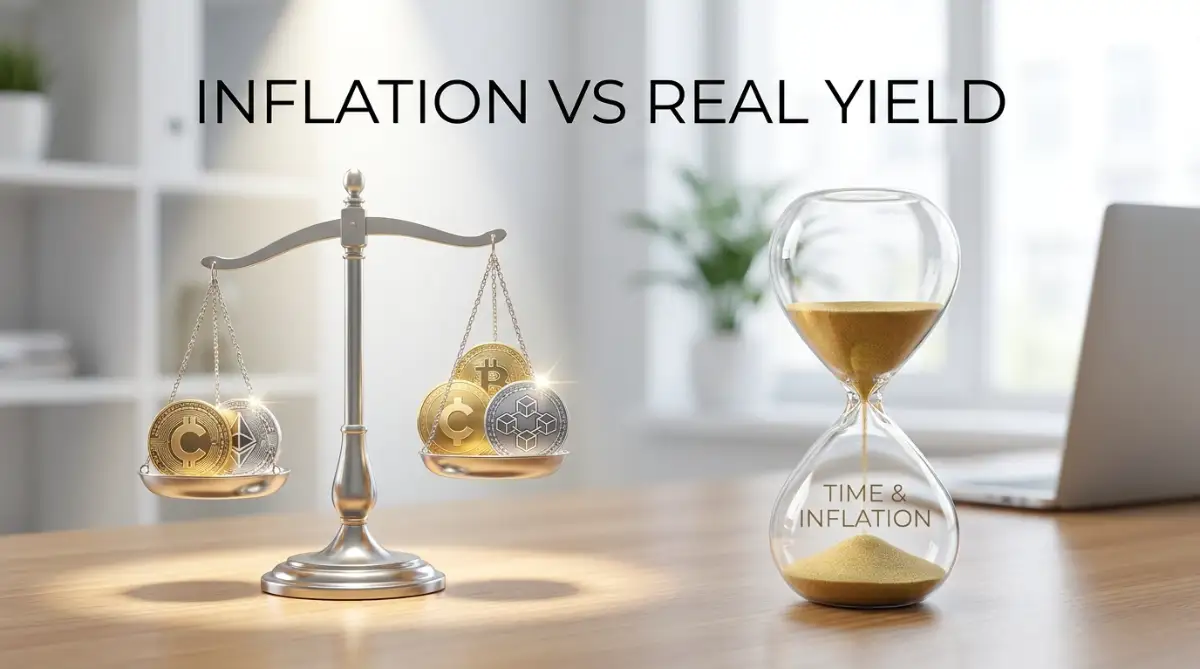
If the supply of a token increases by sixty percent in a year, and you are earning a fifty percent yield, you are actually losing money. The value of each individual token drops because there are simply too many of them flooding the open market. Your pile of tokens gets bigger, but the total dollar value of that pile gets much smaller.
This is why chasing the highest possible percentage rate is usually a terrible investment strategy. Smart investors look for "real yield," which means the rewards come from actual network usage fees rather than just printing new digital money.
I learned this the hard way when I aggressively chased a 120% return on a newly launched gaming token. I was so excited watching my token balance grow every single day, feeling like an absolute genius. Three months later, the token's price had dropped by 95% due to extreme inflation, turning my large stack of rewards into literal pennies.
A Quick Math Breakdown (How You Actually Lose Money):
Let’s say you buy $1,000 worth of a token, and the platform promises a crazy 50% reward rate. Awesome, right? But if the creators print 60% more tokens that year to pay everyone those rewards, the actual dollar value of each token drops fast. You might end the year with 50% more coins in your digital wallet, but your original $1,000 investment is now only worth $400. You didn't make a profit; you just paid for their inflation.
The Harsh Reality of Validator Slashing
When you stake your coins, you usually delegate them to a validator node that processes transactions for the network. These validators are run by actual humans or companies who manage the technical server infrastructure. If they do a bad job, the network punishes them severely to maintain security.
This punishment is called "slashing," and it directly affects your hard-earned money. If the validator you chose goes offline for too long, or tries to approve fake transactions, the network will permanently delete a portion of their staked funds. Since your funds are pooled with theirs, your money gets deleted too.
You can literally wake up one morning and find that five percent of your total investment has vanished into thin air. You did absolutely nothing wrong, but you are penalized for the technical failures of the person running the server. This makes choosing a reliable validator one of the most important decisions you will ever make in this space.
Never just pick the validator offering the lowest fees or the highest returns without doing proper background checks. You need to research their historical uptime, their server infrastructure, and whether they offer any slashing insurance to protect your assets.
Smart Contract Vulnerabilities and Exploits
We must also talk about the underlying computer code that holds your money safely. Staking usually involves locking your assets inside a smart contract, which is just a piece of software running on the blockchain. Like any software in the world, smart contracts can contain hidden bugs and fatal errors.
Hackers spend their entire days analyzing these contracts, looking for a tiny loophole to drain all the locked funds. If a hacker finds an exploit in the staking pool you are using, your money can be stolen in a matter of seconds. Unlike a traditional bank robbery, there is no insurance company waiting to refund your stolen digital assets.
This risk is especially high with brand-new platforms offering impossibly high rewards to attract quick money. They often rush their computer code to the public market without paying for expensive, professional security audits. You are essentially trusting your life savings to a few lines of experimental code written by anonymous developers.
Reevaluating Your Financial Strategy
Now that we understand the hidden dangers, we need to completely shift how we view this type of investment. It is not passive income; it is active risk management. You are getting paid to absorb technical risks, market volatility, and protocol inflation.
Let us look at a practical comparison to really understand the difference between traditional safety and digital yields.
This comparison highlights why you cannot treat these two financial vehicles the same way. You must allocate your portfolio based on worst-case scenarios, not just the best-case dreams.
If you still want to participate in securing digital networks, you must build a strict mental framework. Only use money that you can afford to lose completely without changing your current lifestyle or family stability. Start with well-established networks that have survived multiple market crashes and have thoroughly audited code.
Always keep track of your tax obligations as well. Earning passive tokens is heavily taxed in many countries, often at the moment the tokens are received in your wallet. If you receive tokens when the price is high, but the market crashes before you sell, you might end up owing more in taxes than your entire portfolio is actually worth.
By accepting these hidden realities, you can finally make logical, emotion-free decisions about your financial future. You will sleep much better at night knowing exactly what risks you are taking, rather than blindly hoping for a magical money machine to solve all your problems.
Smart Moves for Long-Term Safety
We have uncovered the stressful reality behind high-yield digital tokens. Now, it is time to focus on how smart money actually approaches this space without losing sleep. You do not have to completely avoid earning yields, but you absolutely must change your strategy from reckless gambling to calculated risk management.
I want to share the exact methods I use today to protect my assets. These steps completely changed how I interact with digital networks, transforming my daily anxiety into steady, confident control.
Start with the Native Layer
Instead of chasing random tokens on new platforms, focus your attention entirely on the base layer networks. These are the main blockchains that actual developers use to build real-world applications. When you secure a massive, proven network, the chances of total system failure are much lower.
The yields on these base layers might seem boring compared to the crazy marketing promises of newer platforms. You might only earn four or five percent over a full year, but that yield is usually backed by real network transaction fees. This is the difference between earning steady rent on a solid apartment building and buying a lottery ticket.
The Power of Liquid Yield Tokens
One of the best innovations in this space recently is the concept of liquid staking. Instead of locking your assets directly into a rigid smart contract, you trade your coins for a receipt token that represents your staked position. This totally solves the terrifying problem of being trapped during a market crash.
For example, if you hold one of these liquid receipt tokens, you can instantly sell it on an open exchange whenever you want. You do not have to wait 21 days for the unbonding period to finish. You simply accept a tiny market fee and exit your position immediately, allowing you to sleep peacefully even when the market turns red.
Pro Tip: I learned early on that not all liquid tokens are created equal, so I always check the actual trading volume before buying one. If nobody is trading that specific receipt token, you will still be stuck holding it when you desperately need to sell.
Spreading Your Technical Risk
Never put all of your digital assets into one single validator node or one single smart contract. If that specific server crashes or that specific contract gets hacked, your entire portfolio disappears instantly. You must split your funds across completely different platforms and different technical teams.
I currently divide my yield-generating assets into at least four different baskets. If one validator gets slashed because they made a mistake, my total portfolio only takes a tiny hit. Spreading your risk like this requires a little more tracking, but it is the ultimate shield against catastrophic financial loss.
If you want to read a technical breakdown of how smart contracts can fail, I highly recommend checking out Consensys smart contract best practices. Learning how the code works is exactly like checking the engine before you buy a used car.
Mastering the Real Yield Calculation
You absolutely must learn how to calculate the real return rate by factoring in token inflation. Do not just look at the big green percentage number on your screen. You need to research the total token supply and find out how many new tokens are printed every single day to pay the stakers.
If the network inflation rate is eight percent, and your yield is only six percent, you are actually bleeding money every single day. The easiest way to track this is to ignore the token amount and only look at the total dollar value of your portfolio over time.

The Hidden Traps That Destroy Portfolios
Over the years, I have watched so many intelligent people lose their life savings because they fell into the same psychological traps. Greed makes us ignore giant red flags, and fear makes us click buttons without thinking. Let us talk about the specific mistakes that will totally wipe out your digital wealth if you are not careful.
First, ignoring the tax implications is a massive financial landmine. Every time you receive a new token as a reward, that is usually considered a taxable event by the government. If you earn thousands of dollars worth of tokens in a bull market, you owe taxes on that specific high value. If the market crashes later, you still owe the government that massive tax bill, even though your tokens are now practically worthless.
You must keep detailed records of every single reward you receive, exactly when you receive it. I use automated tracking software now, but I still set aside thirty percent of everything I earn specifically for the tax man. Do not become one of the horror stories where an investor goes bankrupt just trying to pay their tax debt.
Second, trusting anonymous platform founders is an incredibly dangerous game. If the people who wrote the smart contract are hiding behind cartoon pictures on the internet, you should never give them your money. When anonymous developers decide to steal the locked funds, there is absolutely nobody you can sue to get your money back.
This happens constantly in the digital asset space, and it is usually called a "rug pull." The developers promise incredible yields, wait for everyone to deposit their money, and then instantly drain the entire pool. Always stick to transparent teams who have verified public identities and a long history in the industry.
Finally, failing to secure your own personal digital wallet is the ultimate rookie mistake. You can choose the safest validator and the most secure network, but if someone steals your seed phrase, you lose everything anyway. Never store your recovery passwords on your phone or your computer where hackers can find them.
Your Blueprint for Peaceful Investing
We have covered a lot of heavy reality checks today, from the dangers of unbonding periods to the harsh math of token inflation. The goal here was never to scare you away from digital assets completely. My intention is to upgrade your mindset from a hopeful gambler into a highly educated risk manager.
If you want to continue learning how to manage your overall wealth safely, reading through our Global24Info business and finance guides will give you a massive advantage. Protecting your money is a lifelong skill that requires constant learning and adaptation.
You now understand that true passive income does not magically appear without hidden costs. By avoiding shady platforms, understanding liquid staking, and keeping a close eye on inflation, you can actually build wealth without destroying your mental health.
I honestly wish I had known all of these harsh realities before I made my first deposit. If you take this knowledge and apply it carefully starting today, you will save yourself thousands of dollars and countless sleepless nights.
The Most Common Questions Answered
Is earning yield on digital assets totally safe?
No, it is never totally safe because you are exposed to smart contract bugs, network hacks, and validator slashing. You are essentially getting paid a premium to take on these technical risks. Treat it as an active investment, not a guaranteed bank account.
Why does my token balance go up but my dollar value goes down?
This happens because the network is printing too many new tokens to pay all the stakers. This massive token inflation dilutes the overall value, so your bigger pile of tokens is actually worth less money. Always check the actual inflation rate before investing.
What happens if the market crashes while my funds are locked?
If your tokens are in a strict unbonding period, you simply cannot sell them until the timer finishes. You are forced to watch the price drop while your funds remain trapped in the smart contract. This is why using liquid receipt tokens is becoming so popular.
Do I have to pay taxes on my daily digital rewards?
Yes, in most countries, every single token you receive is considered taxable income at its current market value. You must track these daily rewards carefully to avoid a massive, unexpected tax bill at the end of the year.
Disclaimer: The information provided in this blog post is for educational and informational purposes only and does not constitute financial, investment, or legal advice. Digital asset markets are highly volatile, and you should always conduct your own extensive research or consult with a certified financial advisor before making any investment decisions.