The Overwhelming Trap of Seeking Quick Cash
Have you ever panicked about money and just started filling out loan applications everywhere? It makes sense at the time—you need cash fast, so you cast a wide net hoping someone, anyone, will say yes. But hitting "submit" over and over again is actually a massive red flag to banks. Let me show you exactly what happens behind the scenes when you apply for multiple loans, and how this quick-cash strategy silently tanks your credit score.
When you are trapped in a tight corner with empty pockets, common sense often flies right out the window. We just want a quick fix to stop the bleeding, so we blindly fill out form after form on different banking websites. Every time you hit that "submit" button, it feels like a tiny spark of hope. But behind the scenes, a completely different story is unfolding within your credit report.
This constant cycle of hope and instant rejection slowly eats away at your mental peace. You start snapping at your family members because the financial stress is constantly bubbling right under the surface. Sleep becomes a luxury of the past as you lie awake doing mental math that never actually adds up.
Your self-esteem takes a massive hit every time an algorithm denies your application. It feels like the entire banking system is judging you, pointing fingers at your past mistakes. The worst part is that you do not even realize you are actively making the situation worse with every new form you submit.
The reality is that the financial system is not designed to reward desperate behavior. In fact, it is specifically programmed to penalize it heavily. Today, I am going to walk you through exactly what happens when you try to game the system with multiple loan applications.
What You Need to Know Upfront:
- Multiple applications equal danger: Every personal loan application triggers a "hard pull," which drops your credit score immediately.
- Banks hate desperation: Applying for several loans at once makes algorithms flag you as a high-risk borrower.
- Use soft pulls first: Always use "check your rate" features—they tell you if you will get approved without harming your credit score.
- Pause before you click: If you've recently been denied, wait at least 3 to 6 months before applying for new credit again.
How Rapid-Fire Applications Silently Destroy Your Financial Health
When we need money quickly, we rarely stop to read the fine print. We just want the funds deposited into our checking account by tomorrow morning. However, understanding the mechanics of how lending actually works is the only way to protect your long-term wealth.
The Domino Effect of Hard Credit Inquiries
Every single time you submit a formal application for borrowing money, the bank needs to check your background. They do this by pulling your official credit report from major bureaus like Experian, TransUnion, or Equifax. This process is officially known in the banking world as a "hard inquiry" or a "hard pull."
Unlike a soft inquiry, which happens when you check your own score on a mobile app, a hard pull leaves a permanent footprint. This footprint stays on your public financial record for up to two full years. One single hard inquiry will usually knock a few points off your total score, which is completely normal and expected.
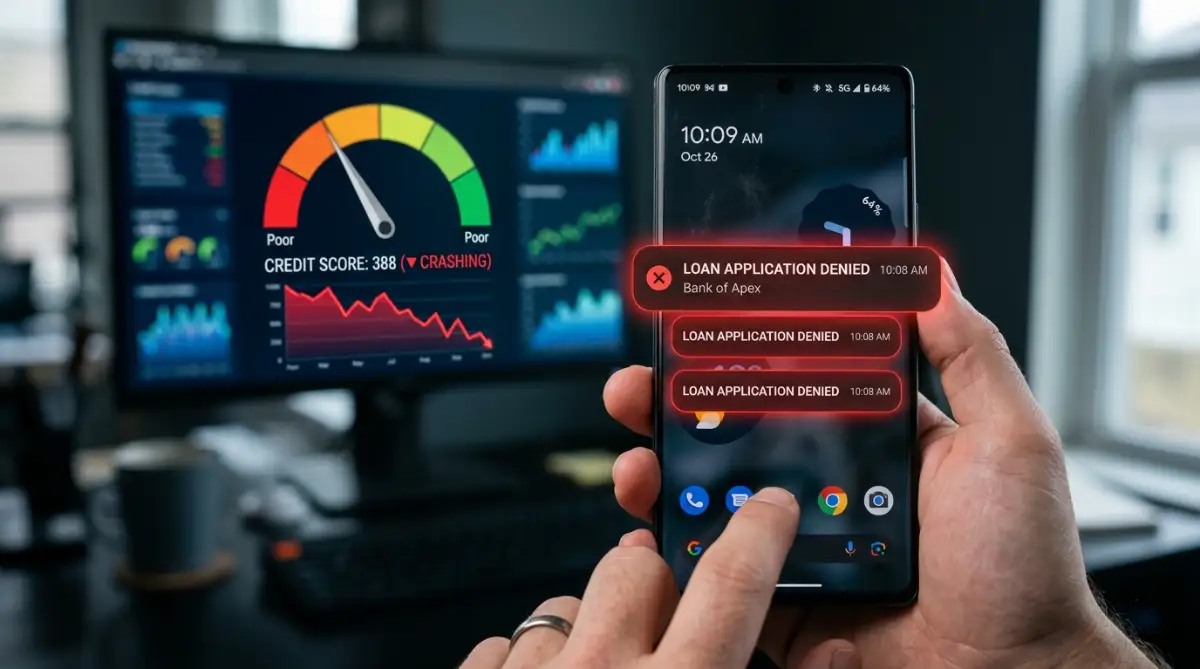
But when you submit five applications in a single weekend, the damage multiplies rapidly. The algorithms that calculate your score see these back-to-back hard pulls as a massive red flag. Your score begins to drop like a rock, sometimes plummeting thirty to fifty points in a matter of days.
Think of your credit score as a beautifully built sandcastle on the beach. A single hard inquiry is like a small wave washing over it, causing minor damage that you can easily repair. But applying for ten loans at once is like a massive hurricane ripping through the beach, washing your entire castle away into the ocean.

The Desperation Signal Lenders See
We often forget that banks are fundamentally risk-averse institutions. They are not in the business of helping people out of tough spots out of the kindness of their hearts. They are heavily focused on protecting their own profit margins and minimizing default rates.
When an underwriter looks at your file and sees seven recent inquiries for personal loans, they instantly panic. To them, this pattern screams financial distress and extreme desperation. They assume you are either losing your job, hiding a massive hidden debt, or planning to take the money and run.
Even if you have a perfectly healthy income, this pattern will get you instantly denied by premium lenders. They simply do not want to take a chance on someone who appears to be scrambling for loose cash. You instantly get pushed out of the prime lending market and forced into the hands of predatory lenders.
Myth vs Reality: Understanding Rate Shopping
A lot of people justify their multiple applications by claiming they are simply "shopping around for the best interest rate." This is a very common misconception that costs consumers thousands of dollars in long-term damage. It is true that credit bureaus allow rate shopping for things like mortgages and auto financing.
If you apply for five mortgages within a two-week window, the system groups them together as a single hard pull. The algorithm understands that you only want to buy one house, so you are just comparing offers. But personal loans are entirely different beasts in the eyes of credit monitoring agencies.
Because you can technically take out multiple personal loans at the exact same time, the grouping rule usually does not apply. If you apply for four unsecured loans on a Friday afternoon, you will likely get hit with four separate negative marks. This fundamental misunderstanding traps countless honest borrowers in a cycle of bad credit.
Quick Reality Check: Mortgage vs. Personal Loans
- The Myth: "If I apply for 5 personal loans today, it counts as one inquiry because I'm just shopping around."
- The Fact: That rule only applies to mortgages and car loans. If you apply for 5 personal loans in an afternoon, you get hit with 5 separate negative marks on your credit report. Don't let this misunderstanding drain your score!
Watch this short breakdown on how credit algorithms silently track your every financial move and penalize rapid applications.
The Algorithmic Black Box of Underwriting
Modern banking no longer relies on human beings sitting at oak desks reviewing paper files. Today, everything is controlled by highly complex, lightning-fast computer algorithms. These systems are designed to instantly flag anomalies in your borrowing behavior.
When your application hits the server, the software cross-references your data with thousands of other borrowers who share your profile. If the machine notices that people with multiple recent inquiries tend to default on payments, it auto-rejects you. A human underwriter never even gets the chance to look at your explanation or hear your personal story.
I learned this the hard way during my own financial panic. I actually called one of the banks to explain that I was just looking for the best rate and wasn't planning on taking all the loans. The customer service representative politely told me that the system had already locked my file, and there was nothing they could manually do to reverse the auto-denial.
The Debt-to-Income Illusion
Another hidden danger lies in how lenders calculate your ability to repay borrowed money. They use a strict mathematical formula called the Debt-to-Income (DTI) ratio. This number simply compares how much money you earn each month against how much money you owe.
When you apply for multiple lines of credit simultaneously, the banking software gets confused. Even if those other loans have not been fully approved or funded yet, the automated system might factor them into your future debt load. It assumes the worst-case scenario: that you will successfully take out all of those loans.
Suddenly, your DTI ratio skyrockets on paper, making you look completely over-leveraged. A bank that would normally approve you instantly will suddenly deny your application because your hypothetical future debt looks too dangerous. You essentially sabotage your own approval odds by creating ghost debts in the system.
A Practical Comparison of Application Strategies
To truly grasp the impact of your actions, let us look at a quick comparison between a patient borrower and a panicked borrower. This clearly highlights the difference between smart financial management and emotional reactions.
As you can clearly see from this simple breakdown, patience is your most valuable asset when dealing with banks. The scattergun approach mathematically guarantees that you will end up in a worse position than when you started.
The Predatory Trap of Subprime Lenders
When premium banks reject your multiple applications, your email inbox will suddenly flood with new offers. These offers usually come from second-tier, subprime lenders who specifically target desperate borrowers with damaged credit. They monitor the credit bureaus and buy data lists of people who have recently been denied.
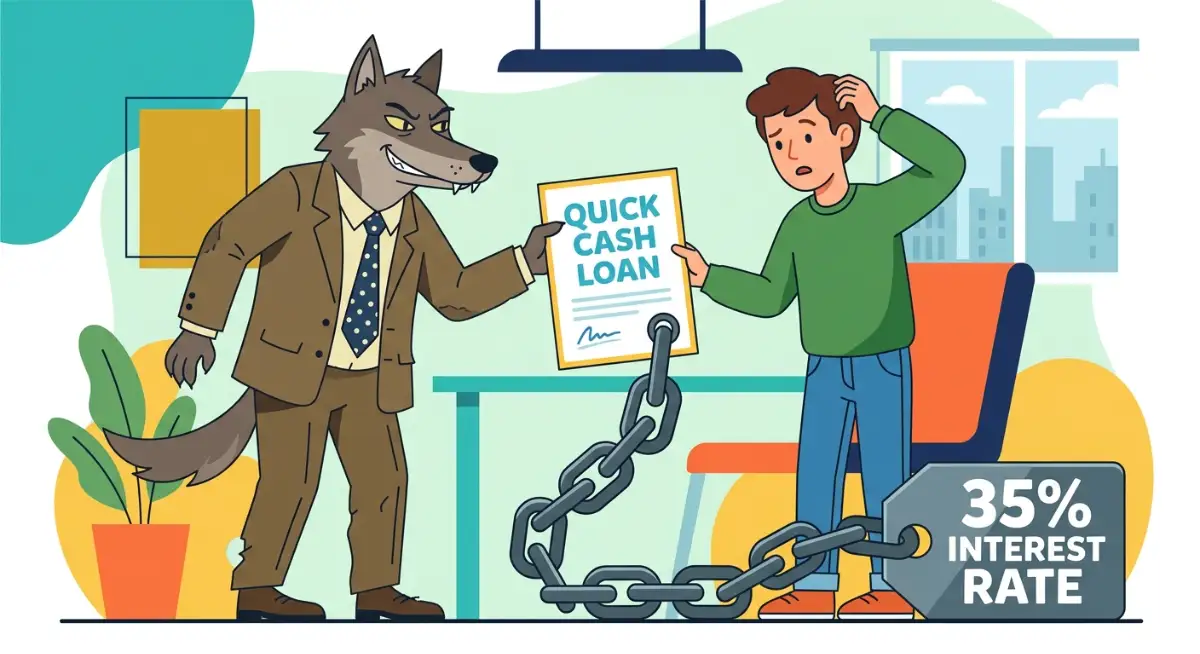
These companies will gladly approve you for a quick cash deposit, regardless of your recent hard inquiries. But this approval comes with a devastating catch that will keep you trapped for years. The interest rates they charge are often three to four times higher than a traditional bank.
You might end up paying a 35% annual percentage rate just to get your hands on a few thousand dollars. Additionally, they pack the contract with hidden origination fees, prepayment penalties, and aggressive collection terms. You solve your temporary emergency, but you create a long-term financial nightmare that is incredibly difficult to escape.
The Illusion of Guaranteed Approvals
Many online platforms advertise "guaranteed approval" regardless of how many times you have applied elsewhere. These flashy advertisements prey directly on the psychological exhaustion you feel after facing multiple rejections. But in the world of legitimate finance, nothing is ever guaranteed.
When you click on these ads and submit your sensitive personal data, you are often not even talking to a real bank. Many of these websites are just lead generators that sell your information to a massive network of shady lenders. Submitting your details to one of these sites can trigger dozens of automated soft and hard pulls as they auction off your application.
You will start receiving aggressive text messages, spam emails, and endless phone calls from companies you have never heard of. Your identity and financial data are now scattered across the internet, heavily increasing your risk of identity theft. All because you wanted a quick shortcut to bypass the traditional application process.
Understanding the Cooling-Off Period
If you have already made the mistake of applying for several loans, you are probably wondering how to fix it. The human body needs time to heal after an injury, and your financial profile works the exact same way. You need to implement a strict, non-negotiable cooling-off period.
A cooling-off period simply means putting a complete freeze on any new credit applications. You must stop trying to borrow money, open new credit cards, or finance large purchases for a set amount of time. Most financial experts recommend waiting a minimum of three to six months before submitting a new application.
During this quiet period, the algorithms slowly start to trust you again. They see that your desperate behavior has stopped and that you are settling back into a stable routine. While the hard inquiries will remain on your report, their sting lessens significantly with each passing month.
The Power of Soft Prequalification
Instead of jumping straight into formal applications, you need to learn how to use the prequalification tools available today. Almost every modern lender offers a "check your rate" feature on their website. This is the single greatest weapon you have against score damage.
When you use a prequalification tool, the bank only performs a soft pull on your file. This allows them to peek behind the curtain and give you an estimated interest rate and approval odds. Soft pulls are completely invisible to other lenders and do not harm your overall score in any way.
You can literally prequalify with twenty different lenders in a single afternoon without losing a single point. Once you find the offer that fits your budget perfectly, you proceed with a single, targeted formal application. This completely eliminates the hidden dangers of the scattergun approach.
Navigating the Emotional Side of Rejection
It is completely normal to feel angry and defeated when you are trying your hardest to fix your situation. But letting those emotions drive your next financial move is a recipe for absolute disaster. Emotional borrowing is exactly what leads to the trap of multiple applications in the first place.
You have to separate your self-worth from your credit score. A bad score simply means you made some mathematical errors in the past, not that you are a bad person. Taking a step back, breathing deeply, and approaching your debt logically will save you from years of unnecessary stress.
Rebuilding Your Profile After the Damage is Done
If your score has already taken a massive dive because of multiple recent inquiries, do not panic. It is not a permanent life sentence, and the damage is highly reversible if you follow a disciplined path. Your first priority right now is absolutely flawless payment history on your existing accounts.
Even if you are just paying the minimum balance on your current credit cards, make sure it is paid early. Payment history makes up the largest chunk of your overall score, far outweighing the damage done by new inquiries. A solid track record of on-time payments will naturally push your score back up over the coming months.
You should also look closely at your credit utilization ratio. This is the amount of credit you are actively using compared to the total amount available to you. Keeping your credit card balances low sends a very strong signal to the algorithms that you are responsible with borrowed money.
The Alternative Routes to Emergency Cash
When traditional unsecured loans are out of the question, you have to get creative with your problem-solving. Running back to the application screen is no longer an option, so what do you do when an emergency strikes? There are several safer alternatives that do not require aggressive hard credit pulls.
Consider asking your local credit union for a small, short-term emergency fund. Credit unions are non-profit organizations that often look past the algorithms and listen to your personal story. They are much more forgiving of recent inquiries if you have a solid history of banking with them.
Another excellent option is requesting a payment plan directly from the people you owe money to. If you are struggling with a medical bill, call the hospital's billing department directly. They would much rather set up a zero-interest monthly payment plan than send your account to a harsh collections agency.
Try This 30-Second Script on the Phone:
If you are dealing with a stressful medical bill, do not apply for a loan. Call the billing department and say:
"Hi, I want to clear this bill, but I simply don't have the full amount right now. Can we set up a $50 monthly payment plan with zero interest so it doesn't go to collections?"
9 times out of 10, they will say yes because they would rather get paid slowly than not at all.
How to Monitor Your Recovery
You cannot fix what you do not track. If you want to successfully navigate away from these hidden traps, you need complete visibility into your financial profile. You should immediately sign up for a free monitoring service to keep an eye on your numbers.
These apps will send you an instant notification every time a new inquiry hits your file or a balance changes. Watching your score slowly tick back up month after month is incredibly motivating. It reinforces the healthy habits you are building and reminds you why patience is so important.
Just make sure you are using reputable services that rely on soft pulls to show you your data. Checking your own score will never hurt you, so you can look at it every single day if you want to. Knowledge is your best defense against the strict rules of the modern banking industry.
Taking Control of Your Financial Narrative
At the end of the day, your financial journey is entirely in your own hands. The banking system is just a tool, and like any tool, it can build you a house or tear it down. Understanding the mechanics of credit inquiries gives you the power to use that tool safely.
You no longer have to operate in the dark, throwing applications at the wall and praying for a miracle. You now know exactly how the algorithms think and what triggers their internal alarms. Armed with this knowledge, you can approach your next borrowing need with total confidence and strategic precision.
Remember, true wealth is not just about how much money you have in the bank. It is about having the discipline to make smart, calculated choices even when you are under immense pressure. Stop the rapid-fire applications, take a deep breath, and start treating your credit profile like the valuable asset it truly is.
Insider Strategies to Protect and Rebuild Your Borrowing Power
Recovering from the shock of a sudden credit score drop takes more than just patience. It requires a highly strategic approach to how you interact with the banking system moving forward. You cannot just sit around and wait for the negative marks to disappear on their own. You have to actively show lenders that you are back in total control of your financial destiny.
The first major shift you need to make is how you view credit reporting agencies like Experian and Equifax. Most people treat these bureaus as unapproachable government entities, but they are actually private companies managing consumer data. You have every right to interact with them and challenge information that seems unfair or inaccurate. If you notice hard inquiries on your report that you did not authorize, you can formally dispute them online.
While you cannot legally remove accurate hard pulls that you intentionally initiated, mistakes happen all the time in banking software. Sometimes a single application is mistakenly coded as three separate hard pulls by a glitching algorithm. If you see duplicate credit inquiries, filing a prompt dispute can get the extras removed, giving your score an instant boost.
Mastering the Art of Pre-Approval Timing
When you finally do need to borrow money again, you must approach the process completely differently. Instead of relying on random online searches, start building a relationship with a local community bank or credit union before you need cash. Having an active checking account with a decent balance often overrides their automated algorithmic decisions.
When a human underwriter can see your regular direct deposits and healthy saving habits, they are far more likely to approve a personal loan application even with a few past hard inquiries. They view you as a whole person, not just a three-digit number on a computer screen.
If you must use an online lender, carefully read the bold print regarding how long their pre-approval offers are valid. Some soft-pull offers expire in 24 hours, while others give you a comfortable 30-day window to make a decision. Always take screenshots of these pre-approval terms so you have solid proof of the rate you were promised.

The Trap of Unnecessary Balance Transfers
A huge mistake desperate borrowers make is trying to shuffle their debt around to hide it from new lenders. They will open a new balance transfer credit card, move their debt there, and then immediately apply for a personal loan. They think this makes their debt-to-income ratio look better for a few days before the systems update.
This is incredibly dangerous because major banking networks update their central databases much faster than they used to. If an underwriter catches you playing this shell game, they will instantly flag your file for potential fraud. Not only will you get denied for the new loan, but your existing credit card company might panic and suddenly lower your limits.
Instead of playing games, focus entirely on aggressive debt reduction. Even paying an extra fifty dollars a week toward your highest-interest balance works wonders. It lowers your overall credit utilization ratio, which is the second most heavily weighted factor in your total score calculation.
Financial Potholes That Keep Borrowers Trapped
It is incredibly easy to make emotional decisions when you feel like the walls are closing in on your finances. Fear makes us blind to the long-term consequences of our actions, pushing us toward quick but harmful fixes. Recognizing these common psychological traps is the only way to avoid stepping directly into them.
Falling for the Consolidation Illusion
Many people apply for multiple loans because they want to consolidate all their credit card debt into one single monthly payment. On paper, debt consolidation sounds like a brilliant strategy to save money on interest. But it completely backfires if you do not fix the underlying spending habits that caused the debt in the first place.
I have seen countless people take out a large loan, pay off all their credit cards, and feel an incredible sense of relief. But because their credit cards suddenly have a zero balance, they start spending on them again within a few months. Now they are stuck paying the new consolidation loan plus a brand new mountain of credit card debt.
This specific scenario is exactly why lenders are so terrified of multiple recent credit inquiries. They know statistically that most people who consolidate debt end up doubling it within two years. If you are going to take out a loan to pay off cards, you must physically lock those cards away so you cannot use them.
Ignoring the Warning Signs of Predatory Fees
When you are desperately searching for approval, you stop paying attention to the actual cost of the money. Subprime lenders know this, so they hide massive origination fees deep inside the digital contract. An origination fee is a percentage of the total loan amount that the bank takes straight off the top before they even send you the funds.
If you get approved for a $5,000 loan with a 10% origination fee, the bank will only deposit $4,500 into your account. However, you are still legally responsible for paying back the full $5,000 plus the daily interest. When you are applying to multiple places at once, it is impossible to carefully compare these hidden fees.
You might end up accepting an offer that technically has a lower monthly payment but costs you thousands more in hidden backend charges. You have to slow down, print the contracts out if you need to, and highlight every single fee they are trying to charge you. Never let a lender rush you into signing a digital document on your phone without reading it first.
The Danger of Co-Signer Pressure
After getting rejected multiple times, a lot of people turn to their friends or family members for help. They ask their parents or a sibling to co-sign the loan application to guarantee an approval. While a co-signer with excellent credit will almost certainly get you the money, it creates a massive invisible risk.
When someone co-signs a loan, the bank places the full legal responsibility of that debt onto their shoulders. If you miss a single payment because you lost your job or got sick, the bank will immediately attack your co-signer's credit score. A single late payment can completely destroy their financial reputation, taking their score down by almost a hundred points.
This ruins family relationships and destroys lifelong friendships faster than almost anything else. If you are going to involve a co-signer, you must have a completely transparent conversation about the worst-case scenarios. You should also set up automatic payments from your account to ensure you never accidentally miss a due date.
Your Blueprint for Smarter Borrowing
Navigating the complex world of modern lending does not have to be a terrifying or stressful experience. The entire system is built on a very predictable set of mathematical rules that you can easily learn to work in your favor. It all comes down to controlling your impulses and understanding how banks perceive risk.
Every single time you apply for a new line of credit, you are making a public declaration about your financial stability. Sending out ten applications in a single weekend screams desperation, while sending out one targeted application shows total confidence. You have to protect your credit profile fiercely because it is the key to your future financial freedom.
Take a deep breath, stop letting algorithms dictate your self-worth, and start making highly calculated moves. Build a small emergency fund so you never have to panic-apply for a loan ever again. When you approach borrowing from a position of strength rather than fear, the banks will happily roll out the red carpet for you.
I know exactly how suffocating it feels when it seems like every bank is slamming their door in your face. But I also know that if I could climb out of that exact same dark hole by learning these rules, you absolutely can too. Take control of your numbers today, and I promise your financial future will be brighter than you can imagine.
Real Questions Borrowers Always Ask
Will checking my own credit score hurt it?
No, checking your own score through a monitoring app or your bank is considered a soft inquiry. Soft inquiries are completely invisible to lenders and have absolutely zero impact on your credit health. You can check it every single day without any worry.
How long do hard inquiries actually stay on my report?
A hard inquiry will remain visible on your official credit report for up to 24 months. However, their negative impact on your actual score fades significantly after the first six to twelve months. As long as you maintain good payment habits, your score will bounce back fairly quickly.
Is it safe to use online loan comparison websites?
You have to be extremely careful with these sites because many are just lead generators that sell your data. Only use comparison tools that explicitly promise they only use soft pulls to show you rates. If a site asks for your full Social Security Number right away, it is usually best to avoid it.
Can I get approved for a loan immediately after a rejection?
While it is technically possible if you apply to a subprime lender, it is a very dangerous move. The new lender will see the previous hard inquiry and likely charge you a massive interest rate to compensate for the risk. It is always better to wait at least a few months before trying again.
Disclaimer: This article is for informational and educational purposes only and does not constitute professional financial or legal advice. Credit scoring algorithms and lending criteria change frequently. Always consult with a certified financial advisor or credit counselor before making major borrowing decisions or signing loan agreements