The Heavy Burden of Sudden Debt
I still remember the exact moment my stomach dropped and panic set in. I was sitting on the edge of my bed, staring at my phone screen, realizing the true cost of the emergency I had just survived. A few months prior, I faced a sudden family medical crisis that completely wiped out my small savings.
With no other options, I took out an unsecured personal loan just to keep my head above water. At the time, it felt like a lifesaver thrown to a drowning person. But as the monthly payments started rolling in, that lifesaver quickly turned into a heavy anchor dragging me down.
I found myself losing sleep, constantly calculating numbers in my head, and feeling a deep sense of shame. Every time my phone buzzed, my heart raced, wondering if it was a reminder from the bank.
I know exactly what it feels like to skip meals with friends or say no to basic joys because you are terrified of your bank balance. You are not just paying back money; you are paying back interest that seems to grow faster than you can earn.
This is the harsh reality for so many of us today. We do the responsible thing by handling an emergency, but the financial hangover leaves us completely paralyzed. The mental toll of waking up every single day owing money you do not have is exhausting.
Your relationships suffer because you are always stressed, and your work suffers because you cannot focus. But I am here to tell you that this dark cloud does not have to last forever. I found my way out of that suffocating situation, and you can absolutely do the same.
Facing the Numbers Without Fear
The very first hurdle in getting your finances back on track is looking at the ugly truth. When we are scared of debt, our natural instinct is to hide from it. We ignore the statements, avoid looking at the banking apps, and just pray the problem magically disappears.
But hope is not a financial strategy. To fix this, you have to know exactly what you are fighting against.
Sit down in a quiet room, grab a pen, and list out every single detail of your unsecured loan. Write down the total balance, the exact interest rate, and the minimum monthly payment. Do not let these numbers scare you; they are simply data points on a piece of paper.
Myth vs. Reality in Debt Management
Before we move forward, we need to clear up a massive misunderstanding about debt.
The Myth: You have to completely stop living your life and punish yourself until the loan is paid off.
The Reality: Financial recovery is a marathon, not a sprint. If you cut out every single joy in your life, you will burn out and likely spend more money out of frustration. Sustainable progress beats extreme restriction every single time.
Organizing Your Comeback Strategy
Once you have your loan details written down, it is time to look at your daily money habits. You need to know exactly where your hard-earned cash is going every single week.
Print out your last two months of bank statements and grab a highlighter. Mark the things you absolutely had to pay for, like rent, groceries, and utilities. Then, look at the unmarked items.
Those unmarked expenses are your secret weapon. I am not going to tell you to stop buying coffee or cancel all your streaming services. Instead, look for the money that slips away without you even noticing.
Maybe it is those random late-night online purchases or paying for subscriptions you have not used in months. Redirecting just a small portion of this "lost" money toward your emergency loan can make a massive difference.
When you pay even slightly more than the minimum payment, you directly attack the principal balance. This simple action cuts down the interest you will owe next month, saving you serious money in the long run.
Taking Immediate Action to Lower Your Stress
Now that you have a clear picture of your situation, it is time to take some pressure off your shoulders. Many people do not realize that you actually have power when dealing with lenders.
If your unsecured loan has a painfully high interest rate, you should try to negotiate. Pick up the phone and call your lender's customer service department.
Explain that you have been a good customer but are struggling with the current interest rate. Ask them directly if they have any hardship programs or if they can lower the rate to help you pay it off faster.
The worst they can say is no, but if they say yes, you could save hundreds of dollars with a ten-minute phone call.
Considering a Smarter Move
If your current lender refuses to help, you might want to look into moving that debt somewhere else. If your credit score is still in decent shape, look for a balance transfer credit card with a zero percent introductory period.
Moving your unsecured loan to a card that does not charge interest for a year gives you a massive advantage. Every single dollar you pay goes straight toward wiping out the actual debt.
However, you have to be extremely disciplined with this approach. You cannot use the new credit card to buy things, and you must aggressively pay down the balance before the promotional period ends.
If a balance transfer is not an option, consider looking into a debt consolidation loan with a local credit union. Credit unions often have much lower interest rates than traditional banks or online lenders.
Replacing a high-interest emergency loan with a low-interest consolidation loan instantly makes your monthly payments more manageable. It gives you room to breathe and think clearly again.
A Personal Realization:
I used to think that asking for a lower interest rate or calling the bank made me look weak or irresponsible. Pro Tip: I finally realized that banks are businesses, and negotiating with them is just a normal business transaction. The day I pushed past my embarrassment and asked for a rate reduction, I ended up saving myself enough money to cover a week's worth of groceries every month. Always ask; you are your own best advocate.
Here is a great video that perfectly explains how to communicate with lenders and take control of your situation. This simple explanation completely changed how I viewed my debt.
Hacking Your Brain for Financial Success
Getting out of debt is only twenty percent math; the other eighty percent is pure psychology. When you are paying off a loan for an emergency that has already passed, it feels incredibly unrewarding.
You are not paying for a fun vacation or a new car; you are paying for a broken water heater or a hospital visit from months ago. This is why staying motivated is so incredibly difficult.
To trick your brain into staying on track, you need to celebrate small wins. Break your large loan balance into smaller, bite-sized milestones.
If you owe five thousand dollars, do not focus on the massive total. Focus on paying off the first five hundred dollars.
When you hit that first mini-goal, do something small to celebrate. Watch your favorite movie, take a walk in a beautiful park, or cook your favorite meal at home. Recognizing your progress releases dopamine in your brain, which gives you the energy to keep going.
The Power of Visual Reminders
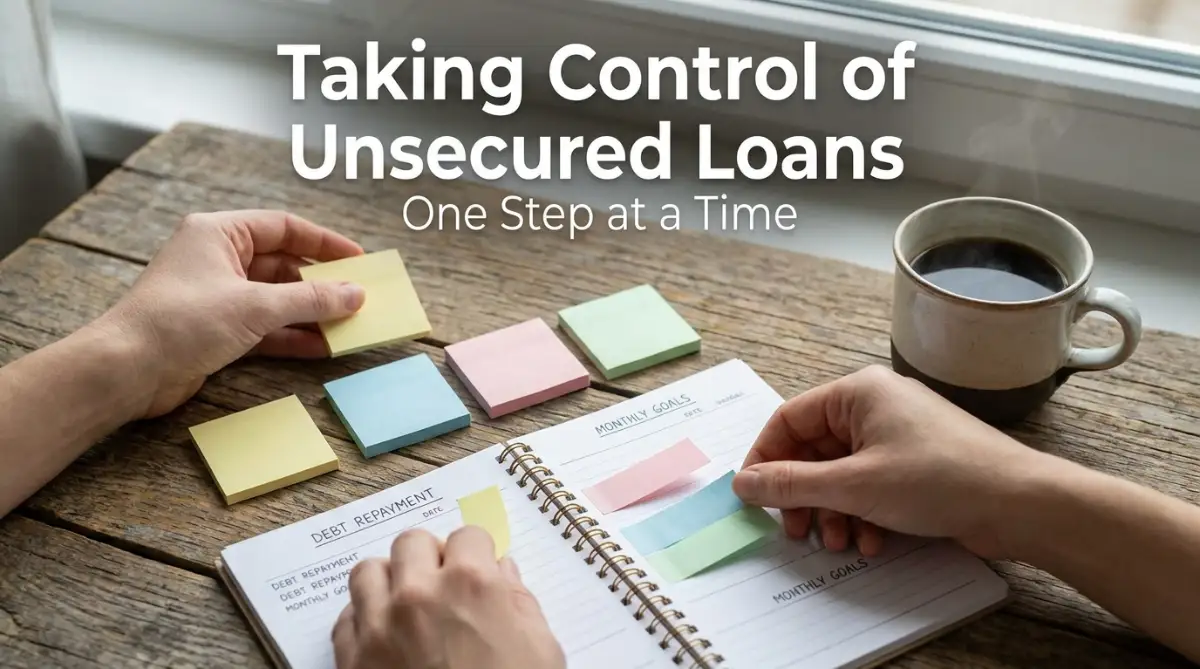
Our brains process visual information much faster than numbers on a screen. Create a physical tracker for your debt payoff journey and put it somewhere you will see it every day.
You can draw a simple thermometer on a piece of paper and color it in as your loan balance drops. Stick this on your refrigerator or your bathroom mirror.
Every time you feel tempted to spend money recklessly, that visual reminder will bring you back to reality. It silently reminds you of the promise you made to yourself to regain your financial freedom.
Finding Extra Cash Without Burning Out
You can only cut your budget so much before you are living on rice and beans in the dark. At a certain point, the fastest way to bounce back from an unsecured loan is to increase your income.
I know the idea of working more sounds exhausting when you are already stressed. But remember, this is a temporary push to fix a specific problem.
Look around your living space. We all have things we bought but never use, like old electronics, clothes with the tags still on, or dusty exercise equipment.
Selling these items on local online marketplaces can quickly generate a few hundred dollars. Take that cash and make an immediate lump-sum payment on your emergency loan.
Exploring Temporary Side Incomes
If selling items is not enough, look for low-stress ways to bring in extra money for just a few months. Think about the skills you already have and how you can offer them to others.
Could you tutor students online, offer freelance writing, or do graphic design for small businesses? Even driving for a delivery service a few evenings a week can make a huge impact.
The trick is to directly funnel every single penny from this side work into your loan. Do not mix it with your regular checking account where it might accidentally get spent on groceries.
Create a rule for yourself: the money from your main job covers your life, and the money from your side hustle kills your debt. This separation keeps your mind focused and your progress moving at lightning speed.
Protecting Your Future Self
As you start making real progress on paying off this emergency loan, you have to look ahead. The absolute worst thing that could happen is finally paying off this debt, only to have another emergency force you right back into the same trap.
While you are actively paying down your unsecured loan, you must slowly build a tiny safety net. I know it sounds impossible to save money while paying off debt, but it is entirely necessary.
Even if you can only put away ten or twenty dollars a week into a separate savings account, do it. This small pile of cash becomes your shield against minor inconveniences.
If you get a flat tire next month, you can pay for it with cash instead of swiping a credit card or taking out another high-interest loan. This small emergency fund protects the progress you are making on your big debt payoff.
Eventually, when the unsecured loan is completely gone, you will take that monthly payment and redirect it into your savings. That is when you truly build a fortress around your finances.
Recovering from an unexpected financial shock is messy, tiring, and frustrating. But every time you make a payment, you are buying back a little piece of your peace of mind. Keep moving forward, stay patient with yourself, and remember that this difficult chapter is actively building your future financial strength.
Next-Level Moves to Protect Your Money
Paying down your initial balance is a massive victory, but keeping that momentum going requires a slight shift in your daily habits. If you want to completely eliminate your unsecured emergency loan, you have to start thinking three steps ahead.
Many people make the mistake of relying strictly on their willpower to make extra payments. But willpower is like a muscle; it gets incredibly tired after a long day at work. Instead of hoping you will make the right choice at the end of the month, you need to automate your success.
Set up an automatic transfer with your bank so that the exact moment your paycheck arrives, a specific portion goes straight to your loan payment. You cannot spend money that is no longer sitting in your checking account. This simple system takes the emotion out of the process and forces you to live on slightly less.
Over time, you will not even miss that extra money, but your loan principal will drop at a terrifying speed.
The Psychology of Beating High Interest
To truly win this game, you need to understand how your mind reacts to money under pressure. According to behavioral studies published by the American Psychological Association on financial stress, constantly worrying about bills actively lowers your cognitive function.
This means the more you stress about your emergency loan, the harder it is to make smart financial decisions. You have to remove the mental weight by creating a completely separate "worry-free" zone in your budget.
Give yourself a tiny allowance in cash every single week. Whether it is twenty dollars or fifty dollars, this is your guilt-free money.
You can buy a fancy coffee, grab a quick lunch with a friend, or save it up for a pair of shoes. When you know you have a little bit of money completely dedicated to fun, you stop feeling deprived.
This psychological trick prevents the massive spending binges that usually happen when people try to stick to an overly strict budget.
Structuring Your Financial Shield
While you are aggressively attacking this unsecured loan, you must also look at your entire financial ecosystem. This is the perfect time to start understanding your debt-to-income ratio and how it impacts your future borrowing power.
When your debt ratio is too high, traditional banks see you as a major risk. This is exactly why you were probably forced to accept a high-interest unsecured loan during your emergency in the first place.
To fix this long-term, you need a two-pronged approach. You pay down the loan to lower your total debt, and you actively seek small income bumps to raise your earning side.
Consider asking for a modest raise at work if you have taken on more responsibilities lately. Alternatively, look into a weekend side hustle that requires zero upfront investment.
Every single time your income goes up, pretend it never happened. Take that extra money and throw it directly at your unsecured loan until the balance hits absolute zero.
Refinancing the Smart Way
If you have been making steady, on-time payments for six months or more, your financial standing might actually be better than you think. You might now qualify for a much better interest rate than you did when you first panicked and took the loan.
Check with local community banks or credit unions to see if they offer better terms. However, you must be incredibly careful here.
You need to become an expert at spotting hidden fees inside your debt consolidation contract. Sometimes a lender will offer a lower monthly payment, but they simply stretch the loan out for an extra three years.
You end up paying thousands of dollars more in overall interest just for a tiny bit of monthly relief. Always ask for the complete amortization schedule and read every single line of the new agreement.
If the new loan does not save you money in total interest, do not sign the paperwork. Walk away and stick to aggressively paying down your current balance.

Dangerous Traps That Keep You Broke
When you are desperately trying to climb out of an unexpected financial hole, it is incredibly easy to accidentally dig yourself deeper. I have seen so many hardworking people make decisions out of pure panic, only to regret them for years.
The biggest and most destructive trap is taking out a second, higher-interest loan just to make the minimum payments on the first one. This is the exact definition of a debt death spiral.
You might think a quick payday loan or a cash advance will save you this month. But those temporary fixes come with terrifying interest rates that compound almost daily.
If you ever find yourself in a situation where you literally cannot make the minimum payment, do not borrow more money. Instead, you need to understand the safe ways to borrow money during an emergency that do not involve predatory lenders.
Pick up the phone, call your original lender, and tell them the truth. Many lenders have hidden hardship programs they only offer when someone is on the verge of defaulting.
The Illusion of "Good Enough"
Another massive mistake people make is slowing down once the immediate pressure is gone. When your emergency loan balance drops by half, the panic usually fades away.
You stop checking your budget every day, and you start letting small luxury purchases creep back into your life. The urgency disappears, and suddenly, you are perfectly comfortable carrying that remaining balance for years.
Do not fall for this trap. If you leave a high-interest unsecured loan sitting around, it silently eats away at your future wealth.
You are literally paying the bank for the privilege of keeping their money a little longer. Stay angry at that debt until every single penny is completely wiped out.
Keep your foot heavily on the gas pedal. The faster you destroy this loan, the faster you can start building real wealth for your family.
Ignoring the Hidden Damage
When dealing with a sudden emergency, many people completely ignore how it affects their overall financial reputation. If you missed a few payments early on while dealing with your crisis, your credit score probably took a massive hit.
Do not stick your head in the sand and pretend your credit report does not matter anymore. You need to actively work to rebuild your credit score after a loan default or late payment.
Start by pulling a completely free copy of your credit report from a trusted government-approved source. Look for any errors or duplicate accounts that might be dragging your score down unfairly.
According to the Consumer Financial Protection Bureau guidelines, you have the legal right to dispute any incorrect information on your report. Cleaning up these simple mistakes can give your score a surprisingly fast boost.
As your score slowly climbs back up, you regain your financial power. You go from begging lenders for help to forcing them to compete for your business.
The Danger of Emotional Spending
We also have to talk about the hardest trap to avoid: emotional spending. When you spend months intensely focused on paying off an emergency loan, you naturally become exhausted.
You might have a terrible day at work, and your brain convinces you that you "deserve" a wildly expensive dinner or a shopping spree. You tell yourself it is just a small reward for all your hard work.
But that momentary rush of happiness disappears the second you see the credit card bill. If you need to reward yourself, find things that cost absolutely nothing.
Take a long hike, read a book from the library, or spend an evening disconnected from your phone. True peace of mind does not come from buying things; it comes from knowing your bank account is safe and secure.
If you are struggling with multiple debts on top of your emergency loan, you might need a broader strategy. Learning how to properly consolidate high-interest credit card debt alongside your personal loan can streamline your entire life into one manageable payment.
Just make sure the new habits stick, or you will end up right back where you started.
Your Action Plan for Tomorrow Morning
Bouncing back from an unsecured emergency loan is not going to happen overnight, and it is certainly not going to be easy. But you have to remember that this specific financial struggle is just a temporary chapter in your life, not the whole book.
You survived the actual emergency, and that in itself is a massive accomplishment that you should be proud of. Now, it is simply time to clean up the financial mess left behind.
You have the exact tools, the proper mindset, and the strategies to completely turn this situation around. Start by facing your numbers today, cutting out the invisible waste, and automatically directing every extra dollar toward your freedom.
Do not wait for a perfect time to start, because the perfect time will never magically appear. Every single day you wait is another day the bank gets to keep your hard-earned money in the form of interest.
I know exactly how overwhelming and heavy this feels right now, because I stood in your exact shoes not too long ago. But I promise you, the day I made that final loan payment, a physical weight lifted off my chest, and I finally felt like I could breathe again. Take that first step today, forgive yourself for any past mistakes, and go take your financial life back.
Common Questions About Emergency Loan Recovery
What happens if I can no longer afford my unsecured loan payments?
If you simply cannot make your payments, call your lender immediately before the due date passes. Many lenders offer temporary hardship programs, forbearance, or alternative payment plans. Ignoring the problem will only lead to severe credit damage and potential legal action from debt collectors.
Can I negotiate the total payoff amount of an unsecured loan?
Yes, in specific situations where the debt is heavily past due, lenders might accept a lump-sum settlement for less than what you owe. However, this strategy will negatively impact your credit score and should generally be used as a last resort. Always get any settlement agreement in writing before sending a single penny.
Should I use my tiny emergency fund to pay off this loan?
You should keep a small starter emergency fund (usually a few hundred to a thousand dollars) safe in your bank account. If you drain all your cash to pay the loan, the next minor emergency will force you to borrow money all over again. Balance paying down the debt while maintaining a small cash safety net.
How long does an emergency loan stay on my credit report?
If you pay the loan off entirely as agreed, the positive history can stay on your credit report for up to ten years, helping your score. However, if you have late payments, defaults, or accounts sent to collections, those negative marks will drag your score down for seven years.
Is it a good idea to borrow from family to clear this debt?
Borrowing from family can instantly stop high bank interest rates, but it introduces a massive risk to your personal relationships. If you choose this route, treat it exactly like a real bank transaction by writing up a clear contract with a strict repayment schedule. Never let money destroy a relationship with someone you care about.
Disclaimer: The information provided in this article is for educational and informational purposes only and does not constitute financial, legal, or tax advice. Personal finance situations vary heavily from person to person. Please consult with a certified financial planner or professional advisor before making any major decisions regarding debt consolidation, loan refinancing, or credit management.