
The Hidden Emotional Weight of Studying the Wrong Subject
Look, I know the exact panic you feel right now. You are sitting there looking at a degree audit for a major you absolutely hate, wondering if you just wasted years of your life and thousands of dollars. Take a deep breath. I have been in that exact spot, and I am going to show you how to pivot to a new degree without starting from scratch or losing your mind.
The heavy anxiety of being left behind while all my friends graduated on time kept me awake for weeks on end. I knew in my heart that I needed to change my path to graphic design, but the deep fear of losing all those expensive, hard-earned academic classes totally paralyzed me. I felt like I was trapped inside a very expensive maze with absolutely no clear exit sign.
You start doubting your own intelligence simply because you cannot focus on subjects that do not align with your true calling. Families often do not understand this deep internal conflict, usually brushing it off as normal college stress. But pretending to be something you are not is exhausting, and it destroys your personal peace of mind.
Many students eventually hit a breaking point where the fear of staying in the wrong field becomes much bigger than the fear of changing directions. However, the financial reality hits hard when you realize how much money those completed credit hours actually cost. You start doing the math in your head, imagining the heavy burden of extra student loans piling up.
Quick Checklist: How to Save Your College Credits
- Package your old classes: Drop your useless advanced core classes into a brand new minor so they stay on your transcript.
- Fill the "Free Elective" bucket: Push the classes that do not fit anywhere else into the random elective slots your new major requires.
- Never throw away a syllabus: You need the original syllabus to prove to your new department that your old class matches their requirements.
- Check your financial aid first: Never drop a class or switch majors without asking how it impacts your federal loan limits.
The Ultimate Blueprint to Protecting Your Academic Progress
Making a massive shift in your educational journey does not mean you have to burn your old bridge completely to the ground. By using some very strategic planning, you can easily rescue most of your past work and apply it directly to your brand new path. The following steps will show you exactly how to navigate this tricky transition safely and smartly.
Start with a Brutally Honest Course Audit
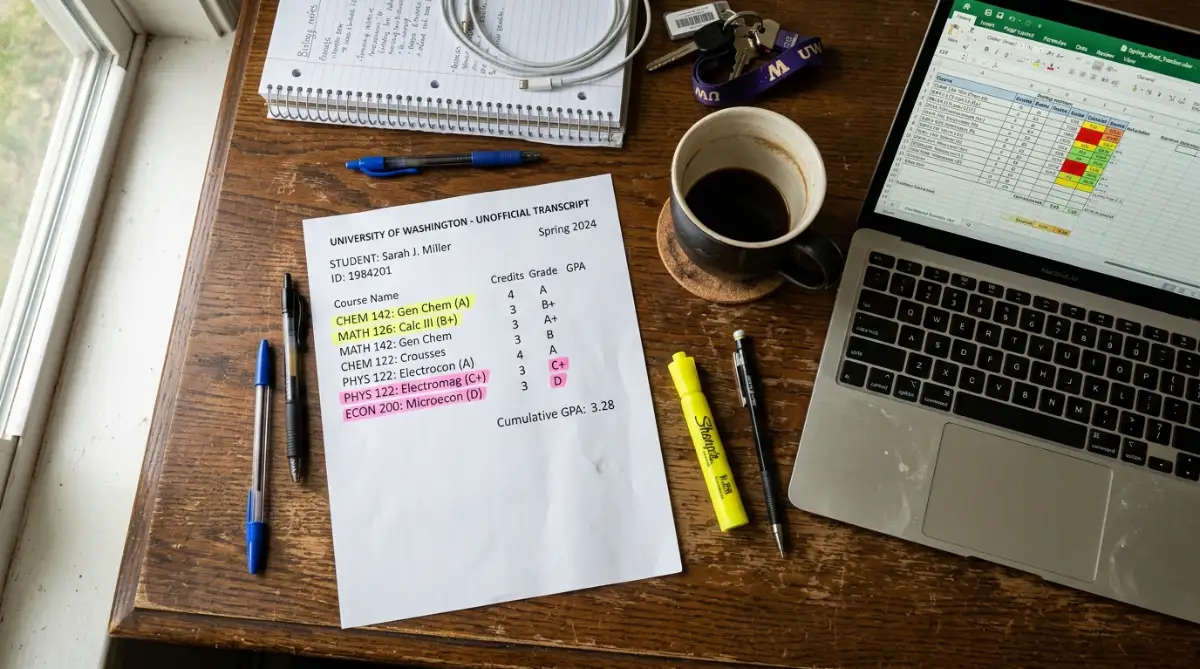
Before you make any sudden moves, you need to understand exactly what kind of academic currency you currently hold in your hands. Not all college courses hold the exact same weight, and understanding these specific categories is your very first line of defense.
Grab a physical copy of your current unofficial transcript and a set of bright highlighters. You need to separate your completed classes into three completely different buckets: general education, major-specific cores, and free electives.
General education classes are usually the safest bets across the board. Subjects like basic English, introductory psychology, and college algebra are universally accepted by almost every single degree program out there. You can safely assume these foundational blocks will transfer seamlessly over to your new academic home.
The tricky part always revolves around your major-specific core classes. If you are moving from mechanical engineering to fine arts, those advanced thermodynamics classes might look like a total loss at first glance. However, you can often push these highly specific classes into your "free elective" bucket.
Every single degree requires a certain number of random, totally open electives simply to reach the minimum graduation threshold. By carefully moving your old core classes into these empty elective slots, you instantly save yourself thousands of dollars and months of wasted time.
Find the "Sister Degree" with Maximum Overlap
Sometimes, you want to leave a field entirely, but other times, you just want to shift slightly to the left or right of your current path. If you are deeply worried about losing your progress, looking for a directly related field is the smartest strategy you can use.
Let us imagine a very common scenario where a nursing student decides they cannot handle the physical demands of clinical rotations. Instead of completely jumping ship to become a history major, they should look at health administration or public health.
These closely related fields are often called "sister degrees" because they share a massive amount of foundational prerequisites. In a related program, those hard-earned biology, anatomy, and medical ethics classes will easily count toward your new core requirements.
Let's clear up some major confusion about switching related degrees:
- Myth: I have to retake all my freshman science classes.
- Reality: "Sister degrees" share up to 80% of your early prerequisites, meaning almost everything transfers over.
- Myth: My GPA resets when I change departments.
- Reality: Your institutional GPA stays with you forever, for better or worse.
- Myth: Advisors will automatically map out my overlapping credits.
- Reality: You usually have to file a manual "course substitution petition" yourself to get credit.
Watch this helpful breakdown before moving forward: This short video perfectly explains the hidden secrets of degree overlapping and how universities secretly structure their prerequisite trees.
Taking a slightly adjacent path allows you to completely change your daily career trajectory while keeping your graduation date exactly the same. You basically trick the academic system by staying within the same broader college department while entirely changing your end goal.
Always pull up the curriculum sheets for both your current program and your desired program, placing them directly side by side. Count exactly how many early-level classes perfectly match up on both sheets. The higher that matching number is, the safer your transition will be.
Transform Your Old Passion Into a Strategic Minor
One of the absolute best ways to save highly specific, advanced classes is to package them neatly into an academic minor. This strategy is incredibly powerful and looks fantastic on your future resume.
Let us say you spent three years studying computer science before realizing your true passion is actually marketing. You likely have a massive stack of advanced coding and database management credits that a marketing degree simply does not need.
Instead of letting those high-level technology classes drop into a useless bucket, you can easily declare a minor in computer science. Most academic minors only require around five to six specific classes to complete.
Pro Tip: When I changed my major halfway through my junior year, I was terrified of losing 18 hours of advanced psychology classes. I quickly realized I only needed one more specific class to officially lock in a psychology minor, which ended up making my final business resume look incredibly unique and highly attractive to my future employers.
By officially claiming a minor, you give those old classes a permanent, respected home on your final degree transcript. It shows future employers that you have a diverse, multi-layered skill set that other standard applicants do not possess.
Let’s do some quick math to show you why this matters:
If a single 3-credit class at your university costs 1,200,andyousave15credits(5classes)bygroupingthemintoaminorinsteadofjustthrowingthemaway,youinstantlysave∗∗
1,200,andyousave15credits(5classes)bygroupingthemintoaminorinsteadofjustthrowingthemaway,youinstantlysave∗∗
6,000**. Plus, you avoid spending an entire extra semester paying for room and board. That is real money staying in your pocket just by organizing your paperwork smartly.
A marketing graduate who also officially understands software development is incredibly valuable to modern tech companies. You take what originally felt like a massive mistake and intentionally turn it into your biggest competitive advantage in the job market.
Master the Art of Course Substitution Petitions
Universities have a lot of strict rules, but almost every single rule has a hidden waiver process if you know exactly who to ask. Course substitution petitions are your secret weapon against rigid academic policies.
A substitution petition is basically a formal, written request asking the university to accept an old class in place of a newly required one. For example, if your new business degree requires "Business Statistics," but you already took "Biostatistics" for your old science degree, you can fight to make them swap.
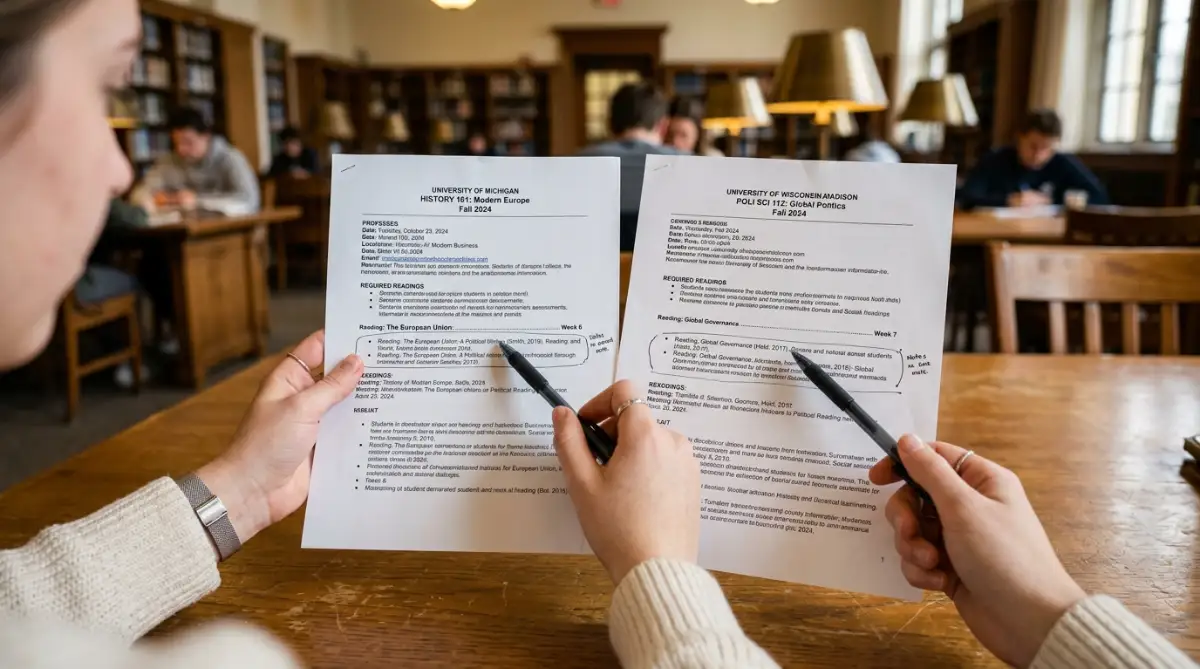
You cannot simply ask nicely; you have to build a highly logical, evidence-based argument. You need to dig up the original syllabus for the class you already took and compare it directly to the syllabus of the class you are trying to skip.
Highlight the specific weekly learning modules that overlap, showing the academic committee that you have already mastered the core concepts. Never assume an advisor will do this heavy lifting for you. You have to act like a lawyer building a solid case for your own academic defense.
When you present a beautifully organized folder showing that 80% of the reading materials and test concepts are identical, department heads have a very hard time saying no. This simple paperwork process can magically save you from retaking heavily redundant material.
Consider the Interdisciplinary or General Studies Route
Sometimes, students wait until their senior year to realize they absolutely hate their major. At this late stage, switching to a brand new traditional program usually guarantees an extra two years of school.
If you are already deep into your timeline and just want to secure a bachelor's degree quickly, an interdisciplinary degree is a lifesaver. These specialized programs allow you to essentially build your own custom major using the random pieces you already have.
Instead of forcing you into a strict box, these programs let you combine three different concentration areas into one solid degree. You can take your past credits in sociology, your few classes in communications, and your current interest in business, blending them together.
This extremely flexible approach ensures that literally every single class you have ever taken counts toward graduation. It completely stops the bleeding of wasted tuition money while still handing you a highly respected, fully accredited university diploma.
Many massive corporations really do not care what specific title is printed on your degree. They simply want to see that you had the discipline, intelligence, and drive to successfully finish a four-year academic marathon.
How to Negotiate Safely with Your Academic Advisor
Your academic advisor holds the keys to your entire future, but you must remember they are managing hundreds of other students at the same time. You can never walk into an advising appointment empty-handed and expect them to magically fix your entire life.
Simple Reality Check for Your Transition
Before you even book a meeting, you need to create your own mocked-up transition plan on a simple spreadsheet. Show them exactly which classes you think will transfer, which ones you plan to petition, and how many semesters you have left.
When you present a fully fleshed-out plan, the advisor instantly shifts from trying to figure out your mess to simply reviewing your excellent work. This proactive behavior makes them highly motivated to approve your requests and fight for your waivers behind closed doors.
Always keep an extremely friendly, polite, but highly assertive tone during these important meetings. If an advisor says a class definitely will not transfer, politely ask them to explain the specific policy or ask if there is an appeal process you can pursue.
Never take the first "no" as the final answer, because academic bureaucracies are full of hidden exceptions for students who advocate for themselves. By taking full ownership of your credit mapping, you guarantee that your past hard work continues to serve your future goals perfectly.
Advanced Strategies for Protecting Your College Investment
Now that we have covered the basics of credit mapping, we need to look at some high-level tactics that most students never even consider. When you treat your university career like a strategic game of chess, you start seeing hidden opportunities everywhere. Protecting your past work requires a little bit of creativity and a lot of active planning.
One of the smartest moves you can make today is to become an absolute syllabus hoarder. A syllabus is not just a piece of paper your professor hands out on the first day; it is a legally binding academic contract. Keeping a digital copy of every single syllabus can literally save you thousands of dollars down the line.
When you ask a new department to accept an old class, they do not care about the title of the course. They want to see the exact textbook you used, the weekly reading assignments, and the grading rubrics. Having this documentation ready allows you to prove your academic worth without breaking a sweat.
If you have already lost your old documents, do not panic just yet. You can usually email your former professors directly and politely ask them for a PDF copy from a previous semester. Universities also keep massive archives of these documents, so reaching out to the department secretary is a fantastic backup plan.
The Reverse Engineering Technique
Instead of looking at the classes you have already taken, you should start by looking at the absolute final semester of your dream degree. This strategy is called reverse engineering, and it completely changes how you view your academic timeline.
Pull up the graduation requirements for your new path and work backward, semester by semester. You will quickly notice that senior-level capstone projects require specific junior-level prerequisites, which require sophomore-level basics. By understanding this rigid chain of events, you can avoid taking classes out of order.
Many students accidentally delay their graduation by simply taking the wrong class at the wrong time. Some highly specific courses are only offered during the spring semester. If you miss that specific window, you are instantly stuck waiting an entire academic year just to take one single class.
Mapping out your prerequisites backward ensures you hit every single academic milestone perfectly on schedule. You should always aim for maximum efficiency when building a better career roadmap to keep your momentum going strong.
Testing Out of the Gaps in Your Schedule
Sometimes, no matter how hard you negotiate with your advisor, you will inevitably have a few empty holes in your new degree plan. You might need a basic history or psychology class that you completely skipped during your previous major. Instead of spending a full four months sitting in a boring lecture hall, you should look into standardized testing.
Programs like the College Level Examination Program allow you to take a single, comprehensive test to prove your knowledge on a subject. If you pass this exam, the university awards you the full credit hours for a fraction of the normal tuition cost. You can learn more about these standardized testing options like CLEP to see which subjects your university currently accepts.
This is a massive secret that universities rarely advertise because it directly cuts into their profits. You can spend two weeks studying a test prep book from your local library, take the exam on a Tuesday, and instantly earn three college credits. It is the absolute fastest way to catch up if changing your path put you slightly behind your peers.
Taking these shortcut exams is also a brilliant way of reducing academic anxiety when you feel completely overwhelmed by a heavy course load. You simply clear the easy requirements out of the way so you can focus all your energy on your brand new, exciting core classes.

The Most Dangerous Traps When Changing Your Degree
Changing your academic direction is an incredibly emotional experience, and high emotions often lead to very poor decision-making. When students panic about their future, they tend to rush through the paperwork and make massive mistakes. These easily avoidable errors can completely derail your financial stability and your graduation timeline.
You must protect yourself by understanding exactly where the hidden traps are buried. The academic system is highly unforgiving to students who try to guess the rules instead of reading them. Let us walk through the most destructive pitfalls you need to avoid at all costs.
The "Ghosting" Approach to Unwanted Classes
One of the most common and financially devastating mistakes happens the moment a student decides they hate their current path. They simply stop showing up to their old major classes, thinking they will just magically disappear from their record. Ghosting your professors does not erase your enrollment; it guarantees a failing grade.
Those ugly failing grades permanently attach themselves to your institutional GPA, dragging your academic standing completely into the mud. When you eventually apply for your new major, the new department head will see those recent failures and seriously question your work ethic. You always want to leave your old department on good terms, showing maturity and responsibility.
If you are absolutely certain you want out, you must follow the official university withdrawal process before the deadline hits. Taking a formal "W" on your transcript is a thousand times better than taking an "F" because a withdrawal does not mathematically hurt your GPA. Protecting your academic reputation is essential for managing your educational expenses and keeping your scholarship money safe.
Ignoring the Financial Aid Progress Rules
This is the silent killer of college dreams, and it catches thousands of students completely off guard every single semester. Federal grants and student loans are heavily tied to a concept called Satisfactory Academic Progress. The government closely watches how many credits you attempt versus how many you actually finish and apply toward a degree.
If you change your direction too many times, you will eventually hit the dreaded maximum timeframe limit. The government generally cuts off your funding once you attempt 150% of the credits required for a standard degree. You can review the specific details regarding understanding federal financial aid progress to ensure you stay safely within the legal limits.
Imagine being only two semesters away from your brand new graphic design degree, only to receive an email saying your federal loans are permanently canceled. This happens every day to students who carelessly jump from subject to subject without a solid plan. You must always sit down with the financial aid office before making any official department changes.
Checking in with the financial office ensures you are improving your daily productivity without constantly worrying about how to pay your next tuition bill. A quick fifteen-minute meeting can save you from a complete financial disaster down the road.
Trusting Unofficial Advice Over Written Policy
Your friends, roommates, and older fraternity brothers mean well, but their academic advice is usually completely wrong. University policies change almost every single academic year, meaning what worked for your older sister three years ago might be totally invalid today.
Never base your transition strategy on a rumor you heard in the dining hall. When it comes to transferring hard-earned credits, the only thing that matters is the officially published university catalog. You should always demand to see national transfer credit standards or the specific written rule from your department head.
If an advisor promises you a substitution verbally, kindly ask them to send you an email confirming that exact conversation. Having a written paper trail protects you if that specific advisor suddenly quits or moves to a different university next semester. You never want to be left holding the bag because someone forgot a promise they made to you six months ago.
Do's and Don'ts for a Smooth Academic Transition
- Do: Keep a heavily organized digital folder containing every single syllabus, transcript, and email from your old department.
- Don't: Drop your current classes without talking to the financial aid office first.
- Do: Look deeply into minor programs to save your highly advanced, specific credits from going to waste.
- Don't: Assume your foundational general education classes will automatically apply to a highly specialized science or nursing program.
Your Immediate Action Plan for Tomorrow
You are officially holding the roadmap to completely change your life without throwing away your past hard work. It is completely normal to feel a heavy sense of guilt when leaving a subject you invested so much time into. But staying in a field you deeply hate is a much bigger tragedy than losing a few random credit hours.
Your past classes were never a waste of time; they simply taught you exactly what you do not want to do for the next forty years. That kind of clarity is incredibly valuable, and it pushes you closer to a career that actually makes you excited to wake up. By using the overlap strategies and substitution petitions we discussed, you are taking total control of your narrative.
Tomorrow morning, I want you to print out your current unofficial transcript and grab a few colorful highlighters. Start categorizing your completed classes into the general, core, and elective buckets right at your kitchen table. Once you visually see how much you can actually save, that heavy chest anxiety will finally start to disappear.
You are actively building an amazing foundation for your future, and learning how to pivot smoothly is a massive life skill. Keep pushing forward, stay highly organized with your paperwork, and advocate fiercely for your own academic success.
My Personal Takeaway: When I finally ripped the band-aid off and changed my own path, I was terrified of falling behind my peers. But organizing my past credits into a custom minor ended up being the smartest move I ever made. I promise you, the temporary stress of filling out transfer paperwork is totally worth the deep relief of finally studying something you truly love.
Real Questions Students Ask About Shifting Paths
Will my bad grades follow me if I switch to a completely different department?
Yes, your institutional GPA generally stays exactly the same because you are still enrolled at the same university. However, many new departments only look at the specific prerequisite grades needed for their program when evaluating your admission.
Is it completely too late to change my path during my junior year?
It is absolutely never too late, but doing it this late requires a heavily aggressive overlap strategy. You will likely need to utilize the free elective bucket heavily and strongly consider turning your old studies into a formal minor.
How do I know if my past classes will count as electives?
Almost every standard bachelor's degree requires between 15 to 30 hours of completely open, random electives just to reach the 120-hour graduation mark. You can simply ask your advisor to drop your old, mismatched courses directly into these empty elective slots.
Will changing my academic focus completely mess up my current scholarships?
This highly depends on the exact source of your funding and their specific rules. Department-specific scholarships will definitely disappear, but general academic merit scholarships usually stay with you as long as your GPA remains high.
Can I appeal a decision if a department refuses to accept my old credits?
Absolutely, you always have the right to challenge an academic decision by submitting a formal syllabus review. You simply need to present a highly detailed comparison showing that your old class covered the exact same material as their required class.
Disclaimer: The information provided in this article is for general educational and informational purposes only and should not be construed as professional academic or financial advising. University policies, credit transfer rules, and financial aid regulations vary wildly by institution and change frequently. Always consult directly with your official university academic advisor and the financial aid office before making any binding decisions regarding your degree path. We are not responsible for any academic delays or financial impacts resulting from the use of this guide.