The Hidden Nightmare Behind That Exciting New Business Location
Before you sign your name on that massive stack of commercial lease papers, take a breath. I get it—you finally found the perfect spot for your business, and you just want the keys. But rushing this step is the fastest way to drain your bank account. Let’s look at the hidden traps landlords hope you ignore, and how you can actually protect your hard-earned money from day one.
I was about to sign my very first commercial lease. My heart was racing with excitement, but deep down, my stomach was tied in knots.
I skimmed through the pages, pretending I understood words like "indemnification" and "subordination." The landlord smiled and told me it was just a standard contract. I believed him. I wanted the keys so badly that I ignored the little voice in my head telling me to slow down.
That single signature ended up costing me thousands of dollars in hidden maintenance fees just six months later. I learned the hard way that landlords protect themselves, not their tenants.
Yet, you rush through the one document that actually controls the future of your business. The stress of paying unexpected bills can completely ruin your mental peace.

Imagine getting a surprise invoice for roof repairs on a building you do not even own. Imagine your landlord telling you that you cannot sell a specific product because another tenant has exclusive rights to it. This happens all the time to good, hardworking people.
The anxiety of realizing your personal assets—like your family home—are on the line because of a bad lease can keep you awake at night. You start dreading the mail. You begin to resent the business you once loved.
Before You Read: 4 Quick Takeaways
- Base rent is a trap: Always check for hidden CAM (Common Area Maintenance) fees before doing your math.
- Protect your home: Never sign an unlimited personal guaranty; always ask for a limit or a 'Good Guy' clause.
- Dodge the HVAC scam: Make sure your contract clearly states the landlord pays for major AC and heating unit replacements.
- Get free time: Always negotiate 1 to 3 months of totally free rent to build out your shop before paying a dime.
Decoding the Traps: How to Protect Your Business Future
To keep your business safe, we have to look closely at the specific rules hidden deep inside the paperwork. Let’s break down the absolute worst mistakes you can make and exactly how you can avoid them starting today.
Failing to Understand the True Cost of Your Rent
Most new business owners think the monthly rent they see on the flyer is the final price. This is a massive misunderstanding of how commercial real estate actually works. In the residential world, your rent usually covers almost everything except maybe electricity and internet.
In the commercial world, base rent is often just the starting line. If you are signing a Triple Net (NNN) lease, you are basically taking on the financial responsibilities of a property owner.
You will be expected to pay a portion of the property taxes, the building insurance, and the Common Area Maintenance (CAM) charges. These CAM charges are where landlords love to hide extra expenses.
They might include landscaping, parking lot repaving, snow removal, and even the salary of the property manager. If you do not cap these charges in your contract, your monthly payment can double without any warning.
I have seen small coffee shops forced to close simply because the landlord decided to do a massive, expensive renovation on the exterior of the building. The tenants were forced to foot the bill. You must always ask for a detailed history of the CAM charges from the past three years.
This will give you a logical, data-backed idea of what you will actually owe. Do not rely on verbal promises from the leasing agent. If it is not written directly in the document, it does not exist.
Real Estate Myth vs. Fact
- The Myth: My base rent is the only big check I will write every month.
- The Fact: If you sign a Triple Net (NNN) lease, hidden CAM (Common Area Maintenance) charges can bump your monthly bill up by 30% or more. Always ask your lawyer to cap your annual CAM increases at 3% to 5% so you never get hit with a surprise bill.
Giving Away Your Life Savings Through a Personal Guaranty
When you form an LLC or a Corporation, you do it to protect your personal money if the business fails. However, commercial landlords know that a new business is a huge risk. They do not want to be left with an empty building and unpaid rent.
Because of this, they will almost always demand that you sign a personal guaranty. This means you are personally promising to pay the rent out of your own pocket if the business goes under.
This is an incredibly dangerous situation. If things go wrong, the landlord can legally come after your personal bank accounts, your car, and even your family home. Many passionate entrepreneurs sign this without fully understanding the gravity of what they are doing.
I learned this the hard way when my landlord demanded a full personal guaranty for a ten-year lease. I was terrified, but I hired a lawyer who helped me negotiate a "Good Guy Guarantee," which meant I was only personally liable if I abandoned the space without notice. This one small change allowed me to sleep peacefully at night.
You do not have to accept an unlimited personal guaranty. You can push back. Ask to limit the guaranty to only the first two years of the lease.
You can also ask to cap the total dollar amount you would owe. If a landlord absolutely refuses to negotiate the personal guaranty, you might need to walk away. No physical location is worth risking your family’s financial safety.
Quick Checklist: How to Shrink Your Personal Guaranty
Do not just sign away your life savings. Ask your landlord for these specific terms:
- The "Good Guy" Clause: You are off the hook for future rent if you simply return the keys and give a 90-day notice.
- The "Burn-Off" Feature: Your personal guaranty automatically expires after 24 months of paying your rent on time.
- A Fixed Dollar Cap: Limit your personal risk to a maximum of six months' rent, rather than the entire 10-year lease amount.
Before you sign any document that puts your personal assets on the line, watch this breakdown of how commercial guarantees actually work in the real world.
Ignoring the Hidden Burden of HVAC Maintenance
Heating, Ventilation, and Air Conditioning (HVAC) units are complex, massive machines. In a commercial building, they are put under an enormous amount of stress. Replacing a commercial rooftop HVAC unit can easily cost tens of thousands of dollars.
Who pays for this when it breaks? If you read a standard landlord-friendly lease, you might be shocked to find out that you do.
Many contracts state that the tenant is responsible for all maintenance, repairs, and full replacements of the HVAC system. Imagine signing a three-year lease, and in month two, the twenty-year-old air conditioner completely dies. You would be legally forced to buy a brand new unit for a building you will leave in less than three years.
This defies basic logic, yet it is a standard industry practice. To protect yourself, you need to hire an independent inspector to check the HVAC system before you agree to anything.
Get a written report on the exact age and condition of the units. Then, negotiate a clear cap on your maintenance expenses.
For example, you can write into the contract that you are only responsible for routine maintenance like changing filters. You can state that your maximum out-of-pocket cost for repairs will not exceed $500 per year. Make sure the contract explicitly states that the landlord is responsible for major breakdowns and full replacements.
Getting Trapped by an Unclear Use Clause
The "Use Clause" is a specific section of the contract that tells you exactly what you are allowed to do inside the building. Landlords use this to control the mix of businesses in their shopping centers. If the clause is written too narrowly, it can completely choke your business growth.
Let’s say you open a gourmet sandwich shop. Your use clause might say you are permitted to "sell sandwiches and cold drinks."
Two years later, your business is booming, and you want to start selling hot soups and fresh baked cookies. If your lease only says "sandwiches," the landlord can legally stop you from expanding your menu. They might do this because another tenant, like a bakery nearby, has an exclusive right to sell baked goods.
You must negotiate a broad use clause. Instead of listing exactly what you will sell, use general terms.
Try to get language approved like "for the operation of a restaurant and any other lawful retail use." This gives you the freedom to pivot your business model if the market changes.
If you are the one signing a lease in a busy plaza, you should also demand your own exclusive rights. If you are opening a high-end hair salon, get it in writing that the landlord cannot rent the space next door to a competing discount hair cutter.
Understanding the Different Types of Commercial Leases
Real estate terminology is intentionally confusing. To make informed decisions, you need to know exactly what kind of payment structure you are walking into. Different buildings use completely different systems.
Here is a simple breakdown of the reality you will face:
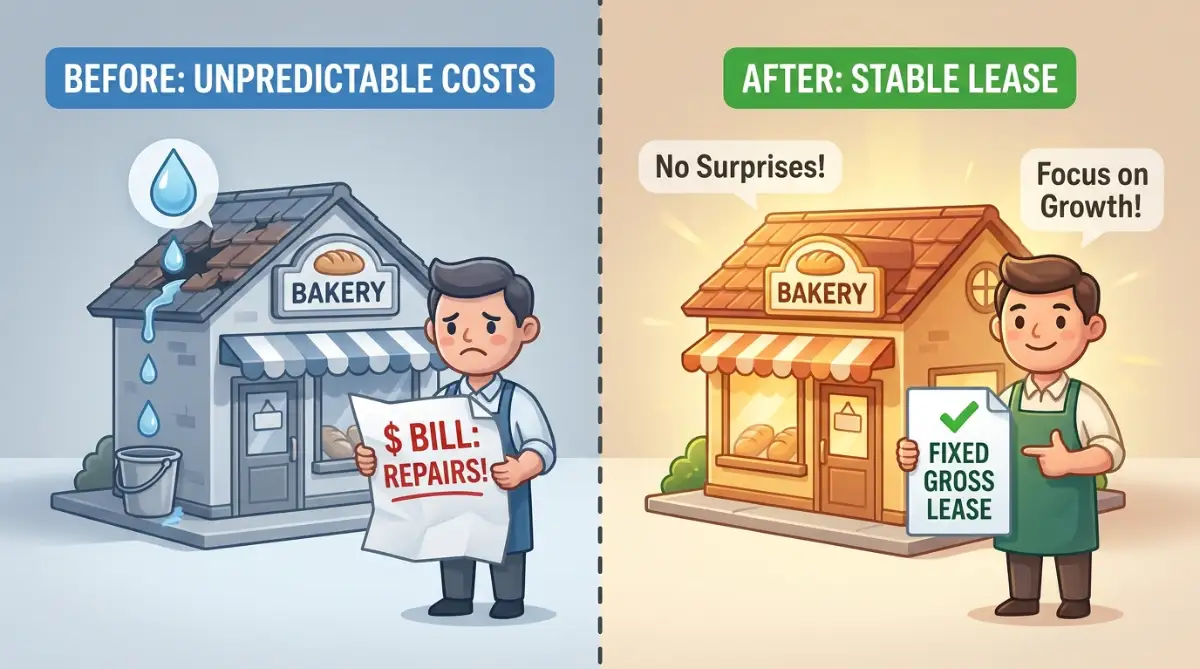
Knowing this structure helps you compare apples to apples. A Gross Lease might look much more expensive on paper, but it provides absolute safety for your monthly budget. A Triple Net lease might look cheap, but the surprise bills can be devastating.
Overlooking the Danger of the Relocation Clause
This is one of the sneakiest paragraphs in a commercial real estate contract. A relocation clause gives the landlord the legal right to move your business to a different unit within the same building or shopping center.
Why would they do this? Let’s say a massive national brand comes along and wants to rent your space plus the space next door. If you have a relocation clause, the landlord can force you to pack up your shelves and move to a dead corner in the back of the plaza.
They will promise that the new space is "comparable," but you know that foot traffic is everything. Moving your storefront can kill your visibility.
You need to try and strike this clause out entirely. Tell them you selected this exact unit for a specific reason.
If they refuse to remove it, you must add strict conditions. Force them to pay for 100% of the moving costs, including printing new marketing materials with your new unit number. Make sure they cannot move you during your busiest holiday sales season.
Failing to Plan for Your Exit Strategy
No one wants to think about closing their business on the day they open it. It feels like bad luck. But from a logical standpoint, failing to plan your exit is the most dangerous error you can make.
Life is unpredictable. You might get sick, you might need to move to another state, or your business might just outgrow the space faster than expected. If your contract strictly forbids assigning the lease or subletting, you are totally trapped.
You need the right to sell your business and transfer the lease to the new owner. Landlords hate this because they want to control who is in their building.
They will try to write that they have "sole discretion" to approve a new tenant. This means they can say no just because they feel like it.
Change those words immediately. The contract must state that the landlord cannot "unreasonably withhold" their permission for a sublease. This simple change forces them to act fairly and allows you to walk away when the time is right, without facing a massive lawsuit.
Negotiating Like a Pro: Insider Strategies Landlords Respect
Now that we have covered the basic traps, it is time to look at the strategies that separate amateur renters from seasoned business owners. You have much more power in this process than you probably realize. Landlords want a reliable, paying tenant just as much as you want a great location.
Because of this mutual need, you can actually ask for things that make your life significantly easier. One of the best tools you can use is asking for a Tenant Improvement (TI) allowance. When you rent a new space, it rarely looks exactly how you need it to.
You might need to knock down walls, install special plumbing for a salon sink, or upgrade the electrical panel for restaurant ovens. These renovations can quickly drain your startup budget. A smart negotiator will ask the landlord to pay for a portion of these build-out costs.
For example, you can ask for $20 per square foot in TI money. The landlord will often agree to this because the upgrades you make will permanently improve the value of their building. If you are learning about managing business operations smartly, you know that keeping your initial cash flow safe is a top priority.
Another powerful secret is securing a "Free Rent" period, formally known as rent abatement. Think about it logically. If your lease starts on the first of the month, you cannot legally open your doors that same day.
You need weeks or even months to paint, move in inventory, train your staff, and set up your computer systems. You should not have to pay full rent while your store is closed to the public. Always ask for at least one to three months of completely free base rent at the beginning of the term.
Most property owners expect this request and will happily grant it to secure a long-term contract. Just make sure the paperwork clearly states that you will still have access to the building during this free period.
You also need to demand the legal right to audit the landlord's books. Earlier, we talked about how dangerous Common Area Maintenance (CAM) charges can be. What happens if the landlord sends you a massive bill for parking lot repairs, but you suspect they are overcharging you?
If you do not have an "Audit Right" clause in your contract, you basically just have to pay whatever they demand. By adding this specific rule, you get to hire an independent accountant to look at the landlord's actual receipts. The U.S. Small Business Administration offers great guidance on how keeping tight control over your financial obligations prevents sudden cash flow disasters.
I have seen audits reveal that landlords accidentally billed tenants for the property manager’s personal travel expenses. A simple audit clause keeps everyone honest and protects your hard-earned money.
Next, we have to talk about the Co-Tenancy Clause. This is highly recommended if you are opening a business inside a large shopping mall or a busy retail plaza. Let’s say you open a healthy juice bar right next door to a massive, popular fitness center.
You chose this spot specifically because you know hundreds of thirsty gym members will walk past your door every single day. But what happens if that gym goes out of business six months later? Suddenly, your foot traffic completely disappears.
A co-tenancy clause protects you from this exact nightmare. It states that if the "anchor tenant" (the big store that brings in the crowds) leaves, your rent automatically drops by a certain percentage. Sometimes, this clause even gives you the right to break your lease completely penalty-free if the landlord cannot find a replacement gym within a year.
Finally, never underestimate the power of capping your annual rent increases. Almost every commercial lease includes an escalation clause, which means your rent goes up every single year to keep up with inflation. If the contract says the rent will increase by the Consumer Price Index (CPI), you could face a massive 8% or 9% jump during a bad economy.
Always negotiate a hard, fixed ceiling. Tell the landlord that you agree to annual increases, but they can never exceed 3% or 4% per year. When you are focused on smart financial planning strategies, knowing exactly what your bills will look like five years from now gives you incredible peace of mind.
Silent Budget Killers: Where Passionate Entrepreneurs Go Wrong
Even when you know the rules, the excitement of starting a new chapter can make you blind to obvious dangers. People make deeply emotional decisions when they are close to achieving their dreams. Let’s walk through the most common pitfalls that destroy good businesses before they even have a chance to succeed.
The biggest mistake by far is relying on a verbal promise from a leasing agent or property manager. You might walk through a space and point out a massive water stain on the ceiling. The friendly agent will smile and say, "Oh, do not worry, we will have the maintenance team patch the roof before you move in."
You trust them because they seem genuine. You sign the paper without checking if that promise was actually written down. Three months later, it rains, and your expensive inventory gets completely soaked.
When you call the landlord to complain, they point directly to the clause that says you accepted the property "As-Is." It does not matter what the agent told you on Tuesday afternoon. In the eyes of the law, if a promise is not explicitly typed into the final agreement, it simply never happened.
Another fatal trap is failing to verify local zoning laws and city permits yourself. Business owners often assume that because a building looks like a restaurant, they can legally operate a restaurant there. This is a very dangerous assumption to make.
I recently heard a heartbreaking story about a woman who signed a five-year lease for a dog daycare center in a beautiful industrial park. After paying her first and last month’s rent, the city government told her that live animals were strictly forbidden in that specific zone. The landlord refused to let her out of the contract, claiming it was her job to check the city rules.
She lost over twenty thousand dollars and never even opened her doors. You must take a trip to your local city planning office and confirm your exact business model is legally allowed in that exact building. Resources like the American Bar Association often highlight how local municipal codes easily override any private contract you sign with a property owner.
You also run a massive risk by using a general family lawyer instead of a commercial real estate expert. When you buy a house, your family attorney does a great job checking the title. However, commercial real estate is an entirely different world filled with specialized vocabulary and aggressive corporate tactics.
Using a lawyer who usually handles divorces or simple wills to review a fifty-page commercial lease is like asking a dentist to perform heart surgery. They might miss sneaky clauses regarding hazardous waste cleanup or complex insurance requirements. Paying a specialized commercial broker or attorney might feel expensive up front, but it is the cheapest insurance policy you will ever buy.
When you are exploring ways to protect your business assets, paying for professional legal translation is non-negotiable.
Lastly, do not ever sign the document under your own personal name if you have an LLC or Corporation. This sounds like basic advice, but you would be shocked at how often it happens. A business owner will form an LLC, but the landlord will draft the lease using the owner's personal name at the top of page one.
If you sign it as an individual, you completely bypass the legal protection your LLC provides. If someone slips and falls in your store, they can sue you personally. Always double-check that the "Tenant" listed on the document is your exact, registered company name.
Your Blueprint for a Safe and Profitable Business Launch
Walking into a commercial real estate negotiation does not have to feel like walking into a trap. Yes, landlords have teams of lawyers writing documents designed to protect their profits. But you also have incredible leverage, common sense, and the ability to walk away if a deal feels wrong.
By taking the time to read the fine print, you are taking absolute control over your financial destiny. You now know how to spot sneaky maintenance fees, limit your personal liability, and secure free rent while you build out your dream space. This knowledge allows you to sit at the negotiation table with confidence and clarity.
Every single rule, clause, and dollar amount in that packet of paper is negotiable. You just have to be brave enough to ask for what you deserve. When you are handling complex business negotiations, remember that the person across the table expects you to push back.
Protecting your business starts long before you make your first sale. It starts with setting a solid, legally binding foundation that gives you room to grow without fear of sudden bankruptcy.
I know exactly how terrifying that massive stack of legal paper looks when it is sitting on the desk in front of you. My best advice to you is to take a deep breath, trust your instincts, and never let anyone rush your signature. Your future self will thank you for taking the extra time to get it right.
Burning Questions Every New Tenant Asks Before Signing
Can a commercial landlord break a lease early?
Yes, a landlord can legally break your contract early, but only if there is a specific clause allowing it, such as a "Demolition Clause" or a "Relocation Clause." If you have paid your rent on time and followed all the rules, they generally cannot force you out unless the written agreement explicitly gives them a loophole. Always ask your lawyer to remove any language that allows the landlord to terminate the deal without heavy financial penalties.
What happens to my business if the building gets sold?
Usually, your commercial lease remains completely valid even if the property changes hands. The new owner simply takes over the existing contract and becomes your new landlord. However, you should check your document for a "Subordination, Non-Disturbance, and Attornment" (SNDA) agreement, which guarantees the new owner cannot randomly evict you after a sale. Checking reputable sources like the Nolo legal guides on commercial tenancy can give you more insight into how building sales affect renters.
Is it normal to negotiate the base rent down?
Absolutely. The asking price you see on a real estate listing is almost always inflated because the landlord expects you to haggle. You should confidently counter-offer a lower monthly rate, especially if you are willing to sign a longer term, like five or seven years. When you are focusing on growing a stable retail brand, saving even fifty dollars a month on rent adds up to massive savings over a decade.
How long does a typical commercial lease last?
Most commercial landlords prefer agreements that last between three and five years. A longer timeline gives them a guaranteed income stream and lowers their turnover costs. As a tenant, a longer agreement locks in your location and helps you predict your expenses, but you should always negotiate an "Option to Renew" so you have the first right to stay when the time is up.
Do I really need a lawyer for a small office space?
Yes, you should always have a legal professional read over the paperwork, even if you are just renting a tiny one-room office. Small contracts can still hide terrible rules about automatic renewals, ridiculous late fees, or unfair maintenance obligations. Paying a lawyer for one hour of reading time can save you from a major financial headache down the road.
Legal and Financial Disclaimer:
The information provided in this blog post is for educational and informational purposes only and does not constitute legal, financial, or real estate advice. Commercial lease laws vary significantly by state and local jurisdiction. Always consult with a licensed commercial real estate attorney or a certified financial professional before signing any legally binding contracts or making major business decisions.