The Crushing Weight of Unproven Dreams
Let's be brutally honest. Most new business ideas are total garbage, and that includes the ones you and I come up with at 2 AM. Before you empty your savings account or beg your family for a loan, you need cold, hard proof that strangers will actually hand you cash. I am going to show you exactly how to get that proof today, without spending a single dime of your own money.
My beautiful product just sat there, and I quickly realized I had built something nobody actually wanted to use. That painful lesson cost me a lot of money and almost destroyed my confidence entirely. I felt like a complete failure, sitting in my room wondering where I went wrong.
If you are reading this, you might be carrying that exact same fear right now. You have a burning business concept in your head that keeps you awake at night. You want to escape the boring daily grind and build something meaningful for your future.
But the fear of losing your hard-earned savings is holding you back. You constantly worry that if you invest your money into this project, you might lose everything and end up worse off than when you started. It is a terrifying position to be in.
The "TL;DR" Blueprint for Safe Launches
- Stop guessing what the market wants and start testing your offers for free.
- Use "Fake Doors" to see if strangers actually click the buy button.
- Do the heavy lifting manually (the Concierge Method) before you pay for any software.
- Never trust business feedback from your family—only trust strangers with credit cards.
The Myth of the Expensive Launch
There is a massive lie floating around the business world today. People think you need a massive pile of cash, an expensive office, and a team of developers just to see if a concept is good. This kind of thinking traps talented people in a cycle of endless planning and zero execution.
Myth vs. Reality: The Startup Trap
- The Big Myth: You need a polished app, an LLC, and $10,000 just to see if your idea works.
- The Hard Reality: You only need a free landing page and 50 strangers who are willing to give you their email address.
The reality is completely different. The most successful founders do not guess what the market wants. They run tiny, free experiments to see how real humans react to their offers.
If nobody cares about your free or low-effort experiment, pouring thousands of dollars into it will not magically make them care. We need to shift your mindset from "building a product" to "testing an offer."
Let's break down the exact, science-backed methods you can use to test your market demand today. You will not need a loan, you will not need an investor, and you will not need to write a single line of code.
The "Fake Door" Strategy: Testing Real Demand
Imagine walking down the street and seeing a beautifully painted door for a new bakery. You love pastries, so you walk up and try to turn the handle. The door is locked, and a small sign says, "Opening next month! Leave your email for a free donut on opening day."
The bakery does not exist yet. There are no ovens, no staff, and no flour. But the owner just proved that real people are willing to walk up to that door and ask for the product. This is exactly what you need to do online.

You can set up a simple, one-page website using free tools like Carrd or Mailchimp. This page should clearly explain the massive problem your business solves and the exact benefits the customer will get.
Make the page look highly professional. Add a button that says "Get Early Access" or "Join the Waiting List." When people click that button, you simply ask for their email address.
How to read the data: If you send fifty people to that page and nobody clicks the button, your messaging is wrong, or the demand simply does not exist. If twenty people gladly give you their email, you just proved that people want what you are selling. You gathered hard evidence without spending a dime on inventory.
The Problem-First Discovery Method
Most beginners start with a shiny solution and run around trying to find a problem it can fix. This is entirely backward. You must start by finding a painful problem that people are actively complaining about.
Go to places where your target audience hangs out naturally. This could be specific Reddit forums, Facebook groups, or local community boards. Do not go there to promote anything. Go there to become a silent observer.
Search for phrases like "I hate it when," "How do I," or "Is there a way to." Watch how people describe their daily struggles in their own words. Take notes on the exact language they use.
When you see the same complaint popping up repeatedly, you have found a validated pain point. You can then gently reply to these comments and ask simple questions. Say something like, "I noticed you struggle with this too. If a tool existed to fix this exact issue, what would you want it to look like?"
Pro Tip: I used to think my idea was too precious to share, fearing someone might steal it. I quickly realized that execution is everything, and hiding my concept only prevented me from getting the honest feedback I desperately needed to succeed.
The Concierge Experience
Sometimes the best way to test software or a complex service is to do it entirely manually behind the scenes. This is known as the concierge approach. It feels like magic to the customer, but it is just you doing hard work in the background.
Think about how the billion-dollar shoe company Zappos started. The founder did not buy a massive warehouse. He just walked into local shoe stores, took photos of the shoes, and put them online. When someone bought a pair on his simple website, he went back to the store, paid retail price, and shipped it himself. He proved people wanted to buy shoes online before he ever bought a single box of inventory.
Let's say you want to build an automated meal-planning app that uses artificial intelligence to create grocery lists based on dietary needs. Building that app would take months and cost a fortune.
Instead, go to five busy parents in your neighborhood. Tell them you are starting a personalized meal-planning service. Ask them for their dietary restrictions and their favorite meals.
Then, go home, sit at your computer, and manually search for recipes. Build their grocery lists by hand in a simple Google Document and email it to them.
Watch exactly how top founders test their concepts without writing a single line of code or spending a dime.
If these parents do not find your manual service helpful, they definitely will not pay for an automated app version. But if they love it and beg you for another list next week, you have fully validated your concept. You proved the value of the outcome, not just the technology.
Selling the Blueprint Before the House is Built
One of the most terrifying but effective ways to validate anything is to ask for money before the product is finished. This is the ultimate test of market desire.
People will often say "That is a great idea!" just to be polite. Polite compliments will not pay your bills. The only true validation is when someone pulls out their credit card and trusts you with their money.
You can create a compelling presentation or a short video explaining exactly what you are going to build. Tell your audience that you are offering a special pre-sale discount for early supporters.
Be completely honest and transparent. Tell them, "This product is currently in development. If you buy today, you get it at half price when it launches next month."
If nobody buys during the pre-sale, you just saved yourself months of useless work. You can simply refund anyone who did buy and respectfully pivot to a new concept. No harm is done, and no capital is lost.
Analyzing the Free Validation Metrics
When you run these zero-cost experiments, you need to know how to measure success. You cannot rely on gut feelings or emotional attachments to your project.
Let's look at a simple comparison of what bad validation looks like versus good validation.
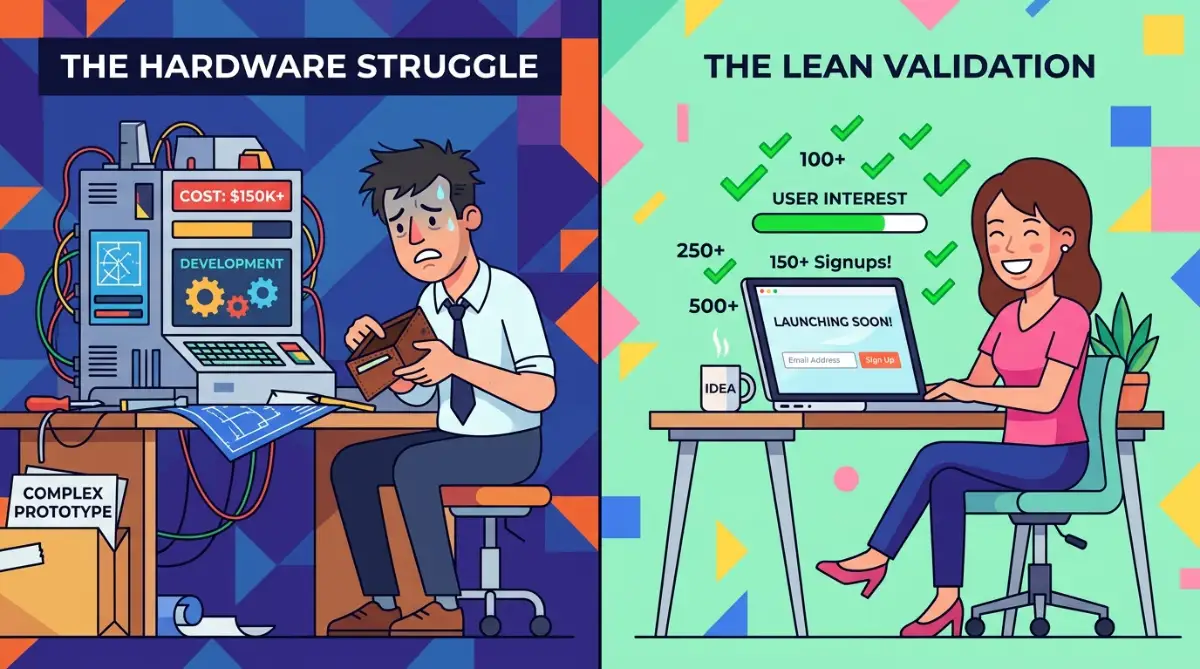
When you treat your startup concept like a science experiment, the pressure completely disappears. You are no longer risking your life savings on a wild guess.
You are simply presenting an offer to the market and waiting for the market to tell you what it wants. This logical, step-by-step approach gives you back your peace of mind. It allows you to build a business based on facts, data, and real human behavior.
Instead of hiding in your room building a secret project, you are out in the world having meaningful conversations. You are learning the exact language your customers use. You are discovering what they truly value and what they are willing to ignore.
The beauty of this zero-dollar strategy is that it forces you to become highly resourceful. When you do not have money to throw at a problem, you have to use your creativity. You learn how to connect with people on a deeper level, which is the foundational skill of any great business owner.
Next-Level Strategies to Prove Your Business Concept
Finding out if people want your product is just the first hurdle. To build a truly sustainable income, you have to dig much deeper into your customer's mind. You need to understand not just if they will buy, but exactly why they are buying.
One of the smartest ways to do this is through a method called shadow testing. This involves selling a product that feels completely real to the customer, even though the backend is entirely manual. It is a brilliant way to gather real payment data without investing in heavy infrastructure.
Let's imagine you want to start a local organic pet food delivery service. Instead of renting a warehouse and buying a massive delivery truck, you simply print some high-quality flyers. You drop these flyers around your neighborhood with a simple text-to-order phone number.
When a customer texts you their order, you personally drive to the local organic store. You buy the exact items they requested, pack them in a nice brown box, and deliver it to their door. You might barely break even on the cost, or even lose a few dollars on gas.
But you are not doing this to make an immediate profit. You are doing this to test the physical demand and logistics. If you get twenty text messages in one weekend, you have incredible proof that your neighborhood wants this service.
To turn this into a long-term habit, you must master the art of the customer interview. Top founders do not just guess what features to add next. They follow proven customer interview techniques to extract honest opinions from their target audience.
When you talk to potential buyers, never ask them about the future. Do not ask, "Would you use an app that does this?" People are terrible at predicting their future behavior. They will say yes just to be polite.
Instead, ask them about their past behavior. Ask, "How did you solve this exact problem last week?" If they cannot remember the last time they faced the issue, the problem is not big enough to build a business around.
You can also use cold email outreach to validate business-to-business ideas. If you have a service aimed at local real estate agents, do not build the service first. Write a simple, friendly email offering your service and send it to fifty local agents.
If nobody replies to your email, you know your offer needs work. By making these small adjustments early, you protect yourself from massive financial disasters down the road. If you want to understand how dangerous poor planning can be, you can study exactly why most startups fail before opening day to protect your own venture.
Keeping this mindset alive requires discipline. You must fight the urge to lock yourself in a room and build things in secret. Always present your roughest drafts to the public and let them tell you what needs fixing.
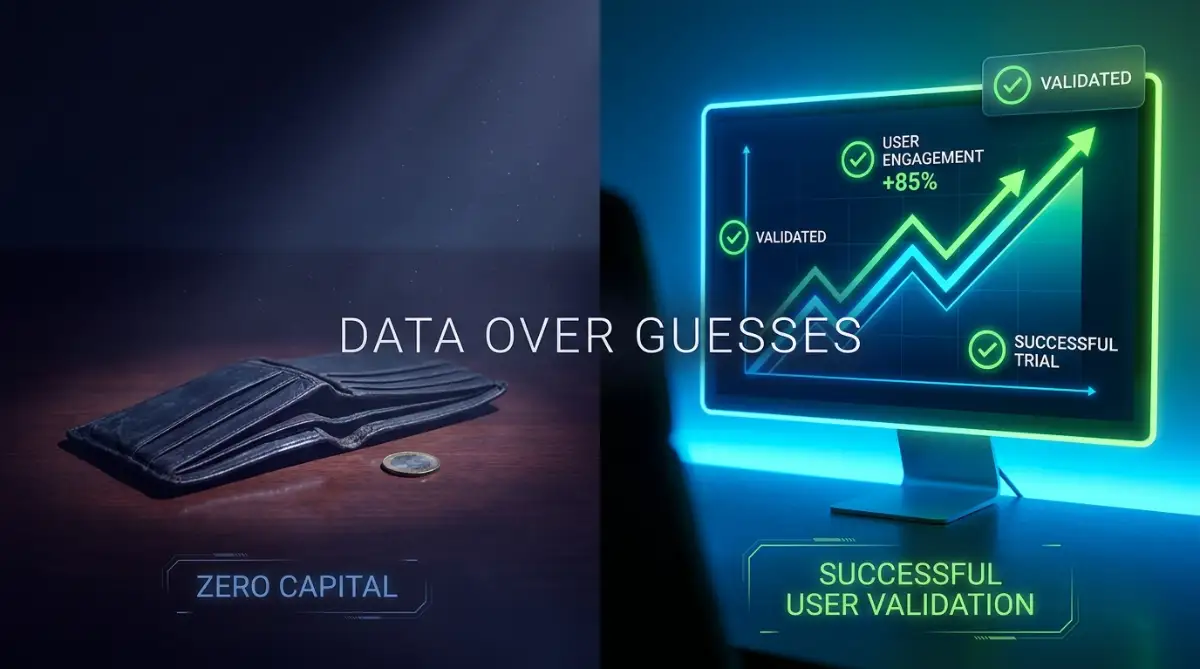
The Heartbreaking Traps of New Founders
I have watched so many brilliant people destroy their savings simply because they ignored the warning signs. Building a business is an emotional journey, and our emotions often trick us into making terrible choices. If you want to survive, you must recognize these dangerous mental traps before they catch you.
The most common trap is the family echo chamber. When you come up with a new idea, you naturally want to share it with your parents, your spouse, or your best friends. Because these people love you, they will tell you that your idea is absolutely amazing.
This is the worst kind of feedback you can possibly get. Your mother will never tell you that your pricing strategy is flawed. To get real data, you must seek out unbiased market research guidelines and talk to complete strangers who owe you nothing.
Another massive mistake is falling in love with a solution rather than the problem. You might spend weeks designing a beautiful logo and a catchy name for a fitness app. You become so attached to your creation that you ignore all negative feedback from real users.
This is a classic example of cognitive bias. When people tell you the app is confusing, you get defensive instead of listening. You must separate your ego from your business. If the market says your idea is bad, drop it quickly and move on to the next one.
Many founders also suffer from the perfectionist delay. They refuse to show their product to anyone until it looks completely flawless. They spend hundreds of hours tweaking button colors and rewriting website text.
By the time they finally launch, they are completely exhausted. Then, when nobody buys, the heartbreak is devastating. If you are not a little bit embarrassed by the first version of your product, you waited entirely too long to launch it.
You must also avoid the terrible habit of building massive features based on a single customer's request. Just because one person said they would buy your software if it had a specific tool, does not mean the rest of the market agrees. You will end up building a messy, confusing product that nobody truly loves.
To stay on the safe path, you need to read up on common pre-launch mistakes and learn from the failures of others. Smart entrepreneurs let other people make the expensive mistakes, and then they study those lessons for free.
The most painful trap of all is the sunk cost fallacy. This happens when you realize your idea is failing, but you refuse to quit because you already spent two months working on it. You keep pouring more time and energy into a sinking ship, hoping it will magically float.
Quitting a bad idea is not a failure. It is actually a massive victory. When you kill a doomed project early, you save your energy and resources for an idea that actually has a chance to win.
Your Action Plan for a Safe Launch
We have covered a lot of ground today, and I want you to walk away feeling empowered, not overwhelmed. You now know that throwing money at a wild guess is the fastest way to ruin your dreams. You have a solid, zero-budget toolkit to test any concept that pops into your head.
Start by writing down your assumptions on a blank piece of paper. Who exactly is your customer? What massive pain are they feeling right now? How much are they currently paying to solve that pain?
Once you have these questions written out, your only job is to prove yourself wrong. Go out into the digital world and find reliable business insights to challenge your own thinking. Post your concept in relevant forums and ask people to tear it apart.
Remember, every negative comment you get early on is a blessing in disguise. It is the market saving you from spending your hard-earned money on something useless. Embrace the negative feedback and use it to sharpen your offer.
A Quick Checklist for Your Next Idea:
- Find a community complaining about a specific problem.
- Create a simple, free waiting list page outlining your solution.
- Drive targeted traffic to that page through simple conversations.
- Count how many strangers give you their email address.
- Ask those strangers what they are willing to pay.
You do not need a fancy degree to run these simple tests. You just need the courage to talk to people and the humility to listen to their answers.
By following the original lean startup principles, you remove all the terrifying financial risks from the equation. You can test five different ideas in a single month without spending a single dollar.
Eventually, one of those tests will explode with positive feedback. People will start begging you to take their money. When that beautiful moment happens, you will know exactly where to focus your energy.
You can also stay updated with latest global business trends to see what new markets are opening up. The world is full of amazing opportunities for people who are willing to test things safely and logically.
Your journey as a founder does not have to be a stressful gamble. By using these validation methods, you turn the scary unknown into a clear, predictable science. You gain complete control over your financial future.
I used to be terrified of failure, but once I learned how to test my concepts for free, that fear completely vanished. My confidence skyrocketed because I started relying on real market data instead of my own wild guesses. I want you to experience that exact same freedom, so please, stop planning in secret and start testing your ideas today.
Common Questions About Free Idea Testing
Is it really possible to validate a physical product for free?
Yes, absolutely. You can create simple 3D renderings or sketches of your physical product and post them in relevant Facebook groups. If people repeatedly ask where they can buy it, you have clear proof of demand before you ever manufacture anything.
What if someone steals my idea while I am testing it?
Ideas alone are practically worthless in the business world; execution is everything. Most people are too busy with their own lives to steal your unproven concept. Hiding your idea only guarantees that you will never get the feedback you desperately need.
How many email signups do I need before I build the product?
There is no magical number, but a great rule of thumb is aiming for fifty highly engaged strangers. If you can get fifty people who do not know you to hand over their email, you have a solid foundation to start building a basic version of your offer.
Do I need to form a legal company before I run these tests?
No, you do not need an official legal entity just to talk to people and gather market research. You are simply running experiments to see if a demand exists. You can worry about the heavy paperwork only after you prove that people want to pay you.
What should I do if my test completely fails?
Celebrate! A failed test means you just saved yourself months of wasted effort and thousands of lost dollars. Take a deep breath, review why it failed, and move on to your next concept with a much smarter approach.
Disclaimer: The information provided in this article is for educational and informational purposes only and does not constitute financial, legal, or professional business advice. Always do your own research or consult with a certified professional before making any major financial decisions or starting a business.